
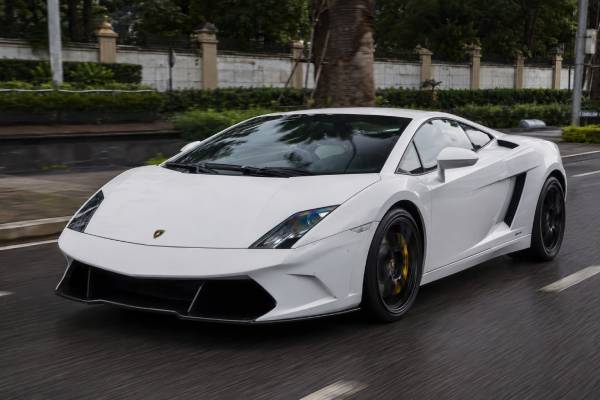
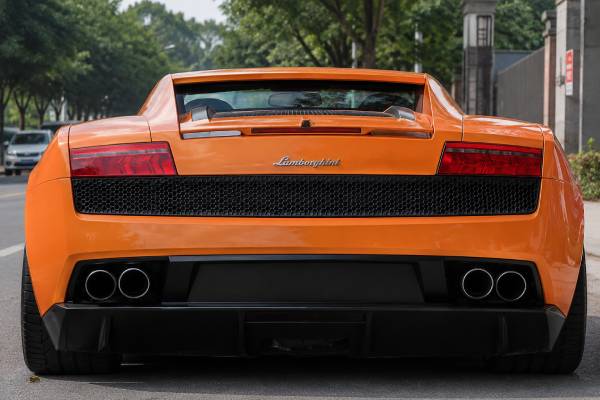
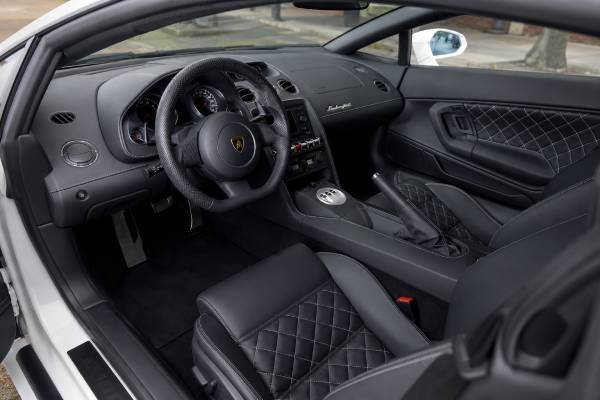
The Lamborghini Gallardo LP 550-2 India Serie Speciale is one of the rarest market-specific Gallardos, built as a six-car tribute for India during Lamborghini’s 50th anniversary year. It matters because it combines the most playful late Gallardo formula — a naturally aspirated 5.2-liter V10, rear-wheel drive, and compact proportions — with a specification made for a single national market. Unlike the higher-output all-wheel-drive LP 560-4 and track-focused LP 570-4 models, the LP 550-2 puts driver feel ahead of pure traction. The India Serie Speciale adds tricolor graphics, special interior stitching, India-specific identification, and a useful nose-lift system for rougher roads. For buyers, the challenge is not choosing between many cars; it is proving originality, checking condition, and understanding whether the premium over a normal LP 550-2 is justified.
Table of Contents
- India Serie Speciale Place in Gallardo History
- LP 550-2 V10 Specifications and Hardware
- Six-Car Production, Colors, and Authenticity
- Design, Engineering, and India-Specific Details
- Rear-Drive Performance and Road Feel
- Maintenance, Reliability, and Common Risk Areas
- Market Value, Buying Checks, and Collectability
India Serie Speciale Place in Gallardo History
The India Serie Speciale is best understood as a late-production LP 550-2 with a national-market collector specification. It was not a new mechanical model, but its six-car build run, 50th-anniversary timing, and India-only identity make it far more special than a standard rear-drive Gallardo.
The Gallardo itself was a turning point for Lamborghini. Launched for the 2000s under Audi ownership, it gave Lamborghini a smaller V10 model below the V12 flagship line. It also made the brand more usable without making it quiet, soft, or ordinary. Over ten years, the Gallardo became one of Lamborghini’s most important modern cars because it proved the company could build a dramatic exotic that owners could actually drive often.
By 2013, the Gallardo was near the end of production. The Huracán was close, and Lamborghini was using special editions to keep the outgoing V10 model visible in key markets. The India Serie Speciale fits this period perfectly: it celebrated Lamborghini’s 50th anniversary and recognized India as a growing supercar market.
The LP 550-2 base was already a meaningful version. “LP” refers to the longitudinal rear-mounted engine layout, “550” indicates output in metric horsepower, and “2” identifies rear-wheel drive. That last number matters most. Most Gallardos were all-wheel drive, which gave them tremendous traction but also a different feel. The LP 550-2 removed the front-drive hardware and used rear-drive-specific tuning for the chassis, stability control, tires, and suspension.
The India Serie Speciale therefore sits at a useful crossroads:
- It has the late Gallardo’s 5.2-liter direct-injection V10.
- It uses the purer rear-wheel-drive LP 550-2 layout.
- It belongs to the final Gallardo era, when special editions were central to the model’s appeal.
- It was limited to only six cars, making documentation and provenance unusually important.
- It carries India-specific design details rather than major performance changes.
For enthusiasts, the car’s appeal is simple: it is an old-school naturally aspirated Lamborghini with fewer electronic layers than later supercars. For collectors, the appeal is narrower but stronger: genuine six-car production, right market story, recognizable special trim, and a place in the last chapter of Gallardo history.
LP 550-2 V10 Specifications and Hardware
The India Serie Speciale uses the same core mechanical package as the Gallardo LP 550-2 Coupé: a naturally aspirated 5.2-liter V10, rear-wheel drive, and a six-speed transmission. The important buyer point is that the special edition’s value comes from specification and rarity, not from extra engine output.
| Item | Lamborghini Gallardo LP 550-2 India Serie Speciale |
|---|---|
| Platform | L140 Gallardo |
| Production year | 2013 |
| Body style | 2-door coupé |
| Layout | Longitudinal mid-engine, rear-wheel drive |
| Engine | 5.2-liter naturally aspirated V10 |
| Displacement | 5,204 cc |
| Valvetrain | DOHC, 40 valves |
| Fuel system | Direct injection |
| Maximum power | 550 hp / 550 PS at 8,000 rpm |
| Maximum torque | 540 Nm / 397 lb-ft at 6,500 rpm |
| Transmission | 6-speed E-Gear automated manual on documented India Series cars; standard LP 550-2 markets may also show manual availability |
| Driven wheels | Rear |
The V10 is the heart of the car. It is smaller than Lamborghini’s V12 engines but sharper in response, lighter in character, and easier to place in a compact chassis. In LP 550-2 tune, it gives away a little power compared with the LP 560-4, but the rear-drive setup changes the personality more than the ten-horsepower difference changes the speed.
The Gallardo’s six-speed E-Gear is not a modern dual-clutch gearbox. It is a single-clutch automated manual, so it needs the same respect as a manual clutch system. Smooth low-speed driving, correct calibration, and clutch-wear readings matter far more than they would in a torque-converter automatic.
| Measurement | Figure |
|---|---|
| Length | 4,345 mm |
| Width | 1,900 mm |
| Height | 1,165 mm |
| Wheelbase | 2,560 mm |
| Front track | 1,632 mm |
| Rear track | 1,597 mm |
| Fuel tank | 90 liters |
| 0–100 km/h | About 3.9 seconds |
| Top speed | About 320 km/h |
| Front tires | 235/35 ZR19 |
| Rear tires | 295/30 ZR19 |
The chassis follows the familiar Gallardo recipe: a stiff aluminum-intensive structure, double-wishbone suspension, large ventilated brakes, wide staggered tires, and a low center of gravity. The LP 550-2’s missing front-drive components make the steering feel cleaner than on many all-wheel-drive Gallardos, although the car still has enough rear tire to put power down effectively when driven with care.
Six-Car Production, Colors, and Authenticity
Production rarity is the India Serie Speciale’s main collector asset. Lamborghini offered only six examples, and the cars were divided across three national-flag-inspired exterior colors.
The known color theme was simple and memorable: orange, white, and green. Reports and registry data identify the cars as being finished in colors such as Arancio Borealis, Bianco Isis or Bianco Monocerus references depending on source wording, and Verde Ithaca. Buyers should not rely on a casual color name in an advertisement. The paint code, build record, original invoice, and Lamborghini documentation should be checked together.
| Area | What to verify | Why it matters |
|---|---|---|
| Production status | One of six India Serie Speciale cars | This is the core value driver |
| Exterior color | Original India-edition color, not a repaint or wrap | Color authenticity strongly affects collectability |
| Tricolor graphics | Factory-style stripe over bonnet, roof, and engine cover | Incorrect graphics reduce originality |
| Interior stitching | India-themed orange, green, and white stitching layout | Interior trim is hard to recreate perfectly |
| Special plaque | India Serie Speciale identification near the side glass/driver area | Helps separate genuine cars from themed replicas |
| Wheels | Special Cordelia wheel specification where documented | Original wheels are important on limited editions |
| Front lift | Working lift system | Useful for Indian roads and relevant to the edition’s story |
Factory paperwork matters more here than on a normal Gallardo. A standard LP 550-2 can be valued mainly on mileage, service condition, color, and gearbox. An India Serie Speciale needs an authenticity file. The strongest examples should have:
- original sales invoice or dealer delivery record;
- service book and stamped maintenance history;
- Lamborghini dealer or factory correspondence confirming edition status;
- VIN-linked build specification;
- evidence of original paint and stripe layout;
- original books, tools, keys, covers, and accessories;
- import and registration documents if the car has moved between countries.
Because the edition’s visual theme is easy to imitate, a buyer should assume that any car without proper documentation is not automatically worth special-edition money. A replica stripe or a later India-themed retrim may look convincing in photos but should be priced as a modified LP 550-2 unless provenance is proven.
Design, Engineering, and India-Specific Details
The India Serie Speciale looks special without changing the Gallardo’s basic shape. Its distinction comes from national-color detailing, late-Gallardo proportions, and the contrast between a compact wedge body and a dramatic V10 soundtrack.
The Gallardo was already a sharp, low, cab-forward design. Compared with older Lamborghinis, it was more compact and less theatrical in door operation, but it still had the brand’s angular stance. The LP 550-2 India Serie Speciale keeps that form and adds a tricolor center stripe running across the upper body. On a car this low and wide, that stripe changes the visual read: it pulls the eye over the nose, roof, and engine cover, making the car feel longer and more ceremonial.
The interior follows the same idea. The cabin is mainly black, but the stitching uses India-themed colors. This is not just decoration; it is part of the car’s identity. A retrimmed seat, replaced door panel, or wrong stitching color can weaken the car’s value even if the mechanical condition is strong.
Why rear-wheel drive changes the engineering
The LP 550-2 was not simply an LP 560-4 with parts removed. Rear-wheel drive changes load transfer, steering feel, tire behavior, stability-control calibration, and suspension tuning. Lamborghini adjusted chassis components for this version so the car would feel natural rather than unfinished.
The practical results are clear:
- less weight and friction at the front axle;
- cleaner steering because the front wheels do not have to pull the car;
- more throttle influence at the rear;
- a more playful balance on corner exit;
- greater need for tire quality and driver judgment.
The India Serie Speciale also benefits from its front-lift system. On a low-nosed Gallardo, that is more than a convenience feature. It can protect the front bumper, undertray, and lower aero pieces from steep driveways, speed breakers, ramps, and uneven urban roads. A broken or ignored lift system can turn a special feature into a repair bill.
Sound and sensory character
The 5.2-liter V10 is central to the car’s emotional value. It revs high, has a hard metallic edge, and feels more mechanical than many newer turbocharged engines. The sound changes from a crisp idle to a sharper, higher-pitched rush as the tachometer climbs. The cabin is not isolated like a modern grand tourer, so the driver hears intake noise, exhaust tone, gearbox activity, tire roar, and road texture.
That rawness is part of the reason late Gallardos remain desirable. They sit between old analog supercars and modern digital ones. The India Serie Speciale has enough electronics to be usable, but it still feels like a compact mid-engine machine built around a loud engine and a direct driving experience.
Rear-Drive Performance and Road Feel
The LP 550-2 India Serie Speciale is fast enough to feel serious today, but its main attraction is how it delivers speed. It feels lighter, more adjustable, and more driver-led than the all-wheel-drive Gallardo versions.
From rest, the car does not have the same idiot-proof launch traction as an LP 560-4. That is not a weakness for the intended buyer. The rear-drive layout makes the driver more involved. You feel the rear tires load up, the stability system watching in the background, and the V10 pulling hard toward the top of the rev range.
The 0–100 km/h figure of about 3.9 seconds still places it firmly in modern performance-car territory. The top speed of about 320 km/h is mostly academic on public roads, but it shows the V10 is not just about noise. It has real high-speed power.
The steering is one of the LP 550-2’s best traits. Without front drive shafts influencing the front wheels, the nose feels more honest. The car still has wide tires and a short, exotic-car seating position, so it is not delicate in the way a small lightweight sports car is. But compared with all-wheel-drive Gallardos, the rear-drive model gives clearer messages through the front axle.
The E-Gear transmission shapes the experience. At speed, full-throttle shifts feel dramatic and mechanical. Around town, it can feel abrupt if treated like a smooth automatic. Good drivers lift slightly during low-speed shifts, manage clutch heat, and avoid repeated creeping in traffic. A badly calibrated E-Gear car can feel clumsy; a well-maintained one feels period-correct and exciting.
Ride quality is firm but not unbearable. The short wheelbase helps the car feel alert, while the low front end demands attention. On Indian roads or broken city surfaces, the lift system is important. It does not make the Gallardo a high-clearance car, but it can prevent expensive scraping during slow obstacles.
On a mountain road, the LP 550-2 rewards patience. The front bites well, the engine responds quickly, and the rear tires carry the drama. The car is best driven with smooth steering and progressive throttle. It is less about forcing lap times and more about enjoying a naturally aspirated V10 working through a chassis that allows movement.
On track, tire condition and brake health matter. Old tires, tired dampers, weak brake fluid, or an overheated clutch can make a good Gallardo feel poor. A fresh, properly aligned car with correct tires is much more convincing than a low-mileage garage queen on aged rubber.
Maintenance, Reliability, and Common Risk Areas
A good Gallardo can be reliable by exotic-car standards, but deferred maintenance turns it expensive quickly. The India Serie Speciale adds rarity and trim-value concerns, so buyers must inspect both the mechanical condition and the edition-specific details.
The 5.2-liter V10 is generally respected, especially compared with older exotic engines that require engine-out service for routine work. Still, it is not a normal used-car engine. It needs correct oil, careful warm-up, clean cooling systems, healthy ignition components, and service by technicians who understand Gallardo diagnostics.
Key mechanical checks
The most important inspection items are predictable, but none should be skipped:
- E-Gear clutch wear: Ask for a current clutch-wear reading from proper diagnostic equipment. Heavy city use can shorten clutch life.
- E-Gear hydraulics and calibration: Check pump behavior, actuator health, smooth engagement, and fault history.
- Cooling system: Look for leaks, weak fans, aged hoses, radiator damage, and signs of overheating.
- Engine oil leaks: Inspect cam covers, seals, oil lines, and underbody panels.
- Misfires and coils: Misfires can damage catalysts and create expensive follow-on repairs.
- Exhaust and catalysts: Check for catalyst efficiency faults, heat damage, and non-original exhaust modifications.
- Suspension wear: Ball joints, bushings, dampers, mounts, and alignment should be inspected carefully.
- Front lift system: Confirm it raises and lowers evenly, holds pressure, and has no warning lights or leaks.
- Brakes: Measure disc condition, pad life, fluid age, and caliper function.
- Tires: Replace aged or mismatched tires, even if tread depth looks acceptable.
Annual service is the safest ownership habit, even on low-mileage examples. Many specialists treat oil and filter service, brake inspection, fluid checks, battery health, and a diagnostic scan as yearly basics. Brake fluid should be kept fresh, and major services should include ignition, filters, belts, gearbox-related checks, and differential/transmission service according to official documentation and actual use.
Electrical and software concerns
Late Gallardos have control modules, warning systems, E-Gear electronics, immobilizer systems, and aging interior electronics. A weak battery can create misleading faults. Before buying, insist on a scan of all modules and a check that no monitors, warning lights, or emissions readiness issues are being hidden.
One known safety-recall area for 2011–2014 Gallardo Coupe and Spyder vehicles involved engine ECU software and fault-code storage behavior. A buyer should check recall completion by VIN through the relevant official market channel or Lamborghini dealer, because recall applicability is VIN-specific and market-specific.
Body, trim, and originality
The body inspection is as important as the powertrain inspection. Low front bumpers, undertrays, splitters, side skirts, wheel lips, and rear diffusers take abuse. A small scrape is normal; poor repair, structural damage, or hidden accident history is not.
For this edition, trim originality deserves special focus:
- confirm the stripe is the correct style and not a later wrap;
- inspect paint depth to detect repainting;
- compare stitching layout with period photos and documentation;
- verify the special plaque and wheel specification;
- check that any replaced trim has been retained or documented;
- avoid cars with unexplained repainting, missing paperwork, or non-original interior changes.
A modified exhaust, aftermarket wheels, or wrap may make a normal Gallardo more personal, but it usually hurts a six-car special edition unless all original parts come with the car.
Market Value, Buying Checks, and Collectability
The India Serie Speciale should be valued as a documented collector version first and a used Gallardo second. Its rarity can justify a premium, but only when the car’s identity, condition, and service history are strong.
Normal LP 550-2 Gallardos appeal because they are among the most involving versions of the model. The India Serie Speciale adds a scarcity layer. With only six cars, there is no deep public transaction history, and asking prices can vary widely. A realistic buyer should compare it with three groups: standard LP 550-2 Coupés, named limited Gallardo editions, and ultra-low-production market specials.
Do not pay a special-edition premium for an undocumented car. The correct approach is to price the base car first, then add value for verified originality, provenance, color, mileage, condition, and completeness.
| Factor | Positive sign | Risk sign |
|---|---|---|
| Provenance | VIN-linked Lamborghini or dealer documentation | Only seller claims or social-media history |
| Mileage | Low but regularly serviced | Very low mileage with long inactivity |
| Paint | Original finish with clear paint-depth consistency | Unexplained repaint or color change |
| Interior | Correct stitching, plaque, and trim | Retrimmed cabin without proof |
| Mechanicals | Recent specialist inspection and clean diagnostics | No clutch reading, warning lights, or weak service file |
| Original parts | Books, tools, wheels, exhaust, and accessories present | Missing factory parts after modifications |
| Market story | Known car with clear ownership chain | Gaps in history or unclear import paperwork |
A proper pre-purchase inspection should be done by a Lamborghini specialist, not a general luxury-car workshop. The inspection should include diagnostics, clutch reading, lift-system operation, paint-depth report, underbody inspection, suspension check, brake measurement, service-record review, and verification of the edition-specific equipment.
Seek cars that are original, complete, and used enough to prove they work. Avoid cars that have sat for years without fluid service, cars with missing documents, cars with heavy cosmetic correction, and cars with low advertised mileage but no matching maintenance history.
Long-term collectability looks promising, but it is specialized. The India Serie Speciale is unlikely to have the same broad recognition as a Superleggera, Squadra Corse, or Valentino Balboni edition. Its appeal is more focused: Indian-market significance, six-car production, 50th-anniversary timing, and rear-drive Gallardo character. That can be powerful for the right collector, especially if the car remains in factory condition.
For an enthusiast who wants the best driving Gallardo, a standard LP 550-2 may offer better value. For a collector who wants a rare India-linked Lamborghini with a real story, the India Serie Speciale is a much more interesting target — but only when the paperwork is as convincing as the car.
References
- Lamborghini Gallardo 550-2 – Technical Specifications, Pictures 2013 (Manufacturer Model Page)
- Celebrating The Lamborghini Gallardo 2023 (Manufacturer History)
- Lamborghini launches limited edition Gallardo for India – Introduction | Autocar India 2013 (Launch Report)
- Part 573 Safety Recall Report 18V-833 2018 (Recall Database)
- ECR – Lamborghini Gallardo LP 550-2 India Serie Speciale list 2026 (Registry)
Disclaimer
This article is for informational purposes only and is not a substitute for professional diagnosis, repair, valuation, or pre-purchase inspection. Specifications, torque values, service intervals, recall applicability, and procedures can vary by VIN, market, equipment, and service history. Always verify details against official Lamborghini service documentation and have any car inspected by a qualified Lamborghini specialist before purchase or repair.
If this guide helped you, please share it on Facebook, X/Twitter, or your favorite car community to support our work.