
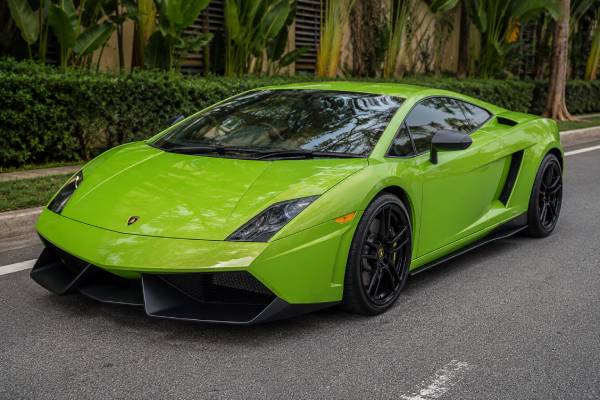
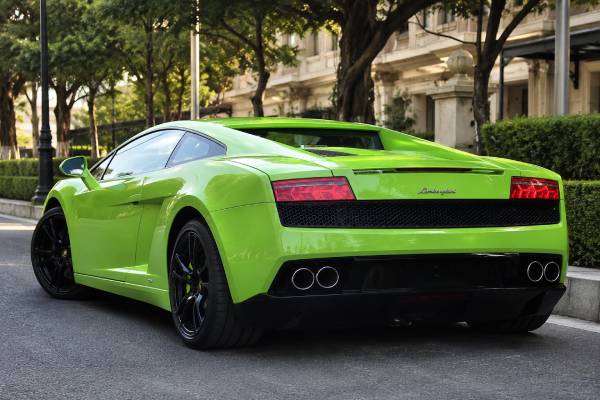
The Lamborghini Gallardo LP 550-2 Malaysia Limited Edition is a 2012 market-specific Gallardo built around the rear-wheel-drive LP 550-2 coupe. It matters because it combines the purist LP 550-2 drivetrain with a more aggressive visual package inspired by the LP 570-4 Superleggera, while remaining far rarer than most regular-production Gallardo versions. Only 20 were produced for Malaysia, making it a small-volume regional edition rather than a global catalog model.
Under the rear deck sits Lamborghini’s naturally aspirated 5.2-liter V10, commonly associated with the CEH engine family in this generation, producing 550 hp and 540 Nm. The Malaysia Limited Edition was sold with the six-speed E-gear automated manual transmission and rear-wheel drive, giving it a sharper, lighter, more adjustable character than the all-wheel-drive Gallardo LP 560-4. For buyers and collectors, the appeal is simple: rarity, V10 sound, Superleggera-style presence, and a specification that needs careful verification.
Table of Contents
- Why the Malaysia Limited Edition Matters
- V10 Specs, Chassis, and Performance Data
- Production Details, Colors, and Identification
- Superleggera-Style Design and RWD Engineering
- How the LP 550-2 MLE Drives
- Maintenance, Reliability, and Age-Related Risks
- Market Values and Buyer Inspection Guide
Why the Malaysia Limited Edition Matters
The Gallardo Malaysia Limited Edition is best understood as a rare regional LP 550-2 with factory-backed visual and trim changes, not as a separate mechanical model. Its importance comes from the way it blends three desirable Gallardo themes: rear-wheel drive, late-model 5.2-liter V10 engineering, and limited-edition market exclusivity.
The Gallardo itself was a turning point for Lamborghini. Launched in 2003, it became the brand’s volume breakthrough model and made the V10 Lamborghini a permanent part of the modern supercar market. Earlier Lamborghinis were rare, dramatic, and often difficult to live with. The Gallardo kept the drama but added better build quality, better ergonomics, modern electronics, and a more usable platform developed during the Audi ownership era.
The LP 550-2 sits in a special place within that story. Most Gallardos used all-wheel drive, which suited Lamborghini’s high-speed stability image. The LP 550-2 removed the front-driven hardware and focused on rear-wheel-drive feel. Lamborghini first made that idea famous with the Gallardo LP 550-2 Valentino Balboni, named after the company’s legendary test driver. The regular LP 550-2 then brought a similar concept into the broader lineup.
The Malaysia Limited Edition arrived late in the Gallardo’s life, when Lamborghini was creating several regional and special-series versions for key markets. These editions often used special paint, trim, badging, and body parts to give local buyers something rarer than a standard car. In the Malaysia version, the draw was the LP 570-4 Superleggera-style exterior treatment combined with the more comfortable LP 550-2 cabin and the rear-drive 550 hp V10.
That combination still appeals because the Gallardo has aged into a modern collector car. It is old enough to feel analog compared with newer turbocharged, hybrid, and heavily software-managed supercars, but new enough to offer genuine usability. It has hydraulic steering, a naturally aspirated high-revving engine, compact dimensions by modern supercar standards, and a theatrical single-clutch gearbox that gives the car a very period-correct character.
For collectors, the Malaysia Limited Edition’s value rests on originality. A standard LP 550-2 can be judged mainly on mileage, service history, color, gearbox, and condition. An MLE also needs proof that it is one of the 20 Malaysian-market cars, that its Superleggera-style parts are the correct original items, and that its interior plaque, colors, documents, and importer history line up. Without that paper trail, it risks being treated as a modified LP 550-2 rather than a recognized limited edition.
V10 Specs, Chassis, and Performance Data
The key specification is the 5.2-liter naturally aspirated V10 paired with rear-wheel drive and E-gear. The Malaysia Limited Edition did not add more power over the LP 550-2, but its rarity and equipment package make the exact build more important than the raw numbers.
| Item | Specification |
|---|---|
| Model | Lamborghini Gallardo LP 550-2 Malaysia Limited Edition |
| Platform code | L140 Gallardo |
| Model year | 2012 |
| Body style | 2-door coupe |
| Layout | Longitudinal mid-engine, rear-wheel drive |
| Engine | 5.2-liter naturally aspirated V10 |
| Displacement | 5,204 cc |
| Output | 550 hp at 8,000 rpm |
| Torque | 540 Nm at 6,500 rpm |
| Fuel system | Gasoline direct injection |
| Transmission | 6-speed E-gear automated manual |
| Drivetrain | Rear-wheel drive with limited-slip differential |
| 0–100 km/h | About 3.9 seconds |
| Top speed | About 320 km/h |
The V10 is the centerpiece. Compared with the earlier 5.0-liter Gallardo engine, the later 5.2-liter unit brought more output, direct injection, and a different character. It revs hard, pulls cleanly in the upper half of the tachometer, and gives the Gallardo much of its long-term appeal. It is not a muted modern supercar engine. It is loud, mechanical, and sharp, especially as the revs rise.
The LP 550-2’s rear-drive layout also changes the chassis balance. Removing the front-drive system reduces weight and friction, but the important change is feel. The steering is cleaner because the front wheels are not also being driven. The car is more responsive to throttle inputs mid-corner, and it asks more of the driver than the all-wheel-drive LP 560-4.
| Area | Useful detail |
|---|---|
| Structure | Aluminum space-frame construction |
| Suspension | Independent double wishbones front and rear |
| Steering | Hydraulic power-assisted rack-and-pinion |
| Front tires | Typically 235/35 ZR19 |
| Rear tires | Typically 295/30 ZR19 |
| Wheelbase | 2,560 mm |
| Length | About 4,345 mm |
| Width | About 1,900 mm, excluding mirrors |
| Height | About 1,165 mm |
| Dry weight | About 1,380 kg for the LP 550-2 coupe basis |
| Fuel capacity | About 90 liters |
Braking equipment needs car-by-car confirmation. Many Gallardos used large ventilated steel brakes, while carbon-ceramic brakes were available on certain versions and specifications. On any MLE, the buyer should verify the actual brake package from the build record, the caliper and rotor type, and the condition of the discs. Carbon-ceramic brakes can last well on the road but are costly if damaged, heavily worn, or chipped.
The E-gear transmission is not a torque-converter automatic or a modern dual-clutch gearbox. It is an electro-hydraulically shifted single-clutch manual gearbox. That distinction matters. At low speed it can feel abrupt, and clutch wear depends heavily on driving style, traffic use, hill starts, and calibration. When driven properly, it suits the car’s aggressive character. When neglected, it becomes one of the biggest ownership cost areas.
Production Details, Colors, and Identification
The Malaysia Limited Edition was limited to 20 cars, and that number is the core of its collector appeal. The edition’s value depends on proving that the car is a genuine Malaysian-market MLE rather than a standard LP 550-2 fitted later with similar body parts.
The known exterior colors were:
- Bianco Monocerus, a solid white
- Verde Ithaca, Lamborghini’s bright pearl green
- Arancio Borealis, Lamborghini’s pearl orange
These colors suit the Gallardo’s wedge shape well, especially with the darker carbon-fiber-style exterior details. Verde Ithaca and Arancio Borealis usually create the strongest visual impact, while Bianco Monocerus can appeal to buyers who prefer a cleaner, more restrained version of the same package.
The MLE used a Superleggera-inspired exterior kit. The important visible items include the more aggressive front bumper, carbon side skirts, four titanium-style exhaust outlets, and a carbon-fiber rear diffuser treatment. The car’s idea was not to turn the LP 550-2 into a true LP 570-4 Superleggera. Instead, it gave Malaysian buyers the look of the harder-edged Gallardo while retaining the rear-drive LP 550-2 mechanical base and a more road-friendly interior.
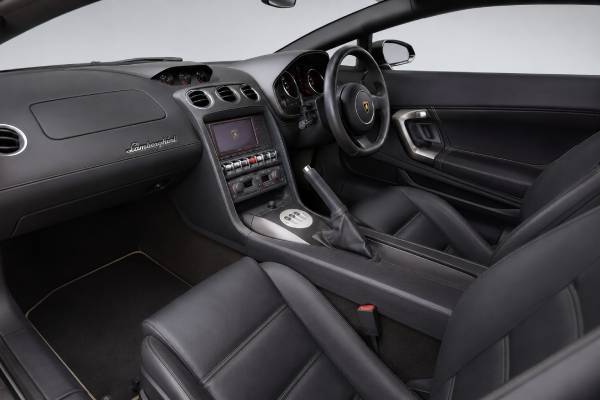
The interior was finished with a leather and Alcantara combination with bespoke stitching. The edition also carried a “Limited Edition 20” plaque. A useful detail for buyers is that the cars were not individually numbered from 1 to 20 in the usual way; examples were reported with the same limited-edition identification approach rather than a conventional numbered sequence.
What to verify on an MLE
A buyer should not rely only on badges or bodywork. A proper inspection should confirm the following:
- Malaysian-market delivery history through the official importer or dealer network
- factory or importer documentation identifying the car as a Malaysia Limited Edition
- original exterior color and interior trim
- presence and condition of the limited-edition plaque
- correct Superleggera-style exterior parts
- VIN, engine, gearbox, and service-record consistency
- whether later repainting, wrap work, or accident repair has altered the original specification
- complete service records from Lamborghini or a recognized exotic-car specialist
Documentation matters more here than it would on an ordinary used exotic. Because Gallardos are commonly modified, an undocumented MLE-style car may be difficult to distinguish from a converted LP 550-2 unless the seller can provide delivery documents, build data, old registration history, and period records.
The original Malaysian pricing also affects the story. The car was announced at a pre-tax price far below the on-road price once Malaysian duties and registration costs were considered. That local-market context helps explain why the MLE is tied closely to Malaysia’s high-end car scene and why surviving cars with original local documentation carry more weight than examples that have lost their paperwork.
Superleggera-Style Design and RWD Engineering
The MLE’s visual identity comes from Superleggera-style aggression on a rear-wheel-drive LP 550-2 base. That makes it more dramatic than a standard LP 550-2 without making it a true lightweight Superleggera mechanically.
The Gallardo shape is compact, low, and sharply geometric. Earlier Gallardos were clean and simple; later models became more angular, with larger intakes and more complex front and rear surfaces. The Malaysia Limited Edition leans into the later, sharper look. The front bumper gives the nose more bite. The side skirts visually lower the body. The rear diffuser and four-exit exhaust make the rear view closer to Lamborghini’s lightweight and track-focused Gallardo variants.
The design works because the Gallardo is not a large car. Modern supercars have grown wider and heavier, while the Gallardo still feels tight and compact. Its proportions are easy to read: low nose, cab-forward cockpit, short rear overhang, and visible engine mass behind the driver. The MLE’s body details exaggerate those qualities without hiding the basic Gallardo form.
The rear-wheel-drive engineering is more than a missing front differential. Lamborghini revised the LP 550-2’s chassis tuning to suit the different power flow. Compared with the all-wheel-drive cars, the LP 550-2 needed different suspension behavior, stability-control calibration, and differential tuning. The goal was not to make a drift car. It was to keep Lamborghini’s high-speed stability while allowing a more alert, more throttle-sensitive driving style.
The mechanical limited-slip differential is central to that feel. Under power, it helps both rear tires contribute rather than letting the inside tire spin away torque. This gives the driver better traction on corner exit and makes the car more progressive when the rear tires start to work hard. In a mid-engine car with 550 hp, that predictability is important.
The E-gear system also shapes the character. At full throttle, the shift event is dramatic and physical. At low speeds, it can feel clumsy if the driver treats it like a normal automatic. Smooth use requires lifting slightly at the right moments, avoiding creeping in traffic, and keeping clutch adaptation and hydraulic operation in good condition. The system is part of the Gallardo experience, but it is also one reason a pre-purchase inspection is essential.
Inside, the MLE keeps the Gallardo’s usable but low-slung cabin. The driving position is more practical than older Lamborghinis, but visibility is still supercar-like. The dashboard and switchgear reflect the Audi-era parts-sharing that made the Gallardo better built than older Lamborghinis, even if some controls feel less exotic than the exterior. The leather and Alcantara trim gives the MLE a more special cabin than a plain LP 550-2, especially when the stitching and plaque remain original.
How the LP 550-2 MLE Drives
The LP 550-2 MLE drives like a sharper, more talkative Gallardo rather than a softer limited-edition cruiser. Its main appeal is the mix of natural aspiration, hydraulic steering, rear-wheel-drive balance, and single-clutch drama.
The engine dominates the first impression. At low revs, it is tractable enough for normal roads, but it never feels like a lazy large-capacity engine. It wants revs. Above the mid-range, the V10 becomes harder, louder, and more urgent. The sound is metallic and clean, with a sharper edge than many newer turbocharged engines. Owners often value the sound as much as the acceleration.
Acceleration remains serious even by modern standards. A 0–100 km/h time of about 3.9 seconds is fast, but the number does not explain the experience. The Gallardo feels quick because the engine response is immediate and the gearshifts are forceful. Unlike a dual-clutch supercar, the E-gear shift has a clear interruption and a physical punch. Some drivers love that. Others find it outdated. For a collector, that old-school behavior is now part of the charm.
The steering is one of the LP 550-2’s best qualities. Without front drive, the front axle feels more direct. The steering has weight and texture, and the car changes direction quickly for a wide supercar. On a good road, the MLE feels more adjustable than an LP 560-4. You can sense the rear axle working and use throttle position to influence the car’s line.
The tradeoff is that the LP 550-2 needs respect. The all-wheel-drive Gallardos can put power down with less drama in poor weather or on rough surfaces. The rear-drive car depends more on tire condition, alignment, road temperature, and driver judgment. Old rear tires, poor alignment, or tired suspension bushings can make the car feel nervous. A well-set-up car feels alert; a neglected one can feel edgy for the wrong reasons.
Ride quality is firm but not unbearable. The Gallardo is stiff, low, and noisy, yet it was designed for road use. On smooth highways it can cover distance better than many expect. In city traffic, the weaknesses appear: poor rear visibility, low nose clearance, cabin heat, heavy attention from other road users, and E-gear clutch wear if the car is crawled forward in long queues.
On track, the MLE can be exciting, but it is not the cheapest way to enjoy circuit driving. Tires, brakes, clutch wear, and heat management all matter. Carbon-ceramic brakes, if fitted, should be checked before and after hard use. Steel brakes are less exotic but still expensive when used hard. The car rewards smooth inputs and a patient corner-entry style rather than rough steering and abrupt throttle use.
Maintenance, Reliability, and Age-Related Risks
The Gallardo is one of the more usable modern Lamborghinis, but it is still an exotic car with exotic-car costs. The Malaysia Limited Edition adds rarity, so poor maintenance or incorrect repairs hurt both reliability and collector value.
The V10 is generally strong when serviced properly. The biggest risks are usually not basic engine design flaws but age, heat, low use, poor diagnostics, deferred maintenance, and previous owners who treated warning signs as minor annoyances. Cars in hot and humid climates need special attention to cooling, rubber parts, trim, wiring connectors, and air-conditioning performance.
The E-gear system is a priority inspection item. A specialist should check clutch wear data, hydraulic pump operation, actuator behavior, gear-selection quality, and stored fault codes. A car that shifts harshly at parking speed, refuses clean engagement, drops into neutral, or shows repeated E-gear warnings can quickly become expensive. Clutch wear percentage should be interpreted by someone who understands Lamborghini diagnostics, not just read as a simple number.
Common ownership inspection points include:
- clutch wear and E-gear calibration
- hydraulic pump cycling frequency
- gearbox actuator leaks or slow engagement
- engine oil leaks and coolant leaks
- misfire history, ignition coils, and spark plugs
- direct-injection carbon buildup symptoms
- radiator and air-conditioning condenser damage
- suspension bushings, dampers, and ball joints
- steering rack, tie rods, and alignment condition
- brake rotor thickness, cracking, chipping, and pad wear
- tire age, tire brand, and correct matching sizes
- battery health and module voltage sensitivity
- sticky interior switches and soft-touch trim wear
- headliner, Alcantara wear, leather shrinkage, and cabin heat damage
The cooling system deserves careful attention. Mid-engine cars package heat tightly, and the Gallardo’s side and front cooling circuits can suffer from blocked fins, minor leaks, stone damage, and old hoses. A car that runs hot in traffic, smells of coolant, or has inconsistent fan behavior needs diagnosis before purchase.
Electrical condition is also important. Low battery voltage can create confusing warnings on modern exotics. A healthy battery, correct charger use, and clean diagnostic scans are part of normal ownership. Buyers should not accept a dashboard full of warning lights as “typical Lamborghini behavior.”
Recall status should be checked by VIN through Lamborghini’s official recall channel or the relevant national database. For 2011–2014 Gallardos, one widely noted safety campaign involved ECU software that could erase fault memory after key-off, which could prevent warning lamps from alerting the driver later. The key buyer point is not only whether a campaign exists for similar cars, but whether the exact VIN is affected and whether the work was completed.
Service records should show more than oil changes. A strong file will include annual inspections, brake-fluid changes, gearbox and differential service where applicable, clutch readings over time, tires by date code, alignment records, battery replacement, coolant service, and invoices from Lamborghini or a known specialist. Sparse records reduce value, even if the odometer reading is low.
Originality matters because this is a limited edition. Upgrades such as aftermarket exhausts, wheels, carbon add-ons, wraps, stereo changes, or ECU tunes may appeal to some drivers, but they can reduce collector confidence. The safest route is a car with all original parts retained, reversible changes documented, and no hidden accident repair.
Market Values and Buyer Inspection Guide
The MLE’s market value should be judged as a documented limited-edition LP 550-2, not as a generic Gallardo with an aftermarket body kit. A real, documented, original Malaysia Limited Edition should command more interest than an ordinary E-gear LP 550-2, but the premium depends heavily on proof, condition, mileage, and buyer location.
In the broader market, late LP 550-2 coupes often sit above early high-mile Gallardos but below the most collectible manual-transmission examples and the more extreme LP 570-4 special models. Recent public listings and auction data show regular LP 550-2 values commonly clustered around the low-to-mid six-figure range in U.S. dollars, with exceptional manual cars reaching much higher numbers. E-gear cars are usually less valuable than gated manuals, but a rare regional edition can narrow that gap if the documentation is strong.
For the Malaysia Limited Edition, the strongest examples are likely to have:
- original Bianco Monocerus, Verde Ithaca, or Arancio Borealis paint
- original MLE body parts and trim
- complete Lamborghini or specialist service history
- verified Malaysian-market delivery documents
- low but believable mileage
- clean accident and title history
- no structural repairs
- original wheels, exhaust, interior, and plaque
- complete books, keys, tools, and service invoices
- evidence of recall and service-campaign completion
Cars to approach carefully include those with missing plaques, undocumented bodywork, repainting without photos, accident history, inconsistent panel gaps, aftermarket engine software, poorly fitted carbon parts, incomplete service records, or unexplained warning lights. A cheap Gallardo is rarely cheap after correction.
Pre-purchase inspection priorities
Use a Lamborghini specialist, not a general luxury-car shop. The inspection should include:
- Confirm the VIN, market history, and MLE documentation.
- Check the paint with a depth gauge and inspect for structural repair.
- Verify the correct limited-edition exterior parts and plaque.
- Perform a full diagnostic scan with Lamborghini-capable equipment.
- Record clutch wear, E-gear data, and hydraulic system behavior.
- Inspect brakes, tires, suspension, steering, and underside damage.
- Check cooling-system health during idle, road use, and shutdown.
- Review every service invoice against mileage and dates.
- Confirm recall and service-campaign completion by VIN.
- Price the car after estimating immediate maintenance needs.
The best car to buy is not always the lowest-mileage one. A properly used, regularly serviced MLE with clean documents may be safer than a long-stored car that needs tires, fluids, clutch work, sticky-button restoration, and cooling-system repairs. Storage can preserve paint and mileage, but it can also age seals, batteries, rubber, and electronics.
Long-term collectability looks positive for the best examples. The Gallardo was built in large numbers by Lamborghini standards, but the Malaysia Limited Edition was not. Its future value will depend on whether collectors continue to prize regional limited editions and naturally aspirated V10 Lamborghinis. The strongest cars will be original, documented, and easy to explain. The weakest will be those that require buyers to “trust the story.”
References
- End of production for the Lamborghini Gallardo_EN 2013
- Lamborghini Gallardo LP 550-2 Tricolore – Technical Specifications, Pictures 2011
- Lamborghini Gallardo LP 570-4 SuperLeggera – Technical Specifications 2010
- Recall Campaign | Lamborghini.com 2026 (Recall Lookup)
- 2012 Lamborghini Gallardo LP550-2 | Hagerty Valuation Tool® 2026 (Valuation Guide)
Disclaimer
This article is for informational purposes only and is not a substitute for professional diagnosis, inspection, repair, or valuation. Specifications, torque values, service intervals, recall status, procedures, and equipment can vary by VIN, market, production date, and individual vehicle configuration. Always verify details against official Lamborghini service documentation, the car’s build records, and a qualified Lamborghini specialist before buying, servicing, or repairing a vehicle.
If you found this guide useful, please consider sharing it on Facebook, X/Twitter, or your favorite car community to support our work.