
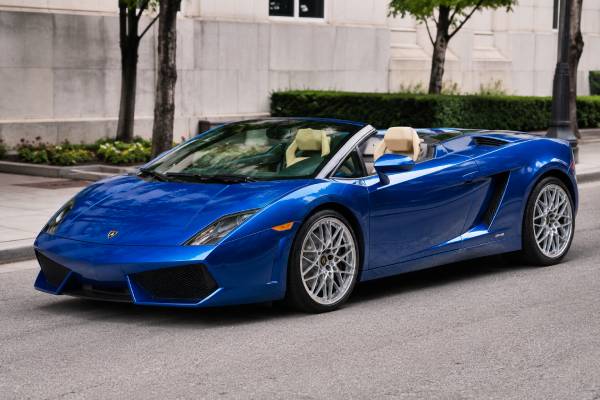
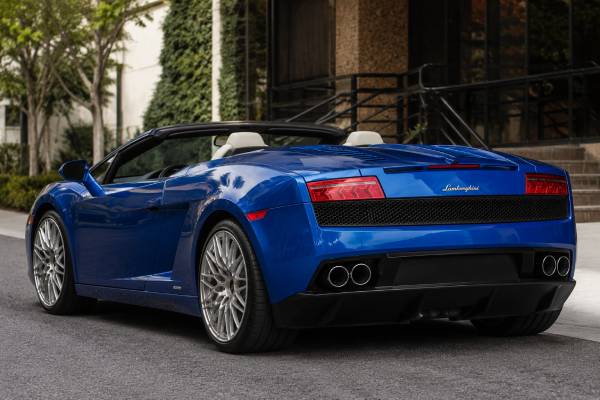
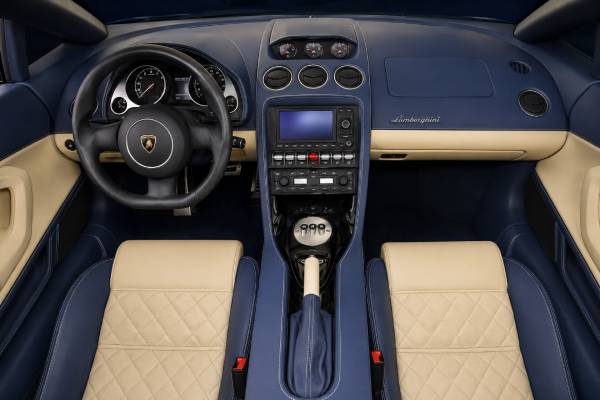
The Lamborghini Gallardo LP 550-2 Spyder is the open-air, rear-wheel-drive Gallardo for buyers who want more steering feel, more throttle adjustability, and less all-wheel-drive filtering. It pairs the facelift-era 5.2-liter V10 with a lighter, simpler driveline than the LP 560-4 Spyder, while keeping the drama that made the L140 Gallardo Lamborghini’s breakthrough modern volume supercar. The “550-2” name tells the story: roughly 550 metric horsepower and two driven wheels. The Spyder body adds sound, exposure, and visual theater, but it also adds inspection points around the soft top, chassis condition, water sealing, and interior wear. For collectors, the appeal is not just speed. It is the rare combination of a naturally aspirated V10, rear-wheel drive, available manual or E-Gear transmission, and late Gallardo usability before the Huracán changed the formula.
Table of Contents
- Why the Rear-Drive Spyder Matters
- V10 Specs, Chassis, and Performance Data
- Production Years, Versions, and Options
- Design, Engineering, and Open-Air Character
- How the LP 550-2 Spyder Drives
- Maintenance Issues and Ownership Reality
- Market Values and Buyer Checklist
Why the Rear-Drive Spyder Matters
The LP 550-2 Spyder matters because it turns the Gallardo from a secure all-weather supercar into a more playful, more transparent driver’s car. It keeps the 5.2-liter V10 and everyday usability, but removes the front-drive hardware that shaped the character of most Gallardos.
The Gallardo itself was a turning point for Lamborghini. Launched in the early 2000s under Audi ownership, the L140 platform gave Lamborghini a smaller V10 model to sit below the V12 flagship. It was still exotic, loud, low, and dramatic, but it was also far better built and more usable than many older Lamborghinis. That blend made it a sales success and helped turn Lamborghini from a low-volume dream-car maker into a more stable modern supercar brand.
The LP 550-2 Spyder arrived near the end of the Gallardo’s life, after the model had already been sharpened by the 2008 LP 560-4 update and the driver-focused LP 550-2 Valentino Balboni coupe. The Balboni special proved that a rear-drive Gallardo could work with the 5.2-liter V10. The LP 550-2 Spyder took that idea and made it part of the regular open-top range.
For enthusiasts, the significance is simple: this is one of the most involving modern Gallardo road cars. The standard LP 560-4 Spyder is faster off the line in poor conditions and easier to drive hard because its all-wheel-drive system pulls the car out of corners. The LP 550-2 Spyder asks more from the driver. The front axle has less driveline load, the steering feels cleaner, and the rear tires do more of the conversation.
For collectors, the car has several strong ingredients:
- A naturally aspirated V10 with a high redline and direct injection.
- Rear-wheel drive in a Gallardo Spyder body, which is less common than all-wheel drive.
- Late-production build quality and the updated 5.2-liter engine.
- A choice between E-Gear and, in some markets and examples, the rare six-speed gated manual.
- A position near the end of the L140 era, before the Huracán introduced a new platform and a different design language.
The LP 550-2 Spyder is not the ultimate track Gallardo; that role belongs more naturally to the Superleggera and Spyder Performante versions. It is also not the fastest Gallardo in a straight line. Its value lies in feel. It is the Gallardo for someone who wants the roof down, the engine behind the seats, and the rear axle involved in every meaningful throttle input.
V10 Specs, Chassis, and Performance Data
The exact appeal of the LP 550-2 Spyder is mechanical: a CEH-coded 5.2-liter naturally aspirated V10, rear-wheel drive, and a chassis retuned around a more active rear axle. The numbers are strong, but the layout is what makes the car special.
| Category | Specification |
|---|---|
| Platform | L140 Gallardo Spyder |
| Production focus | Late Gallardo rear-wheel-drive Spyder, mainly 2011–2013 model coverage |
| Engine code | CEH |
| Engine | 5,204 cc 90-degree V10, DOHC, 40 valves |
| Induction | Naturally aspirated |
| Fuel system | Direct fuel injection |
| Compression ratio | 12.5:1 |
| Output | 550 hp/CV at 8,000 rpm |
| Torque | 540 Nm / 398 lb-ft at 6,500 rpm |
| Drive | Rear-wheel drive |
| Transmission | 6-speed E-Gear automated manual; 6-speed manual on selected cars and markets |
| Differential | Rear limited-slip differential |
| Suspension | Aluminum double wishbones front and rear, coil springs, dampers, anti-roll bars |
| Steering | Power-assisted rack and pinion |
| Front tires | 235/35 ZR19 |
| Rear tires | 295/30 ZR19 |
| Wheel sizes | 19 x 8.5 front, 19 x 11 rear |
| Front brakes | Ventilated discs, approximately 365 mm / 14.4 in |
| Rear brakes | Ventilated discs, approximately 356 mm / 14.0 in |
| Measure | Figure |
|---|---|
| Length | 4,345 mm / 171.1 in |
| Width | 1,900 mm / 74.8 in |
| Height | 1,184 mm / 46.6 in |
| Wheelbase | 2,560 mm / 100.8 in |
| Curb weight | About 1,610 kg / 3,549 lb for E-Gear specification |
| Fuel tank | 80 L / 21.1 US gal |
| Luggage space | About 110 L / 3.9 cu ft |
| 0–100 km/h | About 4.2 seconds |
| Top speed | About 319 km/h / 198 mph |
The 5.2-liter V10 is the heart of the car. It is not turbocharged, and it does not rely on electric boost. Its performance comes from displacement, revs, compression, direct injection, and a short intake-to-exhaust path that gives the Gallardo its hard-edged voice. Peak power arrives high in the rev range, so the car rewards drivers who let the engine climb rather than short-shifting it like a large-displacement GT.
The CEH-family V10 is shared in broad concept with other late Gallardo models, but the LP 550-2 uses calibration and chassis changes suited to rear-wheel drive. The car is not merely an LP 560-4 with parts removed. Lamborghini retuned the dampers, stability control, aerodynamics, and drivetrain behavior so the car would remain stable without losing the livelier balance expected from a two-wheel-drive supercar.
The E-Gear transmission is a single-clutch automated manual. It has no torque converter and no modern dual-clutch smoothness. At low speeds it can feel abrupt, especially if the clutch position, software, or driver technique is not ideal. Driven properly, it delivers sharp, theatrical upshifts and strong downshift drama. The gated six-speed manual is more analog and usually more valuable, but it is also harder to find.
Production Years, Versions, and Options
The LP 550-2 Spyder is best understood as a late-production Gallardo variant rather than a stand-alone limited edition. It followed the Valentino Balboni idea but gave buyers a regular-production open-top rear-drive choice.
The model was introduced around the 2011–2012 period and remained available through the end of Gallardo production. Exact model-year labeling can vary by market, registration date, and source, so buyers should rely on VIN, build records, and factory documentation rather than an advertisement headline alone.
Within the Gallardo family, the main late-era open-top choices were:
- LP 560-4 Spyder: all-wheel drive, 560 metric hp, more secure traction, broader buyer appeal.
- LP 550-2 Spyder: rear-wheel drive, 550 metric hp, more steering clarity and tail-led balance.
- LP 570-4 Spyder Performante: lighter, sharper, more track-focused, all-wheel drive, and more collectible in many markets.
- Edizione Tecnica models: late special-trim cars with more aggressive visual details and equipment combinations, depending on version and market.
The LP 550-2 Spyder was not as visually extreme as a Performante. Its appeal is more subtle: the badging, drivetrain, wheel and tire package, suspension tune, and specification choices. Many cars were ordered through Lamborghini’s personalization channels, so color and interior combinations matter a lot.
Transmission choice
The transmission is one of the biggest value and character points. E-Gear cars are easier to find and match the period supercar experience many buyers expect. A well-set-up E-Gear car can be enjoyable, but the clutch, hydraulic actuator, and software setup need careful inspection.
Manual cars, where available, are more collectible because they combine a V10, rear-wheel drive, an open roof, and a gated shifter. That combination has become especially desirable as modern Lamborghinis moved away from manual gearboxes. A manual car must still be judged on condition, not just the shifter. A tired manual clutch, damaged synchros, sloppy linkage, or poor service history can erase much of the premium.
Factory options that matter
Options affect both enjoyment and resale. The most useful or desirable equipment usually includes:
- Front axle lift, especially for cities, steep driveways, and transport loading.
- Carbon-ceramic brakes, if condition is excellent and the buyer understands replacement costs.
- Apollo or other correct 19-inch wheels in original finish.
- Transparent engine cover on cars so equipped.
- Q-Citura stitching, contrast stitching, and extended leather.
- Navigation, reversing camera, Bluetooth, and upgraded audio where fitted.
- Heated power seats for road use.
- Carbon interior trim, if original and not aftermarket.
- Correct soft-top color and original interior color combination.
Color also matters. Traditional Lamborghini colors such as Giallo, Arancio, Verde, Rosso, and strong blues can command attention, but restrained shades such as Nero, Grigio, and Bianco often appeal to buyers who want a cleaner, more mature Gallardo. The best color is the one supported by factory records and preserved condition.
Documentation and authenticity
A serious buyer should ask for more than a clean title. The useful paperwork includes:
- VIN-specific build sheet or dealer-supplied factory specification.
- Original books, service booklet, and manuals.
- Invoices from Lamborghini dealers or respected independent specialists.
- E-Gear clutch wear readings where applicable.
- Recall and software campaign completion records.
- Paint-meter readings and body repair documentation.
- Tire date codes and brake measurements.
- Soft-top service history and proof of leak-free operation.
Because Gallardos are often modified, originality carries weight. Exhausts, wheels, wraps, lowering kits, stereo work, aftermarket carbon, and ECU tunes can be reversible, but they should be disclosed and priced correctly. A clean, stock, well-documented LP 550-2 Spyder is usually the safer long-term collector purchase.
Design, Engineering, and Open-Air Character
The LP 550-2 Spyder looks familiar because it uses the proven Gallardo shape, but its engineering changes make it feel different from the all-wheel-drive cars. The key design idea is simple: keep the Gallardo drama, remove front-drive complexity, and let the driver feel more of the chassis.
The Gallardo’s design is low, wedge-like, and compact by modern supercar standards. It does not have the extreme origami surfaces of some later Lamborghinis, but the basic proportions still work: short nose, cab-forward stance, wide rear haunches, and a visible mid-engine posture. In Spyder form, the car trades the coupe’s cleaner roofline for a more theatrical open-air experience.
The soft top is part of the car’s personality. With the roof down, the V10 dominates the experience. Intake noise, exhaust pitch, gearbox shifts, and even heat from the drivetrain become part of the drive. With the roof up, the car becomes more usable, but rear three-quarter visibility suffers. The fabric roof also adds one of the most important inspection areas on any used example.
The rear-drive conversion changes the car beyond the obvious. Removing the front drive changes weight, friction, steering load, and how the car reacts when power is applied. The front wheels no longer help pull the car straight when the rear tires are heavily loaded. That means Lamborghini had to tune the car around stability, not just excitement. The suspension and aero changes are there to keep the car predictable at speed.
The engine sits longitudinally behind the cabin. That placement gives the car its “LP” identity: longitudinal posterior. Packaging is tight. Cooling, exhaust routing, intake placement, and roof mechanism storage all compete for space. This is why accident repair, heat damage, and missing undertrays matter. A Gallardo can look clean from above while hiding poor work underneath.
The cabin mixes Lamborghini drama with Audi-era parts quality. That is good and bad. The switchgear is more durable and logical than older exotic interiors, but some shared components and aging soft-touch surfaces can feel less special today. Sticky buttons, worn leather bolsters, scratched console trim, sagging headliners, and poorly repaired interior pieces are common signs of use or neglect.
The special feature of this car is not one single piece of hardware. It is the combination:
- A naturally aspirated V10 that revs hard and sounds raw.
- Open-air access to the engine and exhaust note.
- Rear-wheel-drive balance in a platform usually known for all-wheel-drive security.
- A compact footprint compared with many newer supercars.
- Late-era Gallardo refinement without losing analog character.
The LP 550-2 Spyder is not a stripped race car. It is a road-focused exotic with enough comfort to use, enough drama to feel special, and enough rear-drive edge to separate it from the more common Gallardo Spyders.
How the LP 550-2 Spyder Drives
The LP 550-2 Spyder drives like a Gallardo with more front-end honesty and more rear-axle responsibility. It is fast, loud, and stable, but it rewards smoother inputs than an all-wheel-drive LP 560-4.
At low speed, the car feels wide and low rather than delicate. The steering is assisted, the nose is short, and the seating position is more usable than many older Italian exotics, but visibility is still supercar visibility. The roof-down experience helps in town because it opens the cabin and improves awareness. With the roof raised, blind spots become more obvious.
The V10 is tractable enough for normal driving, but it does not feel fully awake until the revs rise. Below the midrange, it is strong and clean. Above that, it becomes sharper, harder, and more urgent. The final climb toward peak power is where the car earns its Lamborghini badge. The sound is metallic, urgent, and mechanical rather than muted or turbo-softened.
E-Gear cars need a driver who understands single-clutch behavior. Creeping in traffic, reversing uphill, and crawling into parking spaces create clutch heat and wear. The best technique is to move decisively, avoid long slip periods, and let the system engage instead of treating it like a torque-converter automatic. In Sport or Corsa-style driving modes, shifts become quicker and more dramatic, but they can also be harsher.
Manual cars feel more traditional. The gated shift pattern, clutch pedal, and open-air V10 make the car feel more collectible and more connected. The manual is not necessarily faster, but speed is not the point. It gives the driver more control over the engine’s rhythm and makes every downshift part of the event.
The steering is one of the LP 550-2’s strongest points. Because the front wheels are not also driven, the steering can feel cleaner on turn-in. The front axle is more willing to communicate surface, camber, and grip changes. That does not make the car light or nervous; it still has a mid-engine supercar stance. It simply feels less insulated than the all-wheel-drive version.
The rear-drive balance shows most clearly when exiting corners. The LP 560-4 can put power down earlier with less drama. The LP 550-2 asks the driver to manage the throttle with more care. On warm tires and dry pavement, that makes the car rewarding. On old tires, cold tires, wet roads, or uneven pavement, it demands respect.
Ride quality is firm but not unusable. The Gallardo is not a luxury GT, and the Spyder body can send more noise and vibration into the cabin than the coupe. Still, a healthy car should not crash, wander, pull, or feel loose. Harsh impacts, rattles, roof noise, and tramlining may point to tire age, alignment, suspension wear, wheel damage, or previous accident repair.
The brakes are strong when healthy. Steel brakes are simpler to measure and cheaper to service. Carbon-ceramic brakes can be excellent, but inspection must go beyond a quick look through the wheels. Chips, heat damage, surface condition, remaining life, and replacement cost all matter.
The car’s best use is a dry-road weekend drive, mountain road, coastal route, or early-morning open stretch where the engine can breathe. It can handle highway miles, and many owners use Gallardos more often than older exotics, but it is still a specialist machine. It is happiest when maintained properly, driven with mechanical sympathy, and given enough road to feel alive.
Maintenance Issues and Ownership Reality
The LP 550-2 Spyder can be a durable exotic, but only when it is maintained like one. The big risks are not usually catastrophic design flaws; they are deferred service, poor E-Gear setup, aging rubber and hydraulics, damaged brakes, sticky interiors, roof problems, and accident history.
The engine itself is generally strong when serviced correctly. Buyers should still inspect for oil leaks, coolant leaks, misfires, rough idle, warning lights, overheating, and incomplete software campaigns. A naturally aspirated V10 with direct injection is not a cheap engine to diagnose casually. Pre-purchase inspection by a Lamborghini specialist is not optional at this price level.
The E-Gear system deserves special attention. A good inspection should include clutch wear percentage, clutch position calibration, actuator behavior, pump operation, shift quality, stored faults, and service history. A car that shifts harshly, slips excessively, refuses gears, flashes warnings, or creeps poorly may need more than a simple adjustment.
Manual cars have different concerns. Inspect clutch engagement, synchro feel, shifter alignment, linkage condition, pedal behavior, and evidence of aggressive launches. A manual premium only makes sense when the car is mechanically excellent and documented.
The Spyder roof adds its own checklist. Open and close it multiple times from cold and warm conditions. Watch for uneven movement, slow operation, warning messages, hydraulic leaks, latch hesitation, frayed fabric, damaged seals, and water intrusion. A roof that “just needs adjustment” can become expensive quickly.
Common ownership areas to inspect include:
- Clutch and transmission: E-Gear wear readings, manual clutch health, gearbox faults, hydraulic pump behavior.
- Cooling system: radiators, fans, coolant pipes, expansion tank, coolant smell, overheating history.
- Brakes: steel rotor wear, carbon-ceramic condition, caliper finish, pad life, ABS faults.
- Suspension: dampers, bushings, ball joints, control arms, alignment, tire wear pattern.
- Front lift: leaks, slow lifting, uneven drop, warning lights, damaged lines.
- Soft top: fabric, frame, hydraulic rams, latch sensors, seals, drains, water leaks.
- Electronics: warning lights, modules, battery drain, alarm issues, navigation, camera, instrument faults.
- Interior: sticky buttons, shrinking leather, worn bolsters, scratched console trim, loose vents.
- Body and underbody: front splitter damage, undertray damage, jacking damage, paintwork, panel gaps, corrosion on hardware.
- Exhaust and emissions: aftermarket exhaust quality, catalytic converter status, readiness monitors, local inspection compliance.
Service intervals should be verified against the car’s own official documentation, but annual servicing is wise even for low-mile cars. Time matters as much as mileage. Fluids age, tires harden, seals dry, and batteries weaken while the odometer barely moves.
The 2011–2014 Gallardo range was also affected by an ECU software recall in the United States related to warning lights and fault-code storage after key-off. A buyer should confirm recall completion by VIN, not by assumption. A car with incomplete recall work can create inspection and emissions headaches.
Parts availability is generally better than for older Lamborghinis, but that does not mean parts are cheap. The Gallardo benefits from Audi-era structure and a large production base, yet Lamborghini-specific trim, body, roof, brake, and drivetrain parts remain expensive. Labor quality matters as much as labor price. A cheaper shop that guesses can cost more than a specialist who diagnoses once.
Restoration is rarely the right word for a late Gallardo unless the car has been neglected or crashed. The better goal is preservation. Keep the car original, document every repair, avoid irreversible modifications, protect the interior, maintain the roof, and service it before small faults become layered problems.
Market Values and Buyer Checklist
The LP 550-2 Spyder sits in a strong but selective market: rarer and more driver-focused than a normal Gallardo Spyder, but usually less expensive than the most collectible Superleggera, Performante, or ultra-low-mile manual coupe examples. Condition and documentation drive value more than headline mileage alone.
As of the current market, many LP 550-2 Spyder examples trade or list in the low-$100,000 to mid-$100,000 range in the United States, with exceptional low-mileage, high-spec, clean-history cars capable of bringing more. Higher-mileage, modified, accident-repaired, or poorly documented cars sit lower for good reason. A cheap Gallardo is often only cheap until the first major service, clutch, roof, brake, or suspension bill.
The most valuable examples usually have:
- Low but believable mileage.
- Original paint or fully documented paintwork.
- Clean accident history.
- Factory-correct color and trim.
- Complete books, tools, keys, and service records.
- Lamborghini dealer or respected specialist history.
- Verified recall and campaign completion.
- Healthy clutch readings on E-Gear cars.
- Excellent roof operation.
- Original wheels, interior, exhaust, and body trim.
- No warning lights and no emissions readiness issues.
- Recent tires from a correct high-performance fitment.
| Area | What to confirm | Why it matters |
|---|---|---|
| VIN and build records | Correct model, factory options, market equipment, recall status | Prevents paying collector money for a misrepresented car |
| Paint and body | Paint-meter readings, panel gaps, underbody damage, front-end repairs | Accident repair can hurt value and handling |
| Transmission | E-Gear clutch reading and calibration, or manual clutch and synchro condition | Drivetrain repairs are major cost drivers |
| Soft top | Smooth operation, dry cabin, healthy seals and hydraulics | Spyder roof faults can be costly and frustrating |
| Brakes | Rotor condition, pad life, carbon-ceramic surface health if fitted | Brake replacement can change the economics of the car |
| Suspension and lift | Leaks, bushings, damper health, lift operation, alignment | Wear affects both safety and the way the car feels |
| Interior | Sticky controls, leather wear, trim damage, correct electronics | Interior condition strongly affects desirability |
| Service history | Annual services, fluids, tires, battery, software work, specialist invoices | Paperwork is the best defense against deferred maintenance |
Cars to seek are simple to describe but hard to find: original, documented, mechanically current, and honestly presented. A slightly higher-mileage car with full specialist history can be a better buy than a low-mile garage queen with old tires, sticky controls, weak battery, stale fluids, and no recent invoices.
Cars to avoid include:
- Cars with unexplained paintwork or poor panel fit.
- E-Gear cars with no clutch data.
- Cars with roof faults or water staining.
- Cars wearing cheap or old tires.
- Cars with aftermarket exhausts that cause emissions problems.
- Cars with incomplete recall records.
- Cars with missing books, keys, or service invoices.
- Cars sold by sellers who resist specialist inspection.
The long-term outlook is favorable because the LP 550-2 Spyder has the ingredients collectors increasingly value: natural aspiration, rear-wheel drive, analog feel, open-air V10 sound, and a connection to the last years of the Gallardo. It is not rare enough to be untouchable, and that is part of its appeal. The right car can still be driven and enjoyed without treating every mile like a financial disaster.
The smart buying strategy is to pay for condition first, specification second, and mileage third. The wrong Gallardo can quickly consume the discount that made it tempting. The right LP 550-2 Spyder gives you one of the most charismatic late analog Lamborghinis: loud, compact, usable, dramatic, and just unruly enough to feel special every time the roof goes down.
References
- Lamborghini Gallardo LP 550-2 Spyder – Technical Specifications, Pictures 2026 (Manufacturer Model Page)
- 2013 Lamborghini Gallardo 2dr Conv LP550-2 Features and Specs 2013 (Specifications)
- Part 573 Safety Recall Report 18V-833 2018 (Recall Database)
- L71X-A.01.12_Engine_sw_update_ENG 2012 (TSB)
- Lamborghini Gallardo LP550-2 Spyder Market – CLASSIC.COM 2026 (Market Data)
Disclaimer
This article is for informational purposes only and is not a substitute for professional diagnosis, repair, appraisal, or pre-purchase inspection. Specifications, torque values, service intervals, fluids, procedures, software campaigns, and equipment can vary by VIN, market, model year, and factory options. Always verify details against official Lamborghini service documentation and have any car inspected by a qualified Lamborghini specialist before purchase or repair.
If this guide helped you, please consider sharing it on Facebook, X/Twitter, or your favorite automotive community to support our work.