
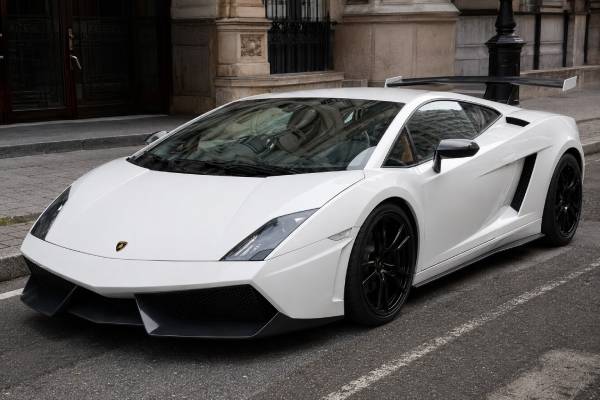
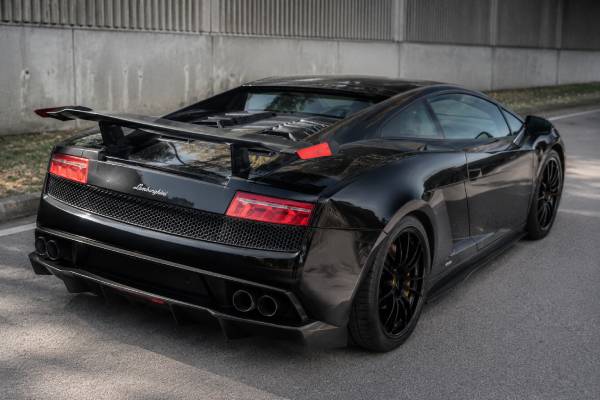
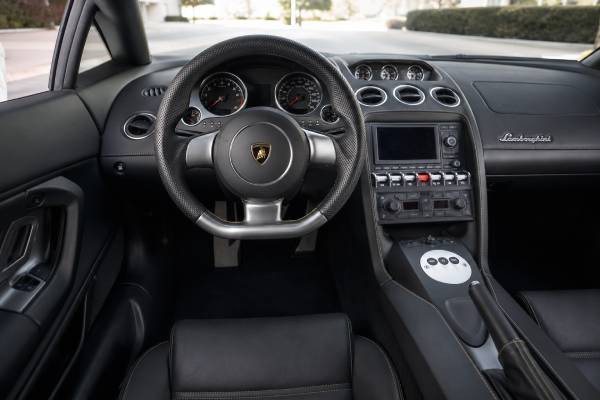
The Lamborghini Gallardo LP 550-2 is the Gallardo for drivers who wanted less driveline security and more old-school feel. It keeps the 5.2-liter naturally aspirated V10, the compact L140 chassis, and the sharp-edged late-Gallardo shape, but sends power only to the rear wheels. That one change gives the car a different personality from the better-known LP 560-4: lighter in feel, more adjustable, and more demanding when the road or track gets quick. The “Super Trofeo” wording needs care because Lamborghini also used that name for racing and LP 570-4 road specials. In this guide, the focus is the CEH-code 5.2-liter, 550 hp, rear-drive LP 550-2 specification from the 2010–2013 period, including the coupe, Spyder, and related special-series context that matters to owners and buyers.
Table of Contents
- Why the Rear-Drive L140 Matters
- CEH V10, Chassis, and Performance Specs
- Model Years, Versions, Options, and Authenticity
- Design, Engineering, and Super Trofeo Details
- How the LP 550-2 Feels to Drive
- Maintenance, Reliability, and Service Risk
- Values, Buying Checks, and Collector Outlook
Why the Rear-Drive L140 Matters
The LP 550-2 matters because it changed the Gallardo from a secure all-wheel-drive junior supercar into a sharper rear-drive Lamborghini. It did not simply lose the front driveline; Lamborghini retuned the chassis, stability control, tires, damping, and aerodynamics so the car worked as a complete rear-drive package.
The Gallardo itself was one of Lamborghini’s most important modern cars. Built from 2003 to 2013, it gave the brand a repeatable, usable, high-volume V10 model below the V12 flagship. It was still exotic, loud, low, and dramatic, but it also reflected Audi-era quality control, aluminum construction, better ergonomics, and a service network that made regular use less intimidating than older Lamborghinis.
The LP 550-2 sits late in that story. By 2010, the Gallardo had already moved from the early 5.0-liter V10 to the 5.2-liter direct-injection V10 used in the LP-generation cars. The LP 560-4 had become the mainstream facelifted model, while the LP 570-4 Superleggera and Super Trofeo-derived variants served buyers who wanted the hardest, lightest all-wheel-drive cars. The LP 550-2 offered a different answer: not the most powerful Gallardo, but arguably the purest.
Its roots are tied closely to the LP 550-2 Valentino Balboni, a 250-unit special edition created to honor Lamborghini’s long-serving test driver. That car proved there was real demand for a rear-drive Gallardo. Lamborghini then broadened the idea with standard LP 550-2 coupe and Spyder versions, plus market and celebration editions such as the Tricolore.
The “Super Trofeo” part of the name should be checked carefully on any car. A true Gallardo Super Trofeo race car, Super Trofeo Stradale, or Squadra Corse is a different model family, usually tied to the LP 570-4 all-wheel-drive performance line. A rear-drive LP 550-2 may have Super Trofeo-inspired styling, late-Gallardo options, or market-specific presentation, but a buyer should confirm the exact factory model from the VIN, build record, service book, and original sales documents.
Today, collectors care about the LP 550-2 for four main reasons:
- It is one of the last naturally aspirated V10 Lamborghinis available with rear-wheel drive.
- Some examples were sold with a gated 6-speed manual, which has become a major value driver.
- It delivers a more involving character than the LP 560-4 without becoming as rare or expensive as the most extreme LP 570-4 specials.
- It represents the end of the Gallardo era, before the Huracán brought a dual-clutch gearbox and a more modern electronic personality.
For enthusiasts, the appeal is simpler: it sounds like a Lamborghini, looks like a Lamborghini, and behaves more like a traditional mid-engine sports car than many all-wheel-drive Gallardos.
CEH V10, Chassis, and Performance Specs
The key specification is a 5.2-liter naturally aspirated V10 making 550 hp and 540 Nm of torque, mounted longitudinally behind the cabin and driving the rear wheels. The CEH-code engine gives the LP 550-2 its main character: high revs, immediate throttle response, and a hard metallic exhaust note without turbocharging.
| Item | Specification |
|---|---|
| Engine code | CEH |
| Configuration | 90-degree V10, naturally aspirated |
| Displacement | 5,204 cc |
| Bore x stroke | 84.5 mm x 92.8 mm |
| Valvetrain | DOHC, 4 valves per cylinder |
| Fuel system | Direct injection |
| Compression ratio | 12.5:1 |
| Maximum power | 550 hp at 8,000 rpm |
| Maximum torque | 540 Nm at 6,500 rpm |
The transmission choice matters almost as much as the engine. The LP 550-2 was available with a 6-speed gated manual in some markets and specifications, while many cars use Lamborghini’s 6-speed e-gear automated manual. E-gear is not a modern dual-clutch system. It is a single-clutch electrohydraulic gearbox that can shift quickly when driven hard, but it can feel abrupt in traffic and is sensitive to clutch setup, wear, and calibration.
| System | LP 550-2 Detail |
|---|---|
| Platform | L140 Gallardo aluminum spaceframe |
| Engine position | Longitudinal rear-mid mounted |
| Drivetrain | Rear-wheel drive |
| Gearboxes | 6-speed manual or 6-speed e-gear automated manual |
| Differential | Rear limited-slip differential |
| Suspension | Double wishbones front and rear |
| Steering | Hydraulic power-assisted rack-and-pinion |
| Standard tires | 235/35 ZR19 front, 295/30 ZR19 rear |
| Fuel capacity | About 90 liters |
The LP 550-2 coupe is usually quoted at about 3.9 seconds from 0–100 km/h and about 320 km/h at the top end. The Spyder is slightly slower because of added mass and open-body structure, with 0–100 km/h commonly quoted around 4.2 seconds and a top speed around 319 km/h. Exact figures vary by market, gearbox, tires, testing conditions, and whether the number is dry weight, curb weight, or manufacturer performance data.
| Measure | Coupe | Spyder |
|---|---|---|
| Length | 4,345 mm | 4,345 mm |
| Width | 1,900 mm | 1,900 mm |
| Wheelbase | 2,560 mm | 2,560 mm |
| Height | About 1,165 mm | About 1,184 mm |
| 0–100 km/h | About 3.9 seconds | About 4.2 seconds |
| Top speed | About 320 km/h | About 319 km/h |
The best way to read these numbers is not as a drag-race claim but as a guide to the car’s balance. The LP 550-2 gives up a small amount of all-weather traction compared with the LP 560-4, but it gains steering purity, simpler driveline behavior, and a more playful rear axle.
Model Years, Versions, Options, and Authenticity
Authenticity is crucial because Gallardo naming can be confusing, and many cars have been modified. A buyer should confirm whether the car is a standard LP 550-2, Valentino Balboni, Tricolore, Spyder, regional special edition, or a car wearing later Super Trofeo-style parts.
The LP 550-2 family developed in steps. The Valentino Balboni special came first and is the most collectible rear-drive Gallardo by default because of its limited production, stripe treatment, numbered identity, and direct connection to Lamborghini history. The regular LP 550-2 coupe then made the rear-drive formula more accessible. The Spyder added open-air drama. The Tricolore used the LP 550-2 base to celebrate Italian unification with a distinctive green-white-red stripe theme inside and out.
Versions to Understand
- LP 550-2 Valentino Balboni: Limited to 250 units and highly sought after, especially with manual transmission, original stripe, books, tools, and full service history.
- LP 550-2 Coupe: The regular rear-drive coupe, generally less rare than the Balboni but very desirable when manual, low-mileage, and original.
- LP 550-2 Spyder: The open version, slightly heavier but more theatrical because the V10 is fully exposed to the driver’s ears.
- LP 550-2 Tricolore: A special-series model linked to the 150th anniversary of Italian unification, with distinctive tricolor exterior and interior accents.
- Late facelift and optioned cars: Some late cars have sharper bumpers, dark wheel packages, carbon trim, lift systems, and styling details that can resemble higher-performance Gallardos.
Factory options strongly affect desirability. Carbon-ceramic brakes, transparent engine bonnet, front lift, rear camera, navigation, contrast stitching, Alcantara, carbon interior packages, special paint, black wheels, and colored calipers can all change buyer interest. The value effect depends on taste and originality. A tasteful factory option helps; an aftermarket copy of a special model can hurt.
Manual-transmission cars need special attention. A factory gated manual is worth far more than an e-gear car converted later, even if the conversion is well executed. A converted car can still be enjoyable, but it should be priced as modified unless the market specifically rewards that conversion. Buyers should ask for factory documentation, original window sticker where available, option codes, service book, dealer invoices, and inspection records.
For any “Super Trofeo” claim, ask for proof. The real Super Trofeo race lineage belongs to competition Gallardos and later road specials such as the LP 570-4 Super Trofeo Stradale and Squadra Corse. A rear-drive LP 550-2 with wings, bumpers, graphics, or lightweight parts may be a genuine special-market configuration, a dealer-built presentation, or an aftermarket build. The difference matters because collectors pay for documented factory identity, not appearance alone.
Quick Authenticity Checks
- Confirm VIN, model designation, engine code, and gearbox from official records.
- Compare body panels, bumpers, wheels, badges, and interior trim with the build specification.
- Look for original books, tools, tire inflator kit, keys, manuals, and service stamps.
- Check whether carbon parts are factory, dealer-installed, or aftermarket.
- Inspect paint-meter readings for accident repair or color change.
- Verify clutch data on e-gear cars using diagnostic equipment.
- Confirm recall and campaign status by VIN.
A clean, documented, original LP 550-2 is much easier to sell than a more dramatic-looking car with uncertain identity.
Design, Engineering, and Super Trofeo Details
The LP 550-2 looks close to the all-wheel-drive Gallardo, but its engineering changes make it feel different. The shape is still compact, wedge-like, and unmistakably Lamborghini, while the rear-drive setup gives the car a more transparent connection between throttle, steering, and rear-tire grip.
The L140 Gallardo design aged well because it avoided soft curves and over-decoration. The low nose, short front overhang, large side intakes, cab-forward stance, and clean rear deck make the car look purposeful even beside newer supercars. The facelifted LP-era cars added sharper front and rear treatments, stronger cooling graphics, and more modern lighting details.
Engineering changes for the LP 550-2 were not casual. Removing the front-drive hardware changed how forces moved through the chassis. Lamborghini adjusted suspension settings, stabilizers, tire tuning, stability control, and aerodynamic balance to suit rear-drive behavior. The goal was not to create a drift car; it was to create a Lamborghini that allowed more driver involvement without becoming unstable at road speeds.
What the Rear-Drive Layout Changes
The front axle feels cleaner because it is no longer managing drive torque. On the road, that means the car turns in with less sense of mechanical drag. Under power, the rear tires do more work, so throttle inputs matter more. In fast bends, the LP 550-2 rewards a progressive right foot. It will not flatter careless driving the way the all-wheel-drive version can.
The hydraulic steering is one of the car’s best features. Newer performance cars often use electric assistance and heavy software filtering. The Gallardo’s steering is old enough to feel mechanical but new enough to be accurate, stable, and confidence-building.
The engine is also central to the design. The V10 sits close behind the cabin, and the transparent bonnet option turns it into part of the car’s visual theater. Intake noise, valvetrain sound, exhaust bark, and the high-rpm surge are not side effects; they are a major part of the ownership experience.
Super Trofeo Naming and Visual Influence
Super Trofeo influence appears around the Gallardo family through racing, aero parts, wings, splitters, and lightweight road specials. That does not mean every car carrying the phrase is a factory Super Trofeo model. For the LP 550-2, the safest interpretation is to treat “Super Trofeo” as a style or market-context term unless documents prove otherwise.
A proper inspection should separate three things:
- Factory LP 550-2 identity: Verified by VIN, records, and original configuration.
- Factory options or special editions: Verified through option codes, build sheets, or dealer documentation.
- Aftermarket Super Trofeo-style additions: Wings, bumpers, decals, wheels, or carbon panels added later.
This matters because a modified car may be more exciting to look at, but a documented factory car usually carries stronger long-term collector value.
Inside, the Gallardo cabin is simple by modern supercar standards. The driving position is low and focused, the windshield is shallow, and rear visibility is limited. Audi-era switchgear makes the cabin easier to live with, although the soft-touch coatings, leather wear, and older infotainment now show the car’s age. The best interiors are original, tight, and free of sticky trim, shrinking leather, broken switchgear, and poorly installed aftermarket audio or cameras.
How the LP 550-2 Feels to Drive
The LP 550-2 feels more alive than the LP 560-4 at normal speeds because the front axle is cleaner and the rear axle has more responsibility. It is fast enough to feel serious, but its real appeal is the way it responds to steering, throttle, revs, and road surface.
At low speed, the Gallardo feels wide, low, and firm. The nose can scrape without the lift system, the clutch can be awkward in traffic, and the view over the shoulder is poor. It is usable for an exotic, not casual like a modern grand tourer. The cabin can get warm, road noise is obvious, and the V10 always feels close.
Once moving, the car comes together. The engine is flexible enough below 4,000 rpm, but it becomes special above that point. The last 2,000 rpm are where the car earns its badge. The sound hardens, the intake sharpens, and the car pulls with a clean naturally aspirated rush that turbocharged cars rarely duplicate.
A gated manual LP 550-2 is the most involving version. The shift requires deliberate movement, and the clutch needs respect, but the mechanical process suits the rear-drive layout. It makes the car feel like a final chapter in analog Lamborghini history. An e-gear car is different. Driven gently, it can feel jerky and dated. Driven hard with proper throttle lift and correct calibration, it becomes more convincing, but it still feels like a single-clutch supercar of its era.
Road Character
On a good road, the LP 550-2 is precise and adjustable. The front tires bite cleanly, the steering loads naturally, and the rear can be steered with throttle in a way the all-wheel-drive model does not encourage as clearly. It is not a car to provoke in cold or wet weather. Tire age, tire model, alignment, and suspension condition dramatically affect confidence.
The ride is firm but not punishing when the dampers and bushings are healthy. A tired car can feel nervous, crashy, or vague. Many disappointing drives come from old tires, poor alignment, worn suspension joints, or incorrect ride height rather than from the Gallardo design itself.
Track Character
On track, the LP 550-2 is rewarding but needs discipline. Brake temperature, tire pressure, clutch heat, and gearbox behavior matter. Steel brakes can work well for spirited road use but may fade with repeated heavy laps. Carbon-ceramic brakes offer stronger heat resistance, but their condition and replacement cost must be taken seriously.
The car is happiest when driven cleanly. Overdriving it wastes the rear tires and makes the e-gear work harder. Smooth braking, early rotation, patient throttle application, and proper tire temperature make the LP 550-2 feel balanced rather than wild.
For most owners, the best use is not constant track work. It is weekend road driving, mountain routes, events, and occasional track days with proper preparation.
Maintenance, Reliability, and Service Risk
The LP 550-2 is generally robust for an exotic, but it is not cheap to run. The engine is strong when serviced correctly, yet clutch wear, e-gear condition, carbon-ceramic brake life, suspension lift issues, old tires, weak batteries, and neglected fluids can turn a fair purchase into an expensive one.
The CEH 5.2-liter V10 has a good reputation, especially compared with older exotic engines that require engine-out routine service. Still, age now matters as much as mileage. A 5,000-mile garage queen with old fluids, flat-spotted tires, dried seals, and a weak battery may need more immediate work than a 25,000-mile car used and serviced regularly.
Common Ownership Risk Areas
- E-gear clutch wear: Ask for clutch wear readings, PIS setup, adaptation records, and shift-quality assessment from a specialist.
- Manual clutch condition: Manuals are desirable, but clutch replacement is still expensive. Check bite point, slip, pedal feel, and service records.
- Hydraulic e-gear parts: Pumps, actuators, sensors, and leaks can cause poor shifting or warning lights.
- Front lift system: Inspect for leaks, slow operation, uneven lift, and warning lights.
- Carbon-ceramic brakes: Measure wear correctly. Do not judge only by appearance.
- Steel brakes: Check rotor lips, cracks, pad wear, vibration, and fluid age.
- Suspension joints and dampers: Worn bushings or tired dampers can make the car feel unstable.
- Cooling system: Inspect radiators, hoses, fans, coolant age, and debris trapped in front openings.
- Oil leaks and seepage: Check cam covers, oil lines, filters, coolers, and undertray residue.
- Electrical health: A weak battery can trigger misleading faults. Battery tenders are not optional for stored cars.
- Interior wear: Sticky switches, worn bolsters, loose trim, shrinking leather, and failed pixels reduce value.
- Accident repair: Low noses, side intakes, undertrays, suspension pickup points, and rear quarters deserve careful inspection.
Service intervals vary by market, VIN, model year, and official maintenance schedule. Many specialists treat annual servicing as the baseline even when mileage is low. Brake fluid, coolant, gearbox oil, spark plugs, accessory belts, filters, and tires should be managed by time as well as mileage.
Originality Versus Upgrades
Some upgrades improve drivability. Modern tires, careful alignment, high-quality brake fluid, updated e-gear setup, and discreet exhaust-valve maintenance can make the car better without harming value. Other changes are risky for collectability. Loud exhausts, aftermarket wings, non-factory carbon, ECU tuning, lowered suspension, wheel changes, and wrap-related paint damage can reduce the buyer pool.
Keep every original part. A reversible modification is far easier to accept than a permanent one. For a rare manual, Balboni, Tricolore, or unusually specified LP 550-2, originality should win over personalization.
A proper pre-purchase inspection should be done by a Lamborghini dealer or a known Gallardo specialist. A normal used-car inspection is not enough. The technician must understand e-gear diagnostics, lift systems, carbon brake inspection, underbody damage, factory options, and Gallardo-specific wear patterns.
Values, Buying Checks, and Collector Outlook
The LP 550-2 is now a modern collector Lamborghini, not just a used exotic. The best cars are priced for provenance, gearbox, originality, color, mileage, service history, and documentation, while rough or modified cars trade at a meaningful discount.
Recent market behavior shows a clear split. E-gear coupes and Spyders are often the most accessible LP 550-2 cars. Clean, low-mileage manual coupes bring a much stronger premium. Valentino Balboni cars sit above regular LP 550-2 models, especially when complete and original. Rare colors, documented special editions, and excellent maintenance records can push values higher, while accident history, missing books, aftermarket bodywork, poor clutch data, and neglected service pull values down quickly.
As a broad guide, standard LP 550-2 examples often sit in the low-to-mid six-figure range in the U.S. market, with Spyders and higher-mileage e-gear cars usually below the best coupes. Strong manual cars can move well beyond ordinary e-gear values. Balboni cars can command a separate tier because they are limited, story-rich, and closely tied to Lamborghini history. Exact pricing changes quickly, so buyers should compare current auction results, dealer asking prices, mileage, gearbox, and condition rather than relying on a single price guide.
Buyer Checklist
| Area | What to Check | Why It Matters |
|---|---|---|
| Identity | VIN, model, gearbox, special-edition proof | Prevents paying factory-car money for a modified car |
| Service history | Annual services, fluids, plugs, belts, recalls | Low mileage does not replace maintenance |
| Gearbox | Manual operation or e-gear clutch data | One of the largest value and cost drivers |
| Brakes | Rotor condition, pad life, carbon-ceramic wear | Replacement can be extremely expensive |
| Suspension | Lift function, dampers, bushings, alignment | Determines how the car actually drives |
| Body | Paint depth, underbody, nose, panel gaps | Accident repair hurts value and safety |
| Interior | Sticky trim, leather, electronics, switchgear | Small cabin faults add up quickly |
| Documentation | Books, tools, invoices, window sticker, options | Supports resale and collector confidence |
The best car to buy is not always the lowest-mileage car. A lightly used, well-serviced, original example with fresh tires, clean diagnostics, known ownership, and complete records is often better than a barely driven car needing deferred work. For investors, the strongest long-term candidates are factory manual coupes, documented special editions, rare colors, low-owner cars, and examples with no stories. For drivers, a clean e-gear coupe or Spyder with proper maintenance can deliver much of the same V10 excitement for less money.
Avoid cars with unclear import history, missing records, heavy cosmetic conversion, unresolved warning lights, poor clutch readings, mismatched tires, non-factory paint without documentation, or sellers who resist a specialist inspection. A Gallardo can hide expensive problems under a polished exterior.
Long term, the LP 550-2 has strong collectability because it sits at the intersection of several desirable traits: naturally aspirated V10, rear-wheel drive, late analog-era Lamborghini feel, available gated manual, and final-generation Gallardo styling. It is not as rare as the most exclusive LP 570-4 specials, but it may be more emotionally satisfying for many owners. Buy the best documented car you can afford, keep it original, service it on time, and drive it enough to keep it healthy.
References
- Lamborghini Gallardo 550-2 – Technical Specifications, Pictures 2026 (Manufacturer History Page)
- Lamborghini Gallardo LP 550-2 Spyder – Technical Specifications, Pictures 2026 (Manufacturer History Page)
- Lamborghini Gallardo LP 550-2 Tricolore – Technical Specifications, Pictures 2026 (Manufacturer History Page)
- Celebrating The Lamborghini Gallardo 2023 (Manufacturer News)
- Check for Recalls: Vehicle, Car Seat, Tire, Equipment | NHTSA 2026 (Recall Database)
Disclaimer
This article is for informational purposes only and is not a substitute for professional diagnosis, inspection, service, or repair. Specifications, torque values, service intervals, parts, procedures, software updates, and recall status can vary by VIN, market, model year, equipment, and prior repairs. Always verify details against official Lamborghini service documentation and have any purchase or repair decision reviewed by a qualified Lamborghini specialist.
If this guide helped you, please share it on Facebook, X/Twitter, or your favorite car community to support our work.