
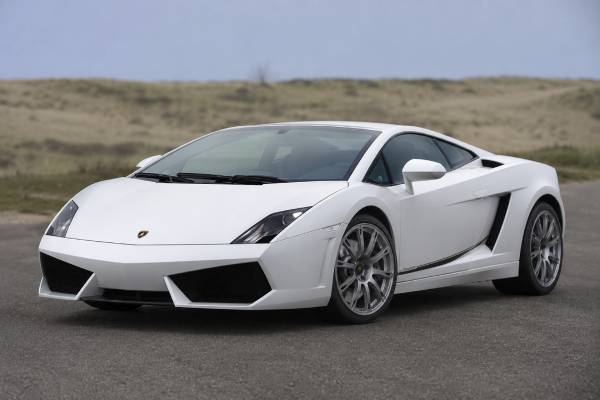
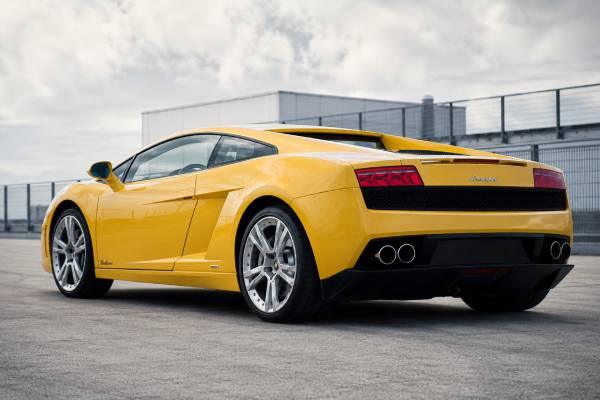
The Lamborghini Gallardo LP 550-2 Valentino Balboni is the rear-wheel-drive, limited-production Gallardo built to honor Lamborghini’s long-serving factory test driver, Valentino Balboni. Based on the facelifted L140 Gallardo platform, it uses a 5.2-liter naturally aspirated V10, rated at 550 hp, and sends power only to the rear wheels. That made it a major break from the all-wheel-drive formula that defined most modern Lamborghinis of the Audi era.
Limited to 250 cars worldwide, the Balboni is more than a stripe-and-badge special. Lamborghini revised the suspension, tires, differential, stability control, and aerodynamics to suit rear-drive behavior. Today, buyers care about it because it combines a gated-manual possibility, natural aspiration, limited production, named-driver provenance, and a more playful chassis than the standard LP 560-4.
Table of Contents
- Why the Balboni Matters
- V10 Specs and Chassis Data
- Production, Options, and Authenticity
- Design and Rear-Drive Engineering
- Road Feel, Performance, and Sound
- Maintenance, Reliability, and Cost Risks
- Values, Inspection, and Buying Advice
Why the Balboni Matters
The Gallardo LP 550-2 Valentino Balboni matters because it turned Lamborghini’s best-selling modern supercar into a rarer, sharper, more personal driver’s car. It was not the fastest Gallardo, but it is one of the most meaningful because it changed the character of the platform.
The Gallardo arrived for the 2004 model year as Lamborghini’s smaller V10 model beneath the Murciélago. It was the car that transformed Lamborghini from a low-volume exotic maker into a more stable modern supercar company. The L140 platform used an aluminum space frame, a mid-mounted V10, Audi-influenced electronics, and standard all-wheel drive. It was easier to use than earlier Lamborghinis, but it still looked, sounded, and felt dramatic.
The LP 550-2 Valentino Balboni appeared after the 2009 facelift, when the Gallardo had already moved from the early 5.0-liter V10 to the later 5.2-liter direct-injection V10. Most facelifted Gallardos were LP 560-4 models: 560 hp, four-wheel drive, and the more planted behavior expected from a modern Lamborghini. The Balboni took a different path. Its name tells the story:
- LP means “Longitudinale Posteriore,” referring to the longitudinal rear-mid engine layout.
- 550 refers to its nominal horsepower rating.
- 2 means two driven wheels, not four.
- Valentino Balboni honors Lamborghini’s famous factory test driver, whose name became closely tied to the feel and development of the brand’s road cars.
The car was limited to 250 units. That gives it real collector status, but its importance is not only about rarity. It marked Lamborghini’s return to a modern rear-wheel-drive production supercar after years of all-wheel-drive emphasis. The later LP 550-2 coupe and Spyder became regular-production rear-drive Gallardos, but the Balboni was the first and the most collectible of that line.
Its reputation today sits between three groups of Gallardo buyers. The first group wants the most usable modern Lamborghini V10. For them, a normal LP 560-4 may be easier to find and cheaper to buy. The second group wants the lightest and most focused Gallardo, which points toward the Superleggera, Performante, Super Trofeo Stradale, or Squadra Corse. The third group wants a special car with driver appeal, manual-transmission desirability, limited production, and a strong story. That is where the Balboni stands out.
It is also one of the rare modern Lamborghinis named after a person rather than a fighting bull, a racing theme, or a performance concept. That matters to collectors because the story is easy to understand and hard to repeat. A signed and numbered plaque, special stripe, rear-drive setup, and Balboni-specific tuning make it more identifiable than many cosmetic limited editions.
V10 Specs and Chassis Data
The LP 550-2 Valentino Balboni uses Lamborghini’s 5.2-liter naturally aspirated V10 with direct fuel injection, dry-sump lubrication, and a high 8,000 rpm power peak. The key mechanical difference from the LP 560-4 is not the engine itself, but the rear-wheel-drive chassis setup around it.
| Category | Specification |
|---|---|
| Model | Gallardo LP 550-2 Valentino Balboni |
| Platform | L140 Gallardo |
| Body style | 2-door coupe |
| Layout | Rear-mid engine, rear-wheel drive |
| Engine | 5.2-liter 90-degree V10 |
| Displacement | 5,204 cc |
| Induction | Naturally aspirated |
| Fuel system | Gasoline direct injection |
| Valvetrain | DOHC, 40 valves |
| Lubrication | Dry sump |
| Power | 550 hp at 8,000 rpm |
| Torque | 540 Nm / 398 lb-ft at 6,500 rpm |
| Transmission | 6-speed manual or 6-speed E-gear automated manual |
| 0–100 km/h | About 3.9 seconds |
| Top speed | About 320 km/h / 199 mph |
| Seats | 2 |
The engine is closely related to the LP 560-4 unit, but rated 10 hp lower. That small drop does not define the car. The Balboni’s character comes from losing the front-driven hardware and having its chassis recalibrated around rear-wheel traction. Compared with the four-wheel-drive Gallardo, it feels less locked down and more adjustable.
The aluminum space-frame structure gives the car its basic stiffness and relatively compact size. The Gallardo is not a tiny car, but by modern supercar standards it feels narrow, low, and easy to place. Its short wheelbase and rear-mid engine layout give it fast reactions, while the rear-drive setup asks for more respect from the driver than an LP 560-4.
Engine character
The 5.2-liter V10 is one of the Balboni’s main ownership attractions. It is naturally aspirated, high-revving, and mechanically vocal. Direct injection improves response and efficiency compared with the early 5.0-liter Gallardo engine, but it does not remove the old-school supercar feel.
The dry-sump oiling system is important because it allows the engine to sit lower and maintain oil supply under high cornering loads. It also changes how oil level checks and servicing must be handled. Incorrect filling can create expensive problems, so service records and specialist maintenance matter.
Transmission choices
The 6-speed manual is the collector choice. It uses the classic open-gate shift pattern that has become one of the most desirable features in modern analog supercars. A manual Balboni brings more involvement, stronger long-term desirability, and a clear value premium.
The E-gear transmission is an automated single-clutch manual. It can shift quickly when driven hard, but it is less smooth in low-speed use than later dual-clutch systems. It also makes clutch-wear measurement essential during inspection. A good E-gear car can be enjoyable, but a poorly set up or heavily worn one can become expensive quickly.
Production, Options, and Authenticity
The Balboni was limited to 250 cars worldwide, so originality and documentation matter more than they do on an ordinary Gallardo. The most valuable examples are the cars with clear provenance, factory-correct details, complete service records, and desirable transmission specification.
The easiest external identifier is the longitudinal stripe. It runs over the body and was inspired by 1970s sports-car graphics. The common description is a white and gold stripe, although exact appearance can vary with body color and lighting. The Balboni also used Scorpius wheels with a dark gray finish and brake calipers in selected colors depending on the exterior paint.
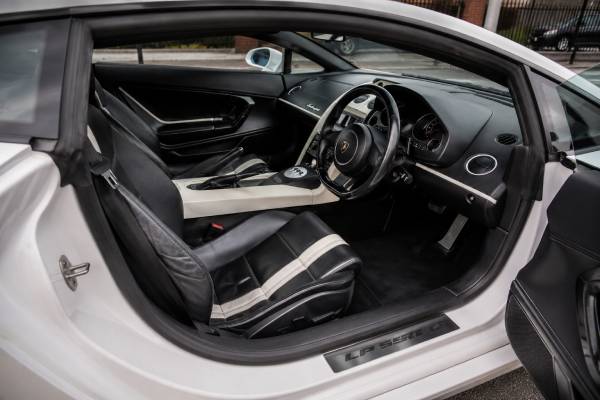
Inside, the car received Balboni-specific trim. The cabin used black leather with a contrasting white stripe on the seats, a Polar white leather center console, and a numbered plaque bearing Valentino Balboni’s signature. That plaque is important. A car with missing, damaged, or inconsistent identification should be checked carefully.
| Area | What to check | Why it matters |
|---|---|---|
| Numbered plaque | Signature plaque and production number below the side window area | Supports authenticity and limited-edition identity |
| Exterior stripe | Correct longitudinal white/gold stripe | Often copied, repainted, or removed |
| Wheels | Dark gray Scorpius wheels | Factory-correct wheels affect presentation and value |
| Interior trim | Black leather, white seat stripe, Polar white console | Special trim helps separate real cars from replicas |
| Transmission | 6-speed manual or E-gear | Manual cars are usually more valuable and harder to find |
| Documentation | Build records, service invoices, books, tools, keys | Strong records reduce risk and support resale |
The Balboni was available with a manual gearbox or E-gear. The manual is especially prized because Lamborghini later moved away from open-gate manuals entirely. Even if two Balbonis have similar mileage and condition, the manual car will usually attract a different buyer pool and a stronger premium.
Factory options can also affect desirability. Gallardos of this period could be ordered with a range of personalization items, including different exterior colors, interior leather choices, carbon-fiber trim, navigation, front lift depending on market and specification, upgraded audio, parking sensors or camera equipment, and carbon-ceramic brakes on some versions. Buyers should verify the original build sheet rather than relying on seller descriptions.
The Balboni’s narrow production run also makes market-specific details important. Cars may differ by lighting, emissions equipment, bumper requirements, instruments, and registration history. A U.S.-market car, a European-market car, and a right-hand-drive U.K. car can have different buyer pools. Imported cars are not automatically bad, but the paperwork must be clean.
How to spot problem cars
A Balboni with modifications is not always a poor purchase, but it should be priced correctly. Exhaust changes, wheel changes, vinyl stripe replacement, suspension lowering, ECU tuning, and interior retrimming can all affect value. The more collectible the car becomes, the more buyers will prefer factory-correct details.
Be cautious with cars that have:
- unclear limited-edition identification
- missing books or long gaps in service records
- aftermarket body panels or non-original paint without explanation
- heavy track use with no supporting maintenance
- E-gear clutch wear near the end of its life
- accident history around the aluminum frame, suspension pickup points, or rear structure
- sticky interior switches, warning lights, or weak battery behavior described as “normal”
A correct Balboni should feel special without needing excuses. The best cars have a clean story, not just a clean detail job.
Design and Rear-Drive Engineering
The Balboni looks like a facelifted Gallardo with a special visual signature, but the engineering changes are what make it important. Lamborghini had to retune the car for rear-wheel drive rather than simply remove the front-drive components.
The Gallardo’s design was originally shaped under Luc Donckerwolke’s Lamborghini design direction, and the facelifted LP cars sharpened the front and rear graphics. The Balboni keeps the wedge stance, cab-forward cockpit, short rear deck, side intakes, and compact supercar proportions that made the Gallardo instantly recognizable. The special stripe gives it a period motorsport feel without changing the bodywork in a major way.
The body sits over an aluminum space frame with aluminum and composite exterior panels. The design is not as extreme as a Murciélago because the Gallardo was intended to be smaller and more usable, but it still has the low roof, wide hips, and engine-behind-the-cabin drama expected from Lamborghini.
The rear-drive conversion changed the mechanical feel in several areas. Lamborghini revised the suspension settings, dampers, stabilizers, tires, differential behavior, aerodynamics, and stability-control calibration. Those changes matter because a mid-engine rear-drive car with 550 hp can become abrupt if the chassis is not tuned carefully.
Rear-drive balance
The Balboni’s steering is one of its main differences from the all-wheel-drive Gallardo. Without front drive forces, the front axle feels cleaner. The car turns in with less sense of the front tires also managing power delivery. That makes the driver feel more connected to the front end, especially on a flowing road.
The rear axle is more active. On throttle, the car can rotate in a way the LP 560-4 usually resists. This does not mean it is a drift car in the casual sense. It still has a short wheelbase, a mid-engine mass distribution, wide tires, and high power. It rewards smooth inputs and punishes clumsy ones. The point is adjustability, not recklessness.
Aerodynamics and cooling
The Balboni’s aero was adapted for rear-wheel-drive behavior. At this speed and power level, airflow is not only about top speed. It also affects high-speed balance, cooling, brake temperature, and confidence. The Gallardo’s side intakes feed the engine bay and cooling systems, while the rear vents help manage heat from the V10.
Heat management is part of the ownership experience. The engine bay runs hot, especially in traffic or after spirited driving. Hoses, wiring insulation, plastic clips, and seals age faster when a car spends years in hot climates or sits unused after heat cycles. A clean engine bay is welcome, but an inspection should focus on condition, leaks, and brittle parts rather than cosmetic shine.
Cabin layout
The cabin is low, tight, and more usable than older Lamborghinis. Audi-era switchgear makes it easier to live with, but some owners see that parts sharing as less exotic. The driving position is generally good for a low supercar, although visibility to the rear is limited and the nose requires care over driveways.
The Balboni-specific white center console and seat stripe are not just decoration. They are part of the limited-edition identity. Because light trim can show wear, dye transfer, and poor repairs, the interior should be inspected closely. A retrim may look fresh but reduce originality if it does not match factory materials and stitching.
Road Feel, Performance, and Sound
The Balboni feels faster through its controls than its numbers suggest because it adds rear-drive movement to the Gallardo’s high-revving V10 character. It is quick by any normal standard, but its lasting appeal comes from sound, response, steering feel, and chassis balance.
Officially, the car reaches 100 km/h in about 3.9 seconds and runs to roughly 320 km/h. Some independent tests show similar real-world pace, with traction and launch technique affecting the numbers. An all-wheel-drive LP 560-4 can be easier to launch cleanly, but the Balboni gives more feedback once the road gets interesting.
The V10 dominates the experience. At low revs it feels muscular but not lazy. As the revs climb, the sound hardens and the response becomes sharper. The engine likes to be worked, and that is a major reason the car still feels special beside newer turbocharged performance cars. There is no waiting for boost, no synthetic soundtrack needed, and no hybrid system smoothing away the edges.
The manual gearbox gives the purest version of the car. The open gate slows the driver down in a good way. Each shift becomes part of the event, and the V10’s rev-happy nature gives the driver a reason to use the gearbox. The clutch is not brutal when healthy, but worn hydraulics, old fluid, or poor adjustment can make any manual Gallardo feel worse than it should.
E-gear cars need a different driving style. They prefer deliberate throttle use, especially at low speed. In traffic, the system can feel jerky compared with a modern dual-clutch transmission. On a fast road, it makes more sense, especially if the clutch is healthy and the system is correctly calibrated. Buyers who expect Huracán-style smoothness will be disappointed.
Steering and cornering
The steering is direct, and the rear-drive layout gives the front axle a cleaner role than in the LP 560-4. On a good road, the Balboni feels lighter on its feet. It rotates more willingly and lets the driver trim the line with throttle. That is the main reason enthusiasts seek it out.
Tires make a huge difference. Old tires can destroy the car’s balance even if they have plenty of tread. A high-power mid-engine car on aged rubber is not just less fun; it is less safe. For serious driving, fresh premium tires in correct sizes and specifications are essential.
Brakes and ride quality
Braking performance is strong when the system is healthy. Cars with carbon-ceramic brakes need special attention because replacement costs can be high. Steel brakes are cheaper to service and can be more practical for road use, but condition matters more than material.
Ride quality is firm but not unbearable. The Balboni is more usable than many older exotic cars, yet it remains low, loud, and attention-heavy. It can handle weekend touring, but it is not a quiet grand tourer. Cabin noise, tire roar, limited storage, poor rear visibility, and low-speed gearbox behavior are part of the package.
The best use case is a dry-road weekend drive, a mountain road, a cars-and-coffee trip, or a careful track session with proper preparation. It is not an ideal daily driver, but it is usable enough that owners should drive it regularly. Long storage with little use often creates more problems than sensible mileage.
Maintenance, Reliability, and Cost Risks
A well-maintained Gallardo can be a durable exotic, but the Balboni is still a limited-production Lamborghini with expensive parts, specialist labor, and inspection-sensitive drivetrain systems. The safest purchase is not the lowest-mile car; it is the car with the best history and current mechanical condition.
The 5.2-liter V10 has a strong reputation when serviced correctly. It does not have the fragile feel of some older exotic engines. Still, it needs correct oil, correct dry-sump level checks, clean cooling systems, healthy ignition components, and regular use. Deferred service is the main danger.
The transmission choice changes the risk profile. Manual cars are simpler in feel, but clutch replacement is still expensive and the gated shifter must feel precise. E-gear cars need clutch-wear readings, actuator health checks, hydraulic-system inspection, and software calibration. A seller saying “it shifts fine” is not enough.
| System | Risk area | Buyer action |
|---|---|---|
| Engine | Oil leaks, dry-sump overfill, misfires, neglected fluids | Check records, scan faults, inspect after warm running |
| E-gear | Clutch wear, actuator issues, poor calibration | Get a specialist clutch-wear report |
| Manual gearbox | Clutch wear, cable stretch, poor shift feel | Test cold and hot shifting |
| Cooling system | Radiator condition, hoses, fans, leaks | Inspect under pressure and after heat soak |
| Suspension | Worn bushings, dampers, alignment damage | Check tire wear, ride height, and underbody impacts |
| Brakes | Carbon-ceramic disc wear or steel-disc condition | Measure discs and inspect pads, lines, and calipers |
| Electronics | Warning lights, weak battery, sticky controls | Perform diagnostic scan and check all cabin functions |
| Body | Accident repair, stripe replacement, panel mismatch | Inspect paint depth, frame areas, and factory trim |
Service history matters more than low mileage
Very low mileage can help value, but it can also hide age-related problems. A car that sat for years may need tires, fluids, battery, brake service, seals, hoses, and clutch or hydraulic attention shortly after purchase. A regularly maintained car with sensible mileage may be more enjoyable and less risky.
Ask for invoices, not just stamped books. Invoices show what was actually done. Look for engine oil service, gearbox fluid, brake fluid, coolant, spark plugs, filters, clutch work, tires, battery replacement, brake parts, suspension work, and any software or diagnostic notes. A modern exotic without detailed invoices is harder to value.
Carbon-ceramic brake and tire costs
Carbon-ceramic brakes can last a long time on road cars, but they are expensive if damaged or worn. Track use, stone damage, poor pad choice, and careless wheel handling can hurt them. Inspection should include disc condition, not just a glance through the wheels.
Tires should be treated as a safety item. Correct premium tires with recent date codes are essential. Many collector cars sit on old tires because the tread still looks good. On a rear-drive Balboni, that is false economy.
Interior and cosmetic aging
Gallardo interiors can suffer from sticky buttons, leather shrinkage, worn seat bolsters, sagging headliners, and cosmetic wear on high-touch areas. The Balboni’s light console trim shows dirt and dye transfer more easily. Some issues are cosmetic, but originality affects value. A cheap retrim or incorrect leather repair can make a rare car less appealing.
Paintwork also deserves attention. The stripe is a defining feature, so a resprayed panel, replaced vinyl, or inconsistent stripe finish should be explained. Stone chips are normal on a driven car. Poor blending, panel gaps, overspray, and mismatched texture are not.
Values, Inspection, and Buying Advice
The Balboni sits above ordinary Gallardos in collector interest because it combines limited production, rear-wheel drive, named-edition provenance, and manual-transmission potential. Prices vary sharply by transmission, mileage, market, originality, and documentation.
As of 2026, ordinary LP 550-2 market data often sits far below the best Balboni asking prices, while rare manual Balbonis can command a much stronger premium. Some public market references show later LP 550-2 coupes around the mid-six-figure U.S. range, while specialist commentary places the rarest Balboni examples much higher, especially in manual form. The spread is wide because there are so few cars and each example has a different story.
A buyer should not value a Balboni by comparing it only with a standard LP 560-4. That misses the point. The better comparison set includes manual Gallardos, Superleggeras, other limited Gallardo editions, and late analog supercars from Ferrari, Porsche, and Aston Martin. Manual transmission, factory-correct specification, low ownership count, original paint, and complete records can all move the price significantly.
What drives value
The strongest Balboni examples usually have:
- factory 6-speed manual transmission
- complete books, tools, keys, and service invoices
- original limited-edition plaque and correct Balboni trim
- original paint or clearly documented paintwork
- correct stripe, wheels, and interior details
- low but usable mileage
- no accident history
- recent major service by a recognized Lamborghini specialist
- fresh tires and healthy brakes
- clean import, tax, and registration paperwork
E-gear cars can still be desirable, especially if they are clean, rare in their market, or priced correctly. The mistake is paying manual money for an E-gear car or paying collector money for a car with weak documentation.
Pre-purchase inspection checklist
A proper inspection should be done by a Lamborghini dealer or a respected independent specialist. A normal used-car inspection is not enough.
Use this order:
- Confirm VIN, limited-edition plaque, market specification, and build details.
- Check service invoices against mileage, dates, and ownership history.
- Scan all modules for current and stored faults.
- Measure E-gear clutch wear or assess manual clutch engagement and shift quality.
- Inspect engine, gearbox, cooling system, and exhaust for leaks or heat damage.
- Measure brake disc and pad condition, especially if carbon-ceramic brakes are fitted.
- Check tire brand, size, condition, and date codes.
- Inspect the aluminum structure, underbody, suspension pickup points, and front lift areas if equipped.
- Review paint depth, panel gaps, stripe condition, and signs of accident repair.
- Road test the car from cold start to full operating temperature.
The road test should include low-speed maneuvering, full warm-up, smooth and firm braking, gearbox behavior, steering feel, suspension noise, and a check for warning lights after heat soak. Many problems appear only when the car is hot.
Cars to seek and cars to avoid
Seek a car that feels honest. A few stone chips, regular mileage, and a thick service folder are often better than an ultra-polished car with missing history. The Balboni is a driver’s car, so evidence of careful use should not scare buyers away.
Avoid cars with vague stories. “Private collection,” “no records needed,” “just serviced by my mechanic,” and “warning light is only a sensor” are not enough at this level. Also avoid examples where the seller cannot explain stripe replacement, paintwork, clutch condition, or missing factory items.
The Balboni’s long-term collectability looks strong because it has several traits modern enthusiasts keep chasing: naturally aspirated V10 power, rear-wheel drive, limited production, analog controls, manual availability, and a direct link to Lamborghini history. It is not the cheapest Gallardo to own, and it is not the most practical. But as a special modern Lamborghini with a clear identity, it has already moved beyond normal used-supercar status.
References
- Lamborghini Gallardo Valentino Balboni – Technical Specifications, Pictures 2026 (Manufacturer Model History)
- Check for Recalls: Vehicle, Car Seat, Tire, Equipment | NHTSA 2026 (Recall Database)
- Lamborghini Gallardo LP550-2 Valentino Balboni Instrumented Test 2010 (Instrumented Test)
- Lamborghini Gallardo Buyers Guide | Hagerty UK 2026 (Buying Guide)
- Lamborghini Gallardo LP550-2 Market – CLASSIC.COM 2026 (Market Data)
Disclaimer
This article is for informational purposes only and is not a substitute for professional diagnosis, repair, valuation, or inspection. Specifications, torque values, service intervals, procedures, market equipment, and parts can vary by VIN, country, production date, and factory option package. Always verify details against official Lamborghini service documentation and have any purchase inspected by a qualified Lamborghini specialist.
If this guide helped you, please share it on Facebook, X/Twitter, or your favorite car community to support our work.