
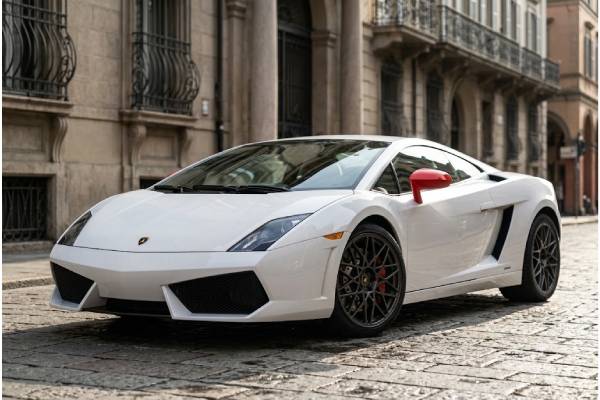
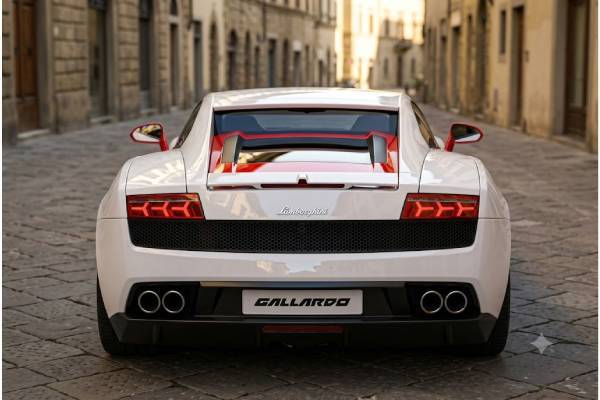
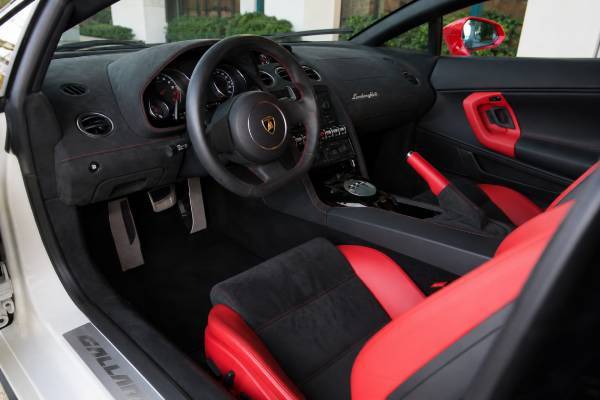
The Lamborghini Gallardo LP 560-4 Bianco Rosso is a Japan-only 2012 special edition of the L140 Gallardo LP 560-4 Coupé. It keeps the standard LP 560-4 mechanical package: a naturally aspirated 5.2-liter V10, permanent all-wheel drive, a mid-mounted longitudinal engine layout, and 560 PS output. What makes it different is its market story and specification. Built to celebrate 45 years of Lamborghini imports into Japan and 10 years of Lamborghini Japan, the Bianco Rosso used a white-and-red theme inspired by the Japanese flag. Only 10 were offered, so authenticity, documentation, and original trim matter as much as mileage or condition. For collectors, it is a rare regional Gallardo. For drivers, it remains one of the sharpest late-generation versions of Lamborghini’s first modern V10 supercar.
Table of Contents
- Why the Bianco Rosso Matters
- CEH V10 Specs and Chassis Data
- Production, Options, and Authenticity
- Design Details and Engineering Character
- Road Feel, Performance, and Usability
- Maintenance Risks and Specialist Care
- Market Value and Buying Checks
Why the Bianco Rosso Matters
The Bianco Rosso matters because it combines the best-known Gallardo facelift mechanical package with a very small Japan-market production run. It is not a higher-output track special like the Superleggera, but it is far rarer than most regular LP 560-4 Coupés.
The Gallardo itself was a turning point for Lamborghini. Earlier “junior” Lamborghinis, including the Urraco, Silhouette, and Jalpa, never became volume successes. Under Audi ownership, the Gallardo finally gave Lamborghini a smaller, more usable V10 model that could sit below the V12 Murciélago while still feeling exotic. The L140 project created the platform for that car: compact proportions, aluminum spaceframe construction, a high-revving V10, and a more disciplined build quality than older Lamborghinis.
The first Gallardo arrived for the 2003 model year with a 5.0-liter V10. In 2008, Lamborghini heavily revised the model and renamed the core all-wheel-drive Coupé the LP 560-4. The name explains the layout: “LP” stands for Longitudinale Posteriore, meaning the engine is mounted longitudinally behind the occupants; “560” refers to the output in metric horsepower; and “4” identifies the all-wheel-drive system.
That 2008 update was much more than a light facelift. The LP 560-4 gained a 5.2-liter direct-injection V10, revised front and rear styling, improved aerodynamics, updated suspension behavior, lower weight compared with the earlier Gallardo, and a quicker E-Gear shift strategy. By 2012, the Gallardo was near the end of its life, but it still had a strong following because it mixed analog supercar feel with enough Audi-era structure to make ownership less intimidating than older Italian exotics.
The Bianco Rosso arrived in this late period. It was made for Japan, a market with a deep Lamborghini enthusiast culture and a history of special regional editions. The name means “white red” in Italian. The concept was simple but effective: a white Gallardo LP 560-4 Coupé with red accents outside and inside, echoing Japan’s Hinomaru flag.
For collectors, its appeal comes from five main points:
- Tiny production: only 10 units were offered.
- Clear market story: it marked 45 years of Lamborghini imports into Japan and 10 years of Lamborghini Japan.
- Recognizable specification: white bodywork, red exterior details, black cabin, and red trim accents.
- Late Gallardo timing: it belongs to the mature LP 560-4 era, not the earlier 5.0-liter generation.
- Usable mechanical base: it uses the proven LP 560-4 all-wheel-drive V10 package rather than an experimental or one-off drivetrain.
The result is a car that sits between a regular LP 560-4 and a true homologation-style special. It does not have the track focus of the LP 570-4 Superleggera or Squadra Corse. Its value depends more on originality, proof, color-correct trim, and Japan-market provenance than on lap-time advantage.
CEH V10 Specs and Chassis Data
The Bianco Rosso uses the standard LP 560-4 Coupé powertrain, so the important technical story is the 5.2-liter naturally aspirated V10 and all-wheel-drive chassis. The special edition changed presentation and equipment, not the basic engine tune.
| Item | Specification |
|---|---|
| Model | Lamborghini Gallardo LP 560-4 Bianco Rosso |
| Platform / project code | L140 |
| Model year | 2012 |
| Body style | 2-door coupé, 2 seats |
| Engine | CEH-coded 5.2-liter V10 |
| Displacement | 5,204 cc |
| Configuration | 90-degree V10, DOHC, 4 valves per cylinder |
| Induction | Naturally aspirated |
| Fuel system | Direct injection |
| Compression ratio | 12.5:1 |
| Maximum output | 560 PS / 412 kW at 8,000 rpm |
| Maximum torque | 540 Nm at 6,500 rpm |
| Lubrication | Dry sump |
| Transmission | 6-speed E-Gear automated manual |
| Drivetrain | Permanent all-wheel drive with viscous traction system |
| Layout | Longitudinal mid-engine |
The engine is one of the main reasons the LP 560-4 is still respected. It revs hard, makes peak power high in the rev range, and uses direct injection to support both performance and emissions targets. Unlike modern turbocharged supercars, it has no forced induction to mask throttle response. The driver gets a direct relationship between pedal position, engine speed, induction sound, and exhaust note.
The all-wheel-drive system uses a rear-biased character in normal driving. Lamborghini’s viscous coupling system generally sends more torque rearward, then shifts torque as grip changes. It is not a modern torque-vectoring system with layers of software, but that is part of the Gallardo’s appeal. It gives security without making the car feel detached.
| Area | Data |
|---|---|
| Frame | Structural aluminum spaceframe |
| Suspension | Double wishbones front and rear |
| Steering | Power-assisted rack and pinion |
| Front tires | 235/35 ZR19 |
| Rear tires | 295/30 ZR19 |
| Wheelbase | 2,560 mm |
| Length | 4,345 mm |
| Width | 1,900 mm |
| Height | About 1,165 mm |
| Dry weight | About 1,500 kg |
| Weight distribution | 43% front / 57% rear |
| 0–100 km/h | 3.7 seconds |
| Top speed | 325 km/h |
The brake setup is especially important on any Bianco Rosso inspection. Japanese launch data listed large ceramic brake dimensions for this edition, but individual cars should still be checked by VIN, build record, and physical inspection. Carbon-ceramic brakes are expensive to replace and easy to misjudge visually. Surface marks are not always fatal, but chips, heavy scoring, heat damage, and poor pad matching can become costly.
Production, Options, and Authenticity
The Bianco Rosso is valuable only if it is truly one of the original Japan-market cars and still carries its correct special-edition features. A white LP 560-4 with red mirrors is not automatically a Bianco Rosso.
The edition was limited to 10 cars and announced for Japan in May 2012. It was not a global catalog trim like the standard LP 560-4, LP 560-4 Spyder, LP 550-2, or LP 570-4 Superleggera. It was a regional commemorative model built around a fixed design idea.
Expected Bianco Rosso identifiers
A correct car should have a consistent group of factory or market-specific features rather than one or two cosmetic clues. Look for:
- White exterior finish, commonly associated with Lamborghini’s Bianco paint family.
- Red side mirror covers.
- Red engine-cover surround or red accents around the transparent engine cover area.
- Red brake calipers.
- Black interior base color.
- Red leather or red trim accents on the seat side bolsters, door handles, and handbrake area.
- Red stitching or red cabin detailing that matches the edition theme.
- 19-inch high-gloss black Cordelia wheels.
- Rearview camera.
- LED lighting package.
- Navigation system.
- Front lifting system.
- Japan-market documentation showing the edition identity.
The most important point is that these details should make sense together. A car with missing wheels, changed cabin trim, repainted engine-cover details, or vague documentation needs closer scrutiny. Some changes may be reversible, but rarity only helps value when the car can be proven and returned to correct condition without major guesswork.
How it differs from other Gallardo editions
The Bianco Rosso can be confused with other late Gallardo special editions because Lamborghini released many regional or limited models in the car’s final years. Key distinctions are:
| Variant | Main idea | Buyer relevance |
|---|---|---|
| LP 560-4 Coupé | Standard all-wheel-drive facelift Gallardo | Baseline for performance, maintenance, and market value |
| LP 560-4 Bianco Rosso | Japan-only white/red commemorative edition | Rarity and originality drive interest |
| LP 560-4 Bicolore | Two-tone body theme with black upper section | More visible styling edition, but not the same Japan-only story |
| LP 570-4 Superleggera | Lighter, more focused performance version | More track-biased and usually valued on weight, carbon, and condition |
| LP 550-2 | Rear-wheel-drive Gallardo | Appeals to drivers wanting less all-wheel-drive security and more adjustability |
For collectors, the ideal Bianco Rosso has its original Japan-market paperwork, service book, invoices, import/export documents if it has left Japan, and any Lamborghini dealer or launch material that ties the car to the edition. A dealer advertisement is helpful, but it is not enough on its own. The best proof comes from factory build data, official dealer records, VIN-linked specification sheets, and consistent physical details.
Originality also includes small items. Wheels, calipers, engine-cover trim, red interior pieces, and correct paintwork all matter. Because the edition was based on a normal LP 560-4, it is technically possible to copy much of the look. That makes documentation more important than usual.
Design Details and Engineering Character
The Bianco Rosso’s design works because it adds a clear commemorative theme without changing the Gallardo’s sharp basic shape. The car remains a compact, low, wedge-like V10 Lamborghini, but the red details make it instantly different from a normal white LP 560-4.
The LP 560-4 facelift sharpened the original Gallardo design. Earlier Gallardos had cleaner, simpler front and rear surfaces. The 560 update added more aggressive triangular and trapezoidal forms, larger air intakes, revised lighting graphics, and a broader-looking tail. The effect brought the car closer to Lamborghini’s later design language without making it as extreme as the Aventador or Huracán.
On the Bianco Rosso, the white paint gives the body a clean base. The red mirror caps, red engine-cover surround, and red calipers add contrast in areas the eye naturally catches. The result is not as loud as a full red car or a heavily striped special edition. It is more symbolic than theatrical, which fits its Japan-market purpose.
Engine placement and cooling
The LP 560-4’s longitudinal V10 sits behind the cabin, which gives the car its “LP” identity. This layout helps weight distribution and packaging, but it also means heat management matters. The Gallardo’s engine bay runs hot, and the car depends on clean radiators, healthy cooling fans, correct underbody panels, and intact ducts.
The transparent engine cover, often associated with high-option Gallardos and special editions, gives the V10 a showpiece quality. On the Bianco Rosso, the red surround makes the engine cover part of the edition’s visual identity rather than a simple option.
Cabin layout
The Gallardo cabin is more restrained than the later Huracán’s cockpit. The driving position is low, the dashboard is compact, and many controls reflect the Audi-era parts-sharing environment. That is not a weakness for most owners. It means the car is easier to use than older Lamborghinis, with better switchgear, better climate control, and fewer hand-built surprises.
The Bianco Rosso cabin should feel more special than a plain black LP 560-4. Red bolsters, stitching, door-handle treatment, and handbrake trim create a visible link to the exterior theme. Wear on these pieces deserves attention because replacing or retrimming them incorrectly can reduce the car’s identity.
Sound and sensory character
The 5.2-liter V10 is the heart of the experience. It does not rely on turbo boost or electric torque fill. It builds power with revs, and the sound hardens as the tachometer climbs. Intake noise, mechanical vibration, and exhaust tone all feel more direct than in many newer supercars.
Exhaust modifications are common on Gallardos. They can make the car sound dramatic, but they also affect value. A collector-grade Bianco Rosso is usually stronger with its original exhaust or, at minimum, with the original system included separately. Loud aftermarket exhausts may trigger warning lights, drone at highway speed, or complicate emissions inspections in some markets.
Road Feel, Performance, and Usability
The Bianco Rosso drives like a late LP 560-4: fast, compact, mechanical, and more approachable than its looks suggest. It is not soft or modern in the current supercar sense, but it is usable enough for weekend driving, events, and longer trips if maintained properly.
Acceleration is strong from low rpm, but the engine’s best character appears above the middle of the rev range. The V10 pulls cleanly, then becomes more urgent as it nears 8,000 rpm. In normal driving, the all-wheel-drive system gives confidence, especially in cool or damp conditions. On dry roads, the car still feels rear-biased enough to avoid the dullness that some older AWD performance cars can have.
The E-Gear transmission defines much of the driving experience. It is a single-clutch automated manual, not a dual-clutch gearbox. At full throttle, especially in Sport or Corsa-style use, shifts can feel dramatic and quick for its era. At low speed, it needs more mechanical sympathy. Smooth starts, careful parking, and avoiding unnecessary clutch slip are important. Drivers coming from modern dual-clutch cars may find E-Gear abrupt until they learn to lift slightly or time the throttle.
A manual LP 560-4 has a different kind of appeal, but the Bianco Rosso was sold in Japan with E-Gear equipment. For this edition, the transmission is part of the expected specification rather than a downgrade. Condition matters more than preference. A healthy E-Gear car with correct clutch readings, clean actuation, and good service history is far better than a poorly documented car bought only because it looks rare.
Steering, ride, and grip
The steering is one of the Gallardo’s strengths. It is more direct and less isolated than many newer supercars. The short wheelbase and wide track help the car feel alert, while the AWD system gives it traction out of corners.
Ride quality is firm, especially on older tires or rough urban roads. The front lift system is useful because the nose is low and expensive to repair. A working lift system is not just a convenience feature; it is a practical ownership tool.
Tires have a large effect on the car’s feel. Correctly sized, fresh premium tires are essential. A Gallardo on old, hardened, mismatched, or budget tires can feel nervous, noisy, and less secure under braking. Tire age matters even when tread depth looks acceptable.
Braking feel
Carbon-ceramic brakes, when fitted and healthy, give strong stopping power and reduce unsprung mass. They also need inspection by someone who understands them. They can last a long time in road use, but track use, poor cleaning methods, incorrect pads, or impact damage can turn them into a major cost.
Brake feel may be firm compared with ordinary cars. That is normal. Pulsation, grinding, pulling, warning lights, or visible disc damage is not normal and should stop a purchase until checked.
Maintenance Risks and Specialist Care
The Gallardo LP 560-4 can be reliable by exotic-car standards, but only when serviced like an exotic. Deferred maintenance is the main risk, especially on cars bought for appearance, stored for long periods, or modified without records.
A proper pre-purchase inspection should be done by a Lamborghini specialist or a workshop with real Gallardo experience. A general luxury-car inspection is not enough. The technician needs to scan the E-Gear system, check clutch wear data, inspect lift-system function, read fault histories, examine brakes correctly, and understand where Gallardos age.
High-priority mechanical checks
Focus first on systems that are expensive, safety-related, or tied to value:
- E-Gear clutch wear: Ask for a diagnostic report, not a guess. Clutch life depends heavily on driving style.
- E-Gear pump and actuator behavior: Slow engagement, warning lights, harsh low-speed behavior, or pressure faults need investigation.
- Carbon-ceramic brakes: Inspect disc condition, pad compatibility, chips, cracks, and thickness or wear data where available.
- Front lift system: Check for smooth raising and lowering, leaks, weak operation, warning lights, and uneven height.
- Cooling system: Look for radiator damage, fan issues, coolant leaks, aged hoses, and signs of overheating.
- Engine oil leaks: Dry-sump engines still need close inspection around covers, lines, fittings, and coolers.
- Suspension joints and bushings: Worn components can make the car feel loose and can be expensive to refresh.
- All-wheel-drive system: Check for drivetrain noise, fluid service, differential leaks, and tire mismatch that can stress components.
- Electrical modules and battery health: Low voltage can create misleading warnings and strange behavior.
Annual servicing is wise even for low-mileage cars. Time matters because fluids age, seals dry, batteries weaken, tires harden, and fuel systems dislike long storage. A car that has covered very few miles but has skipped years of service is not automatically better than a regularly driven car with complete records.
Common age-related issues
The LP 560-4 is now old enough that age is often a bigger concern than mileage. Watch for sticky interior coatings, worn seat bolsters, shrinking leather, weak hood or engine-cover struts, tired TPMS sensors, aged tires, cloudy lighting, and brittle plastics around hot areas.
Interior stickiness is common across many Italian exotics from this period. It can be repaired, but the quality of refinishing varies. On a Bianco Rosso, red interior accents should be restored carefully. A cheap retrim or incorrect leather color can harm the car’s special-edition identity.
Modifications need a conservative view. Sensible reversible upgrades, such as a protective film, high-quality exhaust with original parts retained, or modern audio integration that does not cut the interior, may not hurt a driver-grade car. Non-original paintwork, aggressive ECU tuning, missing cats, poorly installed carbon pieces, altered wheels, and missing edition-specific parts are more serious.
Recall and campaign checks
Any Gallardo should be checked by VIN for open recalls and service campaigns. One known recall affecting some 2011–2014 Gallardo Coupé and Spyder vehicles involved engine ECU software reflash procedure concerns that could prevent warning lamps from illuminating after certain faults. Even if a car appears healthy, a VIN check with an authorized Lamborghini dealer or official recall database should be part of the buying process.
Do not assume a rare imported car has all campaign work complete. Market movement can leave gaps in paperwork, especially when a car has moved from Japan to Europe, the United States, the Middle East, or another market.
Market Value and Buying Checks
A Bianco Rosso should be valued as a rare LP 560-4 first, then adjusted for documentation, originality, condition, mileage, and buyer demand. Rarity can add a premium, but it does not protect a poor car from expensive ownership risk.
Standard LP 560-4 Coupés generally sit in the low-to-mid six-figure market depending on mileage, service history, color, transmission, brakes, options, and region. In Europe, ordinary LP 560-4 asking prices often cluster around the €100,000–€150,000 band, while exceptional, low-mileage, special, or highly optioned cars can sit above that. In the United States and Japan, pricing can differ because of import history, federalization status, currency effects, and available supply.
For the Bianco Rosso specifically, public sale data is thin because only 10 were made. That means asking prices may not equal real selling prices. A seller may ask a large premium because the car is rare, but a buyer should pay for proof, not a story.
What drives value
The strongest examples usually have:
- Confirmed Bianco Rosso identity through documentation.
- Original white/red exterior theme intact.
- Original black/red interior trim in good condition.
- Correct wheels and brake specification.
- Transparent engine cover and red engine-cover detailing present.
- Full Lamborghini or recognized specialist service history.
- Clean title and clean accident history.
- Low to moderate mileage with evidence of regular use.
- Original parts retained if any changes were made.
- No unresolved warning lights, clutch concerns, lift faults, or brake damage.
The weakest examples tend to have vague provenance, repaint evidence, missing special trim, non-original wheels, no factory build proof, inconsistent interior work, deferred E-Gear maintenance, or a seller relying only on “1 of 10” language.
Buyer inspection checklist
Use this sequence before committing money:
- Confirm the VIN, chassis identity, model code, and market history.
- Request factory build data, dealer paperwork, import documents, and service records.
- Compare the car’s exterior and interior details with known Bianco Rosso equipment.
- Have a Lamborghini specialist perform a full diagnostic scan, including E-Gear clutch data.
- Inspect carbon-ceramic brakes, tires, suspension, underbody panels, and lift system.
- Check for paintwork, accident repair, overspray, panel misalignment, and damaged front undertrays.
- Verify recall and service campaign status by VIN.
- Price the car against both normal LP 560-4 Coupés and documented limited-edition Gallardo sales.
A good Bianco Rosso is best bought as a collectible driver, not a sealed investment object. It is rare enough to deserve careful preservation, but the Gallardo platform is enjoyable, durable when maintained, and emotionally rewarding on the road. The best ownership outcome comes from buying the most complete, best-documented car available, then keeping it original, serviced, and exercised.
References
- Lamborghini Gallardo LP 560-4 Coupé – Technical Specifications, Pictures 2025
- Celebrating The Lamborghini Gallardo 2023
- 日本上陸45周年記念車「ガヤルド ビアンコ・ロッソ」 2012
- ランボルギーニ日本上陸45周年記念モデルは限定10台で25,410,000円 2012
- IMPORTANT SAFETY RECALL – Recall No. 18V-833 2018 (Recall Notice)
Disclaimer
This article is for informational purposes only and is not a substitute for professional diagnosis, repair, valuation, or pre-purchase inspection. Specifications, torque values, service intervals, procedures, campaign status, and equipment can vary by VIN, market, production date, and individual vehicle history. Always verify details against official Lamborghini service documentation, factory build records, and a qualified Lamborghini specialist.
If this guide helped you, please share it on Facebook, X/Twitter, or your preferred car community to support our work.