
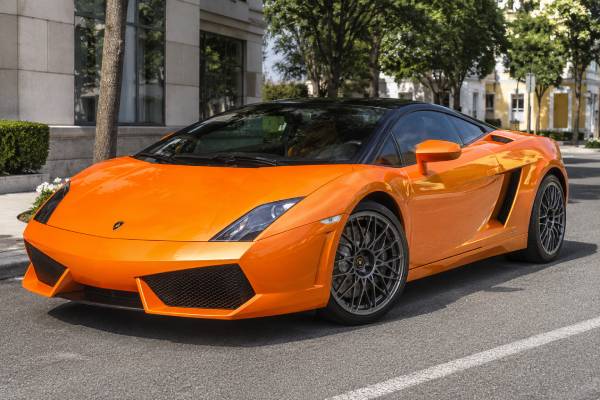

The Lamborghini Gallardo LP 560-4 Bicolore is a special-edition L140 Gallardo built around the 5.2-liter CEH V10, permanent all-wheel drive, and Lamborghini’s late-Gallardo sharper styling. It matters because it combines the usable, Audi-era Gallardo platform with a factory two-tone design package that makes it easier to distinguish from a normal LP 560-4. The Bicolore was not the lightest, rarest, or most track-focused Gallardo, but it captured an important moment: the final years before the Huracán replaced Lamborghini’s first mass-successful V10 supercar. For buyers, it is interesting because condition, originality, color, e-gear health, clutch wear, and service history matter far more than headline mileage alone. For enthusiasts, it remains one of the best ways to experience a naturally aspirated Lamborghini V10 with hydraulic steering, dramatic sound, compact dimensions, and real road usability.
Table of Contents
- Why the LP 560-4 Bicolore Matters
- CEH V10 Specs and Chassis Data
- Production, Options, and Identification
- Two-Tone Design and Engineering Details
- Road Feel, Performance, and Sound
- Maintenance, Reliability, and Service Risk
- Market Value and Buying Checks
Why the LP 560-4 Bicolore Matters
The Gallardo LP 560-4 Bicolore is best understood as a design-led special edition of the facelift Gallardo, not as a separate high-performance model. It kept the LP 560-4’s 5.2-liter V10, all-wheel-drive layout, and everyday-supercar character, then added a factory two-tone exterior, matching interior details, e-gear equipment, and visual features that made it more distinctive.
The original Gallardo launched in 2003 as Lamborghini’s smaller V10 model below the Murciélago. It was a turning point for the company because it brought higher build quality, more consistent production, and a broader customer base without losing the mid-engine drama that defined the brand. By the time the LP 560-4 arrived in 2008, the Gallardo had been heavily reworked: it gained the larger 5.2-liter direct-injection V10, revised aerodynamics, sharper front and rear styling, improved driveline tuning, and a more polished cabin.
The Bicolore appeared near the end of that product cycle. That timing matters. By 2011, Lamborghini had already created several Gallardo personalities: the standard LP 560-4, the rear-drive LP 550-2, the lighter LP 570-4 Superleggera, the Spyder, and multiple regional or commemorative editions. The Bicolore sat in the middle of that world. It was more exclusive and visually special than a regular LP 560-4, but less extreme and less expensive to run than a Superleggera or Super Trofeo Stradale.
The “LP 560-4” name explains the core mechanical layout. “LP” means Longitudinale Posteriore, referring to the longitudinal rear-mid-mounted engine. “560” refers to the metric horsepower output, and “4” means four driven wheels. In practical terms, the Bicolore is a 560 PS all-wheel-drive Gallardo coupe with Lamborghini’s 5.2-liter V10 and the factory Bicolore appearance package.
One important market note: the LP 560-4 Bicolore was aimed at European and Asia-Pacific markets. In North America, the Bicolore name was associated with the rear-wheel-drive LP 550-2 version instead. That distinction matters when reading listings, auction descriptions, and production-number claims. A true LP 560-4 Bicolore should be checked by VIN, market, factory specification, and documentation, not just badges or paint.
The car’s modern appeal comes from three things. First, it is still compact by modern supercar standards, so it feels intense on normal roads. Second, the naturally aspirated V10 has a hard-edged character that later turbocharged performance cars cannot copy. Third, the Bicolore package gives the car factory identity without turning it into a fragile collector-only object. It is special enough to preserve carefully, but still usable enough to drive.
CEH V10 Specs and Chassis Data
The LP 560-4 Bicolore uses the same core mechanical package as the facelift Gallardo LP 560-4 coupe: a 5,204 cc naturally aspirated V10, direct fuel injection, e-gear transmission, and permanent all-wheel drive. The key performance figures are 560 PS, 540 Nm of torque, 0–100 km/h in about 3.7 seconds, and a top speed around 325 km/h.
| Category | Specification |
|---|---|
| Model code | L140 Gallardo |
| Engine code | CEH 5.2-liter V10 |
| Engine layout | Rear mid-mounted, longitudinal |
| Displacement | 5,204 cc |
| Configuration | 90-degree V10, DOHC, 4 valves per cylinder |
| Induction | Naturally aspirated |
| Fuel system | Direct gasoline injection |
| Compression ratio | 12.5:1 |
| Power | 560 PS at 8,000 rpm |
| Torque | 540 Nm at 6,500 rpm |
| Transmission | 6-speed e-gear automated manual |
| Drivetrain | Permanent all-wheel drive with viscous coupling |
| 0–100 km/h | About 3.7 seconds |
| Top speed | About 325 km/h |
The CEH V10 is one of the main reasons buyers still care about the late Gallardo. Earlier Gallardos used a 5.0-liter V10, while the LP 560-4 introduced the 5.2-liter version with direct injection. The larger engine made more power, revved hard, and gave the car stronger mid-range response without taking away the high-rpm character. It also changed the sound. The LP 560-4 has a cleaner, sharper, more mechanical voice than the earlier 5.0-liter car.
The e-gear transmission is not a modern dual-clutch gearbox. It is a single-clutch automated manual that uses paddles and hydraulic actuation to operate a conventional clutch and gearset. That gives the car a more mechanical, sometimes abrupt feel. Smooth operation depends on calibration, clutch condition, driving style, and correct use. When healthy, it gives the Gallardo a dramatic old-school supercar rhythm. When worn or poorly adjusted, it can feel jerky, hesitant, or expensive.
The chassis uses aluminum-intensive construction, double-wishbone suspension, large performance brakes, hydraulic steering, and a short wheelbase of about 2,560 mm. The result is a car that feels smaller and more direct than many later supercars. It is not soft, but it is not a stripped race car either.
| Area | Specification |
|---|---|
| Body style | Two-door, two-seat coupe |
| Body and chassis | Aluminum space-frame structure with aluminum and composite body panels |
| Suspension | Double wishbones front and rear |
| Steering | Hydraulic power-assisted rack and pinion |
| Standard wheel type | 19-inch Skorpius forged alloy wheels for Bicolore |
| Front tires | 235/35 ZR19 |
| Rear tires | 295/30 ZR19 |
| Wheelbase | 2,560 mm |
| Length | About 4,345 mm |
| Width | About 1,900 mm excluding mirrors |
| Height | About 1,165 mm |
| Fuel capacity | About 90 liters |
The numbers tell only part of the story. What makes the Bicolore useful as a driver’s car is the combination of compact dimensions, naturally aspirated response, all-weather traction, and hydraulic steering. It is fast enough to feel serious today, but old enough to feel mechanical.
Production, Options, and Identification
A correct LP 560-4 Bicolore should be identified by factory specification, not by paint alone. The defining features are the Bicolore two-tone exterior, Noctis Black upper body treatment, matching interior stitching, Skorpius forged wheels, e-gear transmission, front lift system, and glass engine cover.
Lamborghini described the Bicolore as a special edition rather than a track model. It was presented with the LP 560-4 mechanical package for Europe and Asia-Pacific markets, while the North American Bicolore was offered as an LP 550-2. Because of that, buyers should be careful when comparing values or production claims across countries. A U.S.-market LP 550-2 Bicolore is not the same car as an LP 560-4 Bicolore, even though the paint concept is closely related.
Lamborghini did not publish a widely accepted separate global production total for the LP 560-4 Bicolore in the same way it did for some more limited Gallardo editions. That makes documentation especially important. A seller claiming rarity should be able to support it with original order records, build documents, dealer paperwork, or a Lamborghini dealer specification printout.
Factory Bicolore identifiers
The factory Bicolore look is specific. From the window line upward, the car uses Noctis Black. This includes the pillars, roof, engine cover area, and rear spoiler region. The lower body was offered in several Lamborghini colors. Commonly cited Bicolore colors include:
- Giallo Midas
- Arancio Borealis
- Grigio Telesto
- Bianco Monocerus
- Blu Caelum
The exterior also used high-gloss black on selected intakes and rear diffuser areas. The Skorpius wheels are important because they are part of the Bicolore’s visual identity. Missing original wheels do not automatically make a car bad, but they reduce originality and should affect value.
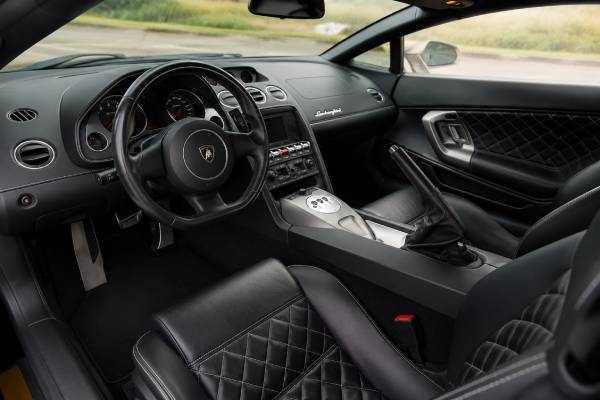
Inside, the Bicolore used Nero Persus leather with contrast stitching matched to the exterior color. The e-gear bezel was finished in black to echo the exterior upper-body treatment. A car with a retrimmed interior, incorrect stitching, missing Bicolore details, or unverified paintwork should be inspected more carefully.
Options that affect desirability
The Bicolore came with desirable equipment as part of the package, including e-gear, front axle lift, and the glass engine cover. Additional equipment can influence value, but condition still matters more than option count.
| Feature | Why it matters |
|---|---|
| Front axle lift | Very useful for ramps, driveways, and speed humps; leaks or pump faults can be costly. |
| Glass engine cover | Part of the Bicolore appeal because it shows the V10; check seals, hinges, and heat damage nearby. |
| Carbon-ceramic brakes | Desirable and expensive; condition matters more than presence alone. |
| Rear-view camera | Helpful because rear visibility is limited; aging cameras and screens should be checked. |
| Navigation and audio | Nice to have, but older infotainment is not a major value driver. |
| Heated power seats | Useful for road use; bolster wear and leather shrinkage should be inspected. |
For authenticity, the best examples have original paint or carefully documented paintwork, correct Bicolore color separation, original wheels, matching interior stitching, original books, service invoices, and evidence that recall and software work has been completed. A heavily modified exhaust, wrapped roof, aftermarket wheels, or repaint can be enjoyable on a driver’s car, but it should be priced accordingly.
Two-Tone Design and Engineering Details
The Bicolore’s main engineering story is not a new engine or suspension package; it is how Lamborghini used factory design details to make the LP 560-4 look wider, lower, and more aggressive. The black upper body visually lowers the roof and emphasizes the Gallardo’s wedge shape.
The Gallardo’s basic form is simple, sharp, and compact. It has the cab-forward stance of a mid-engine car, short overhangs, triangular front graphics, strong side intakes, and a wide rear. The LP 560-4 facelift made the car more modern than the early Gallardo by sharpening the front bumper, enlarging the air openings, and giving the rear a more horizontal, planted look. The Bicolore builds on that by separating the body visually into a dark upper section and a colored lower section.
This two-tone approach works because the Gallardo already has a low roofline and strong shoulder. The Noctis Black upper body makes the cabin appear smaller and the lower body appear more muscular. On bright colors such as Arancio Borealis or Giallo Midas, the contrast is dramatic. On Grigio Telesto, Bianco Monocerus, or Blu Caelum, the effect is more refined.
The Bicolore also gives the engine bay more visual importance. The tempered-glass engine cover turns the V10 into part of the car’s design. That is more than decoration. The Gallardo’s V10 is central to the car’s emotional value, and being able to see the intake and upper engine hardware reinforces the idea that the powertrain is the centerpiece.
Cooling and packaging are classic mid-engine Lamborghini. Large side intakes feed air toward the engine bay. Front openings manage cooling for radiators and brakes. Rear vents help extract heat from a tightly packaged powertrain area. Heat management is a real ownership issue, not just an engineering note. Exhaust heat, engine-bay temperatures, and slow-speed use can age wiring, plastics, seals, and surrounding trim.
The interior is more usable than older Lamborghinis but still special. The driving position is low, the windscreen is steep, and the dashboard is simple by modern standards. Audi-era switchgear improved quality, yet the cabin still feels Italian because of the low roof, wide sills, engine noise, and leather-trimmed surfaces. The Bicolore stitching gives the cabin a stronger link to the exterior than a normal LP 560-4.
The most important design detail for buyers is originality. A Bicolore that has been repainted badly, wrapped to imitate the package, fitted with incorrect wheels, or retrimmed without the proper stitching loses much of what makes it special. A clean factory Bicolore does not need visual modification. The original contrast scheme is the point.
Road Feel, Performance, and Sound
The LP 560-4 Bicolore feels fast, loud, compact, and secure rather than delicate or nervous. Its all-wheel drive gives it huge traction, while the naturally aspirated V10 and single-clutch e-gear transmission give it a rawer personality than newer dual-clutch supercars.
Acceleration is immediate once the engine is in its power band. The V10 pulls cleanly at low rpm, but it becomes much more exciting as it climbs toward the upper range. Peak power arrives at 8,000 rpm, so the car rewards drivers who let the engine rev. The sound hardens as revs rise, moving from a mechanical growl to a sharp, metallic wail. That sound is one of the car’s biggest ownership rewards.
The e-gear transmission defines much of the driving experience. It is not as smooth as a modern dual-clutch gearbox in traffic, and it should not be driven like a normal torque-converter automatic. It works best when the driver uses deliberate throttle inputs, avoids creeping, and lets the clutch engage cleanly. In harder driving, the shifts feel dramatic and physical. In Corsa-style aggressive use, it can deliver the old Lamborghini sense of occasion that many modern cars smooth away.
Steering is a major strength. The hydraulic rack gives real weight and feedback, especially compared with many newer electric systems. The front end feels stable rather than hyperactive. With all-wheel drive, the car prefers clean inputs: brake in a straight line, turn in with confidence, feed in throttle, and let the rear-biased traction help pull the car out. It is not as playful as an LP 550-2, but it is more secure on cold, wet, or uneven roads.
Ride quality is firm but livable. The Gallardo is low, wide, and loud, yet it can handle normal road use better than older exotic cars. The front lift is valuable in real life because the nose is vulnerable to ramps, driveways, and parking entrances. Tire choice and age make a large difference. Old tires can make the car noisy, harsh, and unpredictable; fresh premium tires restore much of the intended grip and steering quality.
Braking performance is strong when the system is healthy. Steel brakes are easier to service and less frightening from a cost perspective. Carbon-ceramic brakes are desirable, but buyers must inspect disc condition carefully because replacement costs can be high. A car used mostly for street driving can have old ceramic discs that look fine at a glance but still need specialist evaluation.
Visibility is better forward than rearward. The car is low, so traffic and parking require attention. The rear-view camera helps, but buyers should not assume old electronics work perfectly. The cabin can get warm, road noise is present, and the luggage space is limited. Even so, the Gallardo remains one of the more usable older supercars because it starts reliably when maintained, has manageable dimensions, and does not feel as intimidating as a V12 Lamborghini.
Maintenance, Reliability, and Service Risk
A well-maintained Gallardo LP 560-4 Bicolore can be dependable by exotic-car standards, but neglected cars become expensive quickly. The biggest ownership risks are e-gear clutch wear, deferred annual servicing, front-lift faults, brake costs, aging electronics, accident damage, and poor-quality cosmetic work.
The CEH V10 itself has a strong reputation when serviced correctly. It uses a timing chain rather than a belt, which removes one classic exotic-car worry. That does not make it cheap to own. Fluids, coils, plugs, gaskets, cooling components, sensors, exhaust parts, and labor access still cost supercar money. A car that sits unused can develop more problems than a car that is driven regularly and serviced on time.
The e-gear system deserves special attention. Clutch wear can be measured with diagnostic equipment, but the number alone does not tell the full story. Calibration, bite point, driving history, and actuator health also matter. Repeated low-speed maneuvering, reversing uphill, creeping in traffic, and poor clutch setup can shorten clutch life. During inspection, the car should shift cleanly, engage reverse without excessive drama, pull away predictably, and show no warning lights.
Common inspection points
- Check clutch wear data with a Lamborghini-capable diagnostic tool.
- Confirm e-gear pump operation, actuator condition, and recent calibration.
- Inspect for oil leaks around cam covers, seals, oil lines, and the dry-sump system.
- Check radiators, coolant hoses, water pump area, and signs of overheating.
- Inspect front lift cylinders, lines, pump operation, and ride-height behavior.
- Look for cracked undertrays, scraped front bumper edges, and damaged jacking points.
- Inspect carbon-ceramic discs by condition and measured wear, not only by appearance.
- Check tire age, tire brand, uneven wear, and alignment.
- Test every switch, window, lock, screen, camera, lamp, and instrument display.
- Verify recall work, software updates, service invoices, and ownership history.
The front lift is a useful feature but also a system to inspect carefully. If it raises slowly, drops unevenly, leaks, or triggers warnings, repair costs can be significant. A non-working lift also increases the chance of nose damage because owners may have scraped the car more often.
Brakes are another major cost area. Steel brakes are more straightforward, while carbon-ceramic brakes can be very expensive if discs are damaged or near replacement. Track use, poor pad choice, road debris, and improper wheel handling can chip or damage ceramic discs. A pre-purchase inspection should include wheel removal when possible.
Electrical and trim issues are usually less dramatic than engine or gearbox problems, but they matter on a special edition. Sticky switches, shrinking leather, worn bolsters, weak batteries, alarm faults, failing cameras, and old infotainment components are common aging concerns. Battery condition is especially important because low voltage can trigger misleading warning lights and control-module issues.
Accident damage is a serious value risk. The Gallardo’s aluminum structure and mid-engine packaging require specialist repair. Poor panel gaps, overspray, mismatched black roof finish, incorrect texture around the engine cover, and missing underbody hardware should be treated as warning signs. A Bicolore’s two-tone paint makes poor repair work easier to spot if you know where to look.
Service history should show time-based care, not just mileage-based care. Low-mileage cars still need fluids, brake service, tires, battery maintenance, and inspections. A car with 15,000 miles but long gaps in maintenance can be riskier than a car with 30,000 miles and excellent records.
Market Value and Buying Checks
The LP 560-4 Bicolore sits in a strong but selective part of the Gallardo market. Buyers pay for originality, clean history, correct Bicolore details, strong service records, low-to-moderate mileage, desirable colors, and verified e-gear condition.
The broader LP 560-4 market often trades in the low-to-mid six-figure range, with major variation by country, mileage, transmission, specification, and condition. Bicolore examples can bring a premium over ordinary LP 560-4 coupes when they are clearly original and well documented. That premium is not automatic. A poorly serviced Bicolore with accident history, missing wheels, tired clutch, or questionable paint should be valued like a problem car, not like a rare collectible.
Manual Gallardos are a separate market and often command stronger collector attention, but the LP 560-4 Bicolore was closely tied to e-gear equipment. Do not assume a manual-converted or incorrectly described car is more valuable. Verify what the car was built as.
Best examples to seek
The safest Bicolore purchases usually share the same traits:
- Factory Bicolore specification confirmed by paperwork
- Original Noctis Black upper-body treatment
- Correct exterior color and matching interior stitching
- Original Skorpius wheels
- Glass engine cover and front lift working correctly
- Complete service history from Lamborghini dealers or respected specialists
- Recent clutch wear report and e-gear calibration record
- Clean accident history with paint readings
- Fresh premium tires with correct sizes
- No warning lights, no unresolved recall items, and no vague seller stories
Cars to approach carefully
Avoid being distracted by bright paint and low mileage. The riskiest cars often look good in photos but fail on documentation and mechanical detail.
| Warning sign | Why it matters |
|---|---|
| No clutch wear report | Clutch replacement and e-gear work can change the economics of the purchase. |
| Long service gaps | Low use does not stop fluid aging, rubber aging, or battery-related faults. |
| Incorrect wheels | Hurts Bicolore originality and may hide accident or curb damage history. |
| Repaint with weak records | The two-tone finish is central to value; poor paintwork is costly to correct. |
| Non-working front lift | Repair can be expensive and may indicate nose damage risk. |
| Carbon-ceramic brakes not inspected | Replacement cost can be high enough to change the deal price. |
| Modified exhaust without original parts | May affect emissions, noise compliance, resale, and collector appeal. |
| Imported car with unclear market history | Bicolore specifications differ by market, so paperwork matters. |
A proper pre-purchase inspection should be done by a Lamborghini dealer or a specialist who knows Gallardos. The inspection should include diagnostics, clutch data, e-gear behavior, paint readings, underbody inspection, suspension and lift check, brake inspection, leak inspection, and confirmation of recall status.
For collectors, the long-term case is straightforward but not guaranteed. The Bicolore has several things in its favor: naturally aspirated V10 power, late Gallardo improvements, factory special-edition identity, hydraulic steering, compact proportions, and Lamborghini’s shift away from this older mechanical feel. Against it, the Gallardo was built in far larger numbers than earlier Lamborghinis, and the Bicolore is not as famous as the Superleggera, Balboni, Super Trofeo Stradale, or Squadra Corse.
The best buying strategy is to pay more for the right car and less for the story. A correct, serviced, original Bicolore in a strong color with clean documentation is worth stretching for. A cheap one with missing records, worn e-gear parts, old tires, paint questions, and weak seller knowledge can become expensive before it becomes enjoyable.
References
- Lamborghini Gallardo LP 560-4 Bicolore – Technical Specifications, Pictures 2011 (Manufacturer Model Page)
- Lamborghini Gallardo LP 560-4 Coupé – Technical Specifications, Pictures 2008 (Manufacturer Model Page)
- End of production for the Lamborghini Gallardo 2013 (Manufacturer Press Release)
- Part 573 Safety Recall Report 18V-833 2018 (Recall Database)
- Lamborghini Gallardo LP560-4 Market 2026 (Market Data)
Disclaimer
This article is for informational purposes only and is not a substitute for professional diagnosis, repair, inspection, or valuation. Specifications, torque values, service intervals, software procedures, recall applicability, and parts can vary by VIN, market, model year, and equipment. Always verify details against official Lamborghini service documentation and have any car inspected by a qualified Lamborghini specialist before purchase or repair.
If you found this guide useful, please share it on Facebook, X/Twitter, or your favorite car community to support our work.