
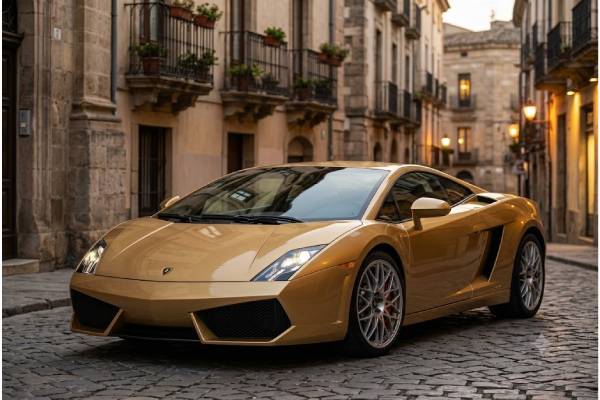
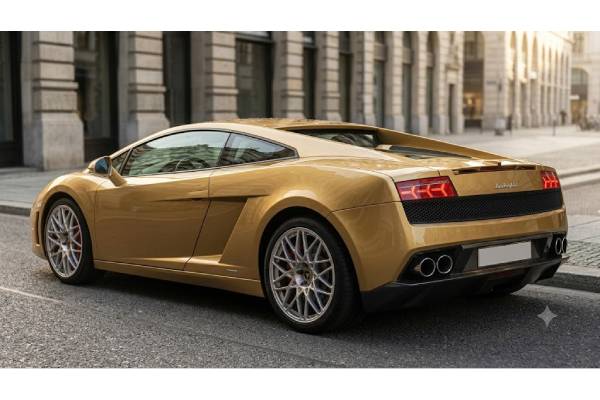
The Lamborghini Gallardo LP 560-4 Gold Edition is a 2012 China-market limited edition based on the facelifted L140 Gallardo LP 560-4 coupé. It keeps the standard 5.2-liter naturally aspirated V10, known in many technical databases by the CEH engine code, with 560 hp, permanent all-wheel drive, and the sharp-edged late-Gallardo bodywork that replaced the original 5.0-liter car’s softer front and rear styling. Its importance is not mechanical rarity but specification rarity: the Gold Edition was created as a small regional special series with gold paint, special wheels, red brake calipers, red interior stitching, and China-focused launch positioning.
Collectors care because it sits at the meeting point of three strong Gallardo themes: the desirable LP 560-4 mechanical update, the end-period special-edition strategy, and a very small-market run. Owners and buyers should treat it like any LP 560-4 mechanically, but inspect it like a limited-edition exotic where originality, documentation, color, trim, and market provenance carry extra weight.
Table of Contents
- Why the Gold Edition Matters
- CEH V10 Specs and Chassis Data
- Production, Identity, and Options
- Design Details and Engineering Character
- How the LP 560-4 Drives
- Maintenance Risks and Specialist Care
- Market Value and Buying Checks
Why the Gold Edition Matters
The Gold Edition matters because it is a rare visual and market-specific version of one of Lamborghini’s most usable modern V10 supercars. It is not a higher-output Gallardo, but its limited China-market positioning gives it a different collector profile from a normal LP 560-4 coupé.
The Gallardo arrived in 2003 as Lamborghini’s smaller V10 model beneath the V12 Murciélago. It was a turning point for the company because it brought higher production volume, Audi-era engineering discipline, and a level of everyday usability that earlier Lamborghinis rarely offered. The L140 platform used an aluminum spaceframe, mid-mounted V10, two-seat layout, and all-wheel drive on most versions. It made Lamborghini more visible and more reliable without losing the brand’s dramatic shape and sound.
The LP 560-4 update, introduced for the 2008 model year, was the major evolution. “LP” means Longitudinale Posteriore, referring to the longitudinal rear-mid engine layout. “560” refers to metric horsepower, and “4” refers to four driven wheels. Compared with the earlier 5.0-liter Gallardo, the LP 560-4 gained a 5.2-liter V10 with direct fuel injection, more power, revised chassis settings, cleaner front and rear styling, updated aerodynamics, and better drivability.
The Gold Edition arrived in 2012, late in the Gallardo’s life. By that time, Lamborghini had already stretched the Gallardo family into many forms: Spyder, Superleggera, LP 550-2 rear-wheel-drive models, Bicolore, Valentino Balboni, Super Trofeo Stradale, and several regional editions. These special versions helped keep the model fresh while Lamborghini prepared the Huracán, which replaced the Gallardo for 2014.
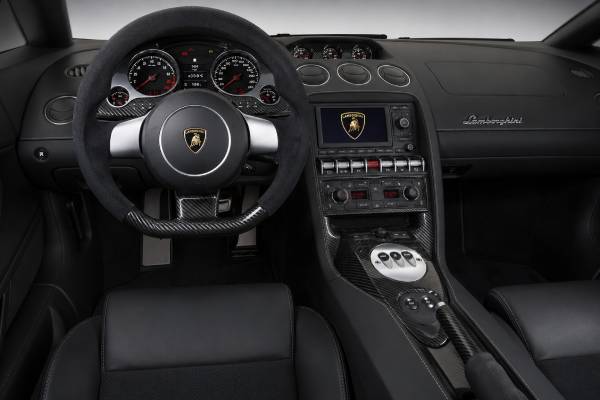
For an enthusiast, the Gold Edition is best understood as a factory appearance and market edition rather than a performance package. It uses the regular LP 560-4 V10 and all-wheel-drive chassis, but adds an attention-grabbing gold exterior finish, contrasting red brake calipers, special wheels, black interior treatment, red stitching, and edition-specific trim details. Period reports describe it as a very small run for the Chinese market, with the car shown at the Shenzhen-Hong Kong-Macau International Auto Show.
The Gallardo’s broader significance also helps this version. Lamborghini built the Gallardo for a decade, and total production reached 14,022 units across all variants. That made it Lamborghini’s most successful model line of its era and the car that normalized the idea of a usable, high-revving Lamborghini V10. The Gold Edition sits inside that story as a small, region-specific collectible from the final phase of production.
For buyers, the key point is simple: do not pay only for gold paint. Pay for a real Gold Edition with proof. The mechanical package can be assessed like a standard LP 560-4, but the collector value depends on evidence that the car is the correct edition, retains its original specification, has not been repainted or retrimmed incorrectly, and carries documentation that supports its market history.
CEH V10 Specs and Chassis Data
The Gold Edition uses the standard LP 560-4 technical package: a 5,204 cc naturally aspirated V10, direct injection, 560 hp, 540 Nm of torque, and permanent all-wheel drive. The engine, chassis, and performance figures are the reason the LP 560-4 remains one of the most desirable regular-production Gallardo variants.
| Category | Specification |
|---|---|
| Model | Lamborghini Gallardo LP 560-4 Gold Edition |
| Platform / project code | L140 Gallardo |
| Model year coverage | 2012 |
| Body style | Two-door, two-seat coupé |
| Engine code commonly listed | CEH |
| Engine layout | Longitudinal rear-mid-mounted V10 |
| Displacement | 5,204 cc / 5.2 liters |
| Induction | Naturally aspirated |
| Fuel system | Direct injection |
| Power | 560 hp at 8,000 rpm |
| Torque | 540 Nm at 6,500 rpm |
| Drivetrain | Permanent all-wheel drive |
| Transmission | 6-speed manual or 6-speed e-gear automated manual on LP 560-4 range; Gold Edition examples should be checked individually |
| 0–100 km/h | About 3.7 seconds |
| Top speed | About 325 km/h / 202 mph |
The 5.2-liter V10 is the heart of the car. It is a 90-degree V10 with four valves per cylinder, continuously variable valve timing, a high 12.5:1 compression ratio, dry-sump lubrication, and a character that feels very different from turbocharged modern supercars. It builds power with revs, responds sharply to throttle input, and becomes more intense as it approaches its high-rpm power peak.
The LP 560-4’s direct injection was a major step from the earlier Gallardo. It helped Lamborghini increase output while improving efficiency and emissions. It also changed the engine’s personality slightly. The 5.2 has a harder, cleaner, more metallic tone than the early 5.0, with more mid-range strength and a stronger top end.
| Item | Detail |
|---|---|
| Configuration | V10, 90 degrees, DOHC, 40 valves |
| Bore x stroke | 84.5 mm x 92.8 mm |
| Compression ratio | 12.5:1 |
| Lubrication | Dry sump |
| Engine management | Bosch MED 9 family |
| Clutch | Dual-plate clutch on LP 560-4 drivetrain |
| Rear differential | Limited-slip rear differential |
| Front differential control | Electronic brake-based traction support |
The chassis uses a structural aluminum spaceframe with aluminum and thermoplastic exterior panels. This construction gives the Gallardo a solid, compact feel. It is not as light as a carbon-tub supercar, but it is strong, stiff enough for serious performance driving, and easier to service than some later carbon-heavy exotics.
Suspension is by double wishbones at the front and rear, with anti-roll bars and geometry tuned for a mix of road grip, high-speed stability, and predictable all-wheel-drive behavior. Standard brakes use large ventilated discs with multi-piston calipers. Carbon-ceramic brakes may appear on some Gallardo variants and optioned cars, so a buyer should inspect the exact equipment rather than assume one setup.
| Area | Specification |
|---|---|
| Length | 4,345 mm |
| Width | 1,900 mm |
| Height | 1,165 mm |
| Wheelbase | 2,560 mm |
| Kerb weight | About 1,500–1,520 kg depending on source, equipment, and market |
| Fuel capacity | About 90 liters |
| Luggage capacity | About 110 liters |
| Front tires | 235/35 ZR19 |
| Rear tires | 295/30 ZR19 |
The key technical takeaway is that the Gold Edition’s value is not tied to mechanical upgrades. A correctly maintained standard LP 560-4 can feel almost identical on the road. What separates the Gold Edition is the edition identity, paint-and-trim package, and rarity.
Production, Identity, and Options
The Gold Edition is best treated as a rare regional special edition, not a separate mechanical model. Its strongest identification points are its China-market launch context, gold exterior finish, special wheels, red calipers, black interior, red stitching, and edition-specific presentation.
Period reporting described the Gold Edition as a 10-car limited run for China. Because small regional Lamborghini editions can be difficult to verify from public information alone, a buyer should not rely on internet descriptions, seller claims, or color alone. The car needs factory or dealer documentation that ties the VIN to the Gold Edition specification.
Useful proof can include:
- Original sales invoice or dealer order sheet
- Lamborghini dealer correspondence confirming the edition
- Factory build information or market documentation
- Original China-market registration or import records
- Original photos from delivery or early ownership
- Service book and warranty records with matching VIN
- Evidence that the paint, stitching, wheels, calipers, and engine-cover treatment match the edition from new
The standard LP 560-4 coupé was sold globally from the 2008 update through the end of Gallardo production. Buyers could choose different colors, wheels, carbon-fiber trim, transparent engine cover, front lift, rear camera, navigation, branding packages, and interior combinations depending on market and model year. The Gold Edition should be judged against its own intended package, not against a normal Ad Personam car that happens to be painted gold.
How it differs from a regular LP 560-4
The Gold Edition’s changes were mainly visual and market-specific. The known package is usually described around these features:
- Gold metallic exterior finish
- Special polished or bright-finish alloy wheels
- Red brake calipers
- Black interior treatment
- Red stitching on seats, dashboard, door areas, steering wheel, and console areas
- Black engine-cover frame or special engine-cover treatment
- LED headlamp-era LP 560-4 facelift appearance
- Standard LP 560-4 5.2-liter V10 output
This means a Gold Edition should not be advertised as more powerful unless there is documented aftermarket tuning. Tuning may make the car faster, but it can reduce collector value if it changes the original nature of the edition.
Nearby Gallardo variants to compare
A buyer may cross-shop the Gold Edition with several late Gallardo versions, but each has a different purpose.
| Variant | Core character | Buyer appeal |
|---|---|---|
| LP 560-4 Coupé | Standard 5.2 V10 all-wheel-drive facelift model | Best balance of value, usability, and performance |
| LP 560-4 Gold Edition | China-market visual limited edition | Rarity, specification, and market provenance |
| LP 550-2 Valentino Balboni | Rear-wheel drive, named special edition | Driver involvement and strong collector story |
| LP 570-4 Superleggera | Lighter, sharper, higher-output track-focused model | Performance collectors and serious drivers |
| Super Trofeo Stradale | Race-inspired limited road model | Highest drama and stronger collector demand |
The Gold Edition is not the most track-focused Gallardo and not the purest driver’s Gallardo. Its appeal is more specific: a limited, visually bold, China-market LP 560-4 from the final period of Gallardo production.
Design Details and Engineering Character
The Gold Edition’s design is dramatic because it applies a high-visibility gold theme to the cleaner, sharper LP 560-4 body. The engineering underneath is the mature facelift Gallardo package, with a compact V10 layout, all-wheel-drive stability, and a low wedge shape that still reads as unmistakably Lamborghini.
The LP 560-4 facelift changed the Gallardo’s look without changing its basic proportions. The front bumper adopted larger, more angular intakes and sharper triangular and trapezoidal forms. The rear became wider-looking and more horizontal, with revised lighting and a more planted stance. These changes made the car feel closer to the Murciélago LP 640 and Reventón design language of the period.
Gold paint changes the visual balance of the Gallardo. On a neutral color, the LP 560-4’s shape can look technical and compact. In gold, the surfaces stand out more, especially the broad front bumper, side intakes, rear haunches, and engine-cover area. Red calipers and red interior stitching add a strong contrast. On a car like this, originality matters because the whole collector argument depends on the factory-selected visual combination.
The engineering character comes from packaging. The V10 sits behind the cabin and ahead of the rear axle line, helping centralize mass. The dry-sump system allows the engine to sit lower than a conventional wet-sump design would allow. The all-wheel-drive system gives the car strong traction, especially when exiting slower corners or accelerating on imperfect roads.
The cabin is compact, low, and driver-focused. By modern standards, the infotainment and switchgear feel dated, but that is part of the car’s appeal. The Gallardo belongs to the last period before supercars became dominated by screens, hybrid systems, dual-clutch gearboxes, and heavy software integration. It still feels mechanical and slightly raw, especially with the e-gear automated manual.
Sound is one of the main reasons people still want the LP 560-4. The 5.2 V10 has a hard-edged, rising note that feels more exotic than many turbocharged engines. Intake noise, exhaust pitch, and gearshift interruption all shape the experience. A stock car should be loud enough to feel special without the drone and harshness that can come with poorly chosen aftermarket exhausts.
A buyer should be careful with modifications. A quality exhaust can make a Gallardo more exciting, but a limited edition is usually most valuable when it remains close to factory condition. Paint protection film, reversible exhaust changes, and careful wheel refurbishment are easier to accept than repainting, non-factory interior retrimming, heavy tuning, or carbon add-ons that were not part of the original specification.
How the LP 560-4 Drives
The LP 560-4 drives like a compact, high-revving, all-wheel-drive analog supercar with enough refinement for road use. It is fast by modern standards, but its real appeal is response, sound, size, and the way the V10 builds intensity as revs rise.
Acceleration is immediate and clean. The naturally aspirated engine does not wait for boost, so throttle input feels direct. At low rpm, the 5.2 V10 is tractable enough for city driving. Above the mid-range, it becomes much more urgent, and near 8,000 rpm it delivers the kind of mechanical excitement that defines the car.
The all-wheel-drive system gives the Gallardo strong launch traction and secure corner exits. It is not a drift-focused car like the LP 550-2. Instead, it feels stable, planted, and confidence-building. On mountain roads or fast sweepers, this stability is useful. The car can still feel alive, but it is less nervous than many rear-wheel-drive supercars from the same period.
The gearbox experience depends heavily on whether the car has a manual or e-gear transmission. Most late Gallardos, especially market-specific special editions, are likely to be e-gear, but every car should be verified by VIN and physical inspection.
With the e-gear automated manual, shifts are more dramatic than in a modern dual-clutch car. At low speed, the system can feel jerky if the driver treats it like a torque-converter automatic. It rewards a slight lift or smooth throttle timing during part-throttle shifts. In sportier modes, the shift action becomes quicker and more forceful. This is part of the Gallardo experience, but clutch wear depends heavily on driving style, traffic use, and setup condition.
Steering is direct and nicely weighted. The front end has more grip and precision than many people expect from an all-wheel-drive Lamborghini. Tire condition makes a huge difference. Old tires, mismatched brands, or incorrect sizes can make the car tramline, understeer, or feel nervous. A properly aligned LP 560-4 on fresh, correct tires feels much more modern than its age suggests.
Ride quality is firm but usable. The car is low, wide, and sensitive to road camber, but it is not unbearable on normal roads. A front lift system, if fitted, is valuable for steep driveways, ramps, and urban use. Buyers should test it repeatedly because lift-system issues can be expensive.
Braking performance is strong when the system is healthy. Steel brakes are easier and cheaper to live with. Carbon-ceramic brakes, if fitted, can be excellent but must be inspected carefully for surface damage, wear, and replacement cost. Brake feel should be firm and consistent, with no vibration, pulling, or warning lights.
The driving position is low, visibility is better forward than rearward, and the car feels wider than it is in tight streets. Parking sensors and a rear camera are useful. Cabin heat, noise, and e-gear behavior in traffic make it less relaxed than a modern Huracán, but that is also why many enthusiasts find the Gallardo more involving.
Maintenance Risks and Specialist Care
The Gold Edition should be maintained like a standard LP 560-4, but inspected like a collectible limited edition. Mechanical neglect is expensive, while cosmetic or documentation mistakes can damage the special-edition value.
The 5.2 V10 is generally strong when serviced correctly. It does not have the fragile reputation of some older Italian exotic engines, but it is still a high-performance dry-sump V10 in a tightly packaged mid-engine car. Heat, age, deferred maintenance, and poor diagnostics are the main enemies.
Important maintenance areas include:
- Engine oil service with the correct specification and procedure
- Dry-sump oil level checked correctly
- Gearbox and differential service history
- E-gear clutch wear readings and actuator calibration
- Cooling system condition, radiators, hoses, and fans
- Ignition coils, plugs, misfire history, and ECU fault records
- Suspension bushings, dampers, ball joints, and alignment
- Brake disc, pad, caliper, and fluid condition
- Tire age, brand, size, and wear pattern
- Battery health and charging-system stability
- Front lift operation, if fitted
- Air-conditioning performance
- Sticky interior switches or trim wear
- Headlamp condensation and exterior lighting faults
E-gear clutch condition is one of the biggest buying points. A low-mileage car can still have heavy clutch wear if it spent its life in traffic, on steep driveways, or being maneuvered badly. A higher-mileage car with careful use and documented clutch work may be safer. Ask for a diagnostic clutch-wear report, but do not rely on the percentage alone. Engagement quality, service records, calibration, and specialist opinion all matter.
Software history matters on 2011–2012 LP Gallardo cars. There were Lamborghini service communications related to engine software updates, and later recall activity covered some 2011–2014 Gallardo vehicles for ECU software behavior that could affect stored trouble codes and warning lamps. A buyer should verify open campaigns by VIN through an authorized Lamborghini dealer or official recall channel. The important point is not to panic; it is to confirm the car has the correct software status and documentation.
Age-related issues can be as important as mileage. A 2012 car that has covered very few kilometers may still need tires, fluids, battery, rubber parts, lift-system attention, brake service, and careful recommissioning. Garage queens can develop problems from sitting. A car driven regularly and serviced annually may be healthier.
Special-edition preservation risks
The Gold Edition adds a second layer of inspection beyond normal mechanical condition. Check the limited-edition details carefully:
- Paint should match the original gold shade and show no signs of poor repainting.
- Wheels should match the edition style and finish.
- Brake caliper color should be correct and not a later cosmetic repaint unless documented.
- Red stitching should look factory, consistent, and unworn.
- Seat, steering wheel, dashboard, door, and console trim should align with the claimed edition.
- Engine-cover treatment should match period descriptions and photos.
- Any carbon trim, audio, camera, lift, or interior option should be supported by build information when possible.
Accident history is especially important. A repaired Gallardo can drive well if fixed correctly, but structural aluminum repairs and paintwork on a limited edition require expert review. Panel gaps, paint depth, undertray damage, front-lift scraping, wheel impact marks, and suspension geometry should all be checked before purchase.
Parts availability is generally better than for many older low-volume exotics, but costs remain high. Shared Audi-era engineering does not make the car cheap to own. Labor access, Lamborghini-specific diagnostics, trim parts, wheels, lights, clutch work, and body repairs can all be expensive. Use a specialist who knows Gallardos, not just a general performance-car shop.
Market Value and Buying Checks
The Gold Edition’s value should sit above an ordinary LP 560-4 only when the car is authentic, original, documented, and in excellent condition. Without proof, it is safer to price it like a gold-painted LP 560-4 rather than a collectible regional edition.
Standard LP 560-4 values vary widely by country, mileage, gearbox, condition, service history, color, options, and accident record. In recent public market data, normal LP 560-4 coupés and Spyders can range from lower-mile driver-quality cars around the low six figures in dollars or euros to stronger examples well above that. Special editions, manuals, ultra-low-mile cars, and rare specifications can trade at a premium. The Gold Edition is too rare for a clean public price benchmark, so valuation needs a case-by-case approach.
The strongest value drivers are:
- Confirmed Gold Edition identity
- Original paint and trim
- Complete service history
- Low but credible mileage
- No accident or structural repair history
- Correct wheels, brake calipers, interior stitching, and engine-cover details
- Authorized dealer or specialist maintenance
- Clean import and registration history
- Strong ownership file with invoices, photos, and records
- Recent clutch, tire, brake, and fluid service where needed
Avoid cars with vague claims. A seller should be able to explain why the car is a Gold Edition and show supporting records. “Rare color,” “China edition style,” or “believed to be” is not enough for a serious premium.
| Area | What to verify | Why it matters |
|---|---|---|
| Identity | VIN, original market, build records, dealer documents | Confirms whether it is a real Gold Edition |
| Paint and body | Paint depth, panel gaps, accident repair, underbody damage | Limited-edition value depends heavily on originality |
| Interior | Red stitching, leather condition, switches, trim finish | Incorrect retrim can reduce collector appeal |
| Engine | Leaks, misfires, ECU faults, service history, cooling system | V10 repairs can become expensive quickly |
| E-gear | Clutch wear, engagement, actuator operation, calibration | Major running-cost and drivability factor |
| Suspension | Lift system, bushings, dampers, alignment, tire wear | Impacts road feel and repair budget |
| Campaigns | Recall and service-campaign status by VIN | Confirms correct software and safety updates |
The best examples to seek are complete, original cars with a strong paper trail and careful ownership. A slightly higher-mile car with excellent records can be better than a very low-mile car with missing history. Be cautious with cars that have aftermarket exhausts, repainted wheels, non-factory carbon parts, tuned ECUs, or retrimmed interiors unless all original parts are included and the work is reversible.
Ownership risk is manageable by exotic-car standards, but not low. Budget for annual servicing, tires by age rather than tread alone, clutch monitoring, battery care, brake work, lift-system repairs, and unexpected electronic or trim issues. A buyer stretching to purchase the car may struggle with the first major repair.
Long-term collectability is strongest if the car remains original. The Gallardo is no longer just a used supercar; it is becoming a modern classic, especially in naturally aspirated V10 form. The Gold Edition adds scarcity and regional story, but its premium will only hold if buyers can verify what it is. In short, buy the documentation first, the condition second, and the gold paint third.
References
- Lamborghini Gallardo LP 560-4 Coupé – Technical Specifications, Pictures 2026 (Manufacturer Model Page)
- Celebrating The Lamborghini Gallardo 2023 (Manufacturer History)
- Lamborghini Gallardo LP 560-4 5.2i V10 (560 Hp) AWD | Technical specs, data, fuel consumption, Dimensions 2026 (Technical Data)
- Lamborghini Gallardo LP560-4 Gold Edition | LamboCARS.com 2012 (Gold Edition Details)
- Part 573 Safety Recall Report 18V-833 2018 (Recall Database)
Disclaimer
This article is for informational purposes only and is not a substitute for professional diagnosis, repair, valuation, or pre-purchase inspection. Specifications, torque values, service intervals, software status, recall applicability, and repair procedures can vary by VIN, market, equipment, and service history. Always verify details against official Lamborghini service documentation, authorized dealer records, and a qualified Lamborghini specialist before buying, servicing, or restoring a vehicle.
If you found this guide useful, please share it on Facebook, X/Twitter, or your preferred enthusiast community to support our work.