
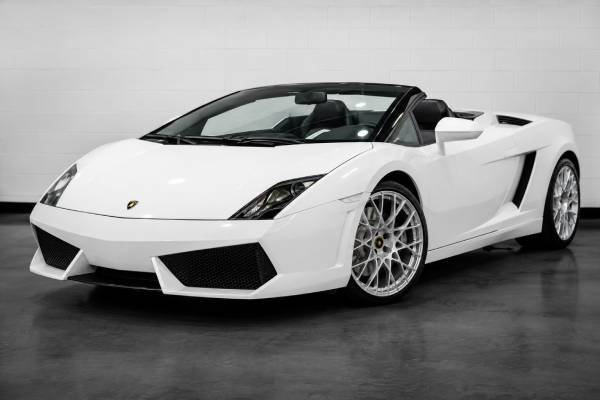

The Lamborghini Gallardo LP 560-4 Spyder is the open-top version of the major 2008 Gallardo update, sold mainly across the 2009–2013 model years. It kept the compact, mid-engine V10 layout that made the Gallardo Lamborghini’s volume-changing supercar, but added a new 5.2-liter direct-injection V10, sharper styling, revised chassis tuning, permanent all-wheel drive, and a faster optional E-gear automated manual. In service and parts contexts, the 5.2 V10 is often associated with CEH-family identification, though buyers should always verify engine coding by VIN and factory records.
Enthusiasts still care because this Spyder sits at a useful point in Lamborghini history: modern enough to be fast, usable, and Audi-era dependable by exotic standards, but old enough to offer a raw V10 sound, compact footprint, hydraulic feel, and available gated manual transmission.
Table of Contents
- Why the LP 560-4 Spyder Matters
- CEH 5.2 V10 Specifications
- Years, Variants, and Factory Options
- Design and Engineering Details
- How the LP 560-4 Spyder Drives
- Maintenance, Reliability, and Known Issues
- Market Values and Buying Advice
Why the LP 560-4 Spyder Matters
The LP 560-4 Spyder matters because it turned the first-generation Gallardo into a more complete modern Lamborghini without taking away its compact, mechanical character. It replaced the earlier 5.0-liter Gallardo Spyder with more power, better response, cleaner aero, a stiffer open body, and a more polished drivetrain.
The Gallardo itself was one of the most important Lamborghinis ever built. Launched under Audi ownership, it became the brand’s reliable V10 counterpart to the Murciélago and gave Lamborghini a car that could be sold, serviced, and used in far greater numbers than the older Diablo-era products. By the time the Gallardo ended production in 2013, Lamborghini had built 14,022 examples across all body styles and versions, making it the company’s defining pre-Huracán success story.
The LP 560-4 update arrived first as a coupé and then as the Spyder. “LP” stands for Longitudinale Posteriore, referring to the longitudinal rear-mid engine layout. “560” refers to the metric horsepower rating, and “4” identifies the permanent all-wheel-drive system. The Spyder added a power-folding fabric roof and open-air sound without turning the car into a soft grand tourer.
For buyers today, the LP 560-4 Spyder is appealing for four main reasons:
- It has the later 5.2-liter direct-injection V10 rather than the earlier 5.0-liter engine.
- It keeps the naturally aspirated sound and response that later turbocharged supercars cannot copy.
- It offers either the more common E-gear paddle-shift gearbox or the much rarer six-speed gated manual.
- It is usable enough for road trips and city driving, yet still feels small, loud, and dramatic by modern supercar standards.
Its reputation sits between “old-school exotic” and “modern collectible.” It is not as analog as a Diablo and not as electronically advanced as a Huracán, but that middle ground is exactly why it has become interesting. The LP 560-4 Spyder gives owners the theatre of a V10 Lamborghini with fewer ownership compromises than many earlier Sant’Agata cars.
CEH 5.2 V10 Specifications
The key technical story is the 5.2-liter V10: it gave the Spyder 560 hp, direct fuel injection, a 12.5:1 compression ratio, and much stronger high-rpm performance than the earlier 5.0-liter Gallardo. The car was also lighter than the first Gallardo Spyder despite added structure for the convertible body.
| Item | Lamborghini Gallardo LP 560-4 Spyder |
|---|---|
| Model code | L140 Gallardo |
| Model years covered | 2009–2013 |
| Body style | Two-door, two-seat Spyder with power fabric roof |
| Engine | 5.2-liter 90-degree V10, DOHC, 4 valves per cylinder |
| Displacement | 5,204 cc |
| Induction | Naturally aspirated |
| Fuel system | Direct fuel injection |
| Compression ratio | 12.5:1 |
| Power | 560 hp at 8,000 rpm |
| Torque | 540 Nm / 398 lb-ft at 6,500 rpm |
| Lubrication | Dry sump |
| Transmission | 6-speed manual or 6-speed E-gear automated manual |
| Drivetrain | Permanent all-wheel drive with viscous traction system |
| Standard torque split | 30 percent front / 70 percent rear |
| Rear differential | 45 percent limited-slip |
| Item | Specification |
|---|---|
| Frame | Structural aluminum spaceframe |
| Body material | Aluminum with thermoplastic exterior components |
| Suspension | Double wishbones front and rear with anti-roll bars |
| Steering | Power-assisted rack and pinion |
| Standard brakes | 365 x 34 mm front discs, 356 x 32 mm rear discs |
| Optional carbon-ceramic brakes | 380 x 38 mm front discs, 356 x 32 mm rear discs |
| Wheels | 19-inch aluminum alloy, 8.5 inches front / 11 inches rear |
| Tires | 235/35 ZR19 front, 295/30 ZR19 rear |
| Wheelbase | 2,560 mm / 100.7 in |
| Length | 4,345 mm / 171 in |
| Width | 1,900 mm / 74.8 in |
| Height | 1,184 mm / 46.6 in |
| Dry weight | 1,550 kg / 3,417 lb |
| Weight distribution | 43 percent front / 57 percent rear |
| 0–100 km/h | 4.0 seconds |
| 0–200 km/h | 13.1 seconds |
| Top speed | 324 km/h / 201 mph |
| Fuel tank | 80 liters / 21.1 US gallons |
The numbers tell only part of the story. The engine’s high compression, dry-sump oiling, and direct injection make it feel much sharper than the old 5.0-liter V10. It pulls cleanly at road speeds but becomes much more urgent above the midrange, where the intake noise, exhaust note, and gear ratios push the car toward its 8,000-rpm power peak.
The E-gear system was also improved for the LP 560-4 generation. It is still a single-clutch automated manual, not a dual-clutch gearbox, so it shifts with a mechanical pause and a clear clutch action. In Corsa mode, the shift time was reduced compared with the earlier Gallardo system, but smoothness still depends on calibration, clutch health, and driver technique.
Years, Variants, and Factory Options
The LP 560-4 Spyder is the mainstream all-wheel-drive open Gallardo of the facelift generation, but individual cars can differ greatly because of gearbox, brakes, wheels, lift system, trim, and Ad Personam specification. Those details now have a real effect on value and desirability.
The car was introduced after the LP 560-4 coupé and shared its main mechanical package. In most markets, early cars are 2009 model-year examples. Later cars continued through the final Gallardo production period, with 2013 being the main end point for the generation. Some registrations and market listings may show 2014, especially where cars were titled after production or sold from remaining inventory.
The LP 560-4 Spyder should be separated from these related Gallardo versions:
- Pre-facelift Gallardo Spyder: 5.0-liter V10, older nose and tail, earlier E-gear behavior, less power.
- LP 560-4 Coupé: same basic 5.2-liter all-wheel-drive platform, fixed roof, slightly higher top speed and structural stiffness.
- LP 550-2 Spyder: rear-wheel-drive version in some markets, less power on paper but more tail-led in character.
- LP 570-4 Spyder Performante: lighter, sharper, more track-focused open Gallardo with higher output and more carbon fiber.
- Final Edition and late appearance packages: later cars with updated trim, colors, and design features that can carry extra collector interest.
The gearbox is one of the biggest buying factors. Most LP 560-4 Spyders were ordered with E-gear because that was what many new Lamborghini customers wanted at the time. Manual cars are much rarer and usually more valuable, especially if they have low mileage, original paint, clean records, and desirable colors. A manual is not automatically the better car for every driver, but it is the stronger collector specification.
Factory and dealer options to look for include:
- Front-axle lift system for steep driveways, ramps, and urban use.
- Carbon-ceramic brakes, often called CCBs.
- Rear-view camera and navigation.
- Bluetooth hands-free system.
- Carbon-fiber interior trim.
- Leather, Alcantara, contrast stitching, and Q-citura diamond stitching.
- Apollo or Cordelia wheels depending on year and specification.
- Matte Ad Personam colors such as Nero Nemesis, Bianco Canopus, and Marrone Apus.
- Special interior color combinations and contrast piping.
- Transparent engine-related trim on some related versions, though not every Spyder specification includes the same visual treatment.
Authenticity matters. A car with factory documentation, original option list, service book, manuals, tools, tire inflator kit, keys, battery tender, and Lamborghini dealer printouts is worth more than an incomplete car with a vague history. Because many Gallardos were personalized, unusual colors should be checked against build records rather than assumed to be later wraps or resprays.
For identification, check the VIN, option sticker, service book, under-hood labels, gearbox type, brake package, wheel type, and interior trim. A clean Carfax or market-history report is useful, but it is not enough. A Lamborghini specialist should confirm paint depth, underbody condition, roof operation, E-gear clutch data, and whether all recall campaigns were completed.
Design and Engineering Details
The LP 560-4 Spyder looks sharper than the earlier Gallardo because Lamborghini cleaned up the front, rear, lighting, cooling, and aero at the same time as the mechanical update. The design is still compact and wedge-shaped, but the details are more angular and more closely tied to late-2000s Lamborghini design language.
The front end uses larger air intakes and a lower visual stance. The Y-shaped LED daytime running lights under the bi-xenon lamps became a clear Lamborghini signature, repeated in the rear lamps. The rear bumper, vents, diffuser, and quad exhaust outlets make the car look wider and more technical than the early Gallardo Spyder.
The roof system is a major part of the car’s identity. The LP 560-4 Spyder uses a lined fabric soft top available in several colors. It folds under an engine-cover area ahead of the V10, using a hydraulic and electric sequence that takes about 20 seconds. The rear glass can work as a wind deflector, and the car has spring-loaded rollover bars behind the seats that deploy if sensors detect a rollover event.
Aluminum spaceframe and open-body stiffness
The Gallardo’s aluminum spaceframe is built from cast nodes, extruded sections, and aluminum panels. The Spyder received extra strengthening to make up for the missing fixed roof. That extra structure is one reason the open car feels more solid than many older convertibles, but it still should be inspected carefully for accident repair. Poor crash repair on an aluminum exotic can be expensive to correct and may permanently affect value.
Aero and cooling
The LP 560-4 Spyder is not covered in large wings, but its aero is functional. The smoother underbody, redesigned rear diffuser, low front spoiler, and electronically controlled rear spoiler improve stability at speed. The rear spoiler deploys at higher road speeds and works with the underbody airflow to add rear-axle downforce.
Cooling is also tightly packaged. The V10 sits behind the cabin, the dry-sump system helps oil control during hard cornering, and the front and side airflow paths need to be kept clean. Damaged undertrays, blocked radiators, missing ducting, or poorly repaired bumper sections can cause heat issues and reduce high-speed stability.
Cockpit and sensory character
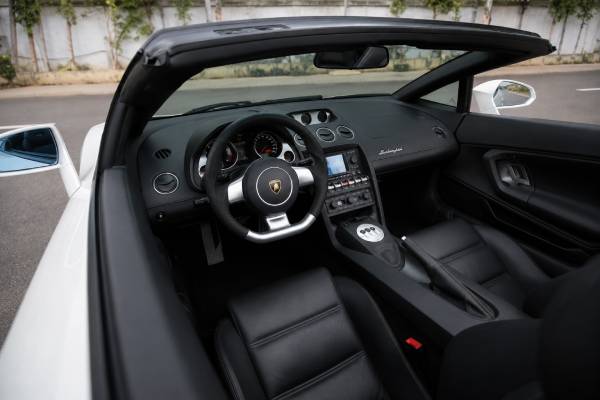
Inside, the LP 560-4 Spyder mixes old Gallardo architecture with updated materials and controls. The driver sits low, the windshield is shallow, the center console is wide, and the cabin feels more like a compact fighter cockpit than a modern luxury convertible. Visibility is better than the shape suggests, though rear visibility is still limited with the roof up.
The sound is a large part of the engineering appeal. The firing order, short exhaust path, high engine speed, and open roof make the Spyder more dramatic than the coupé at normal road speeds. It does not need extreme speed to feel special; even moderate throttle brings intake noise from behind the cabin and a metallic exhaust note that gets harder and brighter near the top of the rev range.
How the LP 560-4 Spyder Drives
The LP 560-4 Spyder drives like a compact, all-wheel-drive V10 supercar with real grip, strong body control, and more mechanical feel than newer dual-clutch Lamborghinis. It is fast by modern standards, but its bigger appeal is the way it delivers speed.
The engine is the centerpiece. At low rpm it is tractable enough for traffic, though it never feels like a lazy luxury engine. Above about 4,000 rpm it becomes much more alert, and near the top of the tachometer the car feels alive in a way that only a naturally aspirated V10 can. Throttle response is immediate, and the sound changes from a hard-edged growl to a sharp, layered howl.
The all-wheel-drive system gives the car confidence on imperfect roads. The standard rear-biased torque split helps the car feel like a mid-engine Lamborghini rather than a front-pulling AWD car, while the viscous system adds security when the tires are cold or the surface is uneven. It is not a drift-focused car in LP 560-4 form. It rewards smooth inputs, early throttle on corner exit, and trust in front-end grip.
Manual and E-gear cars feel different:
- Manual: more interactive, more valuable, and more satisfying for drivers who enjoy timing shifts and clutch work. It can feel heavy in traffic, but on a clear road it is the purer experience.
- E-gear: faster in the period sense, easier for casual use, and more common. It works best when the driver lifts slightly during lower-speed shifts and uses Sport or Corsa only when the car is warm and the road suits it.
Steering is direct and relatively communicative. It has more assistance than an older analog exotic, but it still gives useful information through the rim. The short wheelbase and wide track make the car feel agile, and the body stays settled on smooth, fast roads. On poor pavement, the ride is firm, especially on older tires or cars with incorrect alignment.
The brakes are strong in both standard steel and optional carbon-ceramic form. Steel brakes are often easier and cheaper to live with, especially for road cars. Carbon-ceramic brakes save weight and resist heat, but their condition must be judged carefully because replacement costs are high. On either system, pedal feel should be firm, consistent, and straight under hard braking.
As a road car, the Spyder is more usable than its image suggests. The front luggage compartment is small but helpful, the cabin can handle long-distance driving, and the nose lift option makes a meaningful difference in cities. The main daily-use compromises are width, low ground clearance, heat, roof complexity, tire cost, and attention from everyone nearby.
Maintenance, Reliability, and Known Issues
A good LP 560-4 Spyder can be dependable by exotic-car standards, but neglect turns it into a very expensive project. The right car is one with steady specialist servicing, clear clutch and brake data, working roof hydraulics, clean electronics, and no hidden crash history.
The 5.2 V10 itself is generally strong when serviced correctly. It needs quality oil, correct warm-up, healthy cooling, and careful attention to leaks. Because it uses dry-sump lubrication and tight mid-engine packaging, service access is more involved than on ordinary performance cars. Small leaks, tired hoses, cracked plastic fittings, and old rubber parts matter more as the car ages.
Important inspection areas include:
- E-gear clutch wear: A specialist can read clutch wear data and check calibration. Jerky engagement, warning lights, slipping, or hard launches can point to expensive repairs.
- Manual clutch condition: A gated manual is valuable, but clutch replacement is still a major cost. Check bite point, pedal feel, synchro behavior, and service history.
- Roof operation: The soft top should complete its full cycle smoothly. Slow movement, uneven latching, hydraulic leaks, sensor errors, or rear-glass issues need diagnosis before purchase.
- Carbon-ceramic brakes: Inspect rotor condition, surface damage, hardware, pad life, and service history. Do not judge CCB health only by appearance.
- Cooling system: Look for radiator debris, coolant leaks, fan operation, temperature stability, and signs of overheating.
- Suspension and alignment: Worn bushings, tired dampers, uneven tire wear, and bent wheels are common on cars driven hard or used in cities.
- Front lift system: If fitted, it should raise and lower evenly without warning lights or hydraulic leaks.
- Electrical modules: Check windows, locks, instrument display, infotainment, sensors, battery drain, and warning lights.
- Underbody and front bumper: Low cars often suffer splitter, tray, and radiator-area damage. Poor repairs can affect airflow and value.
Service records should show more than occasional oil changes. Brake fluid, coolant, gearbox service, differential service, spark plugs, belts, filters, tires, batteries, and roof maintenance all matter. A car that sat unused for years may need more work than a higher-mileage example that was driven and serviced regularly.
Known recall and campaign areas should be checked by VIN. Some 2007–2009 Gallardo Coupé and Spyder models with carbon-ceramic brakes were affected by a brake rotor hardware recall related to fastener corrosion in salty conditions. Some 2011–2014 Gallardo Coupé and Spyder vehicles were also covered by an ECU software recall involving warning lamps after restart. The exact applicability depends on VIN, market, equipment, and campaign completion, so buyers should verify directly with Lamborghini or an authorized dealer.
Ownership costs vary widely, but the pattern is predictable. Tires, fluids, batteries, clutches, brake parts, roof repairs, and suspension wear are normal exotic-car expenses. The most dangerous cars are the “cheap” ones with deferred service, aftermarket wiring, accident history, tuned ECUs, incomplete records, or sellers who cannot explain clutch and brake condition.
Originality is usually the safest path. Sensible reversible upgrades such as modern tires, protective film, or updated audio can be acceptable, but heavy exhaust modifications, poor carbon trim, non-original wheels, suspension lowering, and questionable ECU tuning can reduce buyer confidence.
Market Values and Buying Advice
The LP 560-4 Spyder sits in a strengthening collector position because it combines the later 5.2 V10 with open-air drama and a still-manageable purchase price compared with newer Lamborghinis. The best cars are no longer just used exotics; they are becoming specification-sensitive modern collectibles.
In the current market, ordinary E-gear LP 560-4 Spyders with average mileage often trade below the very best manual, low-mileage, rare-color cars. Well-kept E-gear examples commonly sit in the low-to-mid six-figure range in the U.S., while special-condition cars, late cars, rare colors, and manual-transmission examples can command much more. UK and European pricing varies by right-hand drive availability, VAT status, mileage, color, and service history.
Value is driven by specification more than model year alone. A later car with poor records is less desirable than an earlier car with excellent documentation. A manual car with a dull color may still outrank a highly optioned E-gear car for collectors. A high-mileage car with full Lamborghini specialist history can be a better driver purchase than a low-mileage car that has sat unused and needs recommissioning.
| Priority | Why it matters |
|---|---|
| Documented service history | Proves maintenance pattern and helps avoid deferred exotic-car costs |
| Gearbox condition | Clutch wear and E-gear calibration strongly affect value and near-term cost |
| Original paint and clean structure | Accident repair on aluminum structures can be costly and value-sensitive |
| Roof function | Hydraulic and sensor issues can be expensive and inconvenient |
| Brake package condition | CCB replacement costs can change the economics of a purchase |
| Factory options | Lift, manual gearbox, rare colors, carbon trim, and Ad Personam details affect desirability |
| Recall completion | Confirms safety campaigns were addressed by VIN |
Before buying, follow a proper exotic-car process:
- Confirm the VIN, engine identity, gearbox type, factory options, and market specification.
- Review service invoices, not just stamped books.
- Have a Lamborghini dealer or marque specialist perform a pre-purchase inspection.
- Get clutch data on E-gear cars and confirm the latest calibration.
- Inspect the roof mechanism through several full cycles.
- Check brake rotor, pad, tire, and suspension condition.
- Measure paint depth and inspect the underside for crash or curb damage.
- Verify recall and campaign completion through an authorized source.
- Budget for immediate fluids, tires, battery, alignment, and small age-related fixes unless recently documented.
The best examples to seek are original, unmodified cars with clear ownership history, strong colors, complete accessories, specialist service, and no warning lights. The cars to avoid are those with vague “just serviced” claims, missing records, unknown clutch wear, non-functioning roof features, cheap tires, warning lights, sticky interior controls, heavy modifications, or signs of accident repair.
Long-term, the LP 560-4 Spyder has a credible collector case. It is the mature version of the original Gallardo, it has a naturally aspirated V10, and it represents the last era when Lamborghini still offered a gated manual in its V10 line. E-gear cars will likely remain the accessible entry point, while manual cars and rare specifications should continue to attract the strongest collector attention.
References
- Lamborghini Gallardo LP 560-4 Spyder – Technical Specifications, Pictures 2009 (Manufacturer)
- Lamborghini Gallardo LP 560-4 Spyder 2008 (Press Kit)
- Celebrating The Lamborghini Gallardo 2023 (Manufacturer)
- Vehicle Detail Search – 2009 LAMBORGHINI GALLARDO SPYDER | NHTSA 2026 (Recall Database)
- Part 573 Safety Recall Report 18V-833 2018 (Recall Database)
Disclaimer
This article is for informational purposes only and is not a substitute for professional diagnosis, repair, appraisal, or pre-purchase inspection. Specifications, torque values, service intervals, campaign applicability, parts, and repair procedures can vary by VIN, market, equipment, and software version. Always verify details against official Lamborghini service documentation and have any vehicle inspected by a qualified Lamborghini specialist.
If this guide helped you, please share it on Facebook, X/Twitter, or your favorite car community to support our work.