

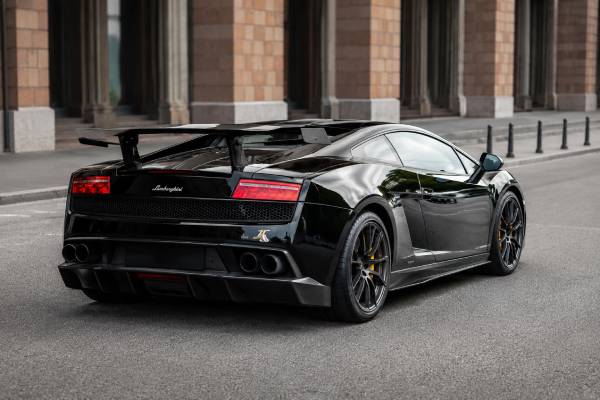
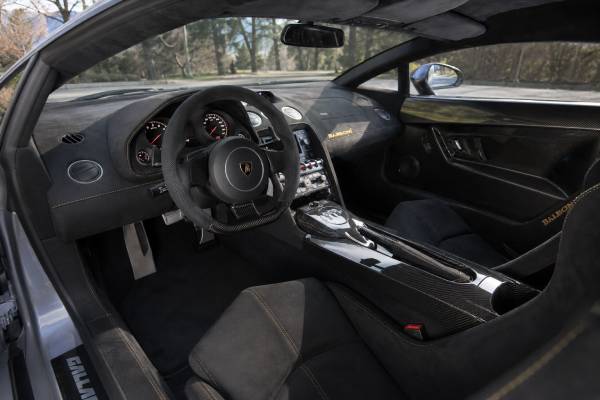
The Lamborghini Gallardo LP 570-4 Blancpain Edition is one of the rarest road-going versions of the L140 Gallardo. It is a 5.2-liter V10, all-wheel-drive, e-gear lightweight special based on the LP 570-4 Superleggera and created to celebrate Lamborghini’s partnership with Blancpain in the Super Trofeo one-make racing series. Its appeal comes from three things at once: the late Gallardo’s sharper 570 hp powertrain, the Superleggera’s carbon-heavy weight reduction, and Blancpain-specific race-inspired details.
For buyers and collectors, this is not a normal Gallardo with decals. The Blancpain Edition sits in a narrow space between the standard LP 570-4 Superleggera and later road-racing specials such as the Super Trofeo Stradale and Squadra Corse. Condition, documentation, originality, and verified edition identity matter as much as mileage.
Table of Contents
- Blancpain Edition history and significance
- 5.2L V10, e-gear, AWD, and specifications
- Production, options, and authenticity checks
- Race-derived design and engineering details
- Road and track driving character
- Maintenance, reliability, and ownership risk
- Market value and buying guide
Blancpain Edition history and significance
The Blancpain Edition matters because it links the Gallardo road car directly to Lamborghini’s early modern customer-racing identity. It was presented in 2010 and belongs to the 2011-era LP 570-4 family, when the Gallardo had evolved from a junior Lamborghini into the brand’s most important volume supercar.
The original Gallardo arrived in 2003 and changed Lamborghini’s scale. Earlier Lamborghinis were rare, dramatic, and often difficult to build in large numbers. The Gallardo kept the mid-engine V10 drama but added Audi-era engineering discipline, an aluminum spaceframe, permanent all-wheel drive, and a production process that made Lamborghini far more sustainable as a company.
By the time the LP 570-4 versions arrived, the Gallardo had already gone through its major second-generation update. The 2008 LP 560-4 brought a redesigned front and rear, a 5.2-liter direct-injection V10, more power, and improved drivability. The LP 570-4 Superleggera then sharpened that base with extra power, lower weight, carbon-fiber parts, Pirelli P Zero Corsa tires, and a more focused chassis.
The Blancpain Edition used that Superleggera foundation and added a stronger visual and symbolic link to the Lamborghini Blancpain Super Trofeo race series. Blancpain was the title sponsor of the one-make championship, and the road car was presented at Vallelunga during the final race weekend of the series. That launch context matters because the car was not merely a color-and-trim package. Its rear wing, engine cover, carbon exterior pieces, carbon-ceramic brakes, Alcantara cabin, and yellow Blancpain details were meant to make the road car feel close to the Super Trofeo world.
The Gallardo’s historical importance is also helped by timing. It was Lamborghini’s last V10 model line before the Huracán and one of the final Lamborghini platforms where analog sensations still played a major role. The engine is naturally aspirated, the e-gear transmission is a single-clutch automated manual rather than a modern dual-clutch unit, and the chassis gives the driver clear mechanical feedback. Later Lamborghinis are faster and more polished, but the LP 570-4 cars still feel raw enough to satisfy drivers who want a supercar with noise, edge, and physicality.
For collectors, the Blancpain Edition has several layers of appeal:
- It is based on the most desirable late Gallardo coupe formula: 570 hp, lightweight construction, and all-wheel drive.
- It has a direct motorsport connection through Super Trofeo branding and design cues.
- It is far rarer than normal LP 560-4 and LP 570-4 Superleggera models.
- It belongs to the mature, final phase of the Gallardo platform, when many early issues had been improved.
- It has clear visual identity: matte black paintwork, yellow accents, carbon details, fixed rear wing, and Blancpain logos.
Its limitation is that it is niche. Some buyers prefer the cleaner look of a standard Superleggera, while others want the more widely recognized Super Trofeo Stradale or Squadra Corse. The Blancpain Edition appeals most strongly to buyers who value rarity, Super Trofeo history, and a road car that feels like a privateer race paddock special.
5.2L V10, e-gear, AWD, and specifications
The Blancpain Edition uses the LP 570-4 Superleggera’s main mechanical package: a naturally aspirated 5.2-liter V10, 570 hp, six-speed e-gear transmission, and permanent all-wheel drive. The key point is that the car’s character comes from light weight and sharp response, not from turbocharged torque or electronic excess.
| Category | Specification |
|---|---|
| Platform | Lamborghini Gallardo L140 |
| Engine code | CEH family 5.2L V10 |
| Engine layout | Longitudinal rear-mid-mounted 90-degree V10 |
| Displacement | 5,204 cc |
| Valvetrain | DOHC, 40 valves |
| Induction | Naturally aspirated |
| Fuel system | Direct injection |
| Compression ratio | 12.5:1 |
| Power | 419 kW / 570 hp at 8,000 rpm |
| Torque | 540 Nm / 398 lb-ft at 6,500 rpm |
| Transmission | Six-speed e-gear automated manual |
| Drivetrain | Permanent all-wheel drive with viscous traction system |
| Chassis | Structural aluminum spaceframe |
| Body | Aluminum with thermoplastic and carbon-fiber elements |
| Suspension | Aluminum double wishbones, front and rear anti-roll bars |
| Steering | Power-assisted rack and pinion |
| Front tires | 235/35 ZR19 Pirelli P Zero Corsa |
| Rear tires | 295/30 ZR19 Pirelli P Zero Corsa |
| Carbon-ceramic brakes | 380 x 38 mm front, 356 x 32 mm rear |
| Dry weight | 1,340 kg / 2,954 lb |
| Weight distribution | 43% front / 57% rear |
| 0–100 km/h | 3.4 seconds |
| 0–200 km/h | About 10.2 seconds for the Superleggera basis; Blancpain official release states 6.8 seconds after 100 km/h |
| Top speed | Over 320 km/h / 199 mph |
| Fuel tank | 90 liters / 23.8 US gallons |
The engine is the heart of the car. It is a high-revving, dry-sump, direct-injection V10 with variable intake geometry and continuous camshaft control. Dry-sump lubrication helps manage oil supply during hard cornering and lets the engine sit lower in the chassis, which helps the center of gravity.
The e-gear system deserves clear explanation. It is not a torque-converter automatic and not a dual-clutch transmission. It is an automated version of a manual gearbox, with computer-controlled clutch actuation and paddle shifts. In normal use it can feel mechanical, sometimes abrupt, especially at low speed. Driven correctly, with small throttle lifts during shifts when needed, it feels much more natural. Driven like a modern automatic, it can feel clumsy and can wear the clutch faster.
The all-wheel-drive system gives the LP 570-4 a different personality from rear-drive special editions such as the LP 550-2 Valentino Balboni. The Blancpain Edition is less playful at low speeds but has stronger traction and confidence when the V10 is used hard. The nominal rear bias helps it still feel like a mid-engine car rather than a front-pulling AWD coupe.
Carbon-ceramic brakes are central to the Blancpain Edition’s appeal. They reduce unsprung weight, resist fade during hard driving, and fit the race-linked image. They also add inspection risk because worn or damaged carbon-ceramic discs are expensive. A buyer should never assume that low mileage means healthy brakes; heat cycling, track use, stone chips, and poor storage can all matter.
Production, options, and authenticity checks
The Blancpain Edition is highly collectible because production was extremely limited and edition-specific details are central to value. The safest buying approach is to verify the car as a real Blancpain Edition through factory paperwork, VIN records, plaque details, original sales documents, and a specialist inspection.
Unlike a standard Gallardo, where color, mileage, and service history may be enough to set value, the Blancpain Edition needs authentication. A car with missing edition pieces, unclear import history, repaint work, or substituted interior trim can lose much of the premium that makes the model special.
Important identifiers include:
- Blancpain Edition plaque or edition numbering where fitted.
- Blancpain logos on the exterior and inside the cabin.
- Black Alcantara interior with yellow accents and stitching.
- Carbon-fiber exterior pieces such as diffuser and mirror casings.
- Large fixed rear wing.
- Race-inspired vented engine cover.
- Skorpius wheels.
- Yellow brake calipers.
- Carbon-ceramic brake system.
- Matte black exterior presentation.
Some cars may have been titled or registered in different years depending on country, delivery timing, and local paperwork. That is normal for ultra-low-volume exotics. The buyer’s job is not just to read the model year in an advert; it is to match the VIN, build record, factory specification, and physical car.
How it differs from a standard LP 570-4 Superleggera
The Blancpain Edition is best understood as a Superleggera-based special with a distinctive motorsport partnership theme. Mechanically, it shares the core 570 hp V10, lightweight construction, e-gear transmission, all-wheel drive, and performance character of the LP 570-4 Superleggera. Its added value comes from the way Lamborghini combined those parts with Blancpain and Super Trofeo design cues.
A standard Superleggera can be just as exciting to drive. In some cases, a clean Superleggera with perfect documentation may be a better buy than a tired or poorly documented Blancpain Edition. The Blancpain premium is justified only when the car’s identity and condition are beyond doubt.
Factory options and equipment to verify
Lamborghini offered a wide range of options through the Gallardo era, and late cars could be personalized. On a Blancpain Edition, the most important question is whether the car still matches its original build specification.
Check these items carefully:
- Front-axle lift system, because it improves usability and is desirable.
- Navigation, rear-view camera, and audio equipment, because market equipment varies.
- Carbon interior package and original carbon trim condition.
- Original wheels, wheel finish, and correct tire sizes.
- Brake caliper color and carbon-ceramic disc condition.
- Seats, seat logos, stitching, and Alcantara wear.
- Original books, keys, tools, charger, tire equipment, and factory literature.
- Market-specific lighting, emissions labels, and import documentation.
The best examples have a complete paper trail from new, including original bill of sale, service invoices, warranty or campaign records, registration history, and any import or compliance documents. For a car this rare, missing paperwork is not a small issue. It can affect resale and make the car harder to place with serious collectors.
Race-derived design and engineering details
The Blancpain Edition looks different because its design cues were meant to connect the road car to the Super Trofeo paddock. The large rear wing, vented engine cover, carbon diffuser, matte black finish, and yellow accents give it a more aggressive identity than the cleaner standard Superleggera.
The Gallardo shape was already compact and wedge-like, with a short nose, cab-forward cockpit, and broad rear haunches. The LP 570-4 generation sharpened that shape with larger intakes, more defined front elements, and a more purposeful rear. The Blancpain Edition pushes the theme further. It looks less like a luxury exotic and more like a road-legal track car with sponsor-linked detailing.
The carbon-fiber pieces are not just decorative. Carbon was used throughout the LP 570-4 program to reduce weight, including exterior and interior components. The Superleggera basis used carbon-fiber for items such as the engine cover, rear spoiler, sills, diffuser, underbody parts, mirror casings, door panels, tunnel cover, and seat shells, depending on specification. The result was a dry weight of 1,340 kg, 70 kg lighter than the LP 560-4 base.
Aerodynamics are also part of the story. The Gallardo is not a modern active-aero car, so its aero work comes from fixed shapes: front intakes, underbody management, rear diffuser, and wing. The Blancpain’s large rear wing adds visual drama and high-speed stability, though it also makes the car less discreet and more specification-sensitive. Buyers should inspect wing mounts, rear deck alignment, and carbon finish for signs of removal, repainting, or accident repair.
The cabin is more focused than a normal Gallardo but not stripped like a race car. Alcantara reduces glare and weight while giving the interior a competition feel. Yellow stitching and Blancpain logos make the car feel special, but they also create restoration challenges. Replacing generic Alcantara is one thing; recreating correct stitching, logos, texture, and factory placement is another. Worn bolsters, sun-faded yellow thread, loose trim, sticky switches, and scratched carbon are all value factors.
The sound is one of the car’s defining traits. The 5.2-liter V10 has an uneven firing character and a hard metallic note at high rpm. It does not deliver the low-end punch of a turbocharged modern supercar. Instead, it builds intensity as revs rise, becoming sharper and more urgent near the top of the tachometer. That sound is a major reason buyers still seek late Gallardos.
Road and track driving character
The LP 570-4 Blancpain Edition feels fast, loud, compact, and mechanical. It is not as smooth as a modern Huracán, but that is part of the reason enthusiasts like it.
At low speeds, the e-gear transmission is the first thing most drivers notice. It asks for mechanical sympathy. Smooth launches, careful parking maneuvers, and light throttle timing can reduce clutch wear and improve shift quality. In traffic, it can feel less relaxed than a modern dual-clutch gearbox. On an open road, it becomes much more satisfying, especially when shifts are timed with the engine’s rising note.
The V10 is responsive rather than lazy. It likes revs, and the best part of the powerband sits higher than many modern drivers expect. Below the midrange it is tractable, but the car comes alive as the revs climb. The reward is a clean naturally aspirated pull that feels connected to throttle position rather than boost pressure.
The steering is direct and readable. The front axle has real bite, helped by the tire package and the car’s compact proportions. Compared with a rear-drive Gallardo, the all-wheel-drive LP 570-4 gives more security when powering out of corners. The tradeoff is that it feels less loose and less adjustable with the throttle. It prefers clean inputs, decisive braking, and early throttle application on exit.
Ride quality is firm. The Blancpain Edition’s appeal depends on the driver accepting some harshness, tire noise, and road texture. On smooth roads, it feels alive and precise. On broken city pavement, it can feel busy, especially on old or cold P Zero Corsa tires. The front lift system, if fitted and working properly, makes a major difference in daily usability.
The brakes are powerful, but carbon-ceramic systems have their own feel. They can need temperature to feel their best, and they are sensitive to pad condition and surface health. A properly maintained system gives strong stopping power and fade resistance. A neglected one can produce noise, vibration, uneven bite, or large repair bills.
On track, the car has enough grip and braking capability to remain serious, but ownership reality matters. Track use accelerates tire wear, clutch wear, brake heat cycling, suspension bushing wear, and paint damage. A tracked Blancpain Edition is not automatically bad if it was maintained properly. But a seller must have records that support that use. Without records, track signs become risk.
Visibility and cabin ergonomics are typical late Gallardo. Forward visibility is acceptable for a low supercar, rear visibility is limited, and the cabin feels compact. The controls are simple compared with later Lamborghinis. There are fewer screens, fewer modes, and less software between the driver and the car. That simplicity is part of the charm.
Maintenance, reliability, and ownership risk
A Blancpain Edition can be reliable when used and serviced correctly, but it is still an exotic with expensive parts and specialist labor needs. The biggest risks are clutch wear, e-gear health, carbon-ceramic brake condition, aging rubber and fluids, carbon damage, and incomplete campaign history.
The 5.2-liter V10 is generally respected, but ownership quality matters. Cars that sit for long periods can develop battery, fuel, seal, and electronic problems. Cars driven hard without warm-up or proper service can hide expensive wear. A low-mile example is not automatically better than a regularly exercised, fully documented car.
Key inspection areas include:
- Clutch wear reading through proper diagnostic equipment.
- E-gear pump operation, shift quality, and actuator calibration.
- Engine oil leaks, dry-sump lines, and service history.
- Cooling system condition, including radiators and hoses.
- High-pressure fuel pump history and fuel-system fault codes.
- Carbon-ceramic disc thickness, surface condition, chips, and heat marks.
- Suspension bushings, dampers, ball joints, and alignment.
- Tire age, not just tread depth.
- Front lift operation and hydraulic leaks if fitted.
- Battery condition and parasitic drain history.
- Sticky interior switches and trim deterioration.
- Carbon-fiber cracks, delamination, repairs, and poor refinishing.
- Underbody damage from ramps, transport, or road strikes.
The e-gear system is one of the most important ownership topics. Clutch life varies widely because it depends on driving style, traffic use, hill starts, reverse maneuvers, calibration, and previous maintenance. A car used mostly for short urban trips may have more clutch wear than a higher-mile car driven on open roads. A specialist should provide a clutch wear report and check for stored faults.
Carbon-ceramic brakes must be inspected by someone who understands them. Visual shine alone is not enough. Disc weight, thickness, surface condition, edge chips, heat damage, and pad compatibility all matter. Replacement costs can be high enough to change the value of the car.
The 2011–2014 Gallardo family also has known recall and campaign relevance in the United States for engine ECU software behavior. Buyers should verify by VIN that all applicable campaigns and recalls have been completed. A proper Lamborghini dealer or marque specialist can check the car against factory systems. Do not rely only on a seller’s statement that “everything is up to date.”
Service history matters more than mileage
The best service file shows regular annual care, brake-fluid service, gearbox and e-gear checks, coolant attention, tires replaced by age, battery maintenance, campaign completion, and clear notes from a Lamborghini dealer or respected independent specialist. A three-year gap on a very low-mile car should raise questions.
A pre-purchase inspection should include:
- Confirm VIN, edition identity, build details, and market specification.
- Scan all modules with Lamborghini-capable diagnostic equipment.
- Check clutch wear and e-gear parameters.
- Inspect carbon-ceramic brakes and tires.
- Check underbody, front splitter, side sills, diffuser, and wing mounts.
- Inspect paint depth and carbon-fiber finish.
- Road-test from cold and hot.
- Review service invoices line by line.
- Confirm recalls, campaigns, and emissions readiness.
- Estimate immediate needs before agreeing on price.
Restoration is possible but expensive. Mechanical parts for Gallardos are generally more available than parts for older Lamborghinis, but Blancpain-specific trim can be hard to source. The more edition-specific the part, the more important originality becomes. A missing logo seat, incorrect wheel, repainted carbon panel, or damaged edition plaque can become a serious problem.
Market value and buying guide
The Blancpain Edition trades above ordinary Gallardos because rarity and identity drive demand, but the market is thin. A normal price guide is not enough; buyers must judge each car by authenticity, mileage, condition, history, and how closely it matches its original specification.
Standard Gallardo values cover a wide range. Early 5.0-liter coupes, Spyders, LP 560-4 cars, rear-drive LP 550-2 cars, and LP 570-4 specials all behave differently. The Blancpain Edition is closer to the collector end of the range because it combines LP 570-4 performance with a very limited production identity. Low-mile, fully documented examples can command a serious premium over normal Superleggera cars. Higher-mile, modified, incomplete, or poorly documented examples should be treated much more cautiously.
A realistic buyer should be prepared for the low-$200,000 to high-$200,000 range for strong examples in major collector markets, with exceptional or unusually documented cars capable of asking more. Lesser examples may appear cheaper, but a discount can disappear quickly if the car needs clutch work, carbon-ceramic brake replacement, tire replacement, e-gear service, carbon repair, or authenticity correction.
Value is driven by:
- Verified Blancpain Edition identity.
- Original paint and original carbon parts.
- Low but believable mileage.
- Complete service records.
- Clear title and no accident history.
- Correct wheels, brakes, interior, and edition details.
- Complete books, keys, tools, charger, literature, and factory items.
- Recent tires and fluids.
- Completed recalls and campaigns.
- Specialist inspection report.
- Original market desirability, especially left-hand-drive cars in strong collector regions.
Cars to seek are original, documented, lightly used, and mechanically current. A car that has been serviced annually, stored correctly, driven enough to stay healthy, and kept close to factory condition is usually worth paying more for.
Cars to avoid include:
- Examples with unclear edition identity.
- Cars missing Blancpain-specific trim or logos.
- Cars with accident history and poor carbon repair.
- Cars with clutch wear hidden behind vague seller claims.
- Cars on old tires.
- Cars with warning lights, incomplete monitors, or emissions issues.
- Cars with aftermarket tuning that cannot be reversed.
- Cars with long service gaps and no specialist inspection.
- Cars priced like top examples but needing major deferred maintenance.
The long-term collectability outlook is positive but selective. The Blancpain Edition has rarity, a strong V10 powertrain, a direct motorsport partnership, and a clear place in the late Gallardo story. It also lives in a crowded Gallardo special-edition world, so the best cars will separate themselves from average cars over time. Originality and documentation will likely matter more each year.
For an enthusiast who wants the most usable, least stressful Gallardo, a standard LP 560-4 or well-bought LP 570-4 Superleggera may be easier. For a collector who wants a rare late Gallardo with a defined motorsport identity, the Blancpain Edition is far more interesting. The right car should feel complete before purchase: correct identity, clean history, fresh service, healthy e-gear, good brakes, and no excuses around rare trim.
References
- Lamborghini Gallardo LP 570-4 Blancpain Edition 2010 (Press Release)
- Gallardo LP 570-4 Superleggera – EN 2010 (Technical Data)
- End of production for the Lamborghini Gallardo_EN 2013 (Press Release)
- Part 573 Safety Recall Report 18V-833 2018 (Recall Database)
- 947-Kilometer 2012 Lamborghini Gallardo LP570-4 Blancpain Edition 2023 (Auction Result)
Disclaimer
This article is for informational purposes only and is not a substitute for professional diagnosis, repair, inspection, valuation, or restoration advice. Specifications, torque values, service intervals, repair procedures, campaign applicability, and equipment can vary by VIN, market, production date, and individual vehicle specification. Always verify details against official Lamborghini service documentation and have any purchase inspected by a qualified Lamborghini specialist.
If you found this guide useful, please share it on Facebook, X/Twitter, or your preferred enthusiast community to support our work.