
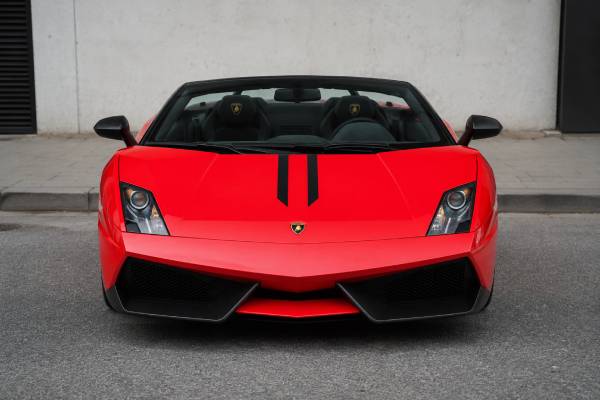
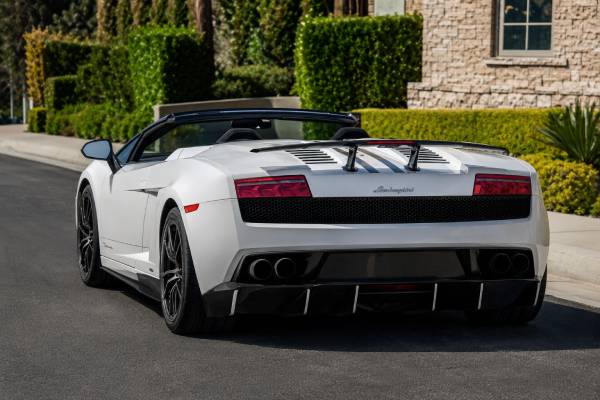
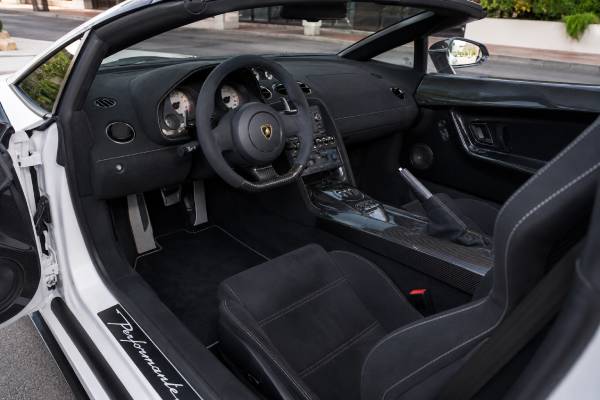
The Lamborghini Gallardo LP 570-4 Spyder Performante Edizione Tecnica is the most focused open-top Gallardo: a lighter, sharper, carbon-trimmed V10 roadster with the final-series equipment that collectors now watch closely. It sits at the top of the Gallardo Spyder range, above the LP 560-4 Spyder, and shares its core character with the LP 570-4 Superleggera coupe. The appeal is simple: naturally aspirated V10 sound, all-wheel-drive traction, open-air drama, and a rare late-production specification from the end of the Gallardo era.
For buyers, the important point is that this is not just a used exotic convertible. Condition, originality, clutch data, carbon-ceramic brake health, service documentation, paintwork, roof function, and factory specification can change the car’s value and ownership risk by a large margin. For enthusiasts, it remains one of Lamborghini’s most vivid analog-era supercars before dual-clutch gearboxes, turbocharging, hybrid systems, and heavier digital control became the norm.
Table of Contents
- Why This Final Gallardo Spyder Matters
- LP 570-4 Spyder Performante Specs
- Edizione Tecnica Production, Options, and Identification
- Carbon, Aero, and Open-Top Engineering
- How the Spyder Performante Drives
- Maintenance Risks and Service Priorities
- Values, Inspection, and Buying Strategy
Why This Final Gallardo Spyder Matters
The Spyder Performante Edizione Tecnica matters because it combines the Gallardo’s lightest open-top formula with the late-production LP 570-4 package. It is one of the clearest expressions of Lamborghini’s pre-Huracán V10 era: compact, loud, mechanical, and still usable enough for road miles.
The Gallardo arrived in 2003 as Lamborghini’s smaller V10 model, sitting below the Murciélago and later the Aventador. It was also the car that changed Lamborghini’s scale as a company. Earlier “junior” Lamborghinis such as the Urraco, Silhouette, Jalpa, and early concept ideas never reached this level of commercial success. The Gallardo did. Across a ten-year production run, it became the brand’s most-built model of its time and helped make Lamborghini ownership more visible, more global, and more serviceable.
The LP 570-4 Spyder Performante appeared as the open version of the Superleggera idea. “LP” means the engine is mounted longitudinally behind the cabin, “570” refers to the power rating in metric horsepower, and “4” means all-wheel drive. “Performante” signaled the lighter, more focused roadster, while “Edizione Tecnica” added a more defined late-series specification with visual contrast, the fixed high rear wing, and carbon-ceramic braking equipment.
This model sits in an interesting historical place. It is modern enough to have direct fuel injection, carbon-ceramic brakes on many examples, stability systems, navigation, a powered roof, and available front lift. Yet it is old-school enough to keep hydraulic steering feel, a naturally aspirated V10, a single-clutch E-gear automated manual on most cars, and a six-speed gated manual on very rare examples.
The car also has end-of-era significance. The final Gallardo built was an LP 570-4 Spyder Performante in Rosso Mars, which gives the whole variant extra collector attention. That does not make every example priceless, but it does make specification and provenance more important than they would be on an ordinary exotic roadster.
Today, the strongest appeal is emotional as much as numerical. The car gives buyers a late Lamborghini V10 without the polish of the Huracán, and that is exactly why many enthusiasts want it. It is rawer, narrower in feel, less filtered, and more dramatic at normal road speeds.
LP 570-4 Spyder Performante Specs
The headline specification is a 5.2-liter naturally aspirated V10, all-wheel drive, 570 PS, and a claimed 0–100 km/h time of about 3.9 seconds. The numbers still look serious, but the real value is the combination of low weight, direct response, and open-air sound.
| Item | Specification |
|---|---|
| Model | Lamborghini Gallardo LP 570-4 Spyder Performante Edizione Tecnica |
| Platform | L140 Gallardo platform |
| Engine | 5.2-liter 90-degree V10, DOHC, 40 valves |
| Induction | Naturally aspirated |
| Fuel system | Gasoline direct injection |
| Output | 570 PS at 8,000 rpm, commonly listed as 570 hp; about 562 bhp in some markets |
| Torque | 540 Nm / about 398 lb-ft at 6,500 rpm |
| Transmission | Six-speed E-gear automated manual on most cars; six-speed manual on rare examples |
| Drivetrain | Permanent all-wheel drive with viscous coupling and limited-slip differentials |
| Layout | Longitudinal mid-mounted engine, two-seat roadster |
The V10 is the Gallardo’s defining mechanical feature. Compared with the earlier 5.0-liter Gallardo engine, the later 5.2-liter unit brought more power, direct injection, stronger midrange, and a harder top-end charge. It is not a turbocharged engine that hides its work behind boost. It builds speed with revs, air, intake noise, and exhaust pressure.
| Item | Specification |
|---|---|
| Body style | Two-door, two-seat soft-top roadster |
| Length | About 4,386 mm / 172.7 in |
| Width | About 1,900 mm / 74.8 in, excluding mirrors |
| Height | About 1,184 mm / 46.6 in |
| Wheelbase | 2,560 mm / 100.8 in |
| Claimed dry weight | About 1,485 kg / 3,274 lb |
| Front tires | 235/35 ZR19 |
| Rear tires | 295/30 ZR19 |
| Brakes | Carbon-ceramic brakes on Edizione Tecnica specification |
| 0–100 km/h | About 3.9 seconds |
| Top speed | About 324–325 km/h / 201 mph |
| Fuel capacity | About 80 liters / 21.1 US gal |
The dry-weight figure should be read carefully. Real road weight depends on fluids, market equipment, gearbox, options, and later modifications. A lift system, multimedia equipment, camera system, and different seats can change the feel and collectability more than the headline weight suggests.
The chassis uses aluminum construction with double-wishbone suspension. Steering is hydraulic, not electric, which helps explain why the car still feels more connected than many newer supercars. Braking performance depends heavily on carbon-ceramic disc condition, pad material, brake fluid age, and tire temperature.
Edizione Tecnica Production, Options, and Identification
The Edizione Tecnica is best understood as a late-production specification for the LP 570-4 Superleggera and Spyder Performante, not as a separate clean-sheet model. The key identifiers are the high fixed rear wing, carbon-ceramic brakes, lightweight carbon details, and distinctive color or trim treatment.
Lamborghini did not publish a simple global production number for the LP 570-4 Spyder Performante Edizione Tecnica in the way it did for some numbered limited editions. That matters for buyers. Sellers may describe the car as “rare,” and that can be true, but a serious buyer should ask for factory documentation rather than relying on vague rarity language.
The Gallardo line itself ran from 2003 to 2013, with late cars registered or sold in some markets after that. The Edizione Tecnica appeared at the end of the model cycle, around the 2012–2013 period, when Lamborghini was sharpening the final Gallardo range before the Huracán arrived.
What separates it from a normal LP 560-4 Spyder
The LP 570-4 Spyder Performante is more than a cosmetic upgrade over the standard LP 560-4 Spyder. The main differences include:
- More power from the 5.2-liter V10.
- Lower claimed weight through carbon fiber and lighter trim.
- More aggressive aero, including the larger fixed rear wing on Edizione Tecnica cars.
- More focused seats, Alcantara, and carbon-fiber interior parts.
- Sharper road feel and stronger track-day identity.
- Greater collector interest because of its position near the top of the Gallardo family.
The LP 560-4 Spyder is easiergoing and usually less expensive. The Spyder Performante Edizione Tecnica is more special, but that also makes originality and correct equipment more important.
Factory options that matter
The most desirable examples are not always the loudest-looking cars. Buyers should care more about original equipment, documentation, and condition than social-media color impact.
Valuable or inspection-worthy equipment includes:
- Front-axle lifting system, useful for steep driveways and urban use.
- Multimedia system with navigation, Bluetooth, and interface options.
- Rear-view camera, which is helpful because rear visibility is limited.
- Carbon-fiber interior trim and carbon sport seats.
- Correct Scorpius-style 19-inch wheels.
- Correct high rear wing and carbon rear diffuser.
- Factory color contrast and livery details.
- Original books, tools, tire repair kit, keys, and service invoices.
- Lamborghini dealer or specialist records showing clutch and brake data.
The factory manual gearbox is a special case. Manual LP 570-4 Spyder Performante cars are extremely scarce compared with E-gear cars, and a documented gated manual can sit in a different value category. That does not mean every manual car is automatically better to drive for every owner, but from a collector standpoint, factory manual originality is a major value driver.
How to identify a better example
A strong car should have consistency. Paint color, trim, wheels, brake package, wing, interior stitching, carbon parts, and build documentation should all tell the same story. Any mismatch deserves explanation.
A good file should include:
- Factory build information or Lamborghini heritage documentation where available.
- Continuous service history with dates and mileage.
- Clutch wear reading for E-gear cars.
- Brake disc condition reports for carbon-ceramic cars.
- Tire dates, not just tread depth.
- Paint-meter readings on panels, especially nose, hood, doors, rear quarters, and rear bumper.
- Proof that recall and software updates were completed where applicable.
Avoid cars where the seller leans heavily on rarity but cannot provide documents. Also be cautious with cars that have aftermarket exhausts, ECU tunes, changed audio systems, wrapped panels, missing original parts, or inconsistent carbon trim. Some upgrades may improve sound or usability, but they usually reduce collector confidence unless the original parts come with the car.
Carbon, Aero, and Open-Top Engineering
The car’s special feel comes from a direct engineering idea: remove weight, add downforce, keep the V10 exposed to the driver’s senses, and preserve all-wheel-drive traction. The result is less delicate than a Ferrari 458 Spider but more aggressive, louder, and more mechanical.
The exterior design is classic late Gallardo. The shape is short, wide, low, and wedge-like, with strong shoulder lines and a nose that sits close to the ground. The front bumper has large cooling openings, the rear diffuser frames the exhaust outlets, and the high rear wing gives the Edizione Tecnica a stronger visual link to the Superleggera and Super Trofeo world.
Carbon fiber appears in places that matter visually and, in some cases, functionally. Depending on specification, the car can include a carbon rear wing, carbon rear diffuser, carbon mirror housings, carbon engine-bay trim, carbon interior trim, and carbon-shell sport seats. The soft top adds weight and complexity compared with the coupe, so the carbon work helps pull the roadster back toward the Superleggera character.
The roof is central to the car’s personality. Closed, the car is still compact and dramatic, but rear visibility is limited and the cabin can feel snug. Open, the V10 becomes the main event. The engine sits close behind the occupants, and the intake and exhaust sound bounce around the cabin in a way the coupe cannot copy.
Aerodynamics on this car are not hidden or subtle. The wing and diffuser help define the high-speed character, but they also define the look. A missing, damaged, aftermarket, or incorrectly refinished wing is a serious inspection point, not a minor trim issue.
The cockpit mixes exotic drama with familiar Audi-era practicality. That is part of the Gallardo’s charm and part of its criticism. The switchgear is easier to live with than older Lamborghinis, but some plastics, screens, and buttons do not feel as special as the bodywork. The best interiors use Alcantara and carbon to reduce that issue. Worn Alcantara, sticky buttons, scratched carbon, fading displays, and loose trim should all affect the price.
Engineering-wise, the car sits between eras. It has direct injection and electronic drive modes, but it does not feel like a software-first supercar. The E-gear transmission is a single-clutch automated manual, not a modern dual-clutch. It shifts with a physical interruption and a mechanical event. Some owners love that drama; others find it slow or clumsy at parking speeds. That single trait often decides whether a buyer should choose this car, a manual example, or a later Huracán.
How the Spyder Performante Drives
The Spyder Performante drives like a loud, compact, all-weather Lamborghini with sharper responses than the standard Spyder. It is fast, but its bigger thrill is how clearly it turns fuel, revs, shifts, grip, and sound into theater.
The V10 is the main attraction. It does not deliver peak drama at idle or low rpm alone. It gets better the higher it revs. Below the midrange, it is tractable enough for town use, but above that it hardens, sharpens, and pulls with the kind of urgency that naturally aspirated engines are prized for. Near the top end, the sound becomes more metallic and urgent, especially with the roof down.
The E-gear gearbox needs the right expectations. In normal use it can feel jerky if the driver treats it like a torque-converter automatic. It works better when the driver slightly lifts the throttle during low-speed shifts and lets the system behave like a clutch-operated manual. In sportier modes, shifts become harder and more dramatic. That is part of the experience, but it also adds clutch wear if abused.
A manual car feels more traditional and more involving. The gated shift action adds a tactile layer that collectors love. The downside is that manual examples are far rarer and usually much more expensive. A buyer who wants the best road feel may prefer the manual; a buyer who wants the most typical period Lamborghini experience may accept E-gear if the clutch health is strong.
The steering is one of the car’s best qualities. It has weight, texture, and road information without feeling nervous. Compared with newer electric-rack supercars, the Gallardo feels more honest through the front axle. The all-wheel-drive system gives strong traction out of corners, especially when the tires are warm, but it does not make the car foolproof. Old tires, cold tires, mismatched tires, or poor alignment can turn a confident car into a vague one.
Ride quality is firm. The Spyder Performante is not harsh all the time, but it is not a relaxed grand tourer. Broken pavement, steep ramps, and urban speed bumps make the front lift system valuable. On smooth roads, the chassis feels flat and stable. On rough roads, tire age and damper condition matter greatly.
Brakes can be excellent when the carbon-ceramic system is healthy. Pedal feel, bite, and endurance depend on disc condition, pads, fluid, and how the car has been used. Carbon-ceramic brakes can last a long time on road cars, but replacement cost is high enough that inspection is mandatory before purchase.
On a mountain road, the car feels compact by modern supercar standards. Visibility forward is good, the nose is low, and the sound encourages short bursts rather than reckless speed. On track, it is quick and exciting, but consumables are expensive and the open body is less focused than the Superleggera coupe. It is best as a road-first exotic that can handle occasional performance driving, not as the cheapest path to lap times.
Maintenance Risks and Service Priorities
The Spyder Performante can be dependable when used and serviced correctly, but neglect is expensive. The safest cars are the ones with regular specialist care, fresh fluids, healthy clutch data, documented software work, and no mystery modifications.
The 5.2-liter V10 is generally strong, but age and heat matter. These cars can spend long periods sitting, then get driven hard. That pattern is harder on batteries, seals, tires, fluids, E-gear hydraulics, roof systems, and fuel components than steady use.
Common ownership risks
Important areas to inspect include:
- E-gear clutch wear, engagement quality, and calibration history.
- E-gear pump, accumulator, actuator, and hydraulic leaks.
- Manual clutch condition on rare gated cars.
- Carbon-ceramic disc wear, chips, cracks, and pad condition.
- Front lift operation, leaks, pump noise, and uneven movement.
- Soft-top fabric, frame alignment, hydraulic function, and water sealing.
- Radiators, condensers, fans, and low-nose damage from debris.
- Control-arm bushings, ball joints, dampers, and alignment.
- Tire date codes, tire brand matching, and correct sizes.
- Battery health, low-voltage warning history, and charging habits.
- TPMS sensors, infotainment screen wear, sticky switches, and aged interior trim.
- Exhaust heat effects, catalytic converter health, and non-factory exhaust fitment.
A clutch report is essential on E-gear cars. Do not accept “shifts fine” as a substitute. A car can feel acceptable on a short test drive and still have a clutch near the end of its service life. The same applies to carbon-ceramic brakes. Visual inspection is not enough; a proper specialist should measure condition using the correct method.
Service habits that protect the car
Good ownership usually includes annual servicing even when mileage is low. Oil, brake fluid, gearbox fluid, differential fluids, coolant, filters, and roof mechanisms all need time-based attention. Tires should be replaced by age as well as tread depth, because a 570 PS mid-engine roadster on old rubber is a false economy.
The car should be kept on a proper battery maintainer. Many odd warnings on modern exotics start with weak voltage. A low battery can trigger fault codes, roof issues, transmission warnings, and infotainment problems that look worse than they are.
Software and recall status should be checked by VIN. Certain 2011–2014 Gallardo Coupe and Spyder vehicles were affected by an ECU software recall related to trouble-code storage after key-off. A buyer should confirm the campaign status with Lamborghini or an official recall database, because unresolved software work can affect both safety and future resale.
The roof deserves extra attention because a neglected soft-top system can turn a mechanically healthy car into a frustrating ownership experience. Inspect operation several times, check seals after washing, look for damp carpet, and examine the rear window and fabric for wear.
Originality versus upgrades
Many Gallardos have aftermarket exhausts, ECU tunes, wheel changes, lowered suspension, audio changes, or cosmetic carbon additions. These can make the car more exciting, but they also raise questions.
Collector-grade cars are usually strongest when they retain:
- Factory exhaust or included original exhaust.
- Factory wheels.
- Factory seats.
- Factory carbon parts.
- Original paint or clearly documented paintwork.
- Factory ECU calibration.
- Complete books, tools, and accessories.
A lightly modified driver can still be a good car, especially if it has been serviced well and priced correctly. The mistake is paying collector money for a car that cannot meet collector standards.
Values, Inspection, and Buying Strategy
The best buying strategy is to pay for documentation, condition, and correct specification before mileage alone. A low-mile car with old tires, weak service history, sticky controls, and no clutch or brake data can be riskier than a well-used car with excellent records.
The market treats the Spyder Performante Edizione Tecnica differently from a standard Gallardo Spyder. Late LP 570-4 cars, strong colors, carbon seats, carbon-ceramic brakes, factory high wing, front lift, and documented low ownership can all support value. Factory manual cars are in a different collector tier because they are so scarce.
Broadly, driver-quality E-gear Spyder Performante examples often trade below the most pristine cars, while clean Edizione Tecnica cars with strong options and low mileage can command a meaningful premium. Exceptional colors, delivery mileage, celebrity ownership, or factory manual documentation can push a car far above the normal driver range. Asking prices can be ambitious, so recent sold results matter more than dealer headlines.
What drives value most
The strongest value factors are:
- Factory originality.
- Verified Edizione Tecnica equipment.
- Low but believable mileage.
- Continuous Lamborghini or recognized-specialist service history.
- Clean title and clean accident history.
- Original paint or fully documented paintwork.
- Strong clutch reading and proper E-gear behavior.
- Healthy carbon-ceramic brakes.
- Correct tires and wheels.
- Rare factory manual gearbox.
- Desirable colors such as Rosso Mars, Nero Nemesis, Bianco Canopus, Arancio Argos, and other well-documented original finishes.
- Complete factory accessories, including books, tools, keys, tire kit, and original parts.
A repaint is not automatically fatal, because low noses and wide rear quarters are exposed on these cars. The question is why the paintwork happened, who did it, how much was painted, and whether structure or carbon parts were involved.
Pre-purchase inspection checklist
Before buying, arrange an inspection with a Lamborghini dealer or a specialist who knows Gallardos. The inspection should include:
- Confirm VIN, build data, gearbox type, factory options, and Edizione Tecnica features.
- Scan all control modules for current and stored faults.
- Record E-gear clutch wear and adaptation data, where applicable.
- Inspect carbon-ceramic discs and pads using proper measurement methods.
- Test roof operation repeatedly and check for water entry.
- Test front lift operation and look for leaks.
- Check tire date codes, sizes, brand matching, and wear pattern.
- Inspect underbody panels, front bumper, rear diffuser, and jacking points.
- Use paint-meter readings across all major panels.
- Confirm recall, software, and service campaign status.
- Review service invoices for fluid changes, not just stamps.
- Drive the car from cold and warm, checking idle, shift quality, braking, steering, and suspension noise.
Do not rush this process. A missed brake, clutch, roof, or lift problem can cost enough to erase any discount.
Examples to seek and avoid
Seek a car with consistent mileage, clear ownership, clean paintwork, original specification, and recent specialist service. The ideal E-gear car has documented clutch life, smooth engagement, no unresolved warning lights, healthy brakes, and a complete file. The ideal manual car has all the same qualities plus proof that the gearbox is factory original, not converted.
Avoid cars with vague “just serviced” claims, no clutch data, mismatched tires, heavy aftermarket tuning, missing original parts, accident stories that change during the conversation, roof faults, or warning lights dismissed as “normal Lamborghini things.” A seller who cannot explain the car’s history clearly is often part of the risk.
The long-term outlook is positive for the right cars. The Spyder Performante Edizione Tecnica has the right ingredients: late production, naturally aspirated V10, open roof, carbon detailing, final-era Gallardo status, and a strong emotional identity. It is not as universally liquid as a Ferrari 458 Spider, and it is not as easy to use as a Huracán. That is exactly the point. Buyers are paying for a Lamborghini that still feels wild, mechanical, and close to the end of an analog chapter.
References
- Lamborghini Gallardo LP 570-4 Spyder performante – Technical Specifications, Pictures 2010 (Manufacturer Specifications)
- Celebrating The Lamborghini Gallardo 2023 (Manufacturer History)
- IMPORTANT SAFETY RECALL – Recall No. 18V-833 2018 (Recall Notice)
- OPTION LIST GALLARDO LP570-4 Superleggera_Performante_SuperTrofeoStradale_20110908.xls 2011 (Factory Option List)
- 2,900-Kilometer 2014 Lamborghini Gallardo LP570-4 Spyder Performante Edizione Tecnica for sale on BaT Auctions – sold for $189,000 on September 3, 2024 (Lot #161,196) | Bring a Trailer 2024 (Market Sale)
Disclaimer
This article is for informational purposes only and is not a substitute for professional diagnosis, repair, valuation, or inspection. Specifications, torque values, service intervals, software campaigns, and repair procedures can vary by VIN, market, model year, gearbox, and equipment. Always verify details against official Lamborghini service documentation and have any purchase inspected by a qualified Lamborghini dealer or specialist.
If this guide helped you, please consider sharing it on Facebook, X/Twitter, or your favorite car community to support our work.