
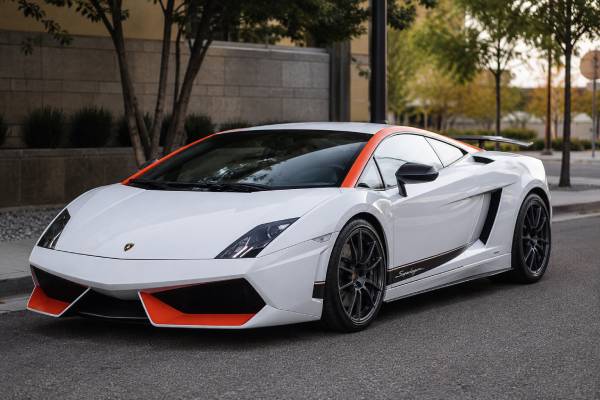
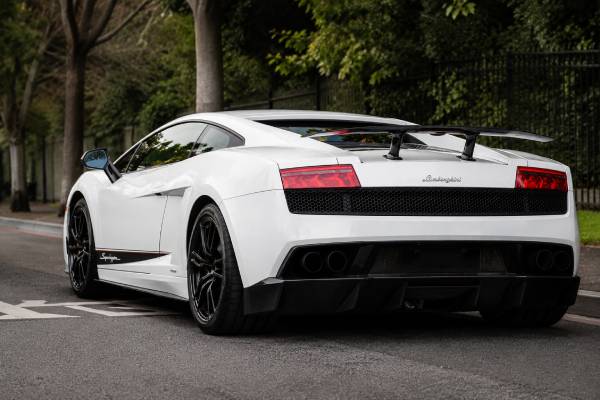
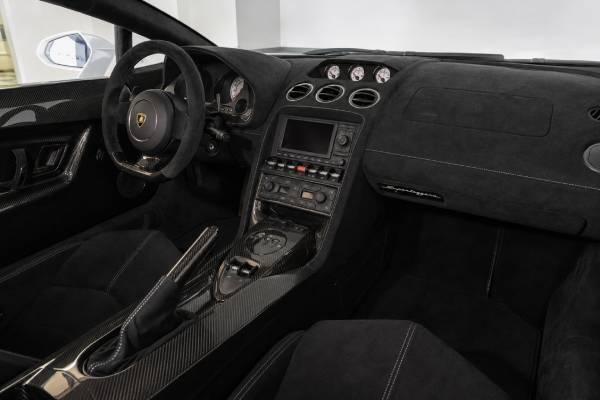
The Lamborghini Gallardo LP 570-4 Superleggera Bianco Canopus Limited Edition is one of the more obscure late-Gallardo special editions, but it is not just a paint-and-trim curiosity. It sits on the sharpest road-focused Gallardo foundation: the LP 570-4 Superleggera, with a 5.2-liter direct-injection V10, all-wheel drive, e-gear paddleshift transmission, carbon-fiber weight saving, and a dry-weight target of 1,340 kg. The Bianco Canopus edition was created for Taiwan around the Republic of China centennial period, giving it a stronger local-market identity than a normal color-order Superleggera. For buyers, the hard part is not understanding the headline performance. It is proving the car is a real Bianco Canopus Limited Edition, confirming its original specification, checking expensive lightweight parts, and judging whether the car has been maintained like an exotic or merely stored like a collectible.
Table of Contents
- Why This Taiwan-Market Superleggera Matters
- V10 Specifications and Chassis Data
- Bianco Canopus Edition Identification
- Lightweight Design and Superleggera Details
- Road and Track Driving Character
- Ownership, Maintenance, and Known Risks
- Values, Inspection, and Buying Strategy
Why This Taiwan-Market Superleggera Matters
The Bianco Canopus Limited Edition matters because it combines the most focused Gallardo road-car formula with a regional commemorative specification. It is best understood as a Taiwan-market special edition built from the LP 570-4 Superleggera, not as a separate engineering model.
The Gallardo itself was Lamborghini’s turning point. Internally linked with the L140 program, it gave the brand a smaller V10 model beneath the V12 flagship and became the car that brought Lamborghini into a more modern, Audi-era production rhythm. Earlier Lamborghinis had huge drama but often demanded commitment from owners. The Gallardo still felt exotic, loud, low, and theatrical, but it added better build quality, all-weather traction, stronger parts support, and enough usability to be driven regularly.
The LP 570-4 Superleggera arrived as the sharper, lighter, higher-output version of the facelifted 5.2-liter Gallardo. “LP” means the engine is mounted longitudinally behind the driver, “570” refers to metric horsepower, and “4” means all-wheel drive. Superleggera means “super light,” and Lamborghini used the name seriously: carbon fiber, Alcantara, lightweight forged wheels, polycarbonate glazing, and reduced sound-deadening all helped turn the Gallardo into a more direct road-and-track machine.
The Bianco Canopus Limited Edition added another layer. It was created around Taiwan’s Republic of China centennial celebration and used a matte white exterior finish with a Superleggera-specific lightweight and aerodynamic package. Period Taiwan-market reporting described it as a limited special-order car, with pre-orders beginning in February 2011 and availability tied to that centennial year. That local-market story is part of its appeal, but it also creates a verification challenge. Public sources do not consistently confirm a total production number, so buyers should treat “limited edition” as something that must be proven by paperwork, not by seller description.
Today, the car appeals to three overlapping groups:
- Collectors who want a late, light, special-market Gallardo with strong visual identity.
- Drivers who want one of the most responsive pre-Huracán V10 Lamborghinis.
- Investors who see the LP 570-4 Superleggera as a future classic from the end of the analog-supercar era.
Its importance is not only rarity. It represents the final stretch of Gallardo development, before dual-clutch transmissions, turbocharged rivals, hybrid systems, and heavier electronics changed the supercar landscape.
V10 Specifications and Chassis Data
The LP 570-4 Superleggera is built around a 5,204 cc naturally aspirated V10, a six-speed e-gear automated manual transmission, and permanent all-wheel drive. The Bianco Canopus Limited Edition keeps the same core hardware, so its performance is essentially the performance of the LP 570-4 Superleggera.
| Item | Specification |
|---|---|
| Model | Lamborghini Gallardo LP 570-4 Superleggera Bianco Canopus Limited Edition |
| Platform / project code | L140 Gallardo family |
| Body style | Two-door coupe |
| Engine code reference | CEH 5.2-liter V10 family reference; confirm exact engine and calibration by VIN |
| Engine layout | Mid-mounted, longitudinal 90-degree V10 |
| Displacement | 5,204 cc |
| Induction | Naturally aspirated |
| Fuel system | Gasoline direct injection |
| Lubrication | Dry sump |
| Compression ratio | 12.5:1 |
| Maximum power | 570 CV / 419 kW at 8,000 rpm |
| Maximum torque | 540 Nm at 6,500 rpm |
| Transmission | Six-speed e-gear single-clutch automated manual |
| Drivetrain | Permanent all-wheel drive |
| Nominal torque split | 30 percent front / 70 percent rear in normal conditions |
| Rear differential | 45 percent limited-slip differential |
The V10 is the main event. It is not turbocharged, not hybrid-assisted, and not softened by a modern dual-clutch gearbox. It makes its power through revs, compression, intake tuning, cam timing, and direct injection. The result is a car that feels more mechanical than later supercars, even though it is already a highly engineered Audi-era Lamborghini.
| Item | Specification |
|---|---|
| Length | About 4.39 m |
| Width | About 1.90 m |
| Height | About 1.17 m |
| Dry weight | 1,340 kg |
| Power-to-weight ratio | 2.35 kg per CV |
| Front tires | 235/35 ZR19 |
| Rear tires | 295/30 ZR19 |
| Standard brake layout | Ventilated steel discs with eight-piston front and four-piston rear calipers |
| Carbon-ceramic brakes | Available / commonly seen on high-spec cars; verify original fitment |
| 0–100 km/h | 3.4 seconds |
| 0–200 km/h | 10.2 seconds |
| Top speed | 325 km/h |
The most important specification detail for buyers is weight. Lamborghini reduced about 70 kg compared with the LP 560-4 coupe. The difference is not just a number on a brochure. Less mass improves braking feel, turn-in, tire workload, and the way the car changes direction. It also makes the drivetrain feel more immediate because the engine has less car to move.
The e-gear transmission deserves careful explanation. It is not a torque-converter automatic and not a dual-clutch transmission. It is a single-clutch automated manual with electrohydraulic actuation. In fast driving it feels dramatic and period-correct; in slow traffic it needs patience and mechanical sympathy.
Bianco Canopus Edition Identification
A real Bianco Canopus Limited Edition should be documented as a Taiwan-market special edition, not merely a white Superleggera. The paint, trim, launch context, and paperwork are the value story.
The edition was based on the LP 570-4 Superleggera and associated with Lamborghini Taipei. Period descriptions point to a matte white Bianco Canopus finish, Superleggera aerodynamic parts, transparent engine cover, lightweight 19-inch forged wheels, a large carbon-fiber rear wing, e-gear transmission, Alcantara interior, silver stitching, and four-point harnesses. Some descriptions also list the front-axle lift system among the specification highlights.
What separates it from a normal Superleggera
The key identifiers are not complex, but they must agree with each other:
- Exterior color: Bianco Canopus matte white, not ordinary gloss white.
- Market story: Taiwan-market commemorative edition linked to the Republic of China centennial period.
- Interior trim: Superleggera interior with Alcantara and silver stitching.
- Transmission: e-gear paddleshift, described as standard for this edition.
- Safety trim: four-point harnesses listed in period launch information.
- Aero and carbon parts: Superleggera aero kit, carbon rear wing, carbon details, and transparent engine cover.
The problem is that many Gallardos were heavily optioned, wrapped, repainted, or modified. A matte white Superleggera with a wing is not automatically a Bianco Canopus Limited Edition. The strongest cars have an original order sheet, Lamborghini dealer invoice, market-specific documentation, service book, build record, and a VIN-supported specification trace.
Related late Gallardo versions
The late Gallardo range included several special or focused variants, and confusion is common. The Bianco Canopus Limited Edition should not be mixed up with every other white, matte, or Edizione Tecnica car.
| Variant | How it differs |
|---|---|
| LP 570-4 Superleggera | The base lightweight coupe that underpins the Bianco Canopus edition. |
| LP 570-4 Spyder Performante | Open-top lightweight version; similar power but heavier and different body structure. |
| Nero Nemesis Taiwan special | Another Taiwan-market special based around matte black presentation. |
| Super Trofeo Stradale | More overtly race-inspired road car with stronger Super Trofeo visual links. |
| Edizione Tecnica | Late package with contrasting color accents and higher standard equipment depending on market. |
For collectors, originality matters more than adding later parts. A car that still has its original matte finish, correct carbon components, original interior stitching, uncut harness mounting, factory books, dealer records, and Taiwan-market provenance should sit above a visually similar car assembled from options or later modifications.
Lightweight Design and Superleggera Details
The Superleggera feels special because the engineering choices are visible, audible, and tactile. Lamborghini removed weight in places the driver can feel, then gave the car a more aggressive aero and cockpit character.
The body structure begins with the Gallardo’s aluminum spaceframe. Molded nodes, extrusions, and aluminum panels form a stiff foundation, while the Superleggera uses carbon fiber and lightweight materials to reduce mass. Lamborghini did not simply strip the car bare. Air conditioning and electric windows remained, which is why the car works as a road car rather than a track toy.
The main lightweight changes include:
- carbon-fiber engine cover section
- carbon-fiber rear spoiler
- carbon-fiber sills and diffuser elements
- carbon-fiber underbody pieces
- carbon-fiber mirror housings
- carbon-fiber interior tunnel and door panels
- carbon-fiber seat shells
- polycarbonate rear and side glazing
- forged 19-inch wheels
- titanium wheel bolts
- Alcantara in place of heavier leather in key areas
The carbon-fiber parts are not decorative afterthoughts. Lamborghini stated that carbon-fiber components accounted for a major share of the weight saving. That matters for repair cost, too. A cracked diffuser, damaged carbon sill, or replaced engine cover is not a minor cosmetic issue on a collectible Superleggera.
Aerodynamics and cooling
The front bumper has deep air intakes and sharper surfaces to feed cooling air and improve front downforce. The underbody, sills, rear diffuser, and tailpipe layout work together to control air as it leaves the car. A smaller rear spoiler was part of the standard Superleggera package, while the larger carbon wing became one of the model’s signature visual cues and is especially important on cars described with the Bianco Canopus launch specification.
This is functional design. The Gallardo’s wedge shape is simple, but the Superleggera pieces make the body look lower, wider, and more purposeful. The matte white finish changes the mood again. Instead of the usual bright Lamborghini gloss-color theater, Bianco Canopus gives the car a colder, harder, almost prototype-like presence.
The sound is part of the engineering
The 5.2-liter V10 has a distinctive sound because of its firing pattern and high-revving character. At low rpm it has a hard metallic pulse. Above the midrange it becomes sharper and more urgent, with intake and exhaust noise stacking on top of each other. The dry-sump lubrication also helps the engine sit lower, improving the center of gravity.
This is one reason the LP 570-4 Superleggera remains desirable even against newer, faster cars. Modern supercars may shift faster and launch harder, but many filter the experience. The Superleggera still makes the engine, gearbox, tires, and road surface feel directly connected.
Road and Track Driving Character
The LP 570-4 Superleggera is fast by modern standards and intense by any standard, but its character is more important than its numbers. It feels light, loud, compact, and highly mechanical compared with later dual-clutch supercars.
Acceleration is immediate once the V10 is spinning. Below the upper midrange, it is tractable rather than lazy. Near 6,500 rpm, the engine hits its torque peak, and near 8,000 rpm it delivers its full power. The last third of the tachometer is where the car feels most alive. It rewards drivers who use the revs instead of leaning on low-rpm boost.
The e-gear transmission shapes the whole experience. In normal driving it can feel abrupt if the driver treats it like a modern automatic. Lift slightly during low-speed upshifts and it becomes smoother. Drive harder, use the paddles properly, and the shifts become part of the drama. Thrust mode delivers the full launch-control experience, but repeated launches add stress and should not be treated as harmless entertainment on a collectible car.
The steering is direct and confidence-building. The all-wheel-drive system sends most torque rearward in normal conditions, so the car does not feel like a dull front-pulling AWD machine. It has strong traction out of corners, especially on warm Pirelli P Zero Corsa-type tires, but old or cold tires can make the car nervous. Tire age is a major part of how any Superleggera drives.
Ride quality is firm. The Superleggera is not unbearable, but it is clearly tighter than a regular Gallardo. The suspension, mounts, anti-roll control, and low-profile tires give the car sharp responses at the cost of calmness over poor road surfaces. On a smooth mountain road, that firmness feels right. In city traffic, it reminds you that this was the closest road-going Gallardo to Lamborghini’s one-make racing program.
Braking depends heavily on condition and equipment. Steel brakes are strong and easier to budget for, while carbon-ceramic brakes offer heat resistance and lower unsprung mass but demand careful inspection. A carbon-ceramic disc can look acceptable at a glance and still have expensive wear, impact damage, or heat-cycle concerns.
Visibility is better than many mid-engine exotics, but the nose is low and the rear quarters are wide. The front-axle lift system, when fitted, is not a luxury feature; it protects the splitter and underbody from driveways, ramps, and broken urban surfaces. Buyers should check that it raises evenly, holds pressure, and does not leak.
On track, the Superleggera is engaging but not cheap to run. Tires, brake pads, brake discs, fluids, clutch wear, and aero-piece risk add up quickly. Its best use is occasional high-quality track driving with warm tires and proper inspection before and after, not endless hot-lap punishment on deferred maintenance.
Ownership, Maintenance, and Known Risks
The Gallardo LP 570-4 Superleggera can be durable when maintained correctly, but the expensive parts are exotic-car expensive. The safest ownership plan is annual specialist care, clean diagnostics, careful clutch monitoring, and fast correction of small faults before they become large ones.
The engine itself has a strong reputation when serviced correctly. The dry-sump V10 needs proper oil, proper level-check procedure, and regular fluid service. Misfires, failed coils, old plugs, tired oxygen sensors, or catalyst problems should be handled early because heat and fueling faults can create larger problems. Radiators and condensers sit in vulnerable front areas and can collect debris, especially on cars that are driven on fast roads.
The e-gear system is the biggest routine inspection point. It uses a clutch, actuator, pump, hydraulic lines, position sensors, and calibration. Clutch wear is not judged by feel alone; it should be read with the correct diagnostic equipment by someone who understands Lamborghini e-gear data. A car that has spent its life creeping through traffic, reversing uphill, or being used for repeated launches can have much more clutch wear than its mileage suggests.
High-priority inspection areas
| Area | Why it matters | What a buyer should verify |
|---|---|---|
| E-gear clutch and hydraulics | Clutch replacement and actuator work can be costly. | Diagnostic clutch reading, smooth engagement, pump behavior, no warning lights. |
| Matte paint | Bianco Canopus is difficult to correct like normal gloss paint. | Original finish, no uneven repaint, proper matte-safe care, quality PPF history. |
| Carbon aero parts | Cracked or replaced carbon affects value and repair cost. | Splitter, sills, diffuser, wing, engine cover, mirror housings, underbody panels. |
| Carbon-ceramic brakes | Replacement costs can be very high. | Disc condition, pad life, edge damage, heat marks, service measurements. |
| Front-axle lift | Failure can damage the nose and underbody. | Even lift action, no fluid leaks, no sagging, no pump faults. |
| Cooling system | Debris and age can reduce cooling performance. | Radiator condition, fan operation, coolant history, no corrosion or seepage. |
| Electronics and recalls | Late Gallardos had an ECU software recall in some markets. | VIN recall check, completed campaign records, clean scan report. |
| Tires | Old tires make the car feel dangerous and reduce value confidence. | Correct sizes, date codes, matched set, no cracking or flat-spotting. |
A major U.S. recall affected certain 2011–2014 Gallardo Coupe and Spyder vehicles for ECU software that could fail to retain trouble codes after key-off, preventing warning lamps from appearing later. That does not mean every Bianco Canopus car is affected in every market, but it does mean every buyer should run a VIN-specific recall and service-action check.
Service history should be judged by time as well as mileage. Low-mileage cars still age. Brake fluid absorbs moisture, tires age out, batteries weaken, lift seals dry, and sticky interior surfaces can appear even on stored cars. A car with 5,000 km and long service gaps is not automatically safer than a car with 25,000 km and excellent specialist records.
Originality versus upgrades
Some upgrades make a Gallardo easier to live with, such as modern PPF, battery-tender wiring, updated infotainment that can be reversed, or improved protective grille mesh behind front intakes. But collector value favors reversible work. Avoid cars with cut interiors, questionable exhaust tuning, removed catalysts, poor ECU remaps, non-original paint, aftermarket wings, or undocumented crash repairs.
For this edition, originality is especially important because the value depends on being the correct Bianco Canopus Limited Edition. Any repaint, wrap, interior retrim, or missing launch-specific equipment weakens the story unless the documentation clearly explains it.
Values, Inspection, and Buying Strategy
The best Bianco Canopus purchase is the car with the strongest proof, not simply the lowest mileage or shiniest photos. Market value depends on documentation, originality, condition, mileage, service depth, and whether the seller can prove the special-edition identity.
Public market data for LP 570-4 Superleggera cars has recently shown a wide spread. Driver-quality or higher-mileage examples can sit in the mid-to-high six figures in U.S. dollars or equivalent, while low-mileage, rare-color, high-spec, or final-year cars can ask far more. The cleanest cars with special provenance may command a premium, but exact Bianco Canopus premiums are hard to quantify because public transactions are scarce.
A sensible modern buying range for a normal LP 570-4 Superleggera often falls roughly around the upper-$100,000s to mid-$200,000s depending on mileage, market, and condition. Exceptional cars, very rare specifications, or dealer-retail examples may exceed that. Weak cars can look tempting below the market, but one clutch job, brake issue, paint correction problem, or carbon-part replacement can erase the saving quickly.
What drives value
The strongest value factors are:
- confirmed Bianco Canopus Limited Edition provenance
- original matte Bianco Canopus paint or fully documented paint history
- original carbon-fiber aero and interior parts
- clean accident and repair history
- complete Lamborghini or recognized specialist service records
- low but believable mileage
- recent clutch-wear report
- current tires in correct sizes
- completed recalls and software campaigns where applicable
- original books, tools, keys, manuals, invoices, and market documents
- unmodified exhaust, ECU, emissions equipment, and interior
The weakest cars are the opposite: vague provenance, missing records, repainted matte panels with no explanation, aftermarket carbon parts, clutch uncertainty, old tires, unresolved warning lights, poor panel gaps, and sellers who rely on the words “limited edition” without proof.
Pre-purchase inspection checklist
Use a Lamborghini specialist, not a general luxury-car shop. The inspection should include a lift inspection, diagnostic scan, paint assessment, carbon-fiber condition review, and road test by someone familiar with e-gear behavior.
| Priority | Inspection step | Good result |
|---|---|---|
| 1 | Verify VIN and original specification | Documents support Bianco Canopus Limited Edition identity. |
| 2 | Scan all control modules | No stored faults, no hidden e-gear or engine issues. |
| 3 | Measure clutch wear | Wear reading matches mileage and driving behavior. |
| 4 | Inspect paint and carbon | Original-looking matte finish, no structural carbon damage. |
| 5 | Check brakes and tires | Measured brake life, recent correct tires, no heat or impact damage. |
| 6 | Review service history | Regular time-based servicing with invoices, not just stamped books. |
| 7 | Road-test gearbox and lift system | Clean shifts, no slipping, no lift faults, no suspension noises. |
Long-term collectability looks positive for the right example. The LP 570-4 Superleggera sits at the end of the pre-dual-clutch Gallardo era, has naturally aspirated V10 character, uses real lightweight parts, and carries a clearer motorsport influence than standard Gallardos. The Bianco Canopus edition adds rarity and regional significance, but only when the documents are strong.
The best strategy is to buy slowly. Pay more for the car with proof, service history, original parts, clean paint, healthy clutch data, and no stories. The wrong Superleggera can become expensive quickly. The right one is one of the most exciting, usable, and collectible V10 Lamborghinis of its generation.
References
- Lamborghini Gallardo LP 570-4 SuperLeggera – Technical Specifications 2013 (Manufacturer Technical Page)
- Celebrating The Lamborghini Gallardo 2023 (Manufacturer History)
- Part 573 Safety Recall Report 18V-833 2018 (Recall Database)
- 同慶百年,Lamborghini LP570-4 Superleggera限量特仕車發表 | U-CAR新聞 2011 (Special Edition Launch Report)
- Lamborghini Gallardo LP570-4 Superleggera Market 2026 (Market Data)
Disclaimer
This article is for informational purposes only and is not a substitute for professional diagnosis, repair, valuation, or inspection. Specifications, torque values, service intervals, recall status, and repair procedures can vary by VIN, market, equipment, software version, and later service history. Always verify details against official Lamborghini service documentation and have any purchase inspected by a qualified Lamborghini specialist.
If this guide helped you, please share it on Facebook, X/Twitter, or your favorite car community to support our work.