
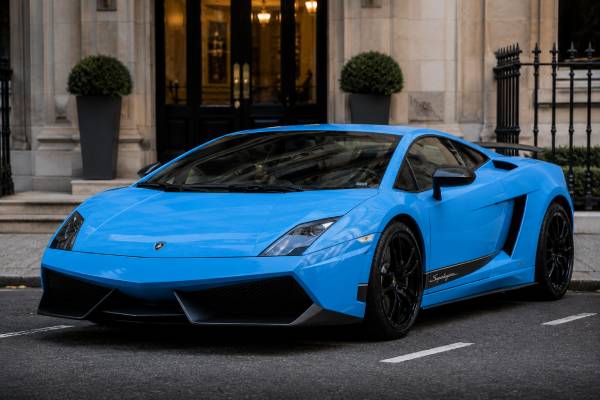
The Lamborghini Gallardo LP 570-4 Superleggera Edizione Tecnica is one of the sharpest late Gallardo variants because it combines the lightest road-going Gallardo formula with the final-cycle styling and equipment that collectors notice. It is not just a louder trim package. It is a 5.2-liter V10, all-wheel-drive, carbon-ceramic-braked, lightweight coupe with a fixed rear wing, Super Trofeo-inspired details, and a more focused cabin than the standard LP 560-4. For buyers, its appeal is simple: it gives the analog Gallardo shape a serious performance edge without moving into the more expensive and rarer Squadra Corse or Super Trofeo Stradale world. For owners, the car rewards correct maintenance and punishes deferred service. A great example feels tight, urgent, and special. A neglected one can hide clutch wear, tired tires, aging electronics, and expensive carbon-ceramic brake issues. This guide explains what matters before buying, maintaining, or valuing one.
Table of Contents
- Why the Edizione Tecnica Matters
- CEH V10, Chassis, and Core Specs
- Production Details, Colors, and Options
- Race-Bred Design and Lightweight Engineering
- How the LP 570-4 Feels to Drive
- Maintenance Realities and Inspection Risks
- Market Values and Smart Buying Checks
Why the Edizione Tecnica Matters
The Edizione Tecnica matters because it sits near the top of the road-going Gallardo family while keeping the clean, usable Superleggera identity. It is a late-production Gallardo for people who want the lightest, most aggressive LP 570-4 experience without buying a pure limited-number special.
The Gallardo itself changed Lamborghini. Before it, the brand was famous for dramatic V12 cars, small production numbers, and difficult ownership reputations. After Audi took control of Lamborghini, the Gallardo became the car that turned Sant’Agata’s junior supercar idea into a real global business. It was smaller than the Murciélago, easier to use, more reliable by exotic-car standards, and still wild enough to feel like a proper Lamborghini.
The LP 570-4 Superleggera was the hard-edged development of that idea. “LP” means the engine is mounted longitudinally behind the cabin, “570” refers to the power rating, and “4” points to all-wheel drive. “Superleggera” means “super light,” and that is the key to the car’s character. Lamborghini reduced weight compared with the regular Gallardo coupe by using carbon fiber, lighter interior trim, Alcantara, lighter wheels, and fewer comfort-heavy parts.
The Edizione Tecnica arrived for the final phase of the Gallardo line, covering the 2012–2013 period. By then, Lamborghini had already shown several ways to make the Gallardo more focused: the first Superleggera, the LP 570-4 Superleggera, the Spyder Performante, the Super Trofeo Stradale, and the later Squadra Corse. The Edizione Tecnica took the LP 570-4 Superleggera coupe and gave it a more distinctive appearance and equipment set, most notably the fixed high rear wing, carbon-ceramic brakes, and contrasting color treatments.
Its historical position is important. It belongs to the end of the Gallardo era, just before the Huracán arrived with a dual-clutch transmission, a newer chassis, and a more digital personality. That makes the Edizione Tecnica one of the last old-school Lamborghini V10 cars with the single-clutch E-gear character, compact cabin, hydraulic-feeling steering, and naturally aspirated engine response that many enthusiasts now miss.
The car is collectible for several reasons:
- It is a late-production Gallardo, which usually benefits from years of model development.
- It uses the higher-output 5.2-liter V10 rather than the earlier 5.0-liter engine.
- It has the lightweight Superleggera body and cabin treatment.
- It carries Edizione Tecnica visual identifiers that separate it from a normal LP 570-4.
- It was produced at the end of the naturally aspirated, single-clutch Lamborghini V10 period.
- It is easier to use than a race-derived special but feels more focused than a standard Gallardo.
The strongest examples are not simply the lowest-mile cars. The best cars have original paint or clearly documented paintwork, factory-correct Edizione Tecnica details, service records, clutch data, tire age records, brake condition documentation, books, tools, keys, window sticker, and clean ownership history. In this market, provenance matters almost as much as mileage.
CEH V10, Chassis, and Core Specs
The LP 570-4 Superleggera Edizione Tecnica is built around the CEH 5.2-liter naturally aspirated V10, all-wheel drive, lightweight construction, and carbon-ceramic braking. The important numbers are 570 hp, 397 lb-ft, roughly 2,954 lb dry weight, 0–62 mph in about 3.4 seconds, and a top speed around 202 mph.
| Item | Specification |
|---|---|
| Model | Lamborghini Gallardo LP 570-4 Superleggera Edizione Tecnica |
| Platform | L140 Gallardo |
| Production period covered | 2012–2013 |
| Engine code | CEH family 5.2-liter V10 |
| Engine layout | Rear-mid-mounted, longitudinal V10 |
| Displacement | 5,204 cc |
| Induction | Naturally aspirated |
| Fuel system | Direct injection |
| Output | 570 hp at 8,000 rpm |
| Torque | 397 lb-ft at 6,500 rpm |
| Transmission | 6-speed E-gear automated manual on most Edizione Tecnica examples |
| Drivetrain | All-wheel drive |
The engine is the reason this car still feels special. It does not use turbocharging, hybrid assistance, or a torque-heavy calibration to create speed. It revs, breathes, and builds intensity. The 5.2-liter V10 is sharper than the earlier 5.0-liter Gallardo engine and more sophisticated in its fueling. It also has a different sound character: harder, more metallic, and more urgent at high rpm.
The chassis uses aluminum spaceframe construction. It is not a full carbon tub supercar, but the Superleggera uses carbon-fiber body and interior pieces to reduce mass and sharpen response. The dry-weight figure is the number most often associated with the model, so buyers should not confuse it with real-world curb weight with fluids and equipment. A car with options, fuel, and road equipment will weigh more.
| Item | Specification |
|---|---|
| Dry weight | About 1,340 kg / 2,954 lb |
| Wheelbase | 2,560 mm / 100.8 in |
| Length | About 4,386 mm / 172.7 in |
| Width | 1,900 mm / 74.8 in |
| Height | About 1,165 mm / 45.9 in |
| Front tires | 235/35 ZR19 |
| Rear tires | 295/30 ZR19 |
| Front wheels | 19 x 8.5 in |
| Rear wheels | 19 x 11 in |
| Front brakes | Carbon-ceramic ventilated discs, about 14.4 in diameter |
| Rear brakes | Carbon-ceramic ventilated discs, about 14.0 in diameter |
| 0–100 km/h / 0–62 mph | About 3.4 seconds when healthy and properly launched |
| Top speed | About 325 km/h / 202 mph |
| Fuel capacity | About 23.8 US gal |
The E-gear transmission is central to how the car drives and how it must be inspected. It is not a modern dual-clutch unit. It is an automated single-clutch manual gearbox with paddles and an electrohydraulic actuation system. When set up well, it feels dramatic and mechanical. When worn, misadjusted, or abused in traffic, it can become jerky, slow, or costly.
The suspension is conventional in layout but serious in tuning: double wishbones, coil springs, dampers, and anti-roll bars front and rear. Steering is power-assisted rack and pinion, with more road texture than many newer supercars. Tires make a huge difference. A fresh set of correct high-performance tires can transform the car, while old, heat-cycled, or mismatched rubber can make it feel nervous and underwhelming.
Production Details, Colors, and Options
The Edizione Tecnica is best understood as a final-series specification applied to the LP 570-4 Superleggera coupe and the related Spyder Performante, not as a simple standalone trim with a universally published production total. For buyers, the build sheet matters more than hearsay about rarity.
Lamborghini did not publish a simple, globally accepted production count for every Edizione Tecnica coupe the way it did for some numbered specials. That means sellers may describe the car as rare, and they may be right, but the correct way to verify value is to inspect factory records, original sales documents, window sticker, option codes, color combination, and VIN-specific history.
The Edizione Tecnica package is known for three factory-style contrast themes:
- Nero Nemesis body with Arancio Argos contrast on the roof arch and front intake areas.
- Bianco Canopus body with Arancio Argos contrast for a bright, high-contrast look.
- Arancio Argos body with Nero Nemesis contrast for the most visually dramatic version.
Those combinations are important because they make the car recognizable at a glance. They also affect collector appeal. A correct original contrast scheme generally carries more confidence than a later wrap or repaint that imitates the look. That does not mean every non-standard Ad Personam car is less desirable. It means documentation becomes even more important when the car does not match the better-known launch combinations.
How to identify a convincing Edizione Tecnica
A serious buyer should look for the full pattern, not one piece of equipment in isolation. A fixed wing alone does not prove the car is an Edizione Tecnica, and carbon-ceramic brakes can appear in other Gallardo contexts. The strongest identification comes from matching factory paperwork.
Useful verification points include:
- VIN and original selling dealer documentation.
- Window sticker or factory build record.
- Correct LP 570-4 Superleggera base model.
- Edizione Tecnica exterior contrast treatment or documented Ad Personam specification.
- Fixed high rear wing.
- Carbon-ceramic brakes.
- Correct lightweight cabin materials.
- Correct wheels, tire sizes, and brake calipers.
- Books, tools, keys, service booklet, and accessories.
- Paint meter readings that support the stated history.
The Gallardo market contains many modified cars. Exhausts, wheels, wraps, tinted lights, stereo changes, lowered suspension, carbon add-ons, and aftermarket wings are common. Some changes are reversible and may not hurt a driver-grade car. On a collector-quality Edizione Tecnica, however, originality is a major value factor.
Options that matter
The most desirable options depend on the buyer’s intended use. A car bought for weekend road use may benefit from front lift, parking sensors, navigation, and comfort seats. A collector may prefer the lightest, most factory-correct configuration with carbon buckets and minimal aftermarket additions. A driver who plans track days should care most about brake condition, tire age, cooling system health, clutch readings, and alignment.
High-value equipment and details include:
- Carbon-fiber interior trim in good original condition.
- Carbon bucket seats with limited bolster wear.
- Front-axle lift where fitted and working correctly.
- Original wheels with no cracks or poor refinishing.
- Carbon-ceramic brakes with documented condition.
- Original exhaust or included original exhaust if an aftermarket system is fitted.
- Complete factory literature and accessory set.
- Original paint in the factory Edizione Tecnica scheme.
The E-gear transmission also affects desirability. Some enthusiasts prefer a gated manual Gallardo, but the LP 570-4 Edizione Tecnica is most commonly associated with E-gear. Because of that, buyers should not apply ordinary manual-Gallardo pricing logic without confirming the exact model and market segment.
Race-Bred Design and Lightweight Engineering
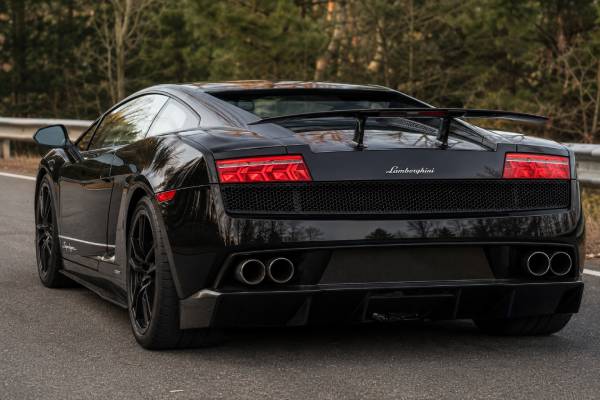
The Edizione Tecnica looks special because its design serves cooling, downforce, weight reduction, and visual link to Lamborghini’s Super Trofeo racing world. The fixed wing, larger intakes, carbon diffuser, and lightweight cabin are not random decoration.
The front end is sharper than the earlier Gallardo design. The nose has large air intakes that help feed the cooling package, with a central aerodynamic element that gives the car a more purposeful face. The late Gallardo geometry uses triangles and trapezoids more boldly than the original 2003 car, making the Edizione Tecnica look like a final evolution rather than a mild facelift.
At the rear, the fixed wing gives the car its clearest identity. It also changes the way people read the car visually. A regular Gallardo can look compact and clean; the Edizione Tecnica looks lower, wider, and more track-biased. The rear diffuser frames the quad exhaust outlets, and the ceramic-coated exhaust tips reinforce the technical look.
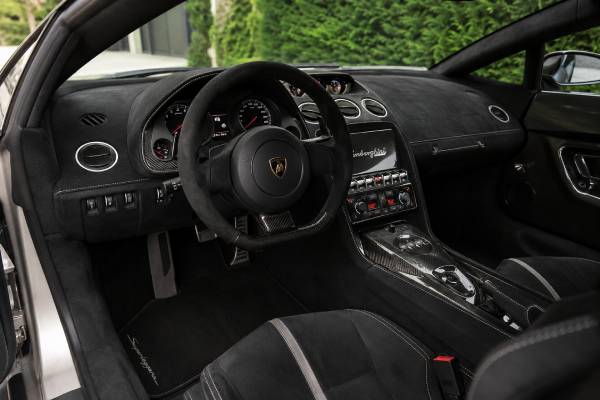
The Superleggera weight-saving approach is also visible inside. Alcantara replaces heavier and glossier trim in key areas. Carbon-fiber pieces reduce mass and create a more motorsport-like cabin. Door panels, seat shells, tunnel trim, and other surfaces may use carbon depending on specification. This is not a luxurious grand-tourer interior in the traditional sense. It is a compact, low-slung, two-seat cockpit where the low dashboard, tight glasshouse, and high center tunnel make the car feel focused even before the engine starts.
The design is also honest about the Gallardo’s age. Compared with a Huracán, the cabin is smaller, the infotainment is dated, and the E-gear controls feel from an earlier era. That is part of the charm for many buyers. It feels mechanical rather than screen-led.
Why the sound is such a big part of the car
The V10 sound is one of the main reasons enthusiasts still chase these cars. The engine has a hard-edged idle, a sharp intake note, and a rising metallic wail near the top of the rev range. The exhaust system changes the car’s personality dramatically. A factory exhaust keeps the car more usable and original. A Super Trofeo-style or aftermarket exhaust can make it sound ferocious, but it may also create drone, emissions problems, or value questions.
Sound should never be used to excuse poor mechanical behavior. A healthy LP 570-4 should idle cleanly, rev freely, pull hard under load, and show no warning lights. Misfires, fuel smells, rough starting, or uneven throttle response need diagnosis, not romance.
What separates it from later Lamborghini V10 cars
The Edizione Tecnica feels more compact and raw than a Huracán. The Huracán is faster, smoother, more modern, and easier to drive quickly. The Gallardo is more physical. The steering talks more. The gearbox interrupts the acceleration more. The cabin lets more mechanical sound through. The body feels narrower from the driver’s seat than modern supercars, even though it is still wide by normal road standards.
That balance is why the car has aged well. It is modern enough to use, but old enough to feel like an occasion.
How the LP 570-4 Feels to Drive
A good LP 570-4 Superleggera Edizione Tecnica feels fast, immediate, noisy, and compact, with a sense of mechanical involvement that newer dual-clutch supercars often smooth away. It is at its best on open roads, mountain routes, and fast circuits where the V10 can work above the midrange.
The engine does not deliver its best character at low rpm. It is tractable enough around town, but the car comes alive as the revs rise. The throttle response is crisp, and the last third of the tachometer is where the car earns its name. Above about 6,000 rpm, the V10 hardens its note and pulls with a racing edge that still feels special today.
The E-gear transmission shapes the experience. In gentle traffic, it can feel abrupt compared with a modern automatic or dual-clutch gearbox. Pulling away smoothly takes mechanical sympathy. Creeping in traffic is not its favorite job because clutch wear is real. On the move, especially in sportier modes, the gearbox gives firm, dramatic shifts that suit the car’s personality. It is not seamless, but it is memorable.
The all-wheel-drive system gives the LP 570-4 strong traction, especially out of slower corners. It is not a loose, tail-happy rear-drive supercar. The car generally feels planted and secure, but it is not dull. With correct tires and alignment, it turns in cleanly, grips hard, and rewards confident inputs. On old tires, poor alignment, or worn suspension, it can feel skittish or oddly numb. That is why a test drive should never be judged without checking tire dates and suspension condition.
Steering is one of the car’s strengths. It has real weight and road feel compared with many newer electrically assisted systems. The front end can feel light at low speeds but becomes clearer as load builds. On a tight road, the car feels smaller than its spec sheet suggests. Visibility is acceptable forward, less friendly rearward, and low-speed parking needs care.
Ride quality is firm but not unbearable. The Superleggera tuning is more focused than a standard Gallardo, and the short sidewall tires do not hide sharp impacts. A car used on rough roads needs careful wheel, tire, suspension, and underbody inspection. The front overhang is vulnerable, so front lift, careful approach angles, and a clean underside matter.
Braking performance is excellent when the carbon-ceramic system is healthy. Pedal feel should be firm and consistent. Carbon-ceramic brakes can last a long time in road use, but they are not maintenance-free. Chipped rotors, worn pads, heat damage, or poor previous service can become expensive quickly.
On track, the Edizione Tecnica is capable but should be prepared properly. Fresh fluid, correct pads, current tires, good alignment, and a gearbox/clutch health check are basic requirements. It is a road car with track influence, not a disposable track toy. Heat, tire wear, and brake costs add up quickly.
Maintenance Realities and Inspection Risks
The LP 570-4 can be reliable for an exotic if it is maintained correctly, but it is never cheap to run like a normal performance car. The expensive risks are clutch wear, E-gear system condition, carbon-ceramic brakes, aged tires, old fluids, weak batteries, electronic faults, and poorly documented modifications.
The V10 itself is strong when serviced properly. Many ownership problems come from age, heat, low use, deferred maintenance, and previous owners treating the car as an ornament. A low-mile car that sat for years can need more recommissioning than a higher-mile car that was serviced annually and driven correctly.
Key mechanical areas to inspect
A specialist pre-purchase inspection is essential. A normal used-car inspection is not enough because many problems require Lamborghini diagnostic equipment, model knowledge, and experience with E-gear clutch data.
Important checks include:
- Clutch wear reading: E-gear clutch life depends heavily on traffic use, launch behavior, calibration, and driver technique.
- E-gear pump and actuator behavior: Slow engagement, warning lights, pressure faults, or irregular shifts need attention.
- Carbon-ceramic brake condition: Inspect rotor surface, edge chips, pad thickness, wear data, and service history.
- Tire age and model: Old P Zero Corsa tires can look fine but perform poorly and reduce safety.
- Suspension dampers and bushings: Worn parts make the car feel loose and can create uneven tire wear.
- Front lift system: If fitted, it should raise and lower cleanly without leaks or warnings.
- Cooling system: Check radiators, hoses, fans, coolant condition, and signs of front-end debris damage.
- Oil leaks and service quality: Look for sloppy undertray work, damaged fasteners, and leaks around serviced areas.
- Battery and charging health: Weak batteries cause strange electronic behavior in many low-use exotics.
- Exhaust modifications: Confirm emissions readiness, heat shielding, fitment, and whether original parts are included.
The clutch is one of the biggest buying points. A seller saying “it drives fine” is not enough. You want a current diagnostic reading and an expert’s interpretation. Clutch percentage alone is not perfect, but it is far better than guessing. Engagement quality, calibration history, and driving behavior matter too.
Service rhythm and ownership habits
A sensible owner treats the car as an annual-service exotic even if mileage is low. Oil, filters, brake fluid, coolant condition, gearbox service history, and inspection records should be consistent. Brake fluid should not be ignored because the car has serious performance potential and may sit between drives. Tire age matters as much as tread depth.
Common good habits include:
- Use a battery maintainer when the car sits.
- Warm the engine and gearbox before hard driving.
- Avoid long creeping traffic when possible.
- Do not abuse launch-style starts.
- Keep the front radiators clean.
- Replace aged tires even when tread remains.
- Keep every invoice, diagnostic printout, and inspection report.
- Verify recall and campaign status by VIN through official channels.
Parts availability is generally better than for many older exotics, but prices are still Lamborghini prices. Some parts cross-reference with the Audi-era supply chain, but buyers should not assume Audi-level costs. Body carbon, interior carbon, ceramic brake parts, E-gear components, wheels, and model-specific trim can be expensive.
Restoration is not the right word for most Edizione Tecnica cars yet, but recommissioning is common. A car with ten years of low mileage may need tires, fluids, battery, sticky switch correction, brake service, lift-system work, suspension bushings, paint correction, PPF removal, or exhaust reversal. Those jobs can quickly erase the savings from buying a cheaper example.
Market Values and Smart Buying Checks
The Edizione Tecnica sits above ordinary Gallardo coupes and around the stronger end of LP 570-4 Superleggera values, with the best cars commanding a premium for originality, colors, documentation, and mileage. As of 2026, strong LP 570-4 Superleggera market data generally lives in the mid-$100,000 range, while exceptional or very low-mile Edizione Tecnica asking prices can move well above that.
The gap between guide values, auction results, and dealer asking prices can be wide. That is normal for low-volume exotic cars. A high-mile modified car, a car with missing records, or a car needing clutch and tire work may transact far below a low-mile collector example with original paint and complete documents. Do not compare cars by model name alone.
Value drivers include:
- Original factory Edizione Tecnica specification.
- Low but believable mileage.
- Regular service history despite low use.
- Original paint or well-documented paintwork.
- Correct contrast color scheme or documented Ad Personam build.
- Carbon-ceramic brakes in excellent condition.
- Strong clutch reading and clean E-gear behavior.
- No accident history or structural repair.
- Original exhaust and factory parts included.
- Clean interior carbon, seat bolsters, and switchgear.
- Books, tools, keys, window sticker, and service booklet.
- Ownership history from known collectors or reputable dealers.
What to seek
The best buy is not always the cheapest or lowest-mile car. The best buy is the car with the fewest unanswered questions.
A strong example should have:
- A recent specialist inspection.
- Current diagnostic report including clutch data.
- Clear title and clean history.
- Complete service file.
- Matching factory specification.
- No warning lights.
- Fresh or recent correct tires.
- Healthy carbon-ceramic brakes.
- Good paint-meter results.
- No poor-quality aftermarket wiring or stereo work.
- All original parts included if modified.
A lightly used car with excellent records is often better than a museum-mile car that needs immediate recommissioning. Ultra-low mileage can help value, but it should not blind a buyer to old tires, weak battery, dried seals, stale fluids, or sticky E-gear behavior.
What to avoid
Avoid cars with missing history, unclear specification, obvious repainting without documentation, cheap aftermarket parts, unresolved warning lights, or sellers who refuse a specialist inspection. Be careful with cars that have been repeatedly listed, heavily photographed but lightly documented, or described with vague phrases such as “just serviced” without invoices.
Red flags include:
- No clutch reading available.
- Incomplete VIN documentation.
- Carbon-ceramic brake damage.
- Mismatched tires or old date codes.
- Accident damage around front crash structure or rear frame areas.
- Poor panel gaps near carbon parts.
- Non-factory wing or altered aero sold as factory.
- Deleted emissions equipment.
- Missing original exhaust.
- Sticky buttons and neglected interior trim.
- Weak cold start or uneven idle.
- Seller unwilling to verify recalls or campaigns.
The long-term collectability outlook is positive but selective. The Gallardo is no longer just an old used exotic; it is now an important Lamborghini model. The Edizione Tecnica benefits from being late, light, visually distinctive, naturally aspirated, and connected to the last phase before the Huracán. Still, not every car will become equally collectible. The market will keep separating original, documented, well-maintained cars from modified or neglected examples.
For an enthusiast who plans to drive the car, the Edizione Tecnica offers a strong balance. It is rare enough to feel special, but not so rare that every mile feels financially painful. For a collector, the buying discipline should be stricter: factory specification, originality, complete provenance, and condition should drive the decision more than headline horsepower or seller claims.
References
- Lamborghini Gallardo LP 570-4 SuperLeggera – Technical Specifications 2013 (Manufacturer Specifications)
- Celebrating The Lamborghini Gallardo 2023 (Manufacturer History)
- 2013 Lamborghini Gallardo Superleggera Edizione Tecnica 2dr Cpe LP570-4 Features and Specs 2013 (Specifications)
- Check for Recalls: Vehicle, Car Seat, Tire, Equipment | NHTSA 2026 (Recall Database)
- Lamborghini Gallardo LP570-4 Superleggera Market – CLASSIC.COM 2026 (Market Data)
Disclaimer
This article is for informational purposes only and is not a substitute for professional diagnosis, repair, appraisal, or inspection. Specifications, torque values, maintenance intervals, recall status, procedures, and equipment can vary by VIN, market, production date, and factory configuration. Always verify details against official Lamborghini service documentation and have any purchase candidate inspected by a qualified Lamborghini specialist.
If this guide helped you, please share it on Facebook, X/Twitter, or your favorite car community to support our work.