
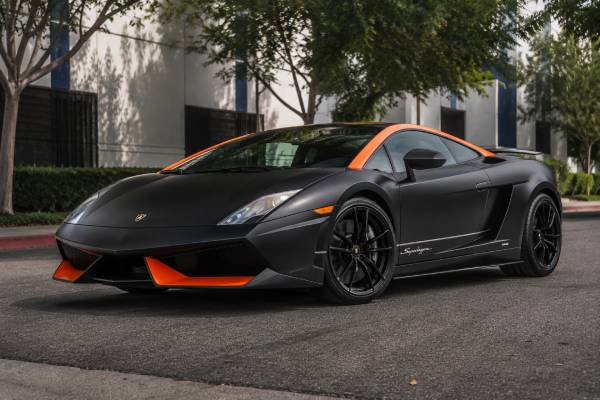
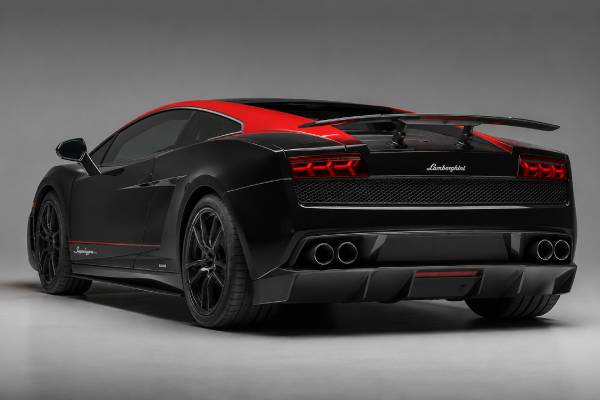
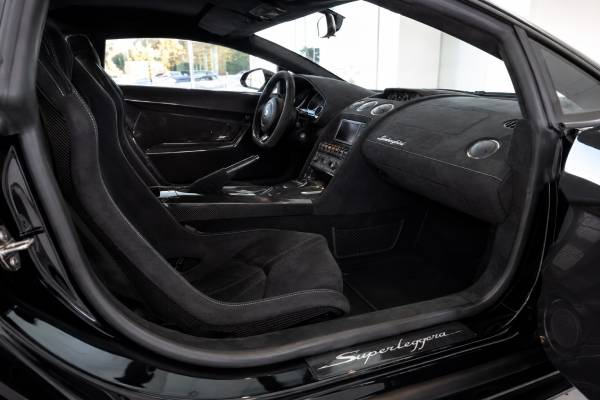
The Lamborghini Gallardo LP 570-4 Superleggera is the sharpest regular-production coupe in the Gallardo family, and Nero Nemesis gives it one of the most serious factory looks of the era. Built near the end of the L140 Gallardo’s life, it combined the stronger 5.2-liter direct-injection V10 with carbon-fiber weight saving, four-wheel drive, a focused cabin, and a more aggressive aero package. It was not a delicate collector ornament when new; it was Lamborghini’s lighter, louder, more track-biased answer for buyers who wanted the Gallardo’s usability with less comfort padding and more edge. Today, it sits in a useful space: modern enough to drive hard with confidence, old enough to feel mechanical, and rare enough that color, originality, documentation, and maintenance history now matter as much as headline speed.
Table of Contents
- Why the LP 570-4 Superleggera Matters
- V10 Specs, Chassis, and Performance Data
- Production, Nero Nemesis, and Options
- Carbon, Aero, and Superleggera Details
- How the LP 570-4 Drives
- Maintenance Risks and Specialist Care
- Market Values and Buying Checks
Why the LP 570-4 Superleggera Matters
The LP 570-4 Superleggera matters because it is the most focused fixed-roof Gallardo short of the rarer race-derived specials. It took the already improved LP 560-4 platform and removed weight, added power, sharpened the visual package, and made the Gallardo feel closer to the Super Trofeo racing world without turning it into a fragile track-only machine.
The Gallardo itself was a turning point for Lamborghini. Introduced for the 2003 model year, the L140 platform became the brand’s volume supercar under Audi ownership. That sounds less romantic than the Countach or Diablo story, but it is exactly why the Gallardo is important. It proved Lamborghini could build an exotic V10 with real usability, stronger quality control, global dealer support, and enough production consistency to bring new customers into the brand.
The LP 570-4 Superleggera arrived in 2010 as the second-generation lightweight Gallardo. The earlier 2007 Superleggera used the original 5.0-liter V10 and set the template: less weight, more carbon fiber, a harder cabin, more visual aggression, and a clearer track bias. The LP 570-4 version moved the idea forward with the later 5.2-liter direct-injection V10, 570 PS output, and the more developed post-facelift chassis.
Its name tells much of the story. “LP” means the engine is mounted longitudinally behind the cabin. “570” refers to the metric horsepower rating. “4” means four-wheel drive. “Superleggera” means “super light,” a direct statement of purpose rather than a decorative badge. In factory terms, the coupe was around 70 kg lighter than a comparable LP 560-4, with a quoted dry weight of 1,340 kg. In real-world curb-weight terms, with fluids and equipment, it is heavier, but still meaningfully lighter and more focused than a standard Gallardo coupe.
Nero Nemesis adds another layer of appeal. It is not a mechanical version by itself; it is Lamborghini’s matte black finish. On this car, it changes the whole character. A bright orange or yellow LP 570-4 looks theatrical. Nero Nemesis makes the same bodywork look more technical, lower, and more predatory. On later Edizione Tecnica cars, the Nero Nemesis body with Arancio Argos contrast pillars and front intake details became one of the most recognizable factory color combinations.
Collectors care about the LP 570-4 Superleggera because it sits near the end of the naturally aspirated, single-clutch Lamborghini V10 era. Enthusiasts care because it still feels raw compared with later dual-clutch supercars. It is fast, but its importance is not only speed. Its appeal comes from noise, response, compact size, carbon details, and the sense that the car still asks something from the driver.
V10 Specs, Chassis, and Performance Data
The LP 570-4 Superleggera uses the CEH-code 5,204 cc naturally aspirated V10, tuned to 570 PS at 8,000 rpm and 540 Nm at 6,500 rpm. The key point is simple: this is a high-revving, dry-sump, direct-injection V10 in a compact all-wheel-drive aluminum-spaceframe supercar.
| Item | Lamborghini Gallardo LP 570-4 Superleggera |
|---|---|
| Platform code | L140 Gallardo |
| Engine code | CEH |
| Engine | 5.2-liter 90-degree V10 |
| Displacement | 5,204 cc |
| Induction | Naturally aspirated |
| Fuel system | Direct injection |
| Valvetrain | DOHC, 4 valves per cylinder |
| Bore x stroke | 84.5 mm x 92.8 mm |
| Compression ratio | 12.5:1 |
| Output | 570 PS at 8,000 rpm |
| Torque | 540 Nm at 6,500 rpm |
| Drive layout | Longitudinal mid-engine, all-wheel drive |
| Transmission | 6-speed manual or 6-speed E-gear single-clutch automated manual, market and specification dependent |
The engine is one of the car’s defining strengths. It is not turbocharged, not hybrid-assisted, and not designed to hide behind software. It makes its best work high in the rev range, with a hard metallic note that builds into a sharper, more motorsport-like sound as the tachometer climbs. Direct injection improves response and efficiency over the earlier 5.0-liter Gallardo V10, while the dry-sump lubrication system helps keep the engine mounted low and supplied with oil during hard cornering.
The chassis is based around an aluminum spaceframe with aluminum and composite outer panels. Carbon-fiber parts reduce weight in the cabin and body, while the suspension uses double wishbones front and rear. Steering is hydraulic, which is important for feel. Later supercars often gained speed and refinement, but many lost some of the Gallardo’s direct steering texture.
| Item | Figure |
|---|---|
| Length | About 4,345 mm |
| Width | 1,900 mm |
| Height | About 1,165 mm |
| Wheelbase | 2,560 mm |
| Dry weight | About 1,340 kg |
| Kerb weight | About 1,430 kg, depending on equipment and measurement standard |
| Fuel tank | 90 liters |
| Front tires | 235/35 R19 |
| Rear tires | 295/30 R19 |
| 0–100 km/h | About 3.4 seconds |
| Top speed | About 325 km/h |
| Combined fuel consumption | About 13.5 L/100 km on European combined-cycle data |
Brakes vary by specification and market. Steel brakes are cheaper to maintain and easier to assess visually, while carbon-ceramic brakes offer stronger fade resistance and lower unsprung mass when in good condition. On Edizione Tecnica cars, carbon-ceramic brakes formed part of the package. On any used example, brake condition matters more than the label. A worn carbon-ceramic setup can turn a promising car into a very expensive purchase.
Production, Nero Nemesis, and Options
The Superleggera was not as common as the standard Gallardo, and the exact specification drives desirability more than the model name alone. The best cars combine factory originality, desirable color, clear service history, low-to-sensible mileage, and no questionable cosmetic conversions.
Lamborghini produced the wider Gallardo family from 2003 to 2013, with 14,022 units across all body styles and versions. The LP 570-4 Superleggera coupe was built from 2010 through the end of the Gallardo line, and it shared the top-performance tier with the Spyder Performante, Super Trofeo Stradale, and later Squadra Corse. It was not numbered like some limited specials, but it was always a lower-volume, higher-interest variant.
Nero Nemesis is a factory matte black finish. Buyers often talk about it as if it were a special edition, but it is best understood as a highly desirable paint choice unless paired with a specific package such as Edizione Tecnica. Matte paint changes ownership reality. It cannot be polished like gloss paint, poor repairs are easy to spot, and careless washing can leave visible marks. A Nero Nemesis car with original paint, careful protection film, and no mismatch between panels is much more attractive than a resprayed or heavily corrected example.
Key versions and related models
The LP 570-4 Superleggera coupe sits in a small family of late Gallardo performance models:
- LP 570-4 Superleggera: the fixed-roof lightweight road car, built for buyers who wanted the most focused regular Gallardo coupe.
- LP 570-4 Spyder Performante: the open-top sister model, similar in power and intent but heavier and less rigid because of the convertible body.
- LP 570-4 Super Trofeo Stradale: a more limited road version inspired by the Super Trofeo race car, visually louder and more collectible.
- LP 570-4 Edizione Tecnica: a late package for the Superleggera and Spyder Performante, with a fixed high rear wing, carbon-ceramic brakes, and distinctive contrast color combinations.
- LP 570-4 Squadra Corse: a final, very rare, race-derived Gallardo special based closely on Super Trofeo influence.
Options that matter most
The most valuable options are not always the most luxurious ones. On a Superleggera, buyers usually prefer equipment that supports the lightweight, focused character of the car.
Important features to verify include:
- Factory carbon-fiber exterior parts, including splitter, diffuser, side details, mirror housings, and engine-bay trim where fitted.
- Carbon-backed sport seats, which suit the Superleggera character better than comfort seats for many collectors.
- Alcantara interior condition, especially on bolsters, steering wheel, dashboard areas, and door pulls.
- Carbon-ceramic brakes, if fitted, with confirmed wear measurements rather than a visual guess.
- Front lift system, valuable for real-world use but important to inspect for leaks or slow operation.
- Rear-view camera and navigation, useful but less important than mechanical condition and originality.
- Factory books, invoices, option printout, dealer service records, and Lamborghini campaign completion records.
Manual-transmission LP 570-4 Superleggeras exist but are rare compared with E-gear examples. A factory manual car can command a premium, but authenticity must be proven. A converted car should not be valued like a factory-built manual, even if the conversion was done neatly.
Carbon, Aero, and Superleggera Details
The Superleggera feels special because the weight-saving work is visible, functional, and tied to the car’s personality. This is not just a standard Gallardo with a power increase; it has a different visual tension and a more purposeful cabin.
The body design keeps the basic Gallardo wedge, but the LP 570-4 Superleggera looks lower and more technical. The front bumper has larger openings, the splitter sits closer to the ground, the side treatment is more aggressive, and the rear diffuser frames the exhaust outlets in a more dramatic way. The fixed rear wing, where fitted, adds the race-car reference many buyers expect from a lightweight Lamborghini.
Carbon fiber appears in areas chosen for both weight and identity. Door panels, seat shells, center tunnel trim, engine-bay elements, diffuser parts, and other pieces vary by specification. The best examples still have clean weave, intact clear coat, original fasteners, and no signs of cheap aftermarket replacements. Damaged carbon is expensive to repair properly, and mismatched carbon parts can reduce collector confidence.
Aerodynamics are simple compared with later active-aero Lamborghinis, but they still matter. The Superleggera uses fixed shapes, openings, and underbody management rather than moving flaps or complex electronic systems. That makes the car easier to understand and, in some ways, easier to own long-term. The tradeoff is that low carbon parts are vulnerable. Front splitters, lower intakes, rear diffuser edges, and side skirts should be inspected carefully from underneath.
The cockpit is where the Superleggera philosophy becomes obvious. The standard Gallardo interior already feels compact, but the Superleggera adds a more serious mood with Alcantara, carbon trim, lighter seat designs, and less visual softness. It is not a stripped-out race cabin; it still has air conditioning, road-car controls, and enough trim to feel like a Lamborghini rather than a kit-built track toy. But the seating position, sound level, and materials all remind you that this is the harder version.
Sound is one of the car’s greatest features. The exhaust exits high enough in the rear visual field to feel part of the design, and the V10’s intake and exhaust characters are both important. At low speed, the engine has a hard mechanical pulse. At high rpm, the note becomes cleaner, sharper, and more urgent. Modified exhausts are common, but they are not always an upgrade for value. A factory system, or at least the original exhaust included with the sale, is preferable for a collector-grade car.
Nero Nemesis changes the design’s effect. The matte black surface reduces reflections, hides some curves, and makes the openings, carbon, wheels, and lights stand out more strongly. It also makes poor detailing obvious. Gloss paint can sometimes be corrected; matte paint often has to be lived with or repainted. That is why paint inspection is not cosmetic trivia on this car. It is a major value issue.
How the LP 570-4 Drives
The LP 570-4 Superleggera drives like a compact, high-revving, all-wheel-drive supercar with real mechanical edge. It is not as seamless as a modern dual-clutch Lamborghini, but that is part of why it feels memorable.
Throttle response is immediate, especially once the engine is warm and above the lower rev range. Below about 3,000 rpm, the V10 is tractable rather than explosive. As the revs climb, it becomes more intense, and above the midrange the car feels alive in a way turbocharged engines rarely match. The reward is not only acceleration; it is the clean rise in sound and the sense that every extra rpm matters.
E-gear cars require the right expectations. The transmission is a single-clutch automated manual, not a modern dual-clutch gearbox. In automatic mode around town, it can feel clumsy, especially at parking speeds and in traffic. Driven with deliberate throttle lifts and manual paddle inputs, it makes more sense. Fast, hard shifts at high rpm suit the car. Lazy creeping does not. A poorly adjusted or worn E-gear system can feel jerky for the wrong reasons, so buyers should separate normal single-clutch behavior from mechanical faults.
Manual cars, where found, offer a more traditional experience and have strong collector pull. The open-gate shift gives the driver more involvement and avoids E-gear clutch-actuator concerns. But a manual car also needs careful inspection for clutch condition, synchro wear, linkage feel, and proof that it left the factory that way.
Steering is one of the Gallardo’s best qualities. It has more weight and texture than many later electric systems, and the compact wheelbase makes the car feel smaller than its numbers suggest. The all-wheel-drive system gives strong traction, especially on imperfect roads, but the car still prefers clean inputs. It is not a soft, forgiving grand tourer. It likes firm braking, smooth steering, and commitment.
Ride quality is firm but not unusable. The Superleggera is sharper than a standard Gallardo, and tire choice matters. Old tires can make the car nervous, noisy, and less predictable. Fresh high-quality tires in the correct sizes transform the car more than many owners expect. Tire age is as important as tread depth because low-mileage exotic cars often sit for long periods.
Braking feel depends heavily on brake type and condition. Steel brakes can offer strong road feel and more manageable replacement costs. Carbon ceramics resist fade and suit track use, but they must be inspected by someone who knows how to measure condition correctly. A car that has done repeated track days on old pads or overheated carbon discs can carry hidden costs.
On a mountain road, the LP 570-4 feels best when driven cleanly rather than aggressively. The nose responds well, the engine rewards revs, and the all-wheel drive lets the driver use power early. On track, heat management, brake condition, tire age, alignment, and fluid freshness become far more important. It can handle track work, but repeated hard use without proper maintenance will show up in clutch wear, brakes, tires, suspension joints, and underbody damage.
Maintenance Risks and Specialist Care
A good LP 570-4 Superleggera can be reliable by exotic-car standards, but only if it has been serviced like a serious machine. The biggest ownership mistakes are buying on color alone, ignoring E-gear data, underestimating carbon-ceramic brake costs, and treating old low-mileage cars as if sitting still preserves everything.
The CEH V10 is generally strong when maintained properly. It needs the correct oil, careful warm-up, clean cooling systems, and regular servicing. Cars that sit can suffer from aged fluids, weak batteries, sticky seals, tire flat-spotting, and electronic faults. A low odometer reading is not enough. A 4,000-mile car with old tires, old fluids, and no recent major service can be a worse buy than a 15,000-mile car maintained by a known specialist.
Common inspection areas
Before purchase, a specialist should check:
- E-gear clutch wear: diagnostic clutch-life readings, engagement behavior, pump operation, actuator condition, and calibration history.
- Manual gearbox condition: clutch bite point, synchro feel, open-gate shift quality, and evidence of factory manual build.
- Cooling system: radiator condition, hoses, coolant leaks, fans, and signs of overheating.
- Oil leaks: especially around cam covers, dry-sump lines, rear main areas, and service-access points.
- Suspension wear: control-arm bushings, dampers, ball joints, alignment, tire wear patterns, and lift-system operation if fitted.
- Brakes: disc condition, pad thickness, carbon-ceramic wear data, caliper condition, and brake-fluid age.
- Carbon body parts: cracks, underside scraping, poor repairs, missing fasteners, and aftermarket replacements.
- Electrical systems: battery health, warning lights, infotainment, window regulators, locks, camera, and lift controls.
- Interior wear: Alcantara shine, seat bolster damage, sticky buttons, loose trim, and carbon delamination.
- Recall and campaign history: especially the ECU software recall affecting certain 2011–2014 Gallardo coupe and Spyder vehicles.
The 2018 NHTSA recall for certain 2011–2014 Gallardo models concerned engine ECU software that could fail to store trouble codes after key-off, meaning warning lamps might not reappear on restart. The fix was a dealer software reflash. A buyer should verify recall completion by VIN, not by model-year assumption.
Service intervals should be treated as a minimum, not a maximum. Many owners use annual servicing because time matters as much as mileage on cars that sit. Brake fluid, coolant, gearbox oil, differential fluid, spark plugs, filters, and tires all age. A proper service history should show more than oil changes. It should show ongoing care.
Matte Nero Nemesis paint deserves its own warning. It should be washed with matte-safe products, never machine-polished like gloss paint, and inspected under good light. Paint protection film can help, but old or poorly installed film can discolor or damage edges. A professional detailer familiar with matte exotic paint is worth using before purchase.
Parts availability is generally better than for older classic Lamborghinis, but Superleggera-specific carbon and trim parts can be expensive and sometimes slow to source. Accident damage is a major concern because aluminum-spaceframe repair quality matters. Any car with a damage history needs documentation, repair invoices, alignment records, and ideally photographs from before and after repair.
Market Values and Buying Checks
The best LP 570-4 Superleggera to buy is the most original, best-documented car you can afford, not automatically the cheapest or lowest-mileage one. A properly maintained Nero Nemesis example with factory carbon, clean paint, strong service history, and verified options is a different market object from a modified, neglected, or story-filled car.
As of mid-2026, the LP 570-4 Superleggera market sits above ordinary LP 560-4 Gallardos and below the rarest final Gallardo specials in most cases. Public asking prices for clean, low-mileage cars can climb into the $200,000–$280,000 range, while auction results and higher-mileage cars can sit much lower. European transactions can look cheaper before import, taxes, currency movement, registration, and specification differences are considered. The headline price is only part of the story; the first-year sorting bill can change the true cost quickly.
What drives value
Strong value factors include:
- Factory Nero Nemesis paint in excellent, original condition.
- Edizione Tecnica specification, especially with correct contrast details and documentation.
- Factory manual transmission, where proven authentic.
- Low but usable mileage with regular maintenance, not long-term neglect.
- Complete service records from Lamborghini dealers or respected specialists.
- Original books, tools, keys, option printout, window sticker, and invoices.
- Unmodified exhaust, suspension, wheels, ECU, and bodywork, or original parts included.
- Clean carbon-fiber exterior parts with no underside abuse.
- Verified recall and campaign completion.
- No accident history, paint mismatch, title issue, or unclear import story.
Weaker value factors include heavy aftermarket carbon, non-factory wings, questionable exhaust tunes, missing records, aged tires, sticky interiors, matte-paint damage, and vague seller claims about “recent service” without invoices. Track use is not automatically bad, but undocumented track use is. A car that has been tracked and maintained correctly may be healthier than a garage queen that has not been serviced properly.
Buyer inspection checklist
Use this order when evaluating a serious candidate:
- Confirm the VIN, model, market, and factory option list.
- Verify Nero Nemesis paint originality and check for panel mismatch or repaint evidence.
- Review service invoices by date and mileage, not just stamps.
- Scan all control modules and check stored faults before clearing anything.
- Measure clutch condition and confirm E-gear calibration on paddle-shift cars.
- Inspect brake discs and pads properly, especially carbon-ceramic equipment.
- Lift the car and inspect splitter, floor, diffuser, suspension, tires, and leaks.
- Road-test from cold and warm, checking idle, shifting, steering, braking, and lift function.
- Verify recall completion and any market-specific service campaigns.
- Price the car after estimating immediate needs, not before.
The examples to seek are usually simple to describe and hard to find: original paint, original carbon, no accident story, strong service trail, healthy clutch, fresh tires, clean brake data, and careful ownership. The examples to avoid are also clear: bargain cars with missing records, “just needs a service” claims, fresh matte repaint, warning lights, aftermarket body parts, or sellers who resist a specialist inspection.
Long-term collectability looks positive because the LP 570-4 Superleggera combines several traits collectors like: naturally aspirated V10 power, limited relative supply, a recognizable lightweight name, end-of-era single-clutch character, strong visual identity, and a direct connection to the Gallardo’s racing halo. It is not the rarest Gallardo, but it is one of the clearest expressions of what made the Gallardo special.
For an owner, the best strategy is to keep the car usable and original. Drive it enough to keep systems healthy, service it by time as well as mileage, preserve factory parts, document every job, and avoid cosmetic shortcuts. A Nero Nemesis LP 570-4 Superleggera can be both a thrilling road car and a serious modern collectible, but only when its condition supports the story its specification tells.
References
- Lamborghini Gallardo LP 570-4 SuperLeggera – Technical Specifications 2026 (Manufacturer History Page)
- Celebrating The Lamborghini Gallardo 2023 (Manufacturer Publication)
- Lamborghini Gallardo LP 570-4 Superleggera 5.2 (570 Hp) AWD E-Gear | Technical specs, data, fuel consumption, Dimensions 2026 (Technical Data)
- Part 573 Safety Recall Report 18V-833 2018 (Recall Database)
- Lamborghini Gallardo LP570-4 Superleggera Market – CLASSIC.COM 2026 (Market Data)
Disclaimer
This article is for informational purposes only and is not a substitute for professional diagnosis, repair, valuation, or pre-purchase inspection. Specifications, torque values, service intervals, fluids, campaign eligibility, and procedures can vary by VIN, market, model year, equipment, and prior repairs. Always verify details against official Lamborghini service documentation and have any purchase candidate inspected by a qualified Lamborghini specialist. If this guide was useful, please consider sharing it on Facebook, X/Twitter, or your preferred automotive community to support our work.