
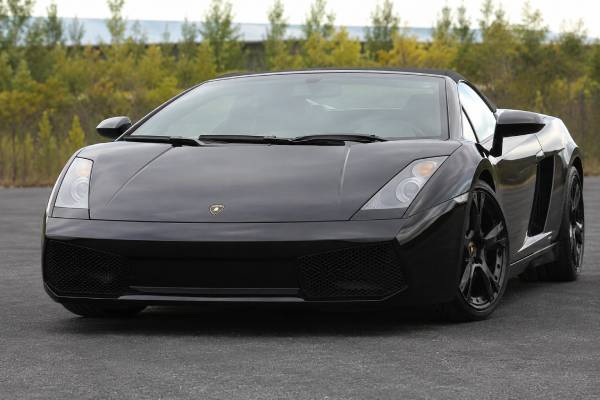
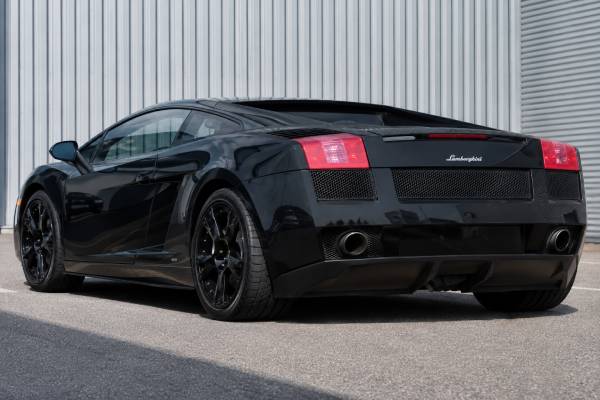
The Lamborghini Gallardo Nera is a 2007-only limited-edition Gallardo Coupé based on the L140-generation MY07 car. It uses Lamborghini’s 4,961 cc naturally aspirated V10, known in this context as the 07L1-type 5.0-liter unit, with 382 kW and 520 PS, commonly described as 520 hp. The Nera was not a lightweight track model like the later Superleggera. Its purpose was different: it showed how far Lamborghini’s Ad Personam personalization program could take a production Gallardo through paint, trim, equipment, and atmosphere.
Only 185 examples were planned, making the Nera one of the rarer early Gallardo variants. Collectors care because it combines the rawer pre-facelift Gallardo feel with a factory-numbered special-series identity. Buyers care because condition, clutch life, service history, paint originality, and documentation matter more than the headline mileage.
Table of Contents
- Why the 2007 Gallardo Nera Matters
- V10 Drivetrain, Chassis, and Key Specs
- Production Numbers, Options, and Authenticity
- Black Bodywork, Ad Personam, and Engineering Details
- How the Gallardo Nera Feels to Drive
- Ownership Reliability and Maintenance Realities
- Market Values and Buyer Checklist
Why the 2007 Gallardo Nera Matters
The Gallardo Nera matters because it is a rare factory special edition from the early, sharper-edged Gallardo era. It sits between the regular MY07 Gallardo Coupé and more performance-focused models, offering the same 5.0-liter V10 hardware with a far more distinctive factory specification.
The Gallardo itself was a turning point for Lamborghini. Before it arrived, the brand had lived mostly on dramatic V12 flagships and occasional smaller models that never reached the same commercial rhythm. The Gallardo changed that. It gave Lamborghini a more usable, more repeatable, and more scalable supercar while keeping the sound, stance, and drama buyers expected from Sant’Agata Bolognese.
The Nera came at a useful moment in that timeline. By 2007, the original Gallardo had already received important updates over the first 2003–2005 cars. Power rose to 520 PS, gearing was shortened, steering and suspension tuning were improved, and the exhaust became more expressive. That makes the Nera more than a black appearance package on the earliest version. It is based on the more mature MY07 Gallardo platform.
Its role was to showcase Ad Personam, Lamborghini’s factory personalization program. The Nera’s black-on-black theme, matte and gloss paint contrast, numbered identity, special interior trim, and standard equipment made it a showroom demonstration of factory customization before modern supercars made bespoke specification a major part of the buying experience.
The Nera’s collectability comes from four things:
- It was limited to 185 examples worldwide.
- It was based on the desirable 520 PS MY07 Gallardo Coupé.
- It carried a factory-developed Ad Personam specification, not a dealer-created theme.
- It kept the early 5.0-liter Gallardo’s rawer sound and feel before the later 5.2-liter LP 560-4 changed the car’s character.
It is not the lightest Gallardo, not the most powerful Gallardo, and not the rarest Lamborghini special edition ever built. Its appeal is narrower and more specific. A correct Nera is a numbered, visually coherent, early V10 Lamborghini with enough factory rarity to stand apart from normal Gallardo Coupés, but without the harsher focus or higher running intensity of a track-oriented special.
For enthusiasts, it represents the clean pre-facelift Gallardo shape at its most sinister. For buyers, it is a car where originality carries real value. A regular Gallardo can survive a color change, aftermarket wheels, exhaust changes, or non-original interior retrim more easily. A Nera loses much of its reason for existing if the paint scheme, Q-citura stitching, numbered plaque, factory options, and service file are not intact.
V10 Drivetrain, Chassis, and Key Specs
The Nera’s core specification is the MY07 Gallardo Coupé formula: a naturally aspirated 4,961 cc V10, permanent all-wheel drive, an aluminum space-frame chassis, and either a six-speed manual gearbox or Lamborghini’s six-speed E-gear automated manual. The engine and drivetrain are the main reasons the car still feels special today.
The 5.0-liter V10 is mounted longitudinally behind the cabin. It is an even-firing, high-revving engine with four valves per cylinder and a hard mechanical voice. Later Gallardos moved to a 5.2-liter FSI-based V10 with a different tone and delivery. The Nera belongs to the earlier group, where the engine feels slightly more old-school, raw, and mechanical.
| Item | Specification |
|---|---|
| Model | Lamborghini Gallardo Nera Coupé |
| Platform | L140 Gallardo |
| Model year | 2007 |
| Engine | 4,961 cc naturally aspirated V10 |
| Power | 382 kW / 520 PS, commonly listed as 520 hp |
| Torque | 510 Nm / 376 lb-ft |
| Engine layout | Longitudinal mid-engine |
| Drivetrain | Permanent all-wheel drive with viscous traction system |
| Transmission | Six-speed manual or six-speed E-gear automated manual, depending on car |
| 0–100 km/h | About 4.0 seconds |
| Top speed | 315 km/h / 196 mph |
The drivetrain is rear-biased in feel even though the car is all-wheel drive. Lamborghini’s VT system gives the Gallardo strong traction on poor surfaces and during hard launches, but it does not make the car feel like a nose-heavy grand tourer. The front axle helps the car dig out of corners, especially when the road is cold, damp, or uneven.
The gearbox matters a lot when buying. The six-speed manual is the more collectible transmission in the broader Gallardo market, but many Nera examples were ordered with E-gear. E-gear is not a dual-clutch transmission. It is a single-clutch automated manual that uses hydraulic actuation to operate the clutch and shift mechanism. It can feel dramatic and period-correct when healthy, but it needs correct setup, clutch measurement, and calibration.
| Area | Details |
|---|---|
| Body structure | Aluminum space-frame construction with aluminum body structure |
| Suspension | Independent double-wishbone layout |
| Steering | Hydraulic power-assisted steering |
| Standard brakes | Ventilated, cross-drilled steel discs |
| Optional brakes | Carbon-ceramic system available on MY07 Gallardo range |
| Wheelbase | 2,560 mm / 100.8 in |
| Length | 4,300 mm / 169.3 in |
| Width | 1,900 mm / 74.8 in |
| Height | About 1,165 mm / 45.9 in |
| Typical tire sizing | 235/35 ZR19 front, 295/30 ZR19 rear |
The MY07 brake option is especially important. Carbon-ceramic brakes reduce fade and unsprung weight, and they suit repeated fast driving. They also create a higher inspection burden because disc condition, remaining life, chipping, heat damage, and replacement cost can change the economics of a purchase. A steel-brake car is less exotic on paper but can be easier and cheaper to maintain for road use.
Production Numbers, Options, and Authenticity
The Gallardo Nera was limited to 185 examples, and that number is central to its identity. A buyer should treat the numbered plaque, original color combination, factory specification, and supporting documents as part of the car’s value, not as minor details.
The Nera was based on the Gallardo Coupé Model Year 2007. It was not offered as a Spyder, and it was not a separate mechanical performance model. Its uniqueness came from Ad Personam paint and trim, a defined production run, and a high standard equipment level.
The exterior theme was built around black paint with matte black contrast panels. Factory descriptions identify Nero Serapis and Nero Noctis as the main black finishes used depending on market, with matte black sections on areas such as the side mirrors, rear spoiler, rear body panels, roof, selected front sections, door sills, and rear apron. The result is subtle in shade but strong in presence. From a distance it reads as a black Gallardo; up close, the contrast between gloss and matte finishes is the point.
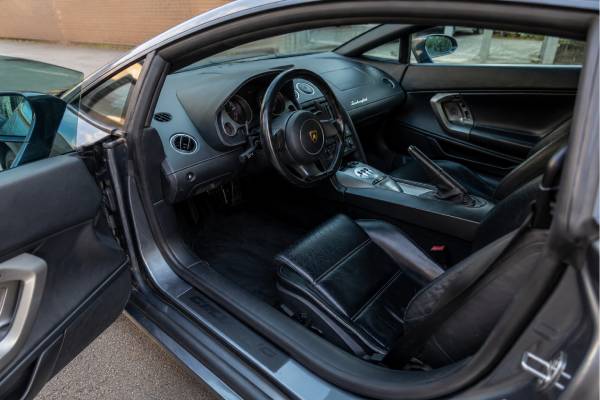
Inside, the Nera used a Nero Perseus and Bianco Polar bicolor cabin. The seats, door trims, roof lining, and rear partition used Lamborghini’s diamond-pattern Q-citura stitching. White piping, contrasting stitching, instrument details, and leather trim upgrades gave the interior a much more deliberate look than a standard black Gallardo cabin.
| Feature | Why it matters |
|---|---|
| Numbered Nera plaque | Confirms the car’s place within the 185-unit limited run |
| Nero Serapis / Nero Noctis exterior theme | Central to the factory Nera specification |
| Matte black exterior panels | One of the easiest visual identifiers, but also costly to restore correctly |
| Nero Perseus / Bianco Polar interior | Important for authenticity and resale value |
| Q-citura stitching | A defining Ad Personam cabin detail |
| Callisto wheels | Part of the period-correct Nera look |
| Silver brake calipers | Factory detail that complements the black exterior treatment |
| Darkened tail lamps and white side indicators | Small but recognizable Nera design touches |
Standard equipment was generous for a Gallardo of the period. The Nera included navigation, a rear-view camera, onboard computer, alarm system, front lifting system, and a made-to-measure vehicle cover. Options could include E-gear, a transparent glass engine cover, Bluetooth-compatible radio, and carbon-ceramic brakes.
Documentation should include as much of the following as possible:
- Original window sticker or order sheet.
- Lamborghini dealer service invoices.
- Evidence of clutch measurements for E-gear cars.
- Paint and bodywork history.
- Books, tools, keys, and vehicle cover.
- Proof that the numbered plaque, interior trim, wheels, and exterior finish are original to the car.
- VIN-specific recall and campaign checks.
A Nera with an aftermarket wrap, repainted matte sections, missing plaque, changed seats, non-original wheels, or incomplete service file may still be enjoyable, but it should not be priced like a complete collector-grade example. The limited edition status works only when the car still presents as a real Nera.
Black Bodywork, Ad Personam, and Engineering Details
The Nera’s design is effective because it does not add wings, vents, stripes, or fake race-car cues. Lamborghini used material contrast, black paint depth, and cabin detailing to make the familiar Gallardo shape feel more serious and more exclusive.
The original Gallardo design was compact, wedge-shaped, and very clean by Lamborghini standards. It had the low nose, cab-forward cockpit, short rear overhang, and broad shoulder line expected of a mid-engine supercar, but it was less wild than a Murciélago. The Nera sharpened that shape by removing visual brightness. The matte black areas break up the surface without disrupting the bodywork.
Ad Personam was the story. Today, almost every supercar buyer expects personalization. In 2007, factory bespoke programs were becoming a bigger part of the exotic-car business, and the Nera made that idea visible. Rather than simply offering a rare paint color, Lamborghini created a complete theme that covered exterior finish, wheels, lights, stitching, leather, roof lining, equipment, and presentation.
The engineering underneath remained pure Gallardo. That is not a weakness. The 5.0-liter V10 sits low and close to the cabin, and the car’s short wheelbase helps it feel alert. The aluminum space frame gives the Gallardo a solid core without the heavy, old-world feel of some earlier exotics. The suspension uses double wishbones rather than a simple strut layout, which helps wheel control during fast direction changes.
Cooling and airflow are major parts of the design. The side intakes feed the engine bay and radiators, while the rear bodywork manages heat from the V10 and exhaust. A Gallardo that has lived in hot climates, spent time in traffic, or seen track use needs careful inspection of cooling fans, hoses, radiators, heat shielding, and engine-bay plastics. The design works, but it places many components in a hot, tightly packaged environment.
The cabin is compact and more usable than older Lamborghinis. Visibility forward is decent for a mid-engine exotic, but rear visibility is limited, which makes the Nera’s rear-view camera useful rather than decorative. The front lift system also matters in real use because the nose is low enough to make ramps, driveways, and parking entrances a constant concern.
The sound is one of the car’s strongest features. The 5.0 V10 has a hard-edged, metallic note that builds with revs and feels more mechanical than turbocharged modern performance engines. Exhaust modifications are common, but originality matters on a Nera. A high-quality aftermarket exhaust may improve drama, but buyers should look for the original system or at least understand how the modification affects emissions, cabin resonance, service access, and value.
How the Gallardo Nera Feels to Drive
A healthy Gallardo Nera feels compact, loud, mechanical, and secure rather than delicate or intimidating. It is fast by modern standards, but its real appeal is the combination of high-revving V10 response, hydraulic steering, all-wheel-drive traction, and a low, focused driving position.
The V10 needs revs to show its best side. At low rpm it is tractable enough for normal driving, but the engine becomes far more exciting as it climbs through the midrange and toward the top end. The response is immediate because there is no turbocharger to wait for and no hybrid system smoothing out the power delivery. Throttle inputs feel direct, and the car rewards clean, deliberate driving.
The transmission changes the character. A gated manual Gallardo gives the most analog experience, with more driver involvement and stronger collector demand. E-gear feels more theatrical. At low speeds it can be jerky if the clutch is worn, the system is out of calibration, or the driver treats it like a torque-converter automatic. Driven properly, with confident throttle inputs and mechanical sympathy, it feels dramatic and period-correct.
Steering feel is one of the best reasons to choose an early Gallardo over many newer supercars. The hydraulic steering has weight, texture, and useful feedback. It is not light in the modern sense, and parking speeds require more effort than in a newer car, but once moving it gives the driver a clear sense of front grip.
The ride is firm but not unbearable. The short wheelbase and low-profile tires mean rough city roads can make the car feel busy. On smooth open roads, the chassis settles and the Gallardo becomes much more satisfying. The all-wheel-drive system helps the car put power down early out of corners, but the car still wants respect. Old tires, cold tires, mismatched tires, or tired dampers can make a Gallardo feel worse than it really is.
Brakes are strong when fresh. Steel brakes are more than adequate for road use, while carbon ceramics suit harder driving and repeated high-speed braking. Pedal feel, vibration, cracks, disc wear, pad condition, and brake-fluid age all matter. A car that has been stored more than driven can still need brake work.
In daily use, the Nera is more practical than its appearance suggests but still an exotic. The front trunk is small, the cabin is low, the doors are long, heat builds in traffic, and ground clearance is a constant concern. The front lift helps, but it must work quickly and reliably. Buyers should test it several times during inspection.
The best examples feel tight, eager, and alive. The worst examples feel clumsy, harsh, and expensive because deferred maintenance affects every part of the experience: clutch take-up, suspension noise, brake vibration, sticky controls, cooling behavior, battery health, and warning lights.
Ownership Reliability and Maintenance Realities
The Gallardo Nera can be a dependable exotic when serviced correctly, but it is not a low-cost used sports car. The largest risks are deferred maintenance, E-gear clutch wear, aging rubber and plastics, cooling-system neglect, brake expense, paint repair quality, and cars modified without proper documentation.
The engine itself has a strong reputation when maintained. It uses timing chains rather than belts, which removes one major service worry found in some older exotics. That does not mean the V10 is cheap to own. Clean oil, correct fluids, healthy cooling, good ignition components, and regular inspections matter because the engine is tightly packaged and heat-stressed.
E-gear cars require special attention. A clutch-wear reading is helpful, but it is not the whole story. A pre-purchase inspection should also consider clutch engagement quality, PIS or kiss-point setup, hydraulic pressure behavior, pump operation, actuator condition, fluid leaks, fault codes, and service history. A car with a low clutch-wear number can still drive poorly if calibration or hardware is wrong.
Common inspection areas include:
- Clutch life and E-gear calibration on automated-manual cars.
- Front lift operation, leaks, and warning lights.
- Radiators, fans, coolant hoses, and heat-related aging.
- Oil leaks around engine and gearbox areas.
- Suspension bushings, ball joints, dampers, and alignment condition.
- Brake disc condition, especially if carbon ceramics are fitted.
- Tire age, brand match, and correct sizing.
- Battery condition and charging-system health.
- Sticky interior switches and trim wear.
- Air-conditioning performance.
- Exhaust modifications and emissions readiness.
- Underside damage from speed bumps, ramps, and poor lifting.
| Area | What to inspect | Why it matters |
|---|---|---|
| E-gear clutch | Wear reading, engagement, calibration, hydraulic faults | Incorrect setup can shorten clutch life and make the car unpleasant |
| Manual gearbox | Shift quality, clutch feel, synchro behavior, service history | Manual cars are desirable, but repairs are still expensive |
| Cooling system | Radiators, hoses, fans, coolant leaks, temperature stability | Heat damage can create broader engine-bay problems |
| Brakes | Disc wear, cracks, vibration, pad condition, fluid age | Carbon-ceramic replacement can heavily affect total cost |
| Suspension | Bushings, dampers, ball joints, lift system, alignment | Tired suspension makes the car feel nervous and reduces tire life |
| Paint and body | Matte/gloss finish match, accident repair, panel gaps | Nera-specific paint originality is a major value factor |
| Interior | Q-citura trim, seat wear, sticky switches, electronics | Correct Nera trim is costly to restore accurately |
Annual servicing is the safe mindset, even for low-mile cars. Many Gallardos cover few miles, but time still ages fluids, tires, rubber parts, batteries, seals, and hydraulic components. A car that has sat for years with “low mileage” can need more work than a higher-mile car that has been serviced and driven regularly.
Originality versus upgrades is a real decision. Some upgrades improve usability, such as a modern battery maintainer, clear paint protection film, updated tires, or a carefully chosen exhaust. Other changes can hurt value, including non-factory paint changes, aggressive aftermarket wheels, poorly fitted audio systems, lowered suspension, cheap carbon trim, or interior retrims that erase the Nera specification.
A proper pre-purchase inspection should be done by a Lamborghini specialist or an independent exotic-car shop familiar with early Gallardos. A normal used-car inspection is not enough. The buyer needs computer diagnostics, underbody inspection, lift-system checks, clutch data, brake assessment, paint readings, service-file review, and a road test from cold.
Market Values and Buyer Checklist
The Nera usually trades above an ordinary E-gear Gallardo Coupé when it is original, documented, and well presented, but condition still matters more than rarity alone. The best cars are complete, numbered, low-to-moderate mileage examples with clean history, recent service, strong clutch data, correct paint, and intact Ad Personam interior details.
As of the 2026 market, public results and listings show that good Nera examples commonly sit in the low-to-mid six-figure dollar range, with recent public auction activity around the $100,000 to $120,000 area for usable, documented cars. Asking prices can run higher for cleaner, lower-mileage, highly original examples. Modified cars, higher-mileage cars, accident-history cars, weak service files, or cars with uncertain clutch and paint condition can sit well below the best examples.
Do not value a Nera by mileage alone. A 10,000-mile car with old tires, weak clutch history, sticky switches, aging fluids, and repaint questions may be a worse buy than a 25,000-mile car with expert maintenance and clean documentation.
The biggest value drivers are:
- Verified Nera identity and numbered plaque.
- Original Nero exterior theme and correct matte/gloss finish.
- Correct Nero Perseus / Bianco Polar interior.
- Full service history from Lamborghini dealers or respected specialists.
- Recent clutch reading and E-gear calibration evidence.
- Clean accident and paint history.
- Working front lift system.
- Correct wheels and equipment.
- Carbon-ceramic brake condition if fitted.
- Complete books, tools, keys, cover, and factory documents.
A buyer should avoid cars with unclear identity, missing interior details, poor paint matching, unresolved warning lights, weak clutch documentation, non-functioning lift, old tires, or a seller who cannot explain the service file. These are not small negotiation points. They are signs that the car may have been maintained as a depreciated used exotic rather than preserved as a limited Lamborghini.
Practical pre-purchase sequence
Use this order before committing to a car:
- Confirm the VIN, numbered plaque, and Nera-specific specification.
- Review all service invoices, not just stamped books.
- Check clutch data and E-gear behavior if fitted.
- Inspect paint depth, matte/gloss finish quality, and panel gaps.
- Verify lift, HVAC, navigation, camera, lights, windows, and warning lamps.
- Inspect brakes, tires, suspension, underside, and cooling system.
- Road test from cold and again once fully warm.
- Price the car after known upcoming work, not before it.
The strongest long-term collectability belongs to cars that remain close to factory condition. The Nera is rare enough to be interesting, but not so famous that every rough example will be forgiven. Its best future is as a correct, usable, documented early V10 Lamborghini special edition.
References
- Lamborghini Gallardo Nera (2007) – pictures, information & specs 2007
- Recall Campaign | Lamborghini.com 2026 (Recall Database)
- Check for Recalls: Vehicle, Car Seat, Tire, Equipment | NHTSA 2026 (Recall Database)
- 2007 Lamborghini Gallardo Market – CLASSIC.COM 2026 (Market Data)
- 11k-Mile 2007 Lamborghini Gallardo Nera Coupe for sale on BaT Auctions – sold for $117,000 on February 26, 2026 (Lot #231,457) | Bring a Trailer 2026 (Auction Result)
Disclaimer
This article is for informational purposes only and is not a substitute for professional diagnosis, inspection, repair, or valuation. Specifications, torque values, service intervals, procedures, recall applicability, and equipment can vary by VIN, market, production date, and individual vehicle configuration. Always verify details against official Lamborghini service documentation, VIN-specific records, and a qualified Lamborghini specialist before buying, repairing, or modifying a Gallardo Nera.
If this guide helped you, please consider sharing it on Facebook, X/Twitter, or your favorite enthusiast community to support our work.