
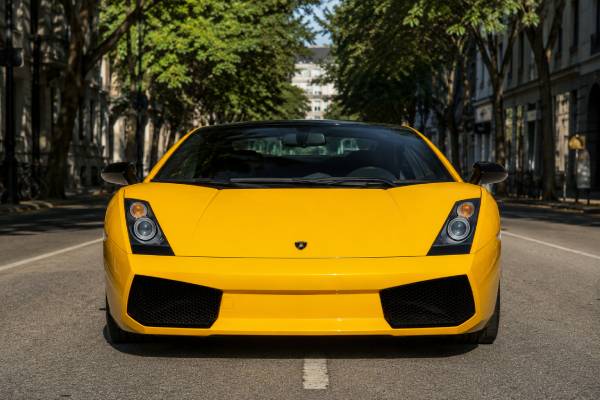
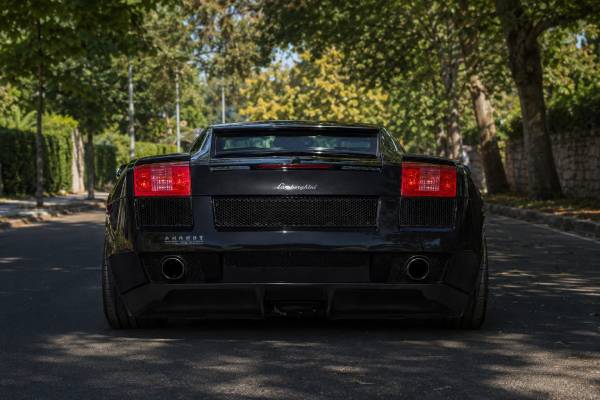
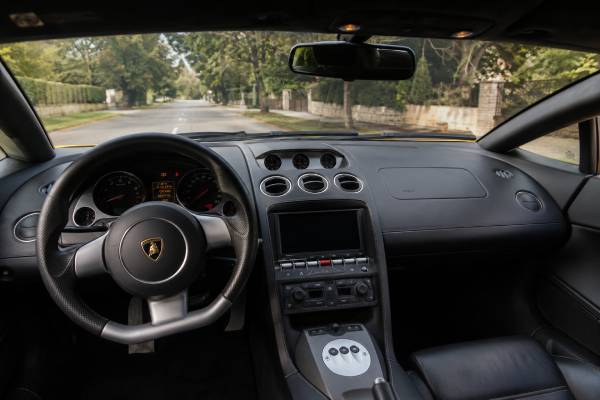
The Lamborghini Gallardo SE is the early limited-edition version of the L140 Gallardo coupe, built around the 5.0-litre 07L1 naturally aspirated V10 and Lamborghini’s permanent all-wheel-drive layout. Introduced in 2005 for the 2006 model year, it matters because it brought several of the most important early Gallardo updates into one numbered, 250-car package: 520 PS output, shorter gearing, sharper steering, revised suspension, two-tone SE trim, Callisto wheels, and a more usable cabin specification. It sits between the original 500 PS Gallardo and the later Superleggera and LP560-4, making it one of the most interesting pre-facelift Gallardos for collectors. Buyers still care because it combines the raw sound and compact feel of the first-generation 5.0 V10 with genuine rarity, Audi-era build quality, and enough modern usability to be driven rather than treated only as a display car.
Table of Contents
- Why the Gallardo SE Still Matters
- 07L1 V10 Specs and Chassis Data
- Production Numbers, Colors, and Options
- Design, Engineering, and SE Details
- Road Feel, Performance, and Sound
- Maintenance Risks and Service Realities
- Market Values and Buying Checklist
Why the Gallardo SE Still Matters
The Gallardo SE matters because it captured the first major improvement wave of Lamborghini’s V10 supercar in a numbered, limited-production coupe. It is not just a paint-and-trim edition; it received the stronger 520 PS version of the 5.0 V10 and the sharper driving calibration that made the early Gallardo feel more urgent.
The Gallardo itself was a turning point for Lamborghini. Before it arrived, Lamborghini was known mainly for dramatic V12 flagships, low production numbers, and demanding ownership. The Gallardo changed that. It gave the company a smaller, more approachable mid-engine model below the Murciélago, and it used Audi-era engineering discipline to make a Lamborghini that could handle regular use without losing the noise, shape, and theatre buyers expected from Sant’Agata.
The L140 Gallardo launched in 2003 as Lamborghini’s V10 answer to cars like the Ferrari 360 Modena and later the Ferrari F430. It used a compact two-seat body, a mid-mounted V10, an aluminium spaceframe, and all-wheel drive. It was still dramatic, but it was less intimidating than a V12 Lamborghini. That mix helped the Gallardo become one of the most successful models in the brand’s history.
The SE arrived when Lamborghini was already listening to early owners and road testers. The first 500 PS cars were fast and charismatic, but some drivers wanted a little more response, more sound, and a tighter relationship between engine speed and road speed. The SE addressed those points with:
- 520 PS output from the 5.0-litre V10.
- Shorter gear ratios for stronger acceleration.
- A more direct steering feel.
- Sports suspension.
- Pirelli P Zero Corsa tires.
- A more distinctive two-tone exterior and interior.
- A numbered limited-edition identity.
That makes the SE historically useful because it foreshadowed the direction of later Gallardos. The 2007 Superleggera would go lighter and more focused. The 2008 LP560-4 would bring the larger 5.2-litre engine and a major facelift. The SE sits before those cars, keeping the cleaner early body and raw 5.0-litre sound while adding the power and gearing that the original version needed.
Collectors usually divide early Gallardos into a few broad groups: original 500 PS coupes, 520 PS updated cars, SE and Nera special editions, Spyder models, and the Superleggera. The SE has a strong place in that group because it is both rare and easy to identify when original. Its build number, SE colors, black contrast panels, Callisto wheels, and interior details all matter when judging authenticity.
The car’s reputation today is also helped by its usability. It is old enough to feel mechanical compared with later dual-clutch supercars, but new enough to have strong brakes, ABS, stability control, usable air conditioning, and a cabin that can survive real mileage when maintained correctly. For an enthusiast, it gives a louder and more physical experience than many newer supercars. For a collector, it offers limited production without the extreme cost or fragility of older Lamborghini icons.
07L1 V10 Specs and Chassis Data
The key technical story is the 5.0-litre naturally aspirated V10: high-revving, dry-sumped, all-alloy, and much more characterful than its displacement alone suggests. In SE form, it produced 520 PS at 8,000 rpm and 510 Nm of torque, giving the coupe a claimed 0–100 km/h time of about 4.0 seconds.
| Item | Specification |
|---|---|
| Model | Lamborghini Gallardo SE |
| Platform code | L140 |
| Production period | Introduced 2005, commonly listed as 2005–2006 / 2006 model year |
| Body style | Two-door coupe |
| Engine family / code reference | 07L1 5.0-litre V10 family; confirm exact engine stamping by VIN and market |
| Engine layout | Mid-mounted 90-degree V10 |
| Displacement | 4,961 cc |
| Induction | Naturally aspirated |
| Fuel system | Electronic multi-point injection |
| Valvetrain | DOHC, 4 valves per cylinder |
| Maximum power | 520 PS / 382 kW at 8,000 rpm |
| Maximum torque | 510 Nm / 376 lb-ft |
| Redline region | About 8,000 rpm-plus |
| Lubrication | Dry sump |
| Transmissions | Six-speed manual or six-speed E-gear automated manual |
| Drivetrain | Permanent all-wheel drive with viscous coupling |
The 07L1 V10 is part of what makes the early Gallardo special. Later Gallardos moved to the 5.2-litre FSI engine, which is quicker and more advanced, but the earlier 5.0 has a harder-edged tone and a simpler, more old-school delivery. It does not feel turbocharged or torque-heavy. It wants revs, and the car feels best when driven in the upper half of the tachometer.
The SE’s shorter gearing is a major part of its character. It makes the same basic engine feel more alert because the revs climb quickly, and the car spends more time in the range where the V10 is loud, sharp, and responsive. That matters more than the 20 PS increase alone. A standard early Gallardo already had the traction to launch hard; the SE added the gearing and response to make it feel more alive between corners.
| Area | Gallardo SE detail |
|---|---|
| Body / frame | Aluminium and thermoplastic body panels over an aluminium spaceframe |
| Front suspension | Independent double wishbones, coil springs, anti-roll bar |
| Rear suspension | Independent double wishbones, coil springs, anti-roll bar |
| Steering | Hydraulic power-assisted rack-and-pinion; sharper SE-era calibration |
| Front brakes | Ventilated discs, commonly listed at 365 mm |
| Rear brakes | Ventilated discs, commonly listed at 335 mm |
| Front tires | 235/35 ZR19 |
| Rear tires | 295/30 ZR19 |
| Wheelbase | 2,560 mm |
| Length | 4,300 mm |
| Width | 1,900 mm |
| Height | About 1,165–1,166 mm |
| Curb / unladen weight | About 1,430 kg, depending on equipment and market |
| Fuel capacity | About 90 litres / 23.8 US gallons |
Performance figures vary by test method, tires, transmission, weather, and launch style, but the accepted factory-level numbers are straightforward: about 4.0 seconds from 0–100 km/h and roughly 315 km/h / 196 mph flat out. The E-gear car could be quicker in perfect launch conditions, while the manual gives more driver involvement and is now more desirable to many collectors.
Production Numbers, Colors, and Options
The SE was limited to 250 cars worldwide, and that fixed production run is central to its value. A real car should have the correct numbered identity, SE-specific exterior treatment, interior details, and equipment trail; otherwise, it is just an early Gallardo wearing SE-style parts.
Lamborghini introduced the Gallardo SE as a special edition rather than a permanent trim level. Its rarity was easy to understand from day one: 250 cars was a small number even by Lamborghini standards, especially for a model that later became a relatively high-volume success. That is why provenance matters. A buyer should confirm that the car is a genuine SE through the VIN, factory records, build plaque, original sales paperwork, service book, and ideally Lamborghini dealer or Polo Storico-style documentation where available.
The main external identifier is the two-tone body. The roof, engine bonnet, front and rear spoilers, and side mirrors were finished in Nero Noctis black, contrasting with the main body color. The SE also used slightly tinted rear lights and special Callisto wheels. Brake calipers were typically finished in grey or yellow depending on specification.
Factory color references commonly associated with the SE include two grey shades, Balloon White, Giallo Midas, Arancio Borealis, and Verde Ithaca. Because individual-market cars, repaints, and later personalization can complicate the story, the safest approach is to verify the original paint code and build specification rather than relying only on what the car looks like today.
Inside, the SE carried the two-tone idea into the cabin. The leather piping and stitching matched the body color, the seat centers used color-coded upholstery, and the black floor mats had matching colored borders. The cabin also included an identification detail tied to the limited edition. These small pieces are important because they are harder to source correctly than ordinary service parts.
Standard and optional equipment can make two SEs feel quite different. Important items include:
- Six-speed open-gate manual transmission.
- Six-speed E-gear automated manual transmission.
- Rear-view camera.
- Multimedia screen.
- Navigation system on many cars, depending on market and specification.
- Sports suspension.
- Sports steering wheel.
- Pirelli P Zero Corsa tires.
- Exclusive SE car cover.
- Heated mirrors and electrically adjustable heated seats where specified.
- Body-color interior stitching and trim accents.
The E-gear option deserves special attention. It was not a torque-converter automatic and not a modern dual-clutch transmission. It was an electrohydraulic system operating a single-clutch manual gearbox. The driver used paddles, and the system controlled clutch engagement and gear selection. In the SE, E-gear cars also gained a launch function often referred to as Thrust mode. It helped the car leave the line hard by coordinating revs and clutch engagement, but repeated aggressive launches are not friendly to the clutch, drivetrain mounts, or tires.
Manual cars are often more collectible now because open-gate Lamborghini manuals have become rare and emotionally desirable. E-gear cars can still be excellent to own, especially if maintained correctly, but their value depends heavily on clutch wear readings, hydraulic system health, and shift quality.
Design, Engineering, and SE Details
The Gallardo SE looks special because the factory changes sharpen the original L140 shape without turning it into a track model. Its black contrast panels, Callisto wheels, tinted rear lights, and color-keyed interior make it instantly recognizable while keeping the clean early Gallardo design.
The original Gallardo shape came from the early-2000s Lamborghini design language: short overhangs, a low wedge profile, large side intakes, angular surfaces, and a cab-forward stance created by the mid-engine layout. Compared with the larger Murciélago, the Gallardo is tighter and more compact. It does not have scissor doors, which some buyers initially saw as less dramatic, but the conventional doors also make it easier to use in tight spaces.
The SE’s two-tone treatment changes the visual weight of the car. The black roof and black upper sections make the coupe look lower, especially in bright colors like Giallo Midas, Arancio Borealis, and Verde Ithaca. The black engine cover area also draws attention to the mid-mounted V10, while the black front and rear spoiler areas add contrast without needing a large wing.
The Callisto wheels are a key authenticity item. They suit the car because their shape looks more technical than the standard early Gallardo wheels without pushing the car into later LP560-4 styling. On an SE, aftermarket wheels can hurt value unless the original wheels are included and in good condition.
The aluminium spaceframe gives the car much of its character. It is stiff enough to support the suspension geometry and road feel that made the Gallardo more precise than older Lamborghinis. The mid-engine packaging places the V10 behind the cabin, with air drawn and heat managed through the side and rear body openings. Owners should remember that this layout concentrates heat around the engine bay, exhaust, wiring, sensors, and hydraulic components. Keeping heat shields, hoses, and underbody panels correct is not cosmetic; it protects the car.
The SE also shows Lamborghini’s move toward a more usable supercar cabin. The rear-view camera and multimedia screen were not trivial in a low, wide coupe with limited rear visibility. A Gallardo is easier to park than a Murciélago, but it is still low, wide, and expensive to repair. The camera helped owners use the car without feeling like every reverse maneuver was a risk.
The sound is one of the SE’s strongest features. The early 5.0 V10 has a metallic, hard-edged note that rises sharply with revs. It is less polished than the later 5.2, and many enthusiasts prefer it for that reason. Exhaust valve behavior, muffler condition, catalysts, and aftermarket exhausts can change the sound dramatically. A factory-correct car will usually be more valuable, but a tasteful exhaust is common in the market. Buyers should confirm whether any exhaust modification has affected emissions readiness, heat management, or warranty-style documentation.
Road Feel, Performance, and Sound
The Gallardo SE feels fast because it combines all-wheel-drive traction, short gearing, and a V10 that rewards revs. It is not as effortless as a modern turbocharged supercar, but it feels more mechanical, more vocal, and more connected when the engine is worked properly.
At low speed, the SE is more usable than its shape suggests. The clutch in a manual car is not impossibly heavy, the steering has hydraulic feel, and the car has better forward visibility than many mid-engine exotics. Rear visibility is limited, which is why the factory rear-view camera is more than a convenience feature. The nose is low, so driveways, ramps, and broken road edges need care.
The V10’s power delivery is linear. Below the middle of the rev range, it is tractable but not lazy. Above that, it starts to feel urgent, and near the top end it becomes the reason to own the car. The shorter SE gearing helps keep the engine on the boil. On a mountain road, that means the car feels more awake between corners than an early 500 PS Gallardo with taller gearing.
The manual gearbox is the more emotional choice. The open metal gate, clutch pedal, and physical shift action create the kind of interaction that disappeared from later Lamborghini production. A good manual car feels direct and special. A worn one can feel vague, especially if the shift cables, bushings, clutch, or mounts need attention.
E-gear has a different appeal. It suits the period and can shift hard when driven aggressively, but it rewards a specific driving style. Smooth E-gear driving often means easing the throttle slightly during upshifts, much like a driver would with a manual. Treating it like a modern dual-clutch transmission makes it feel clumsy and can speed clutch wear. A well-set-up E-gear SE with fresh calibration and a healthy clutch can be enjoyable, but a neglected one can be expensive.
The steering is one of the SE’s best upgrades. The car turns in with confidence, and the all-wheel-drive system gives strong traction out of bends. It is not a drift-focused car and does not have the loose rear-drive balance of the later LP550-2 Balboni. Its personality is secure, planted, and fast. The front tires matter greatly; old or mismatched tires can make the car understeer, tramline, or feel dull.
Ride quality is firm but not punishing when the suspension is healthy and the car is on correct tires. Worn dampers, tired bushings, damaged wheels, or aggressive aftermarket alignment can make the car feel harsher than intended. Braking performance is strong for road use, but track use needs careful attention to pad condition, fluid age, rotor wear, and cooling. Heavy cars with big power and sticky tires can consume brakes quickly when driven hard.
The SE is best understood as a road-focused limited edition with sharper responses, not a stripped track special. It can handle occasional circuit use, but anyone planning track days should budget for tires, brakes, fluid changes, and post-event inspections.
Maintenance Risks and Service Realities
The Gallardo SE can be reliable by exotic-car standards, but only when maintained like a mid-engine Lamborghini rather than an ordinary used coupe. The expensive cars are not always the ones with the highest mileage; they are the ones with missing history, deferred service, poor repairs, clutch uncertainty, or accident damage.
The 5.0 V10 has a strong reputation when serviced correctly. It does not require routine engine-out belt services like some older Italian exotics, which helps ownership. Still, it is a dry-sump engine with specific oil-checking procedures, heat exposure, expensive sensors, and packaging that makes labor slower than on normal cars. Overfilling the oil, using incorrect fluids, ignoring leaks, or letting old fuel and fluids sit for long periods can create costly problems.
The most important maintenance areas are:
- Annual or mileage-based servicing with correct fluids.
- Clean service records from Lamborghini dealers or respected specialists.
- Clutch wear readings on E-gear cars.
- Manual clutch condition and shift quality on three-pedal cars.
- Gearbox oil service history.
- Brake fluid age and brake rotor condition.
- Cooling system health, including radiators, hoses, fans, and expansion tank.
- Suspension bushing, ball joint, damper, and alignment condition.
- Power steering hose and hydraulic leak checks.
- Battery health and charging system stability.
- Tire age, not just tread depth.
- Underbody panel, jack point, and front-lift or nose damage inspection where applicable.
E-gear cars need the closest drivetrain inspection. A specialist can read clutch wear and check for stored faults, hydraulic pressure behavior, shift speed, and calibration status. A car that shifts poorly may need a clutch, actuator work, pump attention, software setup, or a combination of these. Guessing is expensive; diagnostics are cheaper.
Manual cars avoid E-gear hydraulics, but they are not automatically risk-free. Clutches still wear, shift cables can stretch, gates can feel sloppy, and abused cars can have synchro or mount issues. Because manual cars are more desirable, some sellers price them as collectible even when the mechanical condition does not justify it.
Early Gallardos also need careful recall and campaign checks. A 2006 car may have records relating to suspension wishbone inspection and repair, and 2004–2006 Gallardos were also affected by power steering high-pressure hose concerns in some markets. The correct approach is simple: check the VIN with Lamborghini and the relevant national recall database, then confirm completion with invoices, dealer stamps, or official records.
Age-related deterioration is now a major issue. Even low-mile cars are around two decades old. Rubber hardens, tires age out, fluids absorb moisture, electrical contacts corrode, headliners and leather can shrink or lift, sticky interior plastics may appear, and coolant or hydraulic hoses can deteriorate. A low odometer reading does not protect a car from time.
Accident history deserves special caution. The Gallardo’s aluminium structure can be repaired by qualified specialists, but poor repairs are serious value killers. Check panel gaps, paint depth, front splitter and undertray damage, wheel arch liners, suspension mounting points, coolant radiators, and evidence of curb impacts. Because the car is low and wide, front-end scrapes are common; structural or suspension damage is a different matter.
Market Values and Buying Checklist
The Gallardo SE is a niche collector buy: rarer than a normal early Gallardo, less expensive than the most prized lightweight and rear-drive later variants, and heavily dependent on originality. The best cars are genuine numbered SEs with factory colors, complete records, low-to-moderate mileage, clean paintwork, correct wheels, and no deferred mechanical work.
Market values move with mileage, transmission, region, color, and documentation. Public-market data has shown ordinary early Gallardos trading across a wide range, while SE examples can command a premium when they are clean, original, and well documented. Manual SEs tend to attract stronger collector interest because open-gate Lamborghinis have become scarce. E-gear cars can be good buys, but only if clutch wear and hydraulic health are known.
A practical buying approach is to sort cars into three groups:
| Example type | What it usually means | Buyer stance |
|---|---|---|
| Collector-grade original SE | Correct colors, documented build number, strong service file, original wheels, clean history, low mileage | Pay the premium if inspection confirms condition |
| Driver-quality SE | Good history, some mileage, minor paintwork or reversible modifications, mechanically sound | Often the best ownership choice if priced honestly |
| Project or story car | Missing records, accident history, clutch uncertainty, aftermarket parts, poor paint, overdue service | Avoid unless the discount is large and the repair plan is clear |
The inspection should be done by a Lamborghini specialist, not a general used-car shop. A proper pre-purchase inspection should include:
- VIN verification against SE production identity.
- Build number and interior identification check.
- Factory color and trim confirmation.
- Paint-depth readings and accident repair assessment.
- Diagnostic scan of engine, gearbox, ABS, airbag, and body systems.
- Clutch wear report for E-gear cars.
- Road test from cold and hot.
- Leak inspection after full warm-up.
- Cooling fan and temperature behavior check.
- Brake rotor, pad, and fluid inspection.
- Tire date-code check.
- Suspension and steering joint inspection.
- Underbody, radiator, and front-end scrape inspection.
- Review of recall and campaign completion.
- Review of service invoices, not just stamped books.
Originality matters more on the SE than on a normal early Gallardo. Reversible changes, such as an exhaust with the factory system included, are less concerning. Missing SE wheels, incorrect repaint colors, removed interior trim, aftermarket body kits, or undocumented engine and gearbox work are much more serious. The SE’s value depends on being an SE, not merely being a fast Gallardo.
The best cars to seek are usually those with long-term ownership, regular specialist service, original paint or high-quality documented paintwork, complete books and tools, factory wheels, and no signs of track abuse. A car with moderate mileage and excellent maintenance can be better than an ultra-low-mile car that has sat unused and now needs every fluid, tire, hose, seal, and clutch-related item checked.
Avoid cars with vague claims such as “recent service” without invoices, “clutch is fine” without a reading on E-gear cars, “minor damage” without repair photos, or “rare SE conversion” when the VIN and paperwork do not prove it. Also be careful with cars imported across markets, because lighting, emissions, registration, speedometer, and recall documentation can become complicated.
Long-term collectability looks solid rather than speculative. The SE has the right ingredients: a limited 250-car run, early 5.0 V10 character, clear visual identity, useful mechanical updates, and the Lamborghini badge at a point when the company was becoming more reliable and globally successful. It may never be as sought after as a manual Superleggera-style hero car or ultra-rare Balboni, but a correct Gallardo SE should remain one of the more desirable early Gallardo variants.
References
- Celebrating The Lamborghini Gallardo 2023 (Manufacturer Publication)
- Milestones | Lamborghini.com 2026 (Manufacturer History)
- Vehicle Detail Search – 2006 LAMBORGHINI GALLARDO | NHTSA 2026 (Recall Database)
- LAMBORGHINI Gallardo SE Specs, Performance & Photos – 2005, 2006 – autoevolution 2026 (Specifications)
- Lamborghini Gallardo SE Market – CLASSIC.COM 2026 (Market Data)
Disclaimer
This article is for informational purposes only and is not a substitute for professional diagnosis, repair, appraisal, or pre-purchase inspection. Specifications, torque values, service intervals, recall applicability, procedures, parts, and equipment can vary by VIN, market, production date, and option package. Always verify details against official Lamborghini service documentation, factory records, and a qualified Lamborghini specialist before buying, servicing, or repairing a Gallardo SE.
If this guide helped you, please consider sharing it on Facebook, X/Twitter, or your favorite enthusiast community to support our work.