
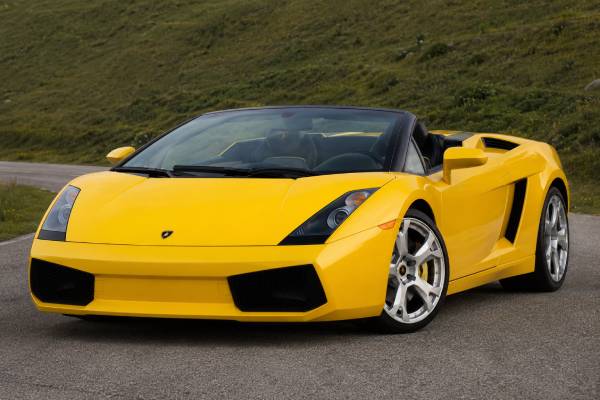
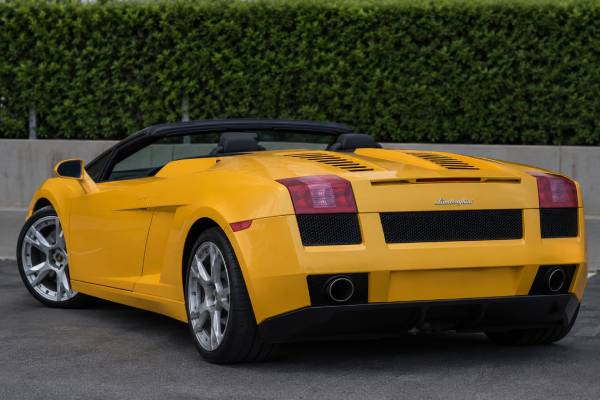
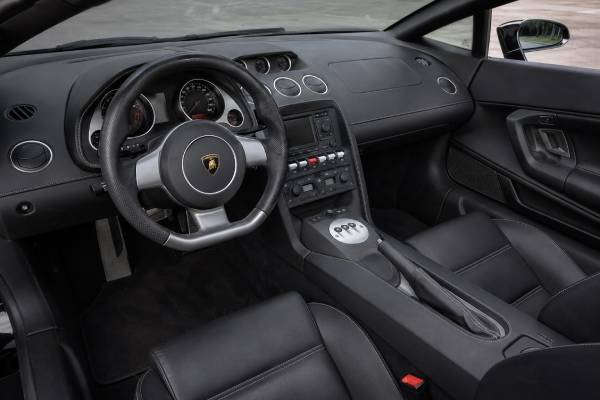
The Lamborghini Gallardo Spyder L140 is the open-top version of the first-generation Gallardo, launched in 2005 and sold mainly for the 2006–2008 model years before the later LP 560-4 update arrived. It matters because it combined Lamborghini’s Audi-era build discipline with a naturally aspirated 5.0-liter V10, permanent all-wheel drive, dramatic wedge styling, and a powered soft top that kept the car usable without removing its theater. Rated at 520 metric horsepower, the early Spyder sits in a sweet spot for many buyers: newer and easier to live with than older V12 Lamborghinis, but more analog and mechanically direct than later dual-clutch supercars. Today it attracts owners, collectors, and enthusiasts who want a real V10 Lamborghini experience, but also need to understand E-gear clutch wear, roof-system condition, service history, originality, and market risk before buying.
Table of Contents
- Why the L140 Gallardo Spyder Matters
- 07L1 V10 Specs and Core Hardware
- Model Years, Transmissions, and Options
- Open-Top Design and Gallardo Engineering
- How the 520 hp Spyder Drives
- Maintenance, Reliability, and Inspection Risks
- Market Values and Buying Strategy
Why the L140 Gallardo Spyder Matters
The Gallardo Spyder matters because it turned Lamborghini’s first modern V10 supercar into a usable open-road exotic without losing the mid-engine character that made the coupe successful. It also helped make Lamborghini a higher-volume, more stable brand during the early Audi ownership period.
The Gallardo itself arrived as the smaller companion to the Murciélago. It was not a cheap Lamborghini, but it was more accessible, compact, and approachable than the V12 flagship. The L140 platform brought a new level of engineering consistency to Sant’Agata Bolognese: an aluminum-intensive body structure, permanent all-wheel drive, a 90-degree V10, better ergonomics, and a cabin that could survive regular use better than many older Italian exotics.
The Spyder appeared after the coupe had already proven the formula. Lamborghini revealed the open car in 2005, with customer deliveries following during the 2006 model year in many markets. The 2005–2008 range covered here is the pre-facelift 5.0-liter Spyder, not the later 5.2-liter LP 560-4 Spyder. That distinction is important for buyers because the later car has a different engine family, revised styling, updated suspension, different performance, and a different market position.
The early Spyder also benefited from the wider 2006 Gallardo update. Compared with the earliest 500 hp coupes, the 520 hp version received more power, shorter gearing, and tuning changes that made it feel sharper. In open form, that gave the car a clear personality: a compact, all-wheel-drive V10 Lamborghini with roof-down sound and enough everyday usability to be driven beyond special occasions.
For collectors, the 2005–2008 Spyder is not rare in the same way as a limited-production Diablo or Murciélago SV, but the right specification can still be very desirable. Manual cars are especially prized because most buyers chose the E-gear automated manual. Low-mileage, original-paint, documented examples in strong colors or tasteful Ad Personam specifications carry a meaningful premium. Heavily modified, poorly serviced, or unclear-title cars sit at the other end of the market.
Its historical importance comes from timing. The Gallardo was the car that helped Lamborghini become a more consistent modern supercar manufacturer. The Spyder widened that appeal by adding open-air drama while keeping the model’s all-weather traction and compact footprint. It was a bridge between older, raw Lamborghinis and later, more digital supercars.
07L1 V10 Specs and Core Hardware
The headline hardware is a 5.0-liter naturally aspirated V10 mounted longitudinally behind the seats and paired with permanent all-wheel drive. Lamborghini rated the early Gallardo Spyder at 520 PS, commonly written as 520 hp, which equals about 513 bhp in imperial horsepower terms.
| Item | Specification |
|---|---|
| Model | Lamborghini Gallardo Spyder L140 |
| Launch / covered years | Revealed 2005; main production and model years 2006–2008 |
| Engine | 5.0-liter 90-degree naturally aspirated V10 |
| Engine code reference | 07L / 07L1 family, depending on documentation and market references |
| Displacement | 4,961 cc |
| Bore x stroke | 82.5 mm x 92.8 mm |
| Valvetrain | DOHC, 4 valves per cylinder, variable valve timing |
| Fuel system | Multipoint sequential fuel injection |
| Compression ratio | 11.0:1 |
| Output | 520 PS at 8,000 rpm |
| Torque | 510 Nm, commonly listed around 4,500 rpm |
| Lubrication | Dry sump |
| Transmission | 6-speed manual or 6-speed E-gear automated manual |
| Drivetrain | Permanent all-wheel drive with viscous coupling |
| Body structure | Aluminum spaceframe with Spyder-specific reinforcement |
The 5.0-liter V10 is part of the car’s appeal because it feels and sounds different from the later 5.2-liter Gallardo engines. It has a hard-edged, mechanical note, quick throttle response, and a power curve that rewards revs. Peak power arrives high, so the car feels best when driven beyond the middle of the tachometer rather than short-shifted like a large-displacement V12.
The dry-sump oiling system matters because it allows the engine to sit lower and helps protect oil supply during high cornering loads. It also makes oil-service procedure more specific than on a normal wet-sump road car. Oil level must be checked correctly, with the right temperature and procedure, or owners can misread the level and create problems by overfilling or underfilling.
The standard gearbox was a gated 6-speed manual in some markets, while the E-gear automated manual was a popular option. E-gear is not a dual-clutch transmission. It is a single-clutch manual gearbox operated by electrohydraulic actuators and steering-column paddles. That difference shapes both the driving feel and the maintenance profile.
| Category | Figure |
|---|---|
| 0–100 km/h | About 4.2–4.3 seconds, depending on source and test conditions |
| Top speed, roof up | About 314 km/h / 195 mph |
| Top speed, roof down | About 307 km/h / 191 mph |
| Wheelbase | 2,560 mm |
| Length | 4,300 mm |
| Width | 1,900 mm |
| Height | Approximately 1,166–1,184 mm, depending on reference and measurement method |
| Suspension | Double wishbones front and rear with anti-roll bars |
| Standard brakes | Large ventilated steel discs with multi-piston calipers |
| Typical tire sizes | 235/35 ZR19 front, 295/30 ZR19 rear |
| Fuel capacity | About 80 liters / 21 gallons |
Weight figures vary by market, equipment, and measuring standard, so the cleanest way to read them is comparative rather than absolute. The Spyder is heavier than the coupe because it needs extra structure, roof hardware, and rollover protection. That added weight is noticeable if the car is driven back-to-back with a coupe, but the Spyder still feels compact by modern supercar standards.
Model Years, Transmissions, and Options
The key buying distinction is simple: this article covers the pre-LP 5.0-liter Spyder, not the later LP 560-4. Within that group, transmission choice, mileage, color, service history, and originality matter more than minor year-to-year differences.
The 2005 date is best understood as the public reveal and early production context. In many markets, the Gallardo Spyder is treated as a 2006–2008 model. The later LP 560-4 Spyder arrived with the facelifted 5.2-liter engine and is a separate buying proposition.
Manual versus E-gear
A gated manual Gallardo Spyder is usually the most collectible version. It gives the car a more traditional Lamborghini feel and avoids some E-gear actuator and clutch-calibration concerns. It is also much less common than E-gear. Buyers who want the strongest long-term collector case tend to seek manual cars with original parts, complete records, and no questionable modifications.
E-gear cars are more plentiful and can be excellent to own when properly maintained. The system can shift quickly for its era, especially under firm throttle, but it is less smooth than a modern dual-clutch gearbox. Low-speed creeping, hill starts, repeated parking maneuvers, and poor clutch setup can accelerate wear. A good E-gear car should have documented clutch readings, correct PIS setup, clean actuator behavior, and no warning lights.
Factory and personalization options
The early Gallardo Spyder could be specified in restrained luxury form or as a loud, high-contrast exotic. Options and market equipment varied, so buyers should rely on the build sheet, original window sticker, Lamborghini dealer records, or heritage documentation rather than seller claims alone.
Commonly important equipment and specification points include:
- Exterior color, especially strong Lamborghini shades such as yellow, orange, white, green, black, and darker metallics.
- Interior leather color and contrast stitching.
- Manual or E-gear transmission.
- Wheel design and original wheel finish.
- Brake specification, including whether the car has standard steel brakes or optional carbon-ceramic brakes where fitted.
- Navigation and audio equipment.
- Rear-view camera or parking assistance on equipped cars.
- Branding package, transparent engine-cover availability by market or year, and carbon trim.
- Ad Personam or Privilegio special-order colors, leather, stitching, and trim details.
- Front axle lift, where fitted, which is useful but adds another system to inspect.
Avoid assuming that a visible feature is original. Wheels, exhausts, carbon trim, paint protection film, infotainment units, and brake upgrades are often changed over time. Modifications do not automatically make a car bad, but they should be priced honestly and supported by receipts. A loud aftermarket exhaust may improve the experience for one buyer and reduce value for another.
Identification and authenticity
The strongest cars have a clean and consistent paper trail. A proper inspection should confirm that the VIN, market equipment, service invoices, paint meter readings, diagnostic records, books, keys, tool kit, tire-inflator kit, and original accessories all line up.
For originality-focused buyers, the most important questions are:
- Is the transmission original to the car?
- Has the car been repainted, wrapped, or color-changed?
- Are the wheels, brakes, exhaust, and suspension factory-correct?
- Are the service records continuous?
- Has clutch wear been measured recently?
- Has the roof system been repaired, and if so, by whom?
- Are recall campaigns complete for the VIN and market?
- Has the car spent time in a harsh climate, flood area, or accident-repair history?
A Gallardo Spyder is modern enough to feel robust, but it is still an exotic. Documentation changes the buying decision because a cheap, undocumented car can quickly cost more than a better example.
Open-Top Design and Gallardo Engineering
The Spyder’s design is not just a coupe with the roof removed. Lamborghini reinforced the structure, redesigned the rear deck, added rollover protection, and created a roof mechanism that became one of the car’s defining theater pieces.
The Gallardo shape came from Lamborghini’s early-2000s wedge language: short overhangs, crisp intakes, a low nose, broad shoulders, and a compact cabin placed ahead of the rear axle. The Spyder kept those proportions while adding flying-buttress-style roof surrounds and a rear deck that visually separates it from the coupe. With the roof down, the car looks wider and more dramatic. With the roof up, it is less pure than the coupe, but still recognizably Lamborghini.
The powered soft top is one of the most important engineering features. The roof operation takes roughly 20 seconds when working correctly. During the sequence, the rear deck and roof panels move through a choreographed motion, and the rear glass can be controlled separately. That rear glass is a major part of the driving experience because lowering it lets more V10 sound into the cabin even when the roof is raised.
The body structure needed extra reinforcement because removing a fixed roof always reduces stiffness. Lamborghini strengthened key areas, including the sills and windshield structure, and integrated rollover protection behind the occupants. A healthy Spyder should not feel loose, rattly, or unstable over uneven surfaces. Some scuttle shake is normal compared with the coupe, but excessive vibration, misaligned roof panels, uneven door gaps, or water leaks should raise concern.
Aerodynamics are also affected by the roof position. Lamborghini quoted different top speeds for roof-up and roof-down driving, which shows that the car was engineered for high-speed open use rather than only boulevard cruising. At normal road speeds, wind management is good for a 2000s supercar, but the cabin is still loud, warm, and exposed compared with a luxury convertible.
Cooling and airflow matter because the V10 sits close behind the passenger compartment. The side intakes, rear vents, radiators, engine oil cooler, and gearbox oil cooling all need to function correctly. Blocked radiators, aging fans, coolant leaks, and poor maintenance can make an otherwise attractive car risky.
Inside, the Gallardo Spyder is more usable than older Lamborghinis. The seating position is low, the windshield is close, the dashboard is simple by modern standards, and the controls are much more logical than in many pre-Audi cars. It is still a low exotic with limited storage, wide doors, poor rear visibility, and expensive trim pieces. The cabin should feel tight and well assembled, not fragile.
The car’s special feature is sound. The early V10 has a rawer edge than later, more insulated supercars. The intake noise, exhaust pitch, mechanical valvetrain sound, and open roof combine to make the Spyder feel faster than the numbers alone suggest. For many owners, that is the main reason to choose the Spyder over the coupe.
How the 520 hp Spyder Drives
The Gallardo Spyder drives like a compact, traction-rich V10 supercar from the analog-to-digital transition era. It is fast, loud, secure, and physical, but it is not as filtered or effortless as a modern Huracán.
The engine is the center of the experience. Below midrange it is tractable enough for city use, but it becomes more urgent as the revs rise. The best acceleration comes when the driver keeps the engine in its upper range, where the 5.0-liter V10 sounds sharper and pulls harder. It is not a turbocharged car with a huge torque wave from low rpm. It rewards commitment.
With the manual gearbox, the car feels mechanical and involving. The gated shift adds rhythm, especially on downshifts, and the clutch gives the car a traditional exotic feel. A manual Spyder is not the easiest car in traffic, but it gives the driver a sense of direct control that later paddle-shift cars cannot fully copy.
With E-gear, the experience depends heavily on adjustment and driving style. In automatic mode, the system can feel clumsy by modern standards. In manual paddle mode, driven decisively, it makes more sense. Smooth inputs at low speed and committed shifts under load help the system work as intended. A jerky, hesitant, or slipping E-gear car may need calibration, clutch work, hydraulic service, or deeper diagnosis.
Steering is one of the Gallardo’s strengths. The front end feels secure, and the all-wheel-drive system gives the driver confidence when accelerating out of bends. Compared with rear-wheel-drive exotics, the Gallardo is less playful but more forgiving. It prefers clean lines, firm inputs, and early throttle rather than smoky oversteer.
Ride quality is firm but not unusable. On good roads, the car feels planted and eager. On broken pavement, it can feel busy, especially on old tires or tired suspension components. Tire age matters a lot. A low-mileage car on old, hardened tires may feel nervous and underwhelming, while a properly aligned car on fresh high-performance tires can feel transformed.
Braking performance is strong when the system is healthy. Steel brakes are cheaper to maintain and fine for road use. Carbon-ceramic brakes, where fitted, are valuable but expensive if worn or damaged. Pedal feel should be firm and predictable. Vibration, pulling, squeal beyond normal exotic-car behavior, or uneven rotor condition should be investigated.
Visibility is typical mid-engine Lamborghini. Forward visibility is better than the shape suggests, but rear visibility is limited, especially with the roof raised. Parking requires care. Many cars have scraped lower front bumpers, worn undertrays, damaged wheels, or splitter repairs because the nose is low and the car is wide.
As a road car, the Spyder is best on open routes where the engine can breathe and the roof can be lowered. It is less satisfying in dense traffic, where heat, clutch wear, width, and low-speed gearbox behavior become more noticeable. On a mountain road, it feels secure and dramatic. On a track, it can be enjoyable, but brake condition, tire age, fluids, cooling, and E-gear clutch heat need careful monitoring.
The most honest way to judge one is through a proper test drive from cold start to full operating temperature. The car should idle cleanly, warm up evenly, shift consistently, track straight, brake smoothly, operate the roof without hesitation, and show no warning lights after repeated starts and low-speed maneuvers.
Maintenance, Reliability, and Inspection Risks
A good Gallardo Spyder can be reliable by exotic-car standards, but a neglected one can become very expensive quickly. The largest risks are clutch wear, E-gear faults, roof-system problems, aging rubber and electronics, cooling issues, accident damage, and deferred service.
The V10 itself is generally respected when maintained correctly. It is not a fragile engine by Lamborghini standards, but it needs proper oil, correct service procedure, clean cooling systems, healthy ignition components, and regular specialist attention. Misfires, rough idle, oil leaks, coolant smell, smoke, or low oil pressure warnings are never minor on a car like this.
E-gear deserves special focus. Buyers should request a diagnostic report showing clutch wear, system pressures, fault codes, and calibration status. A clutch reading is not the only factor, but it helps. How the car has been driven matters. Frequent crawling, reversing uphill, aggressive launches, and poor setup can shorten clutch life. Manual cars also wear clutches, but the inspection process is more familiar.
The roof system is the Spyder-specific risk. It uses motors, sensors, linkages, hydraulic components, switches, and control logic that must work in sequence. A slow, uneven, noisy, or stopped roof operation can mean simple adjustment or expensive repair. Water leaks can damage trim and electronics. Inspect the roof fabric, rear glass, seals, drains, deck alignment, latch operation, and warning messages.
Common inspection areas include:
- Clutch wear, bite point, slipping, and E-gear calibration.
- Gear engagement from cold and hot.
- Hydraulic pump behavior and actuator leaks on E-gear cars.
- Roof operation through several full cycles.
- Roof fabric, seals, drain paths, and rear glass movement.
- Radiator and condenser condition behind the front openings.
- Coolant leaks, oil leaks, and dry-sump oil-level accuracy.
- Suspension arms, bushings, ball joints, dampers, and alignment.
- Brake rotor thickness, pad life, caliper condition, and brake-fluid age.
- Tire date codes, tire type, and matching fitment.
- Wheel cracks, bends, curb rash, and non-factory finishes.
- Front bumper underside, undertray panels, and lift-system condition where equipped.
- Sticky interior switches, shrinking leather, worn seat bolsters, and HVAC operation.
- Battery health, alternator output, parasitic drains, and module fault codes.
- Accident repairs, paintwork, panel gaps, and corrosion on fasteners or brackets.
Recalls and campaigns should be checked by VIN, not guessed from model year. Early Gallardos had safety campaigns in some markets, including steering-related and suspension-related concerns. Completion status matters because an incomplete campaign can affect safety, registration, resale, and insurance.
Parts availability is generally better than for older Lamborghinis, but not everything is cheap or instantly available. Some trim, roof, electronic, and body parts can be costly. Used parts exist, but quality varies. Specialist labor is essential; a general repair shop that treats the Gallardo like a normal used car can create expensive secondary problems.
Service history should show more than oil changes. A strong file will include brake fluid, coolant, gearbox oil, differential service, spark plugs, belt checks where applicable, tires, clutch measurements, roof repairs, battery replacements, alignment, and recall completion. Long storage gaps need explanation. Low mileage does not automatically mean low risk because seals, tires, batteries, fluids, and hydraulics age while the odometer stays still.
Originality versus upgrades is a real tradeoff. A reversible exhaust, modern tires, fresh suspension bushings, and careful paint protection film may improve ownership. Poor tuning, non-factory wheels, cut wiring, cheap stereo installations, slammed suspension, missing catalytic converters, and undocumented bodywork can hurt both reliability and value.
A pre-purchase inspection should be done by a Lamborghini specialist with diagnostic access and experience with early Gallardos. The inspection should include a lift check, paint meter readings, computer scan, clutch data, roof test, road test, brake inspection, tire-date check, service-record review, and estimate of immediate needs. On this car, a “clean-looking” example can still need five figures of catch-up work.
Market Values and Buying Strategy
The early Gallardo Spyder sits in the lower-to-middle part of modern Lamborghini collector pricing, but the spread between average cars and exceptional cars is large. The best examples are bought on condition, specification, records, and originality, not just mileage.
As of the current market, many usable 2006–2008 Gallardo Spyders trade around the low-six-figure range in the U.S., with higher prices for very low-mileage, manual, rare-color, highly original, or exceptional documented cars. Cars with stories, high mileage, heavy modifications, accident history, weak service files, or looming clutch and roof work can appear much cheaper, but they often carry the greatest real ownership cost.
A good buying strategy starts with deciding what kind of owner you are. If you want collectability, wait for the best manual or highly original E-gear car you can afford. If you want a driver, prioritize recent service, clutch health, tires, roof function, and clean history over ultra-low mileage. If you want an investment-grade car, avoid excuses. The market rewards clean stories and punishes uncertainty.
| Value factor | Why it matters |
|---|---|
| Manual transmission | Rarer, more engaging, and usually more collectible than E-gear |
| Clutch condition | Major cost driver, especially on E-gear cars |
| Service history | Shows whether the car has been maintained like an exotic or merely stored |
| Roof-system health | Spyder-specific repairs can be expensive and time-consuming |
| Original paint and body | Accident repairs or color changes reduce buyer confidence |
| Color and interior | Strong factory colors and tasteful special orders can bring premiums |
| Mileage | Low mileage helps, but only when supported by condition and service |
| Factory documentation | Build records, books, keys, invoices, and window sticker improve trust |
| Modifications | Reversible, documented upgrades are easier to accept than permanent changes |
The cars to seek are original, dry, well-documented, and recently serviced. A strong E-gear car should shift cleanly, show sensible clutch wear, and have proof of specialist calibration. A strong manual car should have a healthy clutch, clean shift action, no synchro complaints, and no evidence of abuse. In both cases, the roof should work smoothly, the body should measure consistently, and the interior should match the claimed mileage.
The cars to avoid are the ones with missing records, unclear ownership history, warning lights, non-functioning roof parts, cheap modifications, aged tires, accident indicators, weak clutch data, or sellers who resist inspection. A low asking price should not distract from the cost of putting the car right.
For long-term collectability, the 520 hp Spyder has several strengths. It is part of Lamborghini’s first truly successful modern volume model, it uses a naturally aspirated V10, it offers a more analog experience than later dual-clutch cars, and manual examples are genuinely scarce. It also has emotional appeal: roof down, V10 behind the seats, all-wheel-drive grip, and unmistakable early-2000s Lamborghini styling.
Its limits are also clear. It is not a limited-edition halo car, E-gear examples are not rare, and maintenance costs are high enough to keep weak cars from appreciating cleanly. The market will likely continue to separate the best cars from average ones. Buy the best condition and documentation you can, because the cheapest Gallardo Spyder is rarely the cheapest to own.
References
- Lamborghini Gallardo Spyder – Specs & Performance – LamboCars 2010 (Specifications)
- The History of Lamborghini | Volkswagen Group 2026 (Manufacturer Group History)
- 2006 Model Year Lamborghini Gallardo Vehicles 2006 (Recall Database)
- 12V-430 4 Pages 2012 (Recall Database)
- Lamborghini Gallardo Spyder Market – CLASSIC.COM 2026 (Market Data)
Disclaimer
This article is for informational purposes only and is not a substitute for professional diagnosis, repair, valuation, or inspection. Specifications, torque values, service intervals, recall applicability, procedures, and equipment can vary by VIN, model year, market, and factory options. Always verify details against official Lamborghini service documentation and have any purchase inspected by a qualified Lamborghini specialist.
If you found this guide useful, please share it on Facebook, X/Twitter, or your favorite enthusiast community to support our work.