
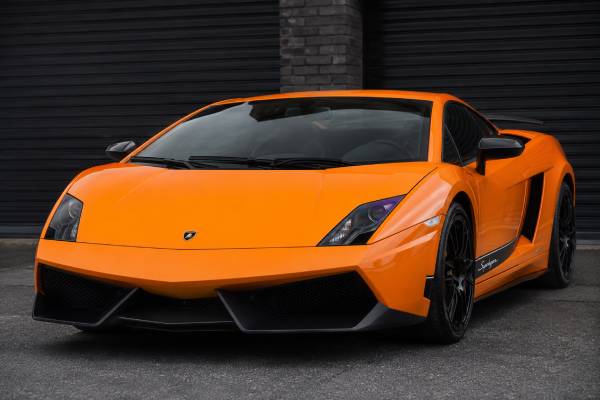
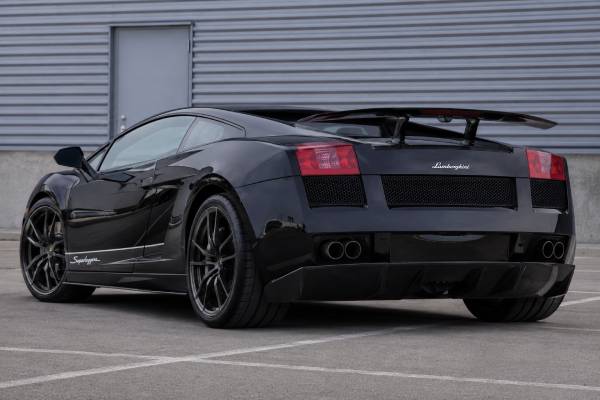
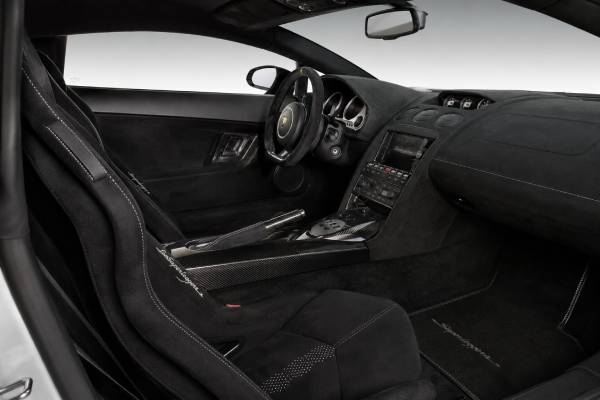
The 2007–2008 Lamborghini Gallardo Superleggera is the first lightweight, track-focused road Gallardo and one of the sharpest pre-facelift L140 models. It uses Lamborghini’s naturally aspirated 4,961 cc V10, tuned to 530 hp in period manufacturer wording, paired with all-wheel drive and either the E-gear single-clutch automated manual or, in some markets, a very rare six-speed manual. The Superleggera matters because it distilled the early Gallardo formula before the later 5.2-liter LP560-4 generation changed the car’s character. Carbon-fiber panels, polycarbonate glazing, forged wheels, fixed-back bucket seats, and a 100 kg factory weight-reduction target made it more focused without turning it into a race car. Today it sits in an appealing collector space: rarer and more special than a standard 5.0 Gallardo, older-school than the LP570-4, and still usable enough for serious road driving.
Table of Contents
- Why the L140 Superleggera Still Matters
- V10 Specs, Chassis, and Performance Data
- Production Numbers, Options, and Identification
- Carbon-Fiber Design and Lightweight Engineering
- How the Gallardo Superleggera Drives
- Maintenance Risks and Specialist Ownership
- Market Values and Buying Checklist
Why the L140 Superleggera Still Matters
The Gallardo Superleggera matters because it was Lamborghini’s first serious lightweight version of the Gallardo, not just a trim package. It took the original 5.0-liter L140 platform and gave it a sharper, leaner, more motorsport-flavored personality before the major 2008 facelift arrived.
The Gallardo itself was a turning point for Lamborghini. Launched for the 2004 model year, it became the brand’s smaller V10 model under the Murciélago and helped Lamborghini move from low-volume exotic maker to a more stable modern supercar company. It still had wild Sant’Agata styling and a naturally aspirated engine, but it also brought Audi-era quality control, a stronger dealer network, and more everyday usability than older Lamborghinis.
The Superleggera appeared at the 2007 Geneva Motor Show as the range-topping version of the first-generation Gallardo coupé. The name means “super light” in Italian and deliberately echoed Lamborghini history. The first production Lamborghini, the 350 GT, used Carrozzeria Touring’s famous lightweight construction philosophy. The Gallardo Superleggera did not use traditional Touring Superleggera tube-and-panel construction, but the name fit the purpose: cut weight, add response, and make the car feel more serious.
Against the standard 5.0 Gallardo, the Superleggera gained a modest power increase and a much more meaningful weight reduction. The V10 rose by 10 hp, while Lamborghini targeted a 100 kg drop from the regular coupé in most markets. U.S.-spec cars saved less weight because of market-specific safety and equipment requirements, but the intent remained the same. Carbon fiber and polycarbonate replaced heavier components wherever Lamborghini could do so without destroying road usability.
The result was not the fastest Gallardo ever made. Later LP560-4 and LP570-4 versions used a newer 5.2-liter direct-injection V10 and delivered stronger numbers. The appeal of the 2007–2008 Superleggera is different. It combines the early Gallardo’s rawer engine note, compact body, single-clutch gearbox character, and simple analog cabin with factory lightweight parts and genuine rarity.
Collectors care about it for several reasons:
- It was produced for a short window before the LP560-4 replaced the early 5.0-liter Gallardo.
- It was a factory lightweight model, not a dealer-built appearance package.
- It retained the pre-facelift Gallardo shape, which many enthusiasts see as cleaner and more original.
- It was available with rare equipment combinations, including manual transmission cars in some markets.
- It introduced the Superleggera idea that Lamborghini later developed further with the LP570-4 and Huracán Performante.
The car’s reputation today is strong but nuanced. A neglected Gallardo Superleggera can be expensive to correct, especially if its E-gear clutch, carbon body parts, brakes, or suspension need major work. A well-documented, original example is a much more compelling car: light enough to feel special, loud enough to feel old-school, and modern enough to drive without the constant fragility concerns of older exotic cars.
V10 Specs, Chassis, and Performance Data
The key mechanical story is simple: the Superleggera uses the early Gallardo’s 4,961 cc naturally aspirated V10, tuned to 530 hp, mounted behind the cabin, and driving all four wheels. Its performance came from weight reduction as much as added power.
| Category | Specification |
|---|---|
| Model code | L140 Gallardo; 07L2 / GE07L2-type market references may appear in some registration systems |
| Production years | 2007–2008 model years |
| Body style | 2-door, 2-seat coupé |
| Engine | 4,961 cc naturally aspirated V10 |
| Valvetrain | DOHC, 40 valves |
| Fuel system | Multi-point fuel injection |
| Power | 530 hp at 8,000 rpm in period manufacturer wording; often listed as 530 PS / 523 bhp / 390 kW |
| Torque | 510 Nm / 376 lb-ft at 4,250 rpm |
| Transmission | 6-speed E-gear single-clutch automated manual; 6-speed manual availability depended on market |
| Drivetrain | All-wheel drive with viscous-coupling center system |
| Structure | Aluminum spaceframe with aluminum body panels and Superleggera-specific carbon-fiber parts |
| Suspension | Independent double wishbones, coil springs, anti-roll bars |
| Standard tire type | Pirelli P Zero Corsa on forged Scorpius wheels |
| Front tires | 235/35 ZR19 |
| Rear tires | 295/30 ZR19 on most published Superleggera specifications |
| Brakes | Vented steel discs standard; carbon-ceramic brakes optional |
| Front brake discs | 365 mm steel discs on common published specifications |
| Rear brake discs | 335 mm steel discs on common published specifications |
| Dry weight | About 1,330 kg / 2,932 lb in non-U.S. published factory-style figures |
| Wheelbase | 2,560 mm / 100.8 in |
| Length | 4,300 mm / 169.3 in |
| Width | 1,900 mm / 74.8 in |
| Height | About 1,160 mm / 45.7 in |
| Fuel capacity | 90 liters / 23.8 U.S. gal |
| 0–100 km/h | 3.8 seconds |
| Top speed | 315 km/h / 196 mph |
The 5.0-liter V10 is an even-firing Lamborghini unit with a hard, metallic sound that differs from the later 5.2-liter odd-firing engine used in the LP560-4 and LP570-4. It does not have the later direct-injection system. That gives the early engine a slightly different throttle feel and a rawer sound character, even though the later engine is more powerful and more efficient.
The E-gear transmission is not a modern dual-clutch gearbox. It is an electro-hydraulically actuated version of the six-speed manual transmission. It uses a single clutch and paddle shifters, so its behavior depends heavily on clutch condition, hydraulic calibration, driver input, and software setup. Smooth driving often means lifting slightly during upshifts, especially at lower speeds. Full-throttle shifts feel more dramatic and are part of the car’s period character.
The all-wheel-drive system gives the Superleggera strong traction and stability. It is not a rear-drive, slide-happy car in standard form. The front axle helps the car put power down early, especially on imperfect roads, but it also means the car can push wide if the driver enters a corner too quickly or uses old, cold, or mismatched tires.
The official weight story needs context. The commonly quoted 1,330 kg figure is a dry-weight-style figure and should not be treated as a ready-to-drive curb weight with fluids, fuel, options, and regional equipment. U.S. cars also carried more weight than European examples because they did not receive every lightweight item in the same form. For buyers, the exact scale number matters less than whether the car still has its original carbon parts, correct seats, forged wheels, and factory Superleggera equipment.
Production Numbers, Options, and Identification
The 2007–2008 Gallardo Superleggera is a rare factory model, with worldwide production usually quoted at about 618 cars. Registry counts and regional totals can vary slightly, so serious buyers should verify a specific car through VIN, factory records, service history, and original order documentation.
The Superleggera was coupé-only in this first 5.0-liter generation. Lamborghini did not sell a matching 2007–2008 Superleggera Spyder. Open-top lightweight Gallardo variants arrived later in the LP570-4 generation, such as the Spyder Performante.
The easiest visual identifiers are the carbon-fiber exterior details, forged Scorpius wheels, Superleggera side graphics, more focused interior, and lightweight seating. However, these parts can be retrofitted to ordinary Gallardos, so identification should never rely on appearance alone. A correct car should match its VIN, build records, market documentation, option list, and service book.
Factory colors most associated with the first Superleggera are:
- Giallo Midas / Midas Yellow
- Arancio Borealis / Borealis Orange
- Grigio Telesto / Telesto Gray
- Nero Noctis / Noctis Black
Other colors exist and may be special-order or market-specific, so unusual paint is not automatically wrong. It does raise the importance of documentation. A rare factory color can add value; a repaint in a rare color usually does not.
Important equipment and options included:
- E-gear transmission as the common and heavily promoted factory setup
- Six-speed manual availability in some markets, now highly prized
- Carbon-fiber fixed-back sport seats trimmed in Alcantara
- Carbon interior trim package
- Fixed rear wing
- Carbon-ceramic brakes
- Navigation and multimedia system
- Rear-view camera on cars equipped appropriately
- Four-point harnesses in some non-U.S. markets
- Lightweight polycarbonate rear and side glazing in market-dependent form
- Sports suspension package elements
- Suede or Alcantara-trimmed steering wheel
For collectors, the most valuable cars tend to be original, low-mileage, accident-free examples with complete documentation and desirable factory equipment. Manual cars, where genuine and properly documented, command special interest because most Superleggeras were E-gear. Carbon-ceramic brakes can help desirability when they are healthy, but worn carbon-ceramic rotors are a major cost exposure.
The fixed rear wing is another detail worth checking carefully. Many buyers like the wing because it gives the Superleggera its most aggressive factory look, but documentation matters. A factory-option wing is more valuable than a later aftermarket or dealer-installed part unless the installation is supported by period paperwork.
A proper identity check should include:
- Confirm the VIN and model designation through Lamborghini or a specialist.
- Check the original build specification against the car’s current colors, seats, wheels, brakes, wing, and trim.
- Inspect all carbon-fiber parts for correct weave, part numbers where visible, and evidence of repair.
- Review service invoices, not just stamped books.
- Confirm clutch readings and E-gear setup through diagnostic equipment.
- Check whether any recalls, campaigns, or market-specific updates apply by VIN.
- Look for signs of conversion from a standard Gallardo, especially on cars advertised only by appearance.
The market is mature enough that buyers know the difference between a real Superleggera and a Gallardo with carbon add-ons. That makes provenance more important than cosmetic drama.
Carbon-Fiber Design and Lightweight Engineering
The Superleggera’s special character comes from selective weight removal, not from a completely different chassis. Lamborghini kept the aluminum-spaceframe Gallardo base and replaced specific parts with lighter carbon fiber, polycarbonate, forged components, and simpler interior trim.
The body still has the compact wedge shape of the original Gallardo, designed under Luc Donckerwolke’s Lamborghini design era. Compared with later Gallardos, the early body looks cleaner and less angular. The Superleggera adds enough aggression to separate it from the standard car without losing that simple shape.
Key lightweight features include:
- Carbon-fiber engine cover with transparent polycarbonate section
- Carbon-fiber rear diffuser
- Carbon underbody elements
- Carbon-fiber mirror housings
- Carbon interior door panels
- Carbon-fiber center tunnel trim
- Carbon-fiber bucket seats
- Forged Scorpius wheels
- Titanium wheel bolts or lightweight wheel hardware in some specifications
- Polycarbonate glazing on selected markets and panels
- Reduced sound insulation and a more focused cabin finish
The best part is that these changes are easy to feel. A 10 hp power increase on a 500-plus-hp supercar is not transformative by itself. A meaningful reduction in mass, especially high in the body and around rotating components, is much more important. The Superleggera feels keener when changing direction and more urgent when the V10 climbs through the top half of the rev range.
The engine cover is one of the car’s signature pieces. It shows off the V10 through a lightweight transparent section, creating a technical display that suits the car’s purpose. It also needs careful inspection. Carbon edges, mounting points, clear sections, and latch areas can show wear, heat exposure, clouding, cracks, or poor repair work.
The interior is more purposeful than luxurious. Alcantara, carbon panels, bucket seats, and reduced trim make it feel closer to a club-sport car than a normal Gallardo. Still, it remains a road car with air conditioning, road-legal equipment, and enough comfort for weekend use. The cabin is not as sparse as a stripped race car, and that balance is a major reason the Superleggera remains usable.
The aerodynamics are functional but not extreme by modern standards. The front end, rear diffuser, and optional rear wing help the car feel more planted, but there are no active aerodynamic systems, no complex drive-mode-controlled aero surfaces, and no modern torque-vectoring electronics. The car’s behavior comes from mechanical grip, all-wheel-drive traction, tire choice, and the driver’s inputs.
The sound is central to the experience. The 5.0-liter V10 has a sharper, more mechanical voice than many newer turbocharged performance cars. Intake noise, exhaust pitch, and the single-clutch gearshift drama create a much more physical experience than the numbers suggest. For many buyers, that sound is the reason to choose the early Superleggera over a newer, faster car.
How the Gallardo Superleggera Drives
The Gallardo Superleggera feels fast, loud, compact, and mechanical rather than polished in the modern sense. It is not difficult to drive, but it rewards drivers who understand old-style single-clutch gearboxes, tire temperature, and all-wheel-drive cornering balance.
Acceleration is strong from low revs and fierce above the midrange. The V10 does not rely on turbo boost, so the response is immediate and linear. The engine feels happiest when worked hard, and the final stretch toward 8,000 rpm is the part that gives the car its exotic edge. Around town it can be docile, but it never feels like a quiet luxury GT.
The E-gear system defines many cars. In automatic mode it can feel clumsy by modern standards, especially in traffic. In manual paddle mode it is much better. A small throttle lift during relaxed upshifts reduces driveline shock and clutch wear. At high load, the shift action becomes more dramatic and satisfying. A perfectly set up E-gear car feels crisp for its era; a poorly calibrated one can feel jerky, slow, or abusive.
Manual cars are a different experience. The six-speed gated manual gives more driver involvement and has become a major collector feature. It also requires a realistic view of clutch wear and driving style. A manual Superleggera may be more valuable, but it is not automatically better if the shift linkage is tired, the clutch is worn, or the documentation is weak.
Steering is one of the car’s strengths. The front end feels more talkative than many later supercars with heavier electronic filtering. It still has all-wheel-drive security, so it is not nervous, but the lighter body and Corsa tires help it react more eagerly than a normal early Gallardo.
The handling balance is stable first, playful second. Enter a corner too quickly and the car can understeer, especially on cold tires. Brake properly, let the nose settle, and feed in throttle on exit, and the all-wheel-drive system gives huge confidence. It is a car that likes clean inputs. Rough steering, greedy throttle use, and old tires make it feel heavier and less precise.
Ride quality is firm but not unbearable. The Superleggera is more focused than a standard coupé, yet it still has enough compliance for normal roads if the suspension is healthy and the wheels are not bent. Worn dampers, old bushings, bad alignment, or aged tires can make the car feel nervous and harsh, so driving feel is a useful inspection tool.
The brakes depend heavily on specification and condition. Steel brakes are easier and cheaper to maintain and are perfectly suitable for road use. Carbon-ceramic brakes reduce unsprung weight and resist fade better under hard use, but they must be inspected for chips, cracks, wear, and remaining life. A seller saying “carbon brakes are lifetime parts” is a warning sign.
Visibility is better than many expect. The car is low, wide, and dramatic, but the cabin is not impossible to use. The rear view is limited, especially with the engine cover and wing, so parking cameras and careful maneuvering matter. Ground clearance remains a practical concern. Front bumper edges, undertrays, and diffusers should be inspected for scraping.
On track, the Superleggera is quick and entertaining, but it is not a cheap track toy. Tires, brakes, clutch life, fluids, and heat management all become expensive quickly. Cars that have seen regular track use are not automatically bad, but they need stronger evidence of maintenance and more careful inspection than cars used mainly on the road.
Maintenance Risks and Specialist Ownership
The Gallardo Superleggera can be reliable when maintained correctly, but it is still an exotic Lamborghini with expensive parts, specialist diagnostics, and age-related risks. The cheapest car to buy is often the most expensive car to own.
The engine itself is generally robust when serviced properly. It uses timing chains rather than routine belt changes, which helps ownership compared with some older exotics. That does not make it maintenance-free. Oil quality, cooling health, ignition condition, intake integrity, and exhaust condition still matter. Misfires, overheating, neglected fluids, or ignored warning lights can turn a strong V10 into a very expensive problem.
The highest-risk ownership areas are usually not the basic engine block. They are the gearbox system, clutch, hydraulics, brakes, suspension, carbon parts, electronics, and accident history.
Common inspection areas include:
- E-gear clutch wear and remaining life
- E-gear actuator, pump, accumulator, hydraulic lines, and calibration
- Manual clutch condition on rare gated cars
- Rear main seal, cam cover, and timing-cover oil seepage
- Cooling radiators and front-end debris damage
- Coolant hoses, thermostat behavior, and water-pump history
- Exhaust leaks, catalyst condition, and heat-shield condition
- Carbon-ceramic rotor wear, cracks, chips, and replacement history
- Steel brake disc wear, caliper condition, and brake-fluid age
- Suspension bushings, ball joints, dampers, and alignment
- Front lift operation where fitted
- Wheel cracks, bends, refinish quality, and correct sizing
- Tire age, matching brand/specification, and uneven wear
- Sticky interior switches, HVAC faults, windows, locks, and instrument issues
- Battery condition and evidence of battery-tender use
- Carbon-fiber cracks, refinishing, delamination, or mismatched replacement parts
E-gear clutch condition deserves special attention. A specialist can read clutch wear values and assess setup, but numbers alone are not enough. The car should also be driven and checked for engagement quality, shift speed, slipping, warning lights, and hydraulic pump cycling. A car with a recent clutch replacement should have invoices showing who did the work, what parts were replaced, and whether the system was calibrated afterward.
Carbon-ceramic brakes can be a value feature or a liability. Replacement costs are high enough to affect the purchase price meaningfully. Rotor condition should be assessed by someone who knows carbon-ceramic systems, not just by looking through the wheel. Track use, stone damage, aggressive pads, and improper wheel handling can all shorten life.
Tires are another overlooked issue. A Superleggera on old or mismatched tires will not drive correctly. The car was designed around serious performance rubber, and tire age matters as much as tread depth. Old tires reduce braking, steering feel, wet grip, and stability.
Accident inspection is essential. The Gallardo’s aluminum spaceframe and exotic body parts are not forgiving of poor repairs. Paint depth, panel gaps, undertray condition, suspension pickup points, wheel alignment, and carbon-part fit should all be checked. A car can look glossy and still have expensive structural or cosmetic shortcuts underneath.
Documentation should include more than a stamped service book. Strong history includes:
- Annual or mileage-based service invoices
- Clutch readings over time
- Brake measurements
- Tire dates and replacement records
- Recall and campaign checks
- Factory build specification
- Ownership history
- Paintwork and repair disclosures
- Specialist pre-purchase inspection report
- Original books, tools, keys, covers, and accessories where applicable
Service intervals and procedures vary by market, VIN, and equipment. Owners should follow the official service documentation for their exact car. As a practical rule, annual inspection and fluid care are wise even when mileage is low, because age affects seals, hoses, fluids, batteries, tires, and electronics.
Market Values and Buying Checklist
The Gallardo Superleggera now trades as a modern collector Lamborghini rather than just a used exotic. In mid-2026 public market data placed typical benchmark values around the high-$100,000 range, with ordinary driver-quality cars below the best low-mileage examples and exceptional cars reaching much higher.
The value range is wide because mileage, transmission, color, originality, brake specification, service history, market, and condition matter enormously. A car with higher mileage, E-gear wear, aftermarket modifications, tired paint, and weak documentation may sit near normal Gallardo money. A low-mileage, original, well-documented car in a desirable color with rare factory options can command a major premium.
The strongest value drivers are:
- Verified factory Superleggera identity
- Original paint or high-quality documented paint history
- Low mileage with evidence of regular use and service
- Rare manual transmission, where genuine
- Healthy E-gear system on paddle-shift cars
- Factory carbon-fiber parts present and undamaged
- Correct forged Scorpius wheels
- Original seats, trim, and lightweight details
- Documented factory wing if fitted
- Carbon-ceramic brakes in excellent condition
- Strong Lamborghini specialist service history
- Complete books, tools, keys, and accessories
- Clean accident history
- Desirable factory color and interior combination
Cars to approach carefully include:
- Cars advertised as Superleggeras without factory proof
- Cars with aftermarket carbon parts replacing missing originals
- Cars with incomplete service records
- Cars with fresh clutch claims but no invoice or diagnostic evidence
- Cars with old tires and unknown brake condition
- Cars with modified exhausts and ECU tunes that may affect emissions or drivability
- Cars with unexplained paintwork or panel gaps
- Cars with warning lights, weak batteries, or intermittent electrical faults
- Cars that have been heavily tracked without matching maintenance records
- Cars priced cheaply because they need “only minor sorting”
A proper buying process should be disciplined:
- Verify the VIN and factory specification before traveling.
- Ask for service invoices, not just photos and a stamped book.
- Review clutch, brake, tire, and fluid history.
- Confirm all Superleggera-specific parts are present.
- Inspect the carbon engine cover, diffuser, mirrors, seats, and interior carbon.
- Check for accident repairs on the aluminum structure and suspension points.
- Have a Lamborghini specialist perform a diagnostic scan and road test.
- Confirm recall and campaign status by VIN.
- Price the car after inspection, not before.
- Budget for immediate sorting even on a good example.
For most buyers, the best Superleggera is not the cheapest one. It is the car with the clearest story, strongest documentation, correct parts, healthy drivetrain, and no mystery damage. A well-kept E-gear car can be excellent to own and drive, while a rare manual car can be the collector prize if it is genuine and properly maintained.
Long-term collectability looks favorable. The Superleggera has the ingredients collectors usually want: a naturally aspirated engine, limited production, factory lightweight engineering, a short production window, distinctive materials, and a clear place in Lamborghini history. It is also still young enough to use without treating every mile as a restoration decision.
The main caution is ownership cost. These cars are old enough to need age-related work and special enough that incorrect parts hurt value. Buyers who budget only for purchase price often get frustrated. Buyers who budget for specialist servicing, clutch or brake work, tires, and preventative maintenance usually enjoy the car more.
References
- Lamborghini Gallardo Superleggera (2008) – pictures, information & specs 2008
- Lamborghini Gallardo Superleggera Specs, Performance, Comparisons 2026
- Recall Campaign | Lamborghini.com 2026 (Recall Lookup)
- Lamborghini Gallardo Superleggera Market – CLASSIC.COM 2026 (Market Data)
- Lamborghini Gallardo Buyers Guide | Hagerty UK 2026 (Buying Guide)
Disclaimer
This article is for informational purposes only and is not a substitute for professional diagnosis, repair, valuation, or inspection. Specifications, torque values, service intervals, recall status, and repair procedures can vary by VIN, market, production date, and equipment. Owners and buyers should verify all details against official Lamborghini service documentation and consult a qualified Lamborghini specialist before making maintenance, repair, or purchase decisions.
If you found this guide useful, please consider sharing it on Facebook, X/Twitter, or your favorite automotive community to support our work.