
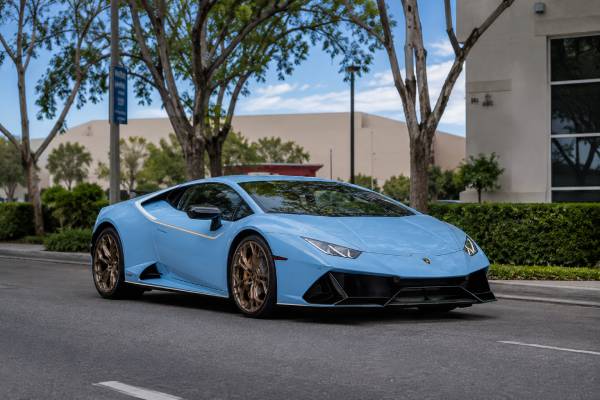
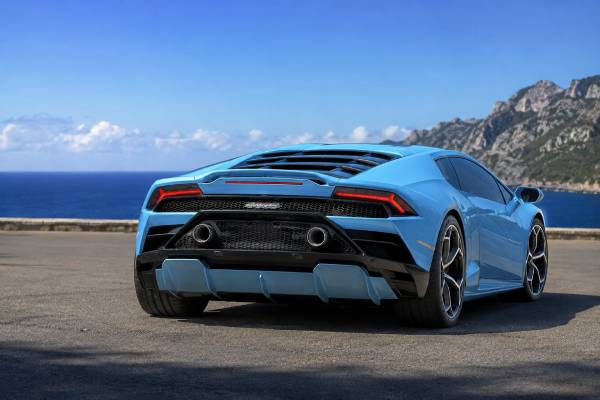
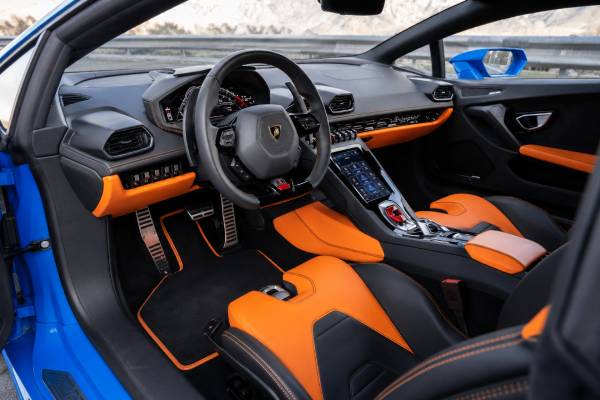
The Lamborghini Huracán EVO Messico Dieci is not a normal trim level. It is a tiny Ad Personam anniversary series created for Lamborghini Mexico’s tenth year, using the 640 hp all-wheel-drive Huracán EVO as its base and adding four Mexico-themed specifications named Vita, Morte, Sogno, and Tempo. That makes it interesting for two reasons: it has the full mechanical appeal of the EVO’s naturally aspirated 5.2-liter V10, rear-wheel steering, active chassis electronics, and 202-mph performance, but it also carries the rarity and provenance of a market-specific collector edition. For buyers, the car’s value depends less on raw speed, which any 640-4 EVO can deliver, and more on documentation, originality, paint and trim verification, plaque details, Ad Personam records, mileage, and condition. The right example is a modern V10 Lamborghini with genuine cultural identity; the wrong one is simply an expensive Huracán with missing proof.
Table of Contents
- Why the Messico Dieci EVO Matters
- V10 Hardware and Core Specifications
- Four Mexican Editions and Identification Details
- Design, Aero, and Ad Personam Details
- How the 640 hp EVO Drives
- Ownership, Service, and Age-Related Risks
- Values, Inspection Priorities, and Buyer Strategy
Why the Messico Dieci EVO Matters
The Messico Dieci matters because it combines the best regular-production Huracán EVO 4WD hardware with a verified regional anniversary story. It is a collector-spec car first and a performance upgrade second, because the mechanical package follows the standard 640 hp EVO rather than a separate motorsport or lightweight specification.
Lamborghini Mexico introduced the special editions in 2021 to mark ten years since the brand’s first showroom opened in the country. The project was developed by Grand Chelem, Lamborghini’s Mexican distributor, with Lamborghini’s Ad Personam personalization program. Instead of one repeated livery, the series used four symbolic themes drawn from Mexican culture: Vita, Morte, Sogno, and Tempo.
That context is central to the car’s appeal. A normal Huracán EVO is already desirable because it sits near the end of Lamborghini’s naturally aspirated V10 era. The Messico Dieci adds a narrow cultural and market story to the same platform. For modern Lamborghini collectors, that type of provenance can matter as much as horsepower, especially when the base car is already fast, usable, and technically mature.
The Huracán line itself replaced the Gallardo and became one of Lamborghini’s most important modern models. The EVO, launched as the facelifted and more intelligent evolution of the Huracán, brought the Performante-derived 640 CV V10 into the mainstream 4WD coupe and added Lamborghini Integrated Vehicle Dynamics, or LDVI. LDVI is the car’s central dynamic control system. It reads driver inputs, chassis movement, steering, traction, drive mode, and road behavior to coordinate the powertrain, all-wheel drive, torque vectoring, rear-wheel steering, adaptive dampers, and stability systems.
That makes the EVO a different kind of Lamborghini from earlier analog-feeling V10 cars. It is still loud, sharp, and dramatic, but it is also predictive and electronically coordinated. The Messico Dieci therefore sits at a useful point in Lamborghini history: after the raw Gallardo and early Huracán years, but before the brand’s full shift toward electrified V8 and V12 platforms.
For enthusiasts, the attraction is clear: a high-revving V10 behind the cabin, a seven-speed dual-clutch gearbox, all-wheel drive traction, rear-wheel steering, and a shape that still looks like a compact exotic rather than a heavy grand tourer. For collectors, the stronger attraction is scarcity. Only four themed cars were publicly described for the Mexican anniversary program. That is a much smaller story than a global limited edition, and it means a buyer should treat each example as an individual artifact.
The car’s reputation today rests on three pillars:
- Mechanical credibility: it is based on the Huracán EVO 4WD, not a cosmetic package on a lesser drivetrain.
- Provenance: it was tied to Lamborghini Mexico’s tenth anniversary and Ad Personam customization.
- Specification uniqueness: each theme used distinct colors, interior details, and a symbolic firewall plaque.
The Messico Dieci is not the fastest Huracán, and it is not the most track-focused. The STO and later Tecnica offer a different type of appeal. Its importance comes from being a rare, documented expression of Lamborghini’s personalization culture at the end of the naturally aspirated V10 period.
V10 Hardware and Core Specifications
The Messico Dieci uses the Huracán EVO 4WD mechanical package: a naturally aspirated 5.2-liter V10 with 640 CV, a seven-speed dual-clutch transmission, electronically controlled all-wheel drive, rear-wheel steering, and carbon-ceramic brakes. The special edition changes the identity and appearance of the car, not the basic performance hardware.
| Item | Lamborghini Huracán EVO Messico Dieci |
|---|---|
| Base model | Huracán EVO 4WD coupe |
| Engine | 5,204 cc naturally aspirated V10 |
| Power | 640 CV at 8,000 rpm |
| Torque | 600 Nm at 6,500 rpm |
| Transmission | 7-speed Lamborghini Doppia Frizione dual-clutch |
| Drivetrain | Electronically controlled all-wheel drive |
| Steering systems | Electronic power steering, Lamborghini Dynamic Steering, rear-wheel steering |
| Suspension | Aluminum double-wishbone layout with magnetorheological dampers |
| Brakes | Carbon-ceramic discs with fixed calipers |
| Driving modes | Strada, Sport, Corsa, plus configurable EGO mode |
The engine is the centerpiece. It uses displacement, revs, and throttle response rather than turbocharging. In daily driving, that means the car does not deliver its full character at low rpm. The V10 builds in layers, pulls cleanly through the middle of the rev range, and becomes much more urgent as it approaches 8,000 rpm. That is one reason the EVO feels special even among faster modern cars. It does not simply produce acceleration; it produces a rising mechanical event.
The 640 CV rating is often converted to about 631 mechanical horsepower. In buyer-facing listings, both figures may appear. The important point is that the Messico Dieci follows the 640-4 EVO output, not the 610 CV rear-drive EVO tune.
| Figure | Huracán EVO 4WD coupe data |
|---|---|
| 0–100 km/h | 2.9 seconds |
| 0–200 km/h | 9.0 seconds |
| Top speed | Over 325 km/h |
| Dry weight | About 1,422 kg |
| Length | About 4,520 mm |
| Wheelbase | About 2,620 mm |
| Fuel tank | About 83 liters |
| EPA fuel economy | 15 mpg combined, 13 city, 18 highway for 2021 Huracán variants in the U.S. |
The chassis is a hybrid structure using aluminum and carbon-fiber elements. This construction gives the Huracán enough stiffness for accurate suspension control without the cost and complexity of a full carbon monocoque like Lamborghini’s larger flagship cars. The compact dimensions also matter. The EVO is wide, low, and exotic, but it is not a giant car. On mountain roads, that gives it a cleaner sense of placement than many newer supercars.
The all-wheel-drive system helps explain the car’s real-world speed. Rear-drive Huracáns can be more playful, but the EVO 4WD is the more secure point-and-fire machine. It puts power down early on corner exit, works confidently in cold or uneven conditions, and makes the V10’s high-rpm output easier to use. Rear-wheel steering sharpens the car at low and medium speeds while adding stability at higher speeds.
The braking system is also part of the value equation. Carbon-ceramic brakes are powerful, light, and durable under normal road use, but they are expensive to replace. A collector-grade Messico Dieci should have discs and pads measured, not judged only by appearance. Heavy track use, incorrect washing methods, impact damage, and aggressive pad wear can turn an attractive car into a costly purchase.
Four Mexican Editions and Identification Details
The Messico Dieci series is best understood as four Ad Personam specifications, each with its own symbolic theme. A buyer should identify the exact edition before discussing value, because the plaque, color combination, interior trim, and factory personalization record are the heart of the car.
Lamborghini described the four cars around Mexican cultural ideas rather than normal model codes. The themes were not random color names; each was meant to represent a part of life, imagination, mortality, or time.
| Edition | Theme | Key visual idea | Symbolic plaque |
|---|---|---|---|
| Vita | Life, freedom, national pride | Green body color with gold accents | Eagle |
| Morte | Death and passage | Blue and metallic bronze combination | Skull |
| Sogno | Dreams and fantasy | Blue body color with gold highlights | Two-headed dragon |
| Tempo | Time and reinvention | Matte black with bronze accents | Snake |
The plaque matters because it links the car to the anniversary project. On a normal Huracán, paint-to-sample and custom trim can be impressive but still personal. On the Messico Dieci, the plaque, color story, and Mexican anniversary narrative turn the car from a personalized EVO into a named special edition.
What buyers should verify
A correct car should not be judged by exterior color alone. Huracáns are commonly wrapped, repainted, accessorized, and re-trimmed, so a visual match is not enough. A serious buyer should ask for:
- VIN and market-delivery information.
- Factory build sheet or Ad Personam documentation.
- Confirmation of the exact edition: Vita, Morte, Sogno, or Tempo.
- Photos of the firewall plaque and any edition-specific interior details.
- Original paint code and trim code records.
- Original window sticker or dealer delivery paperwork where available.
- Service history from Lamborghini-authorized or recognized specialist workshops.
- Evidence that no factory-specific trim has been removed, refinished, or replaced.
The Huracán market rewards mileage, condition, and color, but special editions add another layer: proof. A low-mile car without complete documentation can be less desirable than a slightly used car with a clean paper trail and untouched special-edition details.
Factory options also affect desirability. On Huracán EVOs, buyers often look for front-axle lift, magnetorheological suspension if not standard in the market specification, sports seats or comfort seats depending on use, upgraded audio, parking assistance, telemetry, carbon-fiber exterior details, transparent engine cover, forged wheels, and extended Alcantara or leather. For the Messico Dieci, those options matter only after the edition’s originality is confirmed.
One caution is important: some registry or dealer descriptions may use shorthand names, internal identifiers, or market labels that do not fully explain the factory build. The safest approach is to treat “Messico Dieci” as a provenance claim that needs supporting records. The title, plaque, paint, trim, and Ad Personam file should all tell the same story.
Design, Aero, and Ad Personam Details
The Messico Dieci looks special because it layers Mexican-themed Ad Personam details over the already sharper Huracán EVO body. The underlying design is functional as well as dramatic: the EVO’s revised aero package gives it more stability and cooling control than the early Huracán LP 610-4.
The EVO front end uses Lamborghini’s Y-shaped visual language, large lower intakes, and a splitter designed to manage airflow under the car. Compared with the earlier Huracán, the EVO has a more serious nose and a cleaner link to Lamborghini’s track-derived design language. The rear is even more distinctive, with high-mounted central exhaust outlets and a suspended rear spoiler treatment that helps channel air across the back of the car.
Lamborghini claimed a major aerodynamic improvement over the first Huracán generation. For the driver, that does not feel like an obvious “active aero” moment. Instead, the car feels calmer at high speed, more planted when braking hard, and less nervous when loaded through quick direction changes. The aero also supports cooling, which matters in a mid-engine V10 car used in warm climates or heavy traffic.
The Ad Personam work gives the Messico Dieci its identity. Each edition uses color and symbolism in a way that ties the Italian supercar shape to Mexican themes. That is more meaningful than a simple stripe package. The colors are expressive but not arbitrary:
- Vita uses green and gold to connect life, freedom, nature, and national pride.
- Morte uses blue and bronze to create a darker, more ceremonial character.
- Sogno uses blue and gold to suggest fantasy, dream imagery, and folk-art energy.
- Tempo uses matte black and bronze to create the most restrained and time-focused specification.
Inside, the EVO’s cabin is more digital than the original Huracán. The central 8.4-inch touchscreen controls infotainment and several vehicle functions. This was a major shift from Lamborghini’s older button-heavy interiors. The layout still has the theatrical start-button cover and aircraft-like switchgear, but the EVO feels more connected and software-driven.
Materials depend on specification. Leather, Alcantara, Carbon Skin, contrast stitching, colored trim, and carbon-fiber details can all appear. For this special edition, the interior should be inspected as carefully as the paint. Wear on seat bolsters, steering wheel Alcantara, switches, touchscreen surface, and carbon trim can lower value, especially if the car is being sold as a collector-grade example.
Sound and sensory character
The exhaust placement helps define the EVO’s personality. The central high-mounted outlets make the car sound more focused and motorsport-like than the earlier low-exit Huracán design. The naturally aspirated V10 has a cleaner and more mechanical voice than turbocharged rivals. At low speed it can be surprisingly manageable, but the sound hardens quickly as rpm rises.
The intake and exhaust behavior is a major reason to buy this car over a newer turbocharged exotic. The EVO is not quiet, subtle, or effortless in the luxury-car sense. It communicates through vibration, induction noise, gearshift cracks, and the rising pitch of ten cylinders. That sensory drama is part of the long-term collectability story, because naturally aspirated engines of this type are no longer the default in supercar development.
How the 640 hp EVO Drives
The Huracán EVO 4WD drives like a very fast, highly managed V10 supercar: immediate, loud, secure, and sharper than its predecessor. The Messico Dieci should feel mechanically identical to a healthy EVO 4WD, so any dullness, harsh driveline behavior, warning lights, or uneven braking deserves investigation.
The first impression is throttle response. Modern turbocharged cars often feel faster at low rpm, but the EVO feels more connected. Press the throttle and the engine answers without waiting for boost. The response is crisp rather than explosive at first, then increasingly savage as the tachometer climbs. It rewards drivers who use revs.
The seven-speed dual-clutch gearbox is quick and dramatic. In Strada, it can shift smoothly enough for city use, though it still feels like a supercar transmission rather than a luxury automatic. In Sport and Corsa, shifts become firmer and more theatrical. Manual paddle use suits the car best because the engine’s personality is tied so closely to rpm choice.
Steering is fast and confidence-inspiring, but it is not an old-school unassisted experience. The EVO’s steering feel comes from calibration, geometry, chassis response, and rear-wheel steering rather than heavy mechanical effort. At low speed, rear-wheel steering helps the car rotate. At high speed, it helps the car feel calm and precise. Lamborghini Dynamic Steering can feel very quick to drivers used to older cars, so a test drive should include tight roads and highway speeds, not only a short urban loop.
Ride quality depends heavily on tires, wheel condition, suspension health, and drive mode. With magnetorheological dampers working correctly, the EVO is firm but not punishing. It can handle normal roads better than its shape suggests. However, poor tire choice, old rubber, bent wheels, incorrect alignment, or tired dampers can make the car tramline and feel nervous.
The brakes are powerful, but carbon-ceramic systems have their own feel. They may need heat before they feel at their best, and they can seem grabby or slightly wooden depending on pads, temperature, and surface condition. During inspection, the car should stop straight, without vibration, scraping, or long pedal travel. Any brake warning or visible disc damage should be treated seriously.
Road, city, and track character
In city driving, the EVO is usable but not relaxed in the way a grand tourer is. Visibility is better forward than rearward, the nose is low, the car is wide, and the front lift system is highly desirable for ramps and uneven streets. The cabin has limited storage, and the front trunk is small. Heat, noise, and attention from other people are part of the ownership experience.
On fast roads, the car comes alive. The combination of all-wheel drive and rear-wheel steering makes it feel secure enough to use hard, but it still demands respect. The front axle bites well, the rear follows quickly, and the car exits corners with huge traction. Sport mode adds more playfulness, while Corsa is the serious setting for clean, fast driving.
On track, the EVO is very capable but not as specialized as an STO. Brake and tire condition become the main limits. A car used regularly on circuit should have records for brake inspections, fluid changes, tire replacement, alignment, and any heat-related service. Track use is not automatically bad, but hidden track wear is a major buying risk.
Ownership, Service, and Age-Related Risks
A Messico Dieci should be maintained like a high-value collector Lamborghini, not like an ordinary used exotic. The biggest risks are deferred service, undocumented repairs, electronic faults, carbon-ceramic brake wear, tire age, lift-system problems, and missing special-edition proof.
The 5.2-liter V10 is generally regarded as a robust engine when serviced correctly, but robustness does not mean cheap ownership. Oil quality, service intervals, coolant condition, battery health, software updates, and careful warm-up habits all matter. Cars that sit unused can develop their own problems: flat-spotted tires, weak batteries, sticky controls, old fluids, and electronic glitches.
Key areas to inspect include:
- Engine health: cold start behavior, misfires, oil leaks, coolant leaks, warning lights, and evidence of proper annual servicing.
- Gearbox operation: smooth clutch engagement, clean shifts, no slipping, no warning messages, and no signs of fluid leaks.
- Cooling system: radiator condition, debris in front intakes, fan operation, hoses, and coolant history.
- Brakes: carbon-ceramic disc thickness and surface condition, pad life, caliper finish, brake-fluid age, and pedal feel.
- Suspension: damper function, front lift operation, control-arm bushings, alignment, and uneven tire wear.
- Electronics: infotainment response, cameras, parking sensors, drive modes, lift system, keyless functions, battery condition, and stored fault codes.
- Body and paint: stone chips, underside scrapes, splitter damage, panel alignment, paint thickness, wrap history, and repaired carbon trim.
- Interior: bolster wear, sticky switches, touchscreen marks, Alcantara shine, stitching damage, and missing special-edition details.
Tires deserve special attention. Low-mile collector cars often wear old tires with plenty of tread. That is unsafe and reduces the quality of the test drive. On a 640 hp mid-engine car, tire age can change braking, steering, and traction more than many buyers expect. A buyer should check date codes, brand, model, size, load rating, and matching sets.
The front-axle lift system is valuable but must work properly. It should raise and lower evenly without warning messages or hydraulic noise. A malfunctioning lift is not only a convenience issue; it may indicate hydraulic, electronic, or sensor problems.
Software and recall status should be checked by VIN and market. Huracán campaigns have included issues involving rear-view camera software, headlight-related compliance, and transmission oil-level checks on certain cars. A Mexican-market car, an imported car, or a U.S.-registered car may have different recall records, so the VIN should be checked with Lamborghini and the relevant national database.
Originality versus upgrades
For a regular Huracán EVO, tasteful upgrades may not be fatal to value. For a Messico Dieci, originality is more important. Exhaust changes, aftermarket wheels, paint protection film, wraps, lowering kits, non-factory carbon parts, or interior retrims should be judged carefully.
Paint protection film is usually a positive if installed cleanly and documented, because it preserves the original finish. A wrap can be acceptable if it protected the paint, but it should be removed or inspected before purchase if there is any doubt. Aftermarket exhausts are more complicated. They may improve sound, but they can affect emissions compliance, warranty history, and collector originality. The original parts should come with the car.
For maintenance, the best examples will have annual invoices, correct fluids, factory diagnostics, battery tender use, tire records, brake measurements, and service from recognized Lamborghini technicians. A stamped book alone is helpful, but invoices are better because they show what was actually done.
Values, Inspection Priorities, and Buyer Strategy
The Messico Dieci should trade above a comparable standard Huracán EVO only when its provenance is complete and its special details are intact. Without documentation, a claimed special edition should be valued much closer to a normal 2021 EVO with an unusual specification.
As of mid-2026, clean 2021 Huracán EVO listings in major markets often sit broadly in the mid-$200,000s to low-$300,000s depending on body style, mileage, drivetrain, options, and condition, with low-mile AWD coupes and Spyders asking more. The Messico Dieci is harder to price because public sales are scarce. That means a realistic valuation depends on comparable EVO values plus a rarity premium that the seller must justify with proof.
The most valuable example would have:
- Confirmed Messico Dieci identity.
- Complete Ad Personam or dealer documentation.
- Original paint, trim, plaque, and edition-specific features.
- Low but believable mileage.
- No accident history.
- No paintwork beyond minor documented correction.
- Fresh annual service.
- Recent tires or properly stored original tires plus road-safe replacements.
- Measured carbon-ceramic brakes.
- Original books, keys, charger, tools, accessories, window sticker, and delivery records.
- Clear import, tax, and registration history if moved between countries.
A car to avoid is one where the story is stronger than the evidence. Warning signs include missing plaque photos, vague claims of “1 of 1” status, no factory paperwork, recent repainting without explanation, inconsistent color descriptions, aftermarket interior changes, incomplete service history, dead battery issues, unresolved warning lights, or refusal to allow a specialist inspection.
| Priority | What to check | Why it matters |
|---|---|---|
| Identity | VIN, build sheet, Ad Personam records, plaque, edition name | Confirms the car is a genuine Messico Dieci example |
| Body condition | Paint readings, underside, splitter, panels, carbon trim | Accident repair or repainting can reduce collector value |
| Mechanical health | Diagnostics, engine behavior, gearbox shifts, leaks | Major drivetrain repairs are expensive and affect confidence |
| Brakes and tires | Carbon-ceramic measurements, pad life, tire date codes | Consumables can create large immediate costs |
| Electronics | Lift, cameras, infotainment, drive modes, stored faults | The EVO relies heavily on integrated control systems |
| Service history | Annual invoices, recall status, warranty work, specialist records | Documentation protects both reliability and resale value |
The buyer strategy should be patient. Because only four themed examples were publicized, the right car may not be available when a buyer starts looking. A rushed purchase can lead to paying a premium for a car that lacks the proof needed to hold that premium later.
For investors, the long-term case is strongest if the car remains original and documented. It has three useful ingredients: extreme scarcity, a clear regional anniversary story, and the last-generation naturally aspirated Lamborghini V10 platform. The risk is that market-specific editions can be less widely understood than global special editions. That can make resale more dependent on educating buyers and presenting documents clearly.
For owners who want to drive the car, the best approach is controlled use. Regular exercise, careful warm-up, annual servicing, fresh tires, and clean storage are better than letting the car sit as a static object. Mileage matters, but condition and documentation matter more. A neglected 500-mile car can be worse than a 5,000-mile car with proper service and careful ownership.
The ideal Messico Dieci is not just rare; it is explainable. The file should make the car’s story easy to understand in five minutes: why it exists, which edition it is, how it was specified, who delivered it, how it was maintained, and why it remains original. When that story is complete, the car stands apart from the ordinary Huracán EVO market.
References
- Lamborghini Mexico’s special edition models 2021
- Lamborghini Huracán EVO | Lamborghini.com 2019
- Gas Mileage of 2021 Vehicles by Lamborghini 2021
- ACCESSORI ORIGINALI 2021 (Accessories Brochure)
- IMPORTANT SAFETY RECALL 2022 (Recall Database)
Disclaimer
This article is for informational purposes only and is not a substitute for professional diagnosis, repair, appraisal, or pre-purchase inspection. Specifications, torque values, service intervals, software campaigns, recall status, and procedures can vary by VIN, market, equipment, and later factory updates. Always verify details against official Lamborghini service documentation and have any car inspected by a qualified Lamborghini technician before purchase or repair.
If this guide helped you, please share it on Facebook, X/Twitter, or your preferred car community to support our work.