

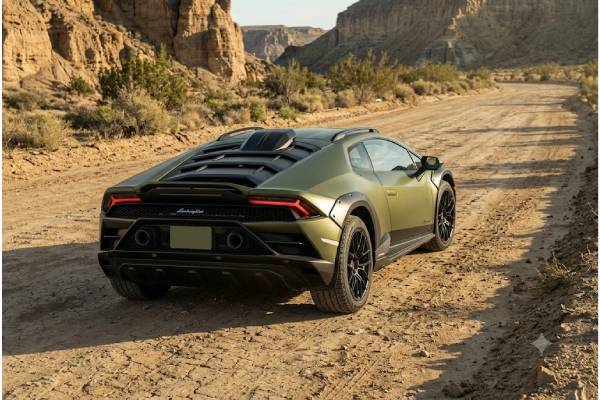
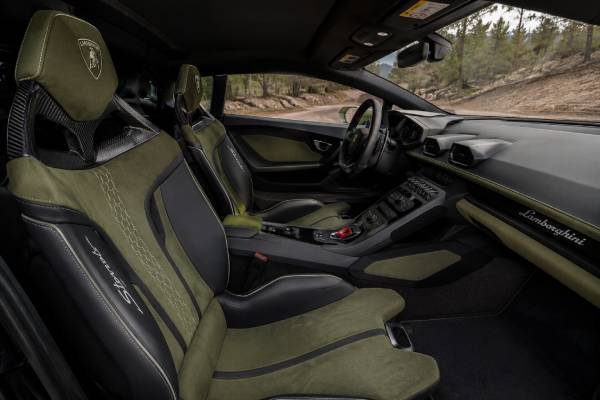
The Lamborghini Huracán Sterrato is the Huracán that deliberately left the polished supercar script. It keeps the naturally aspirated 5.2-liter V10, seven-speed dual-clutch gearbox, all-wheel drive, and low mid-engine proportions of the Huracán family, but adds the hardware and calibration needed for broken tarmac, gravel, dust, snow, and real-world rough roads. It is not an SUV and not a rally car replica. It is a limited-production supercar built to make imperfect roads feel like part of the fun.
For buyers and collectors, the Sterrato matters because it sits at the end of an era. It is one of Lamborghini’s final non-hybrid V10 road cars, the only limited-run Huracán variant of its kind, and a model whose value depends heavily on mileage, originality, specification, documentation, and evidence that its off-road image has not turned into underbody damage.
Table of Contents
- Why the Sterrato Matters
- V10 Drivetrain and Key Specifications
- Production, Options, and Authenticity Details
- All-Terrain Design and Engineering
- How the Sterrato Drives
- Maintenance Risks and Owner Care
- Market Values and Buying Advice
Why the Sterrato Matters
The Huracán Sterrato matters because it turns the last V10-era Huracán into something Lamborghini had never offered before: a factory-built, all-terrain supercar. Instead of chasing lap records, it uses speed, sound, and grip in a looser, more playful way.
Lamborghini revealed the production Sterrato in late 2022, with customer cars arriving mainly through the 2023 and 2024 model years. It was based on the Huracán platform, known internally as LB724 for the Sterrato project, and it arrived near the end of the Huracán’s ten-year run. That timing is important. The Huracán began as the replacement for the Gallardo and became Lamborghini’s core V10 supercar, spawning rear-wheel-drive models, Performante versions, the EVO, STO, Tecnica, and finally the Sterrato.
The Sterrato’s role is different from the track-focused STO or the cleaner road-focused Tecnica. It is the rough-road Huracán, built for drivers who want a supercar that feels alive on surfaces where a normal low-slung exotic becomes nervous or unusable. Lamborghini had already proved that its customers would accept a high-riding performance product with the Urus, but the Sterrato reverses that idea. It does not make an SUV faster. It makes a supercar less fragile in the real world.
Its historical importance comes from four main points:
- It is limited to 1,499 units.
- It is the only Huracán built around an all-terrain factory concept.
- It uses Lamborghini’s naturally aspirated 5.2-liter V10 before the brand’s next-generation hybrid era.
- It combines serious collector appeal with a driving character that is intentionally less formal than most modern supercars.
That last point explains much of the Sterrato’s charm. Many late-model supercars are judged by Nürburgring times, carbon packages, and launch figures. The Sterrato is still fast, but its real appeal is emotional. It looks mischievous, sounds theatrical, and invites the driver to take the longer, dustier, more interesting route.
For collectors, that personality helps separate it from regular Huracáns. For owners, it also creates a warning: the Sterrato’s market value depends on whether the car has been enjoyed carefully or used hard on surfaces that can damage wheels, tires, brake ducts, underbody panels, radiators, paint protection film, suspension joints, and carbon-ceramic brakes.
V10 Drivetrain and Key Specifications
The Sterrato keeps the proven Huracán formula: a naturally aspirated V10 mounted behind the cabin, a seven-speed Lamborghini Doppia Frizione dual-clutch gearbox, and electronically controlled all-wheel drive. Its numbers are slightly less extreme than the fastest Huracán variants, but the package is tuned for traction, response, and control on mixed surfaces.
| Category | Specification |
|---|---|
| Production years | 2023–2024 model years |
| Production volume | 1,499 units |
| Engine | 90-degree naturally aspirated V10 |
| Displacement | 5,204 cc |
| Bore x stroke | 84.5 mm x 92.8 mm |
| Compression ratio | 12.7:1 |
| Maximum output | 449 kW / 610 CV at 8,000 rpm |
| Maximum torque | 560 Nm at 6,500 rpm |
| Gearbox | 7-speed dual-clutch Lamborghini Doppia Frizione |
| Drivetrain | Electronically controlled all-wheel drive |
| Rear differential | Mechanical self-locking differential |
| Top speed | 260 km/h / 161.5 mph |
| 0–100 km/h | 3.4 seconds |
| 0–200 km/h | 9.8 seconds |
| Dry weight | About 1,470 kg, based on factory power-to-weight data |
The engine is not the highest-output version of the Huracán V10, but that is not a weakness. The Sterrato’s job is not to beat the STO on a circuit. Its job is to deliver urgent throttle response, high-rev drama, and manageable traction when the road turns dusty, cold, broken, or loose. The V10 still pulls hard above 6,000 rpm and becomes more exciting as it approaches the upper end of the tachometer.
| Area | Specification |
|---|---|
| Chassis | Hybrid aluminum and carbon-fiber structure |
| Body | Aluminum and synthetic material |
| Suspension | Magneto-rheological adaptive suspension |
| Steering | Electro-mechanical power steering |
| Ground clearance | 162 mm |
| Ground-clearance increase | 44 mm over the Huracán EVO 4WD |
| Front wheels | 8.5J x 19, ET 27 |
| Rear wheels | 11J x 19, ET 40 |
| Front tires | Bridgestone Dueler AT002, 235/40 R19 |
| Rear tires | Bridgestone Dueler AT002, 285/40 R19 |
| Front brakes | Carbon-ceramic, 380 mm x 38 mm |
| Rear brakes | Carbon-ceramic, 356 mm x 32 mm |
| Length | 4,525 mm |
| Width excluding mirrors | 1,956 mm |
| Width including mirrors | 2,236 mm |
| Height | 1,248 mm |
| Wheelbase | 2,629 mm |
| Seats | 2 |
The carbon-ceramic brakes, adaptive dampers, and all-wheel-drive system remain serious supercar hardware. The key difference is calibration and packaging. The Sterrato sits higher, uses dedicated all-terrain run-flat tires, and trades some absolute top-speed capability for control over surfaces that would make a normal Huracán feel too exposed.
Production, Options, and Authenticity Details
The most important buying fact is simple: every Sterrato is a limited-production coupe, and originality matters. There is no factory Sterrato Spyder, no normal high-volume version, and no ordinary Huracán trim that can become a real Sterrato through bolt-on parts.
Lamborghini capped production at 1,499 units. That gives the model a stronger collector foundation than standard Huracán variants, but the cars are modern, documented, and option-sensitive. Buyers should treat specification, factory paperwork, service records, warranty status, and condition as part of the car’s identity.
Factory personalization plays a major role. The Sterrato could be ordered through Lamborghini’s normal paint and trim selections, plus the Ad Personam program. The official brochure describes standard paint choices, optional colors, and more than 300 Ad Personam exterior color possibilities. That wide range means two Sterratos can feel very different in the market, even when mileage and mechanical condition are similar.
Important factory and dealer-visible specification areas include:
- exterior paint and Ad Personam color;
- roof and upper-hood contrast treatment;
- wheel design and finish;
- brake caliper color;
- additional front lights;
- roof rails or roof accessory preparation;
- interior Alcantara and leather configuration;
- Verde Sterrato contrast details;
- carbon bi-shell sport seats;
- aluminum floor mats;
- connected services and smartphone interface availability;
- fire extinguisher, storage options, and market-specific equipment.
The wheel choices matter because the Sterrato’s 19-inch setup is part of the package. Standard Cerere wheels and optional Morus designs can change the look and buyer appeal, especially in bronze, black, or accent-color finishes. Brake calipers were also customizable, with silver as the basic finish and several brighter optional colors.
The 2024 All-Terrain Ad Personam capsule adds another layer of desirability. Lamborghini presented 12 special Sterrato builds inspired by different terrains, with themed finishes and personalization details. These are not mechanically separate models in the way an STO is separate from a Tecnica, but they are highly collectible factory specifications because they tie directly to the Sterrato’s identity.
How to verify a real Sterrato
A buyer should verify the car as a Sterrato by VIN, factory build record, original window sticker or market equivalent, sales invoice, service history, and Lamborghini dealer records. The car’s external details are easy to recognize, but cosmetic mimicry is not enough for collector confidence.
Quick identifiers include the raised stance, wider arches, roof intake, front auxiliary lighting, underbody protection, all-terrain tire package, Rally drive mode, Sterrato badging, and model-specific interior displays. The best examples also retain original accessories, books, keys, charger, tool kit, tire information, protective film records, and dealer service documentation.
Market-specific equipment differences are normal. Emissions labels, lighting behavior, connected services, warning labels, and recall status can vary by country. Imported cars should be checked carefully, especially if warranty transfer, compliance paperwork, or service access may be affected.
All-Terrain Design and Engineering
The Sterrato’s design is functional, not just theatrical. The raised body, roof intake, protective panels, dedicated tires, and recalibrated electronics all support the same goal: keep a Huracán exciting when the surface is no longer smooth asphalt.
The most obvious change is ride height. Lamborghini raised the Sterrato by 44 mm compared with the Huracán EVO 4WD and increased wheel travel by 25 percent at the front and 35 percent at the rear. That does not turn it into a rock-crawler, but it gives the suspension more breathing room over crests, potholes, gravel roads, rough driveways, and snow-packed surfaces.
The widened stance also helps. Compared with a standard Huracán, the Sterrato’s track is wider, giving it a tougher posture and more stability. The wheel arches are not decorative afterthoughts. They protect the body from dust and debris while visually communicating that this is not a normal low, clean-bodied supercar.
The roof intake is one of the most important engineering features. On a regular Huracán, side intakes and lower airflow paths are acceptable for road and track use. On dusty surfaces, they are exposed to airborne dirt, sand, and gravel. The Sterrato closes or protects certain lower intake paths and draws cleaner air from above the roofline, reducing the chance of the engine ingesting heavy dust.
Other protective and aerodynamic details include:
- aluminum underbody protection;
- side lower skid elements;
- front and rear mudguards;
- protective grilles;
- redesigned rear diffuser geometry to reduce dust accumulation;
- front bumper changes for brake cooling and clearance;
- auxiliary lights with careful airflow management.
The tires are just as important as the body changes. Bridgestone developed the Dueler AT002 specifically for the Sterrato. It is an all-terrain run-flat tire in supercar sizes, with a tread pattern and compound intended to preserve high-speed road behavior while adding grip on loose surfaces. The run-flat function is useful because a puncture on an isolated gravel route is a very different problem from a puncture near a city dealership.
Inside, the Sterrato adds information that fits its mission. The human-machine interface can show pitch and roll, a compass, geographic coordinates, and steering angle. These features may look playful, but they help define the car’s personality. The cabin still feels like a Huracán, with a low seating position, dramatic starter cover, tight cockpit, and fighter-jet theater, yet it now speaks the language of terrain and exploration.
The sound is still central to the car. Modern turbocharged and hybrid performance cars can be brutally fast, but the Sterrato’s naturally aspirated V10 gives it a sharper emotional edge. The intake and exhaust character are part of the ownership experience, especially because the car encourages lower-speed fun rather than relying only on extreme track pace.
How the Sterrato Drives
The Sterrato drives like a Huracán with more freedom and less fear of imperfect roads. It is still fast, loud, low, and wide, but it feels less brittle than the track-focused versions and more willing to play when grip is limited.
On clean pavement, the 610 CV V10 remains the star. It does not deliver the instant low-rpm shove of a turbocharged engine, and that is part of the appeal. The engine asks to be revved. The sound hardens as the revs rise, and the final stretch toward 8,000 rpm gives the car a sense of occasion that many newer performance cars lack.
The seven-speed dual-clutch gearbox suits the engine well. In relaxed driving it can behave smoothly enough for traffic, but in manual mode the shifts feel quick and direct. The all-wheel-drive system helps put power down cleanly, especially in cold or dusty conditions where a rear-drive supercar would demand more caution.
The three driving modes change the car’s attitude:
- Strada is the calmer road mode, best for daily use, wet roads, and long drives.
- Sport sharpens response and allows more playfulness, especially on loose or dusty roads.
- Rally is the Sterrato-specific mode for low-grip surfaces, where the car allows more movement while still using its electronics to keep the driver supported.
The steering is accurate rather than old-school heavy. It does not have the slow, talkative feel of a classic sports car, but it points the car precisely and gives the driver enough confidence to place the front axle on narrow roads. The all-terrain tires slightly soften the razor edge you would expect from an STO or Tecnica. That is not a flaw. It is part of why the Sterrato works better when the road surface is broken or unpredictable.
Ride quality is also more forgiving than the visual drama suggests. The extra suspension travel and magneto-rheological dampers give the car more compliance, though it remains a stiff, low supercar. Expansion joints, gravel patches, and rough mountain roads feel less threatening, but deep ruts, large rocks, and steep off-road breakovers still demand restraint.
The brakes are powerful and durable when used correctly. Carbon-ceramic discs deliver serious stopping performance, but they need inspection for chips, cracks, abnormal wear, and heat history. On loose surfaces, brake feel and stopping distances depend heavily on tire contact and surface quality. A Sterrato can accelerate like a supercar, but gravel still behaves like gravel.
The best use case is not extreme off-roading. It is fast road driving over imperfect terrain: alpine roads with grit at the edges, desert pavement, hard-packed dirt, snowy resort access roads, rough rural lanes, and scenic routes that would make most exotic owners turn around. That is where the Sterrato feels special. It lets the driver enjoy a Lamborghini V10 without treating every pothole as a financial threat.
Maintenance Risks and Owner Care
The Sterrato is based on a mature Huracán platform, but it is still an exotic car with expensive consumables and model-specific parts. The safest ownership approach is annual specialist service, careful tire and brake monitoring, and underbody inspections after any loose-surface driving.
The V10 has a strong reputation when serviced properly. It uses dry-sump lubrication, high-quality fluids, many control modules, and tight packaging, so routine work is not ordinary used-car maintenance. Oil service, filters, coolant checks, diagnostic scans, brake inspection, and tire condition checks should be documented by a Lamborghini dealer or a proven independent specialist.
Service intervals vary by market, VIN, equipment, and official maintenance plan, so the car’s own documentation should be treated as the authority. In practice, many low-mileage Huracáns are serviced by calendar time rather than mileage because fluids, brake components, batteries, tires, and rubber parts age even when the car sits.
The Sterrato adds its own inspection priorities:
- Underbody protection: check for scraped, bent, cracked, or missing panels after gravel or trail use.
- Wheel arches and paint protection: look for stone rash, damaged film, and debris trapped behind protective pieces.
- Roof intake and air filters: dust exposure makes filter condition and intake sealing more important than on a pavement-only car.
- Radiators and cooling ducts: debris can collect in low openings and reduce cooling efficiency.
- All-terrain tires: inspect tread blocks, sidewalls, run-flat condition, date codes, and correct matching sizes.
- Carbon-ceramic brakes: check discs and pads with the correct procedures, not only a casual visual look.
- Suspension joints and dampers: rough-road use can accelerate wear in bushings, mounts, and adaptive damper components.
- Wheel condition: 19-inch wheels are tougher-looking than track wheels, but impacts can still bend rims or damage coatings.
- DCT behavior: verify smooth low-speed takeoff, clean shifts, no warning lights, and no launch-control abuse history.
- Battery and electronics: modern Lamborghinis dislike weak batteries, long storage, and interrupted updates.
Carbon-ceramic brakes deserve special attention because replacement costs are high. Chips from gravel, overheating, uneven pad deposits, or careless wheel removal can become expensive quickly. Buyers should ask for measured brake condition from a specialist, not vague statements such as “brakes look good.”
Tires are another major ownership point. The Sterrato’s Bridgestone Dueler AT002 tires are not generic replacements from a local tire shop. They are part of the model’s engineering and appearance. A car on incorrect tires loses authenticity, changes its handling, and may raise questions about prior use or parts availability. Matching date codes and correct sizes matter more than many buyers expect.
Recalls and software campaigns also matter. The Huracán range has had safety-related campaigns, including lighting-related software issues affecting certain model years. A Sterrato buyer should check the VIN through Lamborghini’s recall tool and confirm dealer records show every applicable campaign completed.
Storage is simple but important: use a proper battery maintainer, keep tires inflated correctly, avoid long parking periods on dirty or wet surfaces, and clean the underside after dusty or salty drives. A Sterrato can take more abuse than a low Huracán, but it still rewards careful ownership.
Market Values and Buying Advice
The Sterrato sits in a strong collector position because it combines limited production, a naturally aspirated V10, unusual factory engineering, and immediate visual recognition. Values move with mileage, color, options, condition, and market timing, but clean low-mileage cars often trade at a premium over ordinary late Huracán models.
Recent public-market data and dealer listings commonly place many Sterratos in the low-to-mid $300,000 range in the United States, with exceptional specifications, very low mileage, special Ad Personam builds, and capsule-edition cars reaching higher. Cars with higher mileage, unclear history, imported paperwork, accident repairs, missing accessories, worn tires, or evidence of harsh off-road use should be discounted sharply.
The strongest examples usually have:
- low but believable mileage;
- original paint or fully documented paintwork;
- complete Lamborghini service history;
- factory warranty or extended warranty where available;
- correct Bridgestone Dueler AT002 tires;
- clean underbody and wheel-arch condition;
- desirable paint and interior specification;
- original books, keys, charger, tools, and accessories;
- proof of completed recall and software campaigns;
- no tuning, exhaust tampering, or non-factory suspension changes.
| Inspection area | What to verify | Why it matters |
|---|---|---|
| VIN and factory build | Confirm model, market, options, and original specification | Protects authenticity and resale value |
| Underbody | Look for scrapes, crushed panels, cracked shields, and impact marks | Reveals whether the car was used beyond its intended limits |
| Paint and film | Check stone rash, repainted panels, film edges, and arch damage | Loose-surface use can age the body quickly |
| Brakes | Have carbon-ceramic discs and pads measured by a specialist | Replacement costs can be severe |
| Tires and wheels | Confirm correct sizes, matching tire type, date codes, and wheel condition | The tire package is central to the Sterrato’s character |
| Service history | Review dealer or specialist invoices, not just stamped books | Shows whether time-based care was followed |
| Electronics | Scan control modules and check infotainment, HMI, lift or accessory systems if equipped | Modern Lamborghini faults can be software or module related |
| Warranty and recalls | Confirm active warranty status and completed campaigns by VIN | Reduces near-term ownership risk |
The cars to avoid are easy to describe: unclear imported examples, cars with non-factory modifications, mismatched tires, missing service documentation, accident history, damaged underbody protection, heavily chipped wheels, and sellers who treat “off-road capable” as proof that condition no longer matters. The Sterrato was engineered for rougher surfaces, but it remains a high-value exotic with expensive parts.
For collectors, the ideal car is not necessarily the one with zero miles. A delivery-mileage car may bring a premium, but a carefully driven, fully serviced, perfectly documented example can be easier to enjoy and easier to evaluate. The best ownership strategy is to buy the specification you love, verify it deeply, preserve all documentation, and maintain it through a Lamborghini-literate specialist.
Long-term, the Sterrato has the ingredients collectors like: limited numbers, a memorable concept, a naturally aspirated engine, end-of-era timing, and a shape that cannot be mistaken for anything else. Its future value will depend less on raw speed and more on how buyers remember this moment in Lamborghini history: the point where the V10 Huracán went out with dust on its tires instead of another lap-time trophy.
References
- Huracán Sterrato | Lamborghini.com 2024 (Manufacturer Specifications)
- HURACAN STERRATO_DIGITAL_BROCHURE_EN_2024 2024 (Brochure)
- Bridgestone Partners with Lamborghini to Develop World-First Supercar Run-Flat All-Terrain Tyre for the Huracán Sterrato 2023 (Tyre Technical Release)
- Part 573 Safety Recall Report 23V-826 2023 (Recall Database)
- Recall Campaign | Lamborghini.com 2024 (Recall Database)
Disclaimer
This article is for informational purposes only and is not a substitute for professional diagnosis, inspection, repair, or valuation. Specifications, torque values, service intervals, software campaigns, recall applicability, and repair procedures can vary by VIN, market, equipment, and production date. Always verify details against the official Lamborghini service documentation for the exact vehicle and consult a qualified Lamborghini dealer or specialist before purchase or repair.
If this guide helped you, please share it on Facebook, X/Twitter, or your preferred car community to support our work.