
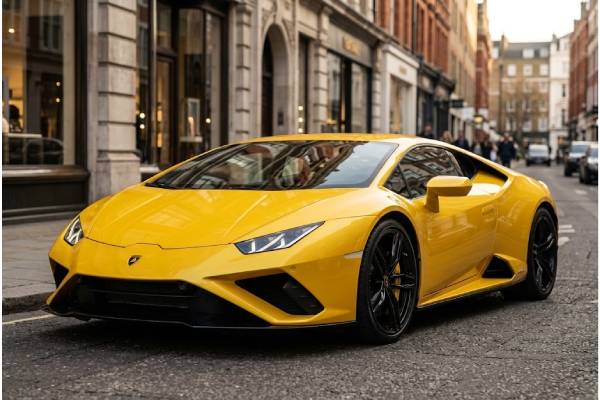
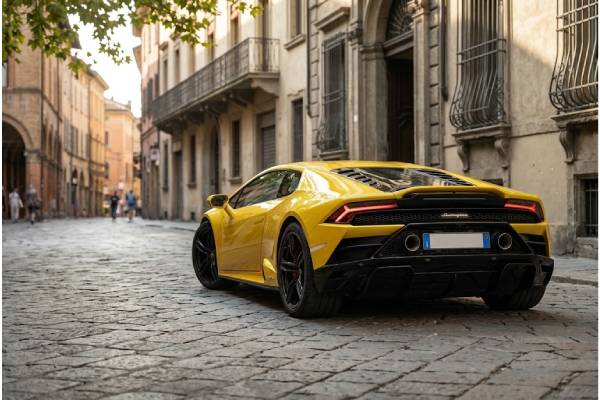
The Lamborghini Huracán EVO RWD is the driver-focused version of the facelifted Huracán: lighter, simpler, and more playful than the all-wheel-drive EVO, but still brutally fast. Its 5.2-liter naturally aspirated V10 makes 610 hp, sends power only to the rear wheels, and delivers the kind of throttle response, sound, and high-rpm drama that has become rare in modern supercars. For buyers, it is attractive because it blends exotic theater with a relatively usable dual-clutch gearbox, strong parts support, and a large enough production base to make ownership less mysterious than older Lamborghinis. For collectors, its importance is bigger than the numbers suggest. It belongs to the final chapter of Lamborghini’s naturally aspirated V10 era before the Temerario moved the junior supercar line into hybrid V8 power. The best examples are original, well-documented, lightly used, and serviced on time.
Table of Contents
- What the EVO RWD Means in the Huracán Story
- V10, Chassis, and Core Specifications
- Body Styles, Options, and Identification Details
- Design and Engineering That Shape Its Character
- How the Rear-Drive Huracán Feels
- Reliability, Service, and Ownership Risk
- Values, Inspection Priorities, and Best Buys
What the EVO RWD Means in the Huracán Story
The Huracán EVO RWD is the purer, rear-drive answer to the technology-heavy Huracán EVO. It keeps the facelifted car’s updated design, cabin interface, and V10 character, but removes front-axle drive to give the car a sharper, more adjustable personality.
Lamborghini launched the Huracán in 2014 as the Gallardo replacement. The original LP 610-4 used all-wheel drive, a naturally aspirated V10, and a dual-clutch gearbox to make the car much easier to drive quickly than older Lamborghinis. The LP 580-2 followed as the earlier rear-drive version, aimed at buyers who wanted less weight, more steering purity, and a lower entry price.
The EVO update arrived as the Huracán’s mid-cycle evolution. The all-wheel-drive EVO received a 640 CV version of the V10, rear-wheel steering, advanced vehicle-dynamics integration, and a more aggressive aerodynamic package. The EVO RWD, introduced for the 2020 model year, took a different route. It used the updated styling and cabin but stayed closer to the classic supercar recipe: mid-mounted naturally aspirated engine, rear-wheel drive, steel brakes as standard, and driver skill placed ahead of maximum electronic intervention.
That matters today because the Huracán EVO RWD sits at a useful point in the model line. It is newer and more refined than the LP 580-2, less expensive and less track-biased than the STO or Tecnica, and more interactive than the all-wheel-drive EVO. It is not the fastest Huracán in a straight line, but it may be the clearest road car for buyers who value steering, balance, and engine feel over launch-control numbers.
Its timing also helps its long-term appeal. Lamborghini’s next junior supercar, the Temerario, moved to a plug-in-hybrid twin-turbo V8 layout. That makes the EVO RWD one of the final regular-production Lamborghini road cars built around a naturally aspirated V10. It is not rare in the way a numbered limited edition is rare, but it represents the end of a mechanical era.
V10, Chassis, and Core Specifications
The key specification is simple: a 5,204 cc naturally aspirated V10, 610 CV, rear-wheel drive, and a 7-speed Lamborghini dual-clutch transmission. The coupé is the sharpest expression of the model because it is lighter than the Spyder and has the cleanest body structure.
| Category | Specification |
|---|---|
| Model years covered | 2020–2024 |
| Engine | 5.2-liter naturally aspirated 90-degree V10 |
| Displacement | 5,204 cc |
| Maximum power | 610 CV / 449 kW at 8,000 rpm |
| Maximum torque | 560 Nm at 6,500 rpm |
| Induction | Natural aspiration |
| Transmission | 7-speed Lamborghini Doppia Frizione dual-clutch automatic |
| Drivetrain | Rear-wheel drive |
| Chassis | Hybrid aluminum and carbon-fiber structure |
| Body | Aluminum and thermoplastic resin panels |
| Dry weight, coupé | 1,389 kg |
| Weight distribution | 40 percent front / 60 percent rear |
| 0–100 km/h, coupé | 3.3 seconds |
| Top speed, coupé | 325 km/h |
| 0–100 km/h, Spyder | 3.5 seconds |
| Top speed, Spyder | 324 km/h |
The engine is the reason this car matters. The V10 uses light-alloy construction and titanium intake valves, and it keeps the naturally aspirated response that defines the Huracán. There are no turbos to soften the sound or delay the power delivery. The reward arrives high in the rev range, but the engine is tractable enough for normal road use.
The LDF dual-clutch gearbox is also central to the car’s usability. It shifts quickly enough for track work and smoothly enough for traffic, which makes the EVO RWD much easier to live with than older single-clutch exotic cars. The gearbox also changes personality through Lamborghini’s ANIMA drive modes: Strada for normal driving, Sport for more playful responses, and Corsa for maximum performance.
The suspension uses double wishbones, described by Lamborghini as overlapping quadrilaterals. Passive dampers are standard on many examples, while magnetorheological dampers were optional. Electronic power steering is standard, with Lamborghini Dynamic Steering available as an option. The standard brake setup uses ventilated and cross-drilled steel discs with 19-inch wheels, while many highly optioned cars have 20-inch wheels and carbon-ceramic brakes.
Body Styles, Options, and Identification Details
The EVO RWD was sold mainly as a coupé and Spyder, with the same 610 CV V10 but different body character. The coupé is the better choice for the most focused driving feel, while the Spyder trades some rigidity and weight for open-air sound and drama.
| Version | Best for | Key differences |
|---|---|---|
| EVO RWD Coupé | Sharper steering feel, lower weight, stronger collector focus | Fixed roof, 1,389 kg dry weight, 0–100 km/h in 3.3 seconds |
| EVO RWD Spyder | Open-air sound, lifestyle appeal, stronger boulevard presence | Soft top opens in 17 seconds at speeds up to 50 km/h, 0–100 km/h in 3.5 seconds |
The easiest exterior identifiers are the RWD-specific nose and rear diffuser. Compared with the all-wheel-drive EVO, the RWD has a different front intake layout and a more distinctive shark-like front treatment. At the rear, the gloss-black bumper and diffuser treatment help separate it from the AWD car.
Factory options matter because they strongly affect value and ownership experience. Desirable equipment often includes:
- Front axle lift, because the nose is low and expensive to repair.
- Magnetorheological dampers, especially for owners who mix city roads and fast drives.
- Lamborghini Dynamic Steering, although some purists prefer the simpler steering feel without it.
- Carbon-ceramic brakes, valued by many buyers but costly to inspect and replace.
- 20-inch forged wheels, often seen on higher-spec cars.
- Sport seats or comfort seats, depending on the buyer’s use case.
- Carbon interior trim, Carbon Skin upholstery, Alcantara, contrast stitching, and Ad Personam colors.
- Rear camera, parking sensors, Apple CarPlay, telemetry, cruise control, and upgraded audio where fitted.
For authenticity, the build sheet is important. Lamborghini options can add large sums to the original invoice, and two EVO RWDs that look similar in photos may be very different in specification. A buyer should match the VIN, factory color, interior trim, wheels, brake type, seat type, and option codes against dealer records or official Lamborghini documentation.
The EVO RWD is not usually bought as a concours object, but originality still matters. Cars with aftermarket exhausts, tunes, lowered suspension, non-factory wheels, paintwork, or vinyl color changes can be enjoyable, but they need closer inspection. A factory-original car with paint protection film, full dealer history, two keys, books, charger, tools, and clean service records is usually the easier car to own and resell.
Design and Engineering That Shape Its Character
The EVO RWD looks aggressive because the bodywork has a job to do. The front splitter, larger air openings, vertical fins, and rear diffuser all support cooling, airflow management, and high-speed stability.
The design is not as extreme as the STO and not as complex as the all-wheel-drive EVO. That restraint is part of the appeal. The RWD model does not need to shout with a huge wing or racing-style bodywork. Its shape communicates speed through proportion: low nose, cab-forward cockpit, sharp side volumes, wide rear haunches, and a short tail wrapped around the V10.
The most important engineering difference is the rear-drive setup. Removing the front-drive hardware changes weight, steering behavior, and throttle adjustability. The car still has stability and traction systems, but they are calibrated to let the rear axle work. Lamborghini’s P-TCS, or Performance Traction Control System, was designed to avoid the abrupt torque cuts that can make powerful rear-drive cars feel nervous or artificial. Instead, it helps the car put power down while still allowing controlled slip.
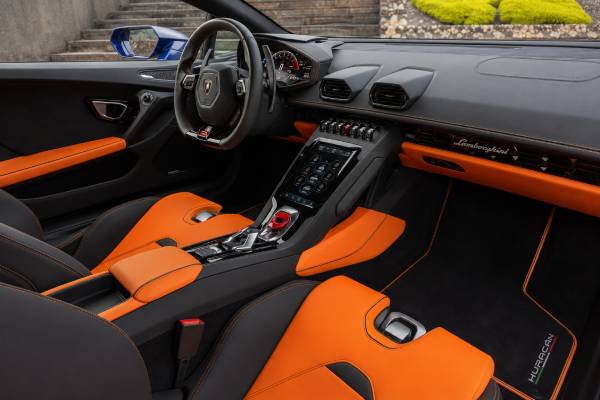
The cabin is modern enough to feel current but not so digital that it hides the car’s mechanical side. The 8.4-inch central touchscreen controls many functions, while the driving position remains low and focused. The starter cover, paddle shifters, drive-mode selector, and digital instrument display all reinforce the sense that this is an event car even before the engine starts.
The sound is a major feature, not a side effect. The V10 sits close behind the cabin, and the engine note changes from hard-edged mechanical noise at low speed to a clean, metallic wail near the top of the tachometer. The Spyder makes that sound more immediate, especially with the rear window lowered, while the coupé gives a tighter, more enclosed intake-and-exhaust experience.
Compared with earlier LP 580-2 cars, the EVO RWD feels more polished and better integrated. Compared with later Tecnica and STO variants, it feels less track-focused and more road-biased. That middle ground is exactly why many owners like it.
How the Rear-Drive Huracán Feels
The EVO RWD feels fast, but its real appeal is how it lets the driver shape the car with steering and throttle. The all-wheel-drive EVO is quicker off the line, yet the RWD version feels more alive at normal road speeds.
In Strada mode, the car is surprisingly manageable. The gearbox shifts smoothly, the throttle is progressive, and visibility is better than the styling suggests. The front is low, the rear is wide, and parking still requires care, but the car is not punishing in the way older Lamborghinis could be. The cabin can be loud on rough pavement, and tire roar depends heavily on wheel and tire choice, but the EVO RWD can handle regular weekend use without feeling fragile.
Sport mode is where the car’s personality opens up. The throttle response sharpens, the exhaust becomes more vocal, and P-TCS allows more movement from the rear axle. This is the mode many drivers remember most because it makes the car feel playful without fully removing the safety net. On a mountain road, the driver can feel the rear load up under power and the nose respond cleanly without the front axle pulling the car through the corner.
Corsa is more serious. It suits smooth roads and track use, where the gearbox holds gears more aggressively and the car expects firmer inputs. Tire temperature matters here. Cold performance tires can make the car feel edgy, while warm, healthy tires give the chassis the grip it was designed around.
The brakes depend on specification. Steel brakes are easier and cheaper to maintain, and they work well for road driving. Carbon-ceramic brakes bring stronger heat resistance and supercar showroom appeal, but they need careful inspection. The pedal can feel firm, and replacement costs are high if discs are worn, chipped, or heat-damaged.
The car is not slow by any normal measure. A 3.3-second 0–100 km/h time and 325 km/h top speed place it deep in modern supercar territory. Still, the numbers do not explain the main attraction. The main attraction is the naturally aspirated V10 climbing toward 8,000 rpm while the chassis stays adjustable, responsive, and clear.
Reliability, Service, and Ownership Risk
The Huracán EVO RWD is generally one of the more usable modern exotic cars, but it is still an expensive Lamborghini that needs specialist care. The safest ownership path is a stock car, complete history, annual servicing, clean diagnostic scans, and a VIN check for every open campaign.
The V10 itself has a strong reputation when serviced correctly and left close to factory specification. The main risk is usually not the basic engine architecture; it is heat, age, neglected fluids, poor storage, accident damage, and modifications. Cars that have been tracked, tuned, fitted with loud aftermarket exhausts, or repeatedly launched need closer review.
Important inspection areas include:
- Service history with dates, mileage, invoices, and authorized or respected specialist stamps.
- Recall and campaign completion, checked by VIN.
- Gearbox behavior, especially smooth low-speed engagement and clean upshifts under load.
- Clutch data and transmission adaptations from a diagnostic scan.
- Oil leaks, coolant leaks, radiator condition, and evidence of overheated track use.
- Front lift operation, if equipped.
- Suspension damper condition, especially magnetorheological units.
- Brake rotor thickness, pad life, carbon-ceramic surface condition, and caliper finish.
- Tire brand, date codes, tread depth, and matching factory sizes.
- Battery health, charger use, and control-module fault history.
- Front splitter, undertray, diffuser, side skirts, and jacking points.
- Paint depth, panel gaps, glass markings, and signs of bumper or structural repair.
The gearbox deserves special attention because some Huracán EVO and STO cars were covered by a safety recall related to insufficient transmission oil. A buyer should not rely on a seller’s verbal assurance. The correct check is a VIN inquiry through Lamborghini or the official recall system, followed by paperwork showing completion.
Electronic issues are usually more annoying than catastrophic, but they matter. Infotainment faults, camera issues, warning lights, weak batteries, parking-sensor errors, and lift-system warnings can all turn a simple purchase into a dealer visit. A pre-purchase inspection should include a full scan, not just a visual review.
Maintenance cost is highly dependent on location, dealer labor rates, and how the car is used. Many Huracán service schedules are built around annual or mileage-based visits, often quoted around 12 months or 9,000 miles in dealer guidance, but the official service booklet for the specific VIN is the final authority. Even low-mileage cars need time-based maintenance because brake fluid, coolant, tires, rubber seals, and batteries age whether the car is driven or not.
Values, Inspection Priorities, and Best Buys
The best EVO RWD to buy is a highly original, well-optioned coupé or Spyder with clear history, no accident story, factory paint, and a specification that future buyers will understand. The cheapest car is rarely the best value if it needs brakes, tires, campaign work, paint correction, or electronic diagnosis.
In the 2026 market, the EVO RWD coupé sits below the STO, Sterrato, and many Tecnica examples, but it remains strong because buyers still want the naturally aspirated V10 and rear-drive layout. Public market data places typical EVO RWD coupé values around the mid-$200,000 range, while dealer asking prices for clean, low-mileage cars can sit higher. Spyders usually bring a premium when colors and options are attractive.
Value drivers are straightforward:
- Low mileage, but not at the expense of service history.
- Original paint or carefully documented minor cosmetic work.
- Strong factory colors, especially vivid Lamborghini shades and tasteful Ad Personam builds.
- Desirable options such as lift, forged wheels, carbon trim, good seats, and carbon-ceramic brakes.
- Clean ownership history with no rental, salvage, flood, or heavy track-use record.
- Complete books, keys, charger, accessories, and invoices.
- Lamborghini dealer or respected exotic specialist maintenance.
- No unresolved recalls or warning lights.
- No irreversible modifications.
Examples to avoid are just as clear. Be cautious with cars that have missing service records, unclear paintwork, worn carbon-ceramic brakes, old tires, heavy aftermarket exhaust work, ECU tuning, cheap lowering kits, poor panel alignment, or repeated auction appearances with changing descriptions. A wrapped car is not automatically bad, but the paint beneath the wrap must be inspected.
A proper buying process should follow this order:
- Confirm the VIN, title status, market specification, and original build.
- Review service invoices, not just a stamped book.
- Check open recalls and campaigns through official channels.
- Inspect paint, underbody, wheels, brakes, tires, and front lift.
- Perform a diagnostic scan with Lamborghini-capable equipment.
- Road test the car from cold and fully warm.
- Price the car after estimating immediate needs, not before.
Long term, the EVO RWD has a strong collectability case because it combines the final-generation Huracán body with rear-wheel drive and the 610 CV naturally aspirated V10. It may not become rare in the same way as an STO or STJ, but it has the right ingredients for lasting enthusiast demand: sound, simplicity, usability, brand strength, and a powertrain Lamborghini no longer offers in its successor.
References
- Lamborghini Huracán EVO RWD | Lamborghini.com 2020 (Manufacturer Specifications) ([Lamborghini.com][1])
- Lamborghini Huracán EVO RWD SPYDER | Lamborghini.com 2020 (Manufacturer Specifications) ([Lamborghini.com][2])
- Huracán EVO RWD: New Features 2020 (Manufacturer News) ([Lamborghini.com][3])
- IMPORTANT SAFETY RECALL 2022 (Recall Database)
- Lamborghini Huracán Evo RWD Market – CLASSIC.COM 2026 (Market Data) ([Classic.com][4])
Disclaimer
This article is for informational purposes only and is not a substitute for professional diagnosis, repair, valuation, or inspection. Specifications, torque values, service intervals, software updates, recalls, and procedures can vary by VIN, market, model year, equipment, and factory campaign status. Always verify details against official Lamborghini service documentation and have any purchase inspected by a qualified Lamborghini dealer or specialist.
If this guide helped you, please share it on Facebook, X/Twitter, or your preferred car community to support our work.