
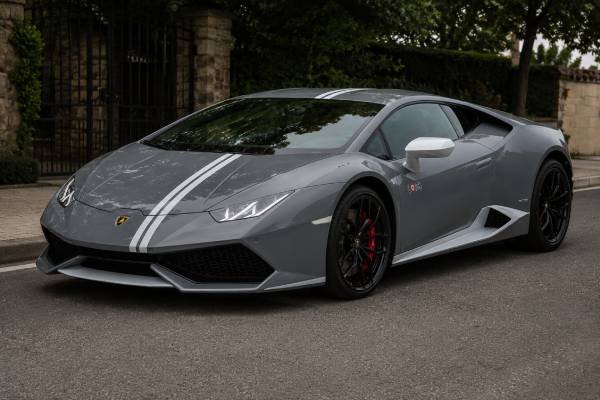
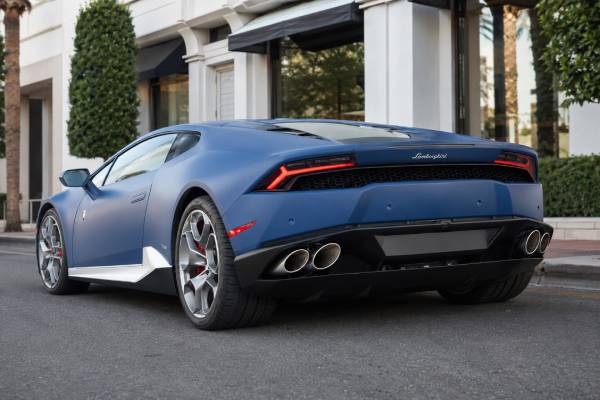
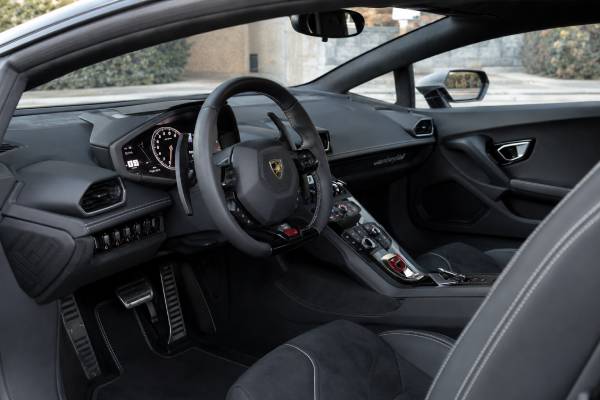
The Lamborghini Huracán LP 610-4 Avio is a limited-run version of the early all-wheel-drive Huracán, created to give the original LP 610-4 a stronger collector identity without changing its core mechanical character. It keeps the 5.2-liter naturally aspirated V10, seven-speed dual-clutch gearbox, carbon-aluminum chassis, and all-wheel-drive layout that made the launch Huracán so usable and fast, then adds an aviation-themed specification limited to 250 cars worldwide. That makes the Avio more than a trim package for buyers who care about originality, rarity, and factory-correct details. Its value sits in the combination of low production, special colors, interior treatment, standard equipment, and the fact that it belongs to the first phase of the Huracán story before the Performante, EVO, STO, Tecnica, and Sterrato expanded the range.
Table of Contents
- Why the Avio Matters in Huracán History
- V10, Chassis, and Core Specifications
- Production, Colors, Options, and Authenticity Details
- Aviation Design and Huracán Engineering
- How the LP 610-4 Avio Drives
- Maintenance, Reliability, and Ownership Risks
- Market Value, Buying Checks, and Collectability
Why the Avio Matters in Huracán History
The Avio matters because it was the first special-edition Huracán and one of the cleanest collector versions of the original LP 610-4 formula. It did not chase more power or track records; it used rarity, specification, and a strong design theme to make the launch-era Huracán more distinctive.
Lamborghini introduced the Huracán LP 610-4 as the Gallardo’s successor. That was a difficult job. The Gallardo had become the brand’s volume supercar, and the Huracán had to feel more advanced without losing the raw appeal of a compact Lamborghini V10. The result was a sharper, more modern car with a naturally aspirated 5.2-liter V10, a new seven-speed Lamborghini Doppia Frizione dual-clutch transmission, all-wheel drive, a carbon-fiber and aluminum chassis structure, and a fully digital cockpit.
The LP 610-4 Avio arrived for the 2016 model year as a special series limited to 250 units. Its name and visual identity refer to aviation and aeronautics, a theme that fits Lamborghini’s long habit of borrowing cues from aircraft, fighter jets, and technical instruments. Unlike later performance-focused Huracán models, the Avio does not alter the base engine output or drivetrain layout. It is best understood as a limited factory specification built on the standard LP 610-4 Coupe.
That distinction is important for buyers. The Avio is not a Performante alternative, and it is not the fastest Huracán variant. Its appeal is closer to a numbered, factory-themed collector configuration. The car keeps the balance, noise, and road usability of the original all-wheel-drive Huracán while adding details that are difficult to recreate correctly after production.
The Avio also sits at an interesting point in Lamborghini history. It came before the Huracán became a large family of variants. After the original LP 610-4, Lamborghini added the rear-wheel-drive LP 580-2, the lighter and more aggressive Performante, the EVO generation, the STO, the Tecnica, the off-road-inspired Sterrato, and the final STJ. The Avio belongs to the first chapter, when the Huracán was still defined by the clean original body shape, the high-revving naturally aspirated V10, and the new LDF transmission that replaced the older single-clutch character of the Gallardo era.
For collectors, that makes the Avio attractive for three reasons:
- It is limited to 250 units worldwide, making it much rarer than ordinary LP 610-4 Coupes.
- Its special colors, stripes, interior trim, and plaque give it visible factory identity.
- It keeps the original Huracán driving experience, rather than becoming a track-special or heavily revised later model.
Its reputation today is strongest among buyers who want a usable modern Lamborghini with real production scarcity. It is not yet a blue-chip classic in the way older V12 Lamborghinis are, but it has a clearer collector argument than a standard early Huracán with a common color and ordinary options.
V10, Chassis, and Core Specifications
The Avio uses the same basic mechanical package as the Huracán LP 610-4 Coupe: a 5,204 cc naturally aspirated V10, seven-speed LDF dual-clutch transmission, and electronically controlled all-wheel drive. The important point is that the Avio’s special status comes from specification and rarity, not from a unique engine tune.
| Item | Lamborghini Huracán LP 610-4 Avio |
|---|---|
| Engine | 5.2-liter naturally aspirated 90-degree V10 |
| Displacement | 5,204 cc |
| Induction | Naturally aspirated |
| Injection | Multi-point injection plus direct stratified injection |
| Bore x stroke | 84.5 mm x 92.8 mm |
| Compression ratio | 12.7:1 |
| Maximum output | 610 PS at 8,250 rpm |
| Maximum torque | 560 Nm at 6,500 rpm |
| Transmission | 7-speed Lamborghini Doppia Frizione dual-clutch automatic |
| Drivetrain | Electronically controlled all-wheel drive |
| Engine position | Longitudinal mid-rear |
The engine is one of the main reasons the Avio remains desirable. It is naturally aspirated, revs high, and uses a long-stroke V10 layout with a sharp mechanical sound. Lamborghini used both multi-point and direct injection, which helped improve performance, response, and efficiency compared with older V10 designs. Start-stop and cylinder-on-demand technology were also part of the efficiency package in certain markets.
| Area | Specification |
|---|---|
| Chassis structure | Hybrid aluminum and carbon-fiber structure |
| Suspension | Double wishbones front and rear |
| Damping | Magnetorheological dampers available and common on well-optioned cars |
| Steering | Electromechanical power steering, with Lamborghini Dynamic Steering available |
| Brakes | Carbon-ceramic discs |
| Wheels | 20-inch Giano-style alloy wheels typical for LP 610-4 specification |
| Tires | 245/30 ZR20 front, 305/30 ZR20 rear |
| Item | Figure |
|---|---|
| Length | 4,459 mm |
| Width | 1,924 mm |
| Height | 1,165 mm |
| Wheelbase | 2,620 mm |
| Dry weight | 1,422 kg |
| Fuel tank | About 83 liters |
| 0–100 km/h | 3.2 seconds |
| Top speed | 325 km/h |
The numbers still feel serious because the Avio is light for an all-wheel-drive V10 supercar and has immediate traction. Later Huracán variants became faster, sharper, or more specialized, but the Avio’s base performance remains more than enough for road use. Its strongest technical identity is not a single headline figure. It is the blend of a high-revving V10, quick dual-clutch shifts, all-weather traction, carbon-ceramic brakes, and a rigid mixed-material structure.
Production, Colors, Options, and Authenticity Details
The Avio was built in a limited series of 250 cars, and authenticity depends heavily on factory colors, livery details, interior trim, and documentation. A normal LP 610-4 dressed later to look like an Avio should not be valued like a genuine numbered Avio.
The key exterior colors were developed around the aviation theme. The standard finish was Grigio Falco with a pearlescent effect. Four optional matte colors were offered: Blu Grifo, Grigio Nibbio, Grigio Vulcano, and Verde Turbine. These names and finishes are a large part of the car’s appeal, so paint condition and originality matter more than they would on an ordinary used Huracán.
The Avio also used contrasting exterior details. A double stripe runs along the roof and down the front hood, and matching contrast treatment appears on areas such as the side mirrors, side member upper surfaces, and front spoiler lip. Depending on specification, these details may appear in white or grey. Buyers should compare any car against factory photos, build records, and dealer documentation because poor repainting, missing stripes, or non-factory wrap work can reduce collector value.
Inside, the Avio alternates black leather with special black Alcantara. The Alcantara carries a laser-engraved hexagonal pattern, and the seats include special L 63 embroidery. The aviation theme is carried through with distinctive trim and a limited-edition plaque. This matters because interior replacement is expensive, and small special-edition parts can be difficult to source.
Factory identity points to verify
- Limited-edition Avio plaque and correct numbering presentation.
- Original Avio exterior color or documented factory paint-to-sample information.
- Correct double stripe and matching contrast details.
- Avio-specific Alcantara with laser-engraved hexagonal treatment.
- L 63 seat embroidery and correct factory interior materials.
- Original sales invoice, build sheet, service booklet, and dealer delivery paperwork.
- Consistency between VIN, options printout, paint code, trim code, and physical car.
The Avio’s standard content was stronger than a basic early Huracán. Front lift, cruise control, and GPS navigation were part of the Avio’s premium standard configuration. Many cars also have desirable extras such as rear-view camera, parking sensors, upgraded interior trim, colored brake calipers, and dynamic chassis equipment.
The most desirable examples are usually those with low mileage, original paint, complete records, correct Avio livery, and no heavy cosmetic modifications. Verde Turbine and Blu Grifo can draw attention because they feel more visibly special than grey tones, but color desirability is market-dependent. Some collectors prefer the understated aircraft-grey theme, while others want the rarest and most dramatic presentation.
Avoid judging an Avio only by mileage. A very low-mileage car with old tires, deferred annual servicing, sticky interior controls, flat battery history, or incomplete records can be a worse ownership risk than a carefully maintained car with moderate miles. For modern Lamborghinis, provenance means more than odometer reading alone.
Aviation Design and Huracán Engineering
The Avio’s special character comes from how Lamborghini layered aircraft-inspired details over the original Huracán shape. The engineering underneath is the standard LP 610-4, but the visual treatment gives the car a more technical and military-aerospace personality.
The base Huracán design uses sharp surfaces, hexagonal themes, and Y-shaped graphic elements. Lamborghini described the exterior language as being inspired by forms as essential as a carbon atom, and that idea suits the Avio especially well. The body is low, wedge-like, and compact, but cleaner than later Huracán variants with larger wings, vents, and aggressive aero add-ons.
The Avio does not need fixed wings or race-style addenda to look special. Its design relies on contrast and proportion. The double stripe draws the eye over the roof and front hood, giving the car a flightline feel. The special colors add the impression of military aircraft paint, especially in matte grey, matte blue, or matte green. The result is subtle compared with an STO or Performante, but clearly more distinctive than a standard LP 610-4.
Engineering-wise, the most important Huracán features are the mixed-material chassis, mid-rear engine placement, all-wheel-drive torque management, and integrated drive-mode system. The chassis combines aluminum and carbon-fiber elements to keep weight down and stiffness high. The V10 sits behind the cabin, but the all-wheel-drive system helps make the car more stable and usable than a rear-drive-only supercar in cold, wet, or imperfect conditions.
What makes the Avio feel special
- The naturally aspirated V10 dominates the experience with sound, response, and high-rpm urgency.
- The LDF dual-clutch gearbox gives the car a more modern feel than the older Gallardo’s single-clutch transmission.
- The all-wheel-drive system makes hard acceleration clean and repeatable.
- The digital instrument cluster makes the early Huracán feel like a major technology step from the Gallardo.
- The Avio trim gives the cockpit and exterior a limited-edition identity without making the car harder to use.
The ANIMA drive-mode system is central to the car’s personality. Strada is the road mode, softening the car’s responses for daily use. Sport sharpens the throttle, gearbox, exhaust behavior, and chassis settings for a more playful feel. Corsa gives the most focused calibration for fast driving, prioritizing response and performance. The difference between modes is obvious enough to matter, especially in the gearbox and exhaust behavior.
The cockpit design also deserves attention. The driver faces a 12.3-inch TFT instrument panel, with many controls placed on or near the steering wheel. The start button under a red cover is theatrical but functional, and the central tunnel keeps the car feeling special even at low speed. The Avio interior adds texture through laser-engraved Alcantara and special embroidery, which helps separate it from ordinary Nero Ade interiors.
How the LP 610-4 Avio Drives
The Avio drives like a well-specified early Huracán LP 610-4: fast, stable, loud, and easier to use than many older Lamborghinis. Its biggest strength is that it delivers real supercar drama without demanding the constant effort of a classic exotic.
The V10 is the heart of the experience. It responds cleanly at low rpm, pulls hard through the middle, and becomes much more urgent near the top of the tachometer. Unlike a turbocharged engine, it does not rely on boost to feel dramatic. The reward comes from revs, sound, and the feeling that the engine becomes sharper the harder it is worked.
The LDF dual-clutch gearbox is a major part of the car’s usability. In automatic mode, it can drive smoothly in traffic. In manual mode, it shifts quickly and gives the driver crisp paddle response. It does not have the slow, mechanical shock of Lamborghini’s older single-clutch e-gear systems, which some enthusiasts miss for drama but most owners appreciate less in daily driving.
The all-wheel-drive system gives the Avio huge launch traction. On dry roads, the car can put power down with very little waste. On wet roads, it feels more secure than a rear-wheel-drive Huracán, though it still demands respect because the tires are wide, the engine is powerful, and the car’s limits are high. Tire age and temperature make a big difference. Old Pirelli P Zero tires can make the car feel nervous or dull, while fresh correct-spec tires restore grip and steering precision.
Steering feel depends on specification. Cars with standard electromechanical steering feel more predictable and natural to many drivers. Cars with Lamborghini Dynamic Steering can feel more variable because the ratio changes with speed and drive mode. Some drivers like the agility; others prefer the steadier response of the standard setup. During a test drive, the steering should feel smooth, accurate, and free of knocks or warning lights.
The ride is firm but not punishing by supercar standards. With magnetorheological dampers, the car can feel surprisingly comfortable in Strada and much tighter in Sport or Corsa. Front lift is valuable in real use because the nose is low, and damage to the front splitter or undertray is common when owners do not use lift carefully.
Braking performance is very strong, but carbon-ceramic brakes need proper inspection. They can last a long time in road use, yet heavy track use, stone damage, overheating, or careless wheel cleaning can create expensive problems. Pedal feel should be firm and consistent. Squeal at low speed can be normal, but vibration, pulsing, cracking, or deep disc wear needs specialist assessment.
On a mountain road, the Avio feels planted rather than wild. The all-wheel-drive system gives confidence, the chassis changes direction quickly, and the V10 makes every straight feel short. It is not as delicate or adjustable as a rear-wheel-drive LP 580-2, and it is not as intense as a Performante, but it is arguably easier to enjoy more often. That is the Avio’s real-world advantage: it brings limited-edition appeal without turning the Huracán into a single-purpose track car.
Maintenance, Reliability, and Ownership Risks
The Avio is generally a strong modern exotic when maintained correctly, but ownership costs are still Lamborghini-level. The safest cars are those with annual servicing, clean diagnostics, fresh tires, completed recalls, and no evidence of accident repair or neglected storage.
The 5.2-liter V10 has a good reputation compared with many exotic engines. It is not fragile by nature, and it benefits from Audi-group engineering influence, but that does not make it cheap to own. Heat, low use, old fluids, weak batteries, and poor servicing can still create expensive problems.
Common inspection areas
- Service history: Look for annual maintenance by an authorized Lamborghini dealer or respected specialist. Gaps matter, even on low-mileage cars.
- Diagnostics: A full scan should check engine, gearbox, suspension, lift system, infotainment, steering, and body modules.
- Tires: Replace aged tires regardless of tread depth. Supercar tires harden with time and change the car’s behavior dramatically.
- Carbon-ceramic brakes: Inspect disc surface, edges, pad life, calipers, and any record of track use.
- Front lift: Confirm smooth operation, no leaks, and no warning messages.
- Dampers: Check for leaks, knocks, uneven ride height, or mode-related faults.
- Cooling system: Inspect radiators and condensers for stone damage, corrosion, and debris.
- Battery condition: Low voltage can trigger confusing electrical faults. A quality battery maintainer is essential for stored cars.
- Body and underbody: Check front splitter, undertrays, jacking points, rocker panels, and wheel arches for scraping or accident repair.
The dual-clutch transmission is far easier to live with than older single-clutch Lamborghini gearboxes, but it still needs proper inspection. Rough engagement, warning lights, fluid leaks, delayed selection, or harsh low-speed behavior should not be dismissed as “normal supercar character.” Launch-control use and track driving increase stress on the drivetrain, brakes, tires, and cooling system.
Interior condition is especially important on an Avio because some trim is unique. Alcantara wear, seat bolster damage, missing embroidery, damaged trim, sticky switches, and poor aftermarket audio or alarm installations can reduce value. Correct Avio interior parts may be difficult or expensive to replace.
Paint and livery condition also deserve more attention than on a standard Huracán. Matte paint requires careful care and cannot be polished like gloss paint. Paint protection film can be helpful, but old film may yellow, lift, or hide stone chips. Factory stripes should be inspected for alignment, finish, and evidence of replacement after repair.
For U.S.-market cars, two Huracán recall areas are especially relevant to many 2016–2017 examples. One concerns missing blanking caps for headlamp horizontal adjustment screws on certain 2015–2020 cars. Another concerns software that could allow incorrect headlight adjustment on certain 2015–2024 cars. A buyer should verify recall completion by VIN, not by model year alone.
| Risk area | Why it matters | What to request |
|---|---|---|
| Incomplete history | Deferred servicing can turn a low-mileage car into a high-cost car | Stamped service book, invoices, dealer records |
| Old tires | Grip, braking, and stability depend heavily on fresh tires | DOT dates and matching approved tire specification |
| Brake wear | Carbon-ceramic replacement costs can be very high | Measured brake report and visual inspection |
| Accident repair | Paint, structure, and special trim affect Avio value | Paint-meter readings, lift inspection, repair records |
| Electrical faults | Low battery voltage can damage confidence and hide deeper problems | Battery test and full diagnostic scan |
| Non-original cosmetics | Incorrect stripes, repainting, or modified trim can hurt collectability | Factory build record and detailed photos |
The best ownership approach is simple: buy the right car, keep it on a maintainer, service it annually, use correct tires, warm it fully before hard driving, and fix small faults early. A neglected Huracán can become expensive quickly, but a properly kept Avio can be a dependable modern exotic by segment standards.
Market Value, Buying Checks, and Collectability
The Avio usually trades above an ordinary early LP 610-4 Coupe when it is original, documented, and correctly specified. The premium is not automatic; it depends on condition, mileage, color, options, service history, and whether the car still presents as a true Avio rather than a modified used Huracán.
As of 2026, ordinary early Huracán LP 610-4 Coupes often sit in a broad market band below the strongest Avio examples. Clean Avios with desirable colors and low mileage commonly appear in the low-to-mid $200,000 range, while exceptional or aggressively priced examples can ask more. European listings can sit around the low-to-mid €200,000s and higher depending on tax, mileage, specification, and market. Asking prices are not the same as sold prices, so buyers should compare recent transactions, not just dealer advertisements.
The Avio’s long-term collectability is supported by limited production and the naturally aspirated V10. It is also helped by the end of the first-generation Huracán era and Lamborghini’s move toward hybridized powertrains. Still, it is not the most extreme Huracán. A Performante, STO, Tecnica, Sterrato, or final special series may draw stronger performance-focused collector interest. The Avio appeals to a different buyer: someone who wants rarity, style, and the original LP 610-4 character.
Value factors that matter most
- Originality: Factory paint, correct stripes, original interior, and unmodified mechanicals support value.
- Documentation: Build records, service invoices, manuals, books, keys, and delivery documents help prove provenance.
- Color: Avio-specific colors are central to identity. Rare matte colors can be attractive but must be in excellent condition.
- Mileage: Lower mileage helps, but only if maintenance has not been neglected.
- Condition: Paint, trim, wheels, brakes, underbody, and glass should match the claimed mileage.
- Ownership history: Fewer careful owners are generally preferable to frequent flips.
- Dealer or specialist inspection: A pre-purchase inspection by a Lamborghini-experienced shop is essential.
A strong Avio buying process should be more detailed than a normal used-car check.
- Confirm the VIN and verify that the car is a genuine Avio.
- Request the factory options list and compare it with the car’s physical specification.
- Check that all Avio-specific exterior and interior details are present and correct.
- Review every service invoice from new, not just the stamped booklet.
- Confirm recall completion by VIN in the relevant market.
- Inspect the car on a lift for underbody damage, leaks, and accident repair.
- Scan all control modules and save the diagnostic report.
- Measure tire age, brake condition, and remaining service life of expensive consumables.
- Drive the car from cold and hot, checking gearbox behavior, steering, brakes, lift, suspension, and warning lights.
- Use any missing documents, old tires, brake wear, or cosmetic corrections in the valuation.
Examples to seek are original, complete, lightly used but regularly serviced, and finished in an Avio color with intact factory trim. Examples to avoid include cars with unclear import history, accident repair, missing Avio parts, wrapped-over paint, non-factory stripes, tuned ECUs, aftermarket exhausts without original parts, neglected annual servicing, or heavily worn carbon-ceramic brakes.
The Avio is a smart choice for a buyer who wants a collectible modern Lamborghini that can still be used. It is rare enough to stand apart from normal LP 610-4 Coupes, but mechanically conventional enough within the Huracán family that servicing is manageable through the right dealer or specialist. Its best future belongs to cars that remain original, documented, and carefully maintained.
References
- Lamborghini Huracán Avio – Technical Specifications, Pictures, Videos 2026
- Pre-Owned Huracán Avio by Lamborghini – Authorised Dealers | Lamborghini.com 2026
- Lamborghini Huracán – Technical Specifications, Pictures, Videos 2026
- Huracán (R)evolution: a story of technology and innovation 2024
- Part 573 Safety Recall Report 23V-826 2023 (Recall Database)
Disclaimer
This article is for informational purposes only and is not a substitute for professional diagnosis, repair, valuation, or pre-purchase inspection. Specifications, torque values, service intervals, software status, recall applicability, and procedures can vary by VIN, market, equipment, and production date. Always verify details against official Lamborghini service documentation and have any car inspected by a qualified Lamborghini dealer or specialist before purchase or repair.
If this guide helped you, please share it on Facebook, X/Twitter, or your favorite car community to support our work.