
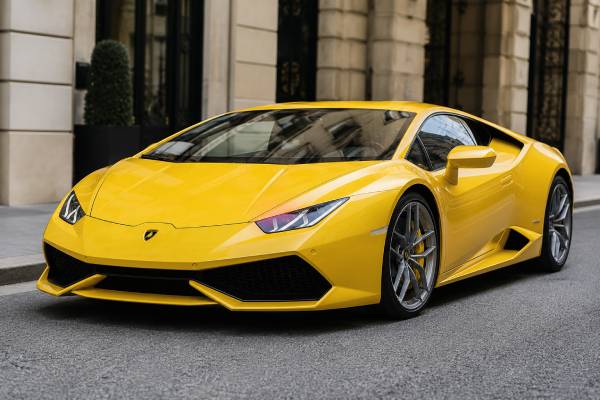
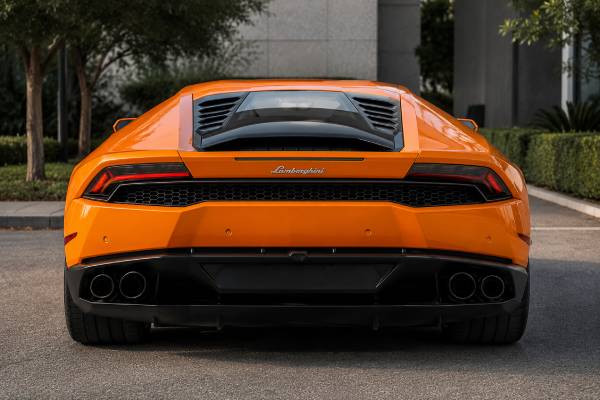
The 2015 Lamborghini Huracán LP 610-4 is the first-year version of the car that replaced the Gallardo and reset Lamborghini’s V10 formula. It kept the drama people expected from Sant’Agata Bolognese, but added a much more modern structure, a dual-clutch gearbox, digital instrumentation, all-wheel-drive control, and a cabin that made the car easier to use often. For buyers, that mix is the point. The early Huracán is not the rarest or sharpest version, but it is the clean starting point of the family and one of the most usable naturally aspirated V10 supercars of its era. The right example offers huge sound, very serious speed, and enough durability for regular driving when maintained properly. The wrong example can bury its owner in deferred service, tired carbon-ceramic brakes, old tires, accident repairs, and incomplete documentation.
Table of Contents
- Why the First Huracán Still Matters
- V10, Chassis, and Key Specifications
- Versions, Options, and Identification Details
- Design and Engineering Character
- How the LP 610-4 Drives
- Maintenance Risks and Service Realities
- Market Value and Buyer Checklist
Why the First Huracán Still Matters
The Huracán LP 610-4 matters because it turned Lamborghini’s smaller supercar from a raw Gallardo successor into a fully modern V10 platform. It was faster, stiffer, more refined, and easier to drive, while still keeping a naturally aspirated engine behind the seats.
Lamborghini presented the Huracán LP 610-4 at the 2014 Geneva Motor Show, with customer deliveries starting soon afterward. The car replaced the Gallardo, which had become Lamborghini’s best-selling model and had carried the brand through a major period of growth. That made the Huracán’s job difficult: it had to feel more advanced without becoming dull, and more usable without losing the sense of occasion.
The 2015 model year is especially important for buyers because it represents the early LP 610-4 coupe in its original form. Later Huracán versions added rear-wheel-drive layouts, Spyder bodies, Performante track hardware, EVO electronics, STO aero, Tecnica tuning, and Sterrato all-terrain character. The first LP 610-4 is simpler in concept: a mid-mounted 5.2-liter V10, all-wheel drive, dual-clutch transmission, carbon-ceramic brakes, digital cockpit, and a clean wedge-shaped body.
The model name explains much of the car. “LP” stands for the longitudinal rear engine layout. “610” refers to metric horsepower, and “4” identifies all-wheel drive. In U.S. horsepower terms, the engine is commonly listed at about 602 hp, but Lamborghini’s model identity uses 610 CV/PS.
Collectors and enthusiasts care about the early Huracán for several reasons:
- It is the first production version of the Huracán family.
- It introduced Lamborghini’s LDF dual-clutch transmission to the V10 road car line.
- It kept the naturally aspirated V10 at a time when rivals were moving toward turbocharging.
- It brought a carbon-fiber and aluminum hybrid chassis to Lamborghini’s entry supercar.
- It is usable enough to drive regularly, which makes condition and maintenance history more important than simple mileage.
The LP 610-4 is not a numbered limited edition, so rarity alone does not drive value. Instead, buyers look for original paint, accident-free structure, complete service records, desirable colors, good options, low-to-moderate mileage, and evidence that the car has not been abused through repeated launch-control use, poor storage, or cheap modifications.
Its long-term importance is tied to the end of an era. The Huracán family became Lamborghini’s last major naturally aspirated V10 line before hybrid replacement. A clean first-year LP 610-4 may not have the track prestige of a Performante or STO, but it has the purity of being the original expression.
V10, Chassis, and Key Specifications
The LP 610-4’s core specification is simple and strong: a 5.2-liter naturally aspirated V10, a 7-speed dual-clutch gearbox, electronically controlled all-wheel drive, and a carbon-aluminum structure. The official performance claim is 0–100 km/h in 3.2 seconds and a top speed above 325 km/h.
Engine and drivetrain
The V10 is the heart of the car. It uses both direct injection and port injection, which helps power, response, emissions, and drivability. It also uses dry-sump lubrication, which lets the engine sit low and keeps oil supply stable during high cornering loads.
| Item | Specification |
|---|---|
| Engine layout | 90-degree naturally aspirated V10 |
| Displacement | 5,204 cc / 5.2 liters |
| Bore x stroke | 84.5 mm x 92.8 mm |
| Fuel system | Direct injection plus multi-point port injection |
| Compression ratio | 12.7:1 |
| Maximum power | 449 kW / 610 CV at 8,250 rpm |
| Maximum torque | 560 Nm at 6,500 rpm |
| Lubrication | Dry sump |
| Transmission | 7-speed Lamborghini Doppia Frizione dual-clutch |
| Drivetrain | All-wheel drive with electrohydraulic multi-plate clutch |
The engine is not about low-rpm shove like a turbocharged unit. It builds power with revs and rewards drivers who let it climb. The last 2,000 rpm are where the car feels most alive, and the sound changes from mechanical growl to sharp V10 howl.
The LDF gearbox was a major improvement over the Gallardo’s earlier automated manual system. It preselects the next gear and swaps clutches very quickly, so shifts are smoother in traffic and sharper under hard load. That makes the Huracán much easier to use in town, but still aggressive enough in Sport or Corsa mode.
Chassis, brakes, and dimensions
The Huracán’s hybrid chassis combines carbon fiber and aluminum, with aluminum and composite exterior panels. Suspension is by aluminum double wishbones, while carbon-ceramic brakes were standard.
| Area | Specification |
|---|---|
| Chassis | Hybrid aluminum and carbon-fiber structure |
| Suspension | Aluminum double wishbones front and rear |
| Dampers | Hydraulic dampers; MagneRide optional |
| Steering | Electromechanical power steering; Lamborghini Dynamic Steering optional |
| Front brakes | Carbon-ceramic discs, 380 x 38 mm, six-piston calipers |
| Rear brakes | Carbon-ceramic discs, 356 x 32 mm, four-piston calipers |
| Front tires | 245/30 R20 |
| Rear tires | 305/30 R20 |
| Fuel capacity | 80 liters |
| Measurement | Figure |
|---|---|
| Length | 4,459 mm |
| Width | 1,924 mm |
| Width including mirrors | 2,236 mm |
| Height | 1,165 mm |
| Wheelbase | 2,620 mm |
| Dry weight | 1,422 kg |
| Weight distribution | 42% front / 58% rear |
| 0–100 km/h | 3.2 seconds |
| 0–200 km/h | 9.9 seconds |
| Top speed | More than 325 km/h |
| EPA fuel economy | 16 mpg combined, 14 city, 20 highway |
The dry-weight figure is useful for understanding Lamborghini’s claims, but buyers should not treat it as real road weight with fluids, fuel, and options. A well-optioned road car will weigh more. What matters more in practice is that the car feels rigid, compact, and planted.
Versions, Options, and Identification Details
For 2015, the car to identify is the LP 610-4 coupe, not the later Spyder, rear-wheel-drive LP 580-2, Performante, or EVO. Correct identification matters because later cars can look similar to casual buyers but differ in drivetrain, aero, suspension tuning, bumpers, and market value.
The 2015 LP 610-4 coupe is the clean original Huracán shape. It has all-wheel drive, the 610 CV V10 tune, standard carbon-ceramic brakes, the early Huracán cabin architecture, and the original front and rear styling. Later models changed the formula. The LP 580-2 removed front drive and had different bumpers. The Performante added power, reduced weight, and active aerodynamics. The EVO brought revised aero, more advanced chassis control, and updated infotainment.
Factory options that affect desirability
Options matter because two Huracáns with the same year and mileage can feel very different to own. A low-mile car without front lift, camera, or desirable interior trim may be harder to live with than a better-optioned example with slightly more mileage.
Commonly desirable options and features include:
- Front axle lift: Very useful for steep driveways, ramps, and city use.
- MagneRide dampers: Adds broader ride control between relaxed and aggressive driving.
- Lamborghini Dynamic Steering: Can sharpen low-speed response, though some drivers prefer the standard steering’s consistency.
- Transparent engine cover: Adds visual drama and helps show off the V10.
- Forged or upgraded wheels: Desirable when original, undamaged, and correctly matched to tire sizes.
- Rear camera and parking sensors: Important because rear visibility is limited.
- Interior leather or Alcantara packages: Condition, color pairing, and stitching quality influence appeal.
- Brake caliper colors: A small detail, but important for buyers seeking a specific color combination.
- Ad Personam personalization: Can add value when tasteful and documented, but can narrow the buyer pool when too loud or unusual.
The safest collector choice is usually an original, well-documented, accident-free car with factory options rather than aftermarket changes. A modified exhaust, tune, wrap, or non-factory carbon trim does not automatically ruin a car, but it should reduce confidence until the work is documented, reversible, and professionally installed.
Documentation and originality checks
A serious buyer should verify more than the VIN and mileage. Early Huracáns are valuable enough that originality, accident history, and service evidence carry real money.
Ask for:
- Original window sticker or build sheet.
- Service booklet and dealer invoices.
- Recall completion records.
- Battery replacement records.
- Tire date codes and tire-brand consistency.
- Brake rotor and pad measurements.
- Paint meter readings.
- Pre-purchase inspection from a Lamborghini specialist.
- Evidence that all keys, books, tools, inflator kit, and accessories are present.
A car with fewer miles but missing service history can be riskier than a car with more miles and excellent records. Low use can age tires, batteries, seals, fluids, and suspension parts. The best examples are exercised, serviced, stored properly, and kept close to factory specification.
Design and Engineering Character
The LP 610-4 works because its design and engineering point in the same direction: make the car look dramatic, keep the V10 central, and use electronics to make the performance easier to access. It is sharper and cleaner than the Gallardo, but less extreme than later Huracán track specials.
The exterior is built around Lamborghini geometry: low wedge proportions, hexagonal forms, Y-shaped light signatures, deep front intakes, and short overhangs. The car is only 1,165 mm high, so it sits with the visual tension expected from a mid-engine Lamborghini. The side glass shape and rising door line give it speed even when parked.
Unlike the Aventador, the Huracán does not use scissor doors. That is not a flaw; it fits the car’s role. The Huracán was intended as the more usable Lamborghini, not the flagship V12 theater piece. Conventional doors, better low-speed manners, and a compact footprint make it easier to use in real traffic and parking spaces.
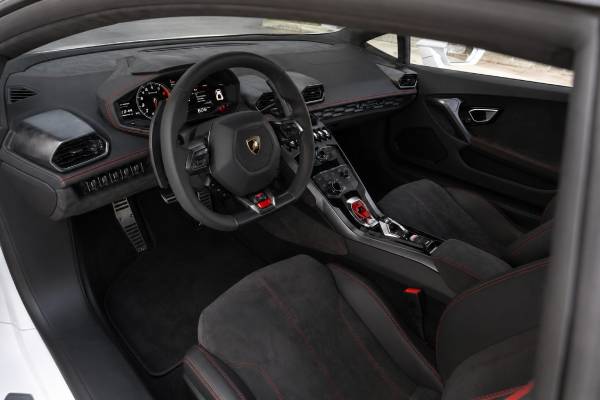
The cabin was a major step forward. The 12.3-inch digital instrument cluster moved key information directly in front of the driver. Many controls sit on or near the steering wheel, including the ANIMA drive-mode selector. The start button under a red flip cover is theatrical without being impractical. The seating position is low, but the forward view is better than the car’s shape suggests.
ANIMA changes the car’s personality:
- Strada calms throttle response, gearbox behavior, all-wheel-drive logic, stability control, steering, and damping when equipped.
- Sport makes the car more vocal and playful, with sharper shifts and more rear-biased attitude.
- Corsa is the most aggressive setting, intended for fast road or track use with the most direct powertrain and chassis responses.
The engineering character is defined by integration. The V10, LDF gearbox, all-wheel-drive system, stability control, steering, exhaust flaps, and optional dampers are not isolated systems. They are tuned together through the drive modes. That makes the Huracán feel more polished than a Gallardo, especially in stop-start driving and fast gear changes.
The sound is central to the car’s identity. At low revs, the V10 has a hard mechanical edge. At high revs, it turns urgent and metallic. Exhaust valves add drama, but the intake and engine itself are just as important. This is why many buyers prefer the naturally aspirated LP 610-4 to faster turbocharged alternatives.
The most important design lesson is that the Huracán is not a soft grand tourer. It is a supercar made more usable by electronics and packaging, not a luxury coupe pretending to be one. The cabin is tight, luggage space is limited, tire noise is real, and the car still needs respect in poor weather or cold conditions.
How the LP 610-4 Drives
The LP 610-4 drives like a secure, high-revving, all-wheel-drive supercar with a very fast gearbox and a dramatic engine. It is not the loosest or most track-focused Huracán, but it is one of the easiest to enjoy quickly and safely.
Acceleration is immediate once the V10 is in its power band. The car does not depend on turbo boost, so throttle response is clean and linear. The engine gets stronger as revs rise, and the final rush toward 8,250 rpm is the reward. Launch control can produce brutal starts, but repeated launches should be treated as a wear and inspection concern when buying.
The LDF transmission is one of the car’s biggest day-to-day advantages. In Strada, it can creep and shift smoothly enough for town use. In Sport and Corsa, it snaps through gears with the kind of speed expected from a modern supercar. It also removes the clutch-wear anxiety associated with older single-clutch Lamborghini models, although it is still expensive if abused or neglected.
Steering depends partly on specification. The standard electromechanical system is accurate and predictable. Lamborghini Dynamic Steering varies the ratio, which can make the car feel very quick at lower speeds. Some drivers enjoy that; others prefer a more linear response. During a test drive, pay attention to whether the steering feels natural to you, not just whether the option is present.
The AWD system gives the Huracán strong traction out of corners. On road, that is a major benefit. It lets the car put power down cleanly and makes it less intimidating than a rear-drive exotic in marginal conditions. The tradeoff is that the front end can push wide if the driver enters a corner too fast and asks the front tires to brake, turn, and pull power at the same time. Good tires and proper alignment matter.
Ride quality is firm but usable. Cars with MagneRide can feel more flexible across rough roads, especially in Strada. Cars on old tires, incorrect pressures, damaged wheels, or tired suspension can feel harsher than they should. A Huracán should feel taut, not loose or crashy.
Carbon-ceramic brakes are powerful and resistant to fade, but they require inspection. Light noise at low speeds can be normal, but vibration, cracks, chipped disc edges, warning lights, uneven pad wear, or poor pedal feel are not. On road, the brakes can feel less warm and grabby than iron brakes at gentle speeds; on fast roads, they make more sense.
As a usable exotic, the Huracán is better than its shape suggests. Forward visibility is acceptable, the gearbox behaves, the engine does not feel fragile in traffic, and the car can cover highway miles easily. The main usability limits are low ground clearance, wide bodywork, rear visibility, tire cost, attention from strangers, and the need to avoid careless parking.
The best test drive route includes city streets, rough pavement, highway cruising, and a safe stretch where the car can rev cleanly. A healthy LP 610-4 should start cleanly, idle smoothly, shift without hesitation, track straight, brake without vibration, and show no warning lights.
Maintenance Risks and Service Realities
The Huracán LP 610-4 has a strong basic reputation for an exotic, but it is still a complex Lamborghini with expensive consumables. The dangerous cars are not usually the ones with miles; they are the ones with skipped annual care, weak batteries, old tires, hidden accident damage, and cheap modifications.
Routine service should be done by a Lamborghini dealer or a specialist who knows the platform. Oil services, brake-fluid changes, gearbox and drivetrain checks, coolant condition, filters, software updates, alignment, and diagnostic scans all matter. A stamped book is useful, but detailed invoices are better because they show what was actually done.
Common inspection priorities
Focus on condition rather than general reputation. A well-kept Huracán can be a satisfying car; a neglected one can become very expensive quickly.
Important inspection points include:
- Engine oil leaks: Check around covers, lines, dry-sump system areas, and undertrays.
- Cooling system condition: Look for seepage, damaged radiators, fan issues, and debris in front intakes.
- Gearbox behavior: Shifts should be quick and clean, with no slipping, harsh engagement, or warning messages.
- All-wheel-drive system: Listen for driveline noises and check for fault codes.
- Front lift system: Make sure it raises and lowers evenly and does not leak down.
- MagneRide dampers: Inspect for leaks, warning lights, and uneven ride behavior.
- Carbon-ceramic brakes: Measure wear properly; visual checks alone are not enough.
- Tires: Replace old tires even with tread remaining; age and heat cycles affect grip.
- Battery and electronics: Weak batteries cause strange warning messages on modern exotics.
- Air conditioning and infotainment: Repairs can be costly and parts-specific.
- Body and underbody: Check front splitter, side sills, rear diffuser, jacking points, and undertrays for scraping or crash evidence.
The carbon-ceramic brakes are one of the biggest ownership cost variables. Rotors can last a long time with road use, but track use, gravel chips, impacts, or incorrect handling can make replacement painfully expensive. A seller saying “the brakes look fine” is not enough. Get measurements and specialist judgment.
Tires are another major clue. Matching premium tires in the correct sizes suggest proper care. Mismatched, aged, budget, or incorrect-spec tires are a warning sign. A Huracán depends heavily on tire condition, and old rubber can make the car feel nervous, noisy, or traction-limited.
Recalls and campaigns should be checked by VIN. For early Huracáns, headlight-related recalls are especially relevant in the U.S. A buyer should confirm whether the blanking-cap recall and later headlamp software campaign apply to the specific car and whether they have been completed. Do not assume completion because the car has been serviced; ask for records.
Restoration and repair reality
This is not a car to “restore cheaply.” Body repairs require correct materials, paint matching, structural knowledge, and calibration. A small front-end impact can involve bumper covers, lights, sensors, ducting, radiators, underbody panels, and paintwork. A poorly repaired car may look acceptable in photos but drive poorly, show panel gaps, or produce warning messages.
Originality matters most in these areas:
- Factory paint and panel fit.
- Original interior trim and stitching.
- Uncut wiring.
- Original wheels or documented factory alternatives.
- Factory exhaust or retained original parts.
- Complete books, keys, manuals, and service history.
Upgrades can be sensible when reversible. Paint protection film, a battery tender lead, high-quality alignment, and discreet protection for vulnerable trim are usually positives. Loud exhausts, ECU tunes, lowered suspension, questionable carbon add-ons, and non-factory wheels should be judged carefully.
Market Value and Buyer Checklist
The 2015 Huracán LP 610-4 is now a value-sensitive modern collectible: not rare enough to buy blindly, but special enough that the best examples command a premium. Market position depends heavily on mileage, color, options, accident history, service proof, and originality.
As of the current market, many clean 2015 LP 610-4 coupes appear in the broad U.S. range from the high-$100,000s to the low/mid-$200,000s, with dealer asking prices often higher than wholesale or auction outcomes. Exceptional low-mile cars, rare colors, strong options, and perfect records can sit above ordinary examples. Higher-mile cars, modified cars, stories, accident history, or deferred service should be cheaper.
Do not shop only by price. A “cheap” Huracán with worn brakes, old tires, overdue service, weak battery, damaged underbody panels, and missing records can cost more than a properly maintained car after the first year.
| Area | What to verify | Why it matters |
|---|---|---|
| Identity | VIN, LP 610-4 trim, build sheet, original options | Confirms the car is the correct AWD 610 CV coupe |
| Paint and structure | Paint meter, panel gaps, underbody, repair invoices | Accident repairs can affect value and driving quality |
| Service history | Annual records, fluids, dealer or specialist invoices | Deferred service is expensive on exotic cars |
| Brakes | Rotor condition, pad life, measurements, warning lights | Carbon-ceramic replacement can be a major cost |
| Tires and wheels | Date codes, correct sizes, wheel damage, alignment | Old or incorrect tires change the car’s behavior |
| Electronics | Diagnostic scan, battery health, infotainment, cameras | Modern Lamborghini faults can be software or module-related |
| Options | Lift, MagneRide, LDS, camera, interior packages | Options affect usability and resale appeal |
| Originality | Exhaust, tune, wheels, suspension, interior changes | Reversible factory-spec cars are easier to sell |
The best examples to seek are original, accident-free cars with complete documentation, known ownership history, healthy electronics, recent service, fresh tires, measured brakes, and desirable but not bizarre specifications. Good colors depend on taste, but classic Lamborghini shades, strong metallics, and tasteful interiors tend to stay liquid.
Examples to avoid include:
- Cars with repeated auction appearances and no clear explanation.
- Cars with incomplete service records.
- Cars wearing old tires to preserve “low mileage.”
- Cars with aftermarket tunes but no original files or documentation.
- Cars with warning lights explained away as “just a sensor.”
- Cars with front-end paintwork but no repair invoice.
- Cars that cannot be inspected cold.
- Cars sold without a specialist pre-purchase inspection.
For long-term collectability, the LP 610-4 has a good foundation. It is the first Huracán, it has the full-power early AWD V10 layout, and it belongs to the final era of non-hybrid Lamborghini V10 road cars. It probably will not outrank the Performante or STO for pure collector demand, but excellent original examples should remain desirable because they combine significance, sound, usability, and design clarity.
The smartest buying strategy is simple: pay for the right car, not the lowest number. A documented, original, freshly serviced LP 610-4 with known brake and tire condition is the car to own. A bargain with hidden needs is usually not a bargain for long.
References
- Lamborghini Huracán – Technical Specifications, Pictures, Videos 2026 (Manufacturer Technical Specifications)
- Huracán (R)evolution: a story of technology and innovation 2024 (Manufacturer History)
- Fuel Economy of the 2015 Lamborghini Huracan 2026 (Official Fuel Economy Database)
- Part 573 Safety Recall Report 22V-081 2022 (Recall Database)
- Lamborghini Huracán LP610-4 Market 2026 (Market Data)
Disclaimer
This article is for informational purposes only and is not a substitute for professional diagnosis, service, repair, appraisal, or inspection. Specifications, torque values, service intervals, recall applicability, equipment, and procedures can vary by VIN, market, software version, and factory options. Always verify details against official Lamborghini service documentation and have any car inspected by a qualified Lamborghini specialist before purchase.
If this guide helped you, please consider sharing it on Facebook, X/Twitter, or your favorite automotive community to support our work.