
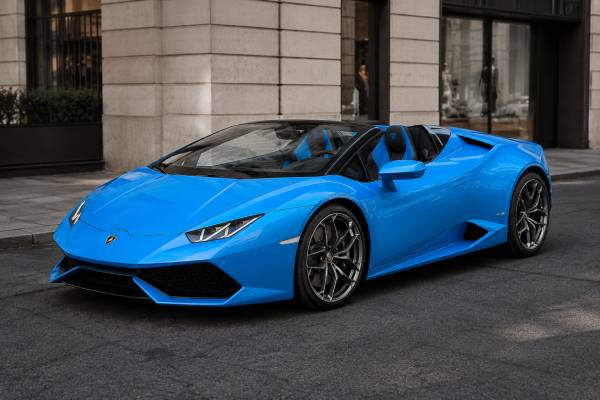
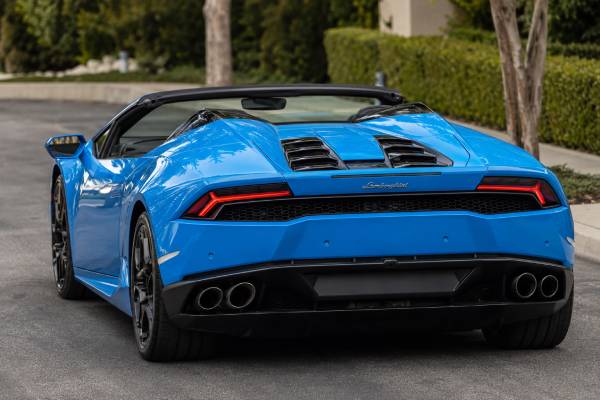
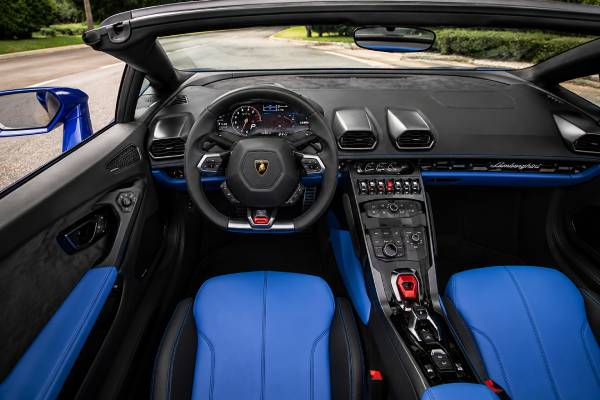
The Lamborghini Huracán LP 610-4 Spyder is the open-air version of the first all-wheel-drive Huracán, and its appeal is simple: it gives you the 610 hp naturally aspirated V10, the security of AWD, the speed of the coupe’s dual-clutch drivetrain, and a roof that drops the whole experience into the cabin. Built for the 2016–2019 model years before the Huracán EVO took over, it sits in an important place in Lamborghini’s modern V10 story. It is newer, quicker, and easier to use than the Gallardo Spyder it replaced, but it still keeps the hard-edged sound and response that made naturally aspirated Lamborghinis special. For buyers, the LP 610-4 Spyder is not just a used exotic convertible. It is a specification-sensitive supercar where options, service history, paintwork, carbon-ceramic brake condition, and originality can change the ownership risk as much as the purchase price.
Table of Contents
- Why the LP 610-4 Spyder Matters
- V10, AWD Chassis, and Key Specs
- Model Years, Options, and Identification
- Open-Top Design and Engineering Detail
- How the Huracán Spyder Drives
- Maintenance, Reliability, and Cost Risks
- Market Values and Buyer Checks
Why the LP 610-4 Spyder Matters
The LP 610-4 Spyder matters because it turned the first-generation Huracán into a usable open-top supercar without removing the core V10 character. It kept the coupe’s main hardware while adding a powered soft top, strengthened open body structure, and a more dramatic sound experience.
Lamborghini introduced the Huracán as the Gallardo replacement, and that context matters. The Gallardo had carried Lamborghini’s V10 business for a decade and became the brand’s volume foundation. The Huracán had to feel more modern without becoming ordinary. It brought a new carbon-fiber and aluminum hybrid chassis, a 7-speed dual-clutch gearbox, electronic all-wheel drive, a digital instrument display, full-LED lighting, and much cleaner cabin ergonomics.
The Spyder arrived as the emotional version of that formula. It was not the lightest or sharpest Huracán, but it gave owners the feature many wanted most: direct access to the V10 intake and exhaust note. Roof down, the LP 610-4 Spyder turns even normal road speeds into a more vivid event. Roof up, it remains a proper modern Lamborghini with climate control, a usable front trunk, stable high-speed manners, and enough refinement for weekend trips.
The name also explains the car. “LP” refers to the longitudinal rear-mid engine layout, “610” identifies the metric horsepower output, and “4” means four-wheel drive. In U.S. horsepower terms, the car is commonly listed at 602 hp, but Lamborghini’s 610 CV rating is the figure behind the badge.
For collectors and buyers, the LP 610-4 Spyder sits in a sweet spot. It is more analog in sound and styling than the later EVO, but still modern enough to use regularly. It also predates the hybrid replacement era, which gives the 5.2-liter naturally aspirated V10 more long-term emotional weight. It is not rare like a numbered limited edition, but it is important as one of the cleanest expressions of Lamborghini’s pre-EVO AWD Huracán platform.
V10, AWD Chassis, and Key Specs
The exact formula is a 5,204 cc naturally aspirated 90-degree V10, 7-speed Lamborghini Doppia Frizione dual-clutch transmission, electronically controlled all-wheel drive, and a dry weight of about 1,542 kg. The result is 0–100 km/h in 3.4 seconds and a claimed top speed of 324 km/h.
| Category | Specification |
|---|---|
| Model years covered | 2016–2019 |
| Body style | 2-seat convertible Spyder |
| Engine | 5.2L naturally aspirated 90-degree V10 |
| Displacement | 5,204 cc |
| Bore x stroke | 84.5 mm x 92.8 mm |
| Fuel system | Direct injection plus multi-point injection |
| Power | 610 CV / 449 kW at 8,250 rpm |
| Torque | 560 Nm at 6,500 rpm |
| Transmission | 7-speed Lamborghini Doppia Frizione dual-clutch |
| Drivetrain | Electronically controlled all-wheel drive |
| 0–100 km/h | 3.4 seconds |
| 0–200 km/h | 10.2 seconds |
| Top speed | 324 km/h / 201 mph |
The V10 is the centerpiece. It uses a long-stroke layout for strong midrange pull and a high-revving top end that defines the car’s personality. Unlike many newer supercars, there are no turbochargers muting response or sound. Throttle inputs feel immediate, and the engine’s character builds in a clear climb from sharp low-speed bark to hard metallic wail near the top of the rev range.
The dual injection system is important because it combines the efficiency and power advantages of direct injection with the cleaning and mixture-control benefits of port injection. Cylinder deactivation and stop-start appeared in the 2016 model-year Huracán family in some markets, mainly to reduce consumption during lighter use. Buyers should not mistake those systems for signs that the car is mild-mannered. They are efficiency tools around a very serious engine.
| Item | Specification |
|---|---|
| Chassis construction | Hybrid carbon-fiber and aluminum structure |
| Body panels | Primarily aluminum |
| Suspension | Aluminum double wishbones front and rear |
| Steering | Electromechanical power steering; optional Lamborghini Dynamic Steering |
| Front brakes | Carbon-ceramic discs, 380 x 38 mm, 6-piston calipers |
| Rear brakes | Carbon-ceramic discs, 356 x 32 mm, 4-piston calipers |
| Wheels | 20 x 8.5 front; 20 x 11 rear |
| Tires | 245/30 R20 front; 305/30 R20 rear |
| Wheelbase | 2,620 mm |
| Length | 4,459 mm |
| Width | 1,924 mm, or 2,236 mm including mirrors |
| Height | 1,180 mm |
| Dry weight | 1,542 kg |
| Fuel tank | 83 liters |
The Spyder is heavier than the coupe because open cars need added structure and roof hardware. That extra mass is real, but it does not change the basic personality. The car is still extremely quick, and the AWD system helps it put power down with less drama than a rear-drive exotic on cold or imperfect pavement.
Model Years, Options, and Identification
The LP 610-4 Spyder is the pre-EVO, all-wheel-drive Huracán convertible sold for 2016–2019, and buyers should separate it from the LP 580-2 Spyder, Performante Spyder, and later EVO Spyder. The badge, drivetrain, front and rear styling, brake equipment, and option list are the easiest ways to identify the right car.
The LP 610-4 Spyder shares its broad model family with several Huracán variants. The LP 580-2 Spyder is rear-wheel drive and lower powered. The Performante Spyder is lighter, more powerful, more track-focused, and equipped with Lamborghini’s active aerodynamic system. The EVO Spyder is the facelifted successor with revised electronics, styling, and a 640 CV engine in AWD form.
For a buyer, this distinction matters because market values, parts, insurance, and desirability vary by version. A clean LP 610-4 Spyder is desirable because it combines the original Huracán shape with AWD and the highest standard pre-EVO non-Performante output.
Important factory and personalization options
Options can change both desirability and usability. A plain car is still exciting, but the right factory equipment makes the Spyder easier to live with and easier to sell.
Look closely for:
- Front axle lifting system, one of the most useful options for real roads, steep driveways, and parking ramps.
- Magnetorheological dampers, often called MagneRide, which widen the comfort-to-sport range.
- Lamborghini Dynamic Steering, a variable-ratio system that some owners like and some prefer to avoid for purity.
- Transparent engine bonnet, prized because it displays the V10.
- Forged wheels or upgraded wheel finishes.
- Carbon-fiber exterior and interior trim.
- Sport seats or comfort seats, depending on buyer preference.
- Sensonum audio, useful for owners who tour the car with the roof up.
- Rear camera and parking sensors, valuable because rear visibility is limited.
- Contrast stitching, branding packages, Alcantara, and extended leather.
- Ad Personam paint and interior combinations.
Factory documentation is more important than a seller’s description. Ask for the original window sticker, build sheet, dealer option printout, service booklet, warranty history, and any Lamborghini dealer records. On a high-option car, these papers help prove that the specification is factory-original rather than added or changed later.
Production and authenticity notes
The LP 610-4 Spyder was not a numbered limited edition, so condition and specification matter more than a plaque. However, authenticity still counts. Original paint, factory wheels, original exhaust, correct carbon-ceramic brakes, unmodified electronics, and a clean body history are all value drivers.
Be careful with cars wearing aftermarket aero kits, exhaust systems, lowered suspension, non-factory wheels, or ECU tuning. Some upgrades may be reversible and well done, but they narrow the buyer pool and can complicate warranty, emissions, drivability, and future resale.
The best examples tend to have a clear pattern: low to moderate mileage, annual servicing, fresh tires, no accident history, complete factory documentation, and tasteful options. A rare color can help, but only if the rest of the car is equally strong.
Open-Top Design and Engineering Detail
The Spyder’s engineering goal was to keep the coupe’s speed and precision while adding a roof that disappears quickly and cleanly. Lamborghini achieved that with a lightweight electrohydraulic soft top, automatic roll-over protection, specific chassis reinforcement, and airflow management shaped around open-top driving.
The roof opens or closes in about 17 seconds and can operate at low road speeds. That detail matters in real use. You do not need to stop completely every time the weather changes or traffic moves. The soft top also preserves a classic Lamborghini Spyder profile more effectively than a bulky folding hardtop would have done.
The rear deck is different from the coupe because the roof mechanism has to live behind the cabin. The engine is less visually exposed unless the car has the transparent engine bonnet option, but the open roof more than makes up for that. With the roof down, the V10 is not background noise. It becomes the main event.
Aerodynamics are also more complicated in a Spyder. Removing the fixed roof changes airflow over the windshield, rear deck, and side intakes. Lamborghini reshaped the upper body and used pop-up rear safety bars behind the seats. The rear window can be lowered separately, which gives owners a useful trick: even with the roof closed, dropping the rear glass lets more V10 sound into the cabin.
The cockpit is modern for its era but still theatrical. The start button hides under a red flip cover, the mode selector sits on the steering wheel, and the 12.3-inch digital instrument display replaces traditional analog gauges. Many controls are grouped around the driver, which reinforces the aircraft-like feel without making normal tasks impossible.
The design language is based on sharp hexagonal forms, Y-shaped lighting themes, and short, tense surfaces. Compared with the Gallardo Spyder, the Huracán looks lower, wider, cleaner, and more technical. Compared with the later EVO, the LP 610-4 Spyder has a simpler and more original front-end look, which some collectors prefer.
The car’s emotional signature is the combination of shape and sound. Many modern supercars are faster, but few deliver the same mechanical clarity. The engine is directly behind the occupants, the roof can be removed from the experience, and the exhaust note changes character as the drive modes sharpen the throttle, gearshift, and stability settings.
How the Huracán Spyder Drives
The LP 610-4 Spyder drives like a fast, secure, open-top V10 Lamborghini rather than a delicate lightweight roadster. Its main strengths are traction, throttle response, noise, shift speed, braking power, and the ability to feel special without needing a racetrack.
In Strada mode, the car is surprisingly manageable. The dual-clutch gearbox shifts smoothly, the AWD system gives confidence, and the steering is light enough for urban use. The nose is low, so the front lift option is highly desirable, but the car is not difficult in the way older Lamborghinis could be. The driving position is low and dramatic, yet the basic controls are logical.
Sport mode is where the Spyder becomes more playful. The exhaust note hardens, gearshifts become more aggressive, and the stability system allows a livelier balance. The AWD system still keeps the car from feeling nervous, but throttle inputs matter. On cold tires or uneven roads, the rear can still move around before the front axle helps pull the car straight.
Corsa mode is the most focused setting. It suits fast roads and track use better than casual city driving because shifts are sharper, the throttle is more immediate, and the car expects smoother inputs. It is exciting, but not always the best mode for real roads. Many owners will enjoy Sport more often because it gives the most theater without making the car feel too rigid.
Acceleration, sound, and gearbox behavior
The engine is the reason to buy this car. It does not have the instant torque shove of a turbocharged rival, but it gives something more linear and more memorable. The pull builds as the revs rise, and the last third of the tachometer is where the car feels most alive.
The LDF dual-clutch gearbox suits the engine well. It shifts quickly enough to feel modern and dramatically enough to match the badge. At parking speeds, it can feel less fluid than a normal automatic, so smooth throttle control helps. During hard driving, it is one of the features that makes the Huracán feel much newer than the Gallardo.
Steering, braking, and road manners
The standard electromechanical steering is accurate and easy to place. Cars with Lamborghini Dynamic Steering can feel more variable because the ratio changes with speed and mode. Some drivers enjoy the agility; others prefer the more consistent feel of the standard setup. A test drive should include tight turns, fast sweepers, and highway speeds so the buyer can decide.
Carbon-ceramic brakes are standard and powerful. They resist fade well, but they need inspection because replacement costs are high. Street-driven cars may have plenty of life left even with age, while tracked cars can show heat wear, chipping, cracks, or heavy pad transfer.
The ride depends heavily on tires, wheel condition, and whether the car has adaptive dampers. A well-kept Spyder on fresh premium tires can feel composed and usable. A neglected one on old rubber can feel noisy, nervous, and harsher than it should.
Maintenance, Reliability, and Cost Risks
The LP 610-4 Spyder is generally a strong modern exotic when serviced correctly, but it is still a Lamborghini with expensive consumables and inspection-sensitive systems. The biggest risks are deferred maintenance, accident repairs, worn carbon-ceramic brakes, old tires, roof or lift issues, electronic faults, and poorly chosen modifications.
Annual servicing is important even when mileage is low. Exotic cars often suffer from sitting more than driving. Fluids age, batteries weaken, tires harden, seals dry, and electronic modules can become fussy if voltage is unstable. A car with 6,000 miles but six missed annual services can be a worse buy than a 20,000-mile car serviced on schedule by a Lamborghini dealer or recognized specialist.
Focus on these ownership areas:
- Engine oil and filter history, with invoices showing the correct service schedule.
- Gearbox service records and any drivability complaints.
- AWD system behavior during tight turns and hard acceleration.
- Coolant leaks, oil seepage, and evidence of overheating.
- Carbon-ceramic brake disc condition, pad life, and caliper finish.
- Tire age, brand, size, and matching set condition.
- Front lift operation, including speed of movement and warning lights.
- Soft-top operation, alignment, hydraulic behavior, and water sealing.
- Battery age, tender use, and low-voltage fault history.
- Infotainment, digital cluster, sensors, cameras, and warning messages.
- Exhaust valves, aftermarket exhaust wiring, and emissions readiness.
- Undercarriage scraping, front splitter damage, and jacking damage.
The carbon-ceramic brakes deserve special attention. Do not judge them only by mileage. A car used gently on the road may have excellent discs after many years, while a car used hard on track can consume pads and heat-cycle discs much faster. A proper inspection should measure disc condition using Lamborghini-approved methods, not just a quick visual glance.
Tires are another overlooked cost. The car uses wide 20-inch performance tires, and AWD cars should not run mismatched tire types or uneven rolling diameters. Old tires can ruin ride, steering, traction, and braking. Even with deep tread, tires older than about six years should be viewed critically on a 200 mph car.
The soft top is usually not a problem when used and maintained properly, but it must be checked carefully. It should raise and lower smoothly, latch cleanly, sit evenly, and seal against wind and water. Any hesitation, warning light, uneven movement, or hydraulic staining deserves specialist diagnosis before purchase.
Recall and campaign status should be checked by VIN. U.S. and Canadian Huracán models from the broader 2015–2020 range were involved in a headlight horizontal adjustment screw blanking-cap recall campaign. On any LP 610-4 Spyder, a Lamborghini dealer should confirm open campaigns, completed campaigns, software history, and warranty repairs.
Market Values and Buyer Checks
The LP 610-4 Spyder currently trades as a desirable used Lamborghini rather than a fully mature collector car. Good U.S. examples commonly sit around the low-$200,000 to mid-$200,000 range, while exceptional low-mileage, high-option, clean-history cars can ask more and higher-mileage or modified cars can fall below that band.
The biggest mistake is buying only on mileage or price. A cheap Huracán Spyder can become expensive quickly if it needs tires, annual service catch-up, brake work, paint correction, roof repair, lift repair, or electrical diagnosis. A higher-priced car with complete records and fresh consumables may be the better value.
| Value Factor | Why It Matters |
|---|---|
| Service history | Annual Lamborghini dealer or specialist records reduce mechanical uncertainty. |
| Originality | Factory exhaust, wheels, suspension, and electronics appeal to more buyers. |
| Options | Front lift, camera, MagneRide, carbon trim, and desirable interiors improve usability and resale. |
| Brake condition | Carbon-ceramic replacement cost can change the real purchase price dramatically. |
| Tire age | Old or mismatched tires are a safety issue and a negotiation point. |
| Paint and body history | Accident repairs, repainting, and panel mismatch reduce collector confidence. |
| Color and trim | Bright Lamborghini colors, tasteful Ad Personam builds, and clean contrast interiors can help. |
| Mileage | Low mileage helps, but only when supported by care, storage, and service records. |
Pre-purchase inspection priorities
A proper PPI should be done by a Lamborghini dealer or a specialist who works on Huracáns regularly. A normal luxury-car inspection is not enough.
Use this sequence:
- Confirm VIN, model, market, and campaign status.
- Review original build specification and option list.
- Compare paint meter readings across all panels.
- Inspect underbody panels, front splitter, rear diffuser, and suspension pickup areas.
- Scan all modules for current and stored faults.
- Test roof operation several times from cold.
- Test front lift, parking sensors, camera, infotainment, and cluster.
- Measure tire age and tread across all four corners.
- Inspect brake discs and pads using proper carbon-ceramic criteria.
- Road test in Strada, Sport, and Corsa after full warm-up.
- Check for clutch, gearbox, AWD, steering, and suspension irregularities.
- Review invoices for oil changes, brake fluid, batteries, tires, recalls, and software updates.
The best cars to seek are original, documented, regularly serviced, and bought from owners who understand exotic maintenance. The cars to avoid are those with missing service history, unexplained warning lights, cheap tires, aftermarket tuning, accident ambiguity, non-factory wiring, neglected roofs, or sellers who resist a specialist inspection.
Long-term collectability looks promising but not guaranteed. The Huracán line was successful and widely produced, so ordinary examples may not become rare soon. Still, the LP 610-4 Spyder has lasting appeal because it offers the original Huracán shape, AWD security, open-air drama, and the naturally aspirated V10 before Lamborghini’s hybrid era. Buy the best documented car you can justify, and treat condition as part of the price rather than a detail to fix later.
References
- Lamborghini Huracán Spyder – Technical Specifications, Pictures, Videos 2026
- Huracán (R)evolution: a story of technology and innovation 2024
- Part 573 Safety Recall Report 22V-081 2022 (Recall Database)
- Front headlight horizontal adjustment screw’s blanking cap 2022 (Recall Campaign)
- Lamborghini Huracán LP610-4 Spyder Market – CLASSIC.COM 2026
Disclaimer
This article is for informational purposes only and is not a substitute for professional diagnosis, repair, valuation, or inspection. Specifications, torque values, service intervals, recall status, procedures, software versions, and equipment can vary by VIN, market, production date, and option package. Always verify details against the vehicle’s official Lamborghini service documentation and have any purchase or repair decision reviewed by a qualified Lamborghini dealer or specialist.
If this guide helped you, please share it on Facebook, X/Twitter, or your favorite enthusiast community to support our work.