
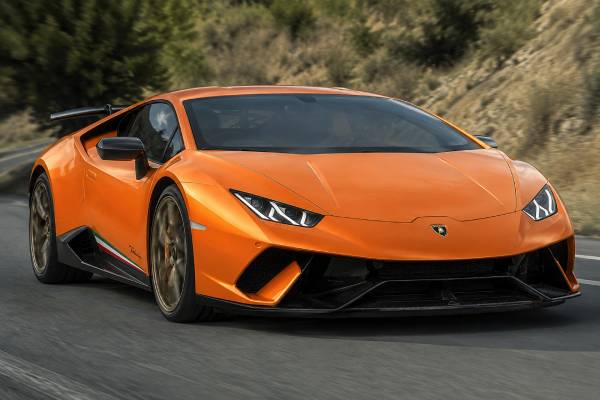
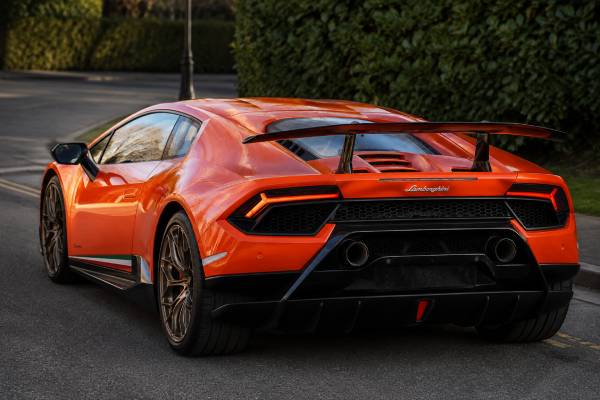
The Lamborghini Huracán Performante is the Huracán in its sharpest early form: lighter, louder, more aerodynamic, and far more serious on track than the standard LP 610-4. Built around Lamborghini’s 5.2-liter naturally aspirated V10, it added 640 PS, revised chassis tuning, Forged Composites® body and aero parts, and the ALA active-aerodynamics system that made the car famous. It was not a limited-number special in the traditional sense, but it was a focused, short-run performance model that sat above the regular Huracán before the EVO, STO, and Tecnica arrived.
For buyers, the Performante matters because it combines modern usability with old-school supercar theatre: no turbochargers, no hybrid system, a 8,000 rpm power peak, and a race-bred personality. For owners and collectors, the main priorities are condition, originality, options, service records, tire and brake life, recall completion, and proof that the car has not been abused on track without proper maintenance.
Table of Contents
- Why the Performante Still Matters
- V10 Specs and Chassis Data
- Production, Versions, and Factory Options
- ALA Aero, Design, and Special Details
- Road, Track, and V10 Character
- Maintenance, Reliability, and Inspection
- Market Values and Buying Guide
Why the Performante Still Matters
The Huracán Performante matters because it turned the first-generation Huracán from a fast, dramatic supercar into a serious track weapon. It kept the naturally aspirated V10 layout but changed the car’s weight, aero, steering, suspension tuning, sound, and attitude.
Lamborghini introduced the Huracán Performante at the 2017 Geneva Motor Show as the more focused version of the Huracán LP 610-4. The standard Huracán was already quick and usable, but it had a reputation for being slightly less delicate than a Ferrari 488 and slightly less technical than a McLaren 720S. The Performante answered that with a clear mission: less mass, more power, more downforce, faster responses, and a stronger connection to Lamborghini’s Super Trofeo racing program.
The model’s reputation came quickly because of its Nürburgring Nordschleife lap. Lamborghini reported a 6:52.01 time on the 20.6 km layout, driven before the public launch. That number made the car famous, but the lasting appeal is not only the lap time. The Performante proved that active aerodynamics could make a road car both slipperier on the straights and more planted in corners without using heavy hydraulic systems.
In the Huracán family, the Performante sits between the regular LP 610-4 and the later, more specialized STO. The STO is more track-biased and rear-wheel drive; the EVO is more rounded and updated; the Tecnica is a later rear-drive road-and-track blend. The Performante remains special because it is all-wheel drive, naturally aspirated, highly usable, and still aggressive enough to feel like a homologation-style car even though it was not built as one.
Collectors care about the Performante for several reasons:
- It represents one of Lamborghini’s last great naturally aspirated V10 track specials before hybridization reshaped the brand.
- It introduced the ALA active-aero system to the Huracán line.
- It uses Forged Composites® in visible exterior and interior parts, giving it a look that is distinct from woven carbon fiber.
- It has a short production window compared with the full Huracán line.
- It offers genuine event-car character without the usability penalties of some older Lamborghinis.
The Performante is also easier to live with than its styling suggests. It has a dual-clutch gearbox, front-axle lift was commonly optioned, the cabin is compact but not primitive, and the car can handle normal road driving when tire temperature, ride height, and parking clearance are respected. That mix of theatre and usability is why strong examples still attract buyers who could also afford newer supercars.
V10 Specs and Chassis Data
The key Performante specification is simple: a 5,204 cc naturally aspirated 90-degree V10, 640 PS, all-wheel drive, a 7-speed dual-clutch transmission, carbon-ceramic brakes, and active aerodynamics. The details matter because small differences in tires, options, and market ratings can change how the car feels and how it is valued.
| Item | Specification |
|---|---|
| Model | Lamborghini Huracán Performante LP 640-4 |
| Production era | 2017–2019, with most market listings treated as 2018–2019 model years |
| Engine | 5.2-liter naturally aspirated 90-degree V10 |
| Displacement | 5,204 cc |
| Fuel system | MPI multi-point injection plus DSI direct injection |
| Power | 640 PS at 8,000 rpm; often listed around 631 hp SAE in U.S. references |
| Torque | 600 Nm / 443 lb-ft at 6,500 rpm |
| Transmission | 7-speed Lamborghini Doppia Frizione dual-clutch automatic |
| Drivetrain | Electronically controlled all-wheel drive |
| Dry weight | About 1,382 kg / 3,047 lb |
| 0–100 km/h | 2.9 seconds |
| 0–200 km/h | 8.9 seconds |
| Top speed | More than 325 km/h / more than 201 mph |
The engine is not just a lightly retuned standard Huracán unit. Lamborghini revised the intake and exhaust flow, raised output, improved response, and gave the Performante a more urgent sound. The peak power arrives high in the rev range, which is central to the car’s personality. It rewards revs instead of relying on turbocharged mid-range punch.
The dual-injection system is important. Multi-point injection helps drivability and high-rpm fueling, while direct injection helps precision and combustion control. The result is a V10 that starts cleanly, idles reliably when healthy, and pulls hard from low revs, yet it still feels increasingly alive as it passes 5,000 rpm.
| Area | Specification |
|---|---|
| Chassis | Hybrid aluminum and carbon-fiber structure |
| Suspension | Double wishbones front and rear |
| Dampers | Standard sport setup; optional magnetorheological dampers on many cars |
| Steering | Electromechanical power steering; optional Lamborghini Dynamic Steering |
| Brakes | Carbon-ceramic discs with 6-piston front and 4-piston rear calipers |
| Brake disc size | 380 x 38 mm front; 356 x 32 mm rear |
| Wheels | 20-inch lightweight wheels, commonly Narvi design |
| Tires | 245/30 R20 front and 305/30 R20 rear, commonly Pirelli P Zero Corsa |
| Fuel tank | About 80 liters / 21.1 U.S. gallons |
The Performante’s numbers are still serious today, but its specification is most interesting as a package. The dry weight reduction of about 40 kg came from lightweight materials and model-specific parts rather than a stripped, uncomfortable cabin. The carbon-ceramic brakes are strong, but condition is expensive to correct. The tires are wide, temperature-sensitive, and central to the car’s handling, especially on cold or wet roads.
Production, Versions, and Factory Options
The Performante was offered as a coupe first, followed by the Performante Spyder, and both are important to the model story. The coupe is the purer collector and track choice, while the Spyder adds open-air V10 drama with a small weight and rigidity penalty.
The coupe is the version covered most directly by the LB724 topic because it is the car that launched the Performante name and made the Nürburgring record claim. The Spyder arrived later with the same basic engine output, all-wheel drive, dual-clutch gearbox, and ALA concept, but its open body changes the experience. It is still very fast, but the coupe is sharper, lighter, and usually preferred by buyers focused on the Performante’s engineering purpose.
Lamborghini did not publish Performante production in the way some limited-number brands do for numbered specials. That means buyers should be careful with listings that imply rarity without proof. The car is uncommon, but it is not a numbered limited edition like some collector specials. Value comes more from specification, condition, mileage, documentation, and originality than from a plaque number.
Important identification points
A real Performante should have model-specific bodywork, ALA aero hardware, a high-mounted rear exhaust layout, Forged Composites® exterior and interior details, Performante badging, and the correct LP 640-4 powertrain specification. A standard Huracán modified to look like one should be avoided unless it is priced and documented honestly as a conversion.
Useful checks include:
- VIN and build data matched to the selling dealer’s documentation.
- Lamborghini service history showing the correct model description.
- Original option list or window sticker when available.
- Correct wheels, seats, carbon parts, exhaust layout, and interior trim.
- Evidence that any replacement panels are genuine and correctly fitted.
- No unexplained gaps between mileage, service entries, and ownership records.
Factory options that affect desirability
Options matter because two Performantes can feel and sell differently even when mileage looks similar. Front-axle lift is one of the most valuable usability options because the nose is low and the front splitter is vulnerable. Magnetorheological suspension can make the car more adaptable on rough roads. Lamborghini Dynamic Steering is more divisive; some drivers like the quicker response, while others prefer the more consistent feel of the standard steering.
Commonly desirable options include:
- Front-axle lift system.
- Magnetorheological suspension.
- Lamborghini Dynamic Steering, depending on buyer preference.
- Carbon-fiber or Forged Composites® interior packages.
- Lightweight sport seats.
- Lamborghini Telemetry System.
- Sensonum premium audio.
- Transparent engine cover.
- Contrast stitching, Alcantara trim, and special-order interior colors.
- Exterior carbon and black trim packages.
- Center-lock-style wheel appearance or special wheel finishes, depending on market and specification.
Color also plays a large role. Loud Lamborghini colors such as Verde Mantis, Arancio Anthaeus, Giallo Inti, and Blu Cepheus can command attention, but conservative colors may appeal to buyers who want a cleaner long-term look. A rare color is valuable only when the rest of the car is right. A bold specification with poor records is still a risky car.
ALA Aero, Design, and Special Details
The Performante’s defining technology is ALA, short for Aerodinamica Lamborghini Attiva. It uses active flaps in the front and rear aero paths to reduce drag on straights or increase downforce in corners and braking zones.
ALA is clever because it avoids the visual drama of a large moving rear wing. Instead, the system manages airflow through channels. In low-drag mode, it helps the car accelerate and reach high speed. In high-downforce mode, it helps press the car into the road. The rear system can also work side to side, helping aero load distribution in corners. That aero-vectoring idea is one reason the Performante felt so advanced when it arrived.
The exterior design is not just a more aggressive bumper package. The front splitter, rear wing, rear diffuser, engine cover area, and exhaust layout all support the car’s purpose. The high-mounted exhaust exits are a major visual cue and also help free space around the diffuser. The Forged Composites® parts have a marbled, chopped-carbon look rather than the uniform weave of traditional carbon fiber. Some buyers love it because it is distinctive and tied to Lamborghini’s material story; others prefer conventional carbon. On a Performante, the forged look is part of the car’s identity.
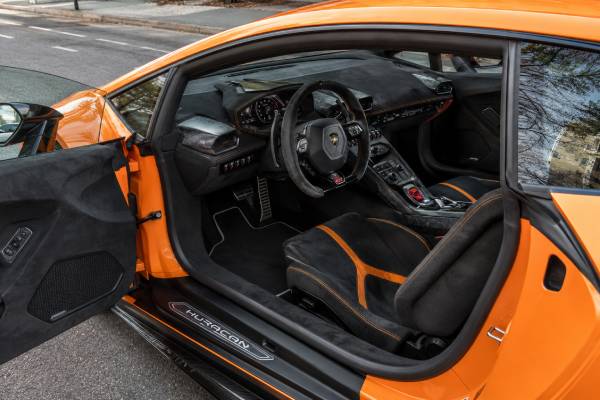
Inside, the Performante continues the lightweight theme without becoming bare. Alcantara covers much of the cabin, the seats can be carbon-fiber shells, and the instrument display has model-specific graphics. The cockpit still uses typical Huracán controls, including the red flip-up starter cover and ANIMA drive-mode selector. ANIMA changes the car’s powertrain, all-wheel-drive behavior, stability control, steering, damping where fitted, and aero strategy.
The three main drive modes are:
- Strada: the calmest setting, best for normal roads, traffic, and wet conditions.
- Sport: louder, looser, and more dramatic, with more emotional responses.
- Corsa: the most focused setting, built for track use, quicker shifts, and maximum performance logic.
Cooling is also part of the design. Mid-engine V10 cars need careful heat management, and the Performante’s side intakes, rear openings, engine-bay ventilation, and diffuser area all work together. Buyers should inspect these areas closely because damage, poor repairs, or missing underbody panels can affect more than appearance.
The sound is a major feature. Lamborghini fitted a lighter exhaust system with reduced back pressure, and the engine’s intake and exhaust changes make the Performante more vocal than a standard LP 610-4. It has a hard-edged metallic tone that rises into a sharp V10 wail near the top of the rev range. This is a large part of the car’s long-term appeal because later performance cars increasingly rely on turbocharging, particulate filters, hybrid assistance, or sound management.
Road, Track, and V10 Character
The Performante feels fast because it combines immediate throttle response, all-wheel-drive traction, short gearing, and a high-revving engine that keeps building. It is not just a numbers car; its main appeal is the way the chassis, aero, sound, and gearbox make speed feel dramatic.
On the road, the Performante is firmer and busier than a regular Huracán, especially on worn pavement. It is still usable, but it is not a soft grand tourer. The front end feels keen, the body stays tight, and the car encourages clean inputs. The all-wheel-drive system gives strong traction out of corners, but the wide tires need heat. In cold weather, the car can feel less secure than its drivetrain layout suggests.
The dual-clutch gearbox is one of the reasons the car works so well. In calm driving, it can shift smoothly enough for traffic. In Sport and Corsa, the shifts become faster and more forceful. The gearbox suits the V10 because it keeps the engine in the upper rev range without the delay of an older automated single-clutch transmission.
Steering feel depends partly on specification. Cars with standard electromechanical steering tend to feel more predictable. Cars with Lamborghini Dynamic Steering can feel very direct, especially in aggressive modes. Some drivers like the speed; others need time to trust the variable ratio. This is not a fault, but it is a reason to drive the exact car before buying.
On track, the Performante needs proper preparation. Tire pressure, tire age, brake condition, fluid age, wheel torque procedure, and cooling checks matter. The car is capable of sustained fast laps, but it is still an expensive road supercar, not a low-cost track tool. Carbon-ceramic brakes can tolerate serious use, yet discs and pads are costly. A car that has done many track days can still be a good buy if maintenance is documented; a car with hidden track use and cosmetic-only preparation is much riskier.
The driving position is low, forward visibility is better than the styling suggests, and rear visibility is limited. Parking sensors and camera function should be checked. The nose lift, if fitted, is highly useful in cities, steep driveways, and fuel stations. Without it, the front splitter needs extra caution.
The best way to understand the Performante is this: it is more precise than a standard Huracán, more secure than many rear-drive rivals, and more theatrical than most modern all-wheel-drive performance cars. It may not have the turbocharged shove of a McLaren or the mid-range torque of a Ferrari 488, but its instant response and sound make it feel special at every speed.
Maintenance, Reliability, and Inspection
A good Huracán Performante can be reliable by exotic-car standards, but maintenance must be treated as value protection, not just repair prevention. The expensive cars are usually the ones with weak records, old tires, worn brakes, questionable paintwork, or ignored software and recall work.
The V10 itself is generally strong when serviced correctly. It does not have the same clutch-wear anxiety as older single-clutch Lamborghinis, and the dual-clutch gearbox is more livable. Still, the car is complex. The all-wheel-drive system, active aero, lift system, magnetorheological dampers, electronic modules, carbon-ceramic brakes, and infotainment functions all need specialist inspection.
Annual service is the baseline for most cars, even if mileage is low. Low use does not stop brake fluid from absorbing moisture, tires from aging, batteries from weakening, seals from drying, or software campaigns from being missed. A Performante that has covered only a few thousand miles but sat on old tires and a weak battery should not be treated as automatically better than a regularly used, well-serviced example.
Common inspection priorities
Before purchase, a specialist should check:
- Engine oil leaks, coolant leaks, and evidence of overheating.
- Smooth cold start, idle quality, misfire history, and fault codes.
- Gearbox shift quality in low-speed traffic and full-throttle upshifts.
- Clutch adaptation data and gearbox service history where available.
- Front lift operation, including speed of lift and signs of hydraulic leaks.
- ALA flap function, warning lights, and damaged aero channels.
- Carbon-ceramic disc thickness, surface condition, edge wear, and pad life.
- Tire brand, date codes, tread depth, and matching specification.
- Suspension joints, damper leaks, alignment, and uneven tire wear.
- Underbody panels, splitter, diffuser, and jacking-point damage.
- Paint depth readings and signs of repaired front, rear, or side impact.
- Battery health and module communication.
- Recall and campaign completion by VIN.
Carbon-ceramic brakes deserve special attention. They can last a long time on road-driven cars, but track use, gravel damage, poor washing habits, and overheating can make replacement painful. Do not judge carbon-ceramic discs only by casual appearance. Proper measurement and specialist evaluation matter.
Tires also matter more than many buyers expect. Old or mismatched tires can make the car feel nervous, reduce braking performance, and hide alignment problems. The Performante was developed around serious Pirelli performance tires, and changing compound can affect steering, ride, and stability-system behavior.
Known ownership issues are often less about one catastrophic flaw and more about exotic-car complexity. Possible trouble areas include lift-system leaks, damper wear, battery-related module faults, infotainment glitches, parking camera issues, exhaust valve behavior, damaged undertrays, scraped splitters, and paint or carbon repairs after minor impacts. None automatically condemns a car, but each affects value.
Recall history should be checked carefully. U.S. recall documentation includes a rearview-camera software recall for certain 2018–2021 Huracán vehicles and headlight-related recalls affecting broader Huracán ranges. A seller should be able to show that the car’s VIN has no open safety campaigns. Even when a recall seems minor, completion matters because it shows the car has stayed in the authorized service network.
For owners, the safest approach is simple: keep the car on a battery maintainer, service it annually, warm it properly before high rpm, replace tires by age as well as tread, avoid cheap alignment work, and use technicians who know Lamborghini systems. A Performante maintained this way is far easier to sell and much more enjoyable to own.
Market Values and Buying Guide
The best Performante to buy is a documented, original, well-optioned car with clean paint history, fresh tires, healthy carbon-ceramic brakes, completed recalls, and a specialist inspection. Mileage matters, but condition and provenance matter more.
As of the current market, strong Performante coupes usually trade well above ordinary Huracán LP 610-4 values and below the most collectible ultra-low-mileage or rare-spec specials. Public market trackers show a broad range because mileage, color, country, taxes, auction venue, modifications, and condition vary widely. In the U.S., many retail asking prices for clean coupes sit in the high-$200,000 to high-$300,000 range, with exceptional ultra-low-mileage cars or unusual specifications sometimes higher. Auction results can be lower than dealer asking prices, especially for cars with higher mileage, modifications, accident history, or weaker presentation.
The Performante is not immune to depreciation, but it has a stronger floor than many standard modern supercars because it has a clear identity. It is the first Huracán track special, it has the ALA story, it has the naturally aspirated V10, and it arrived before the market became crowded with hybrid and turbocharged alternatives.
Value factors that matter most
| Factor | Why it matters |
|---|---|
| Original paint and panels | Accident repair, poor carbon fit, or repainting can reduce collector confidence. |
| Service history | Annual Lamborghini or specialist records protect value and reveal ownership quality. |
| Options | Lift, sport seats, telemetry, carbon trim, and strong color combinations affect demand. |
| Brake condition | Carbon-ceramic replacement costs can change the real purchase price dramatically. |
| Tires | Old tires are a safety issue and a sign of low-use neglect. |
| Track use | Not automatically bad, but it must be matched by fluid, brake, tire, and inspection records. |
| Modifications | Exhaust tunes, wraps, lowering, and aftermarket wheels can reduce originality and warranty confidence. |
| Recall completion | Open campaigns should be resolved before purchase or reflected in the deal terms. |
Avoid cars with vague stories. A seller who cannot explain paintwork, missing records, non-original parts, dead batteries, warning lights, or mismatched tires is asking the buyer to take the risk. Also be careful with heavily wrapped cars. A wrap can protect paint, but it can also hide paint mismatch, chips, poor repairs, or panel-edge damage. A pre-purchase inspection should include the underside and front aero, not just paint readings on visible panels.
Seek cars that feel coherent. The best examples usually have matching premium tires, clean undertrays, no warning lights, smooth gearbox behavior, strong service documentation, factory parts, two keys, books, charging equipment, and a seller who understands the car. For a collector, originality beats flashy modifications. For an owner-driver, a few reversible upgrades may be acceptable, but the purchase price should reflect them.
Long-term collectability looks promising, not guaranteed. The Performante has the right ingredients: naturally aspirated V10, active aero significance, strong motorsport flavor, dramatic design, and a short production era. The risks are also clear: it is a modern electronic supercar, maintenance is expensive, and future values will favor the cleanest, most original cars. Buy the example you would be proud to keep, not the cheapest one you can find.
References
- Lamborghini Huracán Performante – Technical Specifications, Pictures, Videos 2026 (Manufacturer Specifications)
- Pre-Owned Lamborghini Huracán Performante | Lamborghini.com 2026 (Manufacturer Model Guide)
- Part 573 Safety Recall Report 21V-466 2021 (Recall Database)
- Part 573 Safety Recall Report 23V-826 2023 (Recall Database)
- Lamborghini Huracán LP640-4 Performante Market – CLASSIC.COM 2026 (Market Data)
Disclaimer
This article is for informational purposes only and is not a substitute for professional diagnosis, inspection, repair, or valuation. Specifications, torque values, maintenance intervals, software updates, recall status, and service procedures can vary by VIN, market, production date, and equipment. Always verify details against the official Lamborghini service documentation for the specific vehicle and consult a qualified Lamborghini specialist before buying, servicing, or modifying a Huracán Performante.
If this guide helped you, please share it on Facebook, X/Twitter, or your favorite car community to support our work.