
The Lamborghini Huracán Tecnica 60th Anniversary Edition is a rare celebration model built around one of Lamborghini’s most emotional modern powertrains: the naturally aspirated 5.2-liter V10. It is not a new mechanical version of the Huracán Tecnica, but a factory-limited anniversary specification with special colors, trim, badging, and collector appeal layered over the rear-wheel-drive 640 CV Tecnica platform. That distinction matters. The value is in the combination of the Tecnica’s balanced road-and-track character, the end-of-era V10 context, and the documented “1 of 60” anniversary identity.
For buyers, the important question is not whether it is fast. It is. The better question is whether the car is original, correctly documented, lightly and properly used, and maintained by Lamborghini specialists. For enthusiasts, its importance is simpler: it captures the Huracán at its most usable, naturally aspirated, rear-driven, and visually sharpened moment.
Table of Contents
- Why This Anniversary Tecnica Matters
- V10 Specs, Chassis, and Performance Data
- Production Identity and Factory Equipment
- Design, Aero, and Tecnica Engineering
- Road, Track, and V10 Driving Character
- Maintenance Risks and Specialist Care
- Market Value and Buying Checklist
Why This Anniversary Tecnica Matters
The Huracán Tecnica 60th Anniversary Edition matters because it combines the final chapter of Lamborghini’s naturally aspirated V10 era with a very small factory celebration run. It sits in a sweet spot between the more road-focused Huracán EVO RWD and the harder, louder, more track-shaped Huracán STO.
Lamborghini introduced the standard Huracán Tecnica in 2022 as a bridge model. The formula was simple but effective: take the 640 CV V10 character associated with the STO, keep rear-wheel drive, add rear-wheel steering, refine the aero, and give the car enough comfort and visibility for normal road use. The 60th Anniversary Edition, revealed in 2023 as part of Lamborghini’s 60-year celebration, added rarity and a fixed commemorative identity to that already desirable base.
The anniversary context is important. Lamborghini did not create one generic Huracán anniversary model. It created limited editions for three different members of the V10 range: Huracán STO, Huracán Tecnica, and Huracán EVO Spyder. Each model was limited to 60 units, with two special configurations and unique anniversary details. The Tecnica version is the one for buyers who want the sharpness of a rear-drive performance model without the more uncompromising focus of the STO.
The Tecnica’s place in the Huracán family is also unusually clear. The early Huracán LP 610-4 introduced the modern Lamborghini V10 to a wide global audience. The Performante proved the platform could produce serious lap-time performance. The EVO added updated electronics and styling. The STO turned the Huracán into a road-legal track special. The Tecnica then took the best emotional pieces of that late-generation engineering and made them easier to use.
That is why the 60th Anniversary Edition attracts collectors rather than only drivers. It represents:
- a factory-limited 60-unit anniversary model;
- a naturally aspirated, non-hybrid Lamborghini V10;
- rear-wheel-drive handling rather than all-wheel-drive security;
- a late-production Huracán specification;
- a usable alternative to the STO;
- commemorative details that are visible and verifiable.
The “LB724” identifier is best treated as a registry or listing-style model identifier rather than a widely used public Lamborghini platform code. Lamborghini’s public materials identify the car primarily as a Huracán Tecnica 60th Anniversary Edition. For buying and documentation, the VIN, Lamborghini build record, original window sticker or invoice, warranty record, and anniversary-specific trim are more important than shorthand codes used in databases.
The car’s reputation today is already shaped by scarcity and timing. Lamborghini has moved into a hybrid era, and the Huracán’s successor uses a very different powertrain philosophy. That makes the 60th Anniversary Tecnica appealing not because it is the most extreme Huracán ever made, but because it is one of the clearest end-of-era V10 collector specifications.
V10 Specs, Chassis, and Performance Data
The 60th Anniversary Edition uses the same core mechanical specification as the Huracán Tecnica: a 5,204 cc naturally aspirated V10, 7-speed dual-clutch transmission, rear-wheel drive, rear-wheel steering, carbon-ceramic brakes, and magnetorheological suspension. Its special-edition status changes the specification and appearance, not the published performance numbers.
| Category | Specification |
|---|---|
| Model basis | Huracán Tecnica coupe |
| Model year focus | 2023 anniversary edition |
| Engine | Naturally aspirated V10 |
| Displacement | 5,204 cc |
| Bore x stroke | 84.5 x 92.8 mm |
| Compression ratio | 12.7:1 |
| Maximum output | 470 kW / 640 CV at 8,000 rpm |
| Maximum torque | 565 Nm at 6,500 rpm |
| Lubrication | Dry sump |
| Transmission | 7-speed LDF dual-clutch gearbox |
| Drivetrain | Rear-wheel drive |
| Chassis | Hybrid aluminum and carbon-fiber structure |
| Body | Aluminum and synthetic material |
The numbers tell only part of the story. The Tecnica is not tuned to feel like a torque-heavy turbocharged supercar. It builds speed through revs, throttle precision, and a long, hard charge to the upper end of the tachometer. Peak power arrives at 8,000 rpm, which gives the car its urgent, mechanical character.
| Item | Factory data |
|---|---|
| Top speed | 325 km/h |
| 0–100 km/h | 3.2 seconds |
| 0–200 km/h | 9.1 seconds |
| 100–0 km/h braking | 31.5 meters |
| Front wheels | 8.5J x 20 |
| Rear wheels | 11J x 20 |
| Front tires | 245/30 R20 Bridgestone Potenza Sport |
| Rear tires | 305/30 R20 Bridgestone Potenza Sport |
| Front brakes | 380 x 38 mm carbon-ceramic |
| Rear brakes | 356 x 32 mm carbon-ceramic |
| Length | 4,567 mm |
| Width, excluding mirrors | 1,933 mm |
| Width, including mirrors | 2,236 mm |
| Height | 1,165 mm |
| Wheelbase | 2,620 mm |
| Dry weight | 1,379 kg |
| Weight distribution | 41% front / 59% rear |
| Seats | 2 |
The control systems are a major part of the specification. The Tecnica uses Lamborghini Dinamica Veicolo Integrata, usually shortened to LDVI, as the central brain for chassis behavior. It coordinates steering, rear-wheel steering, traction control, stability control, throttle behavior, gearbox response, and damping logic based on the selected drive mode and the driver’s inputs.
The three main drive modes are Strada, Sport, and Corsa. Strada is the calmest setting and suits street driving, rain, traffic, and long trips. Sport allows more rotation and a more playful rear axle. Corsa tightens the car for precision driving and track use. This is a key reason the Tecnica feels more versatile than its raw performance numbers suggest.
Production Identity and Factory Equipment
The 60th Anniversary Tecnica was limited to 60 units, and that number is central to its collector identity. A standard Tecnica can be judged mostly by condition, color, mileage, and options; the anniversary model also needs proof that it is one of the factory-built commemorative cars.
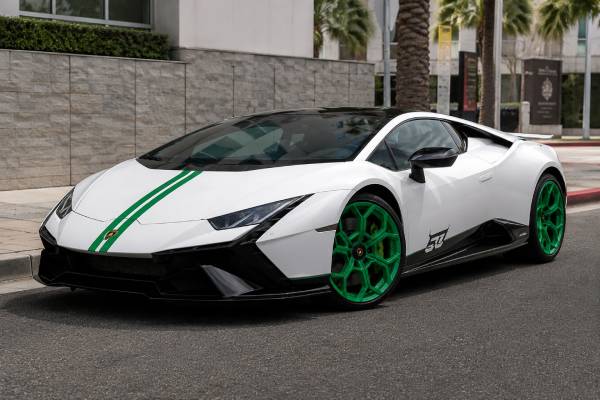
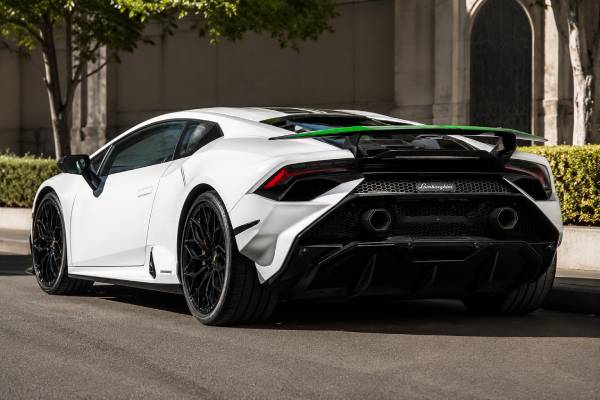
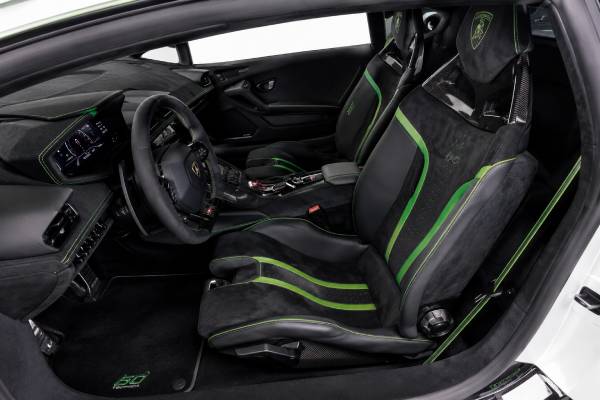
Lamborghini gave the anniversary Huracáns two special configurations per model. The Tecnica editions used dedicated liveries, anniversary badging, a carbon-fiber “1 of 60” plate, a “60th” logo painted on the doors, and matching embroidery on the seats. These details are not cosmetic afterthoughts in the collector market. They are the quick visual and documentary clues that separate an authentic anniversary car from a standard Tecnica customized to resemble one.
For the Tecnica 60th Anniversary Edition, the known anniversary themes include special color combinations such as grey-and-black with red accents and another configuration using a more vivid green-themed treatment. Market listings and registry records show cars in colors such as Grigio Telesto and Verde Viper, but buyers should not rely on color alone because Lamborghini’s Ad Personam program allows deep personalization across the Huracán range.
The strongest identification package includes:
- original Lamborghini sales invoice or order sheet;
- window sticker or market-equivalent factory specification sheet;
- VIN matched to Lamborghini dealer or factory records;
- “1 of 60” carbon-fiber plate;
- “60th” door logo;
- seat embroidery matching the anniversary theme;
- correct special-edition livery elements;
- original wheels, brake caliper finish, interior trim, and carbon details;
- service records from authorized Lamborghini dealers or recognized specialists.
The standard Tecnica already offered broad personalization. Wheel choices included 20-inch designs such as Aesir, Narvi, Damiso, and Lodge, with finishes ranging from graphite grey to matte black, diamond-cut, bronze, titanium matt, and gold finishes depending on option tier. Brake calipers were also configurable, with standard silver and optional or Ad Personam colors such as black, yellow, green, red, orange, blue, and Verde Scandal.
Interior specification is especially important on anniversary cars. The Tecnica cabin combines Alcantara, leather, model-specific stitching, laser-engraved trims on sport seats, and driver-focused displays. Anniversary embroidery and color accents should look factory-integrated, not added later. On a low-production Lamborghini, trim quality, stitch color, seat pattern, and the presence of original factory documentation can affect confidence and value.
There are no meaningful mechanical series changes within the 2023 anniversary edition itself because this is a limited decorative and commemorative run based on the existing Tecnica mechanical package. The differences that matter most are individual specification, market destination, mileage, documentation, and whether the car still carries the exact factory parts and finishes it had when delivered.
Collectors should also separate three categories:
- A true Huracán Tecnica 60th Anniversary Edition with documentation.
- A standard Huracán Tecnica with Ad Personam colors or anniversary-style trim.
- A dealer or owner-customized car with cosmetic additions but no factory anniversary identity.
Only the first category carries the limited-edition collector case.
Design, Aero, and Tecnica Engineering
The Tecnica’s design is functional first: it sharpens the Huracán shape to improve downforce, cooling, stability, and braking consistency without turning the car into an STO. The 60th Anniversary Edition adds visual drama, but the underlying body changes are the reason the Tecnica feels distinct from an EVO RWD.
The front end is one of the clearest identifiers. Lamborghini gave the Tecnica a sharper nose, revised bumper, optimized air inlets, and a new front splitter. The look is more aggressive than the EVO but less race-car-like than the STO. The design also stretches the visual length of the car, giving it a lower and more purposeful stance.
Aerodynamically, the Tecnica uses new underbody deflectors, a revised diffuser with central blowing, an optimized engine air inlet in the rear fender area, and a fixed rear wing. These elements are there to improve aero balance rather than simply create a bigger visual statement. The aim is stability during braking, more confidence at speed, and stronger cornering support.
Cooling is another key part of the engineering. The front and rear brake-cooling system was redesigned to push airflow directly into each brake disc. That matters because carbon-ceramic brakes work best when temperature is controlled properly. On road, this helps consistency. On track, it helps resist fade and protects the brake fluid, calipers, and disc assemblies from repeated high-energy stops.
The engine bay is part of the theater. A carbon-fiber and glass engine hood frames the naturally aspirated V10 as a visual centerpiece. This is a very Lamborghini idea: the mechanical object is not hidden. It is part of the car’s identity, sound, heat, smell, and event.
The chassis combines aluminum and carbon fiber, while the body uses aluminum and synthetic material. That hybrid construction helps keep the car stiff and light enough to respond sharply, without making it fragile in normal use. The Tecnica’s published dry weight of 1,379 kg gives it a strong power-to-weight ratio, but the more important real-world result is how quickly the car reacts to steering and throttle inputs.
The Tecnica also uses rear-wheel steering. At low speeds, the rear wheels can steer opposite the front wheels to improve agility and make the car feel smaller. At higher speeds, they can steer in phase with the front wheels to improve stability. The system is subtle when working correctly, but it is a major reason the Tecnica can feel both alert on a tight road and planted on a fast one.
Why the sound is part of the engineering
The V10 sound is not only emotional branding. It is also feedback. Because the engine is naturally aspirated, sound, vibration, throttle opening, and rpm rise together in a direct way. A turbocharged engine can deliver huge midrange force, but it often filters the relationship between pedal movement and engine response. The Tecnica’s V10 keeps that connection clear.
The exhaust note hardens as the revs climb. At lower rpm, the car can be managed in town without constant drama. At high rpm, it becomes sharp, metallic, and urgent. That dual personality is one of the reasons the Tecnica is easier to live with than the STO but still feels special every time the engine is used properly.
Road, Track, and V10 Driving Character
The Tecnica 60th Anniversary Edition drives like a late-generation Huracán tuned for involvement rather than maximum security. It is fast enough to feel serious anywhere, but its real appeal is the way the rear-drive chassis, high-revving V10, direct steering, and chassis electronics work together.
Acceleration is immediate but not lazy. The V10 does not rely on low-rpm turbo boost, so the driver gets rewarded for using the full rev range. Below the midrange, the car is responsive and manageable. Above that, it becomes increasingly urgent until it reaches peak power near the top of the tachometer. That shape makes the car feel alive rather than simply explosive.
The LDF dual-clutch gearbox suits this character well. In calm settings, it can shift smoothly enough for daily driving. In the sharper modes, shifts become quicker and more forceful, especially under load. Manual paddle use is part of the experience because it allows the driver to hold the V10 near its best operating range.
Steering is quick and direct. This can surprise drivers coming from larger grand tourers because small inputs matter. The rear-wheel steering adds agility, but the Tecnica is not nervous when aligned correctly and wearing good tires. Poor tire condition, old rubber, uneven wear, or incorrect alignment can make the car feel sharper than intended, so driving impressions should always be judged after confirming the basics.
The ride is firm but not punishing by modern supercar standards. Magnetorheological damping helps the car handle broken pavement better than its low stance suggests, although tire sidewalls are short and potholes still deserve respect. The front lift system, when fitted, is valuable for steep driveways, ramps, and urban use.
On a mountain road, the Tecnica is more playful than an all-wheel-drive EVO and less intimidating than an STO. Sport mode lets the rear axle contribute more to cornering attitude, while Corsa is better suited to clean pavement and high-speed precision. The car rewards smooth hands and decisive throttle use. It does not need to be driven at the limit to feel special.
On track, the Tecnica has enough brake, tire, and chassis capability for serious sessions, but it is not a stripped track tool. The STO remains the more focused car for repeated circuit use. The Tecnica is better understood as a car that can handle track days while still being enjoyable on road trips, city drives, and weekend use.
Tire temperature matters. The Bridgestone Potenza Sport setup gives strong response when warm and in good condition, but cold tires reduce grip and can make the rear of the car feel lighter under throttle. Track-focused Potenza Race tires, where fitted or chosen, can increase dry grip but are less suitable for cold, wet, or casual driving. A buyer should always check not only tread depth but tire age, heat-cycle history, and whether all four tires match the intended use.
Visibility and usability are better than the styling suggests. The car is low and wide, so urban width is always part of the experience, but the cabin is not as claustrophobic as some exotic cars. The driving position is focused, and the cockpit keeps the start button, drive mode selector, paddles, and key controls within easy reach.
Maintenance Risks and Specialist Care
The Huracán Tecnica is a robust modern exotic when maintained correctly, but ownership risk is concentrated in expensive wear items, specialist labor, electronics, carbon-ceramic brake condition, tires, accident history, and documentation gaps. A low-mileage anniversary car can still be a poor buy if it has skipped annual servicing, sat on old tires, suffered paintwork, or received undocumented modifications.
The V10 itself has a strong reputation compared with many exotic engines, but it still needs correct servicing, high-quality fluids, and regular use. Cars stored for long periods can develop battery, tire, seal, and fuel-related problems. A collector car that has covered very few miles should be inspected more carefully, not less carefully, because inactivity can hide issues until the car is driven.
Key maintenance and inspection areas include:
- annual service history, even on very low-mileage cars;
- oil service records and correct fluids;
- gearbox service status and shift quality;
- coolant system condition and signs of leaks;
- tire age, brand, size, and heat-cycle history;
- carbon-ceramic brake disc condition and measured wear;
- front lift operation, if equipped;
- suspension damping behavior;
- rear-wheel-steering fault codes or warning lights;
- battery health and charging history;
- infotainment and software update status;
- body panel alignment and paint meter readings;
- underbody damage from ramps, curbs, or transport.
Carbon-ceramic brakes deserve special attention. They are long-lasting in normal road use but very expensive if damaged, overheated, chipped, or worn from track use. Visual inspection alone is not enough. A specialist should check the disc surfaces, edges, pads, calipers, and any available wear data or service notes. Track use does not automatically make a car bad, but undisclosed track use is a risk.
Tires are another major ownership item. On a supercar this powerful, tire age matters almost as much as tread depth. A car on old, hardened tires may feel skittish, brake poorly, or trigger stability systems earlier. Replacement should use the correct sizes and a tire approved or well matched for the Tecnica’s chassis.
Electronics are part of the modern Lamborghini ownership picture. LDVI, rear-wheel steering, infotainment, connected services, drive modes, damping control, and safety systems depend on modules and software being healthy. A pre-purchase inspection should include a full diagnostic scan, not just a test drive.
The U.S. recall environment also matters. A 2023 NHTSA recall covering certain 2015–2024 Huracán vehicles involved infotainment software that could allow headlight functions not configured according to U.S. market requirements. The remedy was a software update to deactivate the affected headlamp functions. Any U.S.-market car should be checked by VIN for completed recall work.
Originality is especially important on the 60th Anniversary Edition. Aftermarket exhausts, wraps, wheel changes, lowered suspension, non-factory carbon trim, or altered badging may reduce collector confidence unless all original parts are included and the work is fully reversible. Some owners want louder exhausts or more aggressive looks, but the safest long-term collector position is a car that remains as Lamborghini delivered it.
Service records to insist on
A strong file should show more than stamps. The best records include dated invoices, mileage, dealer or specialist name, parts used, software updates, recall completion, brake and tire notes, battery replacement or tender use, and any warranty repairs. For a 60-unit anniversary car, the service history is part of the provenance.
Market Value and Buying Checklist
The 60th Anniversary Tecnica sits above the ordinary used Tecnica market because of rarity, timing, and factory identity, but actual value depends heavily on mileage, market region, specification, tax status, condition, and documentation. Public asking prices and limited auction data show a wide spread, so buyers should treat any single advertised price as a data point, not a market rule.
The normal Huracán Tecnica market is already supported by the car’s end-of-V10 appeal. The anniversary version adds a scarcity premium. In Europe, advertised anniversary cars have appeared from the high €200,000s to nearly €500,000 depending on mileage, location, dealer, tax status, and specification. A public RM Sotheby’s sale of a 2024 Tecnica 60th Anniversary Edition at CHF365,000 shows that strong collector-grade examples can sit well above ordinary driver-grade Tecnicas. U.S. asking prices have also appeared above $400,000 for very rare anniversary examples.
That does not mean every 60th Anniversary Tecnica is automatically worth a large premium. The market will punish uncertainty. A car missing proof of anniversary status, showing repaint work, carrying non-original parts, or lacking service records should be priced very differently from a one-owner, low-mileage, factory-documented example.
| Value factor | Why it matters |
|---|---|
| Factory documentation | Confirms true anniversary identity and original specification. |
| Mileage | Low mileage supports collector value, but inactivity still needs inspection. |
| Original paint and trim | Repaint, wrap damage, or missing anniversary details reduce confidence. |
| Service history | Shows the car was cared for, not only stored. |
| Color configuration | Desirable anniversary liveries and strong Ad Personam specs can help value. |
| Brake and tire condition | Major cost items that reveal use pattern and maintenance quality. |
| Ownership history | One-owner or known-collector cars are easier to trust. |
| Warranty and recall status | Completed campaigns and active coverage reduce risk. |
The best examples to seek are complete, original, low-mileage cars with a clean title, no accident history, Lamborghini dealer records, the anniversary plate and logos intact, original books, keys, charger, accessories, and a clear build record. A car that has been stored on a battery tender, serviced annually, and used gently enough to keep systems healthy is often more attractive than an ultra-low-mileage car that has barely moved.
Avoid cars with unclear import status, missing documentation, inconsistent trim, obvious repaint, underbody damage, non-original wheels without the factory set, tuned engine software, deleted emissions equipment, or a seller who cannot explain the car’s service and ownership history. Also be cautious with cars advertised as “1 of 60 style” or “anniversary specification” unless the paperwork proves factory origin.
A proper pre-purchase inspection should include:
- Verify VIN, title, market origin, and factory build record.
- Confirm anniversary edition identity through factory details and documents.
- Check service history against time and mileage, not mileage alone.
- Scan all control modules for stored or cleared faults.
- Inspect paint depth, panel gaps, glass, carbon trim, and underbody.
- Measure or evaluate carbon-ceramic brake condition.
- Check tires for age, specification, tread, and sidewall condition.
- Confirm front lift, rear-wheel steering, drive modes, infotainment, and connected systems work.
- Check recall completion by VIN in the relevant market.
- Review warranty transferability and any extended coverage.
Long-term collectability looks strong, but not because this is the most radical Huracán. Its case rests on scarcity, factory commemorative status, and the emotional pull of the naturally aspirated V10. The STO may remain the harder-edged driver’s collectible, and the Sterrato may remain the oddball off-road icon, but the 60th Anniversary Tecnica has a clear identity of its own: the rare, balanced, usable, rear-drive celebration car at the end of Lamborghini’s non-hybrid V10 era.
References
- Three Limited Editions for the 60th Anniversary 2023 (Manufacturer Publication)
- Lamborghini Event at Milan Design Week 2023 (Manufacturer Publication)
- Lamborghini Huracán Tecnica | Lamborghini.com 2024 (Manufacturer Specifications)
- Lamborghini Huracán Tecnica_EN_WCAG 2024 (Brochure)
- Part 573 Safety Recall Report 23V-826 2023 (Recall Database)
Disclaimer
This article is for informational purposes only and is not a substitute for professional diagnosis, service, repair, valuation, or pre-purchase inspection. Specifications, torque values, service intervals, software status, recall applicability, and procedures can vary by VIN, market, model year, equipment, and later factory updates. Always verify details against the official Lamborghini service documentation, factory records, and a qualified Lamborghini dealer or specialist.
If this guide helped you, please consider sharing it on Facebook, X/Twitter, or your favorite automotive community to support our work.