
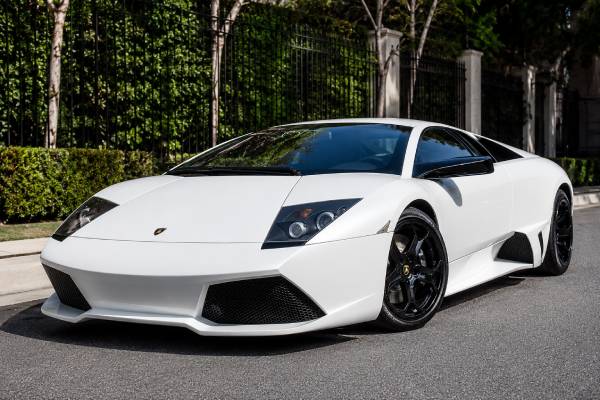
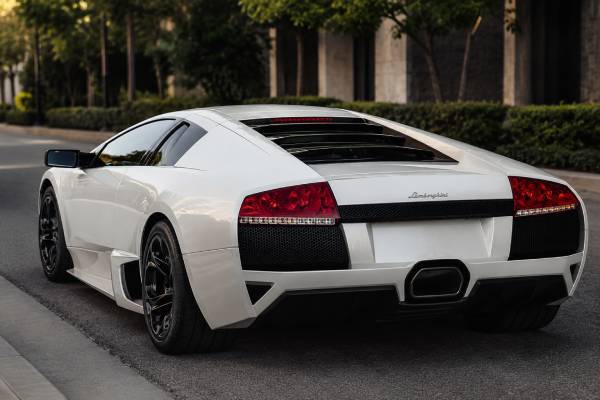
The Lamborghini Murciélago LP 640 Versace is a rare fashion-house version of Lamborghini’s V12 flagship, built around the sharper, more powerful LP 640 update and finished through Lamborghini’s Ad Personam program with Versace-specific trim. It is not a separate mechanical model in the way the later SuperVeloce is; its value comes from the combination of a 6.5-liter naturally aspirated V12, scissor-door Murciélago drama, numbered special-edition identity, and a highly recognizable Nero/Bianco Versace interior theme.
For buyers and collectors, the important point is simple: condition and documentation matter more than the badge alone. A correct Versace car should have its numbered plaque, special upholstery, color-matched details, and supporting paperwork. Mechanically, it should be judged like any LP 640: clutch wear, brake condition, cooling health, lift-system function, and service history can change the ownership experience completely.
Table of Contents
- Why the LP 640 Versace Matters
- V12 Specs and Chassis Data
- Production Numbers, Colors, and Options
- Versace Design and LP 640 Engineering Details
- How the Versace LP 640 Drives
- Ownership Risks, Service Needs, and Repairs
- Values, Inspection Priorities, and Buying Advice
Why the LP 640 Versace Matters
The Murciélago LP 640 Versace matters because it joins Lamborghini’s most theatrical modern V12 platform with a documented Italian fashion collaboration. It is collectible for its rarity and presentation, but it remains most desirable when its special-edition details are complete and its LP 640 mechanical condition is strong.
The Murciélago arrived in 2001 as Lamborghini’s first new V12 flagship of the Audi era. That matters because the car had to replace the Diablo while proving that Lamborghini could build a more usable, better-developed, and still outrageous supercar. The original Murciélago kept the traditional Lamborghini recipe: mid-mounted V12, scissor doors, wide stance, low roofline, and a shape that looked more like an event than a normal car.
The LP 640 update moved the model forward in 2006. “LP” stands for Longitudinale Posteriore, meaning the engine is mounted longitudinally behind the cabin. “640” refers to the factory rating of 640 metric horsepower. Compared with the earlier 6.2-liter Murciélago, the LP 640 brought more displacement, more power, revised bodywork, updated cooling, a single central exhaust outlet, sharper electronics, and improved transmission calibration.
The Versace edition added another layer. Lamborghini Ad Personam and Versace worked together on a special interior and exterior treatment using black-and-white themes, Versace Greca-pattern leather work, and numbered identification. In collector terms, it sits in a different lane from the LP 670-4 SuperVeloce. The SV is the harder, lighter, track-focused Murciélago. The Versace is the couture collector version: mechanically close to a standard LP 640, but visually and historically tied to a specific design partnership.
That distinction helps explain the car’s appeal today. Enthusiasts like it because it is still a naturally aspirated V12 Murciélago, not a softened fashion display. Buyers like it because the number of known cars is tiny, the specification is instantly recognizable, and the best examples carry accessories, plaque, books, service records, and original trim that ordinary LP 640s do not have.
Its place in Lamborghini history is also helped by timing. The LP 640 belongs to the last generation before the Aventador, and the Murciélago line was among the final Lamborghinis to carry the old-school V12 character without hybrid assistance, turbocharging, or heavy digital filtering. The Versace version takes that analog appeal and adds a rare factory-backed design story.
V12 Specs and Chassis Data
The LP 640 Versace uses the same core hardware as the standard Murciélago LP 640: a 6.5-liter naturally aspirated V12, permanent all-wheel drive, and either LP 640 manual or E-Gear architecture depending on the individual car’s specification. Most Versace examples discussed in auction records are E-Gear cars, so gearbox verification is essential.
| Category | Specification |
|---|---|
| Model code | L147 Murciélago platform |
| Engine | 6.5-liter naturally aspirated 60-degree V12 |
| Displacement | 6,496 cc |
| Bore x stroke | 88 mm x 89 mm |
| Power | 640 CV/PS at 8,000 rpm, commonly described as 640 hp |
| Torque | 660 Nm at 6,000 rpm |
| Induction | Naturally aspirated with electronic engine management |
| Transmission | 6-speed manual or 6-speed E-Gear automated manual, depending on car |
| Drivetrain | Permanent all-wheel drive |
| Chassis | High-strength tubular steel structure with carbon-fiber components |
| Body | Carbon-fiber panels with steel roof and exterior door panels |
| Suspension | Independent double-wishbone layout with coil springs and dampers |
| Steering | Hydraulic power-assisted rack-and-pinion |
| Wheels and tires | 18-inch Hermera-style wheels; staggered high-performance tires |
| Fuel capacity | About 100 liters |
The engine is the centerpiece. Lamborghini enlarged the earlier Murciélago’s V12 from 6.2 liters to 6.5 liters, using the increase in capacity and revised tuning to raise output substantially. It is not a low-revving grand-touring engine. Peak power arrives at 8,000 rpm, so the car feels most alive when the driver lets it rev.
The chassis is old-school by modern carbon-tub standards but sophisticated for its period. The structure uses a steel spaceframe rather than a full carbon monocoque. That makes accident inspection especially important because poor chassis repair can ruin geometry, panel fit, and value. The carbon-fiber outer panels help reduce mass and create the car’s dramatic surfaces, while steel is still used in selected roof and door areas.
| Item | Figure |
|---|---|
| 0–100 km/h | About 3.4 seconds |
| Top speed | About 340 km/h / 211 mph |
| Wheelbase | 2,665 mm |
| Length | 4,610 mm |
| Width | About 2,058 mm |
| Height | About 1,135 mm |
| Quoted weight | About 1,665 kg, depending on source and equipment |
The transmission choice changes the ownership profile. A gated manual LP 640 is far rarer and more valuable across the broader Murciélago market, but the Versace cars are most often seen with E-Gear. E-Gear is a single-clutch automated manual, not a modern dual-clutch gearbox. It can be dramatic and fast when driven correctly, but clutch wear and setup quality matter.
Production Numbers, Colors, and Options
The safest way to treat a Versace LP 640 is as a numbered, documentation-sensitive special edition rather than a normal LP 640 with an interior package. Production references vary between period coupe announcements, later roadster references, and auction catalog descriptions, so buyers should confirm the exact car through its plaque, VIN, factory records, and service documents.
The original Versace coupe program is widely associated with the 2006 Paris Motor Show period. Later public auction and registry descriptions commonly identify numbered Versace LP 640 examples out of 20, and roadster descriptions also use 1-of-20 language. This creates an important buyer lesson: do not rely only on a seller’s short description. Confirm whether the car is a coupe or roadster, what its plaque says, whether the plaque matches supporting paperwork, and whether Lamborghini or a recognized specialist can verify the build.
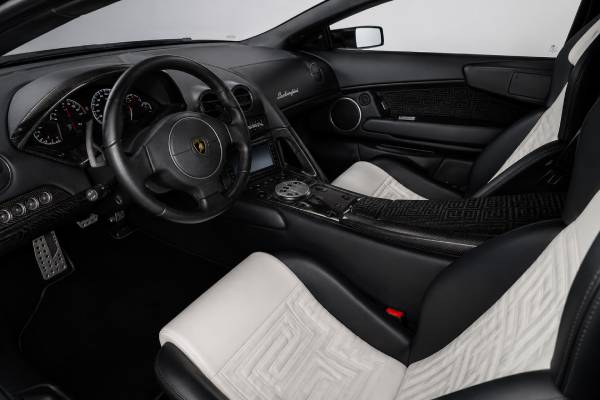
The classic Versace color palette is simple and deliberate. Known cars are usually described in either Bianco Isis or Nero Aldebaran, paired with black-and-white Nappa leather inside. The design works because it avoids the usual exotic-car habit of piling on colors. The contrast is sharp, graphic, and easy to identify.
Key Versace identifiers include:
- Numbered Gianni Versace plaque between or behind the seats, depending on cabin layout.
- Nero and Bianco leather upholstery with Versace Greca motif.
- Matching Versace-themed door, console, seat, and headliner details.
- Black-painted Hermera wheels on many documented examples.
- Transparent engine cover on many cataloged cars.
- E-Gear paddle-shift transmission on many publicly documented examples.
- Versace fitted luggage, gloves, shoes, or other accessories on especially complete cars.
Accessories matter more here than they would on a normal Murciélago. A standard LP 640 can be judged mostly by condition, mileage, color, and gearbox. A Versace car also has a completeness question. Luggage, unused gloves, original branded accessories, books, tools, service records, and early sales documents help prove the car’s story and support value.
Factory options still matter. Carbon-ceramic brakes, front-axle lift, carbon interior pieces, navigation/audio equipment, special stitching, and glass engine cover should be checked against records. Do not assume every Versace car has every desirable LP 640 option unless the build documentation confirms it.
Because the Versace treatment is interior-heavy, originality is crucial. Re-trimming a damaged cabin may make the car look presentable, but it can reduce collector confidence if the work cannot be tied to correct materials and patterns. A car with worn but original Versace leather may be more interesting to a serious collector than a freshly re-trimmed car with incorrect texture, stitching, or motif placement.
Identification should also include market details. U.S., European, Middle Eastern, and other-market cars can differ in lighting, emissions equipment, speedometer markings, paperwork trail, and import history. A car that has moved across markets is not automatically a problem, but its documents must explain the movement clearly.
Versace Design and LP 640 Engineering Details
The Versace edition is distinctive because its design changes are concentrated in the parts the driver sees and touches, while the LP 640 engineering gives it real supercar substance. It is a design collaboration wrapped around one of Lamborghini’s most dramatic naturally aspirated V12 cars.
The exterior keeps the standard LP 640’s essential shape. That means a wedge nose, huge rear haunches, scissor doors, side intakes, and a single central exhaust outlet. The LP 640 facelift made the Murciélago look cleaner and more technical than the earlier 6.2-liter car. The front and rear bumpers were reshaped, the cooling package was improved, and the rear diffuser/exhaust treatment gave the car a stronger visual centerline.
The Murciélago’s proportions are central to its identity. The cabin sits forward, the engine sits behind the driver, and the rear bodywork is wide enough to make even many modern performance cars look narrow. This is not a subtle grand tourer. Even in black, it has visual mass and theatre.
Inside, the Versace work gives the car its signature identity. The black-and-white Nappa leather, Greca-pattern detailing, and special plaque turn the cabin into the real collector object. The best interiors look bold without looking aftermarket. The pattern should appear integrated into the seats, door areas, console, and related trim rather than added as a loose decoration.
Engineering details still define the experience:
- The V12 sits longitudinally behind the cabin and dominates the sound, heat, and service layout.
- The all-wheel-drive system gives traction but does not make the car feel small or foolproof.
- Active cooling and airflow elements help manage heat at speed.
- The single central exhaust outlet is one of the easiest LP 640 visual identifiers.
- The E-Gear system uses hydraulic actuation for an automated single-clutch manual feel.
- The optional front lift is useful because the nose is low and expensive to repair.
Cooling is a major part of the car’s design. Large side openings and rear ventilation are not styling tricks; they help feed and manage the V12. Any inspection should check that ducts, fans, heat shielding, and underbody panels are intact. Missing panels or poorly repaired ducts can create heat problems that do not show during a short, gentle test drive.
The scissor doors remain a Lamborghini signature, but they also need inspection. Hinges, struts, latch alignment, and weather sealing should feel correct. Doors that drop, bind, or sit unevenly can point to wear, previous repair, or accident history.
Compared with later supercars, the Murciélago is less digitally polished. That is part of the appeal. The cabin is low, wide, and intimate. The controls feel from another era, and the car communicates through weight, heat, vibration, and sound. The Versace trim makes it more special, but it does not hide the fact that the LP 640 is a serious, loud, demanding V12 Lamborghini.
How the Versace LP 640 Drives
A good LP 640 Versace feels fast, wide, mechanical, and theatrical rather than effortless. It is quick by modern standards, but its lasting appeal comes from the sound, throttle response, low seating position, and physical sense of controlling a large V12 machine.
The engine is the main event. At low rpm, the 6.5-liter V12 is tractable enough for careful city driving, but it never feels ordinary. The engine note hardens as revs rise, and the final part of the rev range is where the car becomes memorable. Unlike turbocharged performance cars, the LP 640 builds its drama through displacement, revs, intake noise, and exhaust tone.
Acceleration is fierce, especially once the car is moving and the engine is in its stronger range. The claimed 0–100 km/h time of about 3.4 seconds still feels serious, but the number does not describe the full experience. The driver hears the engine behind the cabin, feels the driveline working, and sits low between wide bodywork. The car feels like an occasion even at moderate speed.
The gearbox shapes the personality. A manual car has the classic gated-shift appeal and is a major market prize, but Versace examples are commonly seen with E-Gear. E-Gear needs the right expectations. It is not as smooth as a modern dual-clutch automatic. In gentle use it can feel clunky if the driver treats it like a torque-converter automatic. Driven with a slight lift at the right moments, it feels more natural and reduces clutch abuse.
Steering is heavier and more communicative than many modern electrically assisted systems. The car’s width is always present, especially on narrow roads, in garages, and around curbs. Visibility forward is acceptable for a low supercar, but rear visibility and rear-quarter awareness require care. Parking sensors and cameras, if fitted or added, should not replace physical caution.
Ride quality depends heavily on tires, suspension condition, and alignment. A sorted LP 640 is firm but not hopeless. A tired one can tramline, crash over sharp bumps, or feel nervous. Old tires can ruin the car’s steering and braking even if they still have tread. Tire age matters because many collector cars sit for long periods.
Braking performance can be very strong, especially on cars with carbon-ceramic brakes, but inspection is essential. Carbon-ceramic systems are expensive, and steel systems also need careful checking for disc wear, corrosion, caliper health, and hydraulic condition. Pedal feel should be firm and confidence-inspiring.
On a mountain road, the LP 640 rewards smooth inputs. It is not a small, flickable car. It wants planning: brake early, settle the chassis, choose the gear, and let the V12 pull. On highways, it feels more comfortable because the chassis has space to breathe. On track, it can be exciting but expensive to run. Heat, brakes, tires, clutch wear, and bodywork exposure make track use a serious cost decision, not a casual weekend experiment.
Ownership Risks, Service Needs, and Repairs
The biggest ownership risk is not that the LP 640 Versace is fragile; it is that neglected examples become very expensive very quickly. A low-mileage car with stale fluids, old tires, weak battery history, poor clutch data, and incomplete records can be riskier than a higher-mileage car serviced correctly by specialists.
The V12 itself is robust when maintained properly, but access is costly and labor-intensive. Routine service should not be skipped simply because the car has not covered many miles. Fluids age, rubber hardens, seals dry, batteries weaken, and cooling components suffer from long storage. A collector car that sits must still be exercised and serviced.
E-Gear condition is one of the most important checks. Buyers should ask for clutch-wear readings, not just seller opinions. The clutch should engage cleanly, shifts should feel consistent, and warning lights should be absent. Poor setup, excessive slipping in traffic, and aggressive low-speed maneuvering can shorten clutch life. A clutch replacement is not just a parts cost; it is specialist labor and calibration.
Important inspection areas include:
- Clutch wear reading and E-Gear hydraulic operation.
- Cooling-system leaks, fan operation, hose condition, and radiator health.
- Carbon-ceramic or steel brake disc condition, pad life, and recall status where applicable.
- Front lift operation, leaks, and warning lights.
- Suspension bushings, dampers, ball joints, and alignment.
- Door struts, hinges, latch fit, and scissor-door alignment.
- Electrical modules, battery condition, immobilizer behavior, and dashboard warnings.
- Tire date codes, tire specification, and uneven wear.
- Underside damage to splitters, trays, ducts, and jacking points.
- Evidence of paintwork, carbon repair, chassis repair, or poor panel alignment.
Carbon-ceramic brake cars need special attention because a known recall campaign addressed brake rotor attaching screws on certain 2006–2010 Murciélago coupe and roadster models fitted with carbon-ceramic discs. Any buyer should verify whether the individual VIN was affected and whether the work was completed. Do not rely on model-year assumptions alone.
Age-related issues are now as important as mileage. Sticky interior switches, worn leather, shrinking trim, failing audio/navigation components, weak window operation, old alarm batteries, and degraded seals can all appear. On a normal used car these would be annoyances. On a Versace LP 640, interior originality and trim condition are value issues.
Parts availability is generally better than for some older exotic cars, but that does not mean cheap or instant. Body panels, glass, trim, Versace-specific interior materials, and special accessories can be difficult to replace correctly. A missing piece of special-edition trim may be harder to solve than a routine mechanical service item.
Restoration requires restraint. A perfect-looking but incorrectly restored Versace interior can damage provenance. The best approach is to preserve original materials where possible, document any work, use Lamborghini or recognized marque specialists, and avoid unnecessary modifications. Exhaust upgrades, aftermarket stereos, painted wheels, or non-factory carbon parts may be reversible, but they should be disclosed and ideally accompanied by the original parts.
Values, Inspection Priorities, and Buying Advice
The best Versace LP 640 to buy is the one with verified identity, complete special-edition equipment, clean history, fresh specialist service, and strong mechanical data. Mileage matters, but documentation and condition matter more because rare-edition Lamborghinis punish uncertainty.
The Murciélago market has strengthened because it combines old-school V12 character with modern usability and limited supply. Within that market, special editions, manual gearbox cars, roadsters with unusual specifications, and highly original low-mileage examples attract the most attention. The Versace edition adds fashion-house rarity, but its value depends on how confidently a buyer can prove the car is correct.
Public results and listings show that ordinary LP 640 values can vary widely, while rare manual cars and exceptional roadsters can reach far higher numbers than typical E-Gear coupes. Versace cars are thinnerly traded, so a single sale should not define the whole market. A car sold below expectations may have mileage, condition, market-timing, or documentation factors. A high asking price may reflect rarity more than a proven transaction.
Value drivers include:
- Confirmed Versace edition status and correct numbered plaque.
- Original Nero/Bianco Versace interior with correct Greca pattern.
- Complete accessories, including luggage or gloves when originally supplied.
- Factory books, service records, sales documents, and import paperwork.
- Original paint or high-quality documented paintwork.
- Low mileage supported by records, not just odometer display.
- Recent annual service by a Lamborghini dealer or respected specialist.
- Clutch data, brake condition, and tire age.
- No accident history or properly documented minor cosmetic repairs.
- Desirable market specification and clean title history.
The strongest cars usually have a clear story. They may not be the lowest-mileage examples, but they leave few questions unanswered. Weak cars often have gaps: missing accessories, vague service history, mismatched trim, old tires, clutch uncertainty, unclear market import path, or “freshly detailed” presentation hiding deferred maintenance.
| Priority | What to verify | Why it matters |
|---|---|---|
| Identity | VIN, numbered plaque, build documents, market paperwork | Confirms it is a true Versace car, not a cosmetic imitation |
| Interior originality | Leather pattern, stitching, plaque, trim condition | The cabin is the core of the Versace edition’s value |
| Mechanical data | Clutch wear, fault scan, service records, road test | Prevents expensive surprises after purchase |
| Brake condition | Disc wear, pad life, recall completion, hardware condition | Brake repairs can be costly and safety-critical |
| Body and chassis | Panel gaps, paint meter readings, underside, repair evidence | Accident damage reduces value and can affect alignment |
| Completeness | Books, tools, keys, charger, luggage, Versace accessories | Complete cars are easier to sell and defend on value |
Avoid cars that are marketed only on rarity. A rare Lamborghini with deferred service is still a deferred-service Lamborghini. Also be careful with cars that have spent years in static collections. Storage can preserve paint and leather, but it can also hide dried seals, weak batteries, flat-spotted tires, old fuel, and hydraulic issues.
The ideal pre-purchase inspection should be done by a Lamborghini dealer or a Murciélago specialist with diagnostic access and model experience. The inspection should include a lift inspection, paint readings, clutch data, ECU scan, service-document review, road test, brake evaluation, and verification of special-edition components.
Long-term collectability looks strong for the right cars. The Versace LP 640 sits at the intersection of naturally aspirated V12 Lamborghini heritage, limited production, fashion collaboration, and analog-era supercar drama. It is not the most track-focused Murciélago, and it is not always the most valuable version. But when complete, correct, and well maintained, it is one of the most recognizable and conversation-worthy LP 640 variants.
References
- Lamborghini Murcielago LP 640 Coupè – Scheda Tecnica, Foto 2006 (Manufacturer History)
- Lamborghini Murciélago: the first V12 engine of the new millennium 2022 (Manufacturer History)
- Carbon Ceramic Brake Screws Replacement 2013 (Recall Notice)
- 1200 New Jersey Avenue SE Washington, DC 20590 2013 (Recall Database)
- 2008 Lamborghini Murciélago LP640-4 Coupé Versace ‘E-Gear’ | Paris 2021 | RM Sotheby’s 2021 (Auction Record)
Disclaimer
This article is for informational purposes only and is not a substitute for professional diagnosis, repair, valuation, or pre-purchase inspection. Specifications, torque values, service intervals, recall status, and repair procedures can vary by VIN, market, equipment, and later updates. Always verify details against the vehicle’s official service documentation and have any Murciélago LP 640 inspected by a qualified Lamborghini specialist.
If this guide helped you, please share it on Facebook, X/Twitter, or your favorite car community to support our work.