
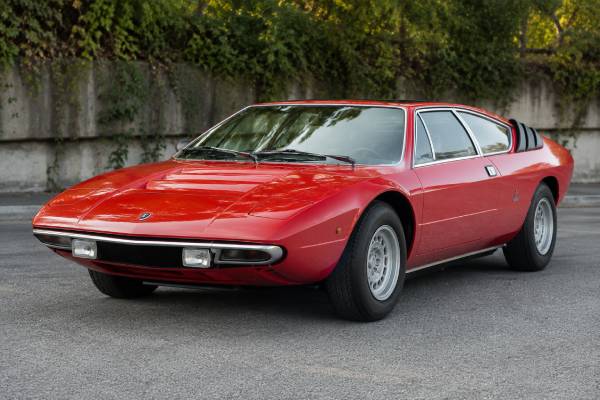
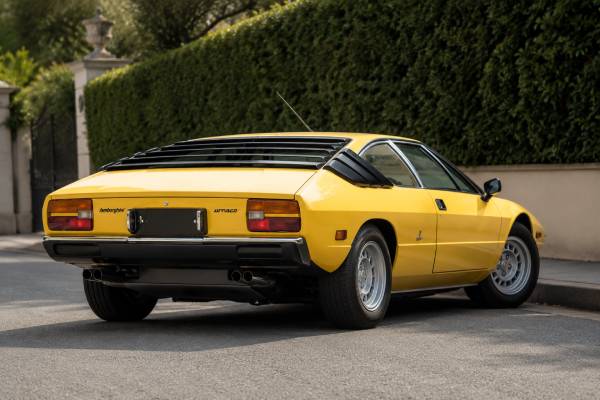
The Lamborghini Urraco P111 is the rare U.S.-market version of Lamborghini’s early mid-engine V8 2+2. It is not the quickest Urraco, and it is not the cleanest expression of the original European P250 idea. Its importance comes from something more specific: it shows how Lamborghini tried to sell a small, technically ambitious, Bertone-styled exotic in America during the difficult emissions and safety era of the mid-1970s. Built in tiny numbers, the P111 combined the Urraco’s transverse 2.5-liter L240 V8 with U.S. bumpers, lighting, and emissions changes that cut output to about 180 hp. Today it appeals to collectors who value rarity, historical context, and unusual Lamborghini engineering. It also demands careful buying, because restoration quality, corrosion, drivetrain health, and documentation matter far more than mileage or cosmetic freshness.
Table of Contents
- Why the P111 Urraco Still Matters
- Tipo 111 Specs and Performance Data
- Production, Identification, and Factory Details
- Bertone Design and Compact V8 Engineering
- How the 180 hp Urraco Drives
- Maintenance, Rust, and Restoration Risks
- Market Value and Buying Strategy
Why the P111 Urraco Still Matters
The Urraco P111 matters because it is one of the rarest production Lamborghinis and one of the clearest examples of the brand adapting a European exotic for U.S. rules. It is best understood as a U.S.-spec P250, not as a separate clean-sheet model.
The standard Urraco project began with a bold idea. Ferruccio Lamborghini wanted a smaller, less expensive Lamborghini that could reach buyers who could not justify a Miura, Espada, or Countach. The car was revealed at the 1970 Turin Motor Show, styled by Marcello Gandini at Bertone and developed with major engineering input from Paolo Stanzani. Production customer cars followed later, after delays caused by development problems, factory pressure, ownership changes, and the worsening economic climate of the early 1970s.
The Urraco sat in a difficult but important space. It was a mid-engine 2+2 coupe aimed at cars such as the Ferrari Dino 308 GT4, Maserati Merak, and higher-end Porsche 911s. It gave Lamborghini a smaller V8 model line beneath its V12 flagships, and that role later continued through the Silhouette and Jalpa. The idea also foreshadowed Lamborghini’s long-term need for a more usable, higher-volume junior exotic, even if the Urraco itself never became the commercial success Lamborghini hoped for.
The P111 was created for the American market. U.S. safety and emissions rules forced visible and mechanical changes, including larger black impact bumpers, altered lighting, and emissions equipment. The result was heavier-looking, less powerful, and slower than a European P250, but much rarer. Only about 21 P111 cars are generally cited, which makes surviving examples serious collector pieces even when they are less desirable to drivers than European-spec cars.
Its reputation today is nuanced. Enthusiasts admire the Urraco for its wedge-era Bertone shape, compact V8, and honest mechanical feel. Buyers respect the P111 for rarity, but they also know that restoration can quickly exceed the value of the car. A good P111 is a fascinating and usable 1970s Lamborghini. A poor one can become a long, expensive parts hunt.
Tipo 111 Specs and Performance Data
The P111 uses the 2,463 cc L240 V8 from the Urraco P250, but U.S. emissions tuning reduced output to about 180 hp. That lower figure defines the car’s performance character: smooth, eager, and exotic, but not especially fast by modern standards.
| Item | Specification |
|---|---|
| Model | Lamborghini Urraco P111, also known as P250 Tipo 111 |
| Production focus | U.S.-market Urraco based on the P250 |
| Model years covered | 1974–1976 |
| Body style | 2-door 2+2 coupe |
| Engine | Lamborghini L240 90-degree V8 |
| Engine position | Mid-mounted, transverse |
| Displacement | 2,463 cc |
| Bore x stroke | 86 mm x 53 mm |
| Valve gear | Single overhead camshaft per bank, 2 valves per cylinder |
| Induction | Four twin-choke Solex 40 IDF 1 carburetors |
| Compression ratio | About 10.4:1 |
| Maximum power | 180 hp at 7,500 rpm |
| Maximum torque | About 20 mkg, commonly converted to roughly 196 Nm |
| Transmission | 5-speed manual |
| Drivetrain | Rear-wheel drive |
| Fuel capacity | 80 liters |
The Urraco’s V8 was advanced for Lamborghini at the time because it gave the company a compact, lighter, less expensive engine family below its V12 cars. In P111 form, the all-alloy V8 is still the heart of the car, but its U.S. carburetion and emissions specification make it softer than the European P250. The European P250 is commonly quoted at about 220 hp, so the P111 gives away a meaningful amount of power.
| Item | Specification |
|---|---|
| Construction | Steel body and platform structure |
| Front suspension | Independent MacPherson struts with coil springs and anti-roll bar |
| Rear suspension | Independent MacPherson struts with coil springs and anti-roll bar |
| Brakes | Vented disc brakes front and rear |
| Steering | Rack and pinion |
| Wheelbase | 2,450 mm |
| Length | About 4,440 mm in U.S. bumper form |
| Width | About 1,740 mm |
| Height | About 1,160 mm |
| Curb weight | Often listed around 1,300 kg |
| Top speed | About 225 km/h, or 140 mph |
| Typical tire size | 205/70 VR14 or equivalent period fitment |
Performance figures for the P111 should be treated carefully. Period data and later databases vary, and the U.S. car’s tune makes direct P250 comparisons misleading. A European P250 is often described as a sub-7-second 0–100 km/h car, while the P111 is slower and more relaxed. Its appeal is not drag-strip pace. It is the way the short-stroke V8 revs, the way the chassis feels compact, and the way the car connects Lamborghini’s early engineering ambition with real-world homologation compromise.
Production, Identification, and Factory Details
The key P111 identification point is simple: it is the U.S.-market Tipo 111 version of the Urraco P250, built in extremely small numbers. The big risk for buyers is confusing a federalized P250, a modified car, or a restored car with incorrect details for an authentic P111.
The Urraco line included several main variants. The P250 was the original 2.5-liter car. The P200 used a smaller 2.0-liter engine for the Italian tax market. The P300 brought a 3.0-liter development of the V8 with more power and a more sophisticated engine layout. The P111 belongs to the P250 family but was adapted for the United States.
| Variant | Main identity | Collector note |
|---|---|---|
| P250 | Original 2.5-liter Urraco | Most common early Urraco and usually preferred for clean European styling |
| P111 | U.S.-market 2.5-liter Tipo 111 | Much rarer, with emissions and bumper changes |
| P200 | 2.0-liter version for displacement-sensitive markets | Interesting but less powerful and less internationally sought after |
| P300 | 3.0-liter developed version | Often considered the best-driving and most desirable Urraco variant |
The P111’s most visible identifiers are its larger black bumpers and U.S.-specific lighting. These pieces affect both appearance and value. Some owners prefer the cleaner European bumper look and may have converted cars, but originality matters strongly on a P111 because the U.S. equipment is part of what makes the car historically distinct. A converted or partially federalized car needs careful explanation in the history file.
Important authenticity checks include:
- Chassis and engine number consistency with factory or specialist records.
- Evidence that the car was built or delivered as a Tipo 111, not later altered.
- Correct U.S.-style bumper brackets, lighting, side markers, and related body details.
- Correct Solex carburetor and emissions specification where originality is claimed.
- Interior trim that matches period records, old photos, or heritage documentation.
- Paint history that explains any color change, accident repair, or corrosion work.
Factory documentation is especially valuable because P111 production was so small. A buyer should try to gather copies of old titles, import paperwork, service invoices, restoration photos, owner correspondence, and any Lamborghini heritage or registry information. A car with a thin file is not automatically bad, but it should be priced as a higher-risk purchase.
Colors and interiors were period Lamborghini rather than modern build-sheet personalization. Bright yellows, reds, whites, darker shades, tan leather, black leather, and brown interiors all suit the car’s era. For value, original color matters more than the most fashionable color. A high-quality repaint in the original shade usually carries more collector weight than a visually attractive but undocumented color change.
Bertone Design and Compact V8 Engineering
The P111 is visually compromised by U.S. bumper rules, but the underlying Gandini design remains one of the sharpest mid-engine 2+2 shapes of the 1970s. Its engineering is equally interesting because Lamborghini packaged a transverse V8 and rear seats into a compact steel coupe.
The Urraco’s body came from Marcello Gandini’s Bertone period, when wedge forms were replacing the rounder shapes of the 1960s. Compared with the Miura, the Urraco is cleaner, shorter, and more geometric. It has a low nose, slim glasshouse, strong rear buttresses, and louvered rear details that help visually manage the unusual proportions required by a mid-engine 2+2.
The P111’s U.S. bumpers interrupt that purity. They make the car look heavier at both ends and reduce some of the delicacy of the European P250. Still, they are not just cosmetic clutter. They tell the story of the car’s intended market and the rules Lamborghini faced. For a collector-grade P111, those parts should be treated as historically meaningful, not as defects to erase.
Under the skin, the Urraco used a steel structure rather than the tubular frames associated with some earlier exotics. This approach supported Lamborghini’s plan for a more repeatable production model. It also means corrosion matters. The body is not just decoration over a separate race-style frame; the shell and structure are central to alignment, panel fit, suspension geometry, and long-term integrity.
The V8 is the car’s engineering centerpiece. A 90-degree all-alloy unit, it sits transversely behind the cabin. The short stroke helps it rev freely, and the carburetors give it the intake texture collectors expect from a 1970s Italian exotic. The gearbox and final drive packaging are also part of the car’s character. It is not as dramatic as a Countach V12, but it feels more compact and mechanically concentrated.
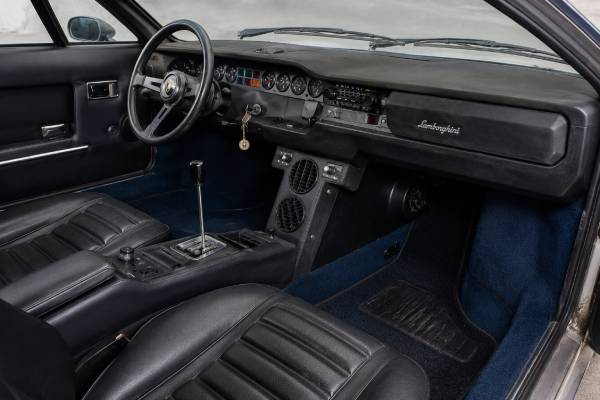
The cockpit is period Lamborghini: low, dramatic, and not always ergonomic. Visibility is better than many later supercars, but the driving position, instrument layout, ventilation, cabin heat, and switchgear reflect small-volume Italian production. The rear seats are best treated as occasional seats or extra luggage space. They make the Urraco more practical than a strict two-seater, but they do not turn it into a family grand tourer.
The sound is also distinct. The P111 does not have the operatic force of a Lamborghini V12, but the V8 has a hard-edged, mechanical note when tuned properly. Intake balance, exhaust condition, ignition health, and carburetor synchronization make a large difference. A tired car can feel flat and harsh. A sorted car has a crisp, eager tone that suits its size.
How the 180 hp Urraco Drives
A good P111 drives like a compact 1970s exotic, not like a modern performance car. It rewards warm-up, mechanical sympathy, and smooth inputs more than aggressive point-and-shoot driving.
The engine needs to be treated as a carbureted classic. Cold starts, idle quality, throttle response, and low-speed smoothness depend on tune. When the carburetors are synchronized, ignition components are fresh, and the engine is properly warm, the V8 should feel clean and willing to rev. It is not especially muscular at low rpm, so the driver gets the best from it by using the gearbox and letting the engine climb.
The 5-speed manual is part of the experience. Shift quality varies heavily by condition and adjustment. A healthy gearbox should feel mechanical and deliberate, not vague or obstructive once warm. A reluctant second gear, crunching, excessive driveline lash, or noisy bearings can point to expensive work. Because access is not simple, small symptoms deserve serious attention before purchase.
The steering is one of the Urraco’s pleasures. With rack-and-pinion steering and a relatively compact body, the car feels more agile than larger Lamborghinis of the period. Parking effort can be high, especially on modern sticky tires, but road feel improves with speed. Correct tire size and sidewall matter. Oversized modern tires can add weight to the steering and spoil the suspension’s intended balance.
Ride quality is firm but not crude when the suspension is rebuilt correctly. The MacPherson strut layout at both ends was unusual for an exotic but sensible for packaging. Old dampers, tired bushings, sagging springs, worn wheel bearings, and incorrect alignment can make the car feel nervous. A freshly rebuilt suspension can transform the Urraco from fragile-feeling to composed.
Braking expectations need period context. Vented discs all around are reassuring, but pedal feel, line condition, caliper health, fluid age, and servo function matter more than the spec sheet. The car should stop straight, with a firm pedal and no pulling. A long pedal, dragging caliper, or uneven lockup is not a personality trait. It is a repair bill.
The P111 is best on flowing roads. It is narrow enough to place accurately, loud enough to feel special, and quick enough to entertain without demanding racetrack speeds. In city traffic it can become hot, heavy, and fussy. On highways it cruises better than its exotic image suggests, but wind noise, cabin heat, and gearing remind you that it was designed in another era.
The main driving takeaway is this: condition dominates the experience. Two P111s can feel like different cars. One may be crisp, balanced, and charming. Another may feel slow, hot, vague, and fragile. Always judge the car in front of you, not the legend.
Maintenance, Rust, and Restoration Risks
The P111 is not a casual classic to revive cheaply. The most important ownership rule is to buy the best, most complete, most documented car you can find, because missing trim, corrosion, engine problems, and poor past work can overwhelm any apparent bargain.
The engine needs specialist attention. Belt-driven camshaft service, tensioner condition, cooling-system health, carburetor setup, ignition condition, and oil leaks are all central to ownership. A recent invoice from a recognized Lamborghini or Italian exotic specialist is worth far more than a seller saying the car “runs well.” Cars that sit for long periods often need fuel-system cleaning, hose replacement, carburetor rebuilding, brake work, and electrical sorting before they are genuinely roadworthy.
The cooling system deserves close inspection. Mid-engine cars place extra demands on pipes, hoses, fans, radiators, thermostats, and bleeding. Overheating can lead to serious engine damage. Look for stable coolant temperature in traffic, correct fan operation, clean coolant, no oil contamination, and no signs of repeated emergency repairs. White residue, patched hoses, bypassed components, or missing shrouding suggest deferred maintenance.
Corrosion is one of the largest restoration risks. Because the Urraco uses a steel body and structure, rust is not only cosmetic. Inspect the floor structure, sills, lower body seams, wheel arches, suspension mounting points, front and rear compartments, door bottoms, windshield and rear glass surrounds, and areas hidden by trim. Rust around suspension or structural sections can make alignment and panel fit difficult to correct.
High-priority inspection areas
- Cam belts, tensioners, and service date.
- Compression and leak-down results on a fully warm engine.
- Carburetor condition, throttle linkage wear, and fuel smell.
- Radiator, coolant pipes, electric fans, thermostat, and hose age.
- Gearbox synchros, bearing noise, clutch engagement, and driveline leaks.
- Brake calipers, flexible hoses, master cylinder, servo, and hard lines.
- Suspension bushings, dampers, ball joints, wheel bearings, and alignment.
- Sills, floors, windshield surround, door bottoms, wheel arches, and mounting points.
- Correct P111 bumper, lighting, side marker, and emissions-related details.
- Documentation for paintwork, body repair, engine work, and previous ownership.
Parts availability is mixed. Basic service parts can often be sourced through specialists, but model-specific trim, U.S.-market P111 details, original lighting, bumper components, interior pieces, and certain engine parts can be difficult. Reproduction parts may solve some problems, but they do not always satisfy concours or originality-focused buyers.
Restoration quality varies widely. A shiny Urraco can hide poor metalwork, incorrect panel gaps, low-grade wiring repairs, weak interior retrimming, and wrong finishes. Older restorations should be checked as carefully as unrestored cars. The best evidence is a photo file showing bare-metal work, corrosion repair, mechanical rebuilding, and final assembly by people who know the model.
Originality versus upgrades is a real decision. Improved cooling fans, modern hose materials, better ignition components, discreet electrical upgrades, and carefully chosen tires can make the car more usable. But irreversible changes hurt a rare P111. The safest path is sympathetic improvement: keep original parts, document everything, and avoid modifications that erase U.S.-market identity.
Market Value and Buying Strategy
The P111 is too rare for a neat market average, so valuation must be built from condition, authenticity, documentation, and comparison with P250 and P300 sales. A correct, complete P111 should not be valued like an ordinary rough Urraco, but rarity alone does not rescue a bad car.
Public market data for the P111 is thin because so few were built and so few trade openly. Broader Urraco data is more useful as context. P250 and P300 cars often define the visible market, with P300s generally carrying stronger driver demand because of their extra power and development. A P111 can attract a rarity premium from the right buyer, but the U.S. emissions specification and bumper appearance may limit its audience compared with a clean European car.
The best P111 to buy is a complete, documented, structurally sound car with correct U.S. features and recent specialist mechanical work. The worst one is a partly disassembled project missing unique parts. A cheap P111 without correct bumpers, lighting, carburetion, interior pieces, or clear identity can become expensive very quickly.
| Value factor | Why it matters |
|---|---|
| Authenticity | Tipo 111 identity is the main reason the car is collectible |
| Completeness | Missing P111-specific parts can be hard to replace |
| Structural condition | Rust repair can exceed normal market logic |
| Mechanical health | Engine, gearbox, cooling, and brake work are specialist jobs |
| Documentation | Old records help prove identity, mileage, colors, and restoration claims |
| Original color and trim | Factory-correct presentation matters in a rare Lamborghini |
| Restoration quality | Correct metalwork and mechanical work are more valuable than fresh paint alone |
A serious pre-purchase inspection should be done by a specialist familiar with early Lamborghini V8 cars, not just a general classic-car mechanic. The inspection should include a road test, lift inspection, cold start, warm restart, compression or leak-down testing where possible, documentation review, number verification, and a written estimate of near-term needs.
Use this buying sequence:
- Verify the car is a genuine P111 with supporting records.
- Confirm that unique U.S.-market exterior and mechanical details are present.
- Inspect the structure before judging paint, interior, or mileage.
- Check engine, gearbox, cooling, brakes, and suspension with a specialist.
- Price the car after adding the cost of immediate repairs, missing parts, and deferred maintenance.
Cars to seek include long-term known examples, cars with original color and trim, cars with strong service records, and cars restored by recognized specialists. Cars to avoid include fresh cosmetics over unknown metal, “nearly finished” projects, cars with unclear identity, cars missing P111 parts, and examples that cannot complete a proper warm road test.
Long-term collectability is likely to remain strong but selective. The P111 has rarity, Lamborghini badge strength, Bertone design, and a direct link to the brand’s first V8 family. Its ceiling depends on originality and presentation. The market will forgive modest performance more easily than missing history or poor restoration. Buy the car for its story, engineering, and rarity, but budget like you are buying a small-production Italian exotic, because that is exactly what it is.
References
- Lamborghini Urraco: innovation turns 50 2020
- Milestones | Lamborghini.com 2026
- P111 Urraco Tech Specs 2026
- Lamborghini Urraco P111 Market – CLASSIC.COM 2026
- 1975 Lamborghini Urraco P250 | Hagerty Valuation Tools® 2026
Disclaimer
This article is for informational purposes only and is not a substitute for professional diagnosis, inspection, repair, or restoration advice. Specifications, torque values, service intervals, procedures, and correct parts can vary by VIN, market, production changes, and equipment. Always verify details against official service documentation, factory records, and a qualified Lamborghini specialist before buying, repairing, or restoring a Urraco P111.
If this guide helped you, please consider sharing it on Facebook, X/Twitter, or your favorite enthusiast community to support our work.