
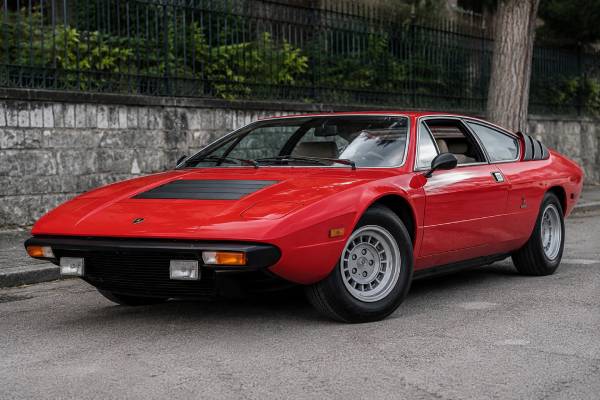
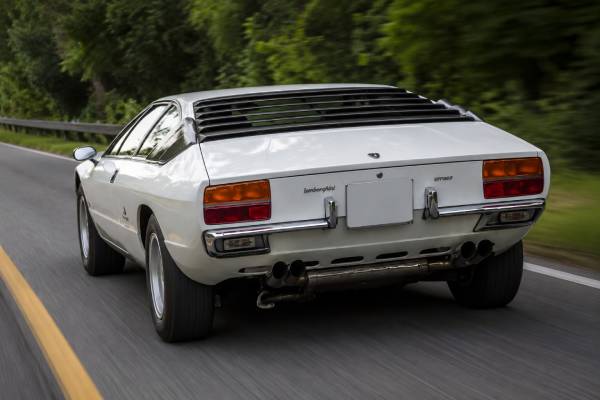
The Lamborghini Urraco P200 is the rarest and most tax-driven version of Lamborghini’s 1970s V8 2+2 coupe. Built mainly for the Italian market, it used a downsized 1,994 cc V8 so buyers could avoid the heavy Italian tax penalty applied to cars over two liters. That practical reason created one of the most unusual Lamborghinis of the period: a mid-engine, Bertone-bodied wedge with a tiny high-revving V8, four seats in theory, and far more mechanical complexity than its modest power figure suggests. The P200 is not the fastest Urraco, and it is not the easiest classic Lamborghini to own. Its appeal comes from rarity, Gandini design, early Lamborghini V8 engineering, and a character that feels more delicate and rev-happy than the larger P250 and P300. For collectors, condition, documentation, originality, and specialist inspection matter more than headline performance.
Table of Contents
- Why the Urraco P200 Matters
- Engine, Chassis, and Key Specifications
- Production, Variants, and Identification
- Bertone Design and V8 Engineering
- How the P200 Drives
- Maintenance, Restoration, and Known Risks
- Market Values and Buying Advice
Why the Urraco P200 Matters
The Urraco P200 matters because it shows Lamborghini trying to make a smaller, more usable mid-engine car without giving up exotic engineering. It was a practical response to Italian tax rules, but it also became one of the most distinctive small-displacement supercars of the 1970s.
The Urraco line began as Lamborghini’s answer to cars such as the Ferrari Dino, Maserati Merak, and Porsche 911. Lamborghini already had V12 icons, but those cars were expensive, thirsty, and difficult to build in high numbers. The Urraco aimed lower in price and size while keeping the brand’s drama: mid-engine layout, sharp Bertone styling, and a multi-carburetor engine mounted behind the cabin.
The P200 arrived after the larger P250 and alongside the more powerful P300. Its reason for existing was simple. In 1970s Italy, cars above two liters faced a much harsher tax burden. Lamborghini reduced the Urraco’s V8 displacement to just under that limit, creating a 1,994 cc version that still produced 182 hp at high revs. That made the P200 unusual even by Italian standards: it was a Lamborghini built around a tax bracket, yet it still had a transverse mid-mounted V8, four Weber carburetors, a five-speed manual gearbox, and wedge styling by Marcello Gandini at Bertone.
The P200’s reputation today is mixed in the best possible collector-car way. It is less muscular than a P300 and less famous than the earliest P250, but it is much rarer. Depending on the source and counting method, production is usually cited at roughly 66 to 77 cars. That rarity makes surviving original cars important, especially those with period-correct engines, body details, interior trim, and market documentation.
The Urraco also sits in an important Lamborghini family tree. The Silhouette and Jalpa developed the same V8 idea further, and decades later the brand would again use smaller entry-point models to widen its reach. The Urraco did not create a sales revolution, partly because Lamborghini was under financial pressure during the 1970s, but it proved that Sant’Agata could build a compact mid-engine car with its own character.
For enthusiasts, the P200 is interesting because it is not simply a slower Urraco. Its small engine changes the whole personality. It needs revs, rewards commitment, and feels more like a sharp Italian GT than a brute-force supercar. For collectors, that same quality means the best cars are not the ones with random upgrades or missing history. They are the cars that still show why Lamborghini built this strange, charming, tax-special V8 coupe in the first place.
Engine, Chassis, and Key Specifications
The P200’s core specification is a 1,994 cc naturally aspirated V8 mounted transversely behind the cabin and driving the rear wheels through a five-speed manual gearbox. Its 182 hp output is modest by Lamborghini standards, but the technical layout is pure exotic 1970s engineering.
| Category | Specification |
|---|---|
| Production years | 1975–1977 |
| Body style | 2-door 2+2 coupe |
| Layout | Transverse mid-engine, rear-wheel drive |
| Engine | 1,994 cc Lamborghini V8 |
| Induction | Naturally aspirated, four Weber carburetors |
| Valvetrain | Single overhead camshaft per bank, 16 valves |
| Power | 182 hp at 7,500 rpm |
| Torque | About 176 Nm / 129–130 lb-ft |
| Transmission | 5-speed manual |
| Suspension | Independent suspension with coil springs |
| Brakes | Ventilated discs front and rear |
| Wheelbase | 2,450 mm |
| Curb weight | About 1,250 kg |
| Fuel capacity | About 80 liters |
The engine is the defining feature. Lamborghini did not create the P200 by fitting a cheap economy engine. It reduced the bore of the Urraco V8 to bring displacement below two liters, keeping the short stroke and high-revving nature. The result is a small V8 that makes its best power near the top of the tachometer. It is not a torque engine. It asks the driver to use the gearbox and keep the engine spinning.
Compared with the P250, the P200 loses displacement and torque. Compared with the P300, it gives away a great deal of performance. But its charm lies in the way it delivers speed. The small V8 is busy, crisp, and mechanical. In good tune, the Weber carburetors give it sharp response once warm, while the exhaust note has a lighter, harder edge than a larger Lamborghini V8.
| Measure | Figure | Useful context |
|---|---|---|
| 0–100 km/h | About 7.2 seconds | Period figures vary by source and car condition |
| Top speed | About 205–215 km/h | Depends on gearing, tune, and period test source |
| Power-to-weight | About 6.8 kg per hp | Good for a 1970s two-liter road car, mild for a Lamborghini |
The chassis is equally important. The Urraco uses independent suspension and a compact mid-engine layout that gives it a different balance from front-engine Lamborghini GTs such as the Espada or Jarama. Steering is rack-and-pinion. Braking is by discs all round, with ventilated discs listed in many references. Wheels were typically 14-inch Campagnolo alloys on period tires.
Dimensions place the P200 in the compact exotic category. It is low, wide for its size, and short enough to feel agile on narrow European roads. The cabin is a 2+2, but the rear seats are best understood as occasional seats or luggage space. The packaging is clever, not spacious.
The specification tells an important ownership lesson: the P200 may have only two liters, but it is not simple. Carburetor tuning, cooling, engine access, gearbox condition, suspension alignment, and brake refurbishment all require knowledge of old Italian exotics. A neglected P200 can become expensive quickly because the engine is rare, the body is hand-finished, and many model-specific parts are difficult to source.
Production, Variants, and Identification
The P200 is best understood as a rare Italian-market Urraco variant, not as a separate model family. Its desirability depends heavily on correct identification, original specification, and evidence that it has not been confused with, converted from, or modified like a P250 or P300.
The Urraco range is usually divided into three main production versions: P250, P200, and P300. The “P” refers to the rear position of the engine, while the number points to engine size. The P250 used a 2.5-liter V8, the P200 used the tax-friendly two-liter V8, and the P300 used a three-liter development with more power and a more mature character.
| Version | Main engine size | Typical role | Collector note |
|---|---|---|---|
| P250 | 2.5L V8 | Original production Urraco | Most numerous and important launch version |
| P200 | 2.0L V8 | Italian-market tax-special model | Rarest regular Urraco variant |
| P300 | 3.0L V8 | More powerful developed version | Often seen as the best-driving Urraco |
The P200’s production count is one of the details buyers should treat carefully. Different sources cite slightly different totals, often around 66 or around 70-plus cars. This is common with low-volume Italian classics from the period, especially when prototypes, market-specific cars, late registrations, and factory records are interpreted differently. For buying purposes, the exact final number matters less than the proof attached to a specific car.
A proper P200 should have documentation that supports its identity. The most valuable paperwork can include factory records, Lamborghini Polo Storico documentation, old Italian registration papers, service invoices, import records, previous sale catalogues, and long-term ownership history. Matching engine and chassis information matters because the P200 engine is the whole reason the car exists. A larger replacement engine may improve performance, but it weakens the model’s collector logic.
Identification points that matter
A buyer should confirm the following before treating a car as a genuine, valuable P200:
- Chassis identity and factory records that match the claimed P200 specification.
- Engine type and displacement consistent with the 1,994 cc version.
- Carburetor setup appropriate for the model.
- Original or period-correct body details, trim, wheels, instruments, and interior layout.
- Evidence of market history, especially Italian-market origin when applicable.
- No unexplained gap between chassis number, registration year, and build history.
- Restoration records showing what was repaired, replaced, or modified.
Because Urracos were never produced in huge numbers, many cars have had difficult lives. Some were inexpensive for years compared with V12 Lamborghinis, which means deferred maintenance and improvised repairs are common. That history affects originality. A car may look correct from ten meters away yet have non-original wiring, substitute switchgear, incorrect upholstery, missing air-conditioning parts, poor panel repairs, or an engine bay assembled from whatever parts were available.
Factory options and trim details can be difficult to verify without records. Leather, cloth inserts, air conditioning, power windows, specific colors, and wheel finishes all need careful checking against the car’s period documentation. A rare color or preserved interior can add interest, but only when the condition and paperwork support it.
The P200 has limited motorsport significance compared with racing-focused Lamborghinis. Its collector value is instead based on rarity, design, brand history, and preservation. The best examples are not necessarily the most cosmetically shiny. They are the cars with honest identity, correct mechanical specification, strong paperwork, and restoration work done by people who understand the Urraco platform.
Bertone Design and V8 Engineering
The P200 looks special because it combines Marcello Gandini’s wedge-era Bertone design language with unusually compact Lamborghini V8 packaging. Its shape is not decoration; the low nose, louvers, steep glass, and short rear body all reflect the challenge of making a mid-engine 2+2 usable.
The Urraco’s design belongs to the same creative period that produced some of Italy’s sharpest wedge cars. Compared with the Miura’s curves, the Urraco is cleaner and more angular. It points toward the Countach era without becoming as extreme. The nose sits low, the roofline slopes quickly, and the C-pillar treatment gives the car a strong side profile. Pop-up headlights helped preserve the front-end shape, while louvers allowed cooling air management without ruining the design.
Bertone’s work is especially clever because the Urraco had to do more than a two-seat supercar. It needed a mid-mounted engine, a small rear seating area, luggage space, and road-car usability. That made the packaging difficult. The engine sits transversely, which helps shorten the drivetrain package and preserve cabin length. The rear seats are tight, but their presence made the car easier to market as a small GT rather than a pure two-seat toy.
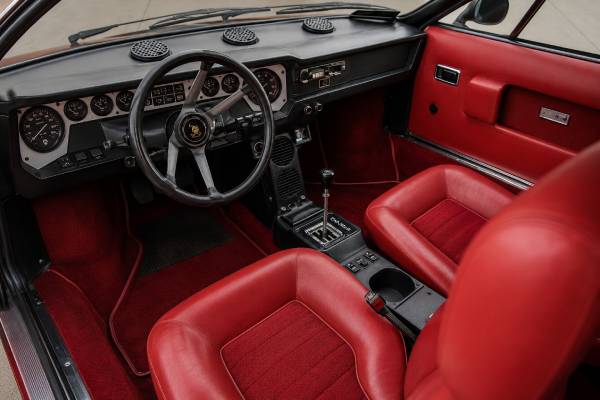
The cockpit is one of the Urraco’s most memorable areas. The dashboard and steering-wheel design are deeply period-specific, with angled forms and a driver-focused layout. The instruments are clear enough, but the cabin is more exotic than ergonomic by modern standards. Visibility is better than in many low mid-engine cars, yet the seating position, pedal placement, and heat management all depend heavily on the condition of the individual car.
What makes the P200 engine unusual
The small V8 is the P200’s engineering signature. A two-liter V8 is rare because eight cylinders normally add cost and complexity without the torque benefits of larger displacement. Lamborghini accepted that tradeoff because the P200 needed to remain a true Urraco while fitting under the Italian tax threshold.
That creates several distinctive traits:
- The engine feels happiest at higher rpm.
- Carburetor balance has a large effect on smoothness and throttle response.
- Cooling health is critical because the compact engine bay retains heat.
- Ignition condition matters because the engine has little low-speed torque to hide poor tune.
- Exhaust and intake sound are a major part of the car’s appeal.
The Urraco’s engineering also shows Lamborghini learning how to build smaller mid-engine cars. The car is not as mature as later V8 Lamborghinis, and that is part of its charm. It feels hand-built and slightly experimental. Some solutions are clever; others are awkward to service. Owners who expect modern convenience will be frustrated. Owners who like mechanical interaction will find the car fascinating.
Aerodynamics are period simple rather than digitally optimized. The low wedge shape helps the car look fast and clean, but the cooling openings and louvers are just as important. On a properly set-up car, temperature control should be stable in normal conditions. On a tired car, blocked radiators, weak fans, old hoses, poor wiring, and incorrect coolant bleeding can turn traffic into a problem.
The P200’s design and engineering are therefore inseparable. The body shape is beautiful, but it also makes service access, cooling, cabin heat, and restoration quality more important. A Urraco that looks perfect but runs hot, smells of fuel, or has poor panel alignment is not a solved car. It is a project wearing fresh paint.
How the P200 Drives
A good Urraco P200 drives like a light, high-revving Italian exotic rather than a high-torque supercar. It rewards smooth inputs, accurate shifting, and patience during warm-up, and it feels best on flowing roads where the engine can stay in its power band.
The first thing a driver notices is that the P200 does not have the lazy shove people may expect from a Lamborghini badge. Below the stronger part of the rev range, it is flexible enough for normal driving but not forceful. The car comes alive when the carburetors are clean, the ignition is right, and the engine is allowed to rev. At that point the V8 becomes eager and musical, with a crisp mechanical note that feels very different from a V12 Lamborghini.
The five-speed manual gearbox is central to the experience. The P200 needs gears to stay quick. A well-adjusted linkage should feel mechanical and deliberate, not vague or obstructive. Cold shift quality can be slower, as with many Italian classics, so forcing the gearbox before the oil warms is poor practice. Worn synchros, sloppy linkage, tired mounts, or incorrect clutch adjustment can turn the car from charming to frustrating.
Steering is one of the Urraco’s strengths when the suspension is healthy. The front end is light enough to feel alert, and the mid-engine layout gives the car good balance. At parking speeds it still feels like a 1970s machine, but once moving it should respond cleanly. Poor alignment, old tires, worn bushings, tired dampers, or incorrect ride height can make a P200 wander, tramline, or feel nervous.
Braking expectations need period context. Ventilated discs all round give the car respectable hardware, but it will not feel like a modern performance car with huge assisted brakes and modern tires. The pedal should be firm and predictable. Long pedal travel, pulling, vibration, or weak response points to service needs, not “classic character.”
Ride quality is better than the shape suggests when the car is set up correctly. The Urraco was intended as a usable GT, not a track special. On correct tires and fresh suspension, it can cover real distance. The problem is that many cars sit on old or incorrect rubber, and that changes everything. Tire age, compound, sidewall, and size can affect steering feel, ride comfort, braking, and confidence.
Usability in real driving
The P200 can be enjoyable on the road, but it asks for sympathy:
- Let the engine warm before using high rpm.
- Expect carburetors to behave differently when cold, hot, or poorly synchronized.
- Watch oil pressure and coolant temperature rather than trusting luck.
- Use the gearbox often; the engine rewards revs.
- Treat cabin ventilation and air conditioning as condition-dependent, not guaranteed.
- Plan for heat, noise, fuel smell, and old-car visibility limits in traffic.
The car is best on morning drives, mountain roads, classic rallies, and events where its rarity and sound matter more than outright speed. On a modern highway, it can cruise, but wind noise, gearing, engine heat, and mechanical sympathy become part of the experience. On a track, the P200 is more historical curiosity than serious weapon. Its value and rarity make aggressive track use hard to justify unless the car is already prepared for that purpose.
The difference between a sorted P200 and a tired one is huge. A good car feels delicate, alert, and alive. A poor one feels hot, heavy, smoky, imprecise, and expensive. That is why a short test drive around a dealership block is not enough. A proper evaluation should include cold start, warm idle, hot restart, full temperature behavior, braking from speed, gear changes in every ratio, steering response, and a careful inspection afterward for leaks or smells.
Maintenance, Restoration, and Known Risks
The P200 is expensive to maintain because it is rare, hand-built, carbureted, mid-engine, and model-specific in many details. The engine may be small, but ownership risk is closer to an exotic Lamborghini than an ordinary two-liter classic.
The main rule is simple: buy condition and documentation before cosmetics. A shiny P200 with poor mechanical history can cost more to correct than a visibly aged but honest car with strong records. Because the P200 was undervalued for many years, some examples received budget repairs, incorrect parts, or cosmetic restorations that hid deeper problems.
Mechanical areas to inspect carefully
The engine should start cleanly, idle evenly when warm, rev without hesitation, and show stable oil pressure and coolant temperature. Smoke, fuel smell, misfire, overheating, or rough transition from idle to main carburetor circuits needs diagnosis. Four Weber carburetors can work beautifully, but they need correct setup. Dirty fuel tanks, weak pumps, air leaks, worn linkage, and incorrect jetting can make the engine difficult.
Cooling is a major inspection area. Old hoses, tired fans, corroded radiators, poor wiring, clogged passages, and bad thermostats can all cause trouble. A car that behaves well only on an open road but overheats in traffic is not properly sorted.
The gearbox and clutch deserve close attention. Synchro wear, noisy bearings, oil leaks, weak clutch hydraulics, and poor linkage adjustment can be costly. Because the engine and transaxle packaging is compact, labor can be significant even when the failed part is not large.
Suspension condition changes the whole car. Bushings, ball joints, dampers, springs, wheel bearings, and alignment should be checked by a specialist. Worn suspension does not just make the car less pleasant; it can hide accident damage or poor chassis repair.
Brakes need more than a quick pedal check. Calipers, discs, hoses, master cylinder, handbrake function, and fluid condition all matter. Cars that sit for long periods often develop hydraulic issues.
Electrical systems are another common weak point. Old Italian wiring, added accessories, cooling-fan modifications, non-original radios, poor grounding, brittle connectors, and aged fuse boxes can cause intermittent faults. A neat wiring repair with documentation is far better than hidden improvisation.
Body and restoration concerns
Body condition can be the largest cost driver. Inspect for corrosion, accident damage, poor panel fit, filler, blistering, cracked paint around stress areas, and hidden repairs. The front and rear structures, sills, floor areas, wheel arches, suspension pickup points, door bottoms, and areas around glass and louvers all deserve careful examination.
Interior restoration is also more difficult than it first appears. Correct trim patterns, instruments, switches, steering wheel, seat materials, and dashboard details are not as easy to source as parts for mass-produced classics. A retrim that looks neat but uses incorrect patterns can reduce collector appeal.
Parts availability is uneven. Some service items can be sourced through specialists, while P200-specific engine and trim parts can be difficult. Used parts may be rare, expensive, or in need of restoration themselves. This is why buying a car missing “small” pieces can be dangerous. Small missing parts on a rare Lamborghini are not always small problems.
Originality versus upgrades requires judgment. Sensible reliability improvements, such as improved cooling fans, careful wiring repairs, modern fuel hoses, or rebuilt ignition components, can make the car more usable. But major non-original changes, engine swaps, incorrect interiors, modernized dashboards, or poorly chosen wheels can hurt value. The best approach is reversible improvement with full documentation.
A pre-purchase inspection should be done by a Lamborghini or Italian exotic specialist familiar with Urracos. A normal classic-car inspection is not enough. The inspector should understand carbureted Lamborghini V8s, period Bertone body construction, correct P200 details, and the cost of sourcing rare parts.
Market Values and Buying Advice
The P200’s market is thin, so value is driven more by the exact car than by a neat price guide number. Rarity helps, but condition, originality, documentation, and restoration quality decide whether a car is desirable or merely expensive.
Compared with V12 Lamborghinis, the Urraco remains one of the more approachable classic ways into the brand. Compared with ordinary 1970s sports cars, it is still a complex exotic with high restoration risk. That creates a narrow buyer pool: people who understand its significance, accept its performance limits, and have the patience to maintain it properly.
Recent public market data for Urracos is limited, and P200-specific sales are especially rare. Some market trackers show stronger values for P250 and P300 submarkets than for P200 simply because there are more public transactions. A P200 may appear with no reliable benchmark because so few sell openly. This does not mean the car has no value. It means each sale must be judged by provenance, condition, and buyer confidence.
A realistic buyer should think in bands rather than fixed numbers. Project cars can become financial traps even if the entry price looks attractive. Usable cars with needs may be enjoyable but require a large reserve. Excellent, correct, well-documented cars deserve a premium because restoring a weak example to that level can cost more than the difference.
| Value factor | Why it matters |
|---|---|
| Verified P200 identity | The two-liter engine is the model’s main reason for existing |
| Original engine and drivetrain | Matching mechanical specification strongly affects collector appeal |
| Factory and ownership documentation | Reduces uncertainty on a rare, low-volume Lamborghini |
| Body condition | Rust and accident repair can be more expensive than mechanical service |
| Correct interior and trim | Rare parts and incorrect retrims can be difficult to reverse |
| Mechanical sorting | Cooling, carburetion, gearbox, brakes, and suspension define usability |
| Specialist restoration quality | Poor restorations often hide major future costs |
Buyer checklist
Before buying a Lamborghini Urraco P200, confirm these points in order:
- Verify chassis identity against factory or recognized specialist records.
- Confirm the engine is the correct 1,994 cc P200 unit.
- Review long-term ownership, registration, import, and service history.
- Inspect the body on a lift, not just from above.
- Check cooling behavior from cold start to fully hot traffic conditions.
- Test gearbox synchros, clutch operation, and linkage feel.
- Inspect suspension pickup points, bushings, dampers, brakes, and tires.
- Confirm interior, instruments, wheels, glass, lights, and trim are correct or documented.
- Price missing parts realistically before purchase.
- Budget for immediate service even if the car is described as sorted.
The best P200 to buy is a documented, correctly identified car that has been used enough to prove it works, but preserved enough to retain its original character. A long-stored car may look tempting, yet recommissioning can involve fuel tanks, carburetors, hoses, brakes, clutch hydraulics, cooling, tires, wiring, and suspension before the car is safe.
Cars to avoid include those with unclear identity, missing engine information, fresh paint over unknown bodywork, non-original major mechanical changes, poor hot-running behavior, weak paperwork, and sellers who cannot explain recent specialist service. A P200 is too rare to buy casually and too complex to repair cheaply.
Long-term collectability looks solid for the right cars. The P200 has rarity, Gandini design, Lamborghini badge value, and a fascinating tax-era engineering story. It is unlikely to become as universally desired as a Miura, Countach, or early V12 GT, but that is not its role. Its appeal is more specialized. For the buyer who values unusual engineering and documented originality over raw speed, the Urraco P200 is one of the most intriguing small-displacement exotics of the 1970s.
References
- Lamborghini Urraco: innovation turns 50 2020
- Lamborghini Urraco (The Ultimate Guide) 2024
- Lamborghini Urraco P200 Specs 2026
- Lamborghini Urraco P200 Market – CLASSIC.COM 2026
- 1976 Lamborghini Urraco P200 for sale on BaT Auctions – closed on March 14, 2022 (Lot #67,963) | Bring a Trailer 2022
Disclaimer
This article is for informational purposes only and is not a substitute for professional diagnosis, inspection, repair, or valuation. Specifications, torque values, service intervals, parts, and procedures can vary by VIN, market, build date, equipment, and previous restoration work. Always verify details against official service documentation, factory records, and a qualified Lamborghini specialist before buying, repairing, or restoring a Lamborghini Urraco P200.
If this guide helped you, please share it on Facebook, X/Twitter, or your favorite car community to support our work.