
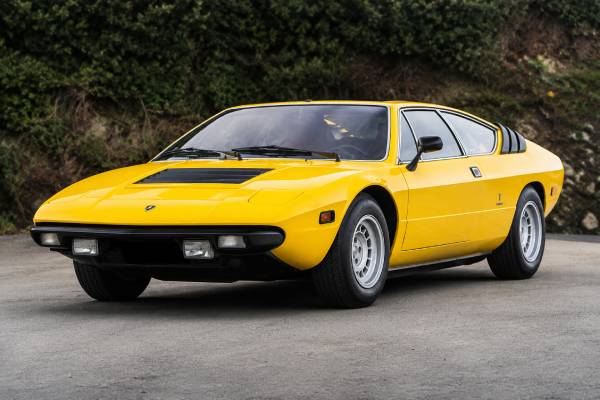
The Lamborghini Urraco P250 is the compact mid-engine V8 Lamborghini that tried to make Sant’Agata ownership more usable, more affordable, and more modern without losing the drama of the badge. Launched as a 2+2 coupé with a transverse 2.5-liter V8, Bertone styling, and a five-speed manual gearbox, it sat below the Miura, Espada, and later Countach as Lamborghini’s answer to cars such as the Ferrari Dino 308 GT4, Maserati Merak, and high-end Porsche 911.
Today, the Urraco P250 appeals because it is rare, mechanically distinctive, and still undervalued compared with Lamborghini’s better-known V12 models. It is not the easiest classic exotic to own, and neglected cars can become expensive quickly. But a well-sorted P250 gives a sharp, high-revving, very Italian driving experience in a compact package that feels unlike almost anything else from the 1970s.
Table of Contents
- Why the Urraco P250 Mattered
- L240 V8, Chassis, and Key Specs
- Production, Variants, and Authenticity Clues
- Bertone Design and Mid-Engine Packaging
- How the Urraco P250 Drives
- Maintenance, Restoration, and Common Risks
- Market Values and Buying Checklist
Why the Urraco P250 Mattered
The Urraco P250 mattered because it was Lamborghini’s first serious attempt at a smaller, higher-volume mid-engine car. It was not designed to replace the Miura or Espada; it was meant to bring Lamborghini into a broader sports-car market where buyers wanted exotic engineering in a more compact, less intimidating shape.
The project began during a difficult but ambitious period for Lamborghini. Ferruccio Lamborghini wanted a car that could compete with the Dino and Porsche 911 while giving the company a model below its expensive V12 machines. The result was shown as the Urraco prototype at the 1970 Turin Motor Show, though customer production did not properly begin until the early 1970s.
The name followed Lamborghini tradition. “Urraco” referred to a breed or line of Spanish fighting bull, but the car itself was less brute-force than the name suggested. It was smaller, cleverer, and more packaging-driven than the front-engine GTs that helped establish the company.
Marcello Gandini at Bertone styled the body, and Paolo Stanzani led much of the engineering thinking behind the car. The P250 used a new Lamborghini V8 rather than a shortened version of the V12. That decision mattered. Lamborghini needed an engine compact enough for transverse mounting, light enough for a smaller chassis, and powerful enough to make the Urraco feel like a real exotic rather than a diluted entry model.
The P250 occupied an unusual place in Lamborghini history. It was a 2+2, but its rear seats were small. It was a mid-engine car, but it aimed for usability rather than pure show-car aggression. It had a 2.5-liter engine, but its 220 hp output was serious for the time. It was meant to be more attainable, but it was still expensive, hand-built, and complex.
That tension explains much of the Urraco’s character. It was clever and charismatic, but it arrived late, during a turbulent period for Lamborghini and the wider performance-car market. The 1973 oil crisis, changing emissions rules, and Lamborghini’s own financial pressure all worked against it. The Urraco never became the sales success Lamborghini wanted.
Its influence lasted longer than its sales figures suggest. The Urraco platform led toward the Silhouette and later the Jalpa, helping define Lamborghini’s smaller V8 line before the company eventually moved away from that formula. It also showed that Lamborghini could build something more compact than a V12 flagship while keeping the brand’s mid-engine identity.
Collectors now look at the P250 with more respect than they did years ago. It has the right ingredients: a Gandini body, a Lamborghini-built engine, low production, manual transmission, mid-engine layout, and a clear place in the brand’s development. It is still less famous than a Miura, Countach, or Diablo, but that is part of the appeal. The Urraco P250 is a connoisseur’s Lamborghini, especially when original, documented, and properly restored.
L240 V8, Chassis, and Key Specs
The Urraco P250’s core appeal is its L240 V8: a compact, high-revving 2.5-liter engine mounted transversely behind the cabin. The engine gives the car its personality, while the chassis layout makes it one of the more technically interesting compact exotics of the 1970s.
| Category | Specification |
|---|---|
| Model | Lamborghini Urraco P250 |
| Production years | 1972–1976 |
| Body style | Two-door 2+2 coupé |
| Designer | Marcello Gandini at Bertone |
| Engine code | L240 |
| Engine layout | Transverse mid-mounted 90-degree V8 |
| Displacement | 2,463 cc |
| Bore x stroke | 86 mm x 53 mm |
| Valve gear | Single overhead camshaft per bank, 2 valves per cylinder |
| Fuel system | Four twin-choke Weber carburetors on European P250 models |
| Maximum power | 220 hp / 220 CV at around 7,500–7,800 rpm |
| Transmission | 5-speed manual |
| Drivetrain | Rear-wheel drive |
| Wheelbase | 2,450 mm |
| Length | About 4,250 mm |
| Width | About 1,760 mm |
| Height | About 1,160 mm |
| Top speed | About 240–245 km/h, depending on source and specification |
The short-stroke V8 is central to the car’s feel. With an 86 mm bore and 53 mm stroke, it was built to rev rather than rely on low-speed torque. That makes the P250 very different from Lamborghini’s large V12 grand tourers. It wants clean carburetion, temperature stability, and revs. When tuned well, it feels eager and mechanical; when neglected, it can feel flat, uneven, and expensive.
The engine’s transverse installation was a packaging solution. By placing the V8 sideways behind the cabin, Lamborghini kept the car compact while leaving room for small rear seats. This helped the Urraco compete with other “junior” exotics, but it also made servicing more involved than on a simple front-engine sports car.
The gearbox is a five-speed manual, and the drivetrain sends power to the rear wheels. The transmission is part of the car’s charm, but it needs proper adjustment, correct oil, and mechanical sympathy. Fast, careless shifts in a cold Urraco are not the way to enjoy one.
The suspension layout used independent suspension, with geometry intended to give the car genuine mid-engine balance. Compared with a front-engine GT, the Urraco feels more compact and alert. Compared with a later modern Lamborghini, it feels narrow, light, and transparent, though period tires and braking systems set the limits.
The braking system is disc-based and adequate when properly rebuilt, but buyers should remember that 1970s braking expectations differ from modern ones. Brake balance, hose age, caliper condition, master-cylinder health, and pad choice all matter more than brochure figures.
The steering is unassisted and should feel direct once the car is moving. Heavy low-speed steering is normal, especially on wider modern tires, but vague response, pulling, or uneven effort suggests worn suspension parts, poor alignment, tired tires, or accident damage.
Performance figures vary across period road tests and later references. A good European-spec P250 is usually quoted around 220 hp and roughly 240 km/h or more at the top end. Acceleration depends heavily on tune, tire choice, gearing, driver technique, and how honestly the car has been maintained. The useful takeaway is simple: the P250 is quick enough to feel special, but its value lies more in balance, sound, rarity, and engineering than in modern supercar speed.
Production, Variants, and Authenticity Clues
The P250 is the main early Urraco variant and the version most closely tied to the model’s original idea. Most accepted references place P250 production at about 520 cars, making it rare but not impossibly obscure by Lamborghini standards.
The Urraco family included three main European variants: the P250, the smaller-displacement P200, and the later P300. The P250 came first for customers and used the 2.5-liter L240 V8. The P200 was developed mainly around the Italian tax environment, where cars above two liters faced heavy penalties. The P300 brought a larger 3.0-liter engine and more power, making it the strongest factory development of the line.
| Variant | Engine | Main purpose or appeal |
|---|---|---|
| P250 | 2.5-liter V8 | Original production version and core Urraco model |
| P250 S | 2.5-liter V8 | Improved trim and comfort features, with similar basic performance |
| P111 | 2.5-liter V8 with U.S.-market emissions changes | Federalized U.S.-market version with reduced output and heavier equipment |
| P200 | 2.0-liter V8 | Italian-market tax-conscious version |
| P300 | 3.0-liter V8 | More powerful later version with greater performance appeal |
The P250 S is especially important for buyers because sellers sometimes use P250 and P250 S descriptions loosely. The S generally brought a more refined interior specification, with features such as leather trim, power windows, and tinted glass often associated with the improved version. Mechanical performance was broadly similar, so condition and originality often matter more than the badge alone.
The P111 is a different case. It was a U.S.-market adaptation of the P250 idea, altered to meet American emissions and bumper rules. These cars are much rarer than the European P250, but they are not necessarily more desirable to every buyer because added equipment and emissions changes reduced performance and changed the car’s appearance.
For authenticity, the first task is to identify what the car actually is. A serious buyer should confirm the chassis number, engine number, body identity, production date, market specification, and any factory or period documentation. Urracos are old enough that registration papers, later restorations, and auction descriptions can disagree.
Important authenticity checks include:
- Confirming whether the car is a P250, P250 S, P111, P200, or P300.
- Checking the engine type and displacement against the claimed model.
- Verifying whether trim, bumpers, lighting, instruments, and carburetion match the claimed market.
- Looking for evidence of right-hand-drive or left-hand-drive originality rather than later conversion.
- Reviewing restoration invoices for engine, gearbox, suspension, brakes, paint, and interior work.
- Comparing color and upholstery with period records when documentation exists.
- Inspecting chassis plates and stampings carefully for consistency.
Matching numbers matter because the Urraco is now a collector car, not just an old exotic. A non-original engine or gearbox does not automatically make a car worthless, but it changes the value conversation. On a rare Lamborghini, originality affects confidence, resale, and eligibility for certain concours or historic events.
Factory documentation is valuable. Lamborghini’s heritage services and specialist historians can help establish whether a car retains its original configuration, though availability of records can vary. Old invoices, import papers, dealer correspondence, photographs, and ownership history can be just as useful when they create a clear timeline.
Year-by-year changes were not always dramatic, but details changed. Later cars may show black exterior trim where earlier cars used brighter finishes. Steering wheels, window frames, wipers, upholstery details, and equipment can differ. Because Lamborghini production in this period was low-volume and sometimes inconsistent, a good inspection should separate true factory variation from later substitution.
Collectors should be careful with over-restored cars. A Urraco that looks perfect in photos may have incorrect materials, modernized details, or cosmetic work hiding corrosion and mechanical weakness. A slightly patinated but honest car with strong records can be a better long-term buy than a shiny car with missing history.
Bertone Design and Mid-Engine Packaging
The Urraco P250 looks distinctive because Gandini blended wedge-era design with a practical 2+2 brief. It is lower, sharper, and more exotic than a typical 1970s sports coupé, yet less theatrical than a Countach.
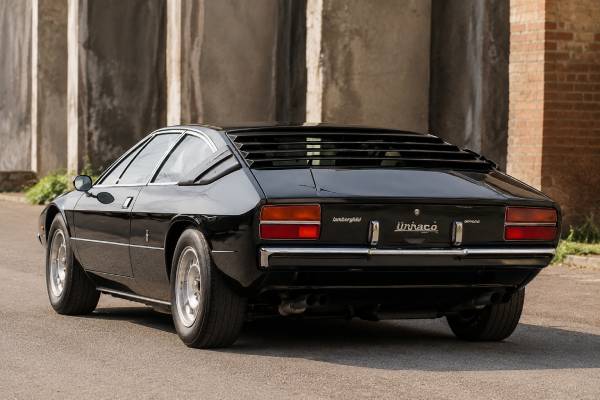
The nose is clean and low, the glasshouse is airy for a mid-engine car, and the rear quarter treatment is one of the car’s signature features. The louvered side and rear details are not just decoration; they help the body manage engine-bay heat and create the visual rhythm that made many Gandini designs instantly recognizable.
The shape also reflects the engineering challenge. Lamborghini wanted a mid-engine car with rear seats, so the cabin had to sit forward enough for the engine package and rear seating area to coexist. The transverse engine helped shorten the drivetrain length, but the Urraco still had to balance style, cooling, cabin space, and service access.
Compared with the Miura, the Urraco feels more geometric and more obviously 1970s. Compared with the Countach, it is calmer and more usable. It does not have scissor doors, extreme width, or outrageous ducts. Its appeal is subtler: crisp proportions, compact size, and a shape that rewards close inspection.
Exterior details that define the P250
Several design features help identify the Urraco’s personality:
- A compact wedge profile without the visual excess of later supercars.
- Louvers and vents that connect the design to its mid-engine layout.
- A low front end that gives the car a purposeful stance.
- Slim pillars and good glass area compared with many later exotics.
- Bertone surfacing that feels clean rather than over-decorated.
Early cars can appear more delicate because of bright trim details, while later or updated cars may look more modern with darker trim. Both looks have appeal, but buyers should check whether the details match the car’s build period.
Cockpit and cabin layout
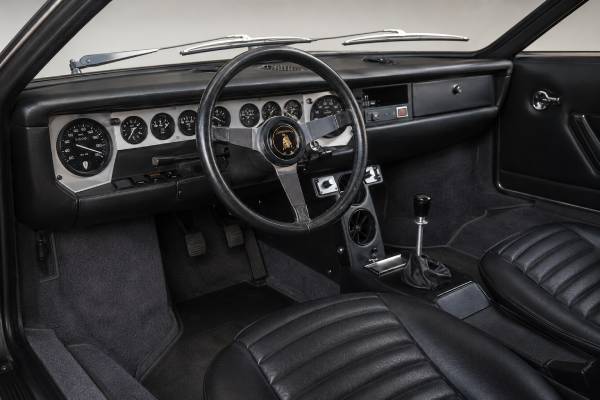
Inside, the Urraco is more compact GT than luxury car. The driving position is low, the windscreen gives a broad view forward, and the rear seats are best understood as occasional seats or luggage space. This was normal for the class. The “2+2” layout added flexibility, but it did not turn the Urraco into an Espada.
The dashboard design is period Lamborghini: interesting, driver-focused, and not always as ergonomic as modern owners expect. Switchgear, ventilation, gauges, and trim should all be inspected carefully because missing or incorrect interior parts can be difficult to source.
Cabin heat and ventilation deserve attention. Mid-engine cars from this period can place significant thermal load near the cabin. If the cooling system, insulation, engine sealing, or ventilation is poor, the Urraco can become hot and tiring. A well-sorted car is more usable than its reputation suggests, but a tired one can feel fragile and uncomfortable.
Engineering choices that make it special
The most unusual feature remains the transverse V8. Many mid-engine cars place the engine longitudinally, but Lamborghini used a compact side-to-side installation to meet the Urraco’s packaging goals. This made the car technically clever, but it also contributed to service complexity.
The chassis and body were built around a low-volume exotic production process. These cars were not assembled like mass-market vehicles. Panel fit, trim finish, and small construction details can vary. That does not excuse poor repair work, but it does mean a knowledgeable inspector is more useful than someone applying modern factory tolerances blindly.
The Urraco’s sound is also a special feature. A small Lamborghini V8 with carburetors produces a different voice from the company’s V12s. It is harder-edged, lighter, and more urgent as the revs rise. Exhaust condition, carburetor balance, ignition health, and intake setup all affect whether the car sounds crisp or merely noisy.
How the Urraco P250 Drives
A healthy Urraco P250 feels compact, mechanical, and eager, with its best character above low revs. It is not a modern point-and-shoot supercar; it rewards warm-up, smooth inputs, and a driver who enjoys the process.
At startup, the carbureted V8 needs the right technique. A well-tuned car should settle cleanly once warm, but cold behavior can be uneven if the carburetors, ignition, fuel pressure, or chokes are not right. Rough running is common on neglected examples, but it should not be dismissed as “just old Lamborghini character.”
The engine’s short-stroke nature means the car likes revs. Low-speed torque is not the main event. The P250 comes alive when the V8 is cleanly pulling through the midrange and toward the upper part of the tachometer. That is where the car feels exotic.
The gearbox should be treated with care when cold. Shift quality depends on adjustment, synchro health, clutch condition, mounts, and oil choice. A good gearbox feels mechanical and deliberate. Crunching, baulking, jumping out of gear, or excessive drivetrain noise should be investigated before purchase.
Steering is one of the Urraco’s strengths. At parking speeds it can be heavy, especially if fitted with modern tires or incorrect sizes. Once moving, it should become accurate and communicative. The front end should not feel loose or nervous. If it does, look for old tires, worn bushings, incorrect alignment, tired dampers, or structural repair issues.
Ride quality is better than many people expect from a small mid-engine exotic. The car was not built as a stripped track machine. It has a GT side, especially on open roads. That said, old suspension rubber, tired dampers, worn ball joints, and poor tire choice can make the car feel harsh or unstable.
Braking is period-correct. A rebuilt system with good pads, fresh fluid, and properly functioning calipers can feel reassuring, but it will not mimic a modern ABS-equipped performance car. A long pedal, pulling, vibration, or weak stopping power is not normal and usually means the system needs work.
Cornering balance is where the P250 makes sense. It feels smaller and more agile than Lamborghini’s larger V12 cars. The mid-engine layout gives it good rotation, but old tires and short-wheelbase reactions require respect. Lift-off behavior, wet roads, and poorly matched tires can make the car less forgiving than a front-engine GT.
On a mountain road, the best Urraco P250 experience comes from rhythm rather than brute force. Keep the engine in its useful range, shift cleanly, let the steering talk, and avoid overdriving the brakes. On a highway, the car can cruise well enough, but noise, heat, and ventilation depend heavily on condition.
Track use is possible but should be approached carefully. The Urraco is a valuable classic with expensive mechanical parts. Sustained high temperatures, hard braking, and repeated high-rpm use will expose weaknesses quickly. Anyone who wants to drive one hard should first upgrade maintenance, not horsepower.
The difference between a sorted and tired Urraco is huge. A good car feels charming, quick, and alive. A poor one feels hot, vague, underpowered, and fragile. That gap is why buying the best-condition example usually costs less than rescuing a neglected bargain.
Maintenance, Restoration, and Common Risks
The Urraco P250 is not unreliable in a simple sense; it is unforgiving of neglect, poor restoration, and non-specialist work. Its biggest ownership risk is buying a car that looks presentable but needs deep mechanical and structural renewal.
The engine must be evaluated by someone who understands carbureted Italian exotics. Compression, leak-down, oil pressure, cooling behavior, carburetor balance, ignition timing, cam drive condition, fuel delivery, and exhaust leaks all matter. A car that has been sitting can need a full fuel-system cleaning before it can be trusted.
Known ownership concerns include:
- Carburetors out of balance or worn internally.
- Aging fuel lines, pumps, filters, and tank contamination.
- Cooling-system weakness from clogged radiators, old hoses, poor fans, or internal corrosion.
- Oil leaks from gaskets and seals.
- Ignition problems caused by old wiring, distributors, coils, or incorrect components.
- Gearbox wear, especially synchro wear or poor shift adjustment.
- Clutch wear or hydraulic faults.
- Brake caliper seizure, old hoses, and master-cylinder problems.
- Suspension bushing deterioration and tired dampers.
- Electrical faults from old connectors, grounding issues, and previous repairs.
Corrosion is a major inspection area. The Urraco’s body and structure can hide rust in areas that are not obvious in auction photos. Check the sills, floor sections, wheel arches, suspension mounting areas, lower doors, windshield and rear-window surrounds, front structure, rear structure, and any seams or boxed sections where moisture can sit.
Accident damage is another major risk. A mid-engine exotic with poor chassis repair will never feel right. Panel gaps alone do not tell the full story, because low-volume cars can vary, but asymmetry, strange tire wear, uneven ride height, poor alignment range, cracking paint near structural points, and mismatched repairs are warning signs.
Restoration quality varies widely. Some Urracos were restored when their market value was low, so work may have been done cheaply or with incorrect parts. Others were modified to keep them running when original components were unavailable. That history is understandable, but today it affects value.
Parts availability is mixed. Some mechanical items can be rebuilt, adapted, or sourced through specialists, while Urraco-specific trim, glass, lights, interior pieces, and engine components can be difficult and expensive. Missing parts are often more troublesome than worn parts.
A proper recommissioning after storage should include:
- Drain and inspect old fuel.
- Clean or rebuild carburetors as needed.
- Replace aged fuel hoses with correct modern-safe lines.
- Inspect the cooling system fully, not just the coolant level.
- Change engine oil, gearbox oil, brake fluid, and clutch fluid.
- Check ignition components and timing.
- Inspect tires by age as well as tread depth.
- Rebuild brakes if there is any doubt.
- Inspect suspension rubber, bearings, and steering joints.
- Road-test gradually while monitoring temperature, pressure, and leaks.
Originality versus upgrades is a careful decision. Sensible hidden upgrades, such as improved cooling fans, better wiring protection, modern fuel hose, or upgraded ignition reliability, can make the car easier to enjoy. Visible modifications, engine swaps, non-original interiors, incorrect wheels, and heavy performance changes can reduce collector appeal.
Restoration cost can overtake market value quickly. Paint, corrosion repair, engine rebuilding, gearbox work, interior retrimming, and missing trim replacement can each become major expenses. A cheap Urraco with needs is rarely cheap for long.
The best ownership strategy is preventive. Drive the car regularly enough to keep systems alive, service it with a marque specialist, keep detailed records, and fix small problems before they cascade. A Urraco rewards active care more than static storage.
Market Values and Buying Checklist
The Urraco P250 remains one of the more attainable classic Lamborghinis, but the gap between average cars and excellent cars is large. In recent market data, P250 values often sit well below the most famous V12 Lamborghinis, yet strong, original, well-documented cars can still command serious money.
Market guides and auction trackers show the P250 commonly trading in a broad band rather than a tight price range. Public results have included cars around the high five figures in dollars or pounds, with better P250 S examples and especially strong cars reaching higher. Asking prices in Europe can sit above auction averages when dealers offer restored, low-mileage, or unusually documented examples.
The most important point is that condition matters more than headline price. A car bought for less can become the expensive one if it needs bodywork, engine work, gearbox repair, interior sourcing, and electrical sorting. A more expensive car with a documented restoration by a respected specialist may be the safer buy.
| Value factor | Why it matters |
|---|---|
| Original engine and identity | Matching-number or correct-type cars inspire more collector confidence |
| Documentation | Invoices, history, import papers, and heritage records reduce uncertainty |
| Body condition | Corrosion and accident repair are among the biggest cost risks |
| Mechanical health | Engine, gearbox, cooling, brakes, and suspension can be expensive to restore |
| Trim completeness | Rare interior and exterior parts can be difficult to replace correctly |
| Specification | P250 S trim, market specification, colors, and originality influence appeal |
| Restoration quality | Correct specialist work is valuable; cosmetic-only restoration is risky |
Buyer inspection priorities
Before buying a Urraco P250, arrange a pre-purchase inspection with a Lamborghini or Italian exotic specialist. A normal classic-car inspection is not enough.
Check these areas first:
- Chassis number, engine number, and model identity.
- Evidence of P250, P250 S, or P111 specification.
- Rust in sills, floors, suspension areas, and window surrounds.
- Accident repair, poor panel alignment, and structural asymmetry.
- Engine compression, leak-down, oil pressure, and temperature control.
- Carburetor condition and fuel-system safety.
- Gearbox synchros, clutch operation, and linkage adjustment.
- Brake performance, caliper condition, and fluid age.
- Suspension joints, bushings, dampers, and steering wear.
- Electrical function, including lights, fans, gauges, windows, and charging.
- Interior originality, missing trim, seat condition, and dashboard condition.
- Tire age, wheel correctness, and alignment behavior.
- Invoices proving recent specialist work rather than vague claims.
Cars to seek
The best P250 to buy is a complete, matching, documented car that starts easily, runs cool, shifts properly, stops straight, and has no hidden rust. Original paint and interior can be desirable when preserved well, but a properly restored car may be better for regular use.
Strong candidates often have:
- Long-term ownership history.
- Specialist service invoices.
- Clear import and registration documents.
- Correct carburetion and engine configuration.
- Complete interior and trim.
- No evidence of major accident damage.
- A known restoration path with photos and invoices.
- Sensible reliability improvements that do not damage originality.
Cars to avoid
Avoid cars that are incomplete, poorly documented, heavily modified, or freshly painted without bodywork evidence. A shiny Urraco with no underside photos, no mechanical records, and no cold-start video should be treated carefully.
Walk away or renegotiate strongly if you find:
- Missing chassis or engine identification clarity.
- Serious corrosion in structural areas.
- Hot running during a proper road test.
- Low oil pressure once warm.
- Gearbox crunching beyond normal cold stiffness.
- Non-functioning cooling fans or gauges.
- Incorrect engine or carburetor setup without disclosure.
- Major trim pieces missing.
- Seller resistance to specialist inspection.
Long-term collectability
The Urraco P250 has a strong long-term case because it is rare, beautiful, mechanically unique, and historically important to Lamborghini’s V8 story. It is unlikely to become as universally desired as the Miura or Countach, but it does not need to. Its audience is smaller and more specialist.
The best examples should remain attractive to collectors who value design, originality, and analog driving feel. The weaker cars will remain difficult because restoration costs are high relative to market value. That split is common with underappreciated exotics: excellent cars become more prized, while project cars become harder to justify.
For an enthusiast who wants a classic Lamborghini to drive, the P250 can be deeply rewarding. For an investor, selectivity is everything. Buy the car with the best history and condition, not the one with the lowest advertised price. In the Urraco world, the cheapest car is often the one that has already had the expensive work done correctly.
References
- Lamborghini Urraco: innovation turns 50 2020
- FIA Historic Database 1975
- Lamborghini Urraco P250 – Specs & Performance – LamboCars 2015
- Lamborghini Urraco P250 Market – CLASSIC.COM 2026
- 1975 Lamborghini Urraco P250 | Hagerty Valuation Tools® 2026
Disclaimer
This article is for informational purposes only and is not a substitute for professional diagnosis, inspection, repair, valuation, or restoration advice. Specifications, torque values, service intervals, procedures, and parts compatibility can vary by VIN, market, production date, and equipment. Always verify details against official service documentation and consult a qualified Lamborghini or classic Italian exotic specialist before buying, servicing, or restoring a vehicle.
If this guide helped you, please share it on Facebook, X/Twitter, or your favorite car community to support our work.