
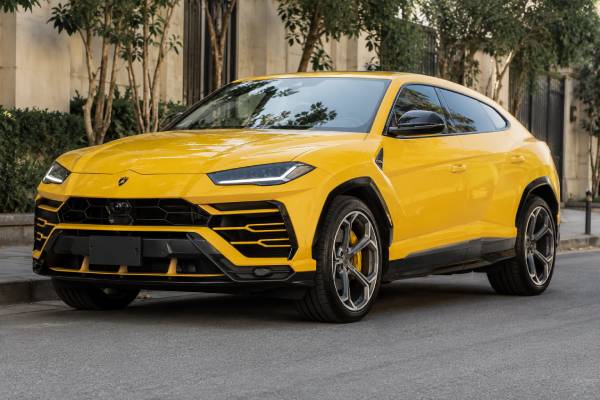
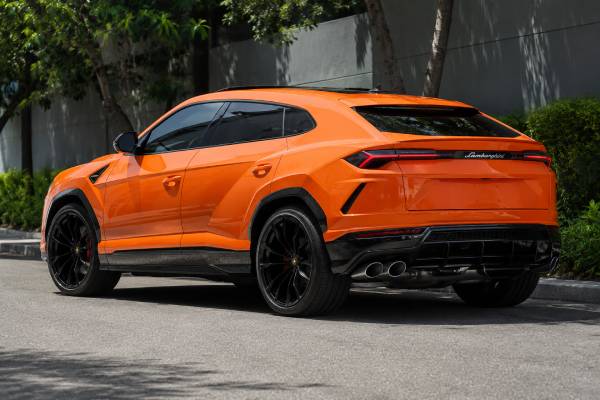
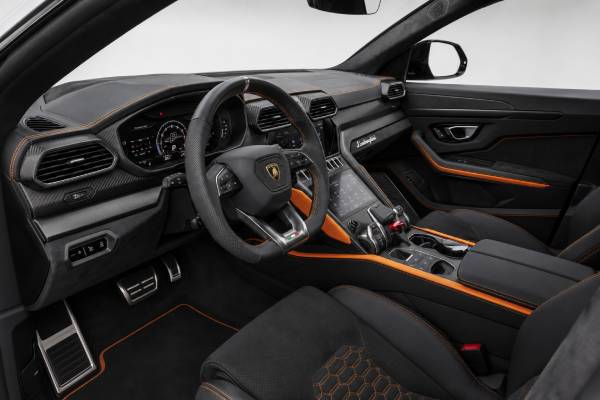
The Lamborghini Urus LB636 is the car that turned Lamborghini from a low-volume supercar maker into a far larger luxury-performance brand. Built from 2018 through the pre-facelift 2022 model year in its original 650 hp form, the Urus used the DHU 4.0-liter twin-turbo V8, permanent all-wheel drive, four-wheel steering, adaptive air suspension, active anti-roll technology, and carbon-ceramic brakes to make a five-door SUV feel far sharper than its size suggests. It was not Lamborghini’s first SUV in spirit—the LM002 came decades earlier—but it was the first modern Lamborghini designed to be used daily, carried four or five people, and still delivered near-supercar pace. For buyers, the Urus is appealing because it combines usability, image, and speed. For owners, it demands serious inspection discipline, strong service records, and a clear view of maintenance risk.
Table of Contents
- Why the LB636 Urus Changed Lamborghini
- DHU V8 Specs and Chassis Data
- Model Years, Options, and Factory Identity
- Design, Engineering, and Signature Features
- Road, Track, and Daily Driving Character
- Maintenance, Reliability, and Ownership Risk
- Market Values and Buying Checks
Why the LB636 Urus Changed Lamborghini
The Urus matters because it made Lamborghini usable every day without removing the brand’s drama. It gave the company a high-volume third model beside the Aventador and Huracán, and it brought Lamborghini buyers who wanted speed, status, family space, winter ability, and long-distance comfort in one vehicle.
Lamborghini revealed the production Urus in December 2017, with customer production following for the 2018 model year. The internal platform code LB636 identifies the production SUV family. The early 2018–2022 version covered here is the original pre-facelift Urus with the 650 hp DHU 4.0-liter twin-turbo V8, before the later Urus S, Urus Performante, and Urus SE plug-in hybrid changed the line.
The Urus sits in an unusual place in Lamborghini history. It is a front-engine, five-door SUV built on the Volkswagen Group MLB Evo architecture, so it shares broad platform thinking with high-end Audi, Porsche, Bentley, and Volkswagen SUVs. Yet Lamborghini did not simply rebadge an existing luxury SUV. The company gave the Urus its own calibration, exterior body, cockpit, dynamic systems, brake package, sound character, and brand-specific design language.
Its importance is partly commercial. The Urus dramatically expanded Lamborghini’s reach because it fits real daily use. Owners can drive it to work, carry children, cross long distances, use it in bad weather, and still enjoy the presence of a Lamborghini. That mix made it one of the most visible exotic vehicles in major cities worldwide.
Its importance is also cultural. The Urus helped normalize the idea of the ultra-performance SUV. Before it, a Lamborghini buyer often had to choose between a supercar and something practical from another brand. After it, the buyer could own one Lamborghini that handled commuting, travel, winter roads, and fast weekend driving.
For collectors, the original 650 hp LB636 is not rare in the traditional limited-production sense, but it is significant as the first series-production modern Lamborghini SUV. Long-term desirability will likely depend less on total rarity and more on condition, specification, originality, color, mileage, documentation, and whether the car avoided abuse or poor modifications.
DHU V8 Specs and Chassis Data
The core specification is straightforward: a 3,996 cc twin-turbo V8 with 650 hp, 850 Nm of torque, an eight-speed automatic gearbox, and permanent all-wheel drive. The result is an SUV that weighs under 2,200 kg yet reaches 100 km/h in 3.6 seconds and 305 km/h at the top end.
| Item | Specification |
|---|---|
| Model | Lamborghini Urus LB636 |
| Production era covered | 2018–2022 pre-facelift 650 hp model |
| Engine code | DHU |
| Engine layout | 90-degree petrol V8 |
| Displacement | 3,996 cc |
| Induction | Twin-scroll bi-turbocharging |
| Maximum power | 650 hp / 478 kW at 6,000 rpm |
| Maximum torque | 850 Nm from 2,250–4,500 rpm |
| Maximum engine speed | 6,800 rpm |
| Transmission | 8-speed automatic |
| Drivetrain | Permanent all-wheel drive with Torsen center differential and active rear torque vectoring |
The DHU V8 is not a traditional naturally aspirated Lamborghini engine, and that is intentional. Lamborghini chose turbocharging because an SUV needs strong torque at low engine speed, especially when climbing, overtaking, towing in some markets, or driving off pavement. The engine’s broad torque band makes the Urus feel explosive without needing high revs.
The eight-speed automatic gearbox is torque-converter based. It is smoother in traffic than a single-clutch exotic gearbox and better suited to the Urus mission than a track-first transmission. In relaxed modes, it shifts early and keeps revs low. In Sport and Corsa, it holds gears longer and responds faster to throttle and paddle inputs.
| Area | Data |
|---|---|
| Platform | Volkswagen Group MLB Evo-based Lamborghini SUV architecture |
| Suspension | Adaptive air suspension with variable ride height |
| Steering | Electromechanical steering with Lamborghini rear-wheel steering |
| Active chassis systems | Active roll stabilization and drive-mode-linked damping |
| Front brakes | Carbon-ceramic discs, 440 mm x 40 mm |
| Rear brakes | Carbon-ceramic discs, 370 mm x 30 mm |
| Wheel range | 21 to 23 inches, depending on specification |
| Tire range | Front up to 285/35 R23; rear up to 325/30 R23 |
| Wheelbase | 3,003 mm |
| Length | 5,112 mm |
| Width | 2,016 mm excluding mirrors |
| Height | 1,638 mm |
| Curb weight | Less than 2,200 kg |
| Fuel tank | 85 liters; 75 liters in the U.S. market |
| Luggage capacity | 616 to 1,596 liters |
| 0–100 km/h | 3.6 seconds |
| 0–200 km/h | 12.8 seconds |
| Top speed | 305 km/h |
| 100–0 km/h braking | 33.7 meters |
The most important chassis detail is the combined effect of air suspension, rear-wheel steering, torque vectoring, and active roll control. One system alone would not hide the Urus’s mass. Together, they make the car rotate more eagerly at low and medium speeds, stay composed at high speeds, and feel less tall than it is.
Model Years, Options, and Factory Identity
The 2018–2022 Urus range is easiest to understand as one main 650 hp model with many personalisation paths. Later versions brought bigger mechanical differences, but the early LB636 cars vary mostly by model year equipment, market specification, trim packages, wheels, colors, interior choices, and option content.
The base identity is consistent: five-door SUV body, DHU 4.0-liter twin-turbo V8, eight-speed automatic, permanent all-wheel drive, carbon-ceramic brakes, adaptive air suspension, rear-wheel steering, and Lamborghini’s ANIMA drive-mode system. Most cars were heavily optioned, so two examples from the same model year can feel very different inside.
Important factory and market elements include:
- Seating layout: five-seat rear bench or four-seat layout with individual rear chairs, depending on configuration.
- Wheel sizes: 21-inch wheels were the more comfort-friendly choice, while 22- and 23-inch wheels gave the Urus a more aggressive stance and sharper steering response at the cost of ride compliance and tire cost.
- Brake system: carbon-ceramic brakes were central to the Urus performance package, not a minor cosmetic detail.
- Off-road modes: Terra and Sabbia were tied to off-road-oriented specification in many markets, while Strada, Sport, Corsa, Neve, and EGO defined the main driving personality.
- Interior trim: leather, Alcantara, contrast stitching, carbon-fiber trim, embroidered details, and color-matched accents strongly affect desirability.
- Audio and technology: the Bang & Olufsen 3D audio system, head-up display, night vision, and ADAS packages can matter to daily users.
- Exterior appearance packages: black trim, body-color details, carbon elements, and special capsules can shift market appeal.
Special appearance editions
The pre-facelift Urus became a canvas for factory appearance packages. The Pearl Capsule emphasized bright exterior colors, gloss-black contrast areas, and bolder cabin trim. The Graphite Capsule leaned more subdued, pairing matte or satin-style exterior themes with bright accent colors.
These packages do not change the 650 hp mechanical foundation, but they can affect resale. A well-specified Pearl Capsule in a desirable Lamborghini color can attract a buyer who wants maximum visual impact. A restrained Graphite Capsule may appeal more to someone using the car daily and wanting a less extroverted look.
Authenticity and documentation
Because many Urus examples were leased, financed, wrapped, tuned, or modified, factory identity matters. A serious buyer should verify the original build specification, service history, warranty records, recall completion, and whether visible carbon, wheels, exhaust parts, body trim, and software remain factory-correct.
Useful documents include:
- original window sticker or build sheet
- Lamborghini dealer service invoices
- warranty and recall completion records
- tire and brake replacement invoices
- paint protection film or wrap records
- accident and paintwork documentation
- original manuals, keys, accessories, and service booklet where supplied
A modified Urus is not automatically a bad car, but undocumented tuning is a major risk. The DHU V8 and driveline are powerful enough in standard form. Software tunes, downpipes, altered emissions equipment, and aggressive launches can complicate warranty coverage, resale value, and long-term reliability.
Design, Engineering, and Signature Features
The Urus works visually because it does not try to look like a normal luxury SUV. It uses Lamborghini wedge themes, Y-shaped lighting, hexagonal details, a low roofline, frameless door glass, strong wheel arches, and a wide stance to make a tall, practical vehicle feel related to the brand’s supercars.
The front end is shaped around the idea that the engine sits ahead of the cabin. The hood is muscular, the air intakes are large, and the nose has an aggressive, low visual mass. From the side, the rising beltline and coupé-like roof give the Urus a fast profile despite its size. At the rear, the diffuser shape, slim lights, and broad shoulders keep the design tied to Lamborghini’s low, wide sports cars.
Engineering that changes the feel
The Urus is heavy, but Lamborghini engineered it to manage weight rather than pretend weight is not there. Four-wheel steering is one of the key systems. At lower speeds, the rear wheels steer opposite the fronts, making the car feel shorter and easier to place. At higher speeds, the rear wheels steer in the same direction as the fronts, improving stability during lane changes and fast bends.
Active roll stabilization also matters. Tall SUVs naturally lean in corners. The Urus reduces that sensation by controlling body roll electronically, so the car stays flatter and more responsive during quick direction changes. This is one reason it can feel surprisingly composed on a mountain road.
The air suspension gives the Urus a wide operating range. It can ride lower for high-speed stability and higher for rough surfaces. That flexibility is central to the car’s appeal because owners expect one vehicle to handle city streets, highways, steep driveways, snow, gravel, and fast roads.
Cockpit and controls
The cabin mixes Lamborghini theater with Volkswagen Group usability. The central “Tamburo” drive-mode selector gives the driver a physical connection to the car’s character. Strada softens the car for daily use. Sport wakes up the exhaust, throttle, gearbox, and chassis. Corsa makes the Urus more serious and direct. Neve is for snow, while Terra and Sabbia suit loose surfaces where equipped. EGO lets the driver combine preferred settings.
The dual-screen infotainment layout gives the cabin a modern feel, but it also means condition checks should include all screens, haptic controls, climate functions, cameras, sensors, and driver-assistance features. These systems are central to the car, not optional gadgets that can be ignored.
Sound and emotional character
The Urus cannot sound like a naturally aspirated V10 Huracán or V12 Aventador, but it has its own personality. The twin-turbo V8 gives a deep, muscular tone, especially in Sport and Corsa. The soundtrack is more aggressive luxury-performance SUV than classic Lamborghini shriek. That difference matters to enthusiasts: the Urus delivers drama through torque, speed, stance, cabin design, and exhaust weight rather than a high-rpm supercar wail.
Road, Track, and Daily Driving Character
The Urus feels quickest where real drivers use it most: from low and medium speeds. The 850 Nm torque plateau gives immediate thrust, and the all-wheel-drive system converts that torque into hard acceleration with very little drama.
In Strada, the Urus is calm enough for commuting. The gearbox shifts smoothly, the suspension breathes better over broken pavement, and the exhaust is restrained. The wide body still requires care in tight streets and parking garages, but the driving position, cameras, and sensors help. On smaller wheels, it can be surprisingly comfortable. On 23-inch wheels, the ride becomes firmer and more tire-sensitive.
In Sport, the car sharpens noticeably. The throttle responds faster, the gearbox holds lower gears, the exhaust becomes louder, and the rear-biased torque behavior is easier to feel. Sport is often the best road mode because it gives the Urus energy without making it too stiff for imperfect pavement.
Corsa is the most focused mode. It suits smooth fast roads or track use, but it can feel too aggressive for daily driving. The car becomes more immediate and flatter, yet the driver is always aware that this is a large SUV carrying real mass. The best way to drive it quickly is cleanly: brake in a straight line, let the nose settle, rotate the car with steering and throttle, then use the torque on exit.
The brakes are a major part of the experience. The huge carbon-ceramic discs give strong stopping performance and help the Urus repeat hard stops better than a conventional steel-braked SUV. On the road, they can feel firm when cold, and buyers should understand that replacement cost is high. On track, they are capable, but the Urus is still heavy. A track-driven example can consume tires and brake material quickly.
Visibility is better than in Lamborghini supercars but not as open as a conventional family SUV. The roofline is low, the rear glass is angled, and the body is wide. Drivers who come from a Huracán or Aventador will find it easy. Drivers coming from a Range Rover or large Mercedes SUV will notice the Lamborghini driving position is more cockpit-like.
The tire choice changes the car more than many owners expect. Performance summer tires give the Urus its sharpest responses. All-season or winter tires improve bad-weather usability but soften steering and ultimate grip. Old tires are a serious red flag because age, heat cycles, and uneven wear can make a powerful SUV feel nervous or noisy.
Maintenance, Reliability, and Ownership Risk
The Urus is generally more usable than a traditional exotic, but it is not cheap to maintain. The right ownership mindset is simple: buy the best-documented car you can afford, inspect it like an exotic, and budget like the vehicle still cost well over $200,000 when new.
The DHU V8 is a strong engine when serviced correctly, but the Urus places heavy demands on its powertrain, cooling system, brakes, tires, suspension, and electronics. Many cars are used hard because they make speed feel easy. Launches, repeated high-speed driving, poor warm-up habits, tuning, and neglected servicing all raise risk.
Key inspection and maintenance areas include:
- Engine oil service: verify correct intervals, approved oil, and dealer or specialist records.
- Turbo system: listen for abnormal turbo noise, check boost behavior, and inspect for oil leaks or heat-related wear.
- Cooling system: look for leaks, low coolant history, overheating warnings, and damaged front heat exchangers.
- Transmission behavior: shifts should be smooth in normal driving and decisive in sportier modes.
- All-wheel-drive system: check for warning lights, driveline vibration, binding, or service history gaps.
- Air suspension: inspect ride-height behavior, compressor operation, uneven stance, and leaks.
- Active anti-roll system: warning lights or clunks can point to costly faults.
- Rear-wheel steering: confirm there are no steering system faults and that alignment is correct.
- Carbon-ceramic brakes: inspect disc thickness, surface condition, chips, cracks, pad life, and service records.
- Tires: check age, matching brand and specification, tread depth, inner-edge wear, and evidence of repeated launch use.
- Electronics: test both screens, cameras, parking sensors, ADAS systems, keyless access, seat controls, climate controls, and audio.
- Body condition: inspect front bumper, undertrays, wheel arches, rocker panels, and rear diffuser for curb, road-debris, and off-road damage.
Known issue patterns to take seriously
The Urus is complex, so small electronic problems should not be dismissed. Infotainment faults, camera failures, warning messages, driver-assistance errors, and battery-related low-voltage issues can create expensive diagnostic time. Recall and campaign completion should be checked by VIN through an authorized dealer or official recall database.
A 2022 rear-view camera-related recall involved the infotainment main unit on a small number of vehicles, and a later rear-view camera software-related recall covered a broader 2019–2024 Urus population. These are exactly the kind of issues a buyer should verify rather than assume have been completed.
Modified cars require extra caution. Aftermarket engine software may increase heat and driveline stress. Non-factory exhausts can create emissions and inspection problems. Lowering links or non-standard suspension changes can affect alignment and air-suspension behavior. Oversized aftermarket wheels may look dramatic but can worsen ride, tire wear, and wheel damage risk.
Ownership cost drivers
The largest routine cost drivers are tires, brakes, scheduled servicing, insurance, fuel, and depreciation. Tires can wear quickly because the Urus is heavy, powerful, and often driven enthusiastically. Carbon-ceramic brake parts are expensive, so a pre-purchase inspection should measure and document brake condition, not just say the car “stops well.”
Cosmetic condition also matters. Many Urus examples live in cities, where wheels, bumpers, door edges, and interior trim take abuse. A car with paint protection film, uncurbed wheels, clean leather, working electronics, and consistent service history is worth paying more for than a cheaper example with vague records.
Market Values and Buying Checks
The early 650 hp Urus has moved from new-car status into a mature used-exotic market. As of the current market, many 2019–2022 examples trade broadly from the mid-$100,000s to the low-$200,000s in the United States, with exceptional low-mileage, rare-color, highly optioned, or special-capsule cars asking more.
Values depend heavily on year, mileage, condition, color, factory options, service history, accident history, and whether the car is stock. A 2019 car with higher mileage, wheel damage, weak records, and aftermarket tuning sits in a different market from a late 2022 Pearl Capsule or Graphite Capsule with low mileage, clean paint, complete dealer history, and desirable colors.
| Value factor | Why it matters |
|---|---|
| Mileage | Low miles help, but extremely low use is less important than correct servicing and condition. |
| Color | Bold Lamborghini colors can bring attention; neutral colors may be easier for daily-use buyers. |
| Interior specification | Contrast stitching, carbon trim, Alcantara, and premium audio improve desirability. |
| Wheels and tires | 23-inch wheels look strong but raise tire and damage concerns; fresh matching tires add confidence. |
| Brake condition | Carbon-ceramic wear or damage can change the economics of the purchase quickly. |
| Service records | Complete Lamborghini dealer or specialist records support value and reduce uncertainty. |
| Factory originality | Stock cars usually have broader resale appeal than tuned or heavily modified examples. |
| Accident history | Paintwork, structural repairs, and airbag events reduce value and require expert review. |
Pre-purchase inspection checklist
A proper Urus inspection should be done by a Lamborghini dealer or a specialist with diagnostic access and model experience. A normal used-car inspection is not enough.
Use this sequence:
- Confirm VIN, market specification, original build, and option list.
- Check recall and service-campaign completion by VIN.
- Review every service invoice, not just stamps or verbal claims.
- Scan all control modules for current and stored faults.
- Inspect engine, turbo, cooling, and driveline systems for leaks or abnormal behavior.
- Measure carbon-ceramic brake condition and confirm pad life.
- Check tire age, matching specification, tread depth, and alignment wear.
- Test air suspension, drive modes, rear-wheel steering, cameras, ADAS, and infotainment.
- Inspect body panels, paint depth, glass, wheels, undertrays, and bumper edges.
- Road test the car from cold and warm, including low-speed maneuvering and highway speed.
Examples to seek and avoid
Seek a stock, well-documented car with clean paint, matching premium tires, verified brake health, no warning lights, complete records, and desirable factory options. A slightly higher-mileage car with excellent maintenance can be a better buy than a low-mileage car with gaps, old tires, and cosmetic neglect.
Avoid cars with unclear tuning, missing service records, unresolved electronic faults, cheap replacement tires, inconsistent panel gaps, heavy wheel damage, brake uncertainty, or seller resistance to specialist inspection. Also be cautious with cars that have been repeatedly wrapped, heavily customized, or used in promotional fleets unless the documentation is unusually strong.
The Urus is likely to remain desirable because it was the first modern Lamborghini SUV and because it remains fast, usable, and visually dramatic. It is not a guaranteed collector-grade investment in ordinary specification, but the best early examples should remain more appealing than neglected, modified, or poorly documented cars. Buy for condition and history first, color and options second, and price third.
References
- Urus Lamborghini | Lamborghini.com 2026 (Manufacturer Specifications)
- Lamborghini Urus_EN 2017 (Press Release)
- Fuel Economy of the 2022 Lamborghini Urus 2022 (Official Fuel Economy Data)
- Part 573 Safety Recall Report 25V903 2025 (Recall Database)
- Lamborghini Urus Market 2026 (Market Data)
Disclaimer
This article is for informational purposes only and is not a substitute for professional diagnosis, repair, valuation, or inspection. Specifications, torque values, service intervals, software campaigns, recall status, and repair procedures can vary by VIN, market, production date, and equipment. Always verify details against official Lamborghini service documentation and have any purchase inspected by a qualified Lamborghini dealer or specialist.
If this guide helped you, please share it on Facebook, X/Twitter, or your favorite automotive community to support our work.