
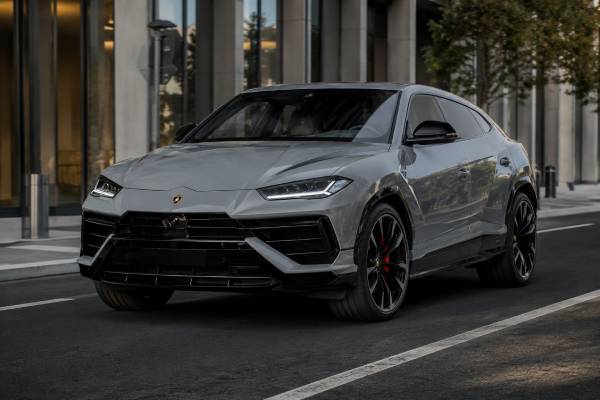
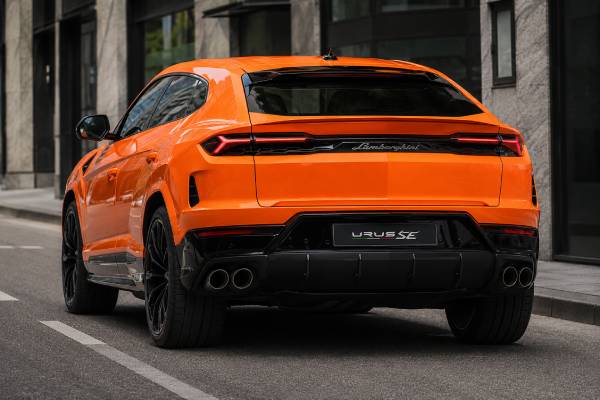
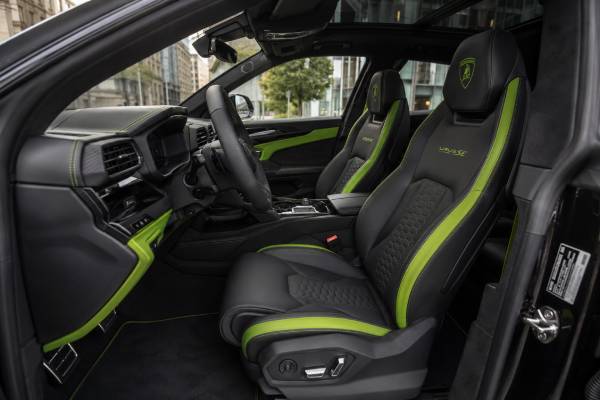
The Lamborghini Urus SE is the plug-in hybrid version of Lamborghini’s Super SUV, and it matters because it changes the Urus without weakening the idea behind it. It keeps the twin-turbo 4.0-liter V8, adds a powerful electric motor and a large high-voltage battery, and raises total output to 800 CV, or 588 kW. In everyday terms, it is faster, more flexible, more efficient in city use, and more technically complex than the Urus S it effectively replaces. For buyers, the SE is not just a facelift with a charging port. It brings revised aerodynamics, new torque-vectoring hardware, a redesigned cabin interface, more electric drive modes, and new ownership questions around battery health, software, brakes, tires, and warranty coverage. For enthusiasts, it is Lamborghini’s answer to a changing high-performance SUV market: still loud, wide, and dramatic, but now deeply hybrid.
Table of Contents
- Why the Urus SE matters
- Powertrain, chassis, and core specs
- Variants, options, and how to identify one
- Hybrid engineering, design, and special features
- How the Urus SE drives
- Maintenance, reliability, and hybrid ownership
- Market values and buying checklist
Why the Urus SE matters
The Urus SE is important because it turns Lamborghini’s best-selling formula into a plug-in hybrid without removing the V8 character that made the Urus successful. It is the first plug-in hybrid Urus and a key step in Lamborghini’s move toward a hybridized model range.
The original Urus arrived for the 2018 model year and gave Lamborghini something it had never had at scale: a usable, four-door, all-weather performance SUV that could bring new customers into the brand. It was not Lamborghini’s first SUV in history—the LM002 earned that distinction decades earlier—but the Urus was the model that made a Lamborghini SUV commercially central. It widened the brand’s audience without turning Lamborghini into a normal luxury-car maker.
The SE, launched in 2024, is the next major chapter. Instead of following the Urus S and Performante with a simple power bump, Lamborghini reworked the powertrain around a hybrid system. The 4.0-liter twin-turbo V8 remains, but it is paired with an electric motor integrated into the driveline and a 25.9 kWh lithium-ion battery. The result is a combined 800 CV and 950 Nm of torque, with official 0–100 km/h acceleration of 3.4 seconds and a 312 km/h top speed.
That makes the SE the most powerful production Urus so far. It also changes the way the car fits into Lamborghini’s lineup. The Revuelto brought plug-in hybrid technology to the V12 supercar space. The Urus SE brings the same strategic idea to the SUV side: use electrification to add response, torque, and usable zero-emission driving, not to make the car feel less dramatic.
For collectors and long-term owners, the Urus SE matters for three reasons:
- It is the first hybrid Urus, which gives it historical importance within the model line.
- It starts a new ownership era where software, charging history, and battery health matter alongside normal exotic-car service records.
- It may become the reference point for later Urus variants, special editions, and personalization-heavy builds.
For enthusiasts, the appeal is more immediate. The SE is still a wide, aggressive, high-riding Lamborghini with carbon-ceramic brakes, rear-wheel steering, air suspension, big tires, and a theatrical cabin. The difference is that it can creep through a neighborhood quietly, deliver instant electric torque, and then behave like a 190-plus-mph super SUV when asked.
Powertrain, chassis, and core specs
The core specification is straightforward: a 3996 cc twin-turbo V8 works with a high-voltage electric motor to produce 800 CV and 950 Nm. The details matter because the Urus SE is heavier and more complex than earlier Urus models, yet it is also quicker and more flexible.
| Item | Specification |
|---|---|
| Model code | LB636 Urus SE |
| Production period | 2024–present |
| Powertrain type | ICE + high-voltage electric motor plug-in hybrid |
| Engine | 90-degree twin-turbocharged V8 |
| Displacement | 3996 cc |
| Bore x stroke | 86 mm x 86 mm |
| Compression ratio | 9.7:1 |
| Combustion-engine output | 620 CV / 456 kW |
| Combustion-engine torque | 800 Nm from 2250–4500 rpm |
| Electric motor output | 141 kW at 3200 rpm |
| Electric motor torque | 483 Nm |
| Combined output | 800 CV / 588 kW |
| Combined torque | 950 Nm |
| Battery | 25.9 kWh lithium-ion, prismatic cells |
| Transmission | 8-speed automatic with torque converter |
| Drivetrain | All-wheel drive with front differential, central torque splitter, and electronic rear differential |
| 0–100 km/h | 3.4 seconds |
| 0–200 km/h | 11.2 seconds |
| Top speed | 312 km/h |
| 100–0 km/h braking | 33.5 m |
The “800 hp” phrase often used in search and buyer listings needs a small clarification. Lamborghini quotes 800 CV, which is metric horsepower. In kilowatts, the official figure is 588 kW. In U.S. mechanical horsepower, the equivalent is slightly lower, commonly rounded to about 789 hp. For buying, insurance, import, and registration paperwork, use the figure shown on the market-specific official document.
The chassis specification is equally important because the Urus SE has to manage more weight than a non-hybrid Urus. Lamborghini lists a 2406 kg dry weight and 2505 kg kerb weight. The car uses multilink suspension at both ends, semi-active dampers, pneumatic springs, height adjustment, and rear-wheel steering. Carbon-ceramic brakes are standard, with 440 mm front discs and 410 mm rear discs.
| Item | Specification |
|---|---|
| Front suspension | Multilink, semi-active dampers, air springs, height adjustment |
| Rear suspension | Multilink, semi-active dampers, air springs, height adjustment, rear-wheel steering |
| Standard front wheels | 9.5J x 21 in |
| Standard rear wheels | 10.5J x 21 in |
| Standard front tires | 285/45 ZR21 |
| Standard rear tires | 315/40 ZR21 |
| Front brakes | Carbon ceramic, 440 mm x 40 mm |
| Rear brakes | Carbon ceramic, 410 mm x 32 mm |
| Wheelbase | 3003 mm |
| Length | 5123 mm |
| Width excluding mirrors | 2022 mm |
| Width including mirrors | 2181 mm |
| Height | 1638 mm |
| Front/rear weight distribution | 54/46 |
| Trunk capacity | 454 liters |
| WLTP electric range | 66 km |
The specification tells the story of the car. The SE is not a lightweight SUV, but it has enough power, braking capacity, tire width, and active chassis hardware to hide much of its mass. The battery reduces cargo volume compared with some non-hybrid SUVs, but it gives the SE a genuine electric-use case for short trips, city zones, and quiet departures.
Variants, options, and how to identify one
The Urus SE is currently the central plug-in hybrid Urus model, with factory personalization playing a larger role than traditional trim levels. Identification depends on the exterior updates, hybrid badging, charging equipment, digital displays, VIN documentation, and factory option records.
The SE replaced the simple idea of “Urus S versus Urus Performante” with a broader hybrid platform. There is no separate coupe, roadster, or two-door body style. Every Urus SE is a five-door Super SUV with all-wheel drive and the same core ICE+electric powertrain. Differences between cars come mostly from specification, market equipment, wheel and tire choices, paint, upholstery, carbon-fiber trim, ADAS availability, audio, accessories, and Ad Personam personalization.
Useful quick identifiers include:
- A charging port and plug-in hybrid information in the displays.
- “Urus SE” exterior identification.
- Revised front end with a new hood treatment and updated lighting.
- New rear design with a full-width visual theme and updated diffuser area.
- Matrix LED headlamps on markets where equipped.
- Hybrid-specific display menus, charging information, and electric strategy settings.
- Factory paperwork showing the Urus SE model designation and option codes.
The most important special-series development is the Urus SE “Tettonero” Capsule, announced as a limited collection of 630 units. It is not a different mechanical model in the way a track-focused Performante was. Instead, it is a personalization-led edition built around exclusive color combinations, Nero Shiny upper-body treatment, dedicated interior content, carbon-fiber detailing, and a wider set of factory design combinations.
For buyers, a special capsule or heavy Ad Personam build can be more desirable than a plain-stock car, but only when the specification is coherent and well documented. A rare color is not automatically valuable if the interior clashes, the options are thin, or the car lacks its original build sheet.
Factory options that matter most
The options that influence value are usually the visible and expensive ones. On an Urus SE, focus on:
- 22-inch or 23-inch wheel packages, with correct tire fitment.
- Exterior carbon-fiber packages, especially if factory-installed.
- Brake caliper color matched tastefully to paint and trim.
- Full leather, Corsa-Tex microfiber, contrast stitching, and special embroidery.
- Premium audio and comfort features for owners who daily-drive the car.
- ADAS and camera systems, especially in urban markets.
- Lamborghini Telemetry for buyers who want a more enthusiast-focused specification.
- Charging accessories, cables, wall dock, and related original equipment.
Do not assume every option adds equal resale value. Some bright color combinations suit Lamborghini’s character and help a car stand out. Others narrow the buyer pool. The best specifications feel intentional: exterior, wheels, calipers, interior trim, stitching, and carbon pieces all work together.
Documentation and authenticity
For a modern Lamborghini, the build record is the new matching-numbers story. A buyer should ask for the original sales invoice, factory option list, service records, warranty information, charging equipment list, recall completion proof, paint protection documentation, and any Ad Personam correspondence. A personalized Urus SE without documentation is still desirable, but it is harder to value precisely.
Market-specific equipment also matters. Lighting, connectivity, emissions labeling, charging hardware, and driver-assistance features can vary by country. Imported cars should be checked carefully for compliance, warranty transferability, charging compatibility, and whether local dealers can support the exact software and parts specification.
Hybrid engineering, design, and special features
The Urus SE feels different from earlier Urus models because the hybrid system is built into the performance strategy, not added only for low-speed economy. The electric motor fills torque, supports electric driving, and works with new torque-vectoring hardware to sharpen the car’s behavior.
The core mechanical layout places the electric motor ahead of the 8-speed automatic transmission. This allows the motor to support the V8 during acceleration and also drive the vehicle in electric mode. The high-voltage battery sits under the load floor, above the rear differential area. That position helps packaging but also changes the rear structure, cargo space, and inspection priorities.
A major engineering change is the centrally located longitudinal electric torque-vectoring system with an electro-hydraulic multi-plate clutch. In plain English, it continuously adjusts how much drive goes to the front and rear axles. It works with an electronically controlled rear limited-slip differential, helping the Urus SE feel more agile than its size suggests.
The drive mode system is broader than before. Lamborghini’s usual modes—Strada, Sport, Corsa, Sabbia, Terra, and Neve—can work with electric strategies such as EV, Recharge, Hybrid, and Performance. This gives the driver more control over how the car uses battery charge, combustion power, traction, and response.
Exterior design changes
The SE keeps the Urus silhouette but uses cleaner and more technical details. The hood has a floating design that visually removes the older cut line and connects the front end more closely with Lamborghini’s newer design language. The lighting signature is sharper, and the front bumper and grille have been reshaped for cooling and aerodynamic needs.
At the rear, the SE uses new surfacing and a more distinctive horizontal treatment. Lamborghini also claims meaningful aerodynamic gains over the Urus S, including increased rear downforce, improved overall cooling, and better brake cooling. Those changes matter because the SE must cool a hybrid powertrain, big brakes, turbocharged V8 hardware, and heavy SUV tires under high load.
Cabin and interface
The cabin keeps the aircraft-like Lamborghini theme, but the software and displays have been updated for hybrid use. The driver needs to see battery status, electric range, charging behavior, drive strategy, power flow, and performance data without digging through menus. The updated HMI is meant to make that easier.
The Push-to-Pass feature adds another layer. It lets the car deliver maximum performance for overtaking or sudden acceleration when conditions allow. Lamborghini Telemetry, where equipped, gives track-oriented information and lap-time tools, which is unusual for an SUV but fits the Urus identity.
The best way to understand the SE’s design is to see it as a practical performance tool wrapped in Lamborghini theater. The vents, spoilers, lights, displays, and drive modes are dramatic, but most of them also serve cooling, traction, visibility, energy management, or driver-control purposes.
How the Urus SE drives
The Urus SE drives like a heavier but more instantly responsive Urus, with electric torque smoothing the gaps that turbocharged engines can leave. It is still aggressive and loud when pushed, but it can also move quietly and gently in situations where an older Urus felt constantly dramatic.
At low speed, EV mode changes the character most. The SE can leave a driveway, glide through traffic, or move around a city without firing the V8, provided the battery has charge and conditions allow it. This does not turn the Urus into a silent luxury crossover. The tires are wide, the body is broad, and the driving position still feels commanding. But it makes the car easier to live with in dense areas.
When the V8 wakes up, the character changes quickly. The combustion engine brings the sound, vibration, and upper-rpm drama buyers expect from a Lamborghini SUV. The electric motor helps with immediate response, so the car feels ready even before the turbos are fully in their strongest range. In Sport and Corsa, the power delivery is forceful and layered: electric shove first, then turbocharged V8 muscle.
The 8-speed automatic is a better fit for this kind of vehicle than a harsh racing-style gearbox would be. It can shift smoothly in traffic, handle high torque, and still respond quickly enough when the drive modes are sharpened. The torque converter also helps the car move cleanly at parking speeds, which matters in a wide SUV often used in cities, hotels, and tight garages.
Steering, braking, and cornering
The steering is not delicate in the way a small sports car is, but the Urus SE’s rear-wheel steering and torque-vectoring systems help it feel shorter and more willing than its dimensions suggest. On a mountain road, the front tires have a huge job: they must manage weight, speed, braking, and steering load. Tire temperature and tire condition make a noticeable difference.
The carbon-ceramic brakes are powerful, but buyers should understand their character. At low speed they may not feel like ordinary steel brakes, and brake feel can vary with temperature, pad condition, software blending, and surface moisture. On a hard drive, they offer the thermal capacity needed for a fast, heavy SUV. On a track, the car’s mass still wins eventually; tires and brake temperatures must be respected.
Ride quality depends heavily on wheel size and tire choice. A 21-inch setup with the correct tire can feel more rounded in daily driving. Larger 22-inch and 23-inch wheels look better to many buyers and can sharpen response, but they also make tire cost, ride firmness, and wheel-damage risk more serious.
The SE is at its best when used as intended: fast road driving, long-distance travel, bad-weather performance, and occasional track or closed-course use. It is not a replacement for a Huracán or Revuelto, but it delivers a surprising amount of Lamborghini energy in a vehicle that can carry people, luggage, winter tires, and charging cables.
Maintenance, reliability, and hybrid ownership
The Urus SE is too new to judge by long-term high-mileage reliability data, so the smart ownership approach is preventive and documentation-heavy. Treat it as a complex exotic SUV with a hot turbocharged V8, high-voltage hardware, air suspension, carbon-ceramic brakes, software-controlled driveline systems, and expensive tires.
The first rule is simple: service it within the official schedule for its market and VIN. Do not rely on generic Urus intervals, internet advice, or the assumption that a hybrid engine works less hard. The V8 still runs under high temperature and boost, and the hybrid system adds components that need trained inspection.
Key ownership areas include:
- Engine oil quality and service timing.
- Coolant condition for both combustion and hybrid thermal circuits.
- Turbocharger heat management after hard use.
- Transmission service history and driveline software updates.
- High-voltage battery health and charging behavior.
- Air suspension leaks, compressor behavior, and ride-height calibration.
- Carbon-ceramic brake disc condition, pad thickness, and surface damage.
- Tire age, brand, specification, load rating, and tread depth.
- Wheel damage from potholes or curb strikes.
- ADAS sensor calibration after bumper, windshield, suspension, or wheel work.
- Infotainment, camera, and control-module software updates.
Known issue areas to inspect
Because the SE uses a performance version of a complex Volkswagen Group-style luxury SUV architecture, the weak points are often not exotic in theory but expensive in practice. Air suspension, electronic control modules, camera systems, high-performance brakes, and large wheels can all create large invoices when neglected.
The high-pressure fuel system deserves special attention. In some markets, certain 2025 Urus vehicles were subject to a recall related to high-pressure fuel pump connections that may not have been tightened correctly. Warning signs may include fuel smell or a check-engine light, but a defect may not always announce itself clearly. A buyer should verify recall status by VIN and confirm completed dealer work in writing.
For the hybrid system, the inspection should include more than asking whether the car “charges.” A specialist should check battery state-of-health information where available, charging fault logs, thermal-management faults, onboard charger operation, charging-port condition, and whether all cables and adapters are present. The battery is one of the most expensive parts of the car, so warranty coverage and transferability matter.
Maintenance records that protect value
A strong Urus SE service file should include:
- Official dealer or qualified Lamborghini specialist invoices.
- Recall and campaign completion records.
- Software update records.
- Brake measurements, not just “brakes checked.”
- Tire replacement dates and correct tire specification.
- Alignment reports after tire, suspension, or wheel work.
- Battery or charging-system diagnostic reports.
- Paintwork and body repair documentation.
- Original charging accessories and manuals.
Avoid cars with tuned engine software unless the discount is substantial and the buyer understands the warranty risk. The same caution applies to aftermarket exhaust work, lowered suspension modules, non-approved wheels, and cosmetic carbon parts installed without clear records. These changes may look appealing, but they can complicate warranty claims, resale, emissions compliance, and dealer diagnostics.
Market values and buying checklist
The Urus SE market is still young, so value is driven more by allocation, specification, mileage, warranty position, and condition than by long auction history. The safest buy is a documented, unmodified, well-optioned car with desirable colors, complete charging equipment, clean software history, and proof that all recalls and campaigns are complete.
New and nearly new pricing varies sharply by country, tax structure, options, dealer allocation, and personalization. A basic-looking SE and a heavily optioned Ad Personam car can sit far apart in real transaction price. Early used examples often advertise above a plain theoretical base price because many cars carry expensive paint, wheels, carbon, interior trim, protection film, and dealer-installed accessories.
Value drivers include:
- Factory paint and interior combination.
- Ad Personam or capsule specification.
- Low mileage with regular use, not long neglect.
- Complete official service record.
- Clean accident and paintwork history.
- Remaining factory warranty and battery coverage.
- Completed recall and campaign work.
- Correct tires with good date codes.
- Carbon-ceramic brake condition.
- Original books, keys, charger, cables, and accessories.
- No tuning, questionable wraps, or undocumented electronics.
The best cars are not always the lowest-mileage cars. A barely used hybrid SUV that sat uncharged for long periods, missed software updates, or lived on old tires can be less attractive than a properly maintained car with modest mileage. Regular use helps keep batteries, seals, suspension, and brakes healthier, provided the owner maintained the car correctly.
Pre-purchase inspection checklist
Use this checklist before committing to a Urus SE:
| Area | What to verify |
|---|---|
| Identity | VIN, model designation, market specification, build sheet, option list |
| Hybrid system | Battery diagnostics, charging function, cable set, warning history |
| Engine | Oil service history, leaks, fuel smell, cooling faults, abnormal turbo noise |
| Transmission and AWD | Smooth shifts, no driveline warnings, no torque-vectoring faults |
| Suspension | Air-suspension height, compressor operation, leaks, alignment |
| Brakes | Carbon-ceramic disc condition, pad life, chips, cracks, uneven wear |
| Wheels and tires | Correct sizes, tire age, matching set, sidewall damage, wheel cracks |
| Body | Paint depth, panel alignment, underbody damage, carbon trim condition |
| Interior | Leather wear, screen function, switchgear, seat electronics, trim damage |
| Software and recalls | Dealer campaign status, control-module updates, camera and ADAS calibration |
Cars to seek are unmodified, complete, and easy to understand. Strong examples have a clear build story: a desirable color, tasteful interior, documented options, good tires, clean paint, and a Lamborghini dealer service trail. Cars to avoid are those with missing chargers, vague history, accident damage, warning lights, tuned software, cheap replacement tires, or sellers who resist a specialist inspection.
Long-term collectability is likely to favor early, clean, highly specified, and special-edition SEs, especially cars that represent the first hybrid Urus era well. The model was built in larger numbers than a limited supercar, so ordinary examples should be bought for use and enjoyment rather than guaranteed appreciation. The rarest and most coherent specifications may do better, but condition and documentation will separate serious cars from merely flashy ones.
For most buyers, the right Urus SE is the one that can be driven without anxiety. That means buying the best-documented car, not the cheapest advertised car. A discount can disappear quickly if the battery, brakes, suspension, tires, or software history is wrong.
References
- Lamborghini Urus SE | Lamborghini.com 2024 (Official Model Page)
- Lamborghini Urus SE: The first Plug-in Hybrid Super SUV 2024 (Manufacturer Publication)
- Lamborghini URUS_PHEV_2024_WCAG_EN 2024 (Official Brochure)
- Lamborghini Urus SE Tettonero: The Most Exclusive Super SUV 2026 (Manufacturer Publication)
- Transport Canada Recall – 2025504 – LAMBORGHINI 2025 (Recall Database)
Disclaimer
This article is for informational purposes only and is not a substitute for professional diagnosis, repair, inspection, or valuation. Specifications, torque values, service intervals, software procedures, recall status, charging equipment, warranty terms, and repair methods can vary by VIN, market, production date, and equipment. Always verify details against the official Lamborghini service documentation for the exact vehicle and consult an authorized Lamborghini dealer or qualified specialist before buying, servicing, modifying, or repairing a Urus SE.
If this guide helped you, please consider sharing it on Facebook, X/Twitter, or your favorite automotive community to support our work.