
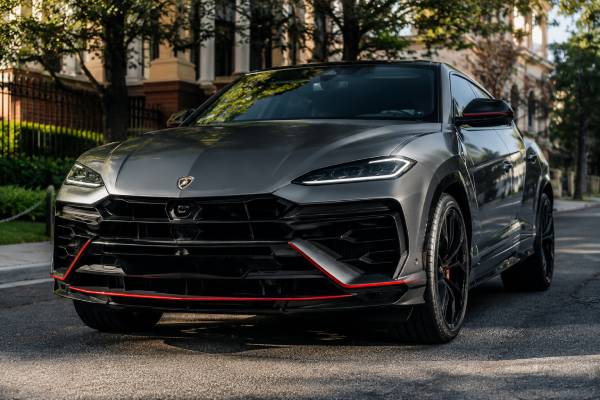
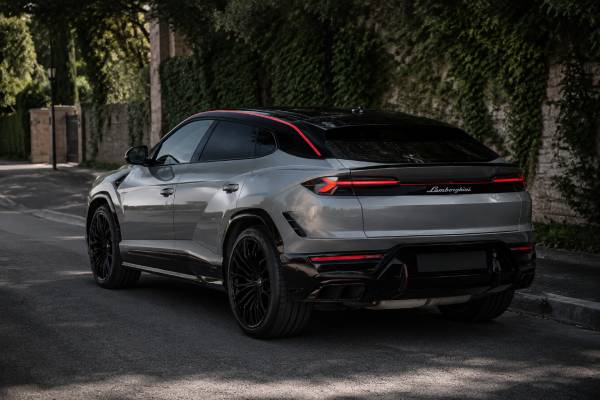
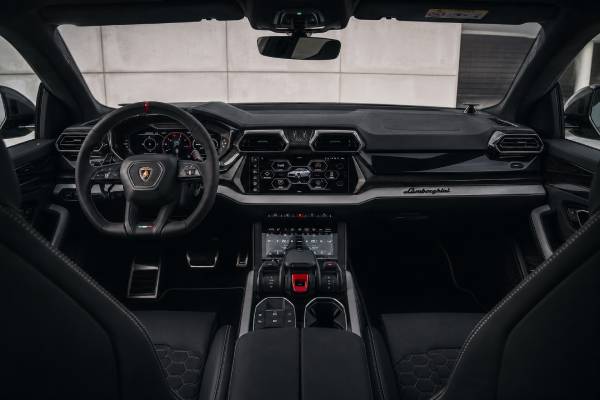
The Lamborghini Urus SE Tettonero Capsule is the most exclusive version of Lamborghini’s first plug-in hybrid Super SUV. It takes the 800 CV Urus SE powertrain and adds a limited 630-unit Ad Personam design program built around a glossy black upper body treatment, curated exterior colors, matching liveries, carbon-fiber details, and special interior finishes. It is not a lighter, harder-edged track model like the Urus Performante; it is a limited, highly customizable hybrid Urus aimed at buyers who want rarity, personalization, and daily usability in one package.
Its core appeal is simple: a 4.0-liter twin-turbo V8, a permanent-magnet electric motor, a 25.9 kWh battery, all-wheel drive, and supercar-level acceleration in a five-door SUV body. For collectors and owners, the Tettonero Capsule matters because specification, documentation, condition, and originality will likely matter more than mileage alone.
Table of Contents
- Why the Tettonero Capsule Matters
- Hybrid V8 Specifications and Chassis
- Limited Production, Colors, and Options
- Design, Engineering, and Special Details
- Road, Track, and Electric Driving Character
- Maintenance, Reliability, and Ownership Risk
- Market Value and Buying Checklist
Why the Tettonero Capsule Matters
The Tettonero Capsule matters because it combines Lamborghini’s most advanced Urus powertrain with a limited factory design specification. It is best understood as a collectible personalization edition, not a separate mechanical model.
The Urus changed Lamborghini’s business when it arrived as a high-performance SUV with real family-car usability. The SE moved the line into plug-in hybrid territory, joining Lamborghini’s wider hybrid range and giving the Urus a new role: it became the bridge between combustion emotion and electrified performance. The Tettonero Capsule builds on that foundation by making the Urus SE more exclusive and more visually distinctive.
The name “Tettonero” points to the black-roof theme. The capsule applies Nero Shiny to the upper bodywork, including the roof and related upper sections, while pairing it with selected body colors and livery colors. The result is a two-tone Urus SE with a stronger custom-built look than the regular configuration path.
For enthusiasts, the significance is the powertrain. The Urus SE uses a re-engineered 4.0-liter twin-turbo V8 with an electric motor and high-voltage battery to create a combined 800 CV and 950 Nm. That gives it more system power than the earlier Urus S and a broader torque spread, while allowing short-range electric driving.
For collectors and buyers, the significance is the production cap. Lamborghini limits the Tettonero Capsule to 630 units, which gives it a clearer identity than an ordinary Ad Personam build. Rarity alone does not guarantee long-term value, but a numbered or documented factory capsule usually makes a car easier to explain, easier to verify, and more attractive to future buyers.
The Tettonero Capsule sits in a useful middle ground. It has the daily comfort, ground clearance, cargo space, and all-weather ability that made the Urus popular, but it also has the hybrid system, special color logic, and limited-run status that make it more interesting than a normal luxury SUV.
Hybrid V8 Specifications and Chassis
The Urus SE Tettonero Capsule uses the same main hardware as the Urus SE: a twin-turbocharged 4.0-liter V8, an electric motor integrated with the 8-speed automatic transmission, a 25.9 kWh battery, and electronically managed all-wheel drive. The important numbers are 800 CV, 950 Nm, 0–100 km/h in 3.4 seconds, and a top speed of 312 km/h.
| Area | Specification |
|---|---|
| Model | Lamborghini Urus SE Tettonero Capsule |
| Platform code | LB636 |
| Production period | 2026–present |
| Body style | Five-door Super SUV |
| Engine | 4.0-liter 90-degree twin-turbo V8 |
| Displacement | 3,996 cc |
| Combustion engine output | 620 CV / 456 kW |
| Combustion engine torque | 800 Nm |
| Electric motor | Permanent-magnet synchronous motor |
| Electric motor output | 192 CV / 141 kW |
| Electric motor torque | 483 Nm |
| System output | 800 CV / 588 kW |
| System torque | 950 Nm |
| Battery | 25.9 kWh lithium-ion high-voltage battery |
| Transmission | 8-speed automatic with torque converter |
| Drivetrain | All-wheel drive with electronically controlled torque distribution |
| 0–100 km/h | 3.4 seconds |
| 0–200 km/h | 11.2 seconds for the Tettonero Capsule |
| Top speed | 312 km/h |
| Electric driving range | More than 60 km in EV mode |
| Maximum EV speed | Over 130 km/h in EV Drive |
The most important engineering point is that the Urus SE is not a mild hybrid. Its electric motor can boost the V8, but it can also move the vehicle in electric all-wheel-drive operation. The battery sits below the load floor and above the electronically controlled rear differential, which keeps the hybrid hardware packaged low and rearward without turning the Urus into a compromised two-seat exotic.
The V8 remains the emotional center. It is a 4.0-liter twin-turbo unit, but Lamborghini recalibrated it for hybrid use rather than simply adding an electric motor to the older Urus drivetrain. The electric side fills torque gaps, improves response, and lets the car move quietly in urban use.
The chassis uses air suspension, active electronic systems, torque vectoring, and multiple drive modes. A centrally mounted electronically controlled torque splitter varies drive between the axles, while the electronic rear limited-slip differential helps the big SUV rotate more naturally. That matters because the Urus SE is heavy and powerful; without careful torque management, it would feel fast but blunt.
| Item | Figure |
|---|---|
| Wheelbase | 3,003 mm |
| Overall length | 5,123 mm |
| Overall width excluding mirrors | 2,022 mm |
| Overall width including mirrors | 2,181 mm |
| Overall height | 1,638 mm |
| Front track | 1,695 mm |
| Rear track | 1,710 mm |
| Front carbon-ceramic brake diameter | 440 mm |
| Rear carbon-ceramic brake diameter | 410 mm |
Limited Production, Colors, and Options
The Tettonero Capsule is limited to 630 units and is defined mainly by its curated factory specification. The key buying point is not just “rare Urus,” but whether the car has its correct Tettonero exterior, interior, carbon, livery, and documentation.
The capsule gives owners a controlled set of combinations rather than unlimited randomness. That helps the model stay recognizable as a special series. Six body colors can be paired with Nero Shiny on the upper bodywork, roof, struts, uprights, rear spoiler profile, and exhaust tips. Lamborghini also offers matching external livery colors, producing more than 70 possible configurations.
Exterior color and livery logic
The body color choices include Arancio Xanto, Bianco Asopo, Grigio Telesto, Viola Pasifae, Giallo Tenerife, and Verde Mercurius. The livery colors include Arancio Borealis, Bianco Monocerus, Giallo Auge, Grigio Nimbus, Rosso Mars, and Verde Mantis.
For a buyer, the best specification is not always the loudest one. The most desirable future cars will likely be the ones that look intentional: body color, livery color, brake calipers, interior contrast stitching, wheels, and carbon trim should feel like one factory-designed theme.
Important Tettonero Capsule identification points include:
- Nero Shiny upper-body treatment
- Capsule-specific body and livery combinations
- 21-, 22-, or 23-inch wheel choices
- Optional “63” logo on the lower front doors
- Six brake-caliper color choices
- Carbon-fiber exterior options such as diffuser, mirror caps, and front splitter
- Interior carbon-fiber trim and dedicated capsule details
- Nero Ade interior base with selected contrast tones
- Corsa-Tex microfiber and Dinamica leather combinations
Interior options and documentation
The cabin is just as important as the paint. The Tettonero Capsule uses a Nero Ade interior base with contrast tones that can align with the exterior livery. It also offers additional embroidery options for seats, headrests, and upholstery.
A future buyer should ask for the original order sheet, window sticker or market equivalent, dealer invoice where available, Ad Personam specification document, service records, warranty history, and any certificate or factory paperwork connected to the capsule. A car with a spectacular configuration but weak paperwork may be harder to sell later than a more conservative example with complete proof.
The most collectible examples will likely share four traits: clear Tettonero identity, low or careful mileage, no repaint or accident history, and complete factory documentation.
Design, Engineering, and Special Details
The Urus SE Tettonero Capsule looks special because the design treatment works with the facelifted Urus SE body rather than fighting it. The black upper body visually lowers the roofline, while the brighter body and livery colors emphasize the SUV’s wide stance and sharp Lamborghini surfacing.
The Urus SE brought new exterior details compared with earlier Urus versions. The front end uses a cleaner hood design, redesigned lighting, and updated cooling paths. The rear has a reworked hatch, new diffuser treatment, and styling that links the taillights more strongly across the back of the car. These changes are not just cosmetic; Lamborghini also improved rear downforce, overall cooling, and brake cooling compared with the Urus S.
The hybrid packaging is one of the most important engineering features. Lamborghini placed the electric motor ahead of the 8-speed automatic transmission, where it can assist the V8 and also provide electric traction. The battery’s position under the load floor protects cabin practicality while keeping the hybrid components integrated into the SUV layout.
The drivetrain uses two main ideas to keep the car lively. First, the torque splitter constantly varies front-to-rear torque distribution. Second, the electronically controlled rear differential helps manage side-to-side torque at the rear axle. Together, these systems let the Urus SE feel more rear-biased and agile than its size suggests.
The driving-mode system also grew with the hybrid powertrain. The familiar Strada, Sport, Corsa, Neve, Sabbia, and Terra modes are joined by EV Drive, Hybrid, Performance, and Recharge strategies. That gives the driver a wider range of characters, from quiet electric city driving to full-power hybrid performance.
Inside, the Urus SE follows Lamborghini’s “feel like a pilot” idea. The 12.3-inch center display, digital instrument cluster, revised interface, new dashboard details, and tactile physical controls give it a more modern cabin than earlier Urus models. The Tettonero Capsule adds a more tailored layer through carbon fiber, contrast stitching, microfiber, leather, and dedicated trim.
The sound is also part of the engineering story. In quiet EV operation, the Urus SE can feel unusually calm for a Lamborghini. When the V8 wakes up, the car returns to the familiar twin-turbo Urus character: deep, forceful, and more muscular than delicate. Buyers should understand that the SE is not trying to sound like an old naturally aspirated Lamborghini. Its drama comes from torque, speed, and the sudden shift from electric silence to V8 force.
Road, Track, and Electric Driving Character
The Urus SE Tettonero Capsule feels fastest when the V8 and electric motor work together. The electric motor sharpens low-speed response, while the V8 provides the sustained high-speed punch expected from a Lamborghini SUV.
In normal driving, the biggest difference from earlier V8-only Urus models is flexibility. EV Drive is useful for short city trips, parking garages, early-morning departures, and low-speed urban areas where noise matters. Hybrid mode suits daily driving because it blends the engine and motor with less drama. Performance mode is the setting that reveals why Lamborghini chose a plug-in hybrid system instead of using electrification only for emissions.
Acceleration is brutal for such a large vehicle. A 3.4-second 0–100 km/h time means the Urus SE sits in true supercar territory, not just “fast SUV” territory. The 0–200 km/h figure is even more telling because it shows the car has strong power beyond the first launch.
Steering and body control depend heavily on mode and tire choice. In Strada, the car is calmer and more comfortable, with the air suspension helping it deal with rough roads. In Sport, the throttle, transmission, suspension, and torque systems become more playful. In Corsa, the Urus SE feels tighter and more direct, but its size never disappears completely.
The brakes are powerful, but buyers should remember that carbon-ceramic systems work best when used correctly. They can feel different at low speeds than iron brakes, and replacement costs are high. On track, brake cooling and tire condition become critical because the Urus SE carries substantial mass.
Tires strongly affect the experience. Dedicated Pirelli P Zero tires are offered for different wheel sizes, while Scorpion Winter 2 tires suit colder conditions. A 23-inch wheel may look spectacular, but a smaller wheel can be more forgiving on rough roads. For owners who actually drive long distances, tire choice is not a cosmetic detail; it affects ride comfort, noise, steering response, and replacement cost.
The best way to drive the Tettonero Capsule is to treat it as a multi-role Lamborghini. Use EV mode where quiet operation makes sense, Hybrid mode for normal travel, Sport for fast roads, and Performance or Corsa only when conditions allow. It is capable off-road in the Lamborghini sense, with Neve, Sabbia, and Terra modes, but the value of a limited capsule means most owners will avoid harsh trails, deep ruts, and stone damage.
Maintenance, Reliability, and Ownership Risk
The main ownership risk is complexity, not fragility. The Urus SE Tettonero Capsule combines a high-output twin-turbo V8, plug-in hybrid hardware, air suspension, carbon-ceramic brakes, advanced driveline electronics, high-value trim, and expensive tires in one vehicle.
A buyer should not inspect it like a normal used SUV. It needs a Lamborghini dealer or specialist inspection with diagnostic access, hybrid-system checks, underbody inspection, paint-depth readings, brake measurements, and a review of every service entry.
Key areas to inspect include:
- Hybrid battery state of health and charging behavior
- Charging-port condition, cable condition, and charging history
- Warning lights, stored fault codes, and software update status
- V8 oil leaks, coolant leaks, turbocharger-related faults, and abnormal noises
- Transmission shift quality in all drive modes
- Torque splitter and rear differential operation
- Air suspension height changes and compressor behavior
- Carbon-ceramic brake disc condition, pad life, and edge damage
- Tire age, tread depth, matching specification, and correct load rating
- Wheel damage, especially on 22- and 23-inch wheels
- Undercarriage scrapes, diffuser damage, and front splitter damage
- ADAS, camera, infotainment, and display functionality
- Paintwork, panel alignment, and evidence of repainting
- Interior trim wear, microfiber staining, leather damage, and carbon trim scratches
The plug-in hybrid system adds several owner habits. The battery should be charged regularly, not ignored for months. The car should complete software updates when required. The charging cable and port should stay clean and dry. If the car is stored, it should follow Lamborghini’s official storage and battery-maintenance procedures.
Carbon-ceramic brakes deserve special attention. They can last a long time in careful road use, but track use, stone damage, aggressive cleaning products, or incorrect handling can make them expensive. A seller saying “carbon brakes last forever” is oversimplifying. They should be measured and inspected, not guessed.
Air suspension and active chassis systems are also important. The Urus SE uses these systems to deliver its broad character, but leaks, compressor wear, sensor faults, or calibration issues can become costly. During a test drive, the car should raise and lower correctly, sit level after parking, and show no suspension warnings.
For the Tettonero Capsule specifically, cosmetic condition carries unusual weight. A normal Urus can tolerate small wear better in the market. A limited capsule with a scratched carbon-fiber plate, repaired Nero Shiny roof section, mismatched paint, or missing special trim loses part of what makes it special.
Maintenance should stay with Lamborghini-authorized service or a recognized exotic specialist. Skipped service, unclear invoices, non-approved tires, incomplete software records, and cheap cosmetic repairs are warning signs. For a high-value PHEV Lamborghini, a clean service timeline is worth real money.
Market Value and Buying Checklist
The Tettonero Capsule is too new for a stable long-term market pattern, so buyers should focus less on speculative appreciation and more on specification quality, documentation, condition, and total ownership risk. Its 630-unit limit should help desirability, but the best cars will still be the best-preserved and best-documented examples.
New transaction prices can vary widely because Lamborghini options, Ad Personam content, local taxes, dealer inventory, and market-specific equipment change the final number. A highly specified Tettonero Capsule may cost far more than a base Urus SE. On the used market, early asking prices may include premiums simply because the car is scarce, new, and visually distinctive.
The most valuable examples are likely to be:
- Factory-correct Tettonero Capsule cars with complete documentation
- Strong, coherent color and livery combinations
- Low-mileage cars that were still exercised and maintained properly
- No accident history, no repaint, and no wheel or underbody abuse
- Complete Lamborghini service history
- Clean hybrid-system diagnostic report
- Original wheels, trim, books, keys, charger, and accessories
- Desirable carbon-fiber and interior options
- No aftermarket tuning, wraps that damaged paint, or non-factory modifications
Cars to approach carefully include examples with missing Ad Personam paperwork, unclear import history, repeated warning lights, poor paint matching, cheap tire replacements, modified exhaust systems, tuned engine software, heavy track use, or unusual gaps in service records.
| Check | Why it matters |
|---|---|
| Confirm Tettonero Capsule identity | Verifies the car is a true limited capsule, not a regular Urus SE styled to look similar. |
| Review factory specification | Color, livery, trim, wheels, calipers, and carbon options affect desirability. |
| Scan all control modules | Hybrid, driveline, suspension, ADAS, and infotainment faults may not show during a short drive. |
| Check high-voltage battery health | Battery condition affects performance, EV range, warranty risk, and resale confidence. |
| Measure brakes and tires | Carbon-ceramic brakes and performance tires are major cost items. |
| Inspect paint and carbon trim | Limited-edition appearance is central to the car’s value. |
| Verify software and recall status | Modern Lamborghini ownership depends on correct updates and campaign completion. |
| Review service invoices | Stamped books alone are less useful than detailed, dated service records. |
The best ownership strategy is simple: buy the right car first, then preserve it properly. Choose a configuration you genuinely like, verify it thoroughly, keep it serviced on time, charge the hybrid system correctly, and avoid reversible “upgrades” that can become irreversible value problems.
For enthusiasts, the Urus SE Tettonero Capsule is a fascinating marker in Lamborghini history. It shows how the brand is using electrification without abandoning combustion drama. For collectors, it is a limited, documented, high-specification version of the first plug-in hybrid Urus. For owners, it is one of the few vehicles that can feel like an exotic, a luxury SUV, a family car, and a silent short-range EV in the same day.
References
- Lamborghini Urus SE | Lamborghini.com 2026 (Manufacturer Model Page)
- Lamborghini Urus SE Tettonero: The Most Exclusive Super SUV 2026 (Manufacturer News)
- Urus SE Tettonero Capsule debuts at Milan Design Week 2026 (Manufacturer News)
- Lamborghini Urus SE: The first Plug-in Hybrid Super SUV 2024 (Manufacturer Technical Overview)
- Check for Recalls: Vehicle, Car Seat, Tire, Equipment 2026 (Recall Database)
Disclaimer
This article is for informational purposes only and is not a substitute for professional diagnosis, service, repair, valuation, or pre-purchase inspection. Specifications, torque values, service intervals, software requirements, recall status, procedures, and equipment can vary by VIN, market, model year, and factory configuration. Always verify details against official Lamborghini service documentation, the vehicle’s build records, and a qualified Lamborghini dealer or specialist.
If you found this guide useful, please consider sharing it on Facebook, X/Twitter, or your preferred automotive community to support our work.