
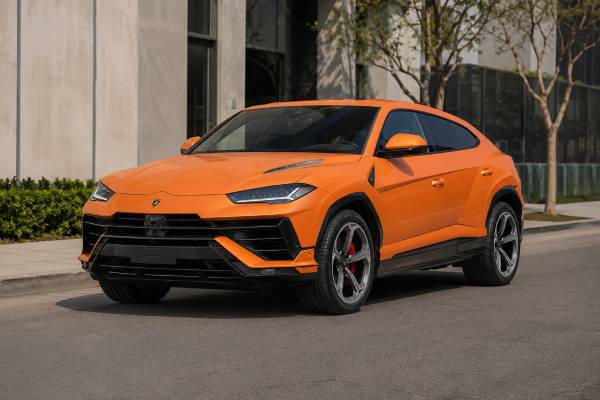
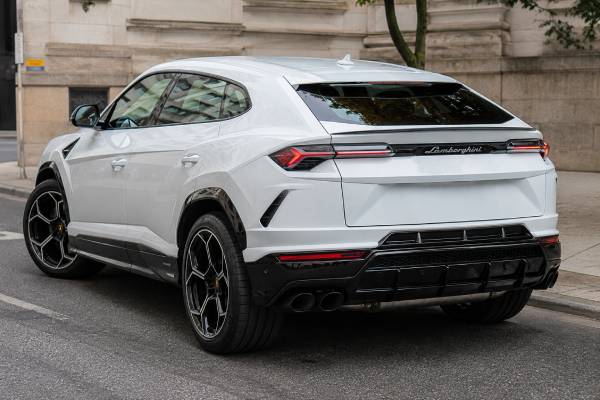
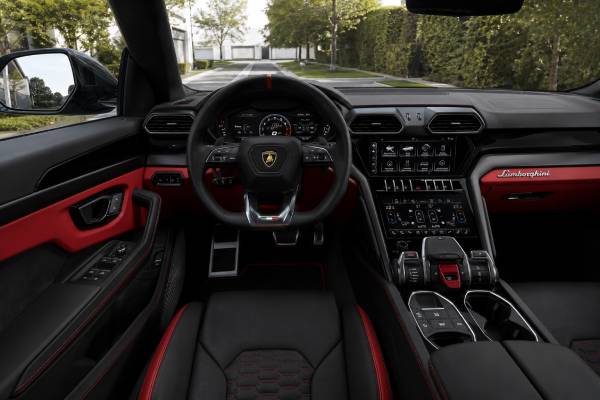
The Lamborghini Urus S is the luxury-focused evolution of the original Urus: faster, sharper, louder, and easier to personalize, but still meant to work as a daily-driven Lamborghini. It sits between the first 650 CV Urus and the more aggressive Urus Performante, using the same 4.0-liter twin-turbo V8 output as the Performante while keeping adaptive air suspension and a broader comfort remit. This guide follows the common 666 hp shorthand used in many markets and listings, though Lamborghini’s official rating is 666 CV, equal to 490 kW. For buyers, the Urus S matters because it is the final non-hybrid, full-combustion Urus before the plug-in hybrid Urus SE arrived. That gives it a clear identity: modern enough to feel current, dramatic enough to feel like a Lamborghini, and practical enough to attract buyers who would never live with a low two-seat supercar.
Table of Contents
- Why the Urus S Matters
- LB636 Specs and Performance Data
- Variants, Options, and Factory Details
- Design and Engineering That Define It
- How the Urus S Drives
- Reliability, Service, and Inspection Risk
- Market Values and Buyer Priorities
Why the Urus S Matters
The Urus S is the refined performance update of Lamborghini’s first modern Super SUV. It replaced the original Urus as the regular-production V8 model while the Urus Performante served buyers who wanted a harder, more track-influenced version.
Launched in September 2022, the Urus S arrived at a key point for Lamborghini. The original Urus had already transformed the company’s business, bringing five-door usability, high-volume demand, and year-round drivability into a brand known mainly for low, loud supercars. By the time the S appeared, the Urus was not an experiment anymore. It was Lamborghini’s sales pillar.
The S kept the Urus formula but sharpened it. The 4.0-liter twin-turbo V8 moved up to 666 CV, the accelerator calibration became more immediate, boost response was improved for launch behavior, and the exhaust was retuned for a stronger cabin sound. Unlike the Performante, the S kept adaptive air suspension, six main drive modes, and the more flexible all-road character that made the Urus useful in cities, on highways, in bad weather, and on poor roads.
For collectors and long-term owners, the Urus S has two reasons to stay interesting. First, it is the last full-combustion, non-hybrid luxury Urus before the Urus SE moved the line into plug-in hybrid territory. Second, it is less extreme than the Performante, which may make it the more desirable car for buyers who want a real daily exotic rather than a firmer special-purpose SUV.
For enthusiasts, the appeal is simple: the Urus S combines supercar-grade acceleration with an SUV body, a useful cargo area, five-seat availability, all-wheel drive, carbon-ceramic brakes, rear-wheel steering, active roll control, and enough Lamborghini theater to feel special every time it starts.
LB636 Specs and Performance Data
The Urus S is built around a front-mounted 3,996 cc twin-turbo V8, an eight-speed automatic transmission, and permanent all-wheel drive. The most useful numbers are the 666 CV output, 850 Nm of torque, 305 km/h top speed, and 3.5-second 0–100 km/h acceleration figure commonly quoted by Lamborghini for the S.
The engine is commonly cataloged under the DHU code in specification databases, but buyers should always confirm VIN-specific engine, emissions, and parts data through Lamborghini service documentation. Lamborghini literature sometimes presents market-specific emissions and performance figures differently, so a car’s registration documents and official service system matter more than a generic listing.
| Category | Specification |
|---|---|
| Model | Lamborghini Urus S, LB636 generation |
| Production era covered | 2022 launch through 2024 model transition |
| Engine | 90-degree V8, twin-turbocharged |
| Displacement | 3,996 cc / 4.0 liters |
| Bore x stroke | 86 mm x 86 mm |
| Compression ratio | 9.7:1 |
| Maximum power | 666 CV / 490 kW at 6,000 rpm |
| Maximum torque | 850 Nm from 2,300 to 4,500 rpm |
| Transmission | 8-speed automatic |
| Drivetrain | Permanent all-wheel drive with Torsen center differential and active rear torque vectoring |
| Front brakes | Carbon-ceramic discs, 440 mm, 10-piston calipers |
| Rear brakes | Carbon-ceramic discs, 370 mm, floating calipers with electric parking brake |
| Standard wheel and tire fitment | 21-inch wheels; 285/45 ZR21 front and 315/40 ZR21 rear tires |
| Fuel capacity | 85 liters |
| Luggage capacity | 616 liters |
| Seats | 4 or 5, depending on rear-seat configuration |
| Measure | Figure |
|---|---|
| Top speed | 305 km/h / 189.5 mph |
| 0–100 km/h | 3.5 seconds in main Lamborghini model data; some brochure tables show 3.6 seconds |
| 0–200 km/h | 12.5 seconds in performance comparison data; some detailed tables show 12.8 seconds |
| 100–0 km/h braking | 33.7 meters |
| Length | 5,112 mm |
| Width excluding mirrors | 2,018 mm |
| Width including mirrors | 2,181 mm |
| Height | 1,638 mm |
| Wheelbase | 3,003 mm |
| WLTP combined fuel consumption | 14.1 l/100 km in published Urus S data |
| WLTP combined CO2 emissions | 320 g/km in published Urus S data |
Weight deserves a special note. Lamborghini materials show different figures depending on measuring basis, market, and table context, including performance comparison and curb-weight references. Buyers should not treat one online weight number as universal. For registration, import, insurance, and finance checks, use the VIN record and market-specific certificate of conformity.
Variants, Options, and Factory Details
The Urus S was not a limited edition; it was the luxury-oriented production version of the updated V8 Urus. Its value depends less on rarity by build number and more on specification, originality, condition, color, service record, warranty status, and whether desirable options are factory-installed.
The main comparison is Urus S versus Urus Performante. Both use the 666 CV version of the V8, but they are not aimed at the same buyer. The Performante is lighter, firmer, more focused, and visually more aggressive. The S keeps adaptive air suspension and a broader personality, making it the better choice for many owners who want comfort, height adjustment, winter use, and family usability.
Factory identity and quick identifiers
The Urus S can be recognized by its updated front and rear bumpers, revised air vents, side fins, new wheel treatments, front steel skid plate, carbon-fiber painted hood treatment, and brushed stainless-steel exhaust finish. It looks more sculpted than the original Urus but less motorsport-influenced than the Performante.
Important identification points include:
- Correct Urus S badging and model record.
- 666 CV engine calibration rather than the earlier 650 CV output.
- Adaptive air suspension retained, unlike the more focused Performante setup.
- Four- or five-seat configuration depending on original order.
- Factory option record matching the visible wheels, interior trim, ADAS package, audio system, and exterior styling package.
Options that matter to buyers
The Urus S was heavily shaped by personalization. Many examples are not “base” cars in any meaningful sense, because paint, wheels, brake calipers, carbon trim, interior color, stitching, seat layout, driver-assistance packages, and entertainment options can change the character and resale appeal.
Factory and accessory choices to check include:
- Ad Personam paint and interior combinations.
- 22-inch Nath and 23-inch Taigete wheel options.
- Carbon-fiber exterior details, including roof and engine-bay trim where fitted.
- Brake caliper colors such as silver, yellow, black, red, green, or orange.
- Bang & Olufsen 3D sound system with 21 speakers and high output.
- Rear-seat entertainment system where equipped.
- ADAS packages, including urban, highway, and fuller assistance bundles depending on market.
- Roof rails, tow equipment, hands-free tailgate function, and travel accessories.
- Lamborghini Accessori Originali items such as titanium exhaust, roof box, snow chains, travel bags, protective film, dash cam, cargo liner, and pet-care accessories.
For collectors, the best configuration is not always the loudest one. A highly original, well-documented, low-mile Urus S in a tasteful color with full Lamborghini service history may be easier to resell than a heavily altered car with a rare but polarizing specification.
Design and Engineering That Define It
The Urus S works because Lamborghini did not treat it like an ordinary SUV with more power. It combines aggressive surfacing, sophisticated chassis electronics, big braking hardware, rear-wheel steering, and a retuned powertrain to make a large, heavy vehicle feel unusually alert.
The body uses an aluminum composite design, with an outer skin made from aluminum and composite material. The shape is muscular and angular, but the engineering job is practical: cool the twin-turbo V8, manage high-speed stability, make space for passengers and luggage, and still create a visual link to Lamborghini’s supercars.
The front end is especially important. The Urus S received a more defined bumper, air-management changes, and a bolder stance. The rear bumper and exhaust area were also updated, giving the S a more modern appearance than the original Urus without turning it into a Performante copy.
Chassis systems
The Urus S relies on several systems working together rather than one simple trick. Adaptive air suspension lets the car change ride height and comfort level. Electromechanical active roll stabilization reduces body movement without making the ride permanently harsh. Rear-wheel steering improves low-speed maneuverability and high-speed stability. Torque vectoring helps the rear axle support rotation instead of simply following the front.
The result is a car that can feel smaller than it is. That does not mean it becomes a Huracán on stilts. It is still a wide, tall, heavy SUV. But the systems mask weight well enough that the driver can place it quickly on a mountain road, merge with supercar urgency, and still cruise quietly when the drive mode is relaxed.
Interior and technology
The cabin is part luxury lounge, part aviation-inspired theater. The dual-screen Lamborghini Infotainment System III uses haptic touch controls, while the digital instrument display changes its look according to the selected mode. The Tamburo drive-mode controls and start switch add the sense of occasion buyers expect from the badge.
The interior’s real strength is contrast. It can be trimmed like a luxury SUV, fitted with rear entertainment, and used as family transport. Yet the driving position, start procedure, exhaust note, and mode selector remind the driver that this is not a Bentley Bentayga, Porsche Cayenne Turbo GT, or Audi RS Q8 with a different badge. It is related to the wider Volkswagen Group performance SUV world, but Lamborghini calibrates the experience around drama.
How the Urus S Drives
The Urus S feels fastest in the way it delivers speed with almost no preparation. Press the throttle hard and the V8 gives a wide, forceful surge from low rpm, while the gearbox and all-wheel-drive system make the car easy to launch cleanly even when conditions are imperfect.
In Strada mode, the Urus S can be surprisingly calm. The air suspension softens the edge of rough pavement, the gearbox shifts early, and the exhaust stays more restrained. This is the mode that makes the S work as a real daily car. It still feels wide in traffic and expensive over potholes, but it does not demand the constant attention of a low supercar.
Sport mode wakes the car up. Throttle response sharpens, the exhaust becomes more present, the gearbox holds gears longer, and the rear axle feels more involved. This is where the S feels most naturally Lamborghini. The car starts to rotate more willingly, the sound becomes richer, and the chassis feels alert without becoming punishing.
Corsa mode is the most focused setting. It suits smooth roads, fast open sections, and track-style driving, but it is not always the best real-world mode. On broken surfaces, the more aggressive settings can make the car feel busier. Good drivers will often find that Sport or a custom EGO setup gives the best balance.
The brakes are powerful, but buyers should understand how carbon-ceramic brakes behave. They can feel different when cold, they are expensive to replace, and they must be inspected for disc condition, pad life, edge damage, and heat history. A car that has done repeated hard mountain runs or track events may look clean but carry meaningful brake and tire cost.
Tires strongly affect the Urus S. Fresh, correct high-performance tires make the steering cleaner, braking shorter, and wet-weather behavior more predictable. Old, mismatched, or budget tires are a serious warning sign on a 305 km/h SUV with this much torque.
The Urus S is also more usable than its numbers suggest. Visibility is better than in Lamborghini’s two-seat supercars, the seating position helps in traffic, and the cargo area is genuinely useful. The compromise is size. In narrow cities, tight garages, and old parking structures, width matters more than acceleration.
Reliability, Service, and Inspection Risk
The Urus S should be judged like an exotic performance SUV, not like a normal used luxury car. Its biggest ownership risks are not only engine failure; they are deferred service, incorrect tires, worn carbon-ceramic brakes, damaged wheels, software issues, suspension faults, accident repair, and missing documentation.
The 4.0-liter twin-turbo V8 is a highly developed performance engine, but heat, oil quality, cooling health, and service discipline matter. Short trips, long idle time, tuning, poor warm-up habits, and skipped maintenance can all increase risk. A pre-purchase inspection should include fault-code scans, service-system records, underbody inspection, cooling-system checks, turbo and intake checks, and evidence that all campaigns and updates were completed.
Key inspection areas
Use this table as a practical inspection guide before paying for a specialist report.
| Area | What to Check | Why It Matters |
|---|---|---|
| Service history | Dealer or recognized specialist records, invoices, annual inspections, software updates | Missing history hurts value and increases mechanical uncertainty |
| Recall status | Confirm hood latch striker recall completion on affected 2023–2024 cars | The defect can allow hood opening or detachment while driving |
| Engine | Oil leaks, coolant leaks, turbo plumbing, abnormal smoke, fault codes, misfires | Heat and boost make early diagnosis important |
| Transmission and AWD | Shift quality, launch behavior, driveline vibration, rear differential operation | Hard launches and tuning can add expensive wear |
| Air suspension | Ride-height changes, compressor noise, uneven stance, warning messages | Suspension faults are costly and affect drivability |
| 48-volt active roll system | Warnings, low-voltage issues, stored chassis faults | The system is central to the Urus S driving character |
| Carbon-ceramic brakes | Disc condition, pad thickness, chips, heat marks, uneven wear | Replacement cost is high and track use may accelerate wear |
| Wheels and tires | Correct sizes, date codes, curb damage, alignment wear | Incorrect or aged tires reduce safety and resale confidence |
| Body and paint | Panel gaps, paint depth, carbon hood fit, bumper repairs, undertray damage | Accident repair can be expensive and value-sensitive |
| Electronics | Infotainment, ADAS sensors, cameras, key functions, app connectivity | Luxury features are complex and market-specific |
Maintenance reality
Routine service is only the starting point. A proper Urus S ownership budget should include tires, alignment, brake inspection, battery care, software work, suspension diagnosis, and cosmetic repair. Large wheels are vulnerable to curb damage. Low-profile performance tires can wear quickly under aggressive driving. Carbon-ceramic brakes can last a long time in normal road use, but damage or severe heat history changes the equation.
Avoid tuned cars unless the discount is meaningful and the buyer understands the warranty and emissions risk. A software tune can increase boost and heat, stress driveline parts, trigger emissions concerns, and complicate dealer support. Exhaust modifications can also affect inspections, warranty conversations, and resale.
Warranty status matters more here than on a normal SUV. A factory warranty, extended warranty, or Lamborghini-backed certified pre-owned program can be worth paying for, especially when the car has complex chassis systems and expensive electronic modules. For cars outside warranty, use a Lamborghini specialist who understands the Urus platform and has proper diagnostic access.
Market Values and Buyer Priorities
The Urus S sits in a strong but mileage-sensitive market. Recent U.S. listings and market trackers commonly place many 2023–2024 Urus S examples in the low-to-mid $200,000s, while very low-mile, highly optioned, rare-color, or nearly new cars can ask more; heavily used or weaker-spec cars trade lower.
The Urus S is not yet a classic collectible in the traditional sense. It is still a modern exotic SUV subject to depreciation, finance cycles, warranty timing, and supply from owners moving into Urus SE or other high-end SUVs. Its long-term appeal will likely come from being the final non-hybrid V8 luxury Urus rather than from low production rarity.
What drives value
The best cars usually share the same traits:
- Complete Lamborghini service history.
- Verified recall and campaign completion.
- Clean title and no accident repair concerns.
- Desirable factory specification, not aftermarket overbuild.
- Low to moderate mileage with consistent use.
- Correct tires with recent date codes.
- Carbon-ceramic brakes in excellent condition.
- Factory paint and interior documentation.
- Warranty, extended warranty, or certified status where available.
- Clean diagnostic scan with no unresolved chassis, emissions, or ADAS faults.
Cars to avoid include examples with missing service records, obvious paintwork without documentation, mismatched tires, cheap aftermarket wheels, tuned engine software, unresolved warning lights, interior abuse, or evidence of hard launch use without corresponding maintenance.
A serious buyer should verify the build through Lamborghini records, not only through an advertisement. The build sheet should match paint, wheels, interior, trim, seating layout, driver-assistance packages, audio, carbon components, and accessories. On a highly personalized Urus S, small specification differences can change resale appeal by tens of thousands of dollars.
Buying strategy
The safest Urus S to buy is not always the cheapest one. A well-serviced, lightly used, factory-original car from an authorized Lamborghini dealer or known exotic specialist may cost more upfront but reduce ownership risk. The expensive surprises on these cars are rarely small: brakes, suspension, electronics, body repair, and warranty disputes can overwhelm a modest purchase discount.
Before committing, complete these steps in order:
- Confirm VIN, model year, market specification, and factory build record.
- Check open recalls, especially the 2024 hood latch striker campaign for affected cars.
- Review service invoices, not just stamped summaries.
- Have a Lamborghini specialist inspect the car on a lift and scan all control modules.
- Measure tire age, brake condition, wheel damage, and paint depth.
- Confirm warranty transferability and any exclusions caused by modifications.
- Price the car against mileage, specification, condition, and upcoming maintenance.
For owners, the best value strategy is simple: keep it original, service it on time, protect the paint, use correct tires, store all invoices, and avoid modifications that future buyers must explain. The Urus S is desirable because it blends Lamborghini drama with everyday use. Preserve that balance and the car will remain easier to sell, easier to enjoy, and easier to trust.
References
- Lamborghini Urus S | Lamborghini.com 2024 (Manufacturer Model Page)
- URUS S_DIGITAL_BROCHURE_WCAG_EN_2024 2024 (Digital Brochure)
- Lamborghini Presents: Lamborghini Urus S 2022 (Manufacturer News)
- Part 573 Safety Recall Report 24V-348 2024 (Recall Database)
- Lamborghini Urus S Market 2026 (Market Data)
Disclaimer
This article is for informational purposes only and is not a substitute for professional diagnosis, repair, valuation, or inspection. Specifications, torque values, service intervals, repair procedures, software updates, recall applicability, and option content can vary by VIN, market, equipment, and production date. Always verify technical information against official Lamborghini service documentation and consult a qualified Lamborghini dealer or specialist before buying, servicing, modifying, or repairing the vehicle.
If this guide helped you, please share it on Facebook, X/Twitter, or your favorite automotive community to support our work.