
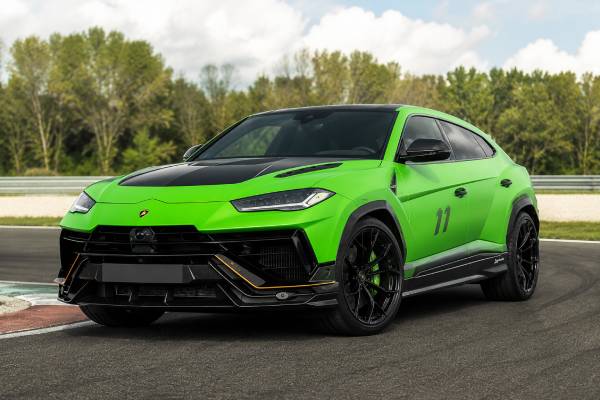
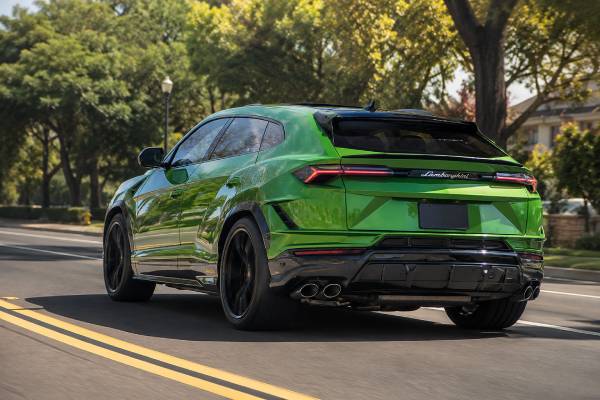
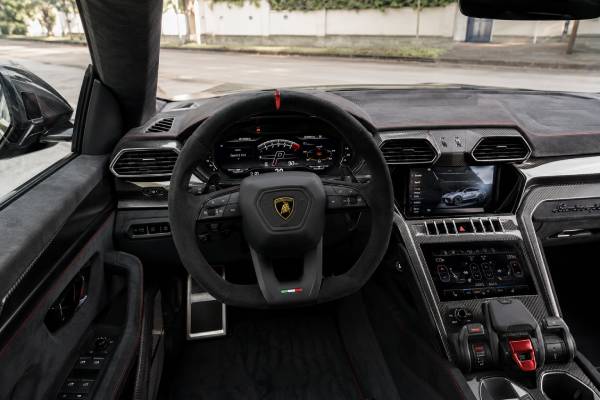
The Lamborghini Urus Performante Essenza SCV12 is not a normal Urus special edition. It is a collector-focused, customer-linked version of the Urus Performante created for owners of the track-only Essenza SCV12 hypercar. Mechanically, it keeps the Performante’s 4.0-liter twin-turbo V8, all-wheel drive, carbon-ceramic brakes, steel-spring performance chassis, and 666 CV factory output. Its importance comes from the connection to the 40-unit Essenza SCV12 program, the individualized Ad Personam configuration process, and the way Lamborghini tied each SUV visually to its owner’s track car.
For buyers and collectors, the key question is not simply whether it is fast. It is whether the car’s specification, documentation, numbered links, paintwork, carbon-fiber finish, service history, recall status, and connection to the original Essenza SCV12 allocation are complete and verifiable. This guide covers the exact model, its specs, engineering character, maintenance risks, and buying priorities.
Table of Contents
- Why This Urus Exists
- V8 Specs and Chassis Data
- Production Identity and Options
- Carbon Bodywork, Aero, and Cabin Details
- How the Essenza Urus Drives
- Maintenance, Recalls, and Ownership Risk
- Market Value and Buyer Checks
Why This Urus Exists
The Urus Performante Essenza SCV12 exists to connect Lamborghini’s most extreme track-only customer program with its most usable high-performance road car. It is best understood as a factory-personalized collector edition, not as a new mechanical version of the Urus.
Lamborghini unveiled the Essenza SCV12-related Urus in 2023 as a special edition reserved for owners of the Essenza SCV12, a track-only V12 hypercar produced in 40 units. That detail matters because the Urus Performante Essenza SCV12 was not aimed at ordinary showroom demand. It was created for a very small circle of clients who already owned one of Lamborghini Squadra Corse’s most exclusive modern cars.
The standard Urus changed Lamborghini’s business and brand image. It gave the company a daily usable SUV with supercar performance, a high seating position, four or five seats, and enough cargo space to make the badge part of more everyday driving. The Performante sharpened that idea. It lowered weight, added more carbon fiber, replaced the regular air-suspension emphasis with a stiffer steel-spring setup, improved chassis response, and introduced Rally mode for loose-surface driving.
The Essenza SCV12 edition adds another layer. It does not try to turn the Urus into a V12 track car. Instead, it turns the Performante into a companion piece. Lamborghini Centro Stile and the Ad Personam department worked with each customer to create a livery and specification inspired by that owner’s Essenza SCV12. The result is a road-going SUV with a visual and provenance link to a car that may spend most of its life on track, in storage, or within Lamborghini-supported events.
That gives this model three types of appeal:
- It is a rare Urus tied to a 40-car Lamborghini motorsport program.
- It has a customer-specific factory configuration rather than a simple package code.
- It combines daily usability with a collector story that most modern SUVs do not have.
Its reputation today depends less on lap times and more on originality. A normal Urus Performante can be judged by mileage, condition, options, color, and price. An Essenza SCV12 example must also be judged by its factory link to the matching Essenza SCV12, the quality of its documentation, and whether its livery and interior details remain untouched.
V8 Specs and Chassis Data
The Essenza SCV12 edition uses the same core technical package as the Urus Performante: a 3,996 cc twin-turbocharged V8, 8-speed automatic gearbox, all-wheel drive, rear-wheel steering, active roll control, and carbon-ceramic brakes. Lamborghini quotes 666 CV, which equals 490 kW and is often casually described as 666 hp, although the mechanical horsepower conversion is about 657 hp.
| Item | Lamborghini Urus Performante Essenza SCV12 |
|---|---|
| Platform / model family | LB636 Urus |
| Engine | 4.0-liter 90-degree twin-turbocharged V8 |
| Displacement | 3,996 cc |
| Bore x stroke | 86 mm x 86 mm |
| Compression ratio | 9.7:1 |
| Maximum output | 666 CV / 490 kW at 6,000 rpm |
| Maximum torque | 850 Nm from 2,300 to 4,500 rpm |
| Transmission | 8-speed automatic |
| Drivetrain | All-wheel drive with Torsen center differential and active rear torque vectoring |
| Drive modes | Strada, Sport, Corsa, and Rally through Lamborghini’s ANIMA selector |
The V8 is the heart of the car, but the Performante package is about response as much as raw output. Lamborghini revised throttle behavior and shift strategy compared with earlier Urus versions, so the car reacts more sharply in its aggressive modes. The torque band is broad, which is why the Urus can feel instantly quick despite its size.
| Item | Specification |
|---|---|
| 0–100 km/h | 3.3 seconds |
| 0–200 km/h | 11.5 seconds |
| Top speed | 306 km/h / 190 mph |
| 100–0 km/h braking | 32.9 meters |
| Chassis construction | Hybrid aluminum and steel structure |
| Body outer skin | Aluminum and composite material |
| Suspension | Multi-link front and rear, steel springs, electronic damper control |
| Roll control | Electromechanical active roll stabilization |
| Steering | Electromechanical power steering with Lamborghini Rear-wheel Steering |
| Front brakes | Carbon-ceramic, 440 mm x 40 mm |
| Rear brakes | Carbon-ceramic, 370 mm x 30 mm |
| Standard wheel and tire fitment | 22-inch wheels; 285/40 ZR22 front and 325/35 ZR22 rear tires |
| Measurement | Figure |
|---|---|
| Length | 5,137 mm |
| Width excluding mirrors | 2,026 mm |
| Width including mirrors | 2,181 mm |
| Height | 1,618 mm |
| Wheelbase | 3,006 mm |
| Front track | 1,695 mm |
| Dry weight | 2,157 kg |
| Weight distribution | 58 percent front / 42 percent rear |
| Seats | 4 or 5 depending on configuration |
The most important specification detail for buyers is the power figure. The article title uses the common “666 hp” shorthand, but Lamborghini’s official figure is 666 CV. Serious listings, insurance documents, and import paperwork may show 490 kW, 666 PS/CV, or about 657 hp depending on the market.
Production Identity and Options
The production story is the main reason this Urus matters. Lamborghini created the Essenza SCV12 edition for the 40 owners of the Essenza SCV12 hypercar, so the car’s value depends heavily on its original customer-specific configuration and paperwork.
Unlike a normal trim package, this edition was shaped by Lamborghini Centro Stile and Ad Personam. Each customer could configure the SUV with details inspired by their Essenza SCV12. Lamborghini used a dedicated livery approach, two-tone paintwork, exposed carbon-fiber elements, and a contrasting color line to visually connect the SUV with the owner’s track car.
The most important identification points are:
- Dedicated Essenza SCV12-inspired factory livery.
- Exterior color treatment linked to the corresponding Essenza SCV12.
- Contrasting pinstripe connecting the front, side, and rear graphics.
- Black lower-body treatment to make the SUV look lower and more aggressive.
- Exposed carbon-fiber elements in gloss or matte finish.
- Corresponding Essenza SCV12 car number painted on the Urus doors.
- Interior details using exclusive upholstery, carbon-fiber decoration, and black anodized aluminum elements.
- Essenza SCV12 branding and silhouette details where specified.
For collectors, the safest car is one that still has its complete factory specification, original paintwork, original carbon finish, original numbered details, and documentation showing how it was ordered. A repaint, wrap, changed stripe color, altered carbon-fiber finish, or missing numbered detail can weaken the story even if the vehicle itself is mechanically excellent.
How it differs from a normal Urus Performante
Mechanically, the Essenza SCV12 edition is not a separate high-output engine tune. It shares the Urus Performante’s 4.0-liter twin-turbo V8, all-wheel-drive system, 8-speed automatic, steel-spring chassis, carbon-ceramic brakes, and performance figures. The difference is factory identity.
That distinction matters when valuing the car. A buyer should not pay an Essenza premium because of more power. The premium comes from rarity, allocation history, livery provenance, numbered link to the Essenza SCV12 program, and the likelihood that few cars will appear publicly for sale.
Options that affect desirability
Because these cars were personalized, there is no simple “best” specification. The right one is the most complete, original, and well-documented. Still, some features carry extra collector appeal:
- A direct and obvious visual match to the owner’s Essenza SCV12.
- Highly contrasting paint and pinstripe combinations that photograph well.
- Matte or gloss carbon chosen consistently across exterior parts.
- Lightweight wheel choices that fit the aggressive character of the Performante.
- Factory carbon interior trim and Essenza SCV12-specific cabin details.
- Low mileage without long storage neglect.
- Documentation from Lamborghini Ad Personam, the selling dealer, or the original owner.
Market-specific equipment can also matter. Some cars may have different driver-assistance, lighting, connected-service, emissions, or regulatory equipment depending on country. Buyers moving a car across borders should confirm that the VIN, lighting equipment, emissions label, radio/navigation setup, and registration documents match the destination market’s rules.
Carbon Bodywork, Aero, and Cabin Details
The Essenza SCV12 edition works visually because it starts with the most aggressive Urus body style and then adds a customer-specific livery. The Performante’s carbon hood, carbon roof, wider carbon wheel arches, aero changes, and titanium exhaust already give it a sharper look than a standard Urus.
The Performante’s “lightweight approach” removed 47 kg compared with the earlier Urus. The weight saving came through more extensive use of carbon fiber and other component changes rather than one single dramatic deletion. The carbon-fiber front hood, full carbon-fiber roof, and carbon wheel arches are especially important because they are visible, expensive, and central to the model’s identity.
Aerodynamics are not cosmetic here. Lamborghini’s Performante package improved downforce, aero efficiency, drag, and engine-bay cooling compared with the Urus S. The visible changes include the front end, bonnet outlets, air curtains, and rear spoiler. The effect is a more planted SUV at speed and a stronger motorsport tone, even though the Urus remains a large, front-heavy, high-riding vehicle by supercar standards.
The Essenza SCV12 edition adds a more personal design layer. The lower body is painted black to reduce visual height. The customer-selected exterior color and pinstripe link the SUV to the Essenza SCV12. Exposed carbon-fiber pieces can be glossy or matte, and the choice matters because inconsistent later changes can make a car feel less original.
Inside, the Performante already favors technical materials. Alcantara reduces glare and gives a grippier feel on touch points. Carbon-fiber trim, dark cabin tones, and performance graphics support the “pilot” theme. The Essenza SCV12 edition adds cabin details that connect it to the track car, including special trim and visual references to the Essenza program.
The sound is another major part of the engineering character. The Performante uses a titanium exhaust that makes the V8 more present in the cabin. It will never sound like the Essenza SCV12’s naturally aspirated V12, and it should not be judged that way. Its character is different: deep, turbocharged, forceful, and sharper than a regular luxury SUV. In Sport and Corsa modes, the exhaust and gearbox strategy make the car feel more urgent. In Strada, it can still settle down enough for normal use.
How the Essenza Urus Drives
The Essenza SCV12 edition drives like a Urus Performante with a rarer suit, not like a road-legal Essenza SCV12. That is the right expectation: it is a brutally quick, surprisingly agile SUV with genuine everyday usability, but it remains a tall, heavy front-engine vehicle.
The first impression is torque. The V8 reaches its 850 Nm peak from low revs, so the car surges forward without needing dramatic revs. In city traffic, that torque can make the accelerator feel sensitive in sportier modes. In Strada, the gearbox softens the response and the Urus becomes easier to place smoothly.
On fast roads, the Performante changes character. The steering is quick for an SUV, rear-wheel steering helps shrink the wheelbase, and active roll control keeps the body flatter than its size suggests. The steel springs give the car a more direct feel than the air-sprung versions of the Urus, but they also make ride quality firmer. Owners who use poor urban roads every day should test the car on familiar surfaces before assuming it will ride like a luxury SUV.
The 8-speed automatic is not a delicate manual-style gearbox. It is fast, strong, and mode-dependent. In Strada, it favors smoothness. In Sport, it becomes more alert and adds drama. In Corsa, it holds gears more aggressively and works with the chassis systems for maximum pace. The calibration is one of the reasons the Performante feels sharper than the numbers alone suggest.
The brakes are enormous and effective. Carbon-ceramic discs resist fade well, but they can feel different from iron brakes when cold, wet, or used lightly for long periods. A buyer should not judge them only by appearance. Disc condition, pad life, sensor readings, surface marks, and service history matter because replacement costs are high.
Road, mountain, and track character
On highways, the Urus Performante Essenza SCV12 is effortless. It has the power to pass almost anything, the stability to cruise at high speed where legal, and enough cabin refinement to cover long distances. Tire noise and exhaust presence are higher than in softer SUVs, but that is part of the Performante identity.
On mountain roads, the car is more impressive than its size suggests, but tire temperature and road width matter. The front tires are wide, the rear tires are wider, and the all-wheel-drive system gives strong exit traction. Push too hard into a tight corner, however, and the driver still feels the weight. The best way to drive it is cleanly: brake early, let the nose settle, then use the torque and traction on exit.
On track, it is fast and entertaining for an SUV, especially with suitable performance tires. Still, it is not a lightweight track car. Brake heat, tire wear, fluid temperatures, and curb impact risk rise quickly. Owners who want repeated track use should service it like a heavy performance car, not like a weekend cruiser.
Rally mode gives the Performante a unique personality. It is designed for loose-surface fun rather than serious off-road expedition work. The car can slide and rotate in a way that feels very Lamborghini, but the tires, wheels, carbon trim, and paintwork are expensive. Gravel rash and lower-body damage can harm both appearance and collector value.
Maintenance, Recalls, and Ownership Risk
The biggest ownership risk is not the V8 alone; it is the combination of exotic-car parts prices, carbon bodywork, high-performance tires, complex electronics, and rare edition-specific trim. A cheap-to-buy example can become expensive quickly if it has missed service, unresolved recall work, damaged carbon fiber, or incomplete documentation.
The 4.0-liter twin-turbo V8 is a high-output engine that needs correct oil, heat management, and proper diagnostic work. Long idle time, short trips, aggressive driving before warm-up, and deferred fluid service are all bad signs. A specialist should check for leaks, fault codes, boost-related issues, cooling-system condition, exhaust condition, and evidence of tuning.
The transmission and drivetrain are strong but not maintenance-free. Launch-control use, repeated hard starts, mismatched tires, or incorrect tire sizes can stress the driveline. Because the car uses all-wheel drive with a Torsen center differential and active rear torque vectoring, tire condition must be treated as a system issue, not only a wear item.
The chassis also needs careful inspection. The Performante uses steel springs, electronic dampers, electromechanical active roll stabilization, and rear-wheel steering. Any warning light, uneven ride height impression, knocking noise, steering fault, or calibration issue should be diagnosed before purchase. Parts and labor will not be priced like a normal SUV.
Known inspection priorities
A pre-purchase inspection should focus on the expensive, model-specific areas:
- Carbon hood alignment, latch area, leading edges, and stone chips.
- Front bumper, splitter, wheel arches, rocker covers, and rear diffuser damage.
- Carbon roof finish, clearcoat condition, and signs of repair.
- Titanium exhaust condition, valve operation, and non-factory modifications.
- Carbon-ceramic disc thickness, pad condition, surface condition, and sensor data.
- Tire age, tire brand, tire specification, and matching rolling circumference.
- Wheel cracks, inner-barrel bends, curb rash, and previous refinishing.
- Diagnostic scan of drivetrain, chassis, steering, braking, body, and infotainment systems.
- Software update history and connected-services functionality.
- Complete service records from authorized Lamborghini dealers or qualified specialists.
The most important recall item for 2023–2024 Urus Performante and Urus S models is the hood-latch striker recall. The issue involves the possibility that the hood latch striker may separate, allowing the hood to open or detach while driving. Any buyer should check the VIN with Lamborghini or the relevant national recall database and confirm that the inspection or repair has been completed.
Edition-specific trim creates another risk. A regular damaged Urus Performante part may be expensive but obtainable. A unique livery element, door number, special carbon finish, or Essenza SCV12 cabin detail may be much harder to reproduce correctly. Accident repairs should be checked with paint-depth readings, body-panel alignment, invoice history, and photographs from before and after repair.
Storage and low-mileage issues
Low mileage is attractive, but storage can create its own problems. Tires age even when tread looks new. Batteries weaken. Brake surfaces can mark. Seals can dry. Fuel can degrade. Infotainment and connected systems may need updates. A collector-grade example should show careful storage, regular exercise, battery conditioning, and time-based service, not just a low odometer reading.
Originality is usually more valuable than modification. Performance tunes, aftermarket exhausts, wraps over original livery, lowered suspension, non-factory wheels, smoked lights, or altered interior trim may appeal to some drivers, but they usually reduce collector confidence. Keep all original parts if any changes have been made.
Market Value and Buyer Checks
The Urus Performante Essenza SCV12 should be valued as a rare factory-linked collector SUV, not as a normal used Urus with a special wrap. Public market data is thin because the edition was tied to a 40-unit hypercar ownership group, so the best comparable is not another mass-market SUV but a documented, low-volume Lamborghini special-series car.
A standard Urus Performante gives a baseline for mileage, age, color, and condition. The Essenza SCV12 edition adds a separate premium for rarity and provenance. That premium is strongest when the car has its original factory livery, matching numbered details, complete Ad Personam documentation, clean history, low but healthy mileage, and a direct connection to the original Essenza SCV12 ownership story.
Value is weakened by missing documents, unexplained paintwork, damage to carbon-fiber panels, unresolved recall work, inconsistent trim finishes, accident history, non-factory modifications, or a seller who cannot explain how the specification relates to the Essenza SCV12.
| Area | What to verify |
|---|---|
| Identity | VIN, model-year paperwork, market certification, and LB636 Urus Performante basis |
| Edition proof | Factory or dealer documentation confirming Essenza SCV12 special-edition status |
| Livery | Original paint, pinstripe, carbon finish, door numbering, and no undocumented repaint |
| Interior | Essenza SCV12 details, carbon trim, upholstery condition, and untouched factory elements |
| Service | Dealer or specialist records, time-based servicing, software updates, and diagnostic reports |
| Recall status | Completed hood-latch striker inspection or repair where applicable |
| Carbon parts | Hood, roof, arches, rocker areas, diffuser, and clearcoat checked for repair or damage |
| Brakes and tires | Carbon-ceramic disc condition, pad life, tire age, matching tires, and wheel condition |
| History | Ownership chain, accident reports, import/export records, storage history, and mileage logic |
The best example to buy is not automatically the lowest-mileage car. The best example is the one with the strongest paper trail, cleanest original condition, correct service history, and the least doubt. A slightly higher-mileage car that has been serviced properly, stored well, and documented clearly can be safer than a delivery-mile car that sat unused with old tires, an aging battery, and incomplete records.
Avoid cars with vague “Essenza style” descriptions unless the seller can prove factory special-edition status. Also avoid examples where a wrap or repaint hides the original livery. With this model, the paint and graphics are part of the asset. Removing, changing, or poorly repairing them can affect the car’s long-term collectability.
Long-term collectability should be strong within the Urus world because the edition has a real Lamborghini story, a 40-client link, and clear design separation from regular Performante models. Its ceiling will depend on how collectors view modern Lamborghini SUVs over time. The strongest future cars will be the most original, most complete, and most closely tied to their Essenza SCV12 counterpart.
References
- Lamborghini Unveils Urus Performante Essenza SCV12 2023
- Lamborghini Urus Performante | Lamborghini.com 2024 (Technical Specifications)
- URUS PERFORMANCE_DIGITAL_BROCHURE_WCAG_EN_2024 2024 (Brochure)
- Essenza SCV12 2020 (Motorsport Model)
- Part 573 Safety Recall Report 24V-348 2024 (Recall Database)
Disclaimer
This article is for informational purposes only and is not a substitute for professional diagnosis, repair, valuation, or inspection. Specifications, torque values, service intervals, software procedures, recall applicability, and repair methods can vary by VIN, market, equipment, and production date. Always verify details against the vehicle’s official Lamborghini service documentation, dealer records, and VIN-specific recall data before buying, servicing, or modifying the car.
If this guide helped you, please share it on Facebook, X/Twitter, or your favorite car community to support our work.