
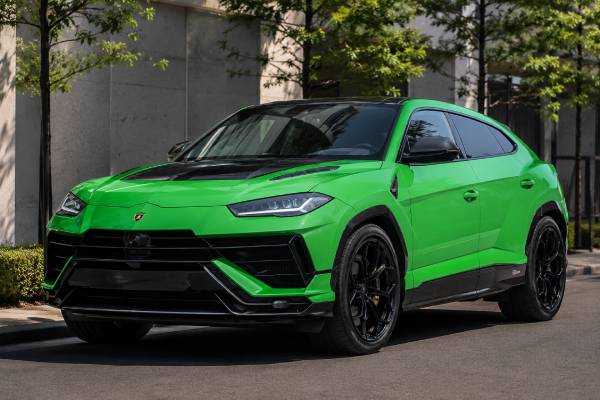
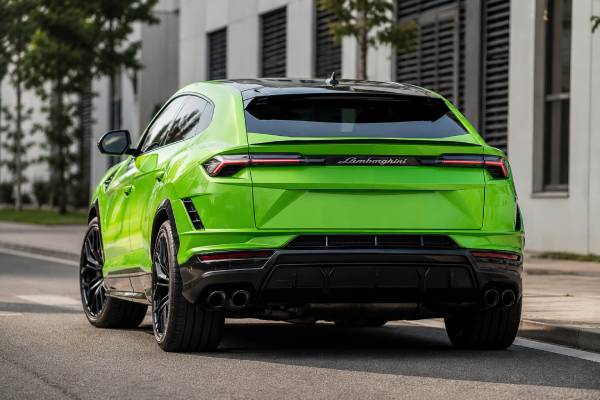
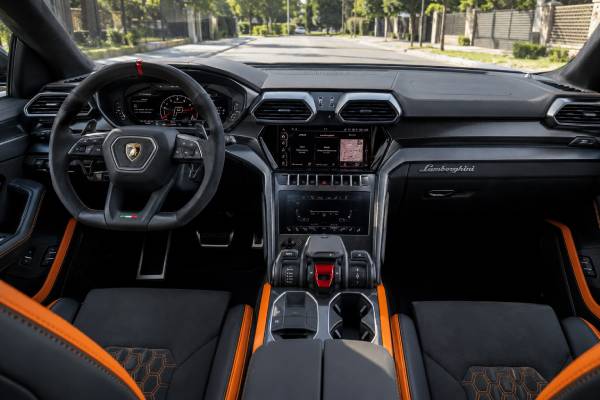
The Lamborghini Urus Performante is the sharper, lighter, more aggressive version of Lamborghini’s first modern super-SUV. Built around the LB636 Urus platform and a 4.0-liter twin-turbo V8 rated at 666 CV, it takes the standard Urus idea and pushes it toward a more focused driving brief: less weight, more downforce, firmer suspension, faster responses, and a louder titanium exhaust. It is still a practical high-performance SUV with four or five seats, all-wheel drive, and daily usability, but it feels more like a Lamborghini product than a luxury SUV wearing a Lamborghini badge. For buyers, the Performante is attractive because it sits in a short pre-hybrid window before the Urus SE changed the model line. For owners, it demands serious maintenance discipline, careful carbon-fiber inspection, tire and brake budgeting, and a proper VIN-based recall check before purchase.
Table of Contents
- Why the Urus Performante Matters
- DHU-Spec V8 and Key Specifications
- Model Years, Options, and Identification
- Carbon, Aero, and Performante Engineering
- How the Performante Drives
- Maintenance Risks and Ownership Reality
- Market Values and Buying Checks
Why the Urus Performante Matters
The Urus Performante matters because it is the most focused gasoline-only version of Lamborghini’s original Urus formula. It arrived in August 2022 as a more driver-led answer to buyers who wanted the speed and presence of the Urus, but with sharper dynamics and stronger visual separation from the regular model.
The standard Urus had already changed Lamborghini’s business. It gave the brand a high-volume, all-weather, family-usable model without abandoning outrageous performance. The Performante then added a more traditional Lamborghini performance layer: carbon fiber, less weight, more aero, firmer calibration, and a louder character.
It is not a numbered limited edition in the way some Lamborghini specials are. Its appeal comes from specification, timing, and role. It sits between the original Urus and the plug-in-hybrid Urus SE era, which makes it important for buyers who prefer the simplicity and sound of the non-hybrid V8.
The model’s significance is strongest in four areas:
- It represents the most athletic factory tune of the first-generation gasoline Urus.
- It uses the 4.0-liter twin-turbo V8 at 666 CV, above the original Urus output.
- It replaced the air-suspension feel of earlier Urus models with a firmer steel-spring setup.
- It added Rally mode, giving the car a distinct low-grip personality rather than simply making it harder and lower.
The Performante also helped prove that a large performance SUV can be engineered for more than straight-line speed. Lamborghini reduced weight by a claimed 47 kg compared with its predecessor, increased aerodynamic performance, widened the track, and recalibrated the chassis systems. These changes make the car feel more alert and less remote, especially when driven hard.
For collectors, the long-term question is not whether the Urus Performante is rare enough today. It is whether a high-spec, well-documented, low-mileage, unmodified example will become the preferred gasoline Urus as hybrid versions take over. That is a realistic possibility, especially for cars with desirable paint, carbon options, original wheels, full Lamborghini service history, and no accident or tuning record.
DHU-Spec V8 and Key Specifications
The key fact is simple: the Urus Performante uses a 3,996 cc twin-turbocharged 90-degree V8 producing 666 CV and 850 Nm. It sends power through an 8-speed automatic gearbox and a full-time all-wheel-drive system with a Torsen center differential and active rear torque vectoring.
In everyday terms, this is a huge-output V8 in a large SUV body, but the Performante’s engineering changes make the numbers more useful than they look on paper. The throttle mapping is more immediate, the shift strategy is more aggressive in performance modes, and the chassis responds faster than the standard Urus.
| Category | Specification |
|---|---|
| Model | Lamborghini Urus Performante |
| Platform code | LB636 |
| Production era covered | 2022–2024 |
| Engine | 4.0-liter 90-degree twin-turbocharged V8 |
| Displacement | 3,996 cc |
| Bore x stroke | 86 x 86 mm |
| Compression ratio | 9.7:1 |
| Maximum power | 666 CV / 490 kW at 6,000 rpm |
| Maximum torque | 850 Nm from 2,300 to 4,500 rpm |
| Transmission | 8-speed automatic |
| Drivetrain | All-wheel drive with Torsen center differential and active rear torque vectoring |
| Area | Factory figure |
|---|---|
| Top speed | 306 km/h / 190.1 mph |
| 0–100 km/h | 3.3 seconds |
| 0–200 km/h | 11.5 seconds |
| 100–0 km/h braking | 32.9 meters |
| Front brakes | Carbon-ceramic, 440 x 40 mm |
| Rear brakes | Carbon-ceramic, 370 x 30 mm |
| Suspension | Multi-link front and rear, steel springs, electronic damper control, electromechanical active roll stabilization |
| Steering | Electromechanical power steering with Lamborghini Rear-wheel Steering |
| Standard tire sizes | 285/40 ZR22 front, 325/35 ZR22 rear |
| Length | 5,137 mm |
| Width excluding mirrors | 2,026 mm |
| Height | 1,618 mm |
| Wheelbase | 3,006 mm |
| Dry weight | 2,157 kg |
| Weight distribution | 58 percent front / 42 percent rear |
| Seats | 4 or 5, depending on configuration |
The car’s official WLTP combined fuel consumption is 14.1 L/100 km, with combined CO₂ emissions of 320 g/km. In EPA form, the Performante is commonly listed at 16 mpg combined, with 14 mpg city and 19 mpg highway for the 2023–2024 Performante. Real-world use depends heavily on tire choice, speed, drive mode, traffic, and how often the driver uses full boost.
The most important technical difference from earlier Urus models is the chassis tune. The Performante uses steel springs rather than the softer, height-adjustable air suspension approach associated with the standard Urus. That makes the car more tied down, more direct, and less plush.
Model Years, Options, and Identification
The safest way to identify a real Performante is by VIN, factory build data, body equipment, interior trim, and original dealer documentation together. Badges alone are not enough, because Urus models are often customized and carbon parts can be added later.
The 2022–2024 Performante run is best understood as the high-performance gasoline Urus before the hybrid shift. It launched in 2022, appeared as a 2023 model in many markets, and continued through the final pre-hybrid period. Market timing varies, so buyers should read the build date, model year, and in-service date separately.
What separates the Performante from a regular Urus
A correct Urus Performante should have a clear combination of mechanical and visual features. The main identifiers include:
- 666 CV engine output in standard global specification.
- Performante-specific front bumper and bonnet treatment.
- Extensive carbon-fiber exterior elements.
- Carbon-fiber roof availability, with some configurations showing aluminum or carbon roof specification.
- Wider carbon-fiber wheel arches.
- Titanium exhaust system.
- Lower, more aggressive stance.
- Steel-spring performance suspension.
- Rally mode added to the ANIMA drive-mode selector.
- Performante logos and interior trim details.
- Nero Cosmus Alcantara-heavy cabin treatment on many examples.
The Chinese-market power figure is a special case. Lamborghini stated that power was set at 640 CV for that market for homologation reasons. That matters if a buyer is importing a car or comparing documentation from different regions.
Wheels, colors, and personalization
Factory specification has a major effect on desirability. The Performante was offered with 22-inch and 23-inch wheel choices, with Helianthus and Pelope designs among the highlighted options. Tire choice also matters. The car could be equipped with high-performance Pirelli P Zero tires, and Lamborghini also worked with Pirelli on a Trofeo R option developed for SUV use.
Color choice is a major value factor. The Performante suits loud colors, matte finishes, Ad Personam paint, and high-contrast interiors, but the market does not reward every loud build equally. A tasteful high-spec car with factory carbon, desirable wheels, attractive stitching, and clean documentation will usually be easier to sell than a heavily modified example with a confusing build.
Common factory and dealer-level desirability factors include:
- Ad Personam paint or rare factory colors.
- Carbon-fiber exterior package content.
- 23-inch wheels, if condition is excellent.
- Carbon-fiber roof where fitted.
- Contrasting brake calipers.
- Full Alcantara interior treatment.
- Factory audio and technology options.
- Four-seat rear-console configuration for style, or five-seat configuration for usability.
- Protective film installed early and documented properly.
A buyer should ask for the original window sticker or build sheet whenever possible. On a car at this price level, missing build documentation is not a small issue. It makes it harder to confirm original options and can reduce confidence later when the car is resold.
Carbon, Aero, and Performante Engineering
The Performante’s character comes from the parts Lamborghini changed, not just from the extra power. Carbon fiber, airflow management, suspension calibration, rear steering, torque vectoring, and the titanium exhaust all work together to make the car feel sharper.
The exterior design follows Lamborghini’s “form follows function” approach. The front end is more aggressive, the bonnet is redesigned, and the body uses carbon elements to cut weight and signal the car’s more focused purpose. It is still a large SUV, but the lower stance and wider visual track make it look more planted than the standard Urus.
The aero changes are not cosmetic only. Lamborghini highlights front air curtains, bonnet outlets, and a carbon-fiber rear spoiler with side fins. The claimed result is a major increase in downforce, better aero efficiency, a small drag reduction, and improved engine compartment cooling. In practice, those changes help the Performante feel calmer at very high speed and more keyed into the road during fast cornering.
Carbon fiber and lightweight strategy
The 47 kg weight reduction matters because large performance SUVs fight mass everywhere. Less weight helps braking, direction changes, tire load, and repeated acceleration. The Performante does not become a lightweight sports car, but the reduction supports the more direct chassis calibration.
Important carbon-fiber elements include:
- Redesigned carbon-fiber front bonnet.
- Full carbon-fiber roof on relevant configurations.
- Wider carbon-fiber wheel arches.
- Carbon-fiber aero details.
- Carbon-intensive interior trim options.
Carbon fiber also creates inspection risk. Stone chips, poor paint protection film installation, previous refinishing, cracked clear coat, and repaired mounting points can all be expensive to correct. On a Performante, carbon condition is part of the car’s value, not just a cosmetic detail.
Chassis systems and Rally mode
The Performante uses electronic damper control, active roll stabilization, rear-wheel steering, and active torque vectoring. These systems make the car feel smaller than its dimensions suggest. At low speeds, rear-wheel steering improves maneuverability. At higher speeds, it helps stability and turn-in behavior.
ANIMA drive modes give the car separate personalities. Strada is the everyday setting. Sport sharpens response and adds more attitude. Corsa focuses the car for precision and maximum performance. Rally is the Performante’s unique party trick, aimed at low-grip surfaces and dirt-road fun rather than lap-time seriousness.
The titanium exhaust is another important feature. It reduces weight, adds a harder edge to the V8 sound, and makes the cabin feel more alive. This matters because the Urus does not have the naturally aspirated V10 or V12 soundtrack many people associate with Lamborghini. The Performante’s exhaust helps give the V8 more brand-appropriate drama.
How the Performante Drives
The Urus Performante drives like a large SUV that has been deliberately tightened, not like a soft luxury SUV with more power. Its best quality is the way it combines huge torque with surprisingly fast body control, direct steering response, and strong braking.
Acceleration is immediate once the turbos are awake. The V8’s 850 Nm torque plateau gives the car a deep, forceful midrange, so passing performance is effortless. Launches are violent for an SUV, and the 0–100 km/h time of 3.3 seconds is believable when the tires, road, and temperature cooperate.
The 8-speed automatic is smooth in relaxed driving and much more assertive in Sport or Corsa. It is not as theatrical as a single-clutch Lamborghini gearbox from an older supercar, but that is part of the Urus brief. It needs to handle traffic, school runs, bad weather, and long-distance use while still shifting quickly under load.
The steering is one of the most important differences compared with a normal luxury SUV. It is not full of old-school road texture, but it is fast, accurate, and confidence-building. Rear-wheel steering helps hide the car’s wheelbase, especially on tight roads.
Ride quality is firmer than a standard Urus. That is not a defect; it is part of the Performante’s point. On smooth roads, the car feels tight and athletic. On broken city pavement, the steel-spring setup and large wheels can feel busy. Buyers who want maximum comfort should drive both a standard Urus or Urus S and a Performante before deciding.
The carbon-ceramic brakes are extremely powerful. Pedal feel is strong once the system is warm and the pads are in good condition. The expensive part is ownership reality: carbon-ceramic discs must be inspected for surface damage, edge condition, wear limits, heat stress, and previous track use. A car that has been driven hard on Trofeo R tires may need a deeper brake inspection than a low-mileage odometer suggests.
The Performante is most enjoyable in three settings:
- Fast road driving, where the torque, steering, rear-wheel steering, and active roll control make the car feel alert.
- Highway use, where the V8 has massive reserve power and the aero changes add stability.
- Low-grip fun, where Rally mode lets the chassis loosen without turning the car into an uncontrolled mess.
It is least convincing as a purely comfort-focused SUV. Wind and tire noise, ride firmness, wide tires, expensive consumables, and the loud exhaust all remind the driver that this is the aggressive version.
Maintenance Risks and Ownership Reality
The Urus Performante is not a normal used SUV, even though it can behave like one in traffic. Its ownership risk comes from exotic-car consumables, complex electronics, carbon-fiber body parts, high-performance tires, carbon-ceramic brakes, and the cost of specialist labor.
The 4.0-liter twin-turbo V8 is a strong modern performance engine when serviced correctly, but neglect gets expensive quickly. Oil quality, correct service intervals, coolant health, turbocharger behavior, intake and PCV system condition, and software updates all matter. A tuned or poorly modified example should be treated with caution unless the work is fully documented and reversible.
Key inspection areas
A serious pre-purchase inspection should focus on the Performante-specific parts as well as ordinary Urus systems.
| Area | What to check |
|---|---|
| Carbon-fiber bonnet and exterior parts | Fit, cracks, clear-coat damage, stone impacts, repaired mounting points, paint-protection film quality |
| Brakes | Carbon-ceramic disc condition, pad thickness, heat marks, edge wear, pedal feel, service records |
| Tires and wheels | Correct sizes, tire age, inner-edge wear, curb damage, cracked wheels, mismatched brands |
| Suspension and steering | Damper operation, active roll system behavior, rear-wheel steering faults, alignment history |
| Powertrain | Boost behavior, oil leaks, coolant leaks, misfires, transmission shift quality, launch-use evidence |
| Electronics | Infotainment, driver-assistance systems, cameras, warning lights, battery health, stored fault codes |
| Documentation | Original build sheet, service invoices, recall completion, warranty status, paintwork records |
Tires are a major consumable. The rear 325-section tires are expensive, and aggressive alignment can wear inner shoulders before the outer tread looks alarming. Trofeo R tires, where fitted, should be treated as performance consumables rather than long-life road tires.
Carbon-ceramic brakes can last a long time in road use, but that does not mean they are free to ignore. Replacement costs are high enough that a proper brake measurement can materially change the value of the car.
The Performante’s 2023–2024 recall history also deserves careful attention. Certain Urus Performante and Urus S vehicles were covered by a hood-latch striker recall, where the hood could open or detach while driving. Later recall documentation also covered a rearview-camera display software issue affecting certain Urus vehicles. The only safe buying approach is to check the VIN with Lamborghini and the relevant national recall database.
Service history and warranty
A full authorized Lamborghini service history is highly valuable. Independent exotic specialists can be excellent, but the invoices must show correct fluids, parts, diagnostics, and maintenance timing. Avoid cars with vague “just serviced” claims and no itemized paperwork.
Warranty status matters because many 2022–2024 cars are now near the end of their original coverage or already outside it depending on first registration. A Lamborghini-backed warranty or eligible Selezione coverage is worth investigating, especially for cars with higher mileage, heavy option loads, or complex electronic features.
Market Values and Buying Checks
The Urus Performante market is still mileage-, color-, option-, and condition-sensitive rather than purely collectible. As of mid-2026, U.S. asking prices for 2023–2024 Performante examples commonly sit roughly in the high-$200,000 to mid-$300,000 range, with outliers above or below depending on mileage, specification, accident history, and dealer positioning.
The strongest cars are not always the lowest-mileage cars. A barely used example with poor storage, old tires, missing documentation, or unresolved campaigns can be weaker than a modest-mileage car serviced on time by Lamborghini. Condition and paperwork matter more than a small mileage difference.
What drives value
The best Performante examples usually share the same traits:
- Desirable factory color or Ad Personam paint.
- Original, complete Performante body specification.
- No accident history or structural repair.
- Clean carbon-fiber panels with excellent fit.
- Full Lamborghini service record.
- Confirmed recall completion.
- Original wheels in excellent condition.
- No questionable ECU tune or exhaust modification.
- Clean interior Alcantara with minimal bolster wear.
- Factory build sheet, window sticker, books, keys, and accessories.
Avoid cars with unclear modifications, unexplained warning lights, heavily worn inner tire edges, missing service records, cheap paint protection film, mismatched tires, or evidence of hard launch use without corresponding maintenance.
A buyer should also think about the future resale audience. The Urus Performante will likely attract two groups: drivers who want the most entertaining gasoline Urus, and collectors who want a clean pre-hybrid performance SUV. Both groups will reward originality. Aftermarket wheels, lowered suspension, loud non-factory exhausts, and ECU tuning may make the car harder to sell later.
Practical buying process
Use a structured buying process rather than falling for the color or mileage first.
- Confirm the VIN, model year, build date, and market specification.
- Request the original build sheet or window sticker.
- Check all recalls and service campaigns through Lamborghini and national databases.
- Review every service invoice, not just stamped history.
- Inspect carbon-fiber panels, wheels, tires, brakes, and underbody condition.
- Run a diagnostic scan before and after the test drive.
- Compare the asking price with similar mileage, color, and option examples.
- Budget immediately for tires, fluids, alignment, warranty transfer or extension, and paint protection.
The best ownership choice is a car bought for condition first and color second. A rare paint car can be exciting, but a poorly documented rare paint car is still a risk. A clean, original, fully documented Performante with the right options is the one to chase.
For long-term desirability, the Performante has a clear story: it is the harder, lighter, louder, gasoline-only Urus before the hybrid era. That story is strong enough to support future interest, but only the best-preserved and best-documented examples are likely to stand apart.
References
- Lamborghini Urus Performante | Lamborghini.com 2024 (Manufacturer Specifications)
- URUS PERFORMANCE_DIGITAL_BROCHURE_WCAG_EN_2024 2024 (Manufacturer Brochure)
- Part 573 Safety Recall Report 24V-348 2024 (Recall Database)
- Part 573 Safety Recall Report 25V903 2025 (Recall Database)
- Warranty Extension 2025 (Manufacturer Warranty)
Disclaimer
This article is for informational purposes only and is not a substitute for professional diagnosis, repair, valuation, or inspection. Specifications, torque values, service intervals, recall applicability, software updates, and repair procedures can vary by VIN, market, model year, equipment, and campaign status. Always verify details against the official Lamborghini service documentation for the specific vehicle and consult an authorized Lamborghini dealer or qualified exotic-car specialist before buying, repairing, modifying, or servicing a Urus Performante.
If this guide helped you, please share it on Facebook, X/Twitter, or your preferred car community to support our work.