
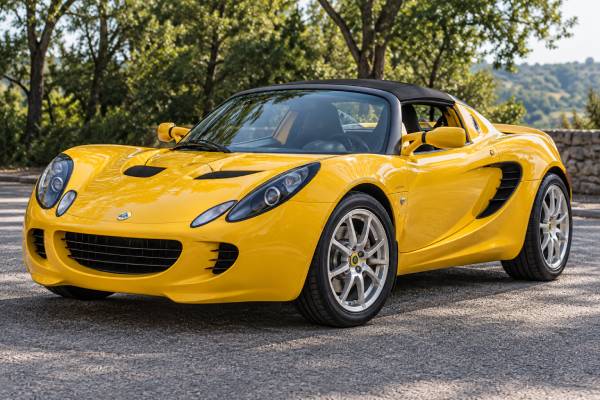
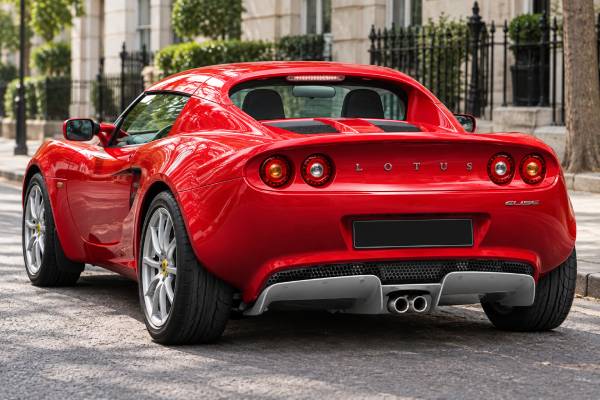
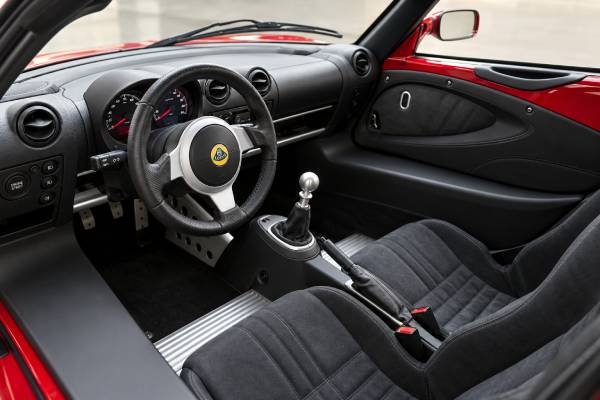
The 2010–2015 Lotus Elise 1.6 is the lightest, simplest way into the facelifted Type 111 generation, and its modest 134 hp is less important than the number it has to move: roughly 876 kg in original form. Lotus replaced the earlier 1.8-liter entry engine with Toyota’s 1ZR-FAE 1.6-liter four-cylinder for the 2011 model-year update, pairing it with a six-speed manual and the Elise’s bonded-aluminum chassis. The result is not a straight-line bruiser. Instead, it is a car built around low mass, unassisted steering, compact dimensions, and a naturally aspirated engine that rewards revs. For buyers today, condition and originality matter more than chasing a particular registration year. A well-maintained 1.6 can be durable and inexpensive to fuel by specialist-sports-car standards, but neglected cooling systems, damaged chassis sections, worn suspension joints, water ingress, and poor accident repairs can turn a seemingly simple Elise into an expensive project.
Table of Contents
- What Makes the 1.6 Elise Distinct
- Engine, Gearbox, and Driving Character
- Elise 1.6 Specifications and Technical Data
- Chassis, Steering, Brakes, and Road Behavior
- Maintenance and Common Age-Related Problems
- How to Inspect and Buy One
- Ownership Costs and Who It Suits
What Makes the 1.6 Elise Distinct
The 1.6 Elise is best understood as the purity-focused road model of the 2010 facelift range, not as a detuned version of the later supercharged cars. Its appeal comes from low weight and delicacy rather than power, and that distinction shapes nearly every part of the ownership experience.
For the 2011 model year, Lotus restyled the Elise with cleaner front and rear bodywork and introduced Toyota’s 1,598 cc 1ZR-FAE engine. The all-aluminum four-cylinder uses dual variable valve timing and Valvematic, Toyota’s variable valve-lift system, to improve breathing and efficiency. Lotus quoted 134 hp and 160 Nm, enough for 0–60 mph in about 6.0 seconds and 0–100 km/h in 6.5 seconds. Those figures look ordinary beside modern hot hatchbacks, but they miss the point. The Elise is narrow, low, mechanically direct, and light enough that its responses arrive without the delay and inertia common in heavier cars.
The 1.6 also sits at an interesting point in Elise history. Earlier Series 2 cars established the Toyota-engine era, while later Sport 220 and Cup derivatives pushed performance upward. The 1.6 retained the basic Elise virtues with fewer demands on tires, brakes, and fuel. It can therefore make a particularly satisfying road car where outright speed is less useful than visibility, balance, and feedback.
Visually, the 2010 facelift brought LED-style lighting details, a more integrated front fascia, revised rear treatment, and improved aerodynamic efficiency. Underneath, however, the essential architecture remained familiar: a bonded and riveted aluminum tub, glass-fiber composite body panels, mid-mounted transverse engine, rear-wheel drive, and double-wishbone suspension.
That continuity is valuable when buying used. Specialists know the platform well, and service parts for Toyota-derived powertrain components are generally less exotic than the body and chassis might suggest. Yet it also creates a trap: because the engine is Toyota-sourced, some buyers assume the entire car can be treated like a Corolla. It cannot. The engine may be robust, but the Elise’s cooling layout, bonded chassis, suspension hardware, body mounting, and packaging require Lotus-specific knowledge.
Where the 1.6 fits among nearby Elise variants
Compared with the 2011 Club Racer, the standard 1.6 is better equipped and slightly heavier. The Club Racer removes comfort items and uses a lighter battery and other weight-saving measures to reach roughly 852 kg. Compared with the 2012-on Elise S, the 1.6 gives away a large amount of torque and acceleration because the S uses the supercharged 1.8-liter 2ZR-FE. In return, the naturally aspirated car feels less urgent, consumes less fuel, and avoids supercharger and charge-cooler hardware.
The right question is therefore not whether the 1.6 is “fast enough” in isolation. It is whether you want an Elise primarily for momentum, steering feel, and modest running loads. If so, the base car is one of the most coherent versions of the late Type 111.
Engine, Gearbox, and Driving Character
The 1ZR-FAE is smooth, willing, and economical, but it needs revs to deliver its best. Drivers expecting the mid-range shove of the supercharged Elise S may initially find the 1.6 subdued; drivers who enjoy carrying speed and using the gearbox often find the restraint part of the charm.
Lotus mounted the 1.6-liter engine transversely behind the seats and paired it with a six-speed manual transaxle. Peak torque is only 160 Nm, so the car does not surge forward from low rpm. The engine instead builds speed progressively. On a flowing road, this encourages earlier throttle application and more deliberate gear choice. Because the car is so light, the lack of torque rarely makes it feel inert unless the driver asks for strong acceleration in a tall gear.
Valvematic varies intake valve lift rather than relying only on a conventional throttle plate to control airflow. In normal driving, the technology helps reduce pumping losses and supports the Elise’s relatively low fuel consumption and CO2 output for a sports car of its period. For owners, the important point is simpler: use the correct oil, keep the oil level monitored, and avoid assuming a Toyota badge makes maintenance optional.
The six-speed gearbox is one of the car’s defining controls. Shift quality should feel mechanical but positive. A healthy linkage should not require excessive force or vague hunting between gates. Age can introduce play in cable ends, bushes, and the linkage mechanism, while clutch wear can make engagement high or inconsistent. A reluctant shift when cold is less alarming than persistent baulking once fully warm, especially if accompanied by crunching.
The clutch is not exceptionally heavy in a good car. Test for slip by applying strong throttle in a higher gear at moderate rpm, but do not abuse a seller’s car. A rising engine speed without matching road speed points to wear. Also check for clutch release problems, judder, or difficulty selecting reverse. Because access is tight, labor can make even ordinary drivetrain jobs cost more than the component price suggests.
Performance in real use
The quoted 0–60 mph time of around six seconds is only one part of the story. The Elise’s biggest advantage appears in transitions: braking, turning, changing direction, and accelerating while the chassis is still loaded. Low mass reduces the energy the brakes must dissipate and the work the tires must do. On a narrow road, the car can feel vivid without requiring extremely high speeds.
The downside is that motorway driving exposes the compromises. Gearing, road noise, limited insulation, tire roar, and the soft top make long journeys more tiring than they would be in a conventional coupe. Crosswinds and standing water also deserve respect. The Elise is not inherently unstable, but low weight and relatively wide rear tires mean abrupt inputs are unnecessary and often counterproductive.
Elise 1.6 Specifications and Technical Data
This version uses a naturally aspirated 1.6-liter Toyota 1ZR-FAE four-cylinder, a six-speed manual transaxle, and rear-wheel drive in a two-seat roadster body. The specifications below describe the European-market facelift-era Elise 1.6; equipment and homologated figures can vary by market and production date, so VIN-specific documentation remains the final authority. **Engine and fuel system**
| Item | Specification |
|---|---|
| Engine | Toyota 1ZR-FAE inline-four |
| Displacement | 1,598 cc |
| Aspiration | Naturally aspirated |
| Valvetrain | DOHC, 16 valves, dual VVT-i with Valvematic |
| Maximum power | 134 hp (136 PS) at 6,800 rpm |
| Maximum torque | 160 Nm at 4,400 rpm |
| Engine position | Mid-mounted, transverse |
| Fuel | Petrol/gasoline |
**Transmission and drivetrain**
| Item | Specification |
|---|---|
| Transmission | 6-speed manual transaxle |
| Driven wheels | Rear-wheel drive |
| Throttle | Electronic throttle control |
| Stability/traction systems | Lotus Dynamic Performance Management, specification dependent |
| Differential support | Electronic differential-lock function through brake intervention |
**Factory performance and efficiency**
| Measure | Official/period figure |
|---|---|
| 0–60 mph | 6.0 seconds |
| 0–100 km/h | 6.5 seconds |
| Top speed | 127 mph (204 km/h) |
| Combined fuel consumption | About 45 mpg UK (6.3 L/100 km), depending on homologation cycle |
| CO2 emissions | 149 g/km |
**Chassis, suspension, brakes, and wheels**
| Item | Specification |
|---|---|
| Chassis | Bonded extruded-aluminum structure |
| Body | Composite panels |
| Front suspension | Independent double wishbones |
| Rear suspension | Independent double wishbones |
| Dampers | Bilstein gas dampers |
| Springs | Eibach coil springs |
| Steering | Manual rack-and-pinion |
| Typical wheel sizes | 16-inch front, 17-inch rear |
| Typical tire sizes | 175/55 R16 front, 225/45 R17 rear |
**Dimensions and mass**
| Item | Specification |
|---|---|
| Body style | Two-seat roadster |
| Length | About 3,824 mm |
| Width | About 1,719 mm excluding mirrors |
| Height | About 1,117 mm |
| Wheelbase | 2,300 mm |
| Unladen mass | Approximately 876 kg for early facelift 1.6 specification |
| Seating | 2 |
**High-value service reference**
| Area | Owner guidance |
|---|---|
| Engine oil | Use the viscosity and specification stated for the VIN and climate in Lotus service information |
| Coolant | Maintain correct concentration; inspect radiator, hoses, joints, and header tank for age deterioration |
| Brake fluid | Replace by time as well as mileage, especially on track-driven cars |
| Gearbox oil | Use Lotus/Toyota-compatible fluid of the specified grade |
| Alignment | Check after suspension work, curb strikes, or abnormal tire wear |
| Timing drive | 1ZR-FAE uses a timing chain rather than a routine-replacement timing belt |
Chassis, Steering, Brakes, and Road Behavior
The Elise 1.6’s chassis is its main event. Manual steering, low mass, and double wishbones create unusually clear feedback, while the modest engine output means the driver can explore the balance more often without immediately reaching antisocial speeds.
The bonded-aluminum tub is stiff for its mass and forms the central structural shell. The front and rear suspension attach to separate structures and mounting points around it. The design is highly effective but changes how accident damage should be judged. Conventional body-shop logic does not apply to a bonded aluminum Elise chassis. Damage, deformation, drilled holes, or corrosion around bonded joints can be serious, and factory guidance generally favors replacement rather than casual structural repair.
Steering feel is strongest once the car is moving. At parking speed the manual rack can feel heavy, especially on poor tire pressures, but assistance is unnecessary at speed. A healthy car should track cleanly on a flat road. Persistent pulling, an off-center wheel, or asymmetric tire wear can indicate alignment issues, worn joints, bent components, or previous impact damage.
The brake system is deliberately simple and well matched to the car’s weight. Pedal feel should be firm and progressive. Pulsation suggests disc variation or deposits; a long pedal can indicate old fluid, air, or hydraulic problems. Track use is not automatically a reason to reject a car—many Elises are designed to tolerate occasional circuit driving—but it raises the importance of inspecting discs, pads, wheel bearings, ball joints, toe links, and tires.
Tire choice matters disproportionately. Lotus-specific or correctly matched performance tires preserve the intended steering and breakaway behavior. Mixing old front tires with much newer rears, fitting budget compounds, or running incorrect pressures can make a good chassis feel nervous. Check date codes as well as tread depth. An Elise can cover few annual miles while its tires age out.
Ride quality is better than the car’s appearance suggests because Lotus did not rely on extreme spring rates to create control. The low mass allows relatively disciplined wheel movement without brutal damping. A crashy, clattery Elise may therefore need suspension attention rather than simply being “normal for one of these.”
Maintenance and Common Age-Related Problems
The 1.6 Elise is mechanically straightforward, but age now matters more than headline mileage. A 15-year-old car with 20,000 miles can need more recommissioning than a regularly serviced 50,000-mile example that has been kept dry and exercised properly.
Start with the cooling system. The radiator sits at the front while the engine sits behind the cabin, so coolant travels through long pipes. Inspect the radiator for leaks and damaged fins, the front hoses and joints, the expansion tank, and the pipes along the chassis. Repeated coolant loss, overheating, or a fan that does not operate correctly warrants investigation before purchase. Do not dismiss temperature instability as an Elise quirk.
Oil leaks around an older engine may be minor, but the level should stay stable and the oil should not smell heavily of fuel or show signs of coolant contamination. Listen from cold for abnormal chain or accessory noises. The 1ZR-FAE’s chain drive removes a routine timing-belt replacement, but it does not make the engine maintenance-free.
The suspension contains many wear points because precise geometry depends on tight joints. Check ball joints, track-rod ends, wishbone bushes, anti-roll-bar links, dampers, and wheel bearings. Corroded steel suspension parts are common on cars used through wet winters. Surface rust is different from serious section loss, but refurbishment costs can add up quickly if every corner needs attention at once.
Rear toe links deserve particular attention because looseness here can affect stability. Ask whether upgrades or replacements are documented. Any non-standard part should be judged by engineering quality and installation, not by brand reputation alone.
Water ingress is another classic Elise ownership theme. Check the footwells, behind seats, under mats, around sill areas, and the luggage compartment. Soft-top seals and window adjustment can allow rain inside. Dampness can damage trim, encourage corrosion on steel fasteners, and create electrical gremlins. A car that smells musty deserves a closer look even if the carpets appear dry on viewing day.
Electrical faults are often mundane—battery condition, earths, switches, immobilizer behavior, window mechanisms—but access can be inconvenient. Verify every light, fan speed, instrument function, alarm/immobilizer feature, window, central locking function if fitted, and charging voltage. Elises dislike being left with weak batteries, and long storage can create more trouble than regular use.
The composite body does not rust like steel, but it can crack, star-craze, blister, or show poor repair work. Inspect panel gaps, paint texture, headlamp areas, clam edges, and mounting points. A cracked clam is not automatically structural damage, but a cosmetic repair can hide an impact that also reached the suspension or chassis.
Maintenance approach that works
A sensible ownership plan is condition-led. Annual inspection matters even when mileage is low. Fluids age, brake calipers can stick, rubber hardens, and dampers deteriorate. Keep a record of tire ages, alignment settings, brake fluid changes, coolant work, battery replacement, and suspension refreshes rather than relying only on stamped oil-service history.
If the car sees track use, shorten inspection intervals. Check wheel torque, tire condition, pad thickness, fluid level, and visible suspension hardware before and after events. Road cars do not need race-car maintenance, but an Elise rewards disciplined checks because its performance depends on relatively small, lightweight components working correctly.
How to Inspect and Buy One
Buy the chassis and history first, then the cosmetics. An untidy but straight Elise can be improved; a shiny car with compromised aluminum structure, unknown accident history, or badly modified suspension can be the more expensive choice.
Begin by confirming the VIN, model description, and engine specification against documents. The 1.6 should have the 1ZR-FAE, not a swapped or misdescribed 1.8. Look for consistent service invoices rather than a stamp book alone. Specialist invoices are especially useful because they often describe suspension, cooling, and chassis observations that routine garages omit.
Inspect the underside with the car safely raised. You want to see the aluminum structure, floor panels, suspension pick-up areas, front crash structure, rear subframe area, and signs of jack damage. Crushed undertrays or scarred lift points can reveal careless maintenance. Any bent aluminum or suspicious fresh sealant near structural joints should prompt expert assessment.
Then inspect the suspension and wheels. Check for mismatched wheel finishes that could suggest replacements after impacts. Look inside rims for cracks or repairs. Uneven tire wear can expose poor geometry. On a test drive, release the steering lightly on a level road and feel whether the car tracks straight without fighting the crown.
The engine should start cleanly from cold, settle to a stable idle, and reach operating temperature without drama. Confirm radiator fans work. Watch the temperature display rather than relying on the seller’s reassurance. After the drive, look again for coolant leaks and oil seepage.
The gearbox should improve as it warms. All six gears should engage without crunching. Check the clutch take-up point and listen for noises that change when the clutch pedal is depressed. A little mechanical sound is normal in such a lightly insulated car; grinding, knocking, or severe bearing whine is not.
Finally, check usability details. Fit the roof and remove it if possible. Inspect seals and roof hardware. Make sure you can enter and exit comfortably, particularly if the car has non-standard seats, harnesses, or a roll bar. Confirm insurance before buying because modified Elises can attract different underwriting terms. **Used Elise 1.6 inspection priorities**
| Priority | What to check | Why it matters |
|---|---|---|
| Chassis | Bonded tub, mounting points, crash structure, lift damage | Structural repairs can be difficult or uneconomic |
| Cooling | Radiator, hoses, fans, header tank, temperature stability | Overheating can cause major engine damage |
| Suspension | Joints, bushes, toe links, dampers, bearings | Wear directly affects stability and steering precision |
| Body | Clams, paint, panel gaps, hidden repairs | Composite repair can be costly and may reveal impacts |
| History | Specialist invoices, fluid changes, alignment, tires | Low mileage alone does not prove good care |
| Modifications | Seats, exhaust, intake, suspension, wheels, electronics | Poorly engineered changes can reduce reliability and value |
Ownership Costs and Who It Suits
The Elise 1.6 can be relatively economical to run when bought well, but it is not a cheap conventional car with a fiberglass body. Consumables are modest because of the low mass, while specialist labor, body repairs, and deferred suspension work are the areas that can upset a budget.
Fuel use is one of the 1.6’s strengths. Gentle touring can deliver surprisingly good economy for a sports car, while hard driving naturally increases consumption. Tires are staggered front to rear, so rotation is limited, but the car does not normally destroy tires at the rate of a much heavier high-power machine unless alignment is wrong or it is frequently tracked.
Brake wear is similarly reasonable on road use. Quality pads and fluid matter more than exotic upgrades. If a seller has fitted aggressive track pads, ask why and verify the rest of the braking system was maintained to the same standard. Squeal or dust alone does not prove a problem, but road manners can suffer with compounds chosen only for circuit temperatures.
Insurance, storage, and weather protection deserve planning. A dry garage is ideal, not because the Elise cannot get wet, but because repeated damp storage accelerates cosmetic and electrical deterioration. A battery conditioner can be useful for cars used intermittently, provided it is suitable for the installed battery type.
As a daily driver, the Elise asks for compromise. Cabin access is awkward, luggage space is small, rear visibility is limited, noise is high, and the roof requires more involvement than a powered convertible top. Air conditioning, if fitted, can matter greatly in hot climates because the cabin is compact and the windscreen large relative to interior volume. Buyers who romanticize simplicity sometimes discover they miss these comforts after the novelty wears off.
As a weekend road car, however, the 1.6 makes exceptional sense. Its performance is usable, the steering remains one of the clearest in modern production-car history, and the engine’s modest torque encourages clean driving rather than brute force. It is also less intimidating in damp conditions than the more powerful supercharged derivatives when both are on appropriate tires.
For collectors, originality is increasingly important. Factory wheels, seats, steering wheel, intake, exhaust, roof, documentation, and removable parts should be retained even if tasteful upgrades are fitted. Reversible modifications are easier to accept than cut bodywork or altered chassis structure. Color and specification can influence desirability, but documented condition should come first.
The strongest 1.6 purchase is therefore not necessarily the lowest-mileage or highest-priced car. It is the example with an undamaged chassis, clear history, healthy cooling system, tight suspension, correct tires, and evidence that previous owners understood the Elise as a lightweight specialist car. Find that, and the 134 hp figure stops looking like a limitation. It becomes part of what makes this version so approachable: enough performance to be genuinely quick on the right road, without overwhelming the balance that made the Elise famous.
References
- Lotus Elise – Iconic Sports Car | Lotus Cars 2026 (Heritage Model Page)
- Lotus Announces New Elise Sport and Elise Sport 220 – TLF – Totally Lotus 2015 (Lotus Press Release reproduction)
- elises.co.uk • Models • 2011 Elise Club Racer 2011 (Period Lotus Press Release reproduction)
- Lotus launches new e-commerce site for parts, accessories and merchandise – Lotus Cars Media Site 2022 (Manufacturer Parts Information)
- Lotus Announces All-new Sub-Assembly Manufacturing Facility in Norwich – Lotus Cars Media Site 2020 (Manufacturer Chassis Information)
Disclaimer
This article is for informational purposes and is not a substitute for professional diagnosis, inspection, or repair. Specifications, torque values, maintenance intervals, fluids, and procedures can vary by VIN, market, production date, and equipment; verify all service work against the official Lotus documentation for the specific car. If this guide was useful, please consider sharing it on Facebook, X/Twitter, or your preferred enthusiast community to support our work.