
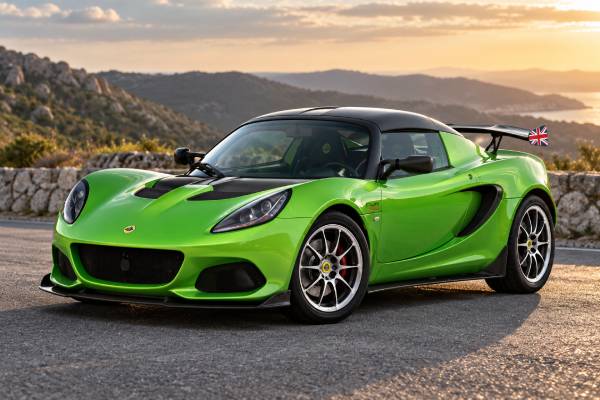
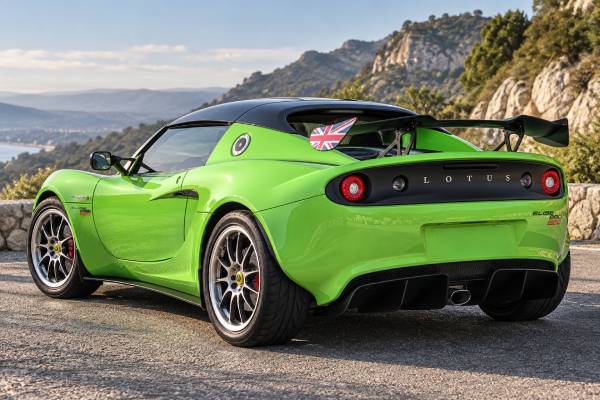
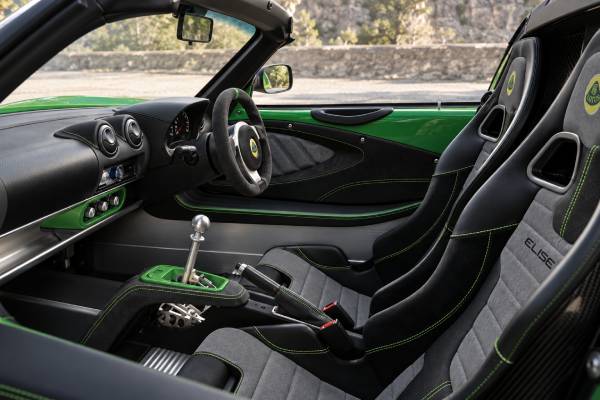
The 2021 Lotus Elise Cup 250 Final Edition is the closing track-focused chapter of the Type 111 road car. It combines the Cup 250’s aerodynamic package and chassis intent with 245 hp, 244 Nm, a new TFT instrument display, revised steering wheel, Final Edition trim, and a set of lightweight components aimed at preserving the Elise philosophy at the end of production. Factory technical material quotes 245 hp at 7,200 rpm, 0–100 km/h in roughly 4.3 seconds, and a maximum speed around 240 km/h, while Lotus’s heritage material highlights the model as the ultimate production expression of the Cup lineage. The key issue is authenticity: genuine Final Edition cars have model-specific trim, plaques, wheels, colors, and equipment, and they command attention because production ended in 2021. That premium makes documentation, condition, and originality important. A damaged, heavily altered, or poorly maintained Final Edition is not rescued by rarity; the best cars still need straight aluminum structures, correct aero, healthy charge cooling, clean suspension geometry, and evidence that any track use was followed by proper inspection.
Table of Contents
- What Made the Final Edition Different
- Power, Aerodynamics, and Performance
- Cup 250 Final Edition Specifications
- Interior, Wheels, and Final Edition Details
- Service and Track-Use Considerations
- Collectability, Originality, and Modifications
- How to Inspect a 2021 Cup 250 Final Edition
What Made the Final Edition Different
The Final Edition is more than a badge package. It marks the end of Elise production and combines the developed Cup 250 chassis with model-specific trim, digital instrumentation, steering-wheel updates, distinctive wheels, paint choices, and a final 245 hp calibration.
Lotus announced the Final Edition range in February 2021 as the Elise and Exige entered their last production year. The Elise range closed with two cars: the more road-oriented Sport 240 Final Edition and the track-focused Cup 250 Final Edition. Both received equipment intended to make the final run feel materially different from the preceding models.
Inside, the old analog-style instrument presentation gave way to a TFT digital display with different screen modes. The steering wheel was redesigned with a flatter lower section, helping entry and exit over the wide sill while also distinguishing the late cabin visually. Final Edition plaques, new trim patterns, and special paint choices connected the cars with earlier Elise colors and Lotus heritage.
The Cup 250 retained the aerodynamic philosophy that separated it from the Sport 220/240. A front splitter, rear wing, diffuser, and side-floor extensions generate downforce at speed. Lotus quoted 66 kg at 100 mph and up to 155 kg at the car’s maximum-speed region for the final specification. That functional aero, not the plaque, remains the defining dynamic difference.
The factory also continued the lightweight approach. Standard equipment included a lithium-ion battery and polycarbonate rear window on the Cup model, while carbon-fiber options could reduce mass further. Lotus cited a 931 kg unladen figure in Final Edition material, but weight references vary with equipment and measurement convention. Buyers should compare like with like rather than mixing dry and kerb numbers from earlier Cup releases.
Power, Aerodynamics, and Performance
The Final Edition adds a small power increase but preserves the Cup 250’s main strengths: immediate supercharger response, low mass, and aero-supported high-speed grip. Its 245 hp figure is enough to make the car extremely quick without making it feel dominated by the engine.
The Toyota-derived 2ZR-FE remains 1,798 cc with dual variable valve timing. Lotus’s supercharger and charge-cooling system deliver 245 hp at 7,200 rpm and around 244–245 Nm across a broad middle portion of the rev range, depending on the way the figure is rounded in market documents.
Factory technical data list 0–100 km/h at about 4.3 seconds and a limited maximum speed around 240 km/h. Some market references also quote 0–60 mph around 3.9 seconds. Differences in acceleration figures can reflect testing conventions, so avoid mixing them as if they came from one standardized measurement.
The car’s high-speed behavior is shaped heavily by aero. The wing and splitter create vertical load that rises with speed, giving the driver more confidence in fast bends. That same hardware creates drag, which is why the Cup’s purpose is not simply maximizing top speed.
At ordinary road speeds, the familiar Elise sensations dominate: manual steering, low seating, compact dimensions, and immediate responses. The Final Edition can therefore feel surprisingly approachable despite its rarity and track focus. The challenge is not controlling a huge power spike; it is respecting how quickly a 900-plus-kilogram car can gather speed and how little electronic filtering sits between driver and road.
Cup 250 Final Edition Specifications
The 2021 Cup 250 Final Edition uses a supercharged and charge-cooled 1.8-liter four-cylinder, a six-speed manual, rear-wheel drive, Cup aero, and track-focused suspension hardware. Figures below reflect published 2021 specifications and should be checked against the individual market car because homologation and equipment differ. **Engine and output**
| Item | Specification |
|---|---|
| Engine | Toyota 2ZR-FE inline-four |
| Displacement | 1,798 cc |
| Valvetrain | DOHC, 16 valves, dual VVT-i |
| Induction | Magnuson/Eaton-type supercharger with charge cooling |
| Maximum power | 245 hp (approximately 248–249 PS) at 7,200 rpm |
| Maximum torque | Approximately 244–245 Nm |
| Engine location | Mid-mounted, transverse |
**Performance and efficiency**
| Measure | Published figure |
|---|---|
| 0–100 km/h | Approximately 4.3 seconds |
| Top speed | Approximately 240 km/h |
| Combined WLTP fuel consumption | About 7.8 L/100 km |
| Combined CO2 | About 177 g/km |
| Power-to-weight | About 263 hp per tonne in published Final Edition data |
| Quoted unladen mass | Approximately 931 kg, specification dependent |
**Aerodynamic and chassis package**
| Item | Final Edition Cup specification |
|---|---|
| Front aero | Functional splitter and side extensions |
| Rear aero | Fixed wing and diffuser |
| Downforce at 100 mph | About 66 kg |
| Maximum-speed downforce | Up to about 155 kg in Lotus Final Edition material |
| Suspension | Double wishbones with Bilstein sport dampers |
| Anti-roll bars | Adjustable Cup-oriented setup |
| Steering | Manual rack-and-pinion |
**Wheels and tires**
| Position | Specification |
|---|---|
| Front wheel | 7J x 16-inch lightweight forged alloy |
| Rear wheel | 8J x 17-inch lightweight forged alloy |
| Front tire | 195/50 R16 |
| Rear tire | 225/45 R17 |
| Period tire family | Yokohama A052 on Final Edition Cup specification |
| Battery | Lightweight lithium-ion unit |
**Dimensions and packaging**
| Item | Specification |
|---|---|
| Length | 3,824 mm |
| Width | 1,719 mm excluding mirrors |
| Height | 1,117 mm |
| Wheelbase | 2,300 mm |
| Body | Two-seat roadster/Cup body configuration |
| Drive | Rear-wheel drive |
| Transmission | 6-speed manual |
**Service priorities for a collector-driven Cup**
| Area | What matters |
|---|---|
| Battery | Correct lithium-compatible maintainer and avoidance of deep discharge |
| Tires | Age and heat cycles even on very low-mileage cars |
| Brake fluid | Time-based replacement regardless of mileage |
| Cooling | Radiator, fans, hoses, charge-cooler circulation |
| Suspension | Joint play, damper condition, alignment |
| Original trim | Preserve plaques, wheels, steering wheel, TFT system, aero, and supplied parts |
Interior, Wheels, and Final Edition Details
The Final Edition’s cabin and exterior details matter because they are part of the model’s identity and future value. Buyers should check that the car retains its correct instruments, plaque, steering wheel, wheel design, trim, and aero rather than assuming any late Elise with Cup bodywork is genuine.
The TFT cluster is the most obvious interior change. It offers a conventional display and a more race-style layout, giving the old Elise cockpit a surprisingly modern final update. Test every display mode, warning light, and telltale. Replacement electronics may become harder to source with time, so a malfunction should not be dismissed as cosmetic.
The flat-bottom wheel is wrapped in leather and Alcantara-type material, depending on market specification. Wear at very low mileage can suggest frequent entry and exit, gloves, or aggressive cleaning products. Re-trimming is possible, but originality may matter to collectors.
Final Edition badging and plaque details should match known factory presentation. Check for correct placement, fonts, and supporting documentation. Reproduction plaques are possible, so identity should always come back to the VIN and build records.
The forged wheels are another key feature. Inspect both faces and inner barrels for cracks, bends, or poor refurbishment. Diamond-cut surfaces can corrode if the lacquer is damaged. A cosmetic wheel repair is not necessarily a problem, but welding or structural repair should be disclosed and assessed.
Special heritage colors add desirability but should not override condition. Paint depth readings are less straightforward on composite panels than on steel, so inspect finish quality, panel edges, fasteners, and overspray rather than relying on a magnetic gauge.
Service and Track-Use Considerations
Low mileage does not eliminate maintenance. A 2021 Final Edition may now have covered very few miles, yet its brake fluid, tires, battery, coolant, and seals have all aged by time.
The lithium-ion battery deserves special care. Use a charger approved for its chemistry and do not assume a conventional trickle charger is safe. A deeply discharged lithium battery can be damaged even if later revived. Ask whether the car has lived on a maintainer and whether the original battery has been replaced.
Tires are equally important. A collector car may still wear its original A052s for authenticity, but old high-performance rubber can be unsafe for active driving. If originality matters, retain the old tires off the car and fit a fresh approved set for road use rather than compromising grip.
Track-driven cars need deeper inspection. Look for heat checking on discs, pad taper, shoulder wear on tires, looseness in wheel bearings, and fresh geometry records. Inspect front splitter edges and underbody panels for curb or off-track damage.
Engine and charge-cooler systems should maintain repeatable power. Let the car get properly hot, then check for coolant smell, warning messages, or power loss. A short cold test drive is not enough to expose heat-related issues.
Service history should show date-based maintenance even if annual mileage is tiny. A Final Edition parked as an investment without fluid changes is not necessarily better than one that has been exercised regularly and maintained carefully.
Collectability, Originality, and Modifications
The Final Edition’s value is tied more strongly to originality than that of a normal Cup 250 because buyers are paying for the end-of-production specification. Reversible upgrades can be sensible, but every removed factory part should ideally stay with the car.
Exhaust systems are a common change. A lighter or louder system may improve the experience, but keep the original exhaust if possible. The same applies to steering wheels, seats, wheels, intake components, and aero pieces.
ECU tuning is harder to justify on a collector-focused car. The factory 245 hp calibration is part of what defines the model, and extra boost can raise thermal load. If a car has been tuned, obtain the original software state and full documentation before deciding what that does to value.
Suspension upgrades are more defensible if the car is actively tracked. Quality dampers can improve control, but the standard Cup setup is already highly developed. Unknown spring rates or excessive lowering can undermine both road behavior and originality.
Cosmetic protection such as paint-protection film is generally positive when installed well. Check edges, trapped moisture, and whether the film hides repaired cracks or paint defects. Removing old film from composite bodywork should be done carefully.
The strongest collectible examples will likely be those with complete books, original sales invoice, Final Edition accessories, both keys, original parts, and clear ownership history. But a mechanically healthy driver-quality car can be a better choice for someone who intends to use it rather than preserve it.
How to Inspect a 2021 Cup 250 Final Edition
Verification should be stricter than for an ordinary late Elise because the model carries a rarity premium. Confirm identity first, then structural condition, then mechanical health, then cosmetic originality.
Check VIN and build paperwork against the Final Edition specification. Confirm the TFT cluster, steering wheel, wheel design, plaques, aero package, and original color. If the car has optional carbon pieces, ask for the factory invoice or dealer record.
Inspect the bonded aluminum chassis on a lift. Even a low-mileage car can have damage from incorrect jacking, transport, or an off-track incident. The tub should not show drilled holes, deformed mounting points, or unexplained adhesive repairs.
Check the aero pieces from underneath as well as above. Splitters can be repaired or replaced, but the mounting points should remain sound. Rear wing bases should not show cracking or movement.
Warm the car fully and use all six gears. Listen for abnormal supercharger noise, clutch slip, or gearbox baulking. Confirm that coolant temperature is stable and that charge-cooled performance remains consistent after repeated acceleration. **Final Edition authenticity and condition checklist**
| Check | Desired evidence | Why it matters |
|---|---|---|
| VIN/build record | Matches 2021 Cup 250 Final Edition | Prevents paying Final Edition money for a converted car |
| TFT/steering/plaque | Correct and fully functional | Model-specific equipment |
| Wheels and aero | Correct type, undamaged mounts, documented replacements | Performance and originality |
| Chassis | No unapproved repairs or drilling | Structural integrity |
| Track history | Supported by fluid, brake, tire, and geometry records | Shows responsible use |
| Original parts | Included with car after reversible modifications | Protects future value |
The Cup 250 Final Edition is best viewed as a usable end-of-era car rather than a museum piece that must never turn a wheel. Its engineering only makes sense in motion: manual steering, low mass, aero load, and a direct supercharged engine. Sensible use with rigorous maintenance is unlikely to diminish what makes it special.
At the same time, the finite production run means careless changes are harder to undo. Preserve the pieces that make the car a Final Edition, maintain it by time as well as mileage, and document every repair. The result is a rare Elise that can still deliver the reason Lotus built it in the first place—exceptional driver connection—while retaining the provenance that future owners will expect from the final Cup-badged Type 111.
Preserving a Final Edition without turning it into a static display
A collector-minded owner can preserve this car while still using it. The key is to separate wear items from provenance items. Tires, brake fluid, engine oil, coolant, and batteries should be replaced when condition requires; keeping unsafe original consumables on the car does not meaningfully preserve authenticity. Store removed factory tires or other dated components only if their historical value matters and storage is safe.
Keep a detailed file with every invoice, alignment sheet, battery change, tire date, and piece of correspondence about options. Photograph the car’s underside and aero periodically. That creates a condition history that can be more persuasive to a future buyer than low mileage alone.
If the car is stored for winter, clean it thoroughly, dry the cabin, inflate tires appropriately for storage, release any avoidable brake tension, and use a compatible battery maintainer. Do not start it repeatedly for a few minutes just to “circulate oil”; short cold runs can add condensation without fully warming the drivetrain. Either leave it correctly stored or drive it long enough to reach full operating temperature when conditions permit.
Final Edition-specific replacement risk
Ordinary service parts for the Toyota-based drivetrain are generally manageable, but Final Edition-specific trim and electronics can become the harder items over time. The TFT cluster, steering wheel, plaques, wheel finishes, and certain carbon or aero pieces may not remain readily available forever. Protect them accordingly.
When removing a special component for track use, label and store it properly rather than selling it. The same applies to the original exhaust, seats, and wheels. Reuniting a car with missing model-specific parts years later can be difficult and expensive.
Electronic faults should be diagnosed early. A flickering display, intermittent switch, or low-voltage warning may begin as a battery issue, but repeated neglect can complicate troubleshooting. Keep the electrical system healthy and avoid non-reversible wiring modifications for cameras, alarms, or accessories.
Insurance, transport, and security
Rarity changes practical ownership. Agree the car’s value with the insurer where that product is available, declare modifications, and confirm whether track-day use is excluded or requires separate cover. A standard road policy often does not protect a car during circuit activity.
If transporting the Elise on a trailer, use proper tie-down points and take care with the low splitter. Poor loading technique can damage the very aero components owners are trying to protect. For storage, use a secure, dry location and avoid leaving the lithium battery unattended on an unsuitable charger.
These precautions may sound conservative, but they support the best kind of Final Edition ownership: preserving originality without depriving the car of the careful driving that gives its engineering meaning.
Using mileage intelligently
Mileage should be read together with time, storage, and use. A 2,000-mile Final Edition that has spent years static may need tires, fluids, battery work, and brake attention, while a 15,000-mile car serviced annually and exercised properly may be mechanically healthier. Extremely low mileage can support collectability, but it does not excuse an incomplete maintenance record.
When comparing two cars, ask how those miles were accumulated. Long road trips are generally gentler on a drivetrain than repeated short starts or intense track sessions. A transparent owner who can describe warm-up habits, storage, and service decisions is giving you information that the odometer cannot.
What to photograph before purchase
Take clear photographs of the VIN, Final Edition plaque, wheel markings, aero mounts, underside, tire date codes, TFT display with ignition on, engine bay, and any repaired bodywork. Those images provide a condition baseline and can help a specialist review details after the viewing. They also become useful ownership records later if the car is repaired, sold, or insured on an agreed-value basis.
Why a pre-purchase inspection still matters at low mileage
The Final Edition badge does not protect a car from curb strikes, poor lifting, storage damage, or rushed modifications. A specialist inspection can identify those issues before rarity and presentation distract from the fundamentals. For a car carrying a collector premium, that inspection is cheap insurance.
Use a known specialist network
For body, chassis, and Final Edition-specific parts, experience with the Elise platform matters. A specialist who understands bonded aluminum repair limits, Cup aero mounting, and the 2ZR-FE installation is more valuable than a general garage learning on a rare car.
A careful owner wins.
References
- Lotus waves goodbye to the Elise and Exige with Final Edition models – more power, performance and kit 2021 (Final Edition Technical Reference)
- Lotus Elise Sport 240 Final Edition | 2021MY 2021 (Lotus Final Edition Press Release reproduction)
- Lotus ELISE – Merz & Pabst – Morgan Vertragshändler und Werkstattservice für Klassiker und exotische Automobile 2021 (Technical Data)
- Lotus Elise – Iconic Sports Car | Lotus Cars 2026 (Heritage Model Page)
- Lotus launches new e-commerce site for parts, accessories and merchandise – Lotus Cars Media Site 2022 (Manufacturer Parts Information)
Disclaimer
This article is for informational purposes only and is not a substitute for professional diagnosis, inspection, track preparation, or repair. Specifications, torque values, maintenance intervals, fluids, and procedures vary by VIN, market, and equipment, so verify all work against official Lotus service documentation for the individual vehicle. If this guide was useful, please share it on Facebook, X/Twitter, or another enthusiast community to support our work.