

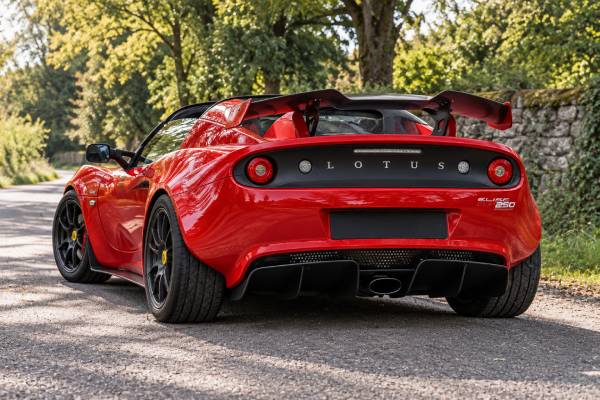
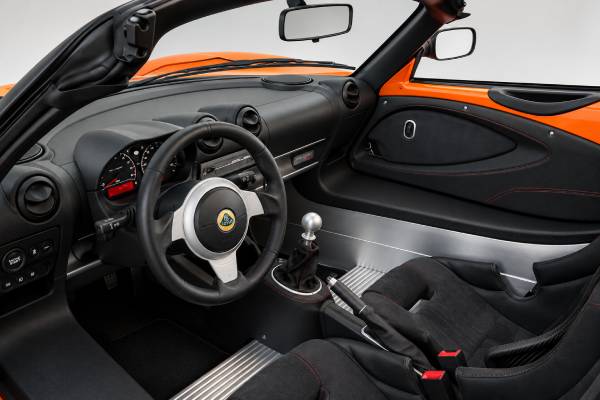
The Lotus Elise Cup 250 is the most developed regular-production track-focused Elise before the 2021 Final Edition. Introduced in 2016 with 243 hp, 250 Nm, and a quoted 931 kg mass, it replaced the 217 hp Cup 220 and immediately became the quickest road-going Elise of its time, with 0–60 mph in 3.9 seconds and a 154 mph top speed. Lotus then revised the car for 2017 with a lighter body, exposed gear linkage, wider front tires, aerodynamic changes, and a dry-mass figure of 884 kg—860 kg with every available lightweight option. Those numbers use different measurement bases, so they should not be treated as a simple 71 kg year-to-year loss. The Cup 250’s real identity is the combination of stronger supercharged performance, meaningful downforce, low mass, and circuit-ready chassis tuning. Buyers today should verify which version they are viewing, whether optional carbon and lightweight equipment are original, and whether track use has been matched by rigorous maintenance. A sound Cup 250 feels precise and repeatable, not merely fast.
Table of Contents
- The 2016 Launch Car and the 2017 Revision
- How Lotus Made 243 hp Work in an Elise
- Cup 250 Specifications and Weight Figures
- Aerodynamics, Tires, and Track Balance
- Maintenance for Hard Road and Circuit Use
- Lightweight Options, Modifications, and Originality
- Pre-Purchase Inspection and Value
The 2016 Launch Car and the 2017 Revision
The Cup 250 exists in two important factory phases, and buyers should keep their specifications separate. The 2016 launch car was quoted at 931 kg, while the substantially revised 2017 version was quoted at 917 kg kerb and 884 kg dry, with 860 kg possible in the lightest optional configuration.
Lotus announced the Cup 250 in February 2016 as the replacement for the Cup 220. Power rose by 26 hp to 243 hp while torque remained broadly at 250 Nm, delivered across a wider mid-range. The company increased supercharger boost, raised the rev limit to 7,200 rpm, and recalibrated throttle and engine mapping. A lithium-ion battery, carbon-fiber seats, and forged wheels helped remove 21 kg versus the predecessor in the launch comparison.
The 2016 car used a roadster body as standard and could be specified with a Carbon Aero Pack that replaced selected aerodynamic pieces with carbon fiber and saved a further 10 kg. Lotus also limited global production to 200 cars per year at launch, reinforcing the car’s specialist positioning.
For 2017, Lotus went further. Revised front and rear clamshells, exposed transmission linkage, lighter components, and detailed chassis changes reduced dry mass. The front tires grew wider to increase front-end grip, and the aero package evolved. The later car’s quoted 884 kg dry mass should not be compared directly with the 2016 931 kg figure without accounting for the different “dry,” “unladen,” and “kerb” definitions used in different releases.
This distinction matters in used advertisements, where sellers sometimes combine the lightest later dry weight with the equipment and body of an earlier car. Verify the production date, visible body features, wheel design, seats, battery type, and documentation before accepting any claimed mass.
How Lotus Made 243 hp Work in an Elise
The Cup 250’s 243 hp is effective because Lotus combines it with less than a tonne of vehicle mass and immediate supercharger response. The engine does not need exotic boost levels to deliver supercar-like acceleration, and the chassis is tuned to use the performance rather than merely advertise it.
The 2ZR-FE remains a 1,798 cc dual-VVT-i inline-four, but Lotus’s calibration raises output compared with the 217 hp Sport 220 and Cup 220. Period technical information describes a 21 percent boost increase, revised mapping, and a 7,200 rpm power peak. Torque is spread across roughly 3,500–5,500 rpm, making the car flexible on corner exit.
A mechanical supercharger suits the Elise because response is direct. There is no large turbocharger waiting for exhaust flow. The throttle can therefore be used finely to adjust attitude, and the driver can feel small changes in load through the rear axle.
At the same time, more power increases thermal demand. Charge-air temperature, engine coolant, oil condition, and supercharger-belt health become especially important on track. A Cup 250 that produces full power for one acceleration run but fades after repeated laps may have a thermal issue even if it never triggers a dashboard warning.
The transmission is still a six-speed manual. Later cars’ exposed gear linkage became a visual signature and gives a wonderfully mechanical shift action when correctly adjusted. Play, stiff cables, worn bushes, or clutch issues can spoil that feel. A healthy car should select gears accurately both cold and fully hot.
Cup 250 Specifications and Weight Figures
The Cup 250 combines a 243 hp supercharged 1.8-liter engine with a six-speed manual and rear-wheel drive. Because Lotus published different mass definitions over the car’s life, the safest approach is to preserve the factory context for each number instead of collapsing them into one “official weight.” **Engine and output**
| Item | Specification |
|---|---|
| Engine | Toyota 2ZR-FE inline-four |
| Displacement | 1,798 cc |
| Valvetrain | DOHC, 16 valves, dual VVT-i |
| Induction | Supercharged with charge cooling |
| Maximum power | 243 hp at 7,200 rpm |
| Maximum torque | 250 Nm, broad mid-range plateau in Cup 250 tune |
| Engine position | Mid-mounted, transverse |
**2016 launch performance**
| Measure | Factory figure |
|---|---|
| 0–60 mph | 3.9 seconds |
| 0–100 km/h | Approximately 4.3 seconds |
| Top speed | 154 mph (248 km/h) |
| Launch quoted mass | 931 kg |
| With Carbon Aero Pack | Approximately 921 kg under the same quoted basis |
| Power-to-weight | More than 261 hp per tonne at launch |
**2017-on mass references**
| Definition | Quoted figure |
|---|---|
| Kerb mass | Approximately 917 kg for revised 2017 specification |
| Dry mass | 884 kg |
| Lightest dry mass with options | 860 kg |
| Important note | Do not subtract these directly from the 2016 931 kg figure without matching measurement basis |
**Chassis, suspension, and brakes**
| Item | Typical Cup 250 specification |
|---|---|
| Chassis | Bonded extruded-aluminum Type 111 |
| Suspension | Double wishbones front and rear |
| Dampers | Bilstein performance dampers |
| Springs | Eibach coils |
| Anti-roll bars | Track-oriented setup with adjustability on Cup specifications |
| Brakes | Performance disc system with ABS |
| Steering | Manual rack-and-pinion |
**Wheels and tires**
| Position | Typical specification |
|---|---|
| Front wheel diameter | 16 inches |
| Rear wheel diameter | 17 inches |
| 2016 front tire | 195/50 ZR16 Yokohama A048-type period fitment |
| Rear tire | 225/45 ZR17 period performance fitment |
| Wheels | Ultra-light forged alloys |
| Track implication | Tire age and heat-cycle history matter as much as tread depth |
**Service checks for the Cup 250**
| System | What should be verified |
|---|---|
| Charge cooling | Coolant level, pump/circulation, temperature consistency |
| Main cooling | Radiator condition, fans, hoses, stable engine temperature |
| Supercharger drive | Belt, tensioner, pulleys, unusual bearing noise |
| Transmission | Hot shift quality, cable/linkage adjustment, clutch condition |
| Brakes | Fluid age, disc cracks, pad thickness, caliper condition |
| Geometry | Toe, camber, ride height, and corner condition after circuit use |
Aerodynamics, Tires, and Track Balance
The Cup 250 is designed to generate useful high-speed aero load without becoming a trailer-only race car. Its front splitter, side floor extensions, rear diffuser, and wing must be treated as a balanced system, and tire choice is equally important to the way that system feels.
The earlier Cup 220 already demonstrated how strongly aero could change an Elise. The Cup 250 develops the concept with revised components and higher top speed. Later factory figures for Cup 250 variants cite substantial downforce at maximum speed, reinforcing that the body parts are functional rather than decorative.
That means accident and curb damage deserve careful scrutiny. A front splitter can scrape on ramps, but a cracked mount or warped floor extension may change airflow and indicate a harder impact. Rear wing supports should be secure, with no stress cracks around the body.
The 195-section front tire used on the Cup 250 is wider than the narrow front tires on road-focused Elises. More front grip helps balance the aero and track setup, but it also makes steering feel different. Fitting alternative sizes or compounds should be done with an understanding of clearance, balance, and geometry.
Track-oriented tires can offer huge dry grip when warm but less confidence in cold rain. A Cup 250 bought for mainly road use may be better on an approved modern performance tire with a broader temperature window. The objective is not to maximize one grip number but to preserve predictable balance.
Alignment is critical. A small toe error can make the car nervous at motorway speed or eat the inside edge of an expensive tire. After any suspension refresh or off-track moment, have geometry measured by a shop that understands Lotus datum points and setup procedures.
Maintenance for Hard Road and Circuit Use
The Cup 250 can tolerate hard use, but it cannot tolerate neglected consumables. Circuit driving compresses the maintenance calendar because heat cycles and lateral loads age parts even when odometer mileage remains low.
Engine oil should be checked before every event and changed at a sensible interval for the duty cycle. A track-driven car spends more time at high rpm and high oil temperature. The Toyota base engine is robust, but low oil level can defeat that reputation quickly.
Brake fluid is another time-sensitive consumable. Water absorption lowers boiling point, and a soft pedal after repeated stops is a safety issue. Use fluid appropriate for the car’s actual use and replace it according to service guidance or more often when track conditions demand it.
Discs and pads should be examined for cracking, taper wear, glazing, and heat damage. Measure rather than guessing. Track pads that work well at high temperature can squeal and feel poor when cold, so understand what is fitted before deciding whether the braking system has a fault.
Wheel bearings and suspension joints need periodic checks for play. High-grip tires increase loads. Rear toe links deserve special attention because accurate rear geometry is essential to stability. If upgraded parts are installed, check installation quality and documentation.
The lithium battery fitted to many Cup 250s saves significant weight but requires appropriate charging. Deep discharge can damage it, and a conventional charger may be unsuitable depending on chemistry. Identify the battery before connecting a maintainer.
Cooling should be checked under real heat. Let the car idle after a drive, confirm fan operation, and observe temperature recovery. On a test day, the charge-cooler system should also maintain consistent performance through repeated acceleration.
Lightweight Options, Modifications, and Originality
Cup 250 values are influenced by specification because Lotus offered genuine factory weight-saving options. Carbon aero components, carbon seats or panels, lithium battery, lightweight wheels, and polycarbonate glazing on later variants can materially alter mass and desirability.
The 2016 Carbon Aero Pack is a good example. It saved about 10 kg by replacing aerodynamic pieces with carbon fiber. Check weave, finish, part shape, and invoices before assuming any black composite part is factory carbon. Aftermarket replicas can look convincing in photographs.
Later cars offered broader carbon options. A lightest-possible 860 kg dry figure depends on selecting multiple weight-saving components; it is not the default weight of every revised Cup 250. Sellers who quote 860 kg should be able to explain the specification that achieves it.
Engine modifications need careful scrutiny. The Cup 250 already runs more boost and rpm than the Sport 220. Further pulley changes or remapping can raise intake temperatures and clutch load. Ask for calibration records, fuel requirements, dyno data, and evidence that cooling was addressed.
Suspension modifications can be excellent when installed for a clear purpose. High-quality adjustable dampers, corner weighting, and a documented geometry setup can improve a track car. Unknown spring rates, extreme ride height, and improvised spacers are warning signs.
Keep original parts whenever possible. Factory wheels, seats, aero, exhaust, steering components, and trim are becoming more important as Elise production recedes into history. A modified car with a complete set of original parts offers far more flexibility than one whose unique components have disappeared.
Pre-Purchase Inspection and Value
A Cup 250 should be bought with a specialist inspection unless the buyer already has deep Elise experience. Its speed, rarity, and track intent make structural and mechanical verification worth more than negotiating the last few percent of price.
Start by identifying the phase of production. Determine whether the car is a 2016 launch specification or the revised 2017-on version. Check which mass basis and options apply. Confirm that engine output is genuinely 243 hp factory specification rather than a tuned Sport 220 wearing Cup parts.
Inspect the aluminum chassis, front crash structure, floor, suspension pick-up areas, rear subframe region, and all cage/harness mounting points. The bonded structure should not show ad-hoc repair. A repaired composite clam is not necessarily a problem; an unknown structural repair is.
Check aero completeness and condition, then verify the suspension beneath it. A beautiful wing cannot compensate for leaking dampers or loose joints. Look for fresh alignment documentation and even tire wear.
Warm the car thoroughly. The engine should produce consistent power, the gearbox should shift cleanly, and coolant temperature should remain stable. Listen for supercharger or belt-drive noises. After the drive, look for leaks and smell for coolant. **Cup 250 buying scorecard**
| Question | Good answer | Concern |
|---|---|---|
| Which factory phase? | Clearly documented 2016 or revised 2017-on specification | Mixed specifications in advert |
| What weight basis? | Seller distinguishes kerb, unladen, and dry | 860 kg claimed for any car regardless of options |
| Has it been tracked? | Yes, with detailed maintenance and inspections | Heavy wear but “never tracked” story |
| Is the aero original? | Factory parts and invoices | Unknown replica pieces or damaged mounts |
| Is the engine tuned? | Stock or documented professional calibration | Unknown pulley/remap combination |
| Is the tub straight? | Specialist inspection confirms condition | Evidence of drilling, distortion, or unexplained bonding |
Running costs are more influenced by use than by engine size. A road-driven Cup 250 can be reasonable on tires and brakes because it is light; a frequently tracked car can consume both quickly. Budget for quality parts and specialist setup rather than trying to make a track-focused Elise cheap through bargain consumables.
The Cup 250 suits an owner who values precision and circuit capability enough to accept the extra attention. A Sport 220 is easier to justify for relaxed road use, while a Cup 250 makes sense when aero, front-end grip, and reduced mass are part of the reason for buying. In good condition, it is one of the most complete expressions of the classic Elise engineering formula: enough power to be genuinely rapid, but still light enough that steering, braking, and chassis response remain the dominant sensations.
Understanding the Cup 250’s different weight claims
Weight numbers are one of the easiest places to misunderstand this model. The 2016 launch figure of 931 kg was presented in the context of the road-going launch car, while later Lotus releases highlighted kerb, dry, and option-dependent dry figures. Kerb mass generally includes operating fluids and may include fuel according to the applicable convention; dry mass excludes specified fluids and therefore looks lower. Manufacturers and markets do not always use identical definitions.
For a buyer, the practical solution is simple: do not buy a car because an advertisement says “860 kg.” Ask which factory options are fitted and what measurement definition the seller is quoting. A later Cup 250 with carbon components, lithium battery, lightweight seats, and polycarbonate glazing can be exceptionally light, but the lightest factory figure represents a specific configuration.
If exact mass matters for motorsport, weigh the actual car on calibrated scales with the fuel load and equipment you intend to use. That figure is more useful for corner weighting and setup than any brochure number.
Preparing a Cup 250 for a first track day
A newly purchased Cup 250 should not go straight from the showroom or private seller to a circuit. Start with fresh or verified brake fluid, sufficient pad and disc thickness, correct wheel torque, healthy tires, stable coolant, proper oil level, and a full suspension check. Confirm that tow points and any required circuit safety equipment are present and accessible.
Set tire pressures from a known baseline and measure them hot rather than copying another driver’s numbers. Pressure requirements depend on tire model, ambient temperature, track layout, and pace. Record cold and hot values so you can make repeatable changes.
After the first session, inspect the car. Look for fluid leaks, splitter contact, tire shoulder damage, wheel-weight loss, and changes in brake pedal. Let the engine and brakes cool progressively rather than parking immediately with the brakes clamped hard after a hot lap.
Most importantly, resist chasing setup changes before learning the car. The factory Cup 250 already has substantial grip and a well-developed balance. Driver consistency, fresh consumables, and accurate geometry usually produce more improvement than immediately changing springs, wings, or engine power.
Road manners should still be good
Even though the Cup 250 is the track-oriented Elise, it should not feel crude or unstable on the road. The steering can follow cambers and the tires may generate more noise than a Sport 220, but the car should still track predictably, ride with control, and brake cleanly. Harsh impact noise, darting under acceleration, or persistent tramlining often points to setup, tire, or suspension issues rather than an unavoidable Cup characteristic.
This is worth remembering during a test drive because sellers sometimes use the model’s reputation to normalize faults. A healthy Cup 250 feels intense, not broken. The distinction is especially important on cars with aftermarket dampers or alignment settings copied from competition use.
When a higher asking price is justified
A Cup 250 with recent dampers, documented geometry, fresh brakes, correct tires, a healthy lithium battery, and complete original carbon or aero parts can justify a meaningful premium over a cheaper car needing all of those items. On this model, deferred maintenance can consume the purchase-price difference quickly.
Complete paperwork matters too. Factory option records help distinguish genuine lightweight equipment from later additions and make the car easier to value accurately.
One practical takeaway
A Cup 250 rewards owners who measure rather than guess. Record alignment, tire pressures, fluid dates, and actual fitted equipment; those facts make setup changes safer and preserve the value of a car whose factory specification matters.
References
- Introducing the Lotus Elise Cup 250 – TLF – Totally Lotus 2016 (Lotus Press Release reproduction)
- 2016 Lotus Elise Cup 250 Specifications – Ultimatecarpage.com 2016 (Period Technical Reference)
- Lotus Elise Cup 250 review | CompleteCar.ie 2016 (Period Road Test)
- Lotus Elise – Iconic Sports Car | Lotus Cars 2026 (Heritage Model Page)
- Lotus launches new e-commerce site for parts, accessories and merchandise – Lotus Cars Media Site 2022 (Manufacturer Parts Information)
Disclaimer
This article is for informational purposes and does not replace professional diagnosis, inspection, track preparation, or repair. Specifications, torque values, service intervals, fluids, and procedures can vary by VIN, market, production date, and equipment; verify all technical work against official Lotus documentation for the specific car. If this guide helped you, please share it on Facebook, X/Twitter, or another enthusiast platform to support our work.