
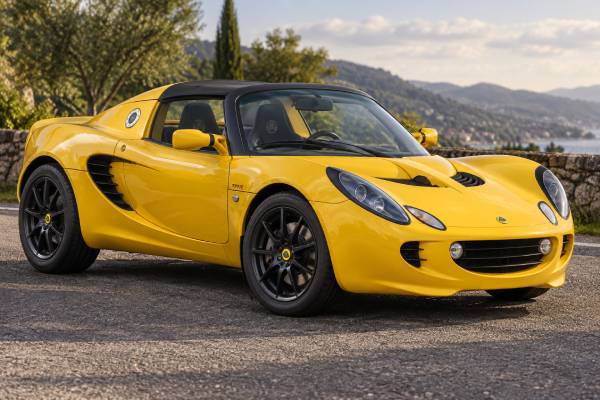
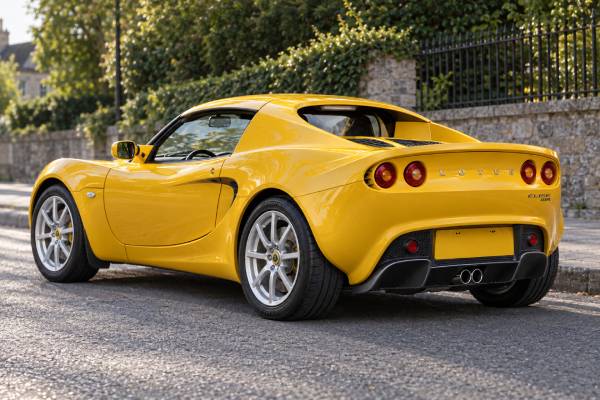
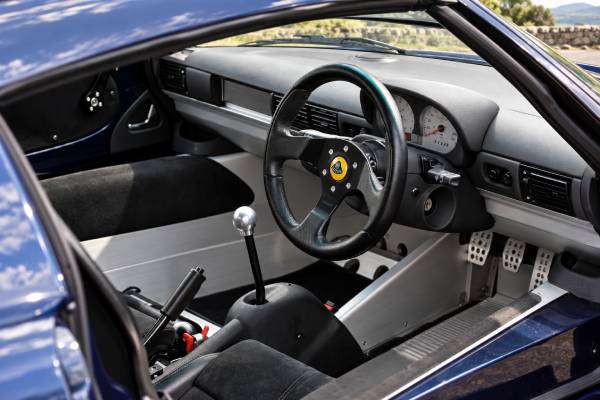
The Lotus Elise 111R changed the mechanical character of the Series 2 more profoundly than its familiar bodywork suggests. Introduced in 2004, it replaced Rover power with Toyota’s 2ZZ-GE, a 1.8-litre all-aluminium engine using variable valve timing and high-rpm variable lift, then paired it with Toyota’s close-ratio C64 six-speed transaxle. Lotus quoted 189 hp at 7,800 rpm, 181 Nm at 6,800 rpm, 0–60 mph in 4.9 seconds, and a 150 mph top speed. For the first time on this road-going Elise, servo assistance and a four-channel ABS system became standard, reflecting the higher performance. The 111R also marked the route into the North American market, where closely related Federal cars appeared. Ownership is different from that of a Rover Elise: there is no K-series head-gasket narrative, but there are 2ZZ lift-system, oil-level, gearbox, and early shifter concerns to understand. A healthy 111R is defined by the transition onto high-lift cam operation and the way the six-speed gearbox keeps the engine there.
Table of Contents
- The Toyota Turning Point
- Lift Engagement and the C64
- 111R Specifications and Data
- Brakes, ABS, and Chassis Balance
- Service Issues That Matter
- Pre-Purchase Checks for a 111R
- Road Car, Track Car, or Collector Car
- Tuning the 111R Without Losing Reliability
- Model-Year Details and Recall-Minded Ownership
The Toyota Turning Point
The 111R brought a high-revving Toyota drivetrain, six gears, ABS, and stronger braking to the Elise without abandoning the bonded-aluminium chassis. It is the model that turned the S2 into a more globally marketable, higher-performance car.
The 2ZZ-GE was developed by Toyota with a Yamaha-designed cylinder head and uses VVTL-i: variable valve timing on the intake cam plus a higher-lift cam profile that operates at high engine speed. Lotus calibrated the engine for the Elise and quoted 192 PS, equivalent to 189 hp or 141 kW, at 7,800 rpm.
Peak torque is 181 Nm at 6,800 rpm, which tells you immediately how the car wants to be driven. Below the high-lift threshold it is responsive but not overwhelming. Above it, airflow and power increase sharply and the engine races toward its upper limit. The sensation is one of two distinct personalities, unlike the smoother continuous VVC behavior of the Rover 111S.
Lotus paired the engine with the C64 six-speed transaxle. The ratios are close enough that an upshift near the top of the rev range can land the engine close to or above the lift transition, allowing sustained acceleration. Shift technique matters: an early change can drop the engine below the stronger cam region and make the car feel flat for a moment.
The 111R therefore rewards precision more than lazy torque. Drivers accustomed to turbocharged cars may initially wonder where the power is. Drivers who enjoy working an engine and gearbox usually find the car increasingly satisfying as they learn it.
Lift Engagement and the C64
The 111R’s defining mechanical event is high-lift cam operation, but it should feel clean rather than violent or erratic. Hesitation, refusal to enter lift, or inconsistent engagement can indicate oil pressure, temperature, sensor, or lift-bolt issues.
The 2ZZ uses special rocker mechanisms that switch to higher-lift cam lobes at elevated engine speed under the right operating conditions. Engine oil is part of the hydraulic control, so correct level, viscosity, and temperature are important. The ECU also protects the engine when cold; do not judge lift operation before the powertrain is fully warm.
Early 2ZZ applications are known for lift bolts that can wear or break, preventing correct high-lift engagement. The parts are inexpensive compared with the consequences of ignoring abnormal behavior, and many cars have already received updated bolts. Service records are useful, but actual operation should still be tested.
Oil level deserves frequent checks because repeated high-rpm use can expose consumption that goes unnoticed in casual driving. A 2ZZ run low on oil can suffer serious damage. Track users should make checking the dipstick part of their event routine rather than relying on warning lights.
The C64 is generally robust when treated well, but synchronization and shift quality should be assessed. A fast second- or third-gear change should not grind. Cable adjustment, linkage wear, engine mounts, clutch condition, and internal wear can all influence feel.
Lotus issued a recall affecting certain 2006 model-year cars for the gear lever because the lever could fracture under repeated high-force operation. A buyer should check the exact VIN and evidence of completed recall work where applicable rather than assuming every 111R was affected or already corrected.
111R Specifications and Data
The 111R is a naturally aspirated petrol ICE sports car with a mid-mounted 2ZZ-GE four-cylinder, six-speed C64 manual transaxle, and rear-wheel drive. The package is designed around high-rpm power, low mass, and stronger braking than Rover-powered road models.
| Specification | Value |
|---|---|
| Engine | Toyota 2ZZ-GE inline-four |
| Displacement | 1,796 cc (1.8 L) |
| Bore × stroke | 82.0 × 85.0 mm |
| Construction | Aluminium-alloy block and head |
| Valvetrain | DOHC, 16 valves, VVTL-i variable timing and lift |
| Induction | Naturally aspirated |
| Fuel system | Sequential multi-point injection |
| Maximum power | 189 hp (141 kW; 192 PS) at 7,800 rpm |
| Maximum torque | 181 Nm (133 lb-ft) at 6,800 rpm |
| Compression ratio | 11.5:1 in commonly published 2ZZ Elise specification |
| Timing drive | Chain |
| Specification | Value |
|---|---|
| 0–60 mph | 4.9 seconds |
| 0–100 km/h | 5.2 seconds |
| 0–100 mph | About 13.0 seconds in launch material |
| Top speed | 150 mph (241 km/h) |
| Combined fuel consumption | 8.8 L/100 km in period European specification |
| CO₂ emissions | 208 g/km in period European specification |
| Emissions standard | Euro IV in launch European specification |
| Gear | Ratio |
|---|---|
| 1st | 3.116:1 |
| 2nd | 2.050:1 |
| 3rd | 1.481:1 |
| 4th | 1.166:1 |
| 5th | 0.916:1 |
| 6th | 0.815:1 |
| Final drive | 4.529:1 |
| Differential | Open in standard specification |
| Specification | Value |
|---|---|
| Chassis | Bonded aluminium extrusion structure |
| Suspension | Independent unequal-length double wishbones front and rear |
| Dampers/springs | Bilstein monotube dampers with Eibach coil springs in launch specification |
| Brakes | 282 mm ventilated, cross-drilled cast-iron discs front and rear |
| Front calipers | Lotus/AP Racing fixed aluminium twin-piston |
| Rear calipers | Brembo single-piston sliding |
| ABS | Servo-assisted four-channel anti-lock system |
| Steering | Unassisted rack and pinion |
| Specification | Value |
|---|---|
| Body style | Two-seat roadster |
| Length | 3,785 mm (149.0 in) |
| Wheelbase | 2,300 mm (90.6 in) |
| Front track | 1,457 mm (57.4 in) |
| Rear track | 1,507 mm (59.3 in) |
| Unladen weight | About 860 kg (1,892 lb) with no options in launch data |
| Item | Practical check |
|---|---|
| Engine oil | Maintain correct level and appropriate specification, especially with high-rpm use |
| Lift system | Verify clean engagement when fully warm and inspect service history for lift bolts |
| Transmission | Use correct fluid and investigate crunching or persistent shift resistance |
| Brake fluid | Renew on schedule and more frequently for track use |
| Gear lever | Check VIN applicability and completion of relevant 2006 recall work |
Brakes, ABS, and Chassis Balance
The 111R’s extra speed came with a braking system designed to tolerate it. Servo assistance reduces pedal effort, while the Lotus-tuned four-channel ABS provides a safety net without turning the car into a heavily assisted GT.
The discs are ventilated and cross-drilled, with AP Racing front calipers and Brembo rears. On a road car, pedal feel should be firm after initial servo assistance. Long travel can indicate air, old fluid, pad knock-back, or mechanical issues. On track-driven cars, inspect drill holes and disc surfaces for cracks and heat damage.
ABS is valuable on mixed surfaces, but old wheel-speed sensors, wiring, or hubs can create warning lights. Do not ignore an illuminated ABS lamp simply because the car is light. Diagnosis is usually more productive than removing or bypassing the system.
The chassis retains unassisted steering. Compared with Rover cars, the Toyota drivetrain and added safety equipment increase mass, but the car remains extremely light by normal standards. Correct tire choice and geometry are essential to preserve the steering feel that justifies the trade.
Many 111Rs were used on circuits, which is not inherently a problem. A car that has been tracked and meticulously maintained can be healthier than a road-only car with old fluids and tires. Look for evidence of intelligent preparation: brake-fluid changes, bearing checks, documented alignments, fresh pads, and cooling inspection.
Service Issues That Matter
A 111R is generally durable when oil level, lift hardware, cooling, transmission condition, and age-related chassis items are managed. The Toyota engine removes some Rover-era concerns but introduces its own high-rpm maintenance logic.
Check oil frequently. The engine’s character encourages operation near 8,000 rpm, and high-speed use can consume oil. Running low is far more dangerous than the inconvenience of carrying a spare litre on a trip or track day.
Lift engagement should be repeatable only when the engine is fully warm. If the car sometimes enters lift and sometimes does not under identical conditions, investigate oil pressure, oil level, lift bolts, control valves, sensors, and ECU conditions. Do not assume a “flat” high-rpm engine is normal.
The timing chain has no routine belt-change requirement like the Rover engine, but chain noise, tensioner condition, and oil maintenance still matter as mileage rises. Coolant should be changed with the correct procedure, and the long front-to-rear cooling layout still requires care when bleeding.
Gearbox fluid quality influences the C64’s shift feel. Use the specified fluid rather than a random “performance” lubricant. If second or third gear crunches even with careful clutch use and warm fluid, price internal work rather than hoping an oil change will cure worn synchros.
The usual Elise chassis checks remain: ball joints, toe links, wheel bearings, dampers, wishbone bushes, engine mounts, undertray damage, and rear subframe corrosion. A powertrain transplant does not make the aluminium tub immune to age or accident history.
Pre-Purchase Checks for a 111R
A good 111R should have a clean structural history, consistent high-lift operation, a crisp C64 gearbox, and evidence of maintenance proportional to how it was used. Mileage is secondary to those factors.
Verify VIN and model identity because 111R, Federal Elise, later Elise R, and converted cars can overlap visually. Confirm the 2ZZ-GE, six-speed C64, braking hardware, and market specification. Check for option packs such as Sport equipment that may change suspension, wheels, or seats.
Inspect underneath with the trays removed if possible. Look at chassis rails, bonded joints, suspension pickups, front crash structure, and rear subframe. Track cars may show harmless scraping but should not show distorted mounting points or improvised repairs.
Start cold, let the car warm fully, then test high-rpm performance only when oil and coolant are ready. The transition into lift should be clear and power should continue smoothly. Misfire, smoke, oil-pressure warnings, or a reluctance to rev deserve immediate investigation.
Shift through all six gears under both light and firm acceleration. Test reverse selection. Listen for differential or wheel-bearing noise on overrun. Check clutch slip in a high gear at moderate rpm under full load.
For 2006 cars, confirm whether the gear-lever recall applies and, if so, whether it was completed. Also check tire dates, brake-disc condition, ABS warning behavior, radiator/fans, and air-conditioning operation if fitted.
Road Car, Track Car, or Collector Car
The 111R can serve all three roles, but the best preparation differs. A road car benefits from compliance and quiet reliability, a track car from frequent inspection, and a collector car from originality and provenance.
For road use, resist over-stiff suspension. The Elise works because its tires stay in contact with imperfect surfaces. A matched road damper and spring package with correct geometry often produces more real grip than a very low ride height.
For track use, focus on consumables and data. Monitor tire pressures hot, inspect pads and discs after sessions, maintain oil at the correct level, and shorten fluid intervals. A baffled or motorsport oil solution may be appropriate for sustained high-g use, but modifications should be chosen based on actual use and specialist advice.
For collector value, original wheels, seats, steering wheel, exhaust, airbox, documentation, and factory option records are increasingly important. Keep replaced parts. The 111R is historically significant as the first Toyota-powered production Elise and the model that helped establish the car internationally.
The 111R’s lasting appeal is its contrast: modest torque at ordinary revs, then a thrilling high-rpm rush when the engine changes character. Owners who enjoy that rhythm often find later turbocharged or supercharged cars faster but less interactive. A healthy 111R makes the driver participate in creating the performance.
Tuning the 111R Without Losing Reliability
The 111R attracts modifications because the 2ZZ-GE responds to intake, exhaust, ECU, cam, and forced-induction changes. The safest approach is to define the use case first. A road car that occasionally sees a track has different needs from a dedicated sprint or race build.
Begin with instrumentation and maintenance. Know normal oil consumption, coolant behavior, fuel quality, and lift engagement before changing hardware. A modified car that cannot establish a reliable baseline is difficult to troubleshoot because every symptom has more possible causes.
Intake and exhaust changes can improve sound and reduce restriction, but the 2ZZ’s airflow is tightly connected to calibration. Large changes should be accompanied by appropriate ECU work and validation of air-fuel ratio under load. A car that “feels faster” because it is louder may actually have lost torque in the middle range.
The lift transition is another tuning temptation. Lowering the engagement point can make the engine feel more aggressive, but if the high-lift cams are engaged before airflow and engine speed support them, torque can fall. The best transition point depends on cam behavior, intake, exhaust, and gear spacing. Treat it as a calibration decision, not a number to chase.
Forced induction can produce far more power, but then cooling, clutch capacity, gearbox condition, fuel delivery, and engine thermal management become system-level concerns. A bolt-on supercharger is not only a blower. Injectors, ECU calibration, spark plugs, belt drive, intake temperature, and knock protection all matter. The factory Elise SC illustrates how much engineering sits around even a conservative supercharged 2ZZ package.
For track use, oil control deserves more attention as cornering forces rise. Maintain correct level and use proven solutions appropriate to the car’s tires and sustained lateral acceleration. Do not assume a street setup that survives occasional acceleration runs is sufficient for repeated high-g corners.
Brakes should be matched to tires and use. Very aggressive race pads can overwhelm street tires when cold, create noise, and accelerate disc wear. Conversely, ordinary road pads may overheat quickly with sticky track tires. Fluid boiling point and freshness are often more important than installing larger calipers.
Chassis tuning should preserve travel. Lowering the car until suspension arms sit at poor angles or dampers operate near their bump stops can reduce grip. Start with known Lotus geometry, then change one variable at a time and record results.
If buying a modified 111R, ask for maps, dyno sheets, part numbers, invoices, and the name of the calibrator. Inspect wiring quality and look for cut connectors, improvised vacuum lines, poorly routed fuel hoses, or unsecured modules. Professional installation has a different visual language from experimentation.
The factory car is already quick enough that reliability and driver confidence often produce larger gains than extra horsepower. A healthy 111R on current tires with strong brakes and a clean C64 shift can run consistently all day. An extra 30 hp is of little use if the car overheats, drops out of lift, or destroys second-gear synchros.
Model-Year Details and Recall-Minded Ownership
The 111R period includes small production changes that matter more now than they did when the cars were new. A buyer should treat the VIN as the key to recalls, part revisions, and market specification rather than assuming every 2004–2006 car uses identical hardware.
The 2006 gear-lever recall illustrates the point. The issue related to a lever that could fracture after repeated high-force shifting on certain cars. Correct ownership practice is to check VIN applicability and repair status, not to replace every lever pre-emptively or assume an aftermarket shifter automatically solves the concern.
A recall record can also tell you something about service culture. A car whose owner retained campaign paperwork, dealer invoices, and later specialist records is easier to understand than one with no documentation beyond annual inspection certificates. Keep recall completion evidence with the permanent history file.
Parts ordering should also use VIN and market. Federal North American cars have equipment differences from European 111Rs, including regulatory lighting and restraint details. Brake, ECU, immobiliser, emission, and body parts may not interchange simply because the engine badge is the same.
The 2ZZ’s service parts deserve equal precision. Use correct spark plugs, filters, oil specification, and lift components. Cheap generic parts can create diagnostic problems that cost more than the saving. When an aftermarket component is fitted, record its exact manufacturer and part number.
Owners should periodically scan the ECU even when no warning lamp is present if drivability changes. Stored or pending codes can reveal intermittent sensor behavior. Live data for coolant temperature, fuel trims, throttle position, and oxygen sensors can help separate an engine fault from a gearbox or chassis complaint.
The six-speed linkage is another system where small wear accumulates. Bushes and cable ends can gradually become vague, so owners adapt without realizing how much precision has been lost. Comparing the shift to a sorted car or refreshing worn linkage components can restore much of the original feel without opening the transmission.
Finally, keep modifications visible in the paperwork. If the ECU has been flashed, the lift point changed, a limited-slip differential fitted, or gear ratios altered, write it down. Future diagnostics depend on knowing what software and hardware are actually present.
A 111R is sophisticated enough to benefit from good records but simple enough that an enthusiast can understand the entire car. VIN-aware maintenance, documented recall work, and careful part selection protect that advantage as the model moves deeper into modern-classic territory.
Cold-weather and low-use considerations
The 2ZZ’s character encourages owners to save the car for warm days, but long periods of inactivity create their own maintenance needs. Keep the battery supported correctly, move the car enough to prevent brake adhesion, and avoid starting the engine briefly in a garage without driving it to full operating temperature. Short idle sessions add condensation to the oil and exhaust without giving the battery a meaningful recharge.
In cold weather, the high-lift region should be treated with extra patience. Coolant temperature rises before all the oil in the engine and transaxle reaches ideal operating condition. Give the drivetrain additional time after the display appears normal, especially before fast shifts. A stiff cold C64 may improve as fluid warms; persistent crunching after a full warm-up points to a different issue.
Tire behavior also changes dramatically with temperature. A summer performance tire that works beautifully on a warm track can feel wooden on a cold road. The 111R has enough power to expose that loss of grip quickly, so seasonal conditions should influence driving style even when the road is dry.
References
* The Lotus Elise S2 2004 Details 2004 (111R Launch Information) * 2004 Lotus Elise S2 111R Specifications – Ultimatecarpage.com 2004 (Specifications) * LOTUS 2004 ELISE SERVICE NOTES Pdf Download 2016 (Service Notes) * Lotus Service Notes Section FJ 2010 (Transmission Service Notes) * SERVICE NOTES 2004 Model Year Onwards with 1ZZ/ 2012 (Service Manual)
Disclaimer
This article is for informational purposes only and does not replace professional diagnosis, inspection, or repair. Specifications, torque values, intervals, recall applicability, and procedures vary by VIN, market, production change, and equipment; verify them against official Lotus/Toyota service information and recall records for the exact vehicle.
If this guide was useful, please share it on Facebook, X/Twitter, or with another Lotus enthusiast to support our work.