
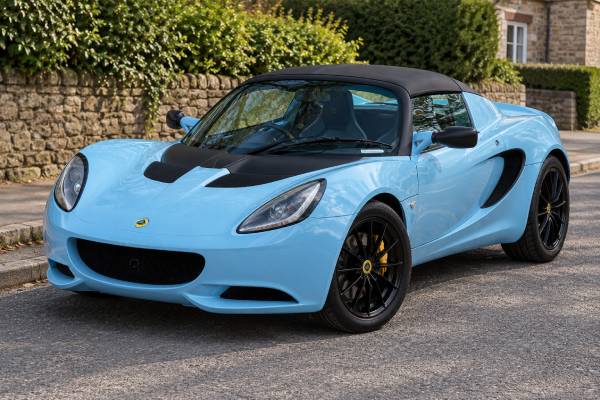
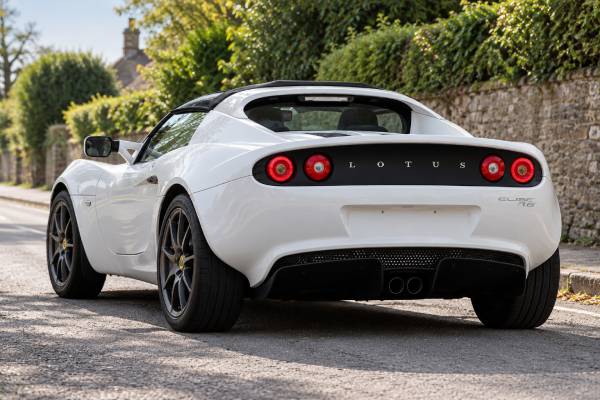
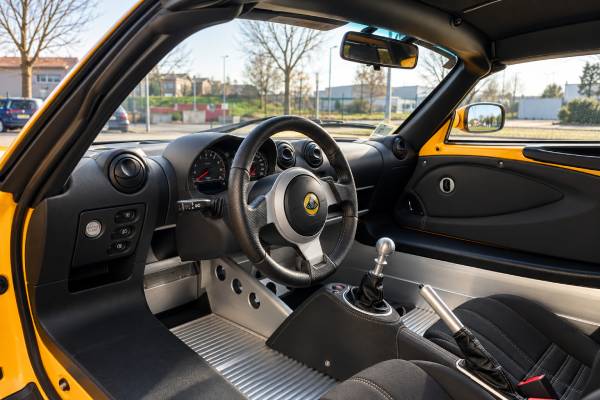
The 2011–2015 Lotus Elise Club Racer takes the entry-level 1.6 Elise idea and strips it closer to the essentials. Its Toyota 1ZR-FAE engine still produces 134 hp and 160 Nm, but Lotus removed almost 25 kg from the standard car, quoted an 852 kg mass, added a more permissive Sport mode, and fitted an adjustable front anti-roll bar. The result is not a dramatic increase in straight-line speed. It is a sharper, more focused Elise whose value lies in response, simplicity, and the way every small weight reduction reinforces the chassis. That focus also changes how the car should be bought. Missing trim may be factory-correct rather than evidence of neglect, while later comfort additions can erase part of the original concept. A good Club Racer should feel tight, light, and deliberate, with no excuses made for sloppy suspension, uncertain geometry, overheating, or structural repairs. Today, originality and documentation matter nearly as much as mileage because many examples have been modified for track days.
Table of Contents
- Club Racer Concept and Factory Weight Saving
- How the 134 hp Car Performs on Road and Track
- Technical Specifications for the 1.6 Club Racer
- Sport Mode, Suspension, and Tire Setup
- Service Needs and Club Racer-Specific Wear
- Originality, Modifications, and Value
- Pre-Purchase Checks for a Used Club Racer
Club Racer Concept and Factory Weight Saving
The Club Racer is a factory lightweight package, not simply a standard Elise with decals. Lotus reduced mass by deleting equipment and substituting lighter components, then used chassis tuning to make the car more adjustable for enthusiastic drivers.
When announced in 2011, the Elise Club Racer was positioned as the new entry point to the range. The engine remained the naturally aspirated 1.6-liter 1ZR-FAE, so the engineering effort went into subtracting mass. Lotus quoted a 24.96 kg saving and a final figure of about 852 kg. That is a meaningful reduction on a car already far lighter than almost any contemporary sports car.
The factory diet included a lightweight battery, deletion of the radio and speakers, reduced sound insulation, removal of carpets and the passenger footrest, simpler convenience equipment, and—depending on market and exact build—deleted airbags and central locking. The soft top was not part of the standard Club Racer specification in the same way as on the regular road car, although many cars have since acquired roofs or comfort items. Even the usual nose badge could be replaced by a lighter decal. No single change transforms the car; the point is the cumulative discipline.
That makes originality unusually nuanced. A bare-looking cabin is not automatically incomplete. Before buying, compare the car with period specification and its option invoice. Some Club Racers were ordered with air conditioning or other equipment, while others were later retrofitted for everyday use. What matters is whether the current configuration is understood and documented.
The visual treatment reinforced the lightweight theme. Lotus offered vivid colors including Sky Blue, Saffron Yellow, Ardent Red, Aspen White, Matt Black, and Carbon Grey, with bespoke graphics and 12-spoke wheels. The car was deliberately playful rather than luxurious. The philosophy was closer to a road-legal club-sport machine than a special edition defined mainly by paint and badges.
What the weight saving actually changes
A 25 kg reduction does not slash the acceleration time because output stays at 134 hp, but the benefit appears everywhere at once. The engine has slightly less mass to accelerate, the brakes have less kinetic energy to shed, the tires carry less load, and suspension reactions feel more immediate. In an Elise, where communication is already the selling point, those incremental gains are noticeable.
The Club Racer therefore rewards a driver who values braking points, line choice, and preserving momentum. If the goal is effortless overtaking torque or dramatic motorway acceleration, the supercharged Elise S Club Racer is the better match. If the goal is maximum involvement at sane road speeds, the 1.6 car makes a stronger argument.
How the 134 hp Car Performs on Road and Track
Performance is modest by modern numbers but highly usable. Lotus quoted roughly 6.5 seconds to 100 km/h for the 1.6 platform, and the Club Racer’s advantage is less about a stopwatch than the reduced inertia you feel under braking and during direction changes.
The naturally aspirated engine needs revs. Peak torque is only 160 Nm, so the car cannot rely on a broad swell of mid-range thrust. Instead, it encourages the driver to select the right gear and keep the engine in its more responsive range. The six-speed manual suits that role because close, deliberate shifts are part of the experience rather than an interruption to it.
On a country road, the Club Racer can be driven hard without immediately reaching the speeds produced by a 300 hp modern coupe. That does not make it slow. Its narrow body, compact footprint, low seating position, and steering clarity make 60 mph feel meaningful. The car communicates changes in surface and load that heavier cars often filter out.
Track use exposes both its strengths and limits. Low mass means the standard braking system can work well with appropriate pads and fresh fluid, while the 1.6 engine places less thermal load on the rear of the car than a highly tuned forced-induction setup. At the same time, sustained circuit use accelerates wear in tires, wheel bearings, suspension joints, toe links, and brake components. A Club Racer advertised as “never tracked” is not automatically superior to one with documented, careful track use and frequent maintenance.
The 1.6 also teaches momentum discipline. Exiting a corner in the wrong gear costs more time than it would in a supercharged model. That can make the car an excellent learning tool because errors are obvious but not masked by torque. Drivers can work on smooth steering, trail braking, and throttle application without the powertrain dominating the session.
Road comfort is the trade-off. Reduced insulation makes drivetrain, tire, and road noise more prominent. The cabin can resonate, and long motorway trips are tiring. If a buyer wants one Elise to commute in all weather, a better-equipped standard car can be easier to live with. The Club Racer is at its best when simplicity is a feature rather than a hardship.
Technical Specifications for the 1.6 Club Racer
The Club Racer keeps the standard 1ZR-FAE 1.6-liter naturally aspirated engine and six-speed manual rear-drive layout, then combines it with lower mass and chassis-focused equipment. Period specifications vary with market and options, so figures such as final mass can change when air conditioning, roof equipment, or other extras are fitted. **1ZR-FAE engine specification**
| Parameter | Club Racer specification |
|---|---|
| Engine type | Inline-four, all-aluminum |
| Engine code | Toyota 1ZR-FAE |
| Displacement | 1,598 cc |
| Aspiration | Naturally aspirated |
| Valve control | DOHC, 16 valves, dual VVT-i and Valvematic |
| Maximum power | 134 hp (136 PS) |
| Maximum torque | 160 Nm |
| Engine location | Transverse, behind the cabin |
**Weight-saving specification**
| Item | Factory approach |
|---|---|
| Quoted vehicle mass | About 852 kg |
| Quoted saving | 24.96 kg versus the standard 1.6 Elise configuration cited at launch |
| Battery | Lightweight unit |
| Audio | Radio and speakers deleted in lightweight specification |
| Cabin trim | Reduced carpets and sound insulation |
| Convenience equipment | Selected items removed; exact content varies by market |
| Roof | Soft-top treatment differs from standard-car equipment; verify build specification |
**Transmission and chassis systems**
| Item | Specification |
|---|---|
| Gearbox | 6-speed manual transaxle |
| Drive | Rear-wheel drive |
| Steering | Manual rack-and-pinion |
| Front suspension | Double wishbones with Eibach springs and Bilstein dampers |
| Rear suspension | Double wishbones with Eibach springs and Bilstein dampers |
| Front anti-roll bar | Adjustable Club Racer specification |
| Driver mode | Sport setting for Dynamic Performance Management |
**Performance and efficiency reference**
| Measure | Period figure |
|---|---|
| 0–100 km/h | Approximately 6.5 seconds |
| Top speed | Approximately 204 km/h (127 mph) |
| CO2 emissions | About 149 g/km in period European testing |
| Combined consumption | About 6.3 L/100 km under the period test cycle |
| Power-to-weight emphasis | Improved mainly through mass reduction rather than engine tuning |
**Body, wheels, and layout**
| Item | Specification |
|---|---|
| Chassis | Bonded extruded-aluminum Type 111 structure |
| Body | Composite two-seat roadster bodywork |
| Wheelbase | 2,300 mm |
| Typical wheel diameter | 16 inches front, 17 inches rear |
| Factory wheel design | Club Racer-specific lightweight 12-spoke alloy design |
| Seating | 2 |
**Service checks worth tracking**
| Area | What to record |
|---|---|
| Oil service | Date, mileage, correct specification, level between services |
| Brake fluid | Replacement date and track-use history |
| Cooling system | Radiator, fan operation, hoses, header tank, coolant age |
| Suspension | Ball joints, bushes, toe links, wheel bearings, alignment |
| Tires | Make, Lotus suitability, pressure, tread, and date codes |
| Battery | Type fitted and compatibility with charger/maintainer |
Sport Mode, Suspension, and Tire Setup
The Club Racer’s chassis changes matter more than its unchanged power figure. Sport mode allows more slip before intervention, while the adjustable front anti-roll bar gives a knowledgeable owner another way to tune balance.
Lotus’s Dynamic Performance Management system combines functions such as traction control and stability intervention. In the Club Racer, the Sport setting was designed to step back sooner from the driving experience without simply abandoning electronic support. On a dry track with warm tires, that can make the car feel more natural near the limit. On a wet public road, restraint remains essential; no mode can create grip that is not there.
The adjustable anti-roll bar should not be treated as a “maximum stiffness is best” device. Increasing front roll stiffness can change the balance toward understeer, while other settings may make the car more responsive. The correct choice depends on tires, alignment, road or track surface, and driver preference. If a used car has been altered, ask which position is being used and why.
Alignment is equally important. Small toe or camber changes are noticeable in a light car with unassisted steering. A track-biased setup may increase turn-in response but wear tires quickly and make the car follow road grooves. If a Club Racer feels nervous on ordinary roads, do not assume that nervousness is inherent to the model. Verify tire pressures, tire condition, and geometry before condemning the chassis.
Period cars commonly used Yokohama tires developed for the Elise platform. Modern replacements should preserve suitable dimensions, load ratings, speed ratings, and handling balance. Avoid choosing tires only by price or headline dry grip. A compound that needs high temperature to work can be inferior for cool, wet road use.
Dampers should control the body cleanly without repeated bouncing or harsh knocking. Leaking Bilsteins, tired bushes, and worn ball joints can make the car feel loose. Because owners often acclimatize slowly to deterioration, a car described as “raw” may simply need a suspension refresh.
Service Needs and Club Racer-Specific Wear
Most maintenance is shared with the 1.6 Elise, but the Club Racer’s likely use pattern makes chassis inspection especially important. Many cars have seen enthusiastic road driving or track days, which can be perfectly acceptable when maintenance matches the workload.
The Toyota-derived engine is generally robust, but oil level and temperature should never be ignored. Check for evidence of regular oil and filter changes. On cars used hard, shorter intervals are sensible. Listen for abnormal chain noise at cold start and inspect for oil leakage after a test drive.
Cooling-system condition is a major age-related concern. The radiator lives in the nose, far from the mid-mounted engine, and stone damage, corrosion, old hoses, or tired joints can cause leaks. Watch the digital temperature display through a full warm-up. Confirm that the fan cycle operates and that the temperature does not climb unexpectedly in traffic.
Brake maintenance should reflect use. A track-driven Club Racer may have upgraded pads and fluid; that is not a problem if installation is documented and discs remain within specification. Check for cracked discs, heat discoloration, seized calipers, and uneven pad wear. Brake hoses and fluid age should be part of the conversation, not an afterthought.
Wheel bearings and suspension joints take repeated lateral load on track. Raise the car safely and check play rather than relying on a quiet road test. Rear toe-link condition is particularly important because loss of accurate rear toe can make the car unstable. Any replacement system should be identifiable and correctly installed.
The sparse cabin presents its own clues. Scratched sills are common from entry and exit, but heavy damage around harness mounts, seat fixings, or roll-over structure deserves closer attention. Check whether a harness bar or cage has been installed and removed. Holes drilled into structural aluminum without correct engineering should be treated seriously.
A lightweight battery can save meaningful mass but may have less reserve capacity than a conventional unit. Cars stored for weeks can flatten it quickly, especially with an alarm or immobilizer active. Verify the battery type before using a maintainer, because charging requirements differ among lead-acid, AGM, and lithium batteries.
Originality, Modifications, and Value
For the Club Racer, “complete” does not necessarily mean “fully equipped.” Value depends on whether the car still reflects its factory lightweight specification and whether any changes are reversible, documented, and well engineered.
A radio, carpets, soft top, or comfort battery may have been added later to make the car easier to live with. Those changes need not ruin the car, but original parts add value if they come with it. Likewise, an aftermarket exhaust or intake can improve sound without compromising the structure, provided fueling, noise limits, and installation are appropriate.
Suspension modifications deserve more skepticism. Lowering the car excessively can reduce bump travel and disturb geometry. Very stiff springs can make it slower on uneven roads even if they feel “race car” firm. Unknown coilovers, extreme alignment, wheel spacers, and non-standard wheel offsets can alter steering loads and bearing life. Ask for invoices and setup sheets.
Engine tuning on the 1ZR-FAE tends to yield modest gains without significant hardware. A period Club Racer Power Pack was quoted as increasing output slightly, but buyers should distinguish genuine period equipment from later remaps or intake claims. Dyno charts alone do not prove durability.
Cosmetic originality matters too. The Club Racer’s special color combinations, graphics, wheels, and minimalist interior help identify it. Repainted cars can still be excellent purchases, especially if the work corrected stone chips, but a color change should prompt questions about accident history and the quality of preparation on composite panels.
Because production numbers are lower than those of ordinary Elise variants, provenance may influence future collectability. Yet paying a large premium for rarity makes little sense if the tub is damaged or the suspension needs complete renewal. Mechanical and structural integrity remain the foundation of value.
Pre-Purchase Checks for a Used Club Racer
A specialist pre-purchase inspection is especially valuable on a Club Racer because the car invites modification and track use. The inspection should establish what is factory, what has changed, and whether the lightweight structure is straight and healthy.
Start with documentation. Confirm the VIN and model designation, then compare the build specification with what is physically present. Ask for invoices showing suspension work, brake servicing, cooling-system repairs, clutch replacement, tires, and alignment. Track-day invoices are not a reason to walk away; missing maintenance after repeated track use is.
Inspect the aluminum chassis from below. Look for crushed jacking areas, corrosion where dissimilar metals meet, distorted mounting points, poorly applied sealant, or evidence of drilling. The tub is bonded rather than conventionally welded, so casual structural repair methods are inappropriate. If anything looks questionable, use a Lotus specialist who understands factory repair limits.
Check the front crash structure and both composite clams for signs of impact. Panel gaps on hand-built, lightweight cars are not luxury-sedan perfect, but sudden changes from side to side can be meaningful. Look behind accessible liners for overspray and replaced fasteners.
During the road test, the steering should be alive but not vague. The car should settle quickly after bumps and should not wander excessively. Under braking it should remain straight. Accelerate through the rev range once warm; hesitation, warning lights, or temperature instability need diagnosis.
Listen to the drivetrain with the roof off and on if possible. A sparse Club Racer is mechanically noisy, so focus on changes in sound rather than absolute silence. Knocks over bumps, rumbling wheel bearings, grinding shifts, and clunks on throttle transitions are more useful clues than general road roar. **Club Racer buying decision guide**
| Finding | Interpretation | Action |
|---|---|---|
| Factory trim deletions | Potentially correct Club Racer specification | Verify against build/invoice records |
| Track history with invoices | Not automatically negative | Inspect consumables and suspension carefully |
| Unknown chassis drilling | Possible structural concern | Obtain expert assessment before purchase |
| Mismatched tires | Can upset balance and steering feel | Budget for a correct matched set |
| Fresh paint with vague history | May be cosmetic or may hide damage | Inspect behind panels and check records |
| Complete original parts included | Positive for usability and future value | Confirm condition and provenance |
A strong example should feel cohesive rather than merely light. The steering, brakes, throttle, gearbox, and suspension should all respond with the same immediacy. If one system feels loose or neglected, assume the car needs attention rather than accepting deterioration as part of the “raw” character.
For the right buyer, that rawness is exactly why the 1.6 Club Racer remains special. It extracts more engagement from 134 hp by asking the driver to work with weight transfer and momentum. It is less about owning the fastest Elise and more about owning one of the clearest expressions of the Elise philosophy: remove what is unnecessary, tune what remains, and let the driver feel the result.
Questions to ask the seller before viewing
A short phone conversation can save a wasted trip because the Club Racer has several specification details that photographs often hide. Ask whether the car still has its lightweight battery, whether a soft top and roof rails are included, which comfort items were factory-fitted, and whether the original wheels, seats, exhaust, intake, and deleted trim remain with the car. If the seller does not know, that is not automatically disqualifying, but it lowers the value of any claim that the car is “totally original.”
Also ask when the geometry was last measured and by whom. An Elise can feel acceptable while carrying uneven toe or camber, and a Club Racer used on track may have deliberately aggressive settings. A printed alignment sheet tells you far more than a statement that the handling is “spot on.” Ask the same practical questions about tire age, brake-fluid date, radiator replacement, toe-link history, and clutch work.
Finally, establish how the car has been stored. A dry, regularly exercised example is often preferable to a very low-mileage car that spent years outdoors or sitting with a flat battery. The Club Racer’s simplicity rewards use, but it also exposes neglect quickly. Evidence of careful warm-up, fluid changes, and post-track inspection is more valuable than a low odometer reading on its own.
References
- Lotus Elise – Iconic Sports Car | Lotus Cars 2026 (Heritage Model Page)
- elises.co.uk • Models • 2011 Elise Club Racer 2011 (Period Lotus Press Release reproduction)
- Lotus Elise goes on a diet – car and motoring news by CompleteCar.ie 2011 (Period Launch Coverage)
- Lotus launches new e-commerce site for parts, accessories and merchandise – Lotus Cars Media Site 2022 (Manufacturer Parts Information)
- Lotus Announces All-new Sub-Assembly Manufacturing Facility in Norwich – Lotus Cars Media Site 2020 (Manufacturer Chassis Information)
Disclaimer
This article is for informational purposes only and does not replace professional diagnosis, inspection, or repair. Specifications, torque settings, service intervals, fluids, and procedures may vary by VIN, market, options, and production date, so verify all work against the official Lotus service documentation for the specific vehicle. If you found the guide helpful, please share it on Facebook, X/Twitter, or another enthusiast channel to support our work.