
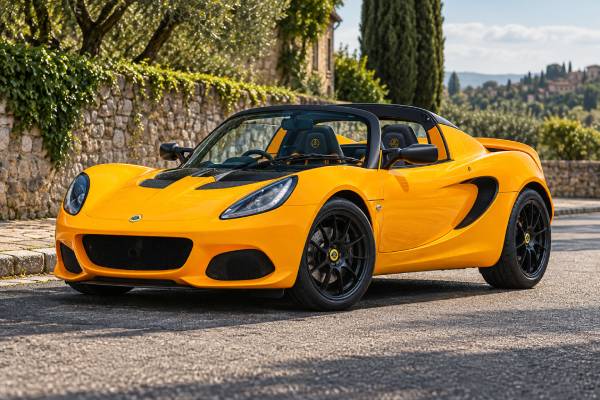
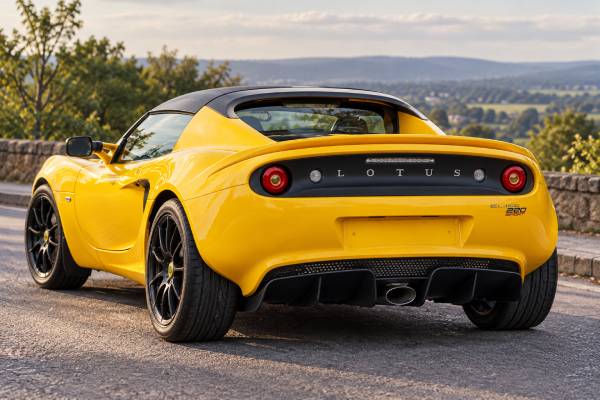
The Lotus Elise Sport 220 is the long-running road-focused supercharged Elise that replaced the Elise S late in 2015 and carried the Type 111 formula toward the end of production. It retains the Toyota 2ZR-FE 1.8-liter engine, Magnuson/Eaton supercharger, 217 hp, 250 Nm, six-speed manual, and rear-wheel drive, but trims mass to a quoted 914 kg in its early specification and later benefits from Lotus’s continuing weight-reduction work. With 0–60 mph in about 4.2 seconds, it is fast enough to feel contemporary while still being defined by manual steering, low mass, and a compact bonded-aluminum chassis rather than electronic complexity. For many buyers, the Sport 220 is the sweet spot between the simpler 1.6 cars and the more specialized Cup models. It has real mid-range pace, a removable roof, and fewer aero compromises than a Cup. The key to buying one is separating normal Elise character from neglect: a good Sport 220 is noisy and intimate, but it should not overheat, wander, clonk, shift poorly, or hide structural repairs.
Table of Contents
- Sport 220 Position in the Late Elise Range
- How the Car Evolved from 2015 to 2021
- Sport 220 Specifications and Core Hardware
- Road Performance, Steering, and Ride
- Service Issues for the Supercharged 2ZR-FE
- Body, Chassis, and Suspension Inspection
- Buying, Running, and Valuing a Sport 220
Sport 220 Position in the Late Elise Range
The Sport 220 is the regular high-performance road Elise, not the Cup model. It combines the 217 hp supercharged engine with a lighter specification than the outgoing Elise S while keeping the everyday roadster layout and less aggressive aerodynamic package.
Lotus announced the Sport 220 alongside the naturally aspirated Elise Sport in November 2015. The “Sport” badge returned to the Elise range while the old Elise S designation disappeared. Mechanically, the 1.8-liter powertrain remained familiar: 217 hp at 6,800 rpm and 250 Nm at 4,600 rpm. The important launch change was a 10 kg weight reduction, giving a quoted unladen mass of 914 kg.
Lotus achieved that reduction through familiar lightweight thinking: lighter seats and battery specification, simplified components, and optional forged wheels that could remove more mass. Performance claims remained around 4.2 seconds to 60 mph and 145 mph maximum speed. The point was not a headline power increase but making the standard road car a little sharper and less expensive in its home market.
Compared with the Cup 220/S Cup, the Sport 220 has much less aero drag and is more suitable for road use. Compared with the later Cup 250, it gives away power, aero load, and track equipment, but it is less visually extreme and typically easier to live with. Compared with the Final Edition Sport 240, it lacks the final power calibration and special end-of-production equipment.
That middle-ground role is why the Sport 220 has broad appeal. It can be driven gently without feeling unhappy, yet it has enough torque to make overtaking effortless. The roof can be removed, the steering is pure, and the chassis remains light enough that the power never becomes the only attraction.
How the Car Evolved from 2015 to 2021
The Sport 220 remained conceptually consistent, but Lotus continued to refine weight, body components, interior details, and wheel choices during the model’s life. Buyers should verify specification by production date rather than assuming every 2016–2021 car is identical.
The initial 2015 announcement described a 914 kg unladen car with the established 217 hp engine. Later updates to the Elise range introduced lighter components and revised bodywork. Lotus’s heritage material specifically notes that the Sport 220 used a redesigned front clam that saved almost 9 kg while improving cooling for the supercharged, charge-cooled engine. Depending on market and year, trim, wheels, battery, air conditioning, stereo, and carbon options alter mass.
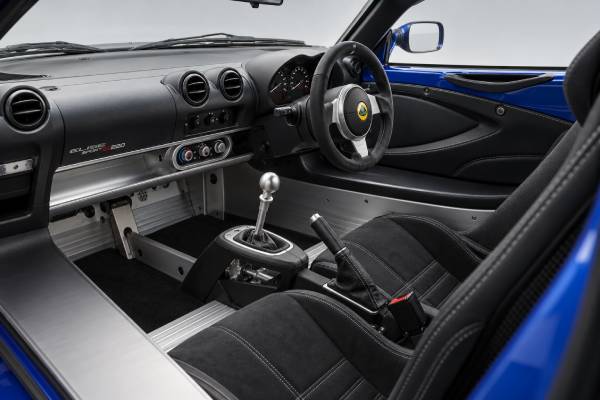
The exposed gearshift mechanism introduced across later Elise models is another useful visual clue on newer cars. It gives the cabin a more mechanical appearance and can make the shift action easier to inspect, but the underlying requirement is unchanged: gear engagement should be clean and cable/linkage play should be reasonable.
Special editions and regional specifications complicate the used market. Some cars have different seats, colors, decals, wheel designs, or option packs. Rather than treating every difference as suspicious, compare the VIN and build details with period brochures or dealer invoices.
By 2021, Lotus replaced the Sport 220 with the Sport 240 Final Edition, which used a revised engine calibration and end-of-production equipment. A 2021 registration therefore does not automatically mean a Final Edition. Production date, exact model name, and output matter.
What changed less than buyers expect
The fundamental architecture did not change. Every Sport 220 remains a small mid-engine roadster built around a bonded aluminum tub, composite bodywork, double-wishbone suspension, manual steering, and a Toyota-derived supercharged four-cylinder. That continuity is useful for servicing because experienced Lotus specialists know the platform well.
It also means age-related issues affect early and late cars similarly. Later build date does not immunize a car from poor storage, track damage, old tires, or bad modifications. A carefully maintained 2016 example can be a better buy than a neglected 2020 car.
Sport 220 Specifications and Core Hardware
The Sport 220 uses a supercharged and charge-cooled 1,798 cc 2ZR-FE, six-speed manual transaxle, and rear-wheel drive. The launch specification quoted 217 hp, 250 Nm, and 914 kg unladen; individual cars vary with options and later production updates. **Engine and induction specification**
| Item | Specification |
|---|---|
| Engine code | Toyota 2ZR-FE |
| Displacement | 1,798 cc |
| Configuration | DOHC inline-four, 16 valves |
| Variable timing | Dual VVT-i |
| Forced induction | Supercharged, charge cooled |
| Maximum power | 217 hp (220 PS) at 6,800 rpm |
| Maximum torque | 250 Nm at 4,600 rpm |
**Launch performance and efficiency**
| Measure | Period figure |
|---|---|
| 0–60 mph | 4.2 seconds |
| 0–100 km/h | 4.6 seconds |
| Top speed | 145 mph (234 km/h) |
| Unladen mass | 914 kg at 2015 launch |
| Combined consumption | About 37.5 mpg UK (7.5 L/100 km) under period test cycle |
| CO2 | About 175 g/km in period European homologation |
**Transmission and control systems**
| Item | Specification |
|---|---|
| Gearbox | 6-speed manual, sports ratios |
| Drive | Rear-wheel drive |
| Engine location | Mid-mounted, transverse |
| Throttle | Electronic throttle control |
| Driver mode | Sport mode with sharper response and reduced traction intervention |
| Electronic differential function | Brake-based EDL support |
**Chassis, suspension, and brakes**
| Item | Specification |
|---|---|
| Chassis | Bonded extruded-aluminum structure |
| Body | Composite roadster panels |
| Front suspension | Independent double wishbones |
| Rear suspension | Independent double wishbones |
| Dampers | Bilstein gas dampers |
| Springs | Eibach coils |
| Front brakes | AP Racing twin-piston calipers in period specification |
| Rear brakes | Performance single-piston calipers in period specification |
**Wheels, tires, and basic dimensions**
| Item | Typical specification |
|---|---|
| Front wheel | 16-inch |
| Rear wheel | 17-inch |
| Typical front tire | 175/55 R16 on early road specification |
| Typical rear tire | 225/45 R17 |
| Wheelbase | 2,300 mm |
| Seating | 2 |
| Roof | Removable soft top; hard-top availability varies |
**Service items to monitor**
| Area | Practical requirement |
|---|---|
| Engine oil | Correct approved grade, regular changes, frequent level checks |
| Supercharger drive | Inspect belt, tensioner, pulleys, and bearing noise |
| Charge cooling | Confirm coolant circulation and consistent hot performance |
| Main coolant circuit | Inspect radiator, hoses, header tank, fans, and long pipe connections |
| Brake fluid | Replace by time; shorten interval for track use |
| Alignment | Measure after suspension work, impact, or abnormal tire wear |
Road Performance, Steering, and Ride
The Sport 220 is fast without feeling overpowered. Its strongest trait is that 217 hp works through less than a tonne, so throttle response, braking, and steering all feel immediate while the car remains exploitable on normal roads.
The supercharger transforms flexibility compared with the 1.6 Elise. Peak torque arrives at 4,600 rpm, but useful response is available well before that. You do not need to chase the rev limiter to make progress, which makes the car easier to drive quickly in traffic and on unfamiliar roads.
Unassisted steering is central to the experience. At parking speeds, effort is high; at 30 mph and above, the wheel becomes precise and full of information. The small front tires contribute to low inertia and delicate feedback. Fitting much wider non-standard fronts can change that character and may increase kickback.
Sport mode changes throttle response and allows more driver involvement before the stability/traction systems intervene. It should be treated as a calibration choice, not a talent substitute. In rain, cold weather, or on old tires, normal mode and smooth inputs remain the sensible default.
The Elise’s ride can surprise drivers used to stiff modern performance cars. With low mass and well-controlled suspension, it can breathe with a rough road rather than hammer over it. Poor aftermarket coilovers often make the car worse by reducing travel and forcing the tires to skip over bumps.
Long-distance comfort is a separate issue. Noise, limited storage, awkward entry, modest ventilation, and the low seating position can be tiring. Air conditioning is worth having for road use in hot climates, but it should be tested because repairs can be labor-intensive in the tightly packaged Elise.
Service Issues for the Supercharged 2ZR-FE
The 2ZR-FE is generally durable, but the Sport 220’s reliability depends on the systems Lotus added around it. Supercharger, charge cooler, belts, cooling circuit, and calibration all deserve attention, especially on tuned or tracked cars.
A cold start should be clean and stable. Listen near the supercharger drive for abnormal rattles or rough bearing sounds. Under acceleration, normal whine should rise smoothly with load. Hesitation or inconsistent boost can come from several causes, so diagnostic data are more useful than blindly replacing parts.
Charge-cooler performance matters most in hot weather and repeated full-throttle use. A weak pump or poor coolant circulation can let intake temperatures climb. The car may still feel fine on a short test drive, which is why a longer warm drive is better than a five-minute loop around a dealer.
The main radiator remains a well-known age point. It sits low at the front and is exposed to debris. Check for leaks, damaged fins, corrosion, and previous replacement. Verify fan operation and watch the digital temperature display in traffic.
Oil level should be checked regularly. A car used on track experiences sustained lateral loads and higher oil temperatures. Owners who know exactly what oil they use and how often they check it are more reassuring than owners who simply point to the Toyota engine badge.
The six-speed gearbox should shift cleanly once warm. Exposed-linkage later cars make some mechanical movement visible, but internal synchro condition and clutch health still require a road test. Check reverse engagement, second-gear behavior, and clutch slip under torque.
Body, Chassis, and Suspension Inspection
Structural condition is more important than paint condition. Composite clams can be repaired, but questionable work on the bonded aluminum chassis should stop a purchase until an expert has assessed it.
Inspect the underside on a lift. Look at the floor, front crash structure, suspension mounting areas, rear subframe interfaces, and jack points. Bent aluminum, drilled holes, or fresh adhesive in unexpected locations deserve explanation. Lotus repair procedures are specific because the tub relies on bonded joints rather than conventional welding.
Composite body panels commonly collect stone chips, particularly on the nose and rear haunches. Small chips are cosmetic. Star cracks, ripples, mismatched paint texture, or unusual panel gaps may indicate repair. Look inside wheel arches and around light apertures for overspray or non-original fasteners.
Suspension should be quiet and precise. Worn ball joints, wishbone bushes, anti-roll-bar links, wheel bearings, and toe links can create clunks or vague behavior. Rear toe control is especially important to stability. If an upgraded toe-link kit is fitted, identify the manufacturer and installation quality.
Tires are part of the chassis. Check age codes, matched make/model, correct sizes, and even wear. A low-mileage car with ten-year-old tires needs a new set regardless of tread depth. A car with heavy inner-edge wear needs geometry checked before new tires are fitted.
Buying, Running, and Valuing a Sport 220
Buy a Sport 220 for condition and documentation, then decide how much premium you will pay for age, color, or special options. A later registration does not automatically make a better car if the earlier example has stronger history and fewer modifications.
Ask for specialist invoices, not only stamps. Useful records include radiator work, supercharger-belt service, brake fluid changes, suspension refreshes, alignment sheets, tire replacement, clutch work, and battery history. If the car has been tracked, look for maintenance that matches that use.
Modifications can be positive when carefully chosen. A quality exhaust, forged wheels, or well-set-up dampers may improve the car without harming its character. Engine tunes, pulley changes, extreme lowering, and non-standard aero require more scrutiny because they affect thermal and dynamic margins.
Fuel and consumable costs are relatively reasonable for the performance. Low mass helps tires and brakes last, especially on the road. Specialist labor and body repairs are the budget risks. A front clam repair or a full suspension refresh can exceed what buyers expect from a small four-cylinder car.
Insurance can vary sharply by market and modification status. Declare all changes, including wheels, suspension, exhaust, and harness equipment. A car that is cheap to insure in standard form may move into a different category once heavily modified. **Sport 220 used-buying priorities**
| Check | Strong example | Weak example |
|---|---|---|
| Structure | Clean tub, documented minor body repairs | Unknown chassis work or distorted mounts |
| Thermal health | Stable temperature and repeatable power | Coolant loss or heat-related power fade |
| Geometry | Recent alignment and even tire wear | Wandering or severe inside-edge wear |
| Service history | Invoices with dates, parts, and mileage | Long gaps explained only by low mileage |
| Modifications | Reputable and reversible | Unknown ECU tuning or improvised suspension |
| Original equipment | Factory parts retained where practical | Rare pieces discarded without record |
The Sport 220 makes sense for a driver who wants one Elise to do almost everything the platform does well. It is less extreme than a Cup, quicker and more flexible than the naturally aspirated cars, and more widely available than the Final Editions. Its performance is serious, but its greatest appeal still comes from qualities that cannot be reduced to acceleration figures: low inertia, steering transparency, and the sense that the car responds immediately because there is so little mass between input and result.
That is also why neglect is easy to feel. A tired Sport 220 loses the very precision that justifies its compromises. Do not buy one that needs excuses. The correct example should feel cohesive from the first mile—clean steering, settled suspension, strong brakes, consistent boost, and a gearbox that invites another shift. When those fundamentals are right, the Sport 220 remains one of the most usable and complete versions of the final-generation Elise.
Choosing between an early and late Sport 220
There is no single “best year” of Sport 220. Early cars offer the original 914 kg launch specification and may be cheaper, while later examples can have lighter body components, exposed linkage details, newer trim, and fewer years of age. Condition can easily outweigh those differences. A 2016 car with refreshed suspension, new radiator, recent tires, and complete history may be a stronger purchase than a 2020 car that has sat unused and damp.
Buyers who care about the purest steering feel should pay close attention to wheels and front-tire size. Factory combinations were chosen to preserve low steering inertia. Heavy aftermarket wheels or wider fronts can dull the response and add kickback even if they increase ultimate grip. If non-standard wheels are fitted, compare their weight and offset with the originals rather than judging only appearance.
Cabin evolution also matters for some owners. Later exposed-linkage cars have a more dramatic mechanical look, while earlier cars feel visually simpler. Neither design changes the fundamental driving experience enough to justify overlooking a better-maintained example.
Using a Sport 220 as a regular road car
A Sport 220 can handle regular use if the owner plans around its compromises. Protect the low nose from steep ramps, keep the roof seals adjusted, avoid leaving valuables visible in the small cabin, and use soft luggage that fits the warm rear compartment. Check engine-bay heat before placing temperature-sensitive items in the luggage area.
For commuting, air conditioning and a healthy heater fan matter more than they do on a weekend toy. Test both before purchase. Window operation and central locking, where fitted, should also be reliable because small electrical annoyances become disproportionately irritating when the car is used often.
Frequent use can actually help reliability by keeping seals, brakes, and electrical contacts active, but it increases exposure to stone chips, rain, and road salt. Owners in wet or salted climates should rinse the underside, inspect steel suspension parts and fasteners, and maintain protective coatings without applying products to braking surfaces or bonded joints inappropriately.
A set of fresh road-focused tires is usually more valuable than an engine tune. The standard power already overwhelms neither chassis nor brakes, so restoring the original balance often delivers a larger real-world improvement than adding another few horsepower.
Why originality still matters on a commonly modified Elise
Sport 220s were often personalized because the platform responds well to small changes. That is part of the model’s appeal, but a complete original specification is becoming more useful as the Elise ages. Cars with factory wheels, seats, intake, exhaust, steering components, roof hardware, and trim supplied with the sale give future owners more options. Reversible changes can then be judged on merit rather than becoming permanent alterations to a finite-production car.
For buyers, this is also a practical diagnostic advantage. A mostly standard car provides a known engineering baseline. If something feels wrong, there are fewer unknown spring rates, software maps, wheel offsets, or airflow changes muddying the diagnosis.
A useful ownership baseline
After purchase, record tire pressures, alignment, fluid dates, battery type, and any non-standard parts. That simple baseline makes the next service more efficient and prevents future owners from having to reverse-engineer the car’s history.
References
- Lotus Announces New Elise Sport and Elise Sport 220 – TLF – Totally Lotus 2015 (Lotus Press Release reproduction)
- 2016 Lotus Elise Sport 220 Specifications – Ultimatecarpage.com 2015 (Period Technical Reference)
- Lotus Elise – Iconic Sports Car | Lotus Cars 2026 (Heritage Model Page)
- Lotus at the Old-Timer Grand Prix – Nürburgring 2019 – Lotus Cars Media Site 2019 (Manufacturer Range Reference)
- Lotus launches new e-commerce site for parts, accessories and merchandise – Lotus Cars Media Site 2022 (Manufacturer Parts Information)
Disclaimer
This article is for informational purposes and does not replace professional diagnosis, inspection, or repair. Specifications, torque values, maintenance intervals, fluids, and procedures can vary by VIN, market, model year, and equipment; verify all work with official Lotus documentation for the specific vehicle. If you found the guide helpful, please share it on Facebook, X/Twitter, or another enthusiast community to support our work.