
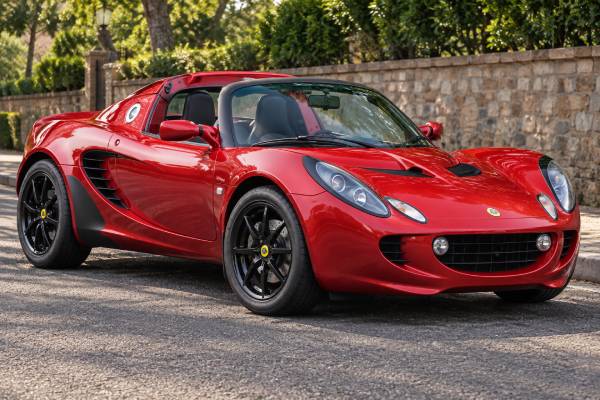
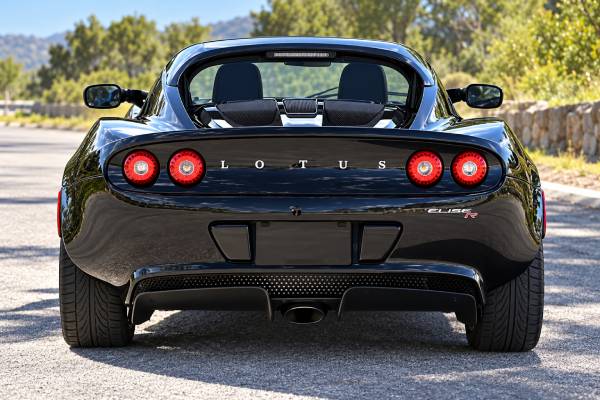
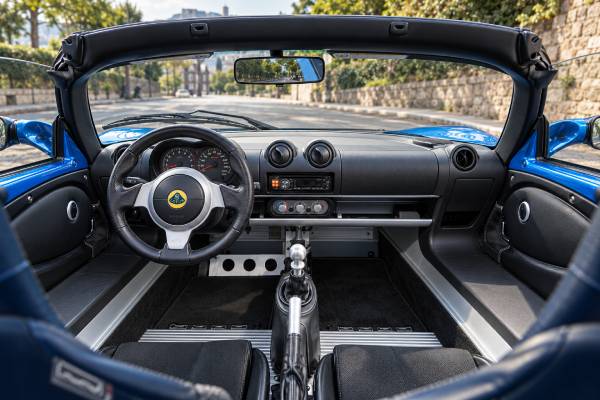
The Lotus Elise R carries the naturally aspirated 2ZZ-GE formula beyond the original 111R name and into the later S2 era. From the 2007-model-year period, Lotus used the Elise R badge for the 189 hp, six-speed car, while retaining the same high-revving Toyota engine and C64 transaxle. That continuity can make the R look like a simple badge change, but later cars gained detail revisions such as improved lighting, ProBax seating availability, updated trim, new instrument packs, airbags as standard for the 2008 model year, revised alarm systems, and simplified option packages. Production date, model year, and registration year can therefore tell different stories. The naturally aspirated 2ZZ Elise continued through the end of that engine era, and some late-built cars can appear as 2011 model-year or registration-year examples depending on market. The right way to buy one is to verify VIN and factory specification, then judge the familiar 2ZZ priorities: oil level, clean lift engagement, C64 shift quality, chassis integrity, brakes, tires, and evidence of track use. A good Elise R remains one of the purest high-rpm road Elises.
Table of Contents
- From 111R to Elise R
- The High-Rpm 2ZZ Experience
- Elise R Specification Reference
- Later Model-Year Equipment
- Reliability and Track Use
- Provenance and Pre-Purchase Checks
- Why the R Still Matters
- Reading Late-Car Specification Correctly
- Creating a Baseline for a High-RPM Engine
From 111R to Elise R
The Elise R is mechanically the direct successor to the 111R: a naturally aspirated 2ZZ-GE, six-speed C64 gearbox, rear-wheel drive, and the same fundamental aluminium chassis. The R name reflects range organization more than a new engine concept.
This is important when shopping across 2006 and 2007. Depending on market, build date, and model year, cars around the transition can be advertised under either 111R or R terminology. A registration document is not enough to settle the question. VIN, factory build information, trim, lighting, and equipment are more reliable.
The 2ZZ specification remains 141 kW, 192 PS, or 189 hp at 7,800 rpm with 181 Nm at 6,800 rpm. The C64 keeps its close six ratios, and factory performance remains around 4.9 seconds to 60 mph and 150 mph maximum speed.
What changes over the R period is the surrounding car. By the 2008 model year, driver and passenger airbags became standard across the Elise/Exige range. Lotus introduced a new instrument cluster with an LCD message display and hidden-until-lit warning graphics, along with a revised alarm/immobiliser and integrated key.
Option structures also evolved. Touring and Sport packs could add leather or microfiber trim, sound insulation, ProBax seats, sports dampers, forged wheels, traction control, and twin oil coolers. A later Elise R can therefore feel more substantial than an early 111R even though the core engine output is unchanged.
The High-Rpm 2ZZ Experience
The Elise R is defined by the 2ZZ’s variable-lift transition. Below the lift point it behaves like a responsive 1.8-litre engine; above it, the higher-lift cam profile gives a clear surge and stronger breathing to the upper rev range.
This is not a turbo boost event. The ECU commands oil-pressure-controlled rocker mechanisms to follow the high-lift cam lobes when engine speed, temperature, and other conditions are satisfied. Variable valve timing continues to optimize inlet-cam phasing across the range.
The engine makes peak torque high at 6,800 rpm and peak power at 7,800 rpm. That is why the six-speed gearbox matters so much. A well-timed upshift can keep the engine near the lift window. Shift too early and the next gear may drop below the stronger cam region, temporarily dulling acceleration.
Drivers should allow the engine to reach full operating temperature before using high rpm. Oil is not only lubricant; it is part of the lift system’s hydraulic operation. Correct viscosity, level, and cleanliness matter. The cluster’s shift lights on later cars help drivers approach the rev limit consistently.
The 2ZZ’s character can become addictive, but it is also diagnostic. A healthy car should enter lift predictably. If performance changes from one pull to the next, inspect oil level, lift bolts, control solenoids, sensors, and ECU conditions rather than treating inconsistency as personality.
Elise R Specification Reference
The Elise R is a naturally aspirated petrol ICE roadster with a 2ZZ-GE, six-speed C64 manual transaxle, and rear-wheel drive. Its key values remain closely aligned with the 111R, while equipment and curb weight can vary with model year and option packs.
| Specification | Value |
|---|---|
| Engine | Toyota 2ZZ-GE inline-four |
| Displacement | 1,796 cc (1.8 L) |
| Bore × stroke | 82.0 × 85.0 mm |
| Construction | Aluminium alloy; MMC cylinder bores in Lotus service data |
| Valvetrain | Chain-driven DOHC, 16 valves, VVTL-i |
| Maximum power | 141 kW (192 PS / 189 hp) at 7,800 rpm |
| Maximum torque | 181 Nm (133 lb-ft) at 6,800 rpm |
| Compression ratio | 11.5:1 |
| Fuel requirement | Unleaded petrol, 95 RON minimum in service data |
| Specification | Value |
|---|---|
| 0–60 mph | 4.9 seconds |
| 0–100 km/h | About 5.1 seconds in later European R data |
| Top speed | 241 km/h (150 mph) |
| Combined fuel consumption | About 8.8 L/100 km in NEDC-era European data |
| CO₂ emissions | About 208 g/km |
| Specification | Value |
|---|---|
| Type | 6-speed manual transaxle |
| Drive | Rear-wheel drive |
| 1st gear | 3.116:1 |
| 2nd gear | 2.050:1 |
| 3rd gear | 1.481:1 |
| 4th gear | 1.166:1 |
| 5th gear | 0.916:1 |
| 6th gear | 0.815:1 |
| Differential | Open as standard; LSD availability depended on option/year/market |
| Specification | Value |
|---|---|
| Chassis | Bonded aluminium extrusion structure |
| Suspension | Independent unequal-length double wishbones |
| Steering | Unassisted rack and pinion |
| Length | 3,785 mm (149.0 in) |
| Width excluding mirrors | 1,719 mm (67.7 in) |
| Height | About 1,117 mm (44.0 in) |
| Wheelbase | 2,300 mm (90.6 in) |
| Specification | Value |
|---|---|
| Brake discs | Ventilated discs, approximately 282 mm front and rear in standard 2ZZ road specification |
| ABS | Four-channel anti-lock braking |
| Brake assistance | Servo assisted |
| Traction control | Available depending on year and option package |
| Limited-slip differential | Available as a stand-alone option in some later specifications |
| Item | Reason |
|---|---|
| Oil level | High-rpm use and lift operation make regular checking essential |
| Lift bolts | Wear can prevent correct high-lift engagement |
| C64 shift quality | Crunching can indicate clutch, cable, or synchronizer issues |
| Brake system | Track use can age fluid, pads, discs, and wheel bearings quickly |
| Geometry | Incorrect toe or ride height significantly changes handling |
Later Model-Year Equipment
Later Elise R cars can be easier to live with than early 111Rs because Lotus progressively improved cabin, safety, and option content. Those changes can also make curb weight and replacement parts differ between superficially similar cars.
ProBax seats became an important feature in the mid-2000s. Their foam profile is designed to influence pelvic and spinal posture, improving comfort without adding a bulky adjustable mechanism. Check seat shell condition, mounting hardware, and whether aftermarket seats have been fitted correctly.
For 2008, airbags became standard across the range. The dashboard finish changed, and the instrument panel gained a scrolling message display, service reminders, digital speed information, and staged shift lights. The alarm/immobiliser also moved to a new Thatcham-approved system with integrated key controls.
The Sport pack could add Bilstein sports dampers, traction control, twin oil coolers, ProBax Sport seats, and lightweight forged wheels. The Touring pack targeted road comfort with leather or microfiber trim, carpets, sound insulation, audio connection, and other convenience equipment. Cars could combine both.
These factory packs matter when valuing originality. A forged-wheel Sport-pack car should not be judged by the base wheel specification, and a heavily trimmed Touring car may weigh more than a sparse example. Use the actual build record where possible.
Reliability and Track Use
The Elise R can tolerate track work well when maintained for it, but repeated high rpm and high cornering loads demand shorter inspection intervals. A car’s track history is less important than whether the owner serviced it like a track car.
Check oil before every event and during long days. Do not rely on the warning lamp as a level gauge. Sustained cornering and high engine speed can expose lubrication weaknesses more quickly than road use.
The lift system should remain consistent even after a hot session. If engagement becomes intermittent as temperatures rise, investigate rather than continuing to run. Lift bolts are a known service point and are cheap compared with valvetrain repairs.
Brakes deserve post-session inspection. Cracks can propagate around cross-drilled holes, pads can taper, and fluid can absorb heat. Wheel bearings and rear toe links also experience higher loads. A meticulous owner will have invoices for these consumables.
Cooling is still front-radiator/mid-engine. Ensure fans, radiator, hoses, and coolant are healthy. Air-conditioning condensers sit in the same vulnerable front area on equipped cars, so stone damage and corrosion can affect both cooling and A/C performance.
On road-only cars, the risk can be the opposite: old tires, old brake fluid, sticky calipers, weak batteries, and dampers that have deteriorated slowly enough for the owner not to notice. Low annual mileage does not freeze the car in time.
Provenance and Pre-Purchase Checks
The Elise R’s value depends increasingly on provenance, because the same basic car could have been a road toy, track car, touring-spec example, or heavily modified project. Verify what it left the factory as before pricing what it is today.
Confirm VIN, build date, engine and gearbox numbers where available, original market, and option packs. Around model-year transitions, distinguish “built in 2010,” “2011 model year,” and “registered in 2011.” These are not interchangeable descriptions.
Inspect the aluminium tub and steel substructures underneath. Any serious accident history should have specialist repair documentation. Cosmetic clamshell repairs are much less concerning than distorted suspension mounts or damaged bonded extrusions.
From cold, listen for abnormal chain rattle, oil-pressure delays, exhaust leaks, and bearing noise. Warm the car completely before testing lift. Run the C64 through all gears, including fast 2–3 and 3–4 shifts, and check reverse engagement.
Test ABS, traction control where fitted, airbags warning sequence, instrument display, alarm/immobiliser, A/C, heater fan, windows, and central locking. Late cars have more electrical convenience equipment than early S1s, so a systematic check pays off.
Why the R Still Matters
The Elise R represents the mature naturally aspirated Toyota-era Elise before supercharging became the route to more torque and power. Its appeal is not outright speed but the requirement that the driver work with the engine.
A supercharged Elise is faster in most situations. The R answers with a more linear relationship between throttle position, engine speed, and acceleration until the high-lift cams arrive. That creates a distinctive sense of occasion without adding boost hardware or heat load.
The six-speed gearbox also makes the driver part of the performance equation. Learning where to shift to stay in lift is rewarding. It is possible to drive the car smoothly and economically at lower revs, then transform its character simply by keeping the tachometer high.
For road use, that split personality is unusual today. Modern turbo engines often deliver maximum torque early and require less planning. The Elise R asks more but gives clear feedback in return.
Collectors may eventually value unmodified examples because many were tracked, upgraded, or converted. Keeping original wheels, airbox, exhaust, seats, dampers, and paperwork can therefore be wise even if tasteful reversible parts are fitted for use.
Reading Late-Car Specification Correctly
Later Elise R cars can be misdescribed because sellers mix build year, model year, registration year, option packs, and cosmetic updates. A precise description is useful not only for valuation but for sourcing correct parts and understanding which safety and electrical systems the car should have.
Start with the VIN and factory build data. The tenth VIN character, production records, and market documentation can help identify model year, while the registration certificate tells you when the car entered road use. A car first registered in 2011 may have been built earlier. That is not suspicious by itself, but it should be described accurately.
Next record the equipment. Later R cars may have airbags, the revised instrument pack, updated alarm key, ProBax seats, traction control, twin oil coolers, forged wheels, sports dampers, Touring trim, or an LSD depending on year and option selections. Do not assume that every feature arrived simultaneously or was standard in every market.
The instrument cluster is particularly useful. On 2008-model-year cars, the LCD message center and staged shift lights distinguish the updated system. Warning lights for airbags, ABS, and traction systems should illuminate for bulb checks and then clear normally. Missing or permanently extinguished warning lamps can indicate tampering.
Factory forged wheels are desirable because they reduce unsprung mass. Check for cracks, bends, repairs, and correct sizes before paying a premium. A wheel can look cosmetically excellent after refurbishment yet still have evidence of significant straightening on the inner barrel.
If the car has twin oil coolers, inspect hoses and fittings for leaks and damage. Extra cooling hardware is useful under sustained load but adds connections that can age. Track use should prompt more frequent inspection rather than confidence that the option makes the car indestructible.
An LSD changes low-speed behavior and can influence tire wear and noise. Confirm whether it is factory, dealer-installed, or aftermarket, and what type is fitted. Plate differentials require different maintenance considerations from torque-biasing units. Do not identify an LSD solely from the way the car feels in a parking lot.
For late cars with traction control, verify that the system works and that no aftermarket ECU change has disabled or altered it without documentation. The Elise’s low mass means electronic aids intervene less often in dry road use, so a fault can go unnoticed until poor conditions.
The best provenance file includes the original sales invoice, option list, handbook pack, both keys, service records, geometry printouts, and invoices for major replacement parts. Those documents explain why two visually similar Elise Rs can legitimately have different hardware.
Accurate specification also protects against over-restoration. If a car left Hethel with Touring trim and forged wheels, returning it to a sparse early-111R appearance is not necessarily “more original.” Preserve the configuration that belongs to that VIN. The later R is interesting precisely because it shows how Lotus evolved the Elise into a more mature road car without changing the essential naturally aspirated 2ZZ experience.
Creating a Baseline for a High-RPM Engine
A newly acquired Elise R should earn the right to visit 8,000 rpm. Before exploring the high-lift region repeatedly, establish that lubrication, cooling, ignition, fueling, and the valve-lift system are healthy.
Start with oil history. Record the grade and specification used, inspect the level correctly, and look for evidence of consumption or leaks. If the previous owner cannot explain how often oil was checked, monitor consumption closely over the first thousand miles rather than assuming the level will remain stable between services.
Replace questionable spark plugs with the correct type and inspect coils and connectors. High-rpm misfire can feel like a lift problem, and ignition weakness often appears under load before it produces obvious symptoms at idle.
Check the lift bolts and related service history. Updated parts are inexpensive, but their condition should be verified rather than inferred from mileage. Once the engine is fully warm, confirm that lift engagement is repeatable in several gears under safe conditions.
Cooling baseline work includes the front radiator, fans, expansion tank, hoses, thermostat behavior, and correct coolant mix. A 2ZZ may tolerate ordinary commuting with a marginal radiator that becomes inadequate during a hot track session. Identify that weakness before asking for sustained power.
Fuel quality matters because the engine uses an 11.5:1 compression ratio and high engine speed. Use at least the specified octane and buy from reliable stations. Old fuel in a seasonal car should be diluted or replaced before hard use rather than consumed during repeated high-load pulls.
Then assess the C64. Warm the gearbox, shift quickly but cleanly through every ratio, and note any gear-specific resistance. Linkage or clutch issues should be corrected before diagnosing internal synchronizers. A transmission forced through reluctant shifts only becomes more expensive.
Finally, inspect the chassis and braking systems because a strong engine can disguise a weak car in a short test drive. Fresh tires, good wheel bearings, secure toe links, healthy dampers, and clean brake fluid are part of a performance baseline just as much as horsepower.
Once those items are known, future changes become meaningful. If lift engagement moves, oil consumption rises, coolant temperature changes, or shift quality degrades, the owner has a reference point. That is the difference between maintaining a high-rpm engine proactively and waiting for a warning lamp after the behavior has already changed.
How to interpret a track-heavy history
Track use should change the questions you ask, not automatically end the purchase. An Elise R is designed around repeated cornering and braking loads, and many excellent cars have spent time on circuits. The key is whether maintenance intensity matched use intensity.
A responsible track owner will often have more frequent oil changes, brake-fluid invoices, pad and disc replacements, geometry records, wheel-bearing work, toe-link inspections, and tire purchases than a road-only owner. That paperwork is reassuring. A car with semislick tires, harnesses, and stone chips but no corresponding maintenance history is less convincing.
Inspect the front clamshell for track debris damage and repaired star cracks, then look beneath it for the condition of the crash structure. Check undertrays for curb or kerb impacts, and examine wheel rims for bends. Heat-cycled tires may have plenty of tread but little useful grip, so date and history matter.
Listen for gearbox synchro wear during fast upshifts after the oil is warm. A driver who repeatedly forced shifts while trying to stay in lift can accelerate C64 wear. At the same time, do not mistake a carefully installed short-shift kit for abuse; judge adjustment, smoothness, and documentation.
A track-used R with a clean tub and disciplined records can be a better driver’s car than a garage queen whose fluids, tires, and dampers have aged quietly. Condition remains the deciding factor.
References
* 2006 Lotus Elise R (man. 6) (model since June 2006 for Europe ) car specifications & performance data review 2006 (Specifications) * 2007 Lotus Elise R (man. 6) (model for Europe ) car specifications & performance data review 2007 (Specifications) * LOTUS 2004 ELISE SERVICE NOTES Pdf Download 2016 (Service Notes) * Lotus Service Notes Section FJ 2010 (Transmission Service Notes) * Microsoft Word – Lotus 08 MY Final RoW.doc 2007 (Lotus News Release)
Disclaimer
This article is for informational purposes only and is not a substitute for professional diagnosis, inspection, or repair. Specifications, torque values, intervals, equipment, and procedures vary by VIN, market, production change, and model year; verify all details against official Lotus and Toyota service documentation for the exact car.
If this guide helped you, please share it on Facebook, X/Twitter, or in your preferred Lotus community to support our work.