
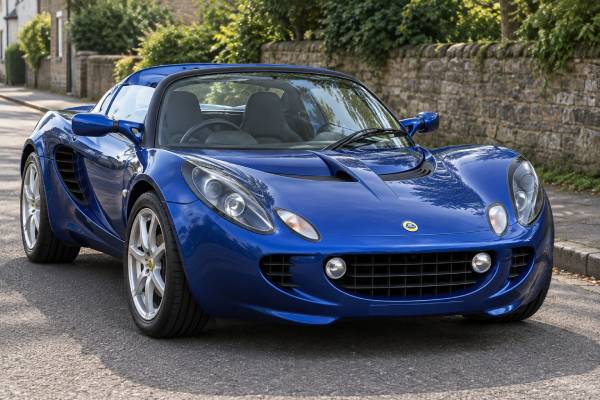
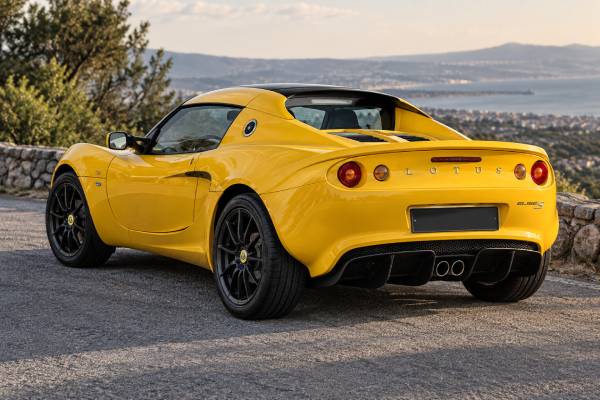
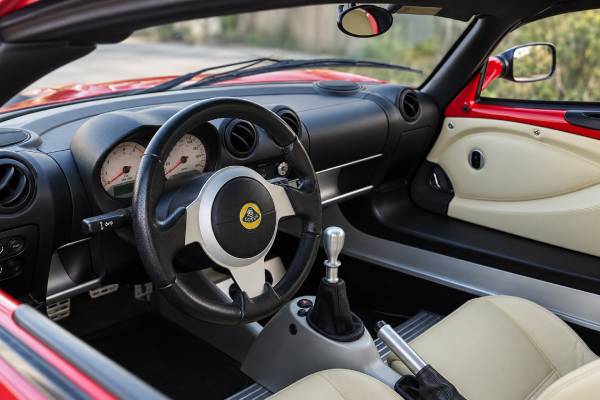
The 134 hp Lotus Elise S is the understated Toyota-powered Elise: less dramatic than the 189 hp Elise R, but often easier to exploit on ordinary roads. Introduced in 2006, it uses Toyota’s 1ZZ-FE 1.8-litre four-cylinder with variable inlet-cam timing, a five-speed C56 manual gearbox, and the familiar bonded-aluminium Elise chassis. Lotus quoted 100 kW, 136 PS, or 134 hp at 6,200 rpm and 172 Nm at 4,200 rpm. Unlike the 2ZZ-GE, the 1ZZ does not use variable high-lift cam operation, so there is no “lift” step in the power delivery. That makes the Elise S calmer and more flexible, while still delivering strong performance because mass remains around the 860 kg mark in period European data. For buyers, its Toyota drivetrain removes the Rover K-series timing-belt and head-gasket narrative, but age still affects cooling, brakes, dampers, suspension joints, gear cables, electrical systems, and chassis condition. A good Elise S is valuable precisely because it is not trying to be the fastest Elise—it is a light, simple road car with a durable, accessible powertrain.
Table of Contents
- Why the 1ZZ Elise Exists
- How the Elise S Drives
- Elise S 1ZZ Technical Data
- C56 Gearing and Chassis Feel
- Service Life and Common Ageing Points
- How to Check a Used Elise S
- Choosing S Versus R
- 1ZZ-Specific Diagnosis and Long-Term Care
- Building a Road-Focused Maintenance Plan
Why the 1ZZ Elise Exists
The Elise S gave Lotus a lower-output Toyota-powered entry model after the company moved away from Rover engines. It uses the 1ZZ-FE rather than detuning the 2ZZ, which means the engine is mechanically different in bore, stroke, cylinder liners, valve gear, rev limit, and transmission pairing.
Lotus service information identifies the Elise S as a May 2006 introduction. The 1ZZ-FE shares its basic family architecture with the 2ZZ-GE but is more undersquare, with a 79.0 mm bore and 91.5 mm stroke for 1,794 cc. The 2ZZ measures 82.0 × 85.0 mm for 1,796 cc.
The 1ZZ uses VVT-i on the inlet cam, varying cam timing as load and speed change. It does not use the 2ZZ’s variable-lift mechanism on the inlet and exhaust valves. That distinction explains both the lower rev ceiling and the smoother power delivery. Lotus specifies 134 hp at 6,200 rpm and 172 Nm at 4,200 rpm, with a maximum continuous engine speed around 6,800 rpm and transient limit around 7,000 rpm in service data.
The five-speed C56 gearbox is another defining feature. Lotus used the six-speed C64 with 2ZZ cars, while the Elise S uses a C56. The five-speed layout suits the engine’s broader, lower-rpm torque curve and avoids forcing the driver to chase a high-lift window.
This makes the Elise S appealing to road users who want the Toyota-era chassis, airbags and ABS-era equipment without the 2ZZ’s high-rpm personality. It is also a rational choice for owners who prefer lower drivetrain stress and simpler valve gear.
How the Elise S Drives
The Elise S feels quick because it is light, not because the engine dominates the experience. The 1ZZ pulls progressively from the middle of the rev range, so the car can be driven briskly without repeatedly visiting the limiter.
Period factory figures put 0–60 mph at about 5.8 seconds and top speed around 127–129 mph, depending on source and market. Those numbers are close enough to many much more powerful cars to remind you how little mass the Elise carries.
Compared with an Elise R, the S gives away acceleration once both engines are worked hard. The R’s 2ZZ becomes much stronger above its high-lift threshold. In the S, there is no equivalent second wind. The benefit is that throttle response remains consistent and predictable across the rev range.
That consistency suits wet roads and traffic. You can use second, third, and fourth gears without constantly planning around a cam change. The engine also sounds less frantic in normal use, though the five-speed can still be busy at motorway speeds by conventional-car standards.
The chassis remains unmistakably Elise. There is no power steering, and the front tires carry relatively little weight. The wheel becomes alive once the car is moving, transmitting road texture and tire load with unusual clarity. If a car feels vague or nervous, suspect condition and alignment before assuming that is normal Elise behavior.
Elise S 1ZZ Technical Data
The Elise S is a naturally aspirated petrol ICE sports car with a mid-mounted 1ZZ-FE, Toyota C56 five-speed manual transaxle, and rear-wheel drive. Its specification emphasizes a broad torque curve, modest mass, and simpler valve gear than the 2ZZ performance models.
| Specification | Value |
|---|---|
| Engine | Toyota 1ZZ-FE inline-four |
| Displacement | 1,794 cc (1.8 L) |
| Bore × stroke | 79.0 × 91.5 mm |
| Block | Aluminium alloy with cast-iron liners |
| Valvetrain | Chain-driven DOHC, 16 valves |
| Valve control | VVT-i variable inlet-cam timing; fixed valve lift |
| Induction | Naturally aspirated |
| Maximum power | 100 kW (136 PS / 134 hp) at 6,200 rpm |
| Maximum torque | 172 Nm (127 lb-ft) at 4,200 rpm |
| Compression ratio | 10.0:1 |
| Fuel requirement | Unleaded petrol, 95 RON minimum in Lotus service data |
| Specification | Value |
|---|---|
| 0–60 mph | About 5.8 seconds in period factory figures |
| 0–100 km/h | About 6.0 seconds in period factory figures |
| Top speed | About 208 km/h (129 mph) |
| CO₂ emissions | 196 g/km in Lotus technical data |
| Maximum continuous engine speed | 6,800 rpm |
| Maximum transient engine speed | 7,000 rpm |
| Specification | Value |
|---|---|
| Transmission | Toyota C56 5-speed manual transaxle |
| Drive | Rear-wheel drive |
| Differential | Open bevel-gear differential in standard form |
| Shift control | Twin cable-operated remote selector |
| Clutch | Hydraulically operated |
| Specification | Value |
|---|---|
| Body style | Two-seat, two-door roadster |
| Length | 3,785 mm (149.0 in) |
| Width excluding mirrors | 1,719 mm (67.7 in) |
| Height | About 1,117 mm (44.0 in) in Toyota-era European data |
| Wheelbase | 2,300 mm (90.6 in) |
| Reference curb weight | About 860 kg (1,896 lb), depending on market and equipment |
| Engine location | Mid-mounted, transverse |
| Specification | Value |
|---|---|
| Chassis | Bonded aluminium extrusion structure |
| Suspension | Independent unequal-length double wishbones front and rear |
| Steering | Unassisted rack and pinion |
| Brakes | Four-wheel discs with ABS in Toyota-era road specification |
| Wheel layout | Staggered front/rear wheel and tire sizes |
| Item | Practical guidance |
|---|---|
| Timing drive | Chain driven; oil quality and tensioner condition remain important |
| Engine oil | Use the Lotus/Toyota-approved specification and keep level correct |
| Gearbox oil | Use fluid compatible with C56 synchronizers and Lotus service guidance |
| Brake fluid | Renew by schedule; shorten interval for track use |
| Cooling system | Bleed correctly after service because the radiator is remote from the engine |
C56 Gearing and Chassis Feel
The C56 five-speed matches the 1ZZ’s torque curve better than simply copying the 2ZZ six-speed setup would have done. Fewer ratios also keep the car’s operation straightforward.
Two selector cables run down the center of the car to the transaxle. Shift quality depends on cable adjustment, linkage condition, engine mounts, clutch release, and transmission synchronizers. Excessive slop or reluctance should be diagnosed rather than dismissed as a trait of cable shift.
The Elise chassis magnifies tire and geometry choices. The front end uses narrow tires and little static weight, so old or overinflated rubber can make steering feel skittish. Matching Lotus-appropriate tire characteristics matters more than fitting the most aggressive compound available.
Road-focused dampers preserve the chassis’s ability to breathe with uneven surfaces. Many used cars have aftermarket coilovers set too low or too stiff. If a car skips over mid-corner bumps, check setup, bump travel, spring rates, and tire pressures before blaming the basic design.
The non-assisted steering and light brake pedal forces make the S particularly rewarding at moderate speeds. With less engine performance to manage, the driver can explore trail braking, line choice, and throttle balance without the car immediately reaching very high speeds.
Service Life and Common Ageing Points
The Toyota drivetrain is durable, but the rest of the car still ages like a specialist sports car. Preventive attention to oil, cooling, suspension, brakes, and electrical systems keeps the Elise S reliable.
The 1ZZ is chain driven, eliminating the Rover engine’s scheduled timing-belt concern. That does not make lubrication optional. Old or low oil can accelerate chain, tensioner, cam, and bearing wear. Check for leaks and verify level regularly.
The front radiator and long coolant circuit remain Elise features regardless of engine. Plastic-ended original radiators can age, and any cooling-system service requires correct bleeding. Monitor temperature in traffic as well as at speed, and verify fan operation.
Suspension ball joints, wishbone bushes, rear toe links, wheel bearings, dampers, and engine mounts deserve inspection. A clonk under load can be a mount or joint rather than an engine fault. Steering that will not self-center may point to geometry or worn components.
ABS and airbag systems add warning lights that should prove out correctly at startup. Diagnose persistent lamps. Electrical problems can arise from battery weakness, poor grounds, water entry, aftermarket alarms, or added audio equipment.
Body clams are fiberglass composite and can develop star cracks or repairs around impact areas. The aluminium tub underneath is the critical structural part. Corrosion at dissimilar-metal interfaces, damaged bond lines, or evidence of improper drilling and welding requires specialist evaluation.
How to Check a Used Elise S
A used Elise S should be assessed as a chassis first, powertrain second, and cosmetic object third. The engine is comparatively easy to replace or repair; a compromised tub changes the economics of the entire car.
Verify the model by VIN and drivetrain. The correct car has the 1ZZ-FE and C56 five-speed, not the 2ZZ/C64 pairing of the R. Check service records for oil, coolant, gearbox fluid, brake fluid, plugs, belts for ancillaries, and any radiator or clutch work.
Inspect underneath with the trays removed where possible. Look at jacking areas, suspension pickups, front crash structure, rear subframe, and floor. Check for curb impacts and evidence of poorly placed lifts. The Elise’s low ride height makes underbody history important.
Start the engine cold and listen for prolonged chain rattle, bearing noise, exhaust leaks, and uneven idle. Allow it to warm normally, then test full-load acceleration. The 1ZZ should build power progressively; there should be no high-rpm lift transition.
Shift through all five gears quickly and slowly. Test clutch engagement on an incline and under high-gear load. Listen for wheel-bearing rumble and driveshaft clicking. Brake hard enough to confirm ABS operation safely and check that the steering remains straight.
Finally, check tire date codes and exact sizes. A low-mileage car can still be unsafe on old rubber. Tire age also tells you something about how closely the owner has managed time-based maintenance.
Choosing S Versus R
Choose the Elise S if you value road usability, progressive response, and mechanical simplicity more than the 2ZZ’s high-rpm drama. Choose the R if chasing the upper rev range is central to the experience you want.
The S is not merely a “slow R.” Its 1ZZ has a different stroke, compression ratio, valve system, rev range, and gearbox. On a road with short sight lines, the lower-performance car can be easier to use fully and may require fewer shifts.
Running costs can also favor the S. Five-speed gearboxes and 1ZZ engines are familiar Toyota hardware, and there is no variable-lift system to service. That advantage disappears if the car has been neglected or modified poorly, so condition still wins over model choice.
For track work, an R will be faster on straights, but the S can be an excellent training tool. Spend money first on instruction, tires, brake fluid, alignment, and reliability. The Elise’s chassis rewards technique far more than a dyno sheet suggests.
As values mature, a clean, original Elise S may also appeal as the last naturally aspirated entry-level Toyota-era Elise before later engine and emissions changes. Retaining original wheels, seats, airbox, exhaust, and documentation helps preserve that identity.
1ZZ-Specific Diagnosis and Long-Term Care
The 1ZZ-FE’s reputation for simplicity can lead owners to under-diagnose problems. It lacks the 2ZZ’s high-lift hardware, but it still uses variable inlet timing, electronic engine management, chain drive, and emissions equipment that can produce distinct symptoms as the car ages.
A rough idle should first be approached with basic checks: intake leaks, throttle-body cleanliness, ignition coils, spark plugs, injector balance, engine grounds, and sensor data. Because the Elise has little sound insulation, a minor misfire can feel dramatic from the driver’s seat. Read fault codes and live data before replacing expensive components.
Variable inlet timing depends on oil flow through the control valve and cam phaser. Sludge, low oil level, incorrect viscosity, or a sticking control valve can reduce response. An engine that feels flat without storing a clear fault code may justify inspection of the VVT-i system after basic ignition and fueling checks.
Chain noise is another area where context matters. A brief sound on a very cold start differs from persistent rattling when warm. Check oil pressure, tensioner operation, guides, and service history rather than assuming every noise requires a chain replacement. Conversely, do not ignore a sustained rattle merely because the engine “uses a chain, not a belt.”
The 1ZZ’s cast-iron liners distinguish it from the 2ZZ’s bore construction in Lotus service data. That difference reinforces why engine parts should not be ordered simply because both cars are described as Toyota 1.8s. Pistons, compression ratio, valve train, rev limits, and cylinder-head components differ.
Emission-control faults can also affect drivability. Oxygen sensors age, catalysts can degrade, and intake leaks can push fuel trims out of range. An illuminated MIL should be scanned promptly. Clearing codes before a sale without fixing the cause only delays diagnosis.
For cars used infrequently, battery health is surprisingly important. Low cranking voltage can create alarm problems, weak starts, and spurious electrical behavior. Use an appropriate maintainer and test the battery under load rather than judging it only by resting voltage.
A long-term service strategy should combine mileage and calendar time. Engine oil, brake fluid, coolant, gearbox oil, air filter, spark plugs, and accessory belts each age differently. Keep records in date-and-mileage form so a low-use year does not hide overdue time-based work.
The 1ZZ Elise also benefits from occasional sustained operation once fully warm. Repeated two-mile trips encourage condensation and never give the oil, exhaust, or battery a proper operating cycle. A careful longer drive is mechanically healthier than frequent cold starts solely to “exercise” the car in a garage.
When properly maintained, the 1ZZ’s modest specific output is an advantage. It does not need to live near 8,000 rpm to deliver its intended performance, and the absence of a lift mechanism removes one set of wear items. That makes the Elise S a particularly attractive car for owners who want to drive often rather than preserve a high-strung engine as an event.
Building a Road-Focused Maintenance Plan
A sensible Elise S maintenance plan separates frequent checks from scheduled replacements and age-driven inspections. This prevents both extremes: neglect because annual mileage is low and unnecessary replacement of healthy parts simply because the car is old.
Before every spirited drive, check tires visually, verify pressures when practical, look for fluid under the car, and confirm oil level at the correct procedure. The 1ZZ is less demanding of high rpm than the 2ZZ, but it still depends on a stable oil supply and a healthy cooling system.
Every service visit should include a scan for stored engine and ABS faults, inspection of brake-pad thickness, flexible hoses, ball joints, rear toe links, driveshaft boots, wheel bearings, and coolant leaks. These checks take little time once the undertrays are off.
Calendar items should be logged explicitly. Brake fluid absorbs moisture whether the car travels 2,000 or 12,000 miles. Coolant chemistry ages. Accessory belts harden. Tires can become unsuitable through age before tread reaches the wear bars. Writing due dates in the service file removes ambiguity.
Gearbox oil is often overlooked because the C56 may shift acceptably for years. Fresh correct fluid can protect synchronizers and reveal whether a notchiness problem is lubricant related or mechanical. If old fluid contains visible metal debris, investigate rather than simply refilling.
The cabin and weather systems deserve an annual check too. Clean roof seals, inspect drain paths, verify heater and A/C operation, and look under carpets or seats for moisture. Water ingress can corrode connectors and alarm hardware long before the owner notices a damp smell.
Battery strategy depends on use. A regularly driven car may need only normal testing. A weekend car benefits from a quality maintainer connected according to safe manufacturer guidance. Repeated deep discharge shortens battery life and can create immobiliser confusion.
Once a year, inspect the underside with the car clean. Look for new scrapes, bent undertrays, corrosion at steel/aluminium interfaces, leaking dampers, and loosened fasteners. Photograph any questionable area so change can be tracked over time.
The result is a car that can be used spontaneously. The point of preventive maintenance is not to make the Elise S precious; it is to make it dependable enough that an owner can choose a winding road on a sunny morning without first wondering which overdue job might end the day early.
Where not to spend money first
The Elise S often tempts owners toward power upgrades because 134 hp looks modest beside later Elise figures. In practice, heavy wheels, tired dampers, old tires, and poor alignment can waste more performance than the engine lacks. Spending first on restoring low mass and chassis precision usually produces a larger improvement in real road pace.
Avoid fitting oversized wheels simply for appearance. Additional unsprung and rotational mass can dull steering, acceleration, and ride. Likewise, a very loud exhaust may make the engine seem busier without increasing useful torque. If parts are changed, weigh them, keep the originals, and judge the car by response rather than noise.
Driver instruction is another unusually effective upgrade. The S allows a large percentage of its performance to be used without extreme speed, making it ideal for learning trail braking, vision, smooth steering, and progressive throttle application. Those skills transfer to every faster Elise later.
For many owners, the best version of the car is therefore close to factory specification but freshly maintained. The 1ZZ’s durability, five-speed simplicity, and progressive response are strengths worth preserving rather than deficiencies that must be engineered out.
References
* LOTUS 2004 ELISE SERVICE NOTES Pdf Download 2016 (Service Notes) * Lotus – Elise S – Workshop Manual – (2006) 2006 (Workshop Manual) * Lotus Service Notes Section FJ 2010 (Transmission Service Notes) * 2006 Lotus Elise S Specs Review (100 kW / 136 PS / 134 hp) (since June 2006 for Europe ) 2006 (Specifications) * Lotus Elise S2 | PH Used Buying Guide – PistonHeads UK 2020 (Buying Guide)
Disclaimer
This article is for informational purposes only and is not a substitute for professional diagnosis, inspection, or repair. Specifications, torque values, service intervals, and procedures vary by VIN, market, production change, and equipment; confirm all work against official Lotus and Toyota service documentation for the exact car.
If this guide was helpful, please share it on Facebook, X/Twitter, or with another Lotus enthusiast to support our work.