
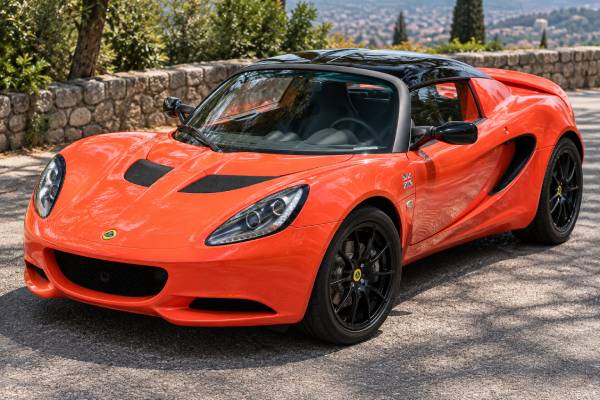
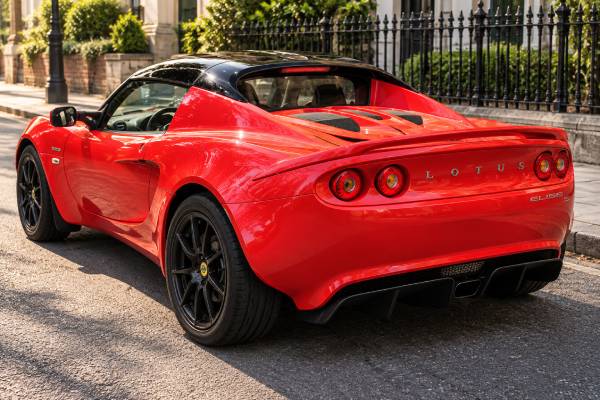
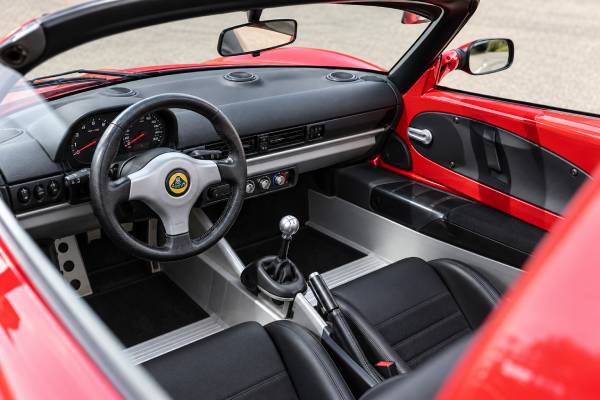
The 2012–2015 Lotus Elise S is the point where the facelifted Type 111 gains serious torque without giving up the basic Elise formula. Its Toyota-derived 2ZR-FE 1.8-liter four-cylinder uses a Magnuson R900 supercharger with Eaton TVS technology and charge cooling to produce 217 hp and 250 Nm, enough for 0–60 mph in about 4.2 seconds while the car still weighs well under a tonne. Compared with the naturally aspirated 1.6 Elise, the S is much faster in normal road driving because its extra torque arrives in the middle of the rev range instead of demanding constant downshifts. That performance brings more heat, more hardware, and more potential maintenance points, so a used Elise S should be judged as a lightweight specialist sports car rather than merely a Toyota-powered convertible. The best examples combine an undamaged bonded-aluminum chassis with a stable cooling system, clean supercharger operation, accurate suspension geometry, and evidence of regular servicing. A fast car with vague history is rarely the bargain it first appears to be.
Table of Contents
- Why the Elise S Changed the Character of the Range
- Supercharged 2ZR-FE Engine and Charge Cooling
- Elise S Specifications and Factory Figures
- Performance, Braking, and Everyday Road Use
- Maintenance Hot Spots and Common Faults
- Modifications, Track Use, and What They Mean
- Used Elise S Buying Strategy
Why the Elise S Changed the Character of the Range
The Elise S is not just a quicker 1.6. Its supercharged 1.8-liter engine changes the way the car is driven by adding 90 Nm of torque and far stronger acceleration from ordinary road speeds, making it more flexible without turning the Elise into a heavy grand tourer.
Lotus introduced the revised S after the 2010 facelift era had established the 1.6-liter base model. The S uses the Toyota 2ZR-FE rather than the high-revving 2ZZ-GE found in some earlier Elise variants. Lotus added forced induction and charge cooling to produce 217 hp at 6,800 rpm and 250 Nm at 4,600 rpm. That combination provides a broad, usable delivery rather than relying on an abrupt high-rpm cam change.
The result is a car that can accelerate decisively from a medium-speed corner without needing the driver to keep the engine permanently near the top of the tachometer. On a road with short straights, that makes the S feel substantially faster than the 1.6 even where peak-speed opportunities are limited. It also makes sixth gear more usable for overtaking and climbing gradients.
Despite the additional hardware, the Elise S remains light. Period factory figures place unladen mass around 924 kg, depending on market and equipment. That means the engine does not need extreme output to deliver strong performance. It also keeps braking distances, tire loads, and direction changes in the territory that gives the Elise its distinctive feel.
The S should not be confused with the later Sport 220, even though both use the same basic 217 hp/220 PS powertrain. The Sport 220 arrived as a lighter, renamed replacement in late 2015. Nor should it be confused with the Elise S Club Racer or S Cup, which apply different weight and chassis/aero strategies to the same core engine.
For ownership, the key consequence is complexity. The 1.6 has no supercharger, charge-cooler circuit, or related belt drive. The S adds those parts and operates at higher specific output. None makes the car inherently fragile, but neglect has more places to show up.
Supercharged 2ZR-FE Engine and Charge Cooling
The 2ZR-FE installation is robust when maintained correctly, but buyers should pay attention to supercharger condition, belt drive, charge-cooling performance, oil level, and engine temperature. A car that feels flat when hot or shows inconsistent boost deserves diagnosis rather than a tune-up guess.
The 1,798 cc engine is an all-aluminum inline-four with dual variable valve timing. Lotus’s forced-induction system uses a Magnuson R900 supercharger incorporating Eaton TVS rotor technology. A supercharger is mechanically driven by the engine, so boost response is immediate compared with a turbocharger that depends on exhaust energy. That suits the Elise because throttle response is central to balancing the chassis.
Compressing air raises its temperature, which reduces density and increases knock tendency. The charge-cooling system removes heat from the intake charge so the engine can deliver consistent power. On a road car, the driver may never think about this system. On a hot day or repeated track laps, it becomes much more important.
When inspecting a used S, start it from cold. Listen for abnormal rattling or roughness from the accessory drive and supercharger area. Some mechanical whine is characteristic, especially under load, but sudden bearing noise, scraping, or a changing pitch can indicate wear. Inspect belts and tensioners according to service guidance rather than assuming they last indefinitely.
The engine should idle steadily and pull cleanly through the rev range once warm. Misfires, warning lights, hesitation, or a strong fuel smell need investigation. Because an Elise cabin is noisy, it is easy for owners to normalize sounds that would be obvious in a conventional car. A specialist familiar with healthy 2ZR-powered Elises is valuable when the history is unclear.
Oil level matters. The car can generate sustained lateral acceleration, particularly on track, and an owner who never checks between services is not ideal. Ask what oil was used, how often it was changed, and whether consumption has been monitored. Avoid diagnosing internal condition from exhaust color alone; a proper compression or leak-down test is more useful if there are symptoms.
Cooling deserves equal attention. The main radiator is at the front of the car, connected to the rear engine by long coolant pipes. Inspect the radiator, hoses, joints, expansion tank, and fan operation. Stable temperature in traffic is a basic requirement, not a luxury. Repeated overheating can damage an otherwise durable engine.
Elise S Specifications and Factory Figures
The Elise S combines a supercharged and charge-cooled 1.8-liter engine with a six-speed manual transaxle and rear-wheel drive. These figures reflect the core 2012–2015 European specification; optional equipment and market homologation can alter weight, fuel-consumption, and emissions figures. **Supercharged engine data**
| Item | Specification |
|---|---|
| Engine code | Toyota 2ZR-FE |
| Configuration | Inline-four, DOHC, 16 valves |
| Displacement | 1,798 cc |
| Variable timing | Dual VVT-i |
| Induction | Magnuson R900 supercharger using Eaton TVS technology |
| Charge cooling | Liquid-cooled charge-cooler system |
| Maximum power | 217 hp (220 PS) at 6,800 rpm |
| Maximum torque | 250 Nm (184 lb-ft) at 4,600 rpm |
**Drivetrain and control systems**
| Item | Specification |
|---|---|
| Engine position | Mid-mounted, transverse |
| Transmission | 6-speed manual with sports ratios |
| Drive | Rear-wheel drive |
| Throttle | Electronic throttle control |
| Traction/stability | Lotus Dynamic Performance Management, market/specification dependent |
| Electronic differential function | Brake-based EDL support |
**Factory performance**
| Measure | Figure |
|---|---|
| 0–60 mph | About 4.2 seconds |
| 0–100 km/h | About 4.6 seconds |
| Top speed | About 145 mph (234 km/h) |
| Maximum torque | 250 Nm |
| Quoted unladen mass | Approximately 924 kg |
| Power-to-weight character | Roughly 235 hp per tonne using the period unladen figure |
**Chassis and running gear**
| Item | Specification |
|---|---|
| Chassis | Bonded extruded-aluminum structure |
| Body | Composite roadster panels |
| Suspension | Independent double wishbones front and rear |
| Dampers | Bilstein gas dampers |
| Springs | Eibach coil springs |
| Steering | Unassisted rack-and-pinion |
| Brakes | Ventilated discs with performance calipers and ABS |
**Size, wheels, and tires**
| Item | Typical specification |
|---|---|
| Wheelbase | 2,300 mm |
| Length | Approximately 3,824 mm |
| Width | Approximately 1,719 mm excluding mirrors |
| Front wheels | 16-inch |
| Rear wheels | 17-inch |
| Typical front tire | 175/55 R16 |
| Typical rear tire | 225/45 R17 |
**Service-reference priorities**
| System | Useful check |
|---|---|
| Engine oil | Correct Lotus-approved grade; level checked between services |
| Supercharger drive | Belt, tensioner, pulley condition, abnormal bearing noise |
| Charge cooling | Coolant level, pump/circulation function, leaks, heat-soak symptoms |
| Main cooling | Radiator, fans, hoses, expansion tank, stable operating temperature |
| Brake fluid | Time-based replacement; shorten interval for track use |
| Timing drive | 2ZR-FE uses a timing chain, not a scheduled timing belt |
Performance, Braking, and Everyday Road Use
The S is fast enough that road discipline matters. Its 4.2-second 0–60 mph capability and strong mid-range acceleration make overtaking easy, but the chassis remains more rewarding when the driver uses smooth inputs instead of treating every straight as a drag strip.
At ordinary speeds, the supercharger gives the car flexibility the 1.6 lacks. You can leave it in a higher gear through a sequence of bends and still have meaningful acceleration on exit. The throttle remains predictable because boost is mechanically linked to engine speed rather than waiting for exhaust-driven turbo response.
The manual steering transmits road texture clearly. At parking speeds it is heavy, especially if pressures are low, but once moving it becomes one of the reasons to buy the car. Any dead zone, knocking, or reluctance to self-center deserves investigation. Incorrect geometry and worn ball joints can spoil the steering long before they produce dramatic noises.
Brakes benefit enormously from the car’s low mass. A healthy pedal should be firm and easy to modulate. On track, pad compound and fluid boiling point become important, but the answer is not necessarily a big-brake conversion. Good standard-size components, fresh fluid, correct cooling, and proper inspection can be enough for many drivers.
The S rides surprisingly well when standard. If a car is brutally stiff over broken roads, check whether it has non-standard springs or coilovers before accepting that behavior as normal. Lotus achieved control through geometry and low mass rather than relying solely on hard spring rates.
Practicality remains minimal. Cabin storage is scarce, the sill is wide, and the rear luggage area is warmed by proximity to the engine. The soft top is simple rather than luxurious. Air conditioning is worth testing carefully because the small cabin can heat quickly in sun or traffic.
Wet-weather behavior depends heavily on tires. The Elise has rearward weight concentration and no excess mass to press through standing water. Old, hardened, or track-biased tires can transform a benign car into a nervous one. Date codes and compound choice matter as much as tread depth.
Maintenance Hot Spots and Common Faults
Most costly Elise S problems are not mysterious: they come from heat, age, water, worn suspension, poor repairs, or deferred servicing. A methodical inspection is more useful than a list of internet “common faults.”
Cooling is first on the list because both the engine and charge-cooler systems matter. Check for dried coolant residue around the expansion tank and hose joints. Inspect the front radiator where debris and corrosion can take a toll. Verify both temperature stability and fan operation during the test drive.
The supercharger system should produce consistent performance once the engine is fully warm. A car that pulls strongly when cold but fades badly with repeated acceleration may have charge-cooling issues, although diagnosis should be data-led rather than assumed. Pump function, coolant circulation, temperature sensors, belt condition, and engine management all deserve consideration.
Suspension wear is common as cars age. Ball joints, wishbone bushes, anti-roll-bar components, wheel bearings, and rear toe links can all develop play. Because the Elise is so communicative, a good car makes deterioration obvious by comparison. Unfortunately, owners can become used to gradual wear. A specialist inspection on a lift is more reliable than a seller’s statement that “they all clonk.”
Corrosion affects steel components even though the main tub is aluminum. Inspect wishbones, fasteners, brackets, subframe areas, brake pipes, and interfaces between different metals. The bonded chassis itself must be treated carefully; damage around adhesive joints or mounting points is not the same as superficial corrosion on a replaceable steel bracket.
Water ingress can affect carpets, wiring, switches, and seat mounts. Check after rain if possible. Inspect window alignment and roof seals. A dry day can hide leaks, so look for tide marks, musty smells, green electrical connectors, and corrosion on seat runners.
The composite clamshell body resists rust but is expensive to repair well. Stone chips are expected, especially at the front, while star cracking around stressed areas and poorly blended paint can indicate past repairs. Examine the underside and wheel arches, not only the glossy exterior surfaces.
Clutches and gear linkages are conventional wear items but labor can be meaningful. A high biting point, slip under load, difficulty selecting gears, or excessive lever play should be priced into the purchase. Do not rely on mileage alone; repeated launches and track use can wear a clutch faster than gentle road miles.
Modifications, Track Use, and What They Mean
A modified Elise S can be excellent, but the quality of the engineering matters more than the parts list. Changes to boost, intake, exhaust, suspension, wheels, or braking should be supported by invoices and a clear reason for the setup.
Engine tuning deserves caution because the standard 217 hp package is well integrated. Smaller supercharger pulleys or aggressive calibrations can raise charge temperature and stress. If power has been increased, ask who calibrated it, what fuel is required, whether charge cooling was upgraded, and whether the clutch remains within its intended torque range.
Exhaust changes are common and often harmless when properly installed. Check for cracked brackets, heat damage, excessive noise, and warning lights from catalyst or sensor changes. A track-day car may need to meet strict noise limits, so an extremely loud exhaust can reduce usability rather than improve it.
Suspension is the area where “upgraded” can most easily become worse. Quality dampers set up for road use can improve control, but cheap coilovers and excessive lowering can reduce bump travel and alter geometry. Ask for alignment sheets. If none exist after major suspension changes, budget to have the car measured from scratch.
Track use should be evaluated through evidence. Good signs include regular fluid changes, high-quality pads, recent wheel bearings, documented geometry, and tires replaced by age and heat cycle rather than only tread depth. Bad signs include cracked rotors, cooked paint around calipers, loose suspension, damaged undertrays, and no invoices.
A standard road car with low mileage is not automatically healthier. Long storage can flatten batteries, seize brakes, harden seals, age tires, and leave coolant unchanged for years. Usage pattern plus maintenance history is more informative than odometer reading alone.
Used Elise S Buying Strategy
Prioritize structural condition and evidence of correct maintenance, then decide how much originality matters to you. Mechanical wear can often be fixed; a compromised bonded chassis or badly repaired crash damage can make the car uneconomic.
Begin with identity. Confirm VIN, model year, 2ZR-FE installation, and factory options. Check that the car is genuinely an Elise S rather than a 1.6 modified or badged to resemble one. Compare registration documents and service history with physical details.
Inspect the chassis and crash structures on a lift. Look for deformation, drilled holes, non-standard adhesives, damaged jacking areas, and replacement hardware that suggests previous repair. Any concern should be referred to an Elise specialist. The aluminum tub is central to the car’s safety and geometry.
Examine suspension geometry through tire wear and road behavior. Uneven front wear, a steering wheel that sits off-center, or a car that needs constant correction can indicate more than a simple alignment. Bent arms, worn joints, or prior curb/track impacts are possible.
Warm the drivetrain fully. Monitor coolant temperature, listen to the supercharger, use every gear, and apply enough load to reveal clutch slip without abusing the car. After the drive, inspect for fresh leaks and coolant smell. If possible, scan for stored engine-management faults even when no warning light is currently illuminated. **Elise S purchase red flags and positive signs**
| Area | Positive sign | Concern |
|---|---|---|
| Chassis | Clean, straight, documented | Unknown repairs, drilling, distorted mounts |
| Cooling | Stable temperature, documented radiator/hoses | Coolant loss, overheating, non-working fan |
| Supercharger | Consistent boost and normal mechanical sound | Scrape, abnormal bearing noise, heat-related power loss |
| Suspension | Tight joints and recent geometry sheet | Clonks, uneven tires, wandering |
| Track history | Frequent inspections and fluid changes | Heat-damaged consumables with little documentation |
| Modifications | Reputable, reversible, invoiced | Unknown ECU tune or poorly installed hardware |
Budget for a baseline service after purchase unless recent work is exceptionally well documented. Fresh fluids, an alignment check, tire-age verification, and a complete inspection establish a known starting point. This is more useful than immediately buying performance parts.
The Elise S suits a buyer who wants the classic Elise sensory experience but does not want to work a low-torque engine hard every time strong acceleration is needed. It is quick enough for modern traffic, light enough to retain delicate steering and braking, and mechanically understandable. Buy on condition rather than color or low mileage, and the supercharged S can deliver the rare combination of real pace and the transparent chassis feel that made the Type 111 famous.
What a baseline service should establish
After buying an Elise S, the most useful first expenditure is often a baseline inspection and service rather than a performance upgrade. The aim is to create a known starting point. Have the car checked for stored fault codes, coolant leaks, charge-cooler circulation, belt and tensioner condition, fluid age, brake wear, tire age, wheel-bearing play, rear-toe security, and alignment. Record what was found even if no parts are replaced.
It is also sensible to verify the battery and charging system. Elises are commonly stored for long periods, and repeated low-voltage episodes can create confusing alarm, immobilizer, or instrument behavior. A healthy battery of the correct type and a compatible maintainer remove one avoidable source of trouble.
If the car has non-standard engine software, pulley sizes, intake parts, or exhaust components, identify them before ordering service parts or diagnosing performance. A tuned car may need a different fuel grade, spark-plug specification, or maintenance interval. The important principle is not that modified cars are bad; it is that unknown modifications make diagnosis harder.
For a car that will see track days, add a pre-event routine: check oil level, coolant level, brake-fluid condition, pad thickness, wheel torque, tire pressure, and visible suspension hardware. After the event, look again for leaks, damaged tires, loosened fasteners, and changes in pedal or steering feel. This simple discipline prevents small track-related problems from becoming expensive road failures.
One final ownership rule
Keep the car on a known maintenance baseline and resist solving every sensation with a modification. Fresh tires, correct geometry, healthy fluids, and a properly functioning cooling system restore more of the Elise S experience than most bolt-on parts. That approach also makes later diagnosis easier because changes can be traced to wear rather than to layers of unknown tuning.
References
- Lotus Elise – Iconic Sports Car | Lotus Cars 2026 (Heritage Model Page)
- Lotus Elise S Cup | 2015MY 2014 (Lotus Press Release reproduction and 2ZR-FE specifications)
- Lotus Announces New Elise Sport and Elise Sport 220 – TLF – Totally Lotus 2015 (Lotus Press Release reproduction)
- Lotus Announces All-new Sub-Assembly Manufacturing Facility in Norwich – Lotus Cars Media Site 2020 (Manufacturer Chassis Information)
- Lotus launches new e-commerce site for parts, accessories and merchandise – Lotus Cars Media Site 2022 (Manufacturer Parts Information)
Disclaimer
This article is for informational purposes and does not replace professional diagnosis, inspection, or repair. Specifications, torque values, fluids, intervals, and procedures vary by VIN, market, production date, and equipment; always verify them against the official Lotus service information for the individual car. If this article helped you, please consider sharing it on Facebook, X/Twitter, or another enthusiast platform to support our work.