
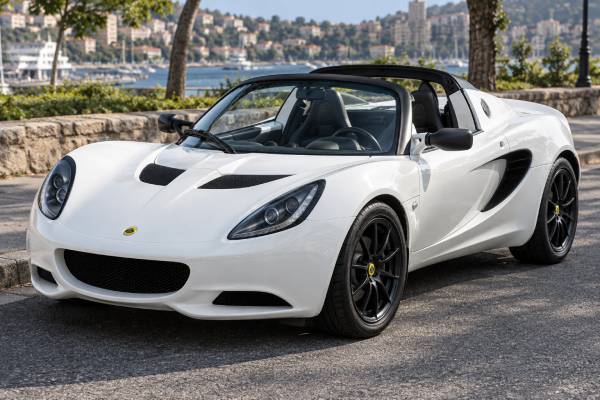
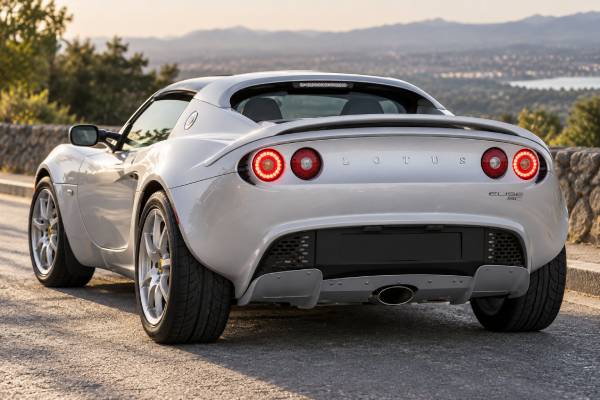
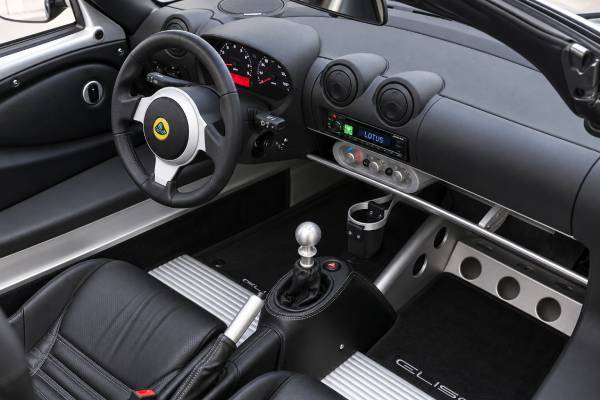
The Lotus Elise SC is the factory answer for drivers who love the 2ZZ-GE Elise but want more torque without losing the roadster’s light, direct character. Introduced for the 2008 model year, the SC uses a Lotus-designed, Magnuson-produced supercharger installation built around an Eaton M45 rotor pack. Crucially, it is not the same system as the chargecooled Exige S. Lotus integrated the smaller M45 into a new inlet-manifold casting and deliberately omitted an intercooler, saving mass and preserving rear visibility. Output rises to 220 PS, equivalent to about 217 hp, while the car remains around 903 kg in launch specification. Lotus estimated 0–60 mph in 4.4 seconds and a 150 mph top speed. The design delivers a broader, more immediate response than the naturally aspirated Elise R while retaining the 2ZZ’s variable timing and lift. Ownership therefore adds supercharger belt, pulley, injector, spark-plug, and heat-management considerations to normal 2ZZ maintenance. Buyers should focus on whether the forced-induction hardware remains correctly installed, serviced, and calibrated—not simply whether the car makes the expected boost.
Table of Contents
- What Lotus Changed for the SC
- How the M45 System Delivers Power
- Elise SC Technical Specifications
- Road Performance and Chassis
- Supercharger-Specific Maintenance
- Inspection and Authenticity
- SC Versus R and Exige S
- Heat, Belt Drive, and Modification Risk
- Recommissioning an SC After Low-Mileage Storage
What Lotus Changed for the SC
The Elise SC is not an Elise R with an Exige supercharger bolted on. Lotus engineered a unique, non-chargecooled M45 installation specifically for the open Elise, integrating the blower housing and inlet manifold to keep the package compact and responsive.
The Exige S of the period uses a larger Magnuson/Eaton M62 and a chargecooling arrangement. That hardware suits sustained higher-output use and the Exige’s packaging, but it adds mass and obstructs rearward visibility. The Elise SC’s smaller M45 and integrated manifold reduce intake tract length and avoid the chargecooler hardware.
Lotus stated that the SC engine installation was about 8 kg lighter than the Exige S arrangement. More important to the driver, minimizing manifold volume helps preserve the naturally aspirated Elise R’s quick throttle response.
The base engine remains the Toyota 2ZZ-GE with VVTL-i. Lotus added higher-flow injectors, higher-rated spark plugs, revised calibration, and the supercharger drive. Output rises from 192 PS to 220 PS while retaining the six-speed C64 transaxle.
The SC is easy to identify visually by its rear spoiler and unique wheel design in launch form, but used cars can have swapped wheels or body parts. Mechanical verification is more important than appearance alone.
How the M45 System Delivers Power
The M45 is a positive-displacement Roots-type supercharger, so it increases airflow in direct relation to engine speed and gives the Elise SC stronger torque before the naturally aspirated 2ZZ would reach its high-rpm peak. The result is not just a larger horsepower number; it changes how often the driver must downshift.
Because the system is driven mechanically by a belt, throttle response remains immediate. There is no turbocharger spool delay. The engine still retains its variable timing and lift hardware, so high-rpm breathing remains part of the character, but the supercharger fills in the lower and middle range.
The non-intercooled design is deliberate, not evidence of a missing component. Intake temperatures will naturally rise under sustained boost, which is one reason the SC is framed as an exceptionally fast road car rather than a duplicate of the more track-focused Exige S.
That distinction matters for modifications. Fitting smaller pulleys or chasing more boost on the stock non-chargecooled system increases heat, injector demand, calibration requirements, and mechanical load. A modified SC needs evidence of engineering, not just a dyno graph.
The supercharger belt and idler system also become service items. Lotus service notes include belt tracking and idler adjustment procedures. A belt running too close to a guide, fraying, glazing, or squealing should be corrected rather than treated as harmless noise.
Elise SC Technical Specifications
The Elise SC is a supercharged petrol ICE roadster with a mid-mounted Toyota 2ZZ-GE, integrated Magnuson/Eaton M45 supercharger, six-speed C64 manual transaxle, and rear-wheel drive. It retains the Elise’s bonded aluminium chassis and lightweight double-wishbone suspension while adding forced induction.
| Specification | Value |
|---|---|
| Engine | Toyota 2ZZ-GE inline-four |
| Displacement | 1,796 cc (1.8 L) |
| Valvetrain | Chain-driven DOHC, 16 valves, VVTL-i |
| Induction | Magnuson-built Eaton M45 positive-displacement supercharger |
| Charge cooling | None in factory Elise SC installation |
| Supercharger housing | Integrated with Lotus-designed inlet manifold |
| Fuel system | Sequential injection with higher-flow injectors for SC application |
| Maximum power | 220 PS (about 217 hp / 162 kW) |
| Maximum torque | Approximately 212 Nm (156 lb-ft) in commonly published SC specification |
| Timing drive | Chain for camshafts; auxiliary belt drives the supercharger |
| Specification | Value |
|---|---|
| 0–60 mph | 4.4 seconds estimated in Lotus launch material |
| 0–100 km/h | 4.6 seconds estimated |
| 0–100 mph / 160 km/h | 10.7 seconds estimated |
| Top speed | About 150 mph (240 km/h) estimated |
| Combined fuel consumption | About 9.1 L/100 km estimated at launch |
| Launch reference weight | 903 kg (1,987 lb) |
| Specification | Value |
|---|---|
| Transmission | Toyota C64 6-speed manual transaxle |
| Drive | Rear-wheel drive |
| Differential | Open standard configuration; limited-slip availability depended on market/options |
| Shift actuation | Cable-operated remote selector |
| Clutch | Hydraulic single-plate arrangement |
| Specification | Value |
|---|---|
| Chassis | Bonded aluminium extrusion structure |
| Suspension | Independent unequal-length double wishbones |
| Steering | Unassisted rack and pinion |
| Rear wheel | 8.0 in wide in launch SC wheel design |
| Rear tire | 225/45 R17 Lotus-specific Yokohama AD07 LTS at launch |
| Brakes | Four-wheel ventilated discs with ABS |
| Feature | Specification |
|---|---|
| Airbags | Driver and passenger airbags standard across 2008 Elise range |
| Instrument pack | LCD message display with service and system information |
| Shift lights | Three-stage hidden-until-lit upshift indicators |
| Alarm | New Thatcham-approved immobiliser/alarm with integrated key controls |
| Option packs | Touring and Sport packages simplified for 2008 model year |
| Item | Why it matters |
|---|---|
| Supercharger drive belt | Wear, tension, alignment, and tracking directly affect blower drive reliability |
| Idler pulley | Incorrect alignment can push the belt toward the guide and damage it |
| Spark plugs | SC uses higher-rated plugs suited to greater cylinder pressure and heat |
| Injectors/calibration | Correct higher-flow injectors and ECU calibration are essential |
| Oil level | 2ZZ high-rpm operation still requires disciplined oil checks |
Road Performance and Chassis
The Elise SC is faster than the Elise R without becoming a torque-heavy car that overwhelms the rear tires. Lotus deliberately tuned the response to remain progressive and direct.
At 903 kg and 220 PS, the power-to-weight ratio is enough for acceleration that still feels modern. The biggest difference from the R is flexibility. An R rewards a downshift and high rpm; the SC can accelerate hard from lower engine speeds, making overtakes easier and reducing the need to plan around lift engagement.
The added rear spoiler and wider rear wheels support the performance package, but the SC is not the same aerodynamic concept as an Exige. Lotus explicitly positioned the Exige S as the quicker track car because of its higher-downforce body.
That is useful context for owners choosing modifications. An Elise SC does not need extreme ride height or giant wings to justify itself. On the road, compliance, tire quality, and clean steering feedback matter more than maximum downforce.
The unassisted steering remains one of the car’s strongest features. Extra power does not change the front axle’s fundamental lightness. Fresh tires, accurate toe settings, healthy dampers, and correct ride height are essential if the car is to feel composed rather than nervous.
Supercharger-Specific Maintenance
The SC adds a belt-driven compressor and associated hardware to normal 2ZZ maintenance, so belt condition, idler alignment, intake sealing, injector health, and calibration deserve special attention.
Lotus service information describes checking that the supercharger belt runs centrally on the idler and adjusting the idler if tracking is too close to the belt guide. That detail matters because edge contact can damage the belt over time. Look for dust, cords, glazing, cracks, chirps, or a belt that walks sideways.
The supercharger drive belt has its own replacement guidance in Lotus maintenance information and should not be treated like an indefinite-life component. Cars that see little mileage still age belts through heat cycles and time.
Inspect the integrated inlet-manifold/supercharger assembly for oil staining, air leaks, damaged bypass controls, and non-factory pulley changes. A smaller pulley may make more boost but also increases rotor speed and intake temperature. Ask for dyno and calibration evidence if the pulley is not standard.
The 2ZZ underneath still needs correct oil level and clean lift engagement. Supercharging does not remove the variable-lift system. Warm the engine fully before using high rpm, and investigate inconsistent lift rather than assuming boost masks it.
Cooling-system health also matters more as engine output rises. The SC itself is non-chargecooled, so there is no separate intercooler circuit to maintain, but the main coolant radiator, fans, hoses, and thermostat must be healthy.
Inspection and Authenticity
A genuine, unmodified Elise SC with coherent service history is increasingly desirable. Verify factory identity and supercharger hardware before paying a premium for the badge.
Start with VIN and build data. Confirm that the car was produced as an SC, not converted from an Elise R. Conversions can be excellent drivers, but their value and parts assumptions differ from a factory SC.
Look for the integrated M45/manifold casting, correct belt drive, injector specification, airbox/intake arrangement, ECU history, rear spoiler, and wheel package. Cosmetic parts may have been changed, so no single feature proves identity.
Inspect the aluminium chassis and rear subframe as on any Elise. Extra performance does not make structural condition less important. Undertrays can hide curb strikes, fluid leaks, and evidence of track excursions.
On a cold start, listen for belt noise, bearing rumble, exhaust leaks, and prolonged chain rattle. Once warm, acceleration should be strong and smooth, without surging that suggests belt slip or intake leakage. The C64 should shift cleanly through all six gears.
Check brake discs, pads, wheel bearings, rear toe links, dampers, tire age, ABS, airbags, alarm, instrument display, and A/C. An SC often attracted enthusiastic use, so consumable history should match that use.
SC Versus R and Exige S
The Elise SC is the choice for stronger road performance without moving to the roofed, more aerodynamically aggressive Exige S. The Elise R remains the purer naturally aspirated experience; the Exige S remains the more track-focused forced-induction package.
Compared with the R, the SC needs fewer revs for a given acceleration request. That makes it easier to drive rapidly on roads where there is not always space to hold second or third gear near 8,000 rpm. The trade-off is additional belt-drive hardware and more heat under sustained load.
Compared with the Exige S, the SC is lighter in its supercharger installation and preserves rear visibility because it has no chargecooler assembly behind the cabin. The Exige’s M62 and aerodynamic body are better suited to repeated track work and downforce generation.
The SC therefore makes most sense as a fast road Elise. It retains open-roof simplicity and steering delicacy while adding enough torque to feel substantially stronger in everyday use. Owners who rarely track their cars may prefer that balance.
For collectors, factory originality matters. Because aftermarket supercharger kits are common on naturally aspirated Elises, a genuine SC should be documented through VIN/build records, original sales paperwork, and service history. Keep any removed original wheels, pulley, exhaust, airbox, or trim pieces.
Heat, Belt Drive, and Modification Risk
The Elise SC’s compact, non-chargecooled supercharger system is elegant, but it leaves less margin for casual pulley changes than a large intercooled setup. Every increase in supercharger speed raises airflow, discharge temperature, belt load, and fuel demand, so modifications should be evaluated as a complete system.
Heat is the first issue. A positive-displacement supercharger compresses air and raises its temperature. The factory SC deliberately omits a chargecooler to save mass, simplify packaging, and protect rear visibility. Lotus calibrated the engine accordingly. On a road car, airflow between bursts helps temperatures recover. Repeated full-load laps create a different thermal environment.
That does not mean the SC cannot be tracked. It means the owner should monitor behavior over a session rather than judging performance from one cool acceleration run. If power fades, coolant temperature rises, or detonation control becomes active, continuing to chase lap times is poor mechanical strategy. Cooling condition, ambient temperature, fuel quality, and session length all matter.
The belt drive deserves equally close attention. Inspect the ribbed surface, edges, tracking, tension, and idler condition. Black dust around pulleys can indicate slip or alignment problems. A belt that repeatedly walks toward the guide may need idler adjustment rather than another replacement belt.
Listen to the supercharger at idle and through gentle rev changes. Some mechanical whine is normal, but grinding, rough bearing noise, or sudden changes in pitch warrant inspection. Do not spray belt dressing onto a slipping drive; it hides a mechanical problem and contaminates components.
Pulley diameter should be recorded. If the car has a non-standard pulley, ask what boost target, injectors, ECU map, spark plugs, fuel grade, and testing accompanied it. An undocumented smaller pulley is a reason to value the car more cautiously, not a free performance bonus.
Fuel delivery must keep pace with airflow. The factory SC uses higher-flow injectors and dedicated calibration. Lean operation under boost can damage pistons and valves quickly. Any injector change should be matched in the ECU and validated under load by a competent calibrator.
Spark-plug specification also matters. Forced induction raises cylinder pressure and heat, so Lotus chose plugs appropriate to the SC package. Installing a generic plug because it fits the thread can increase knock risk or fouling. Follow the exact service information for heat range and gap.
Oil discipline remains as important as on the naturally aspirated 2ZZ. The supercharger broadens torque, but the engine can still rev very high, and the VVTL-i system still relies on clean oil. Check level frequently, especially after track use or long high-speed journeys.
For owners seeking more power, a conservative factory SC in excellent condition is often more valuable and enjoyable than a heavily modified example. If higher output is the goal, choose a proven package that addresses charge temperature, fuel, calibration, clutch, and cooling together. Piecemeal boost increases are where reliability erodes.
The factory installation’s strength is integration. Lotus did not simply attach an M45; it redesigned the manifold, selected injectors and plugs, calibrated the ECU, packaged the belt drive, and balanced the result against the Elise’s weight and road-car mission. Preserving that integration is the best route to the crisp throttle response that makes the SC special.
Recommissioning an SC After Low-Mileage Storage
Many Elise SCs became second or third cars, so low mileage is common. Storage can preserve bodywork, but it does not preserve belts, fluids, seals, tires, batteries, or fuel indefinitely. A careful recommissioning should happen before the supercharger is asked to make full boost.
Begin with the battery and electrical system. A weak battery can create alarm, immobiliser, and cranking issues that complicate diagnosis. Charge and load-test it, clean grounds, and make sure the integrated key and alarm system operate correctly before chasing engine faults.
Inspect all belts with particular attention to the supercharger drive. Look for cracks between ribs, glazing, frayed edges, hardened rubber, or tracking marks. Rotate accessible pulleys by hand with the belt removed when the service procedure permits, feeling for rough bearings or play.
Old fuel is a concern on a forced-induction engine. Petrol loses volatility and can absorb contamination during long storage. If age is unknown, drain or dilute appropriately with fresh fuel of the correct octane rather than testing full boost on stale fuel.
Change engine oil and filter before repeated high-rpm use, and inspect the old oil for unusual metallic debris. Check coolant condition and pressure-test the system if there is any evidence of leakage. Verify fan operation because a car that has only been driven on cool days may never have exposed a failed fan.
Brake fluid should be replaced if age is uncertain. Inspect discs for heavy rust pitting and calipers for sticking after storage. A short road test should include gentle braking first; do not discover a seized caliper during the first hard stop.
Tires can look new and still be too old for an SC’s performance. Read the manufacturing date, inspect sidewalls and bead areas, and replace questionable rubber before using full acceleration. The car’s 4.4-second 0–60 capability makes tire condition a safety item, not a cosmetic preference.
After the first heat cycle, inspect again. Look for fresh coolant traces, oil seepage, belt dust, exhaust leaks, and loose fasteners. Recheck fluid levels. Storage-related seals sometimes begin leaking only once they have been heated and pressurized again.
Increase load progressively over several drives. Confirm smooth boost, consistent lift engagement, clean gear changes, stable temperatures, and normal braking before using sustained full throttle. This staged process is less exciting than immediately testing performance, but it protects rare factory hardware and usually reveals small problems while they are still inexpensive.
What normal SC behaviour should feel like
A healthy factory SC should feel stronger than an Elise R well before the top of the rev range, but the delivery should remain progressive. There should be no dramatic pause followed by a sudden burst of boost. The supercharger’s positive-displacement design supplies airflow predictably, while the 2ZZ’s lift system still adds high-rpm breathing.
Some whine is part of the blower’s character. What matters is change: a new grinding tone, chirp, belt squeal, or sudden loss of whine can signal a belt, pulley, bearing, or bypass issue. Owners who know the normal sound of their car are better placed to detect early trouble.
Throttle response should also be clean when transitioning on and off power. Surging can indicate intake leakage, belt slip, bypass-control problems, ignition weakness, or calibration issues. Because the SC has several systems interacting, diagnosis should use logged data and physical inspection rather than replacing the supercharger first.
That progressive behavior is one reason the factory car remains desirable. It feels like a stronger Elise rather than an engine conversion that overwhelms the chassis. Preserving that balance should be the standard by which maintenance and modifications are judged.
References
* Lotus Elise SC 2008 – Lotus Drivers Guide 2008 (Lotus News Release Reproduction) * Microsoft Word – Lotus 08 MY Final RoW.doc 2007 (Lotus News Release) * Lotus Service Notes — Section EH 2012 (Service Notes) * LOTUS ELISE OWNER’S HANDBOOK MANUAL Pdf Download | ManualsLib 2008 (Owner’s Handbook Supplement) * LOTUS 2004 ELISE SERVICE NOTES Pdf Download 2016 (Service Notes) * Lotus Elise S2 | PH Used Buying Guide – PistonHeads UK 2020 (Buying Guide)
Disclaimer
This article is for informational purposes only and is not a substitute for professional diagnosis, inspection, or repair. Specifications, torque values, belt intervals, equipment, and procedures vary by VIN, market, production change, and usage; verify all work against official Lotus and Toyota service documentation for the exact vehicle.
If this guide was useful, please share it on Facebook, X/Twitter, or with your preferred Lotus community to support our work.