
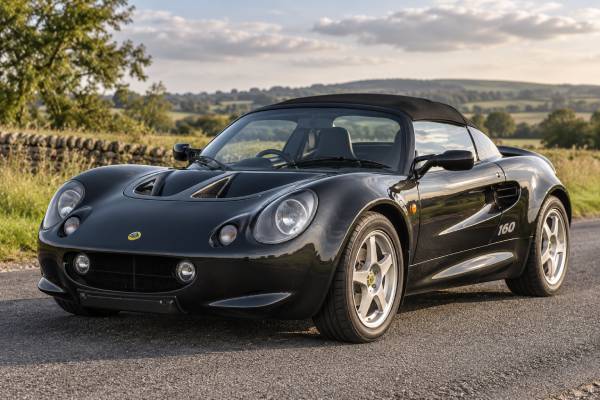
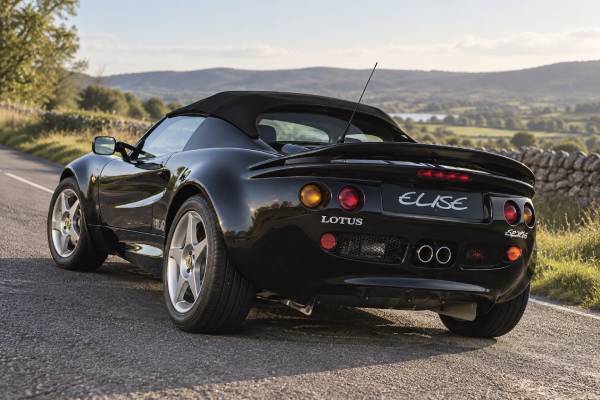
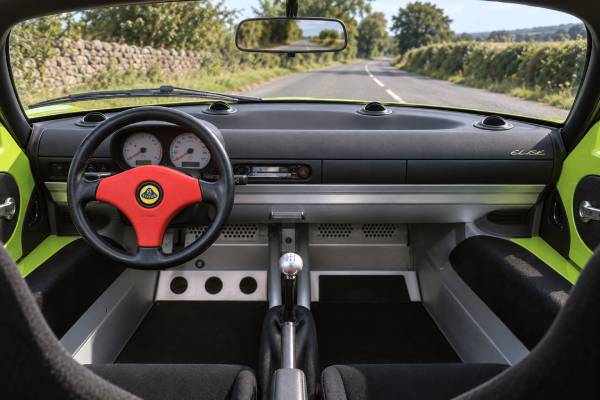
The Lotus Elise Sport 160 is one of the sharpest factory developments of the first-generation Elise, but its name needs explanation before the car can be judged properly. Lotus built the model during 2000 around a heavily revised Rover K-series 1.8, firmer chassis settings, lighter hardware, and a more aggressive calibration. The first 50 SVA-approved cars were delivered in genuine 160 PS form; later whole-vehicle-type-approved cars left the factory at roughly 150 PS and could be converted to the 160 PS specification with the intended intake and exhaust changes. That detail matters to collectors, buyers, and anyone comparing dyno figures. Beyond the headline output, the Sport 160 is valuable because it preserves the very light Series 1 architecture while adding a more urgent engine and more focused chassis. Today, condition and originality matter at least as much as specification: a healthy, correctly set-up car is superb, while a neglected or poorly modified example can be expensive to put right.
Table of Contents
- What Makes the Sport 160 Different
- Engine Changes and Driving Character
- Sport 160 Technical Specifications
- Chassis, Brakes, and Road Behaviour
- Maintenance and Known Weak Points
- How to Inspect and Buy One
- Ownership, Value, and Originality
- Restoring a Sport 160 Without Erasing It
What Makes the Sport 160 Different
The Sport 160 is not simply a standard Elise with an ECU remap. Lotus combined engine, intake, exhaust, calibration, suspension, seating, and trim changes to create a car that feels more intense than the 118 hp base S1 and more overtly sporting than the VVC-powered 111S.
The key complication is homologation. The first 50 cars were approved under the UK’s Single Vehicle Approval process and used the full higher-output specification. Lotus documentation for the model identifies these SVA cars by the relevant VIN sequence and quotes 160 PS at 7,000 rpm. Subsequent cars were built under Whole Vehicle Type Approval. Noise and emissions requirements led to a quieter intake arrangement and a 111S-type silencer, reducing delivery output to about 150 PS. Lotus described how those WVTA cars could be returned to 160 PS specification by modifying the intake and fitting the sport exhaust.
That creates three practical buying categories: an original SVA car, an untouched WVTA car in its lower-output delivery form, and a WVTA car converted to the intended higher-output specification. None is automatically “wrong,” but the paperwork should match the hardware. A seller who simply states that every Sport 160 left Hethel with identical 160 hp hardware is overlooking an important part of the model’s history.
The engine is still based on Rover’s lightweight K-series architecture, but the Sport 160 uses high-lift camshafts, revised induction and exhaust components, and dedicated engine management. A tubular 4-2-1 exhaust manifold, relocated manifold-air-temperature sensing, and other detail changes distinguish it from the ordinary 18K4F installation. The result is an engine that gives away some low-speed smoothness in exchange for a harder, more purposeful top-end character.
On the road, that character defines the car. A standard S1 relies on low mass and clean torque delivery; the Sport 160 asks the driver to use revs. The idle can feel more restless, the throttle response is sharper, and the engine becomes noticeably more animated as the tachometer climbs. It suits a car built around immediacy rather than refinement.
Engine Changes and Driving Character
The Sport 160’s engine works best when treated as a tuned naturally aspirated unit rather than a flexible modern turbo engine. It rewards accurate throttle work and committed use of the upper rev range, while a poorly maintained example can feel lumpy, hesitant, or disappointingly flat.
Lotus retained the 1,796 cc K-series four-cylinder, an aluminium engine whose low mass was a major reason it suited the Elise. The Sport 160’s changes increase airflow at higher engine speeds. The official supplement identifies different airbox arrangements for SVA and WVTA cars, a fabricated 45 mm tubular 4-2-1 manifold, specific catalyst and silencer combinations, and dedicated management systems. SVA cars used a GEMS controller, while WVTA cars used an EFI controller with a MAP sensor arrangement derived from the VVC application.
The quoted peak of 160 PS is produced at 7,000 rpm, with maximum torque around 174 Nm at 5,000 rpm in full 160 specification. The rev limiter sits around 7,200 rpm. Those figures explain why the car feels so different from the base Elise: the ordinary 118 hp engine makes useful torque much earlier, whereas the Sport 160 asks the driver to keep the engine in its stronger range.
This is also why a test drive must cover more than a few urban miles. A cold Sport 160 should not be thrashed, and a seller who encourages hard use before the oil is warm is giving you information about the car’s treatment. Once fully warm, the engine should pull cleanly without a sudden misfire, fuel-starvation sensation, or erratic idle severe enough to suggest a fault. Some unevenness is part of the cammed character; persistent hunting, stalling, or poor hot restarting is not.
The five-speed transaxle uses the standard Elise ratio set with a 3.94:1 final drive rather than an ultra-short motorsport gearset. That matters because the Sport 160’s pace comes from power-to-weight ratio and engine response, not a gearbox designed solely for sprinting. The shift should feel direct. Excessive slop can come from linkage wear or adjustment, while crunching on fast shifts deserves investigation rather than being dismissed as “they all do that.”
A standard exhaust and induction system also matter more here than on many classic cars because they define whether the car is actually in the homologated lower-output or higher-output configuration. Aftermarket exhausts are common and not necessarily harmful, but invoices, part numbers, ECU details, and emissions behavior should be considered together.
Sport 160 Technical Specifications
The Sport 160 is a petrol, naturally aspirated, mid-engined ICE sports car with a five-speed manual transaxle and rear-wheel drive. Its mechanical appeal comes from combining a very light bonded-aluminium chassis with a tuned 1.8-litre K-series engine rather than from outright displacement or forced induction.
| Specification | Value |
|---|---|
| Engine family | Rover K-series 18K4F-based inline-four |
| Displacement | 1,796 cc (1.8 L) |
| Construction | Aluminium block and cylinder head |
| Valvetrain | DOHC, 16 valves; Sport 160 high-lift camshafts |
| Induction | Naturally aspirated |
| Fuel system | Multi-point electronic fuel injection |
| Maximum power | 160 PS (118 kW) at 7,000 rpm in SVA/full 160 specification |
| Maximum torque | 174 Nm (128 lb-ft) at 5,000 rpm in full 160 specification |
| WVTA delivery output | About 150 PS (110 kW) at 7,000 rpm |
| Maximum engine speed | About 7,200 rpm fuel cut |
| Timing drive | Toothed belt |
| Specification | Value |
|---|---|
| Transmission | 5-speed manual transaxle |
| Drive | Rear-wheel drive |
| Final drive | 3.94:1 |
| Differential | Open differential in standard road specification |
| Clutch operation | Hydraulic |
| Specification | Value |
|---|---|
| Chassis | Epoxy-bonded aluminium extrusions with integral rollover structure |
| Body | Composite front and rear clamshells and outer panels |
| Front suspension | Independent unequal-length double wishbones |
| Rear suspension | Independent unequal-length double wishbones |
| Sport ride height | Approximately 100 mm front / 110 mm rear |
| Anti-roll bar | Five-hole sport front anti-roll bar |
| Steering | Unassisted rack and pinion |
| Specification | Value |
|---|---|
| Body style | Two-seat, two-door roadster |
| Engine position | Mid-mounted, transverse |
| Wheelbase | 2,300 mm (90.6 in) |
| Length | 3,726 mm (146.7 in) |
| Width excluding mirrors | 1,701 mm (67.0 in) |
| Height | 1,202 mm (47.3 in) for the standard S1 body envelope |
| Specification | Value |
|---|---|
| Brake layout | Four-wheel discs, non-servo hydraulic system |
| Front calipers | Lotus/AP Racing opposed-piston type |
| Steering assistance | None |
| Tire philosophy | Staggered front/rear fitment; exact wheel and tire package should be checked against the individual car’s build specification |
| Item | Practical reference |
|---|---|
| Engine oil | Use the viscosity and specification stated for the car’s market and operating conditions in Lotus/Rover service information |
| Timing belt | Age is as important as mileage; documentary proof of belt service is valuable |
| Cooling system | Correct bleeding and stable operating temperature are critical on the K-series |
| Chassis repairs | Bonded aluminium structure requires specialist assessment; conventional straightening or welding assumptions do not apply |
Chassis, Brakes, and Road Behaviour
The Sport 160’s greatest advantage is still the Elise chassis. The engine is exciting, but the car’s delicacy comes from low mass, unassisted steering, compact dimensions, and suspension geometry that communicates grip rather than masking it.
The bonded aluminium tub is extremely light and stiff for an open car. Instead of welding a conventional steel monocoque, Lotus used aluminium extrusions joined with structural adhesive and mechanical fasteners in key areas. Composite clamshells carry little of the structural load. That construction is central to the driving experience, but it also changes how accident damage should be assessed. A cracked or bent clamshell can be repairable body damage; deformation, corrosion at interfaces, or damage to the tub is a much more serious matter.
Sport suspension lowers the car and gives it a more disciplined response. Correct geometry is essential. A car with tired dampers, mismatched tires, bent steering arms, or a crude “track alignment” can feel nervous and may be wrongly blamed on the model. On a good road the steering should load naturally as cornering force builds. Tramlining can increase with aggressive tire choices, but it should not dart unpredictably across the road.
Braking feel is similarly direct. Early Elise hardware deliberately avoids the isolated, over-assisted response of heavier cars. Pedal effort is higher than in a modern hatchback, but once the driver adapts, modulation is excellent. Check for pulsing, steering pull, seized sliders where applicable, corroded discs, and old fluid. Cars that spend long periods stored can develop brake issues despite low mileage.
Tires deserve unusual attention because an Elise puts little load on the front axle. Old rubber can still show plenty of tread while delivering poor grip, especially in cold or wet weather. Date codes, compound, matching pairs, and correct staggered sizing matter. A cherished car on decade-old tires is not ready for enthusiastic use simply because the tread looks deep.
Maintenance and Known Weak Points
A Sport 160 is manageable to own if maintenance is preventive and the car has not been badly modified. The expensive problems usually come from deferred cooling-system care, hidden crash damage, ageing consumables, or attempts to treat the Elise like an ordinary steel-bodied car.
The Rover K-series is famous for head-gasket problems, but the useful question is not whether the internet says the engine is “weak.” What matters is the history and current condition of the specific car. The cooling system has long pipe runs through the chassis, limited coolant volume, and a mid-engined layout that makes proper filling and bleeding important. Overheating can damage the cylinder head or compromise the fire-ring seal. Look for unexplained coolant loss, contamination, dried coolant residue, pressurisation from cold, unstable temperature, and evidence of repeated repairs without a root-cause diagnosis.
A well-executed head-gasket repair can be a positive part of the history. Documentation should show what was actually done: gasket specification, head condition, liner heights where relevant, thermostat strategy, water pump, timing-belt work, and cooling-system checks. A vague invoice reading only “head gasket changed” is less reassuring than a detailed specialist record.
Timing-belt age matters even on low-mileage cars. The Sport 160’s tuned head makes belt condition particularly important because belt failure can cause severe engine damage. If proof is missing, budget for service before using the upper rev range. Inspect auxiliary belts and tensioners at the same time.
Other age-related items include engine mounts, gear linkage components, wheel bearings, ball joints, toe links, damper bushes, radiator condition, fan operation, and electrical grounds. The original radiator has plastic end tanks and can become a weak point with age. Replacement with a quality aluminium unit is a common durability upgrade, but installation quality and cooling-system bleeding matter more than the badge on the radiator.
The aluminium chassis itself does not rust like steel, yet it is not immune to damage. Corrosion can occur where dissimilar metals, moisture, or damaged protective finishes interact. Never accept casual welding to the main tub. Lotus repair principles for bonded structures are specific, and serious chassis damage needs an Elise specialist.
How to Inspect and Buy One
Buy the best-documented, least-abused structure you can find, then verify which Sport 160 specification you are actually looking at. Mileage alone is a poor way to rank these cars.
Start with identity. Check the VIN against the registration documents and the chassis stamping. Sport 160 VIN information can help distinguish the earliest SVA batch from later cars. Confirm that engine-management hardware, intake, exhaust, oil-cooling equipment, wheels, seats, and suspension match the claimed specification or are supported by sensible upgrade invoices.
Then inspect the chassis before becoming distracted by paint. Look beneath removable undertrays, around suspension pick-up areas, the rear subframe, jacking points, front crash structure, and visible bonded joints. Stone chips and scrapes are normal; distorted mounting points or evidence of improvised repairs are not. A specialist pre-purchase inspection is particularly valuable because much of the Elise’s condition is underneath the body.
On the road, insist on a cold start. Watch the coolant temperature rise steadily and check that the cooling fans operate when required. Test hot restarting. Run the engine through the rev range only after it is fully warm, listening for abnormal mechanical noise and watching for hesitation. The clutch should take up cleanly, and all five ratios should select without crunching.
Check every simple item too. Window mechanisms, heater fan speeds, lighting, alarm/immobiliser operation, roof seals, door alignment, instruments, and battery condition can all create disproportionate irritation on a lightweight weekend car. Water entry around the roof is common enough to investigate rather than assume.
A useful buying priority is:
- Sound, correctly repaired chassis and crash structure.
- Stable cooling system and documented engine work.
- Correct Sport 160 identity and coherent specification.
- Healthy suspension, steering, brakes, and current tires.
- Cosmetic originality and minor trim details.
That order protects you from spending collector-level money on a shiny car with structural or mechanical problems underneath.
Ownership, Value, and Originality
The Sport 160 is now as much a collector car as a track-day tool, so originality has real value—but sympathetic, documented upgrades can still make a better car to drive. The right balance depends on whether you want a reference example, a road car, or an occasional circuit car.
For collectors, SVA cars have an obvious story because the first 50 were delivered in the full 160 PS configuration. Later WVTA cars are still genuine Sport 160s and should not be dismissed; the important point is to understand their original delivery specification. Factory parts, original wheels, seats, intake components, exhaust pieces, ECU documentation, sales invoices, and service history all help establish provenance.
For drivers, reversible upgrades are often the sensible route. Fresh dampers, high-quality tires, a modern radiator, careful geometry, braided hoses where appropriate, and improved cooling-system reliability can make the car safer and more enjoyable without erasing its identity. Radical engine conversions, cut bodywork, poorly installed roll cages, or heavily altered wiring demand closer scrutiny because reversing them may be difficult.
The Sport 160 also rewards mechanical sympathy. Warm the engine fully before using high rpm, keep the cooling system in excellent condition, do not let old tires survive merely because annual mileage is low, and inspect the underside after track use or encounters with speed humps. Its low weight means consumables can last well, but age still attacks rubber, fluids, belts, and electrical connections.
Most importantly, drive one before deciding that the highest paper output is automatically the best Series 1. The Sport 160 is noisier and more cammy than a standard Elise and less effortless at low revs than the VVC 111S. That edge is exactly what enthusiasts prize. A correct car feels busy, communicative, and alive at normal road speeds, with enough performance to make the chassis work without overwhelming it.
Restoring a Sport 160 Without Erasing It
A Sport 160 restoration should start by preserving evidence. Before replacing anything, photograph the engine bay, ECU labels, airbox layout, exhaust components, suspension settings, wheels, seats, decals, and VIN-related details. The model’s split between SVA and WVTA production means a component that looks “non-standard” compared with another Sport 160 may actually be correct for that car.
The intake system deserves particular care. On later WVTA cars, the extra noise-suppression arrangements were part of the type-approved delivery specification, while the factory-described route to full 160 PS involved deliberate intake modification and sport exhaust hardware. If an owner wants to return a car to original delivery condition, the correct target therefore depends on whether it is an early SVA example or a later WVTA car. Keep removed factory pieces even if the car is driven in upgraded form.
The same logic applies to the exhaust. A modern stainless system may last longer and sound better, but a period-correct silencer or catalyst can matter to a collector. Do not discard rare hardware just because a replacement is easier to source. Photograph part numbers and store parts dry.
Suspension restoration should avoid the common assumption that lower and stiffer is automatically more authentic. The Sport 160 already used a purposeful ride-height and anti-roll-bar setup. First establish that wishbones are straight, bushes and ball joints are sound, dampers operate evenly, springs are matched, and the chassis pickup points are undamaged. Only then set ride height and alignment. Geometry measured on worn joints is not meaningful.
When recommissioning a long-stored example, work through systems in a safe order. Replace degraded fuel hoses, inspect the tank and pump operation, renew aged brake fluid, check flexible brake hoses, verify wheel-bearing condition, and fit current tires before testing performance. A car with rare original paint is still unsafe if its 15-year-old tires have hardened.
The electrical system is simple by modern standards but can still create frustrating intermittent faults. Battery voltage, engine and chassis grounds, alarm/immobiliser connections, relays, and connector corrosion should be checked before replacing sensors at random. Tuned K-series installations are particularly sensitive to accurate sensor information, so poor grounds can be misdiagnosed as an ECU or fueling fault.
If the engine has been rebuilt, ask for measurements rather than marketing language. Cylinder-head condition, liner stand-proud, compression, cooling-system pressure testing, and cam timing are more useful than claims of a “full race rebuild.” A Sport 160 does not need wild additional tuning to be special. In fact, excessive porting, very aggressive cams, or undocumented ECU changes can make a valuable road car harder to start, less tractable, and more difficult to return to standard.
For owners who actually use the car hard, a sympathetic approach can still protect originality. Keep a second set of wheels for track tires, use reversible brake-pad and hose upgrades, log alignment settings, and retain all factory parts. Record every change. That way the car can evolve for use without losing the evidence needed to understand its factory specification.
The most convincing restored Sport 160 is not necessarily the one with the glossiest engine bay. It is the one whose rare components, homologation history, mechanical condition, and driving behavior tell the same story. A car that starts cleanly, warms predictably, pulls hard to 7,000 rpm, steers accurately, and carries the correct documentation is more valuable than a cosmetically perfect example assembled from uncertain parts.
References
- Lotus Elise Sport 160 2000 (Model Technical Information)
- The Lotus Elise S1 2002 (Model Technical Information)
- Lotus Elise S1 Service Manual 1996 (Service Manual)
- LOTUS ELISE Service Manual (complete) 1996 (Service Manual)
- Lotus Elise Workshop Manual 1996 – 2001 Series 1 Free Factory Service Manual 2026 (Factory Service Manual Index)
Disclaimer
This article is for informational purposes only and is not a substitute for professional diagnosis, inspection, or repair. Specifications, torque values, service intervals, components, and procedures can vary by VIN, market, production change, and equipment; verify all work against the official Lotus and applicable Rover service documentation for the individual car.
If this guide helped you, please consider sharing it on Facebook, X/Twitter, or your preferred enthusiast community to support our work.