
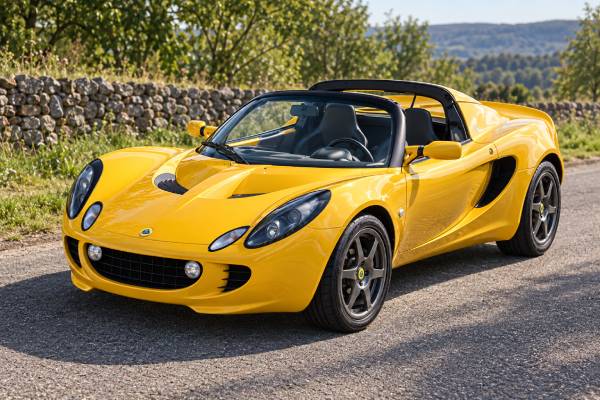
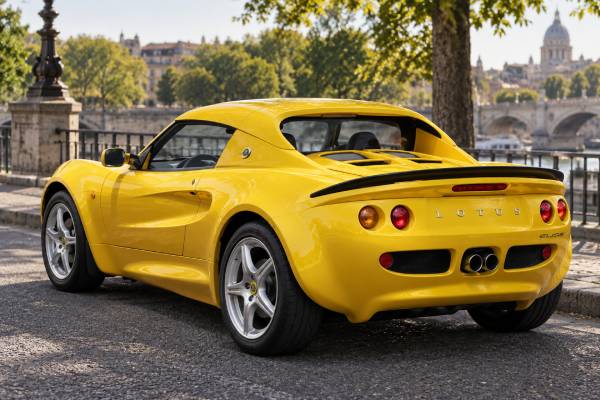
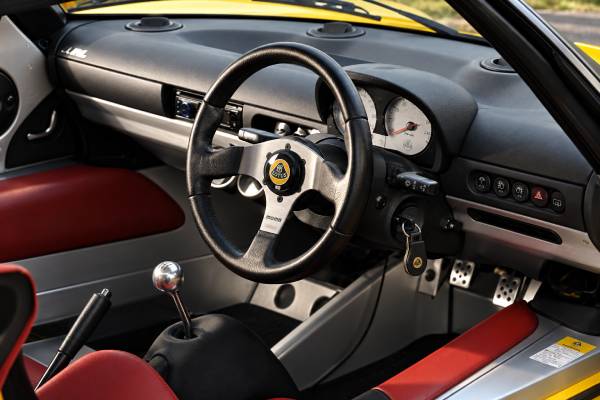
The 120 hp Series 2 Lotus Elise is the entry point to the second-generation shape and, in many ways, the most faithful continuation of the original Elise idea. Lotus retained Rover’s lightweight 1.8-litre K-series but added its K4 engine-management system, Euro 3 onboard diagnostics, a close-ratio five-speed gearbox, larger wheels, improved roof design, a more usable cabin, and a 115-litre luggage compartment. The result is not a straight restyle of the S1: it is a more livable car that still depends on low mass and steering feel rather than big power. The assignment range extends through years when Lotus transitioned to Toyota engines, so specification must be tied to the Rover 18K4F car itself rather than assuming every Elise registered through 2006 uses this engine. For buyers today, the central questions are structural condition, K-series cooling history, timing-belt age, suspension freshness, and whether decades of modifications have improved or diluted the car. A healthy 120 hp S2 remains fast enough to be engaging and simple enough to understand.
Table of Contents
- The Second-Generation Reset
- Why the 120 hp Engine Works
- Rover S2 Specifications
- Road Manners, Roof, and Practicality
- Age-Related Service Priorities
- Identifying and Inspecting a Rover S2
- Best Use Case for the 120 hp Car
- Understanding Option Packs and Common Modifications
- Using the Base S2 for Touring and Driver Training
The Second-Generation Reset
The S2 was designed to make the Elise easier to own without abandoning the bonded-aluminium chassis or light, unassisted control philosophy. Lotus kept the basic architecture but reworked bodywork, packaging, gearing, electronics, and cabin details.
Production began around late 2000 for the new generation, with customer cars arriving in 2001. The standard 1.8-litre K-series remained, but Lotus fitted its own K4 ECU and an emissions system capable of Euro 3 compliance and onboard diagnostics. Output rose slightly to 120 bhp at 5,600 rpm, with 168 Nm of torque at 4,500 rpm.
The car’s 16-inch front and 17-inch rear wheels changed effective gearing compared with the S1, so Lotus made the close-ratio transmission standard to preserve acceleration feel. Period figures quote around 5.6–5.7 seconds to 60 mph and a top speed near 125 mph.
Inside, the S2 is easier to live with. Sill covers, a revised dashboard, storage, optional four-speaker audio, and improved trim make it less austere. The boot grew to about 115 litres, and the soft top was redesigned to be easier to remove and store. These are small details on paper, but they make a meaningful difference if the car is used for weekends away rather than only Sunday drives.
The S2 also introduced option-pack complexity. Sports Tourer and Race Tech packages could add different trim, seats, brake details, mirrors, audio, and convenience equipment. That means two standard 120 hp cars can look surprisingly different without either being non-original.
Why the 120 hp Engine Works
The 120 hp 18K4F succeeds because it is light, compact, torquey enough for the chassis, and inexpensive to service compared with more exotic engines. Its modest output is a feature when the goal is usable performance rather than maximum straight-line speed.
The all-aluminium 1,796 cc K-series uses double overhead camshafts and four valves per cylinder. In S2 form, Lotus’s K4 management improves throttle response and provides diagnostics. Unlike the 111S, there is no VVC mechanism. That means fewer cylinder-head-specific components and only the normal fixed-cam timing arrangement.
Peak torque arrives at 4,500 rpm rather than very low in the range, but the engine remains flexible because the car is light. On a narrow road, second and third gears cover a broad speed range, and the close gearbox helps keep the engine responsive. The driver can use a high proportion of available power without immediately reaching supercar speeds.
That makes the base S2 a strong learning platform. New Elise owners can concentrate on braking points, weight transfer, steering feedback, and throttle balance instead of managing a large power reserve. On track, a skilled driver in a 120 hp car can carry impressive speed because momentum matters more than acceleration between corners.
The downside is that buyers sometimes encounter heavily modified examples whose owners tried to correct a perceived “power problem.” Induction kits and loud exhausts may add sound without useful performance. More extensive cams, porting, or forced induction require evidence of correct calibration and cooling upgrades. A standard, healthy engine is often the more valuable starting point.
Rover S2 Specifications
This version is a naturally aspirated petrol ICE roadster with a mid-mounted Rover K-series 1.8, five-speed manual transaxle, and rear-wheel drive. Its technical identity should be kept separate from later Toyota-powered S2 cars that share the same body generation.
| Specification | Value |
|---|---|
| Engine | Rover K-series 18K4F inline-four |
| Displacement | 1,796 cc (1.8 L) |
| Construction | Aluminium block and head |
| Valvetrain | DOHC, 16 valves |
| Induction | Naturally aspirated |
| Fuel system | Electronic multi-point injection |
| Maximum power | 120 bhp (122 PS) at 5,600 rpm |
| Maximum torque | 168 Nm (124 lb-ft) at 4,500 rpm |
| Engine management | Lotus K4 ECU with OBD capability |
| Emissions | Euro 3-era three-way catalyst and diagnostics in European specification |
| Timing drive | Toothed belt |
| Specification | Value |
|---|---|
| 0–60 mph | About 5.6–5.7 seconds |
| Top speed | About 125 mph (201 km/h) |
| Engine speed in 5th | About 3,830 rpm at 80 mph in period gearing description |
| Speed limiter | About 6,950 rpm |
| Specification | Value |
|---|---|
| Transmission | 5-speed close-ratio manual transaxle |
| Drive | Rear-wheel drive |
| Chassis | Bonded aluminium extrusions with steel rear subframe |
| Front suspension | Independent double wishbones |
| Rear suspension | Independent double wishbones |
| Steering | Unassisted rack and pinion |
| Specification | Value |
|---|---|
| Body | Two-seat, two-door roadster with removable soft top |
| Length | 3,785 mm (149.0 in) |
| Width | About 1,719 mm (67.7 in) excluding mirrors |
| Wheelbase | 2,300 mm (90.6 in) |
| Boot volume | About 115 L |
| Engine position | Mid-mounted, transverse |
| Specification | Value |
|---|---|
| Front wheel diameter | 16 in |
| Rear wheel diameter | 17 in |
| Brake options | Cross-drilled discs were available in option packages/individual specification |
| Roof | Removable soft top; hard-top option available |
| Audio | Two- or four-speaker arrangements depending on specification |
| Area | What to verify |
|---|---|
| Timing belt | Replacement date, tensioner condition, and related water-pump history |
| Cooling | Radiator, fan operation, hose condition, cap, thermostat, and correct bleeding |
| Suspension | Dampers, bushes, ball joints, toe links, wheel bearings, and geometry |
| Brakes | Fluid age, disc condition, caliper operation, and pad suitability |
Road Manners, Roof, and Practicality
The 120 hp S2 is more usable than the original Elise without becoming soft. It still has high sills, a low seating position, minimal sound insulation, and an unassisted steering rack, but everyday details are better resolved.
The roof is a good example. Removing an S1 roof can be a small ritual; the S2 system is easier to handle and store. Check the roof cables, seals, header rail, and fabric condition before purchase. Water ingress is not always catastrophic, but persistent leaks can damage interior trim and electrical connections.
The 115-litre boot is still warm because it sits near the engine, so it is not ideal for groceries that dislike heat. For soft bags, tools, and a weekend’s luggage, however, it is genuinely useful. The cabin also offers more practical storage than the S1.
On the road, the car preserves the Elise’s defining front-end feel. Light mass means the suspension can use relatively modest spring and tire loads. The steering is full of information, yet a good car should not feel harsh simply for the sake of being sporty. If it crashes over small bumps, check damper condition and whether track-oriented suspension has been fitted.
The close gearing keeps the 120 bhp engine busy. Motorway cruising is noisier than in a modern sports coupe, but the car’s purpose is different. Short trips can be tiring if you dislike wind, tire, and engine noise; on a winding road, the same lack of isolation is the point.
Age-Related Service Priorities
At more than two decades old, a Rover S2 should be maintained by time as well as mileage. Rubber, coolant, brake fluid, belts, dampers, and electrical connections age even when the car covers only a few thousand miles per year.
The K-series cooling system remains the most important mechanical area. Inspect the front radiator, long coolant pipes, expansion tank, cap, hoses, thermostat behavior, and fan operation. If the temperature climbs unexpectedly or the coolant level repeatedly falls, stop diagnosing by internet reputation and test the system properly.
Head-gasket work can be acceptable when it was done intelligently. Ask for detailed invoices and evidence that the underlying cause was addressed. A warped head, low liner heights, failed fan, air pocket, or tired radiator cannot be cured reliably by changing only a gasket.
Timing belts should have traceable dates. An old belt on a 20,000-mile car is still old. If documentation is incomplete, replace it before high-rpm use rather than relying on appearance alone.
The bonded aluminium tub and steel rear subframe need separate inspection. The tub does not rust like steel, but corrosion can occur at interfaces and damaged protective coatings. The rear subframe can corrode conventionally. Undertrays can hide dirt, trapped moisture, and evidence of previous impacts.
Suspension refreshes have an outsized effect. A full set of correctly chosen dampers, fresh ball joints, healthy toe links, and accurate alignment often improve the car more than an engine modification. Use a specialist who understands Elise ride heights and geometry rather than applying generic alignment targets.
Identifying and Inspecting a Rover S2
Because the S2 generation spans Rover and Toyota powertrains, confirm the exact mechanical specification before buying parts or valuing the car. Registration year is not enough.
A Rover car has the K-series installation and five-speed gearbox described here. Later 111R/R cars use Toyota’s 2ZZ-GE and six-speed C64, while the later Elise S uses Toyota’s 1ZZ-FE with a C56 five-speed. Engine-bay appearance, VIN records, and service documentation make the distinction clear.
Inspect the chassis, front crash structure, rear subframe, suspension mounts, and clamshell repairs. Look for drilling through structural sections to mount accessories, poorly placed jacks, bent wishbones, and uneven geometry. Fiberglass paint can hide repairs, so use panel alignment and underside evidence together.
On a cold start, the engine should build oil pressure promptly and settle without heavy mechanical knocking. During warm-up, coolant temperature should behave predictably. Once fully hot, test acceleration through several gears, clutch engagement, gear selection, braking, steering self-centering, and hot restart.
Check all electrical systems including the immobiliser, central locking if fitted, instrument cluster, heater fan, lights, wipers, and any aftermarket stereo or alarm. Poorly installed accessories can cause intermittent drains or starting problems.
Best Use Case for the 120 hp Car
The standard Rover S2 is ideal for an owner who wants the S2 body and practicality but prefers the lighter, simpler K-series powertrain over later Toyota performance variants. It is also a strong choice for learning the chassis at sensible speeds.
It makes a particularly good road car. The engine does not demand extreme revs, the gearbox keeps it responsive, consumables are relatively gentle, and there is enough luggage space for short trips. Fuel economy can be surprisingly good when cruising because the car moves little mass.
For track days, its speed comes from consistency. Good brakes, fresh tires, correct geometry, and driver technique matter more than engine tuning. A 120 hp car that can run repeated sessions without overheating or chewing tires is more useful than a powerful conversion with marginal cooling.
Collectors may increasingly prefer original cars, especially those retaining factory wheels, seats, trim, roof hardware, and option-package details. Keep removed parts if upgrading. A reversible modification is easier to justify than cutting the body or altering the chassis.
Most of all, judge the car by how intact its engineering philosophy remains. The standard S2 works because it is light, precise, and mechanically direct. If an example has gained heavy wheels, oversized tires, over-stiff suspension, and unnecessary cabin equipment, much of what made the car special may have been engineered out.
Understanding Option Packs and Common Modifications
The base S2’s specification can be surprisingly difficult to read from photographs because Lotus offered option packs and individual equipment that changed appearance without changing the 120 hp powertrain. Touring-oriented cars could have leather trim, carpets, upgraded audio, body-colored mirrors, and extra convenience details, while Race Tech-style specifications emphasized lighter seats and more sporting trim.
Cross-drilled brakes are a useful example. Their presence does not automatically identify a more powerful model; they were part of option packages and could be ordered on the standard car. The same is true of black calipers, driving lights, hard tops, passenger footrests, and various interior finishes. A seller who claims every visible option is rare factory evidence should be asked for the original order information.
Wheels are another source of confusion. The S2 uses 16-inch fronts and 17-inch rears, but several wheel designs appeared through production and aftermarket replacements are common. Wheel weight matters on an Elise because unsprung mass influences steering and ride. A visually attractive heavy replica can make the car feel worse even if its dimensions fit.
Suspension modifications need context. Many S2s received later Bilstein/Eibach packages, adjustable dampers, or aftermarket coilovers after the original equipment aged. A quality matched replacement can be an improvement over worn factory units. Problems arise when spring rates, damper settings, ride height, and bump travel are chosen for appearance rather than function.
The same principle applies to exhausts. Stainless systems solve corrosion and can sharpen the sound, but excessive volume makes touring tiring and may create track-day noise-limit problems. On a 120 hp engine, an exhaust alone rarely transforms acceleration. Buy for quality and sound rather than advertised peak-power claims.
Induction kits can expose the engine to hot engine-bay air if badly located. The factory system is designed to draw cool air and manage noise. A good replacement should preserve cold-air supply and filtration while avoiding water ingestion. Heat soak can erase the small theoretical gain of a poorly designed open filter.
Engine conversions are a separate category. Honda K-series, supercharged Toyota, and other swaps can produce spectacular performance, but they fundamentally change the car represented by this article. Evaluate conversion engineering, wiring, cooling, driveshafts, brakes, registration legality, and chassis loads. A converted Elise should be valued as a modified vehicle, not simply as a “120 hp car with an upgrade.”
For originality-minded buyers, ask whether factory parts were retained. Standard seats, wheels, airbox, exhaust, dampers, and trim pieces can be expensive to replace years later. A modified car with every original component boxed and labeled is far more attractive than one whose history began after the changes.
A sensible improvement plan for a standard S2 starts with measurement: corner condition, damper performance, alignment, tire age, brake condition, compression, cooling pressure, and fluid state. Only after the baseline is healthy should the owner decide whether more power or sharper suspension is genuinely needed.
That approach often reveals why Lotus gave the car only 120 bhp. On a narrow road, the chassis can use nearly all of it. The driver can stay on throttle longer, feel the rear axle load progressively, and concentrate on carrying speed. Turning the car into something dramatically faster can be rewarding, but it is a different goal from preserving the balance of the entry S2.
Using the Base S2 for Touring and Driver Training
The 120 hp S2 is unusually good at two jobs that seem unrelated: lightweight touring and teaching a driver how to carry speed. Both benefit from the same traits—predictable power, modest running costs, a useful boot, and controls that communicate clearly.
For touring, packing discipline matters. Use soft bags that can conform to the rear luggage compartment and keep electronics, food, and medicines insulated from engine-bay heat. The removable roof should have a dedicated dry bag so a sudden shower does not soak everything else when it is stored.
Before a long journey, test the charging system and battery, check coolant level cold, inspect tire pressures and date codes, and confirm the spare-key/immobiliser strategy. The Elise’s small cabin means an unresolved alarm or key problem can become a major trip interruption. Carry the handbook and recovery details digitally as well as on paper.
Seat comfort is highly personal. What feels supportive for 30 minutes may create pressure points after three hours. Adjust the passenger footrest if fitted, experiment with lumbar support where available, and take short breaks rather than trying to make motorway time like a conventional GT.
For driver training, the base engine is an advantage because mistakes are easier to recognize. Enter a corner too slowly and there is no huge torque reserve to hide it. Brake too late and the unassisted steering shows how much front grip has been consumed. Apply throttle abruptly and the rear weight transfer is clear without being instantly overwhelming.
A wet handling day is especially educational with suitable road tires. Low mass means the car changes direction cleanly, while the modest engine lets the driver explore throttle balance at lower speeds. Electronic systems on early Rover S2 cars are limited, so professional instruction and safe space are important.
Track preparation should still be conservative. Replace old brake fluid, inspect pads and discs, tighten wheel fasteners to the correct specification, set tire pressures, and confirm oil and coolant levels. Do not fit race pads or semi-slick tires for the first event unless there is a demonstrated need.
After the event, recheck wheel bearings, tire shoulders, pad thickness, fluid levels, and undertrays. A small scrape or beginning of toe-link play is easier to address immediately than months later.
This dual use explains why the 120 hp car remains compelling. It can carry two people and weekend luggage economically, then teach precise driving on the same chassis. More powerful versions are faster, but they do not necessarily give a new owner more opportunity to understand what the Elise is doing.
A practical first-year ownership budget
A new owner should reserve money for condition-based work rather than spending the entire budget on the purchase price. Even a strong car may need four current tires, brake fluid, coolant, an engine service, alignment, roof seals, or a battery in the first year. A car with uncertain timing-belt history should have that work treated as immediate. This reserve is more useful than buying accessories before the baseline is known.
Keep the first year mechanically conservative. Drive enough to learn oil consumption, coolant behavior, fan operation, hot starting, clutch feel, and tire wear. Recheck the underside after several hundred miles. Once the car proves stable, decisions about exhausts, seats, suspension, or track use can be made from evidence rather than enthusiasm. That sequence usually creates a faster, more dependable Elise than modifying first and diagnosing later.
References
* The Lotus Elise S2 2002 (Model History and Specifications) * My Lotus Elise S2 Press Announcement 2001 (Launch Information) * Lotus Elise S2 Engine 2002 (Engine Technical Information) * The Lotus Elise S2 Options 2002 (Factory Option Information) * Manual download 2025 (Service Notes Index)
Disclaimer
This article is for informational purposes, not a substitute for professional diagnosis, inspection, or repair. Specifications, torque values, intervals, and procedures can vary by VIN, market, production change, and equipment; verify all service work in the official Lotus and Rover documentation for the exact vehicle.
Please share this guide on Facebook, X/Twitter, or with a Lotus enthusiast community if it helped you and you would like to support our work.