
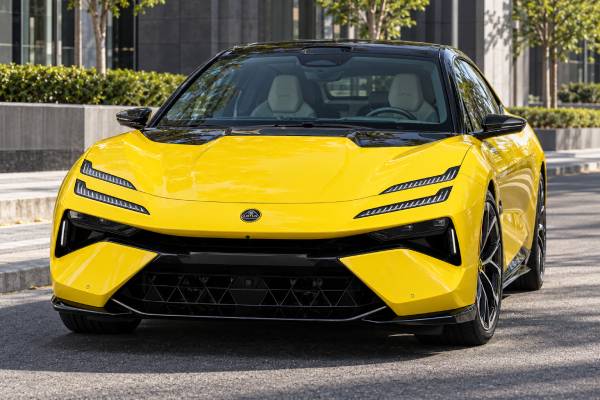
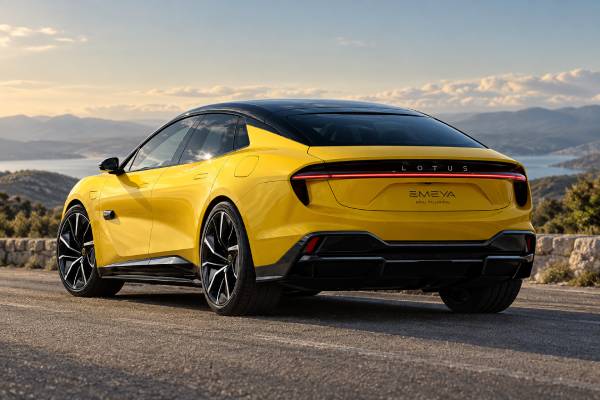
The Lotus Emeya 600 GT SE is the comfort-led expression of the 450 kW Emeya rather than a faster version of the 600 GT. It keeps the dual-motor all-wheel-drive system, 102 kWh gross battery, single-speed reduction drive, and 250 km/h maximum speed, then layers in equipment intended to make the five-door electric GT more relaxing and more complete. That distinction matters because the GT SE can look mechanically identical to less expensive 600-series cars on a specification sheet. The value sits in how the cabin, roof, convenience systems, and standard equipment are bundled for a particular market. This guide separates the shared 600-series engineering from the GT SE-specific proposition, then covers verified performance, charging, dimensions, useful ownership checks, maintenance priorities, and the details worth confirming on a new or used car. Because Lotus equipment packages vary by country, the exact build sheet remains the final authority for any individual Emeya.
Table of Contents
- What makes the 600 GT SE different
- Verified specifications and technical data
- How the GT SE drives
- Battery, range, and charging on long trips
- Cabin equipment and everyday usability
- Maintenance, software, and ownership care
- How to choose and inspect a 600 GT SE
What makes the 600 GT SE different
The 600 GT SE is best understood as an equipment and luxury step within the 600 family. Its 450 kW drivetrain does not gain output over the 600 GT, so buyers are paying for a richer specification rather than a quicker acceleration number.
That approach suits the Emeya’s underlying character. At more than five meters long, with a 3,069 mm wheelbase and a hatchback rear opening, the car is designed to combine high-speed touring with genuine passenger and luggage space. A comfort-oriented trim can therefore change the ownership experience more than an additional headline performance figure would. Market configurators have associated the GT SE with features such as an intelligent glass roof, hands-free tailgate, configurable ambient lighting, illuminated metal sill plates, and upgraded interior presentation. Exact inclusion changes by region, so those features should be verified on the actual car rather than assumed from the badge alone.
The designation also needs market context. Lotus has reorganized Emeya naming as the range evolved, and the 600 GT SE appears in current European and regional lineups alongside other 600 and 900 derivatives. A used advertisement that simply says “GT SE” is therefore not enough evidence of specification. Check the VIN, original sales market, model year, factory option list, wheel package, and chassis equipment before comparing prices.
Mechanically, the GT SE remains a single-speed dual-motor car. That separates it clearly from the 900 family, which uses the 675 kW powertrain and a two-speed transmission. For a driver who wants strong but manageable performance, the 600 GT SE avoids the additional mass and energy demand associated with the 900 while retaining the same basic 800-volt charging architecture.
This is why the GT SE makes most sense when evaluated as a complete grand tourer. Its appeal is not “more power for more money.” It is the combination of the 600 drivetrain with a specification that reduces the need to add comfort and convenience options individually.
Verified specifications and technical data
The 600 GT SE uses two permanent-magnet synchronous motors, one on each axle, for all-wheel drive. European technical data lists 450 kW system output, 710 Nm, a one-speed reduction gear, and a 102 kWh gross lithium battery with 98.9 kWh usable capacity.
| Item | Specification |
|---|---|
| Vehicle type | Battery-electric five-door grand tourer |
| Drive layout | Dual-motor all-wheel drive |
| Motor type | Permanent-magnet synchronous, front and rear |
| System output | 450 kW / 603 hp (612 PS) |
| System torque | 710 Nm / 524 lb-ft |
| Transmission | Single-speed reduction gear |
| 0–100 km/h | 4.2 seconds |
| Maximum speed | 250 km/h / 155 mph |
The acceleration figure is rapid enough to put the GT SE firmly in performance-car territory, but its calibration is less extreme than the 900. The absence of a second ratio also keeps the mechanical layout simpler from a driver’s perspective: there is no high-load gear change to manage or notice during maximum acceleration.
| Item | Specification |
|---|---|
| Battery capacity, gross | 102.0 kWh |
| Battery capacity, usable | 98.9 kWh |
| High-voltage architecture | 800 V class |
| WLTP combined consumption | 18.7 kWh/100 km |
| WLTP combined range | 580 km / 360 mi |
| WLTP city range | 657 km / 408 mi |
| Maximum AC charging | 22 kW, three-phase |
| Maximum published DC charging | 420 kW |
| Published rapid-charge time | About 15 min to 80% at suitable high-power DC equipment |
| European connectors | Type 2 AC / CCS DC |
Charging numbers require context. A 420 kW peak is not a promise that every session will sit at that level. Battery temperature, state of charge, charger voltage and current capability, station sharing, and thermal limits all affect the curve. The useful point is that the Emeya’s 800-volt system can accept very high power when conditions are favorable.
| Item | Specification |
|---|---|
| Length | 5,139 mm / 202.3 in |
| Width, body | 2,005 mm / 78.9 in |
| Width including mirrors | 2,241 mm / 88.2 in |
| Height | 1,459 mm / 57.4 in |
| Wheelbase | 3,069 mm / 120.8 in |
| Maximum ground clearance | 166 mm / 6.5 in |
| EU unladen mass | 2,555 kg / 5,633 lb |
| Maximum permitted mass | 3,100 kg / 6,834 lb |
| Rear luggage capacity | 509 L |
| Rear seats folded | 1,388 L |
| Front luggage compartment | 34 L |
Size is a practical consideration, not a footnote. The car’s width with mirrors is significant in older garages and narrow parking structures. Cameras and parking assistance reduce stress but do not make a tight opening physically wider.
| Item | Specification |
|---|---|
| Front suspension | Air suspension |
| Rear suspension | Air suspension |
| Adaptive damping | Electronically controlled damping |
| Typical GT SE wheel size | 21 in, market specification dependent |
| Front tire size in European data | 265/40 R21 |
| Rear tire size in European data | 305/35 R21 |
| Payload in cited European data | 545 kg / 1,202 lb |
| Braked trailer rating | 2,250 kg / 4,960 lb |
| Unbraked trailer rating | 750 kg / 1,653 lb |
| Maximum nose weight | 75 kg / 165 lb |
Towing and payload figures are homologation-sensitive. An owner should confirm the exact vehicle registration data before fitting towing equipment or loading near the maximum.
| Item | Specification |
|---|---|
| Center display | 15.1-inch OLED |
| Driver information | Digital display plus head-up display |
| Connectivity | 5G-capable connected services where supported |
| Phone integration | Apple CarPlay and Android Auto |
| Software updates | Over-the-air capability |
| Parking assistance | Front/rear sensing and camera-based functions, market dependent |
| Climate system | Multi-zone climate with heat-pump support in cited specification |
| Audio | KEF-based system availability varies by market/package |
| Coverage area | Published example |
|---|---|
| Vehicle warranty, continental European example | 5 years / 150,000 km |
| Vehicle warranty, UK example | 5 years / 100,000 miles |
| High-voltage battery/drive coverage | Up to 8 years / 200,000 km or 125,000 miles depending on market |
| Battery capacity provision | 70% retention threshold in published Lotus terms |
| Paint warranty | 5 years in published Lotus terms |
| Corrosion perforation | 12 years in published Lotus terms |
Warranty terms are market contracts, not universal specifications. Imported cars require particular care because a valid warranty in the original country does not automatically guarantee identical support elsewhere.
How the GT SE drives
The GT SE’s defining dynamic trait is effortless speed rather than dramatic violence. With 710 Nm available through two driven axles, it can accelerate hard from low speed without needing a multi-gear transmission, yet the 4.2-second 0–100 km/h time leaves a meaningful gap to the 900.
That gap is useful for understanding the car. The 600 GT SE is already faster than most traffic can exploit, but it does not ask the chassis to manage the 900’s 985 Nm or 675 kW. For normal road use, that can make throttle calibration feel easier to meter and reduces the temptation to treat every clear straight as a launch opportunity. It is a very fast GT rather than the range’s maximum-attack derivative.
Air suspension and adaptive damping carry much of the workload. The system can vary ride control according to drive mode and road input, while the low battery mass helps keep the center of gravity down. The result should be judged by more than stiffness. A good GT SE should settle after a bump, remain composed during lane changes, and control body motion without turning coarse surfaces into constant cabin movement.
Tire choice has a large influence. The 265-section front and 305-section rear 21-inch sizes provide substantial grip, but they also add replacement cost and can transmit sharp impacts more clearly than a smaller wheel with a taller sidewall. Inspect wheel condition carefully because a large, heavy car can punish rims on broken roads. Repeated vibration at motorway speed should not be dismissed as normal EV behavior.
Braking is a blend of regeneration and friction braking. Drivers may use the mechanical brakes less often than in an internal-combustion GT, which makes periodic inspection important. Rust or uneven deposits can develop when discs spend long periods doing little work. A test drive should include several progressive stops to confirm a consistent pedal and no pulling, vibration, or scraping.
The steering and driver-assistance systems also depend on calibration. After collision repair, windshield replacement, or work near sensor locations, make sure the relevant cameras and radar systems were recalibrated. An apparently minor body repair can become important when the vehicle relies on multiple sensing systems for lane, parking, and collision-assistance functions.
Battery, range, and charging on long trips
A 580 km WLTP rating gives the 600 GT SE a strong starting point for touring, but the charging architecture is what makes the car especially suitable for repeated long-distance use. Short high-power stops can be more valuable than chasing the final few percent of battery at each station.
Real range varies with speed, temperature, rain, wind, elevation, cabin heating or cooling, wheel choice, tire pressure, and payload. Sustained high-speed motorway driving can move consumption well above the WLTP figure. Conversely, moderate speeds and mild weather can make the car exceptionally efficient for its size and output.
The fastest road-trip routine is usually to arrive at a compatible DC charger with a warm battery and a relatively low state of charge. Navigation-based battery preparation can help, especially in cold weather. Starting a rapid-charge session at 60% and expecting headline power is unrealistic; the pack protects itself by tapering as state of charge rises.
At home or work, the 22 kW onboard AC capability is unusually useful where three-phase supply is available. A full charge does not require the driver to seek DC infrastructure, and routine overnight charging can keep the vehicle ready without regularly filling the battery to 100%. For daily use, follow Lotus guidance on charge limits and use a full charge mainly when the extra range is needed.
Owners who cannot charge at home should map their dependable local sites before purchase. A technically impressive maximum charging rate cannot compensate for poor local infrastructure. Check payment methods, reliability, nighttime access, cable reach, and whether the operator commonly shares power between stalls.
Battery condition on a used GT SE deserves evidence rather than guesswork. A moderate drop in displayed range does not prove degradation because recent driving consumption influences estimates. Where supported, request a battery-health report and compare it with service history, charging behavior, and diagnostic data. Underbody inspection is equally important because the pack forms a large protected structure beneath the cabin.
Cabin equipment and everyday usability
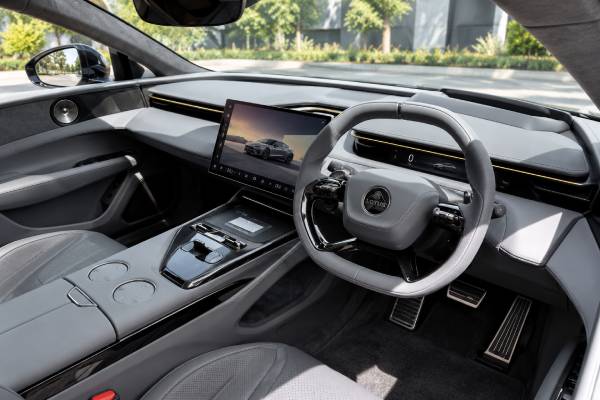
The GT SE earns its place in the range inside the car. Buyers should focus on the equipment they will touch every day: seat comfort, roof behavior, climate performance, door and tailgate convenience, display clarity, audio, and the ease with which connected functions work.
An intelligent glass roof, where fitted, changes the cabin more than a decorative trim package. Test every opacity or shading function and inspect the panel for damage, delamination, or abnormal coloration. If the car has powered or soft-closing doors, operate each one several times from inside and outside. Convenience hardware is valuable when it works smoothly and irritating when adjustment or sensors are out of calibration.
The 15.1-inch OLED central display carries a large portion of the interface, while the head-up display allows key information to remain nearer the driver’s line of sight. Before buying, verify screen response from a cold start, navigation, cameras, audio, Bluetooth, wireless phone charging, smartphone projection, and steering-wheel controls. A luxury EV with a partly functioning digital cabin quickly feels less luxurious.
Rear accommodation benefits from the long wheelbase, but buyers should inspect their exact seating configuration. Some markets and option packages alter seat features. Put the people who will actually use the rear seats in the car, check headroom beneath the roof, and confirm that climate and charging functions are accessible.
The hatch is a major practical advantage. The 509-liter luggage compartment is easier to exploit than a small saloon opening, and folding the second row expands carrying capacity substantially. The 34-liter front compartment is useful for cables, adapters, cleaning supplies, or other items that would otherwise move around with luggage.
Daily usability has one unavoidable constraint: external width. A 2,241 mm mirror-to-mirror measurement is large enough to turn narrow garages and older car parks into routine stress points. Measure home access, not just the parking bay. If the vehicle will be used in dense city streets, test the surround-view system and mirror folding in the actual kind of environment it will face.
Maintenance, software, and ownership care
The absence of an engine does not make the GT SE maintenance-free. Its major ownership costs shift toward tires, brakes, suspension, climate systems, cooling circuits, alignment, software, and the many electronic components supporting comfort and driver assistance.
Tire inspection should be frequent. High mass, instant torque, and wide staggered rubber can consume the inner shoulders without obvious wear from outside the car. Check pressures cold, look across the full tread width, and investigate steering pull or an off-center wheel. Alignment matters both for tire life and for the precision expected from a Lotus-branded GT.
Brake fluid remains time-sensitive, and friction hardware needs exercise and inspection even with regeneration. Ask the service center about the official interval for the exact market rather than applying a generic EV schedule. The same principle applies to cabin filters, air-conditioning service, coolant inspection, and any periodic battery-system checks.
Air suspension should raise, lower, and level consistently. A corner that sinks after parking, repeated compressor operation, or chassis warning messages should be diagnosed before purchase. Because the system affects ride height and wheel geometry, a neglected air-suspension fault can produce secondary tire-wear problems.
Software is part of the maintenance picture. Emeya supports over-the-air updates, and Lotus has released updates that change vehicle and dynamic-control behavior. Confirm that the car can connect to services in its current country, that ownership has been transferred correctly in the Lotus account, and that no update is permanently pending or failing.
Keep the 12-volt system healthy as well. Like other modern EVs, the Emeya relies on low-voltage electronics to wake control units and close high-voltage contactors. A weak auxiliary battery can cause confusing warning messages or prevent normal startup even when the traction battery is charged.
Cleaning and inspection should include the underside. A low, long GT can collect damage from road debris, steep ramps, or careless lifting. Any impact near the battery enclosure, cooling lines, or high-voltage components warrants professional assessment rather than cosmetic reassurance.
How to choose and inspect a 600 GT SE
A good 600 GT SE purchase starts by proving what the car is. Confirm the VIN, original market, model year, factory build, and fitted options before deciding whether its price premium over a GT is justified.
For a new car, compare the GT SE against a 600 GT with the options you actually want. If the SE’s bundled roof, convenience, trim, or cabin features match your priorities, it can be the simpler order. If you do not value those items, paying for the badge may make less sense than selecting a lower trim and directing budget toward wheels, color, or chassis options.
For a used example, begin with charging. Test AC charging if practical and verify that the car can initiate a DC session without errors. Inspect the charge flap, connector area, and cable equipment. Then move to the chassis: check every tire for age and damage, inspect wheels from both faces, listen for suspension knocks, and look for uneven ride height after the car has been parked.
Next audit the luxury equipment. Cycle the glass roof, tailgate, every seat function, climate zones, cameras, parking assistance, HUD, audio, USB ports, wireless charging, ambient lighting, and any powered-door feature. A long list of small faults can be expensive and time-consuming to resolve even when the drivetrain itself is healthy.
Review bodywork in good light. Panel gaps, paint texture, overspray, replaced glazing, and mismatched fasteners can reveal repairs. If accident work is documented, ask whether affected sensors were calibrated and whether any high-voltage isolation procedures were required. A diagnostic scan by a Lotus-capable workshop is an excellent complement to a physical inspection.
Finally, verify warranty position and software support in writing when the car is imported. The 600 GT SE is a connected, highly integrated EV; an attractive purchase price is less valuable if local support cannot activate services, provide parts promptly, or honor the relevant warranty.
The best GT SE is therefore not necessarily the one with the lowest mileage or the longest option list. It is the car whose specification matches your priorities, whose software and electronics work completely, whose charging and battery systems can be demonstrated, and whose history explains how it has been maintained. In that condition, the 600 GT SE captures one of the Emeya range’s most convincing combinations: 603 hp performance, rapid 800-volt charging, useful hatchback practicality, and a cabin configured for long-distance comfort rather than maximum power.
That conclusion is especially important when comparing cars across borders. A cheaper import with different equipment, connectivity, charging hardware, or warranty support is not automatically equivalent to a locally supplied GT SE. Price the complete ownership package, including tires, insurance, service access, and software support, before treating two listings as like-for-like alternatives.
References
- Lotus Emeya 600 GT SE (ab 04/25): Technische Daten, Bilder, Preise | ADAC 2025
- Lotus Emeya Configurator | Lotus Cars Belgique 2026
- Lotus Emeya – The Fully Electric Hyper-GT | Lotus Cars 2026
- Lotus Emeya – Explore Models | Lotus Cars 2026
- THE LOTUS EMEYA 600 SERIES 2025
- Lotus Cars Official Site 2026 (Warranty)
Disclaimer
This article is for informational purposes and is not a substitute for professional diagnosis or repair. Specifications, torque values, service intervals, procedures, charging performance, software features, and equipment can vary by VIN, market, options, and software version. Verify all service work and vehicle-specific data against current official Lotus documentation for the exact car.
If this guide helped you understand the Emeya 600 GT SE, please consider sharing it on Facebook, X/Twitter, or another automotive community.