
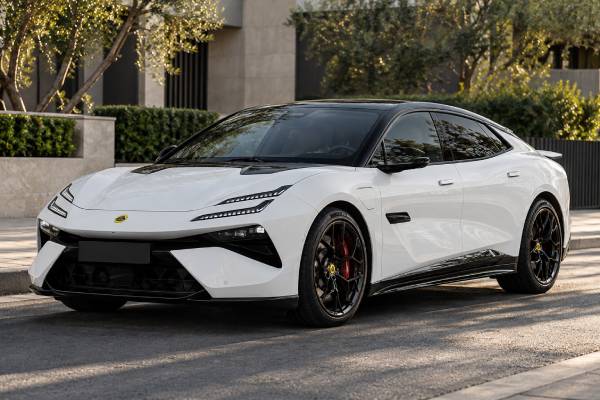
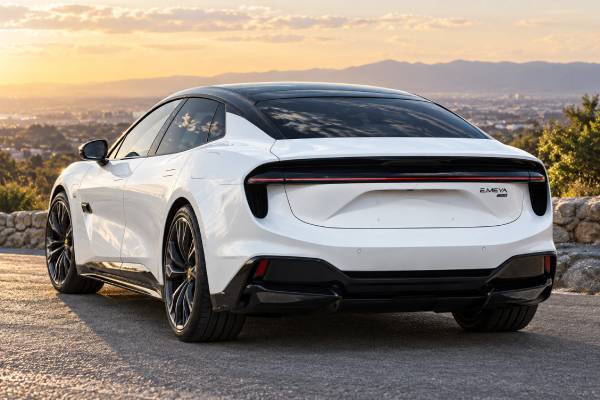
The Lotus Emeya 600 SE is a region-specific 600-series configuration that pairs the standard 450 kW dual-motor drivetrain with a noticeably richer comfort and chassis package. In markets where the badge is used, it is not an intermediate power level: output remains 603 hp, torque remains 710 Nm, and the car still uses a single-speed all-wheel-drive layout. The important differences are equipment. Published Lotus material for Korea and China associates the 600 SE with items such as an intelligent glass roof, enhanced front comfort seats, active rear-wheel steering, powered doors, and market-dependent seating packages. That makes the SE particularly interesting to buyers who want the efficiency and simpler driveline of the 600 but do not want to give up flagship-style convenience. This guide treats the 600 SE as its own market specification, identifies what can be verified, explains where regional data diverges, and sets out the checks that matter when buying, charging, maintaining, or importing one.
Table of Contents
- Understanding the 600 SE badge
- Powertrain, battery, and dimensional specifications
- Why rear-wheel steering changes the car
- Range, efficiency, and charging strategy
- Comfort hardware and digital cabin
- Service, import, and purchase checks
Understanding the 600 SE badge
The 600 SE is best identified by its equipment and market documentation, not by a different power output. Lotus regional material lists the same 450 kW and 710 Nm figures as the 600, with the same 250 km/h top speed and approximately 4.15-second 0–100 km/h performance.
That matters because Emeya naming is not perfectly uniform worldwide. In parts of Europe, buyers encounter 600 GT, 600 GT SE, and 600 Sport SE labels, while Korea and China have used a simpler 600, 600 SE, and 900 hierarchy. An advertisement for a “600 SE” should therefore be traced back to its original market rather than translated mentally into a European GT SE. Similar equipment may overlap, but the badges are not a guarantee of identical homologation or option packaging.
Published Korean material gives the clearest description of the SE’s role. Compared with the local 600, the 600 SE adds an intelligent glass roof, a front comfort-seat package, active rear-wheel steering, powered doors, and an optional five-seat package. It also retains high-value items already associated with the local 600, including soft-closing functionality, large wheel choices, six-piston front calipers, and an active rear spoiler. That turns the SE into a comfort-and-maneuverability upgrade rather than a power upgrade.
Chinese Lotus specifications reinforce the mechanical identity. They list 225 kW front and 225 kW rear electric drive units for both 600 and 600 SE, a 450 kW peak total, 710 Nm, 250 km/h maximum speed, and 4.15 seconds from 0–100 km/h. This is useful evidence because it prevents the common mistake of assuming that an SE badge must mean a higher-output motor calibration.
Model-year language also needs care. Regional product changes can be announced during one calendar year for the following model year, and the assignment’s 2025–present range spans cars whose exact feature bundle may evolve. For any individual vehicle, the original order sheet, VIN-linked build record, registration documents, and local Lotus documentation take precedence over a generic online trim description.
Powertrain, battery, and dimensional specifications
The 600 SE combines two permanent-magnet electric drive units with all-wheel drive and a single reduction ratio. Its performance is strong enough to feel genuinely rapid without using the 900’s higher-output rear system or two-speed transmission.
| Item | Verified specification |
|---|---|
| Propulsion | Battery electric |
| Drive | Dual-motor all-wheel drive |
| Front electric drive unit | 225 kW |
| Rear electric drive unit | 225 kW |
| Peak system power | 450 kW / 603 hp (612 PS) |
| Peak system torque | 710 Nm / 524 lb-ft |
| Transmission | Single-speed reduction drive |
| 0–100 km/h | 4.15 seconds in published regional data |
| Maximum speed | 250 km/h / 155 mph |
The battery is a 102 kWh pack. Korean Lotus material identifies CATL NCM chemistry for the 600 SE, while broader current 600 data places the usable capacity around 98.9 kWh. Because regional homologation documents do not always publish gross and usable figures in the same place, the safest approach is to preserve the distinction rather than treating every quoted battery number as directly interchangeable.
| Item | Specification |
|---|---|
| Gross battery capacity | 102 kWh |
| Usable capacity in current 600-series European data | 98.9 kWh |
| Cell chemistry in Korean 600 SE material | CATL NCM lithium-ion |
| Electrical architecture | 800 V class |
| AC onboard charging | Up to 22 kW where supported |
| DC rapid charging | Up to 420 kW in current 600-series European specification |
| European AC/DC interfaces | Type 2 / CCS |
| Battery preconditioning | Supported through vehicle charging/navigation strategy |
Regional range figures cannot be mixed without their test cycle. Korean certification for the current local 600 is quoted at 518 km on 20-inch wheels, while the official Korean page lists the 600 SE’s local range as pending for some wheel combinations. European 600-series cars can carry WLTP figures up to 580–610 km depending on trim and wheel specification. Chinese data may use CLTC. These are different procedures, not contradictory measurements of one fixed real-world distance.
| Item | Specification |
|---|---|
| Length | 5,139 mm / 202.3 in |
| Width | 2,005 mm / 78.9 in |
| Height | Approximately 1,459–1,464 mm depending on cited regional specification |
| Wheelbase | 3,069 mm / 120.8 in |
| Body style | Five-door liftback / grand tourer |
| Seats | Market/package dependent; five-seat package offered in cited Korean SE specification |
| Platform generation | Emeya / Type 133 assignment designation |
A few millimeters of published height variation can come from regional specification, suspension setting, wheels, or database methodology. It is not useful to force those values into a false single number when the manufacturer’s regional data is the relevant purchasing reference.
| Item | Specification |
|---|---|
| Primary suspension | Air suspension |
| Damping | Electronically controlled adaptive damping |
| Steering | Electric power steering |
| Rear-wheel steering | Standard/additional SE equipment in cited Korean market specification |
| Front brakes | Six-piston calipers listed in cited Korean equipment |
| Rear aero | Active rear spoiler listed in cited Korean equipment |
| Wheel availability | 21- and 22-inch choices cited for Korean market; exact fitment varies |
| Drive modes | Electronic modes vary vehicle response and chassis behavior |
| Feature | What to verify |
|---|---|
| 15.1-inch OLED center display | Boot speed, touch response, camera display |
| Head-up display | Image alignment and brightness |
| Intelligent glass roof | Opacity control and uniform appearance |
| Front comfort-seat package | Adjustment, heating/ventilation/massage where fitted |
| Powered doors | Motor action, sensors, manual override behavior |
| Connected services | Account transfer, eSIM availability, app pairing |
| KEF audio availability | Speaker operation and market/package specification |
| Over-the-air software | Current version and successful update history |
| Document or record | Why it matters |
|---|---|
| Original build sheet | Confirms regional SE equipment |
| VIN and registration data | Confirms market identity and homologation |
| Service history | Shows inspection and maintenance continuity |
| Battery/diagnostic report | Helps assess high-voltage system health |
| Software update history | Shows whether campaigns and OTA releases are current |
| Collision repair invoices | Useful for sensor-calibration and structural checks |
| Charging cables/adapters inventory | Important when importing across connector standards |
Why rear-wheel steering changes the car
Active rear-wheel steering is the 600 SE feature that can most clearly change how the car feels without changing its powertrain. On a car measuring more than 5.1 meters long, it can improve low-speed maneuverability while also helping stability at higher speeds.
At parking speeds, the rear wheels can steer in a way that effectively reduces the turning path. The driver experiences this as a car that feels shorter than its physical dimensions suggest when entering a garage, making a tight U-turn, or navigating a narrow ramp. That is especially valuable because the Emeya is also more than two meters wide before mirrors are counted.
At higher speed, rear-wheel steering can work in the opposite relationship to support directional stability and response. The exact control strategy is software-managed, so the system should not be assessed by looking for obvious rear-wheel angle from the driver’s seat. What matters is whether the car tracks naturally, changes direction cleanly, and produces no warning messages or abnormal tire wear.
A used-car inspection should treat rear steering as a precision system. Check the rear tires for uneven wear, verify alignment history after curb impacts, and ask whether any rear-suspension collision repair involved recalibration. A steering wheel that sits off-center or a car that seems to “crab” slightly on a straight road deserves investigation.
Rear steering also makes wheel alignment more specialized. A generic shop may have equipment capable of measuring toe and camber but not the correct Lotus procedures or calibration sequence. For significant alignment work, sensor replacement, or suspension repair, a workshop familiar with the platform is preferable.
The benefit is not simply sportiness. In the 600 SE, rear steering supports the trim’s luxury role because it reduces the effort associated with maneuvering a very large car. That is a more meaningful everyday improvement than a fractional acceleration gain would be.
Range, efficiency, and charging strategy
The 600 SE shares the 600 family’s fundamental efficiency advantage over the 900: less peak power, a one-speed driveline, and no need to optimize for the same level of maximum acceleration. The result is a car better suited to drivers who prioritize usable range alongside performance.
Do not compare a Korean certified figure directly with a European WLTP or Chinese CLTC figure. Test temperature, speed trace, accessory loads, correction methods, and vehicle configuration differ. A regional number is most useful for comparing cars certified under the same system.
Wheel choice can make a noticeable difference. Large 21- or 22-inch wheels increase visual presence and can sharpen response, but tire width, compound, aerodynamics, and rotating mass all affect energy consumption. If maximum touring range is important, verify the certified figure for the exact wheel-and-tire combination rather than relying on the highest number advertised for the broader 600 line.
For rapid charging, the 800-volt architecture is a major asset. High charging power is most likely when the battery is warm, the state of charge is low, and the station can actually deliver the voltage and current the car requests. A charger’s large number on the sign is only a maximum capability; real output can be reduced by shared cabinets, heat, maintenance state, or site limitations.
Road-trip planning is therefore a temperature and timing exercise. Use the vehicle navigation to route to fast chargers so the battery can prepare when the software supports it. Arrive low enough to exploit the fast part of the curve, then leave once the required energy is onboard instead of automatically waiting for 100%.
AC charging is important for ownership quality. A 22 kW onboard unit can make excellent use of three-phase infrastructure, but home supply may be limited to a lower rate. Before buying, ask an electrician what the property can support safely and whether load management is needed. The cheapest energy and most convenient schedule often come from routine overnight charging rather than public DC use.
In cold climates, plug-in preconditioning improves comfort without drawing all cabin-heating energy from the traction battery at departure. In hot weather, thermal management also matters. Avoid assuming that repeated high-power charging is harmful by definition; the car actively controls battery temperature, but following manufacturer guidance and avoiding unnecessary high state-of-charge storage remain sensible habits.
Comfort hardware and digital cabin
The 600 SE should be evaluated from the seats outward. Its appeal rests on the way comfort equipment, powered convenience, and chassis technology work together, so every one of those systems deserves hands-on testing.
Start with the front comfort seats. Check the full range of movement and memory, then test heating, ventilation, and massage functions if present on the exact regional build. Listen for slow or strained motors and make sure both seats respond consistently. A seat that appears cosmetic can contain multiple motors, controllers, air bladders, heaters, and ventilation hardware.
The intelligent glass roof is similarly more than styling. Cycle all available states and inspect it from inside and outside in even light. Look for areas that fail to switch, hazing, impact marks, or moisture intrusion. Because replacement can be expensive, a roof fault should be priced before purchase rather than dismissed as a minor electronic issue.
Powered doors and soft-closing hardware require patience to check properly. Test every door from different positions, confirm obstacle sensing, and learn how the manual release works. The system should not slam, hesitate, or repeatedly reverse without an obstruction. Owners should also understand the emergency procedure rather than discovering it when the 12-volt system is weak.
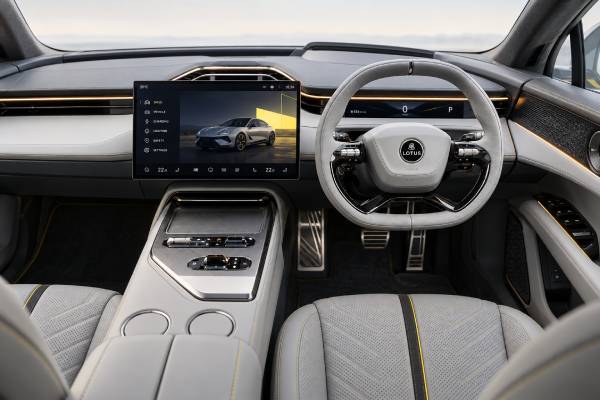
The cabin electronics are built around a fast central interface, connected navigation, displays, camera systems, and a broad sensor suite. Pair a phone, make a call, stream audio, enter a route, view all camera angles, and test the head-up display before buying. A short demonstration by a salesperson is not enough; the buyer should operate the car without guidance and confirm that the interface makes sense.
Connected services create a second-hand ownership issue that traditional cars did not have. The selling owner must remove the vehicle from their account where required, and the new owner must be able to pair the car to a supported regional app and data service. An imported vehicle may have hardware that works physically but lacks local activation for some connected functions.
Rear-seat configuration deserves special attention because the Korean 600 SE material specifically notes a selectable five-seat package. Confirm the actual seat count, center-seat hardware, belts, child-seat anchors, controls, and folding arrangement on the car being considered. Do not assume that every photographed SE has the same rear cabin.
Service, import, and purchase checks
The 600 SE’s biggest buying risk is not the electric motors; it is specification ambiguity combined with sophisticated equipment. A disciplined inspection should prove what the car is, what market it was built for, and whether local support can service all of its systems.
Begin with the VIN and factory documentation. Match the VIN on the body, registration, service records, and diagnostic scan. Ask for the original invoice or build sheet if possible. Confirm wheel size, seat arrangement, roof, rear steering, door system, charging hardware, and driver-assistance package.
Then inspect the underbody and wheels. The battery enclosure should show no unexplained impact damage, deep scraping, or signs of improper lifting. Wide low-profile tires make curb and pothole damage common enough to deserve close inspection. Look across the inner tread, not just the visible outer shoulder.
Charging must be demonstrated. At minimum, verify AC charging and inspect the cable and connector. For an imported car, determine whether its physical inlet and communications are compatible with the local network. If practical, perform a DC session and watch for fault messages or repeated interruptions.
Air suspension and rear steering should be fault-free. Let the car sit, then check whether it remains level. Cycle available ride-height settings and listen for excessive compressor activity. On the road, make several low-speed turns, drive straight on a smooth surface, and assess whether the steering wheel centers naturally.
Brake inspection remains essential even on a regenerative EV. Check disc condition, pad thickness, fluid service history, and pedal feel. Six-piston front calipers can make brake work expensive, and a car that has rarely used its friction brakes can still suffer from corrosion.
Ask a Lotus-capable workshop to scan control modules. Stored faults can reveal intermittent issues in doors, seats, roof, cameras, chassis systems, charging, or high-voltage management that are invisible during a ten-minute test drive. Also check whether recalls, campaigns, and software updates are outstanding.
For an import, get warranty support in writing. Lotus coverage terms vary by country, and battery, paint, corrosion, roadside assistance, and connected-service provisions may not transfer identically. Parts availability and technician access matter just as much as the nominal warranty duration.
A useful 600 SE test-drive sequence
A structured drive is more revealing than a fast one. Start with the car cold if possible and watch for warning lights that disappear only after repeated restarts. With the climate system running, listen for abnormal pumps, fans, or compressor noises, then move slowly through a car park and make full-lock turns in both directions. Rear-wheel steering should make the car feel unexpectedly manageable, but it should not create clunks, jerks, or steering warnings.
On a smooth straight road, release your grip slightly and see whether the vehicle tracks without persistent correction. Then try a rougher surface to judge damper control and listen for trim or suspension noises. Use several drive modes rather than testing only the most aggressive setting. The purpose is to confirm that ride-height control, steering weight, brake blending, and accelerator response change coherently rather than to establish an acceleration record.
Include a sustained motorway section if the seller permits it. Vibration that appears only at 90–120 km/h can expose wheel damage, tire flat spots, poor balancing, or alignment problems that are invisible around town. Check wind noise around the glass roof and doors, then use the driver-assistance functions long enough to confirm that lane sensing, adaptive cruise, and the head-up display behave normally.
Finish by parking and rechecking the car. Look for new warnings, smell for overheated brakes, and compare ride height at all four corners. A sophisticated EV can hide intermittent faults during a short demonstration, so repeat functions after the drive rather than assuming that one successful operation proves long-term health.
Finally, price the car as a complete ownership proposition. A lower purchase price can be offset by 22-inch tires, damaged wheels, an inoperative glass roof, missing charging equipment, unsupported connectivity, or a rear-steering fault. Conversely, a well-documented SE with correct software, healthy battery data, intact luxury features, and recent consumables may justify a premium even with higher mileage.
The 600 SE makes the most sense for a buyer who values maneuverability and cabin convenience as much as straight-line speed. It preserves the 600’s 450 kW drivetrain and rapid-charging foundation while adding hardware that can make a large electric GT easier to park, more comfortable to travel in, and more special to use every day. The key is to buy the exact car rather than the badge: verify its market, build specification, charging compatibility, and support before treating any two 600 SE listings as equivalent.
References
- LOTUS EMEYA 로터스 에메야 2026
- 技术参数 2026
- EMEYA 600 SE 2026
- Lotus Emeya 600 (2025-2026) price and specifications – EV Database 2026
- Lotus believes processing power is the new horsepower – and Emeya built on NVIDIA DRIVE is a thoroughbred 2023
- Lotus Cars Official Site 2026 (Warranty)
Disclaimer
This article is for informational purposes and is not a substitute for professional diagnosis or repair. Specifications, torque settings, maintenance intervals, charging hardware, range ratings, equipment, warranty terms, and procedures can vary by VIN, market, options, and software version. Verify the exact vehicle against official Lotus documentation before servicing, importing, modifying, towing, or relying on any specification.
If this guide was useful, please share it on Facebook, X/Twitter, or an automotive community where other Emeya owners and buyers can benefit from it.